Hi-Fi Audio
Quad 33 and 303 Review: A Modern Take on a British Hi-Fi Classic
A two-part look at the revived Quad 33 preamplifier and 303 power amplifier, covering build, connectivity, the triples output stage, and which speakers suit them.
Introduction
The Quad 33 preamplifier and Quad 303 power amplifier belong to a small group of British hi-fi designs that never really left the conversation. Launched in the late 1960s, they became the most commercially successful amplifiers Quad ever produced, with more than 120,000 preamplifiers and close to 100,000 power amplifiers sold. The pair also earned a Council of Industrial Design award in 1969 and a place in the collection of the Museum of Modern Art in New York.
The current versions keep the spirit of the originals while updating the engineering underneath. The 33 remains a fully analogue preamplifier with a built-in moving magnet and moving coil phono stage, and the 303 retains the triples output stage that made the original famous. In the UK the 33 retails for £1,199, and the 303 carries a £1,200 asking price.
Design Heritage and Build Quality
The original pair arrived in 1967, at a time when vinyl and valve amplifiers still dominated and the first transistor designs were often criticised for a hard, brittle sound. Peter Walker’s answer was a symmetrical triples output stage: three directly coupled transistors operating at low, medium and high power, with quiescent current compared against a fixed voltage in the first two stages. Because those stages ran at low power, temperature changes stayed negligible, addressing the thermal instability and drifting quiescent current that troubled early transistor amplifiers. Quad claimed the 303 was the world’s first low-distortion transistor amplifier, and the design became a landmark in amplifier history.
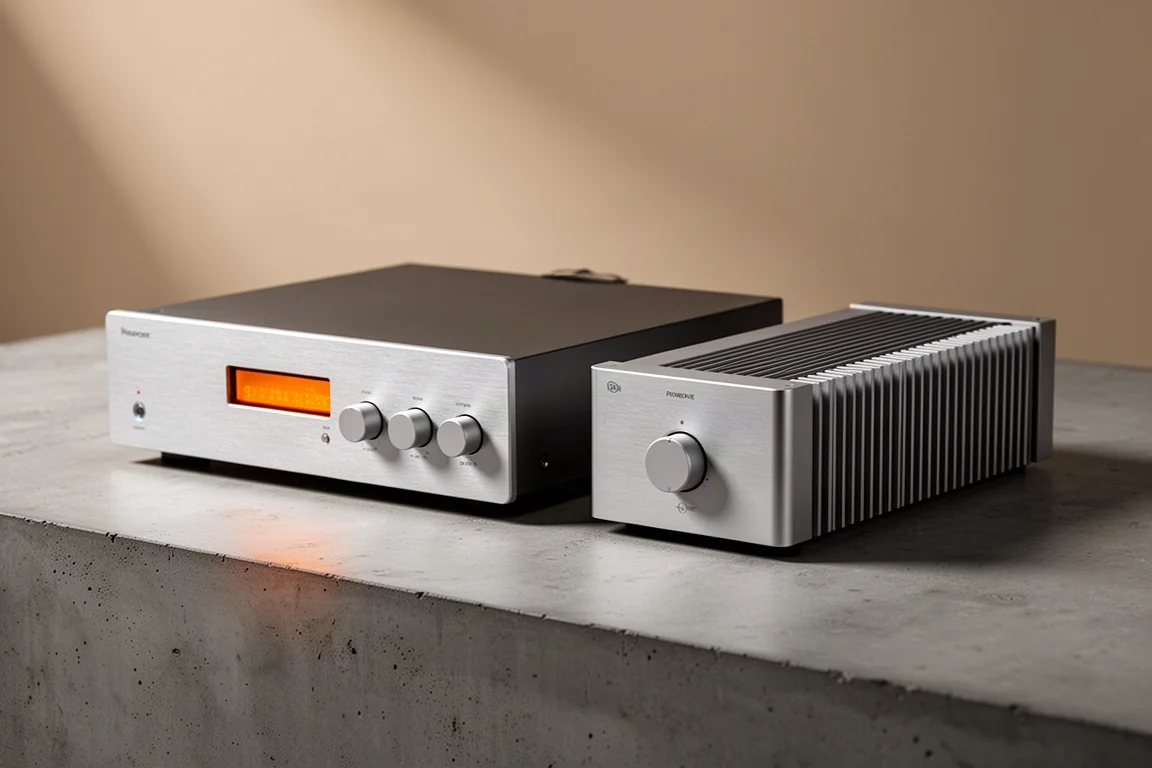
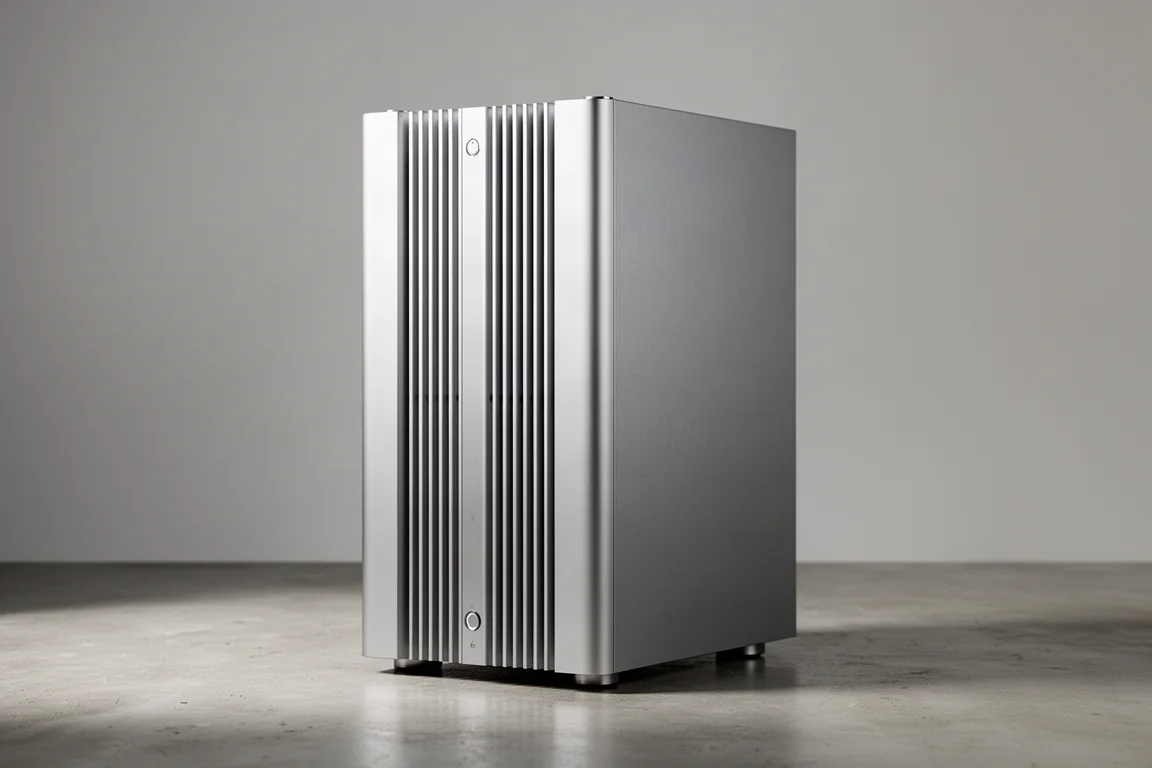
The revival carries that industrial design forward. The 33 uses a matte silver finish over substantial gauge aluminium platework, and its proportions are carried over from 1967: a half-rack-width chassis measuring 258 x 83 x 165 mm and weighing 4 kg. The 303 keeps the narrow, deep, upright stance with the distinctive heat sinks running down the front. Visually, the two read as a matched pair: matte silver panels, restrained controls, and no clutter beyond what the front panel actually needs.
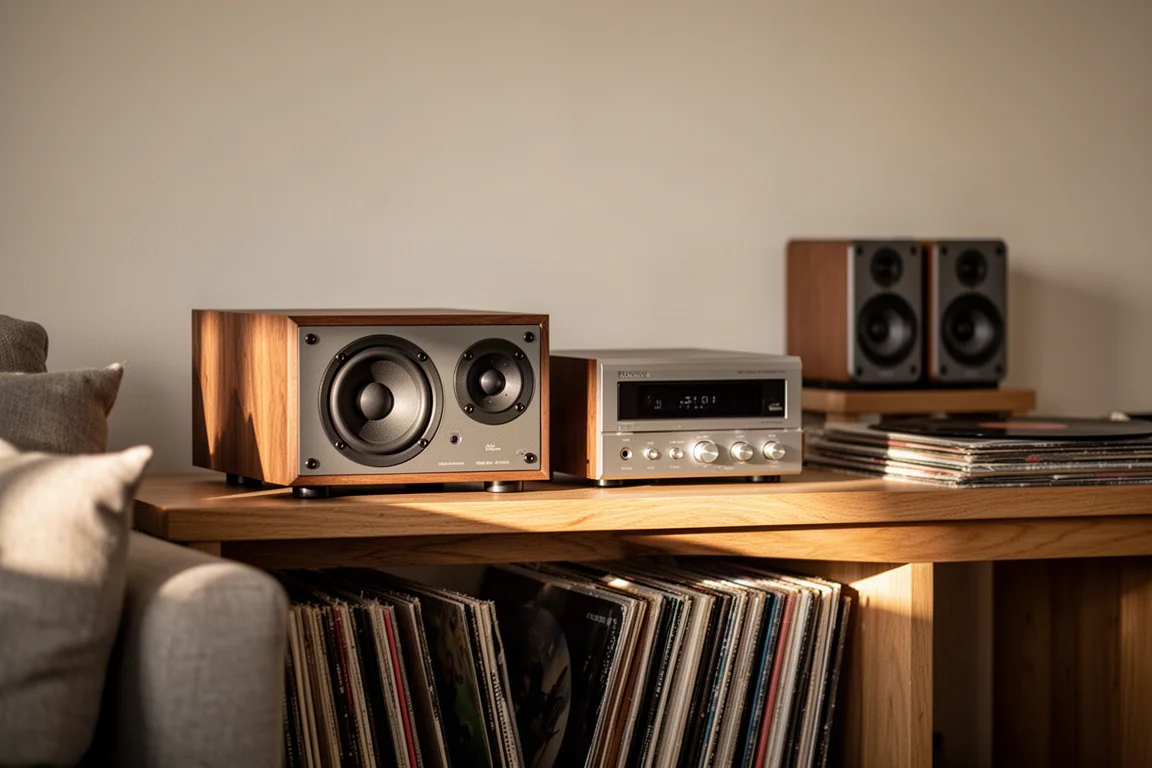
Both units feel dense and purposeful rather than decorative, and the aluminium work gives them a weight that matches their price positioning.
Quad 33 Preamplifier: Controls and Connectivity
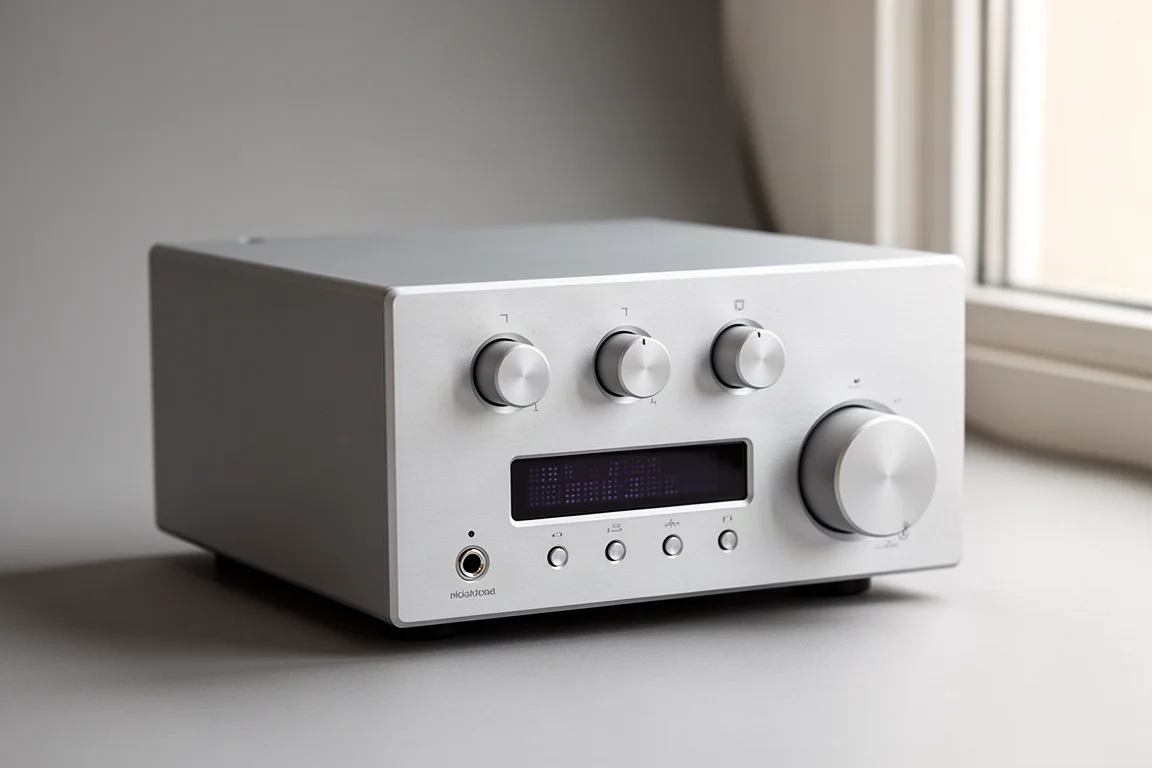
The front panel is where the 33 makes its case. Underneath the display sit four buttons, reassigned for modern use: power, the dot-matrix display itself, the tone controls, and selection between the built-in moving magnet and moving coil phono stage. Above the display, three flush-mount rotary dials have been retained, providing left and right channel balance, bass attenuation or augmentation of up to 3 dB, and a tilt control that pivots the frequency response around a 700 Hz axis in 1 dB steps.
To the right of the 6.35 mm headphone jack and the IR sensor are four input selection buttons. Volume is handled by a single large rotary dial working through a good quality motorised Alps potentiometer. The supplied remote is plastic but generously sized and offers comprehensive functionality. True to the original, the 33 is an all-analogue design with no digital inputs at all.
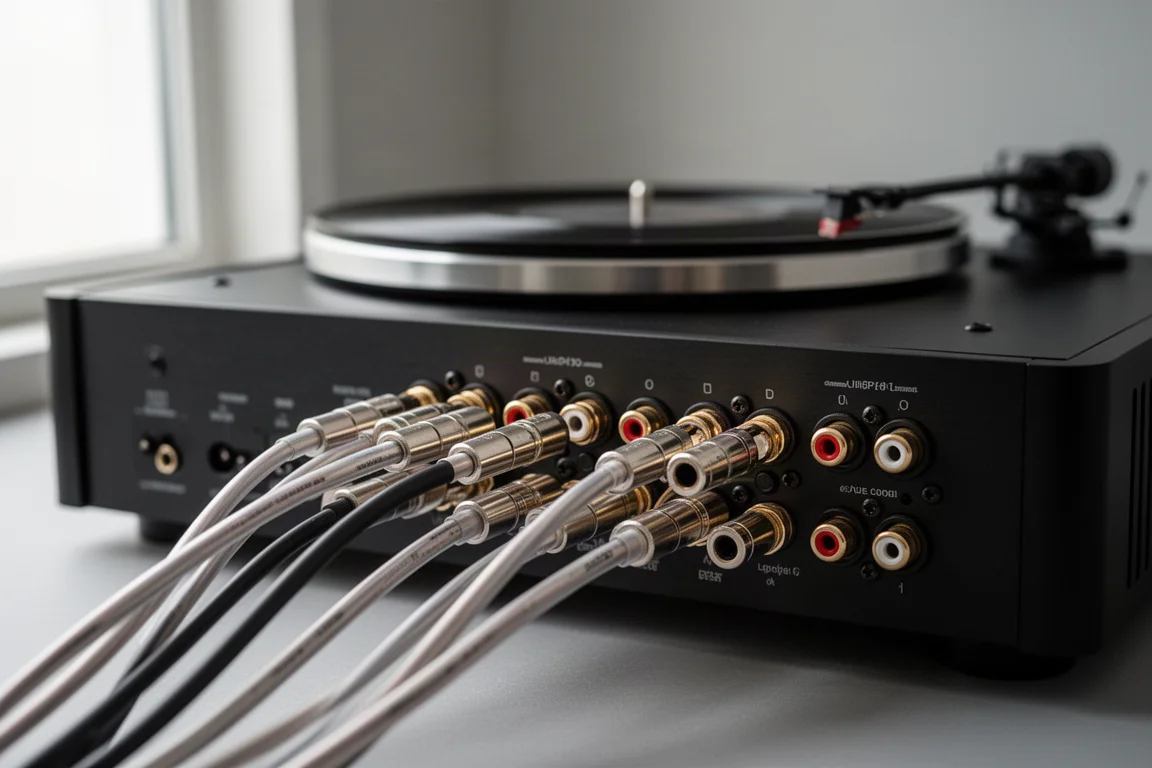
Connectivity has moved on from the 1960s DIN sockets. There is one balanced XLR input and four single-ended RCA inputs, one of which is marked for turntables, plus a balanced XLR analogue output, a set of single-ended RCA preouts, and a fixed-level auxiliary output for bypassing the volume control. A 12 V trigger is provided for system integration, and the USB port exists solely for firmware updates.
Quad 33 Preamplifier: Internals and Analogue Circuitry
Inside, the 33 uses a completely new circuit design rather than a reissue of the original board. A decently sized toroidal transformer sits at the heart of the power supply, a type chosen partly because toroids emit less noise than EI equivalents, and a generously sized transformer helps keep supply impedance low. Six filter capacitors follow, three smaller and three larger, feeding a preamplifier that needs far less capacitance than a power amplifier.
The volume control is the expected Alps part, and the two-level board layout makes sense of a compact half-width chassis: the phono stage board sits in the corner nearest the phono terminals, with a small standby supply alongside it, while the main preamplifier board runs along the bottom, carrying input switching, system control and the preamplifier section itself. Surface-mount components and integrated circuits are present throughout, which is what you would expect at this price.
The tone controls are worth a closer look, because they are not conventional. With some speakers, pulling the bass down by one or two decibels produced a noticeably better tonal balance without an obvious loss of fidelity. The tilt control is a more mixed proposition: cutting the mids and highs audibly reduces clarity and soundstage width, which makes it a tool to use sparingly rather than a permanent setting.
Quad 303 Power Amplifier: Design and the Triples Output Stage
The 303 can be seen as an evolutionary update rather than a revolutionary one, because it keeps the one element that makes a 303 a 303: the triples output stage. Three directly coupled transistors work at low, medium and high power respectively, and comparing quiescent current against a fixed voltage in the first two stages keeps temperature variation negligible. That is the engineering behind the low-distortion claim attached to the original.
The chassis keeps the upright, deep profile of its predecessor, with heat sinks running down the front face. Speaker binding posts are of reasonable quality, and the balanced XLR and single-ended RCA connections are switchable. One small frustration is the power button: the unit automatically enters standby after a period without a signal, and even when dormant a little light bleeds through, so it is not immediately obvious that the amplifier is not switched on when no sound appears.
Quad 303 Power Amplifier: Power, Bridging, and Internals
On paper, the 303 delivers 50 watts per channel into an 8 ohm load. It can also run in bridge mono mode as a mono amplifier, which raises output to 140 watts per channel into the same load, though this requires a second unit for two-channel listening. The internals support that flexibility with a generously rated toroidal transformer, a power supply board carrying four large filter capacitors rated at 15,000 microfarads each, and a separate balance board where the XLR terminals mount. The triples output stage is visible on three heat sinks per channel.
Setup is close to plug and play, and a printed manual is included, though few owners are likely to need it beyond the initial wiring. The one detail worth reading carefully is bridging: when running two 303s in bridge mono mode, the connection is made across the two red terminals in the correct polarity, which is clearly labelled on the rear panel.
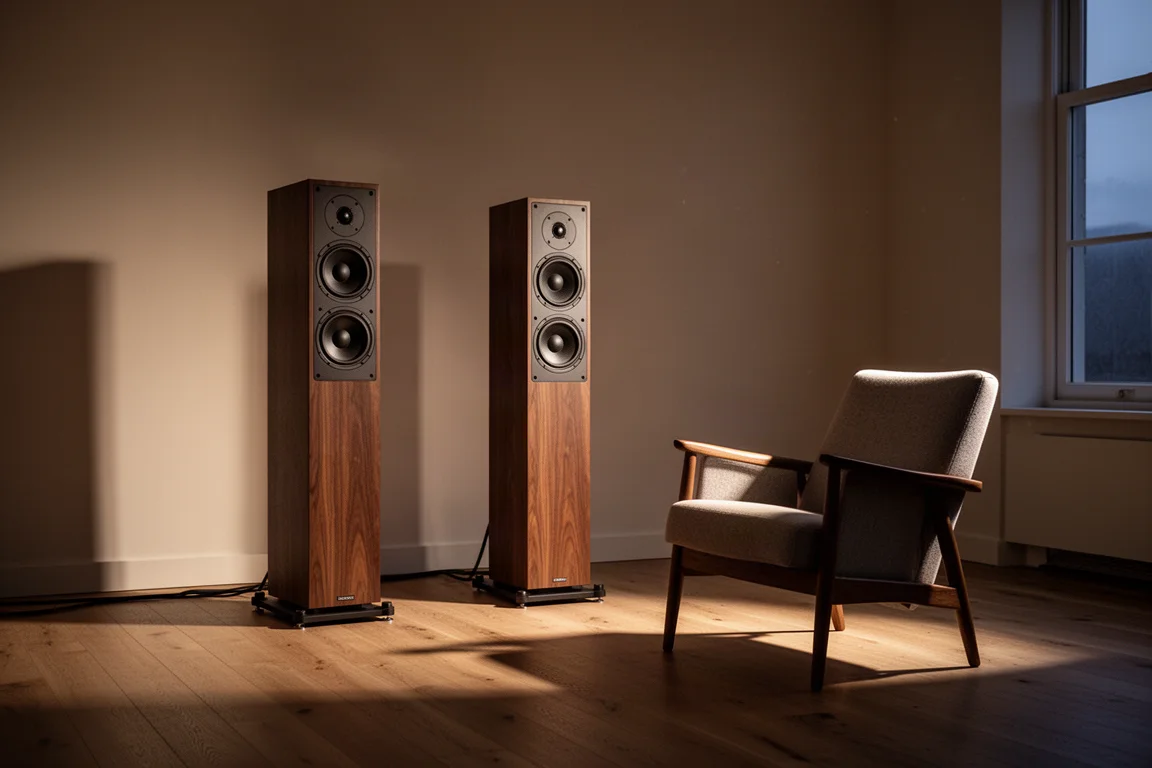
In practice, one 303 is ample for many speakers below £2,000, and it is the sensible starting point. Adding a second unit in bridge mono mode noticeably improves grip and control, allows louder playback, and makes genuinely demanding speakers behave.
Sound Character and Speaker Pairing
The defining characteristic here is warmth. Bass is full and juicy rather than sharply defined, transients have been softened, and the midrange keeps vocals and instruments realistic without sounding clinical. The overall presentation is rich, enveloping and non-fatiguing, with high frequency detail present but pulled back for a relaxed listen. The soundstage extends laterally well beyond the speakers, with acceptable depth and decent localisation of performers. What it is not is the last word in detail retrieval or neutrality, and it was never intended to be.
Pairing matters more than usual. Easy-to-drive speakers responded best: the Monitor Audio Silver 100, at £799, proved a strong partner, with the amplifier’s warmth smoothing the speaker’s normally cool tone into a beautifully balanced result. Other easy loads in the £1,500 bracket combined just as convincingly. More demanding speakers were a different story. A vintage pair of hard-to-drive stand-mounts and Quad’s own £1,800 speakers both sounded constrained with a single 303, and only gained proper control over their midwoofers when a second 303 was added in bridge mono mode, cleaning up the bass and reducing bleed into the midrange.
The practical rule is straightforward: lean toward speakers on the cool to neutral side of the spectrum, and check the sensitivity of anything you already own before committing. One 303 drives a wide range of sub-£2,000 speakers comfortably. A second one unlocks headroom rather than changing the character.
Buying Advice
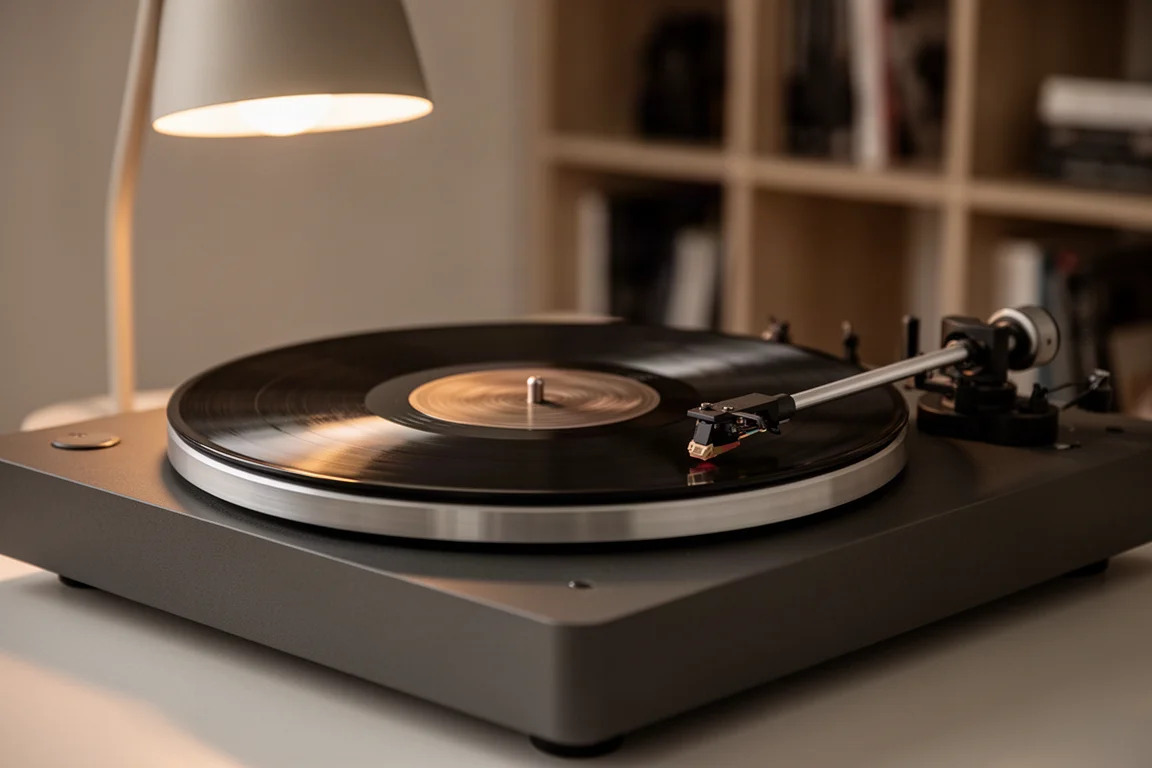
If you are building an analogue-first system around a turntable, the 33 makes a persuasive case. The moving magnet and moving coil phono stage is built in, the signal path stays analogue end to end, and the connectivity covers balanced and single-ended sources without adapters. The bass control earns its place; the tilt control is best treated as an occasional tool.
For amplification, start with a single 303 unless you already know your speakers are difficult to drive. Adding a second unit later is a genuine upgrade path rather than a sideways move, since bridge mono mode lifts output to 140 watts per channel and brings harder loads under control. Budget for both together only if your speakers demand it.
Owners should also expect a little patience with placement and pairing. These are components that reward matching rather than brute force, and the difference between a well-suited speaker and a mismatched one is larger here than with many modern amplifiers.
Conclusion
The 33 preamplifier and 303 power amplifier are as striking today as the originals were in 1967. The 33 is a thoroughly modern preamplifier that nods gracefully to its ancestor, and the 303 keeps the triples output stage and the characteristic sound signature of its predecessor. Together they deliver a warm, rich presentation with good resolution and decent driving capability, backed by substantial build quality and an all-analogue philosophy.
They are not the last word in detail, neutrality or imaging, and they ask for care when choosing speakers. Buyers who want a non-fatiguing, enveloping sound and appreciate the history behind the design will find a great deal to like here, and owners of easy-to-drive speakers on the cooler side of neutral will get the best from them from the first listen.
Further reading
Related Reviews
Hi-Fi Audio
Accuphase C-57 vs Allnic H-7000V: Two High-End Phono Stages Compared
A fully balanced solid-state phono stage with a pitch-black noise floor meets a tube design built for well-loved records. Here is how to choose between them.
Hi-Fi Audio
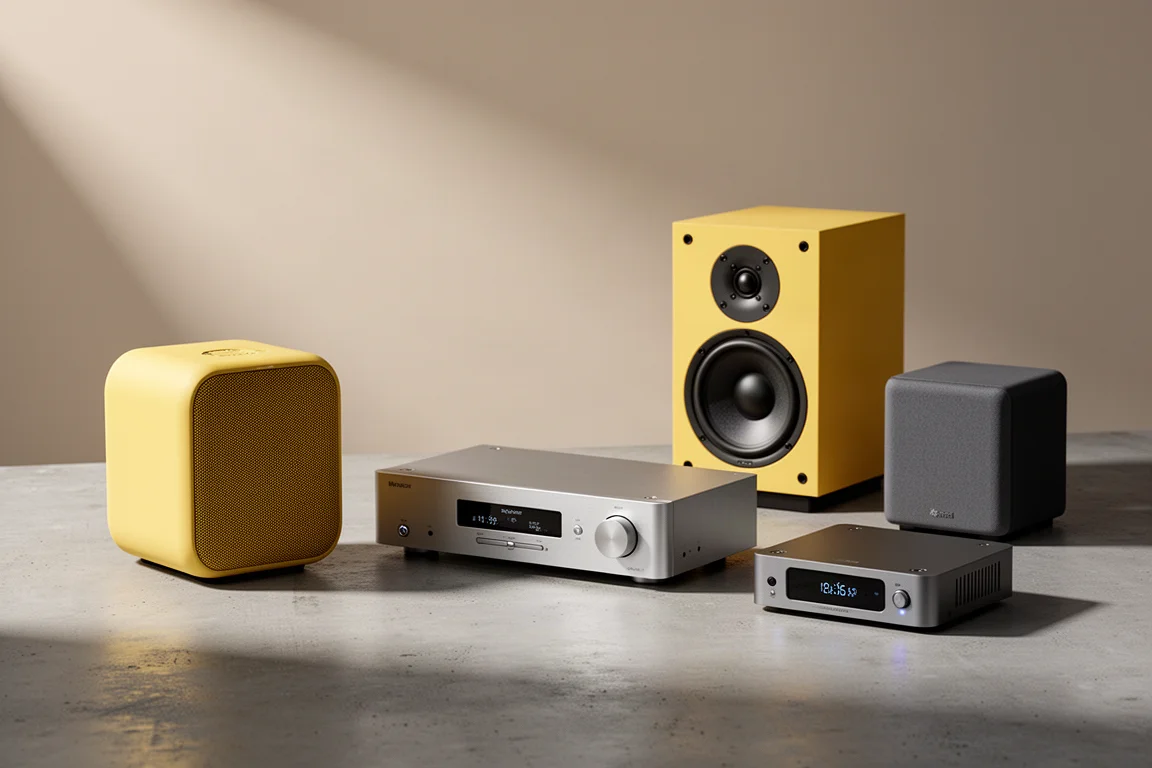
Active vs Passive Hi-Fi: Five Components for a Modern System
Five components that define modern active and passive hi-fi systems, with the strengths, trade-offs and setup details worth weighing before you buy.
Hi-Fi Audio
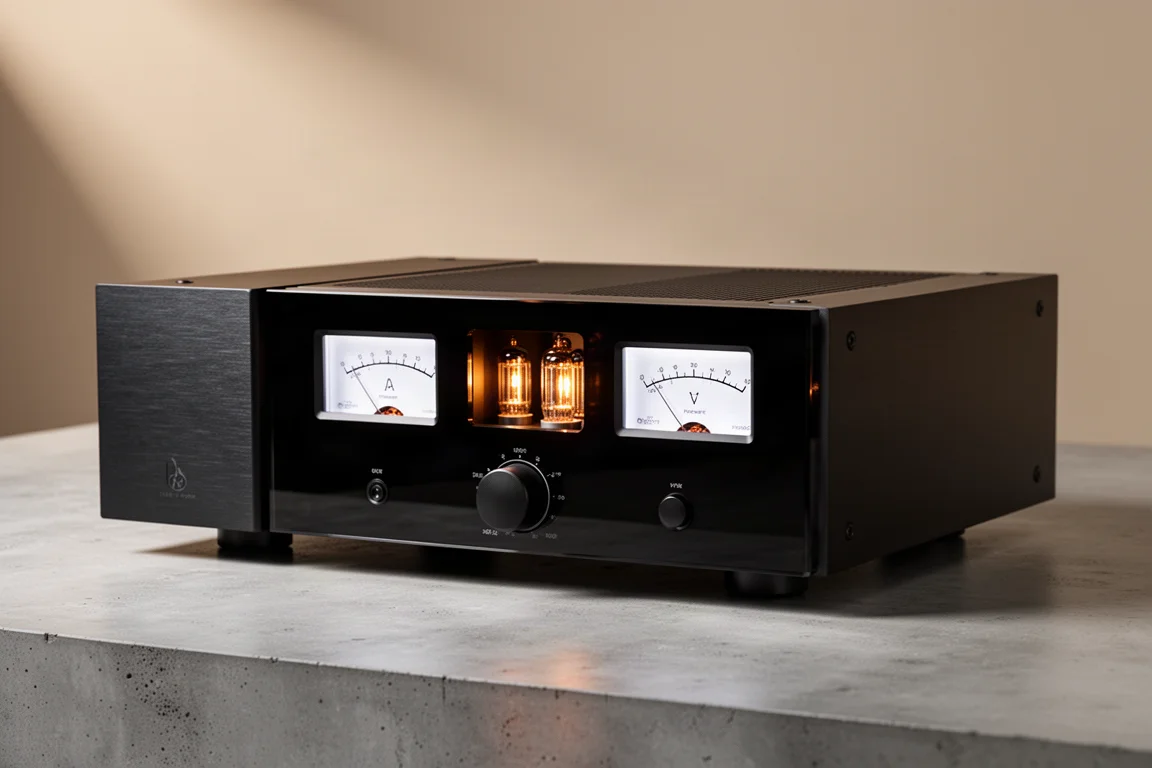
Advance Paris A10 Apex Review: A Hybrid Integrated Amplifier That Covers a Lot of Ground
A French hybrid integrated amplifier with a class A tube preamp stage, analogue power meters, and an internal DAC and phono stage good enough to make extra boxes unnecessary.