Astrophotography
QHY533M Review: A Compact Monochrome Camera for Narrowband Astrophotography
A closer look at the QHY533M cooled monochrome camera, and whether switching from one-shot color still makes sense for city-based narrowband imaging.
Introduction
One of the most common questions in astrophotography circles is whether city-based imagers interested in narrowband shooting of emission nebulae should stick with a one-shot color camera or switch to monochrome. Years ago the answer seemed obvious, but the arrival of high-quality multi-band pass filters for color cameras has made the decision more nuanced. This review looks at both sides of the debate and takes a close look at the QHY533M, a monochrome camera that has been in testing for several months.
Color versus Mono: How the Sensors Actually Differ
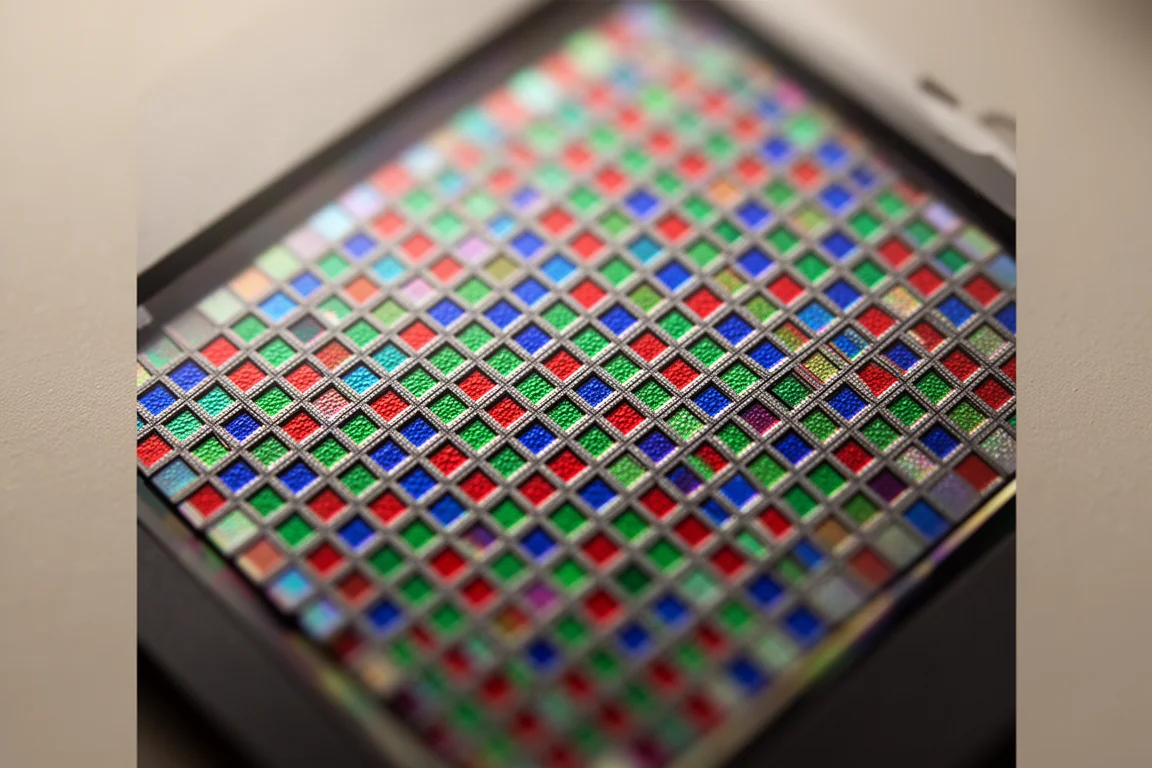
The sensors in one-shot color cameras do not directly sense color. They are the same monochrome sensors used in mono cameras, registering only brightness. The color in a color camera image is interpolated by software using a debayer algorithm, which relies on a physical color filter array sitting over the sensor: a fixed pattern of tiny red, green, and blue filters, one over each photosite. The most common arrangement, the Bayer pattern, uses two green filters for every one red and one blue filter, mimicking the color response of human vision.
The practical difference is simple. A one-shot color camera has a fixed, non-removable color filter array, so a single exposure can be debayered into a full color image. A mono camera has no color filter array, so you shoot through external filters one at a time and combine the resulting data stacks into a color image. That requires at least two or three filters to build a full-color result with real color contrast.
Is Mono Still the Better Choice for Narrowband?
For pure image quality, mono still wins. When shooting broadband, a color camera is fairly efficient because every photosite receives light. But a narrowband filter blocks roughly 99 percent of visible light, passing only a tiny slice of the spectrum. If that slice sits in the red end, as with H-alpha or SII, only about a quarter of the sensor’s photosites are actually receiving signal. With mono, the entire sensor area works for every filter.
Multi-band pass filters designed for color cameras have evened the score somewhat, because they capture the H-alpha line in red and the OIII line in green and blue at the same time, and the color filter array then separates the signals. Mono cannot do this in color, since there is no filter array to split the wavelengths.
Even so, mono typically produces a cleaner result with more signal. The debayering process is not perfect and introduces some color mottling, while mono has less filtration in the light path and therefore higher sensitivity. That extra performance makes it easier to go after demanding targets, such as very dim objects in the OIII band like the Squid Nebula. Good results are possible with either approach, but mono consistently delivers better, faster results when imaging from light-polluted skies.
Which Setup Costs More?
Mono is almost always the more expensive path. Monochrome cameras are more of a niche product, so they do not benefit from the economies of scale of color models. As an example, the QHY533M costs $200 more than its color version.
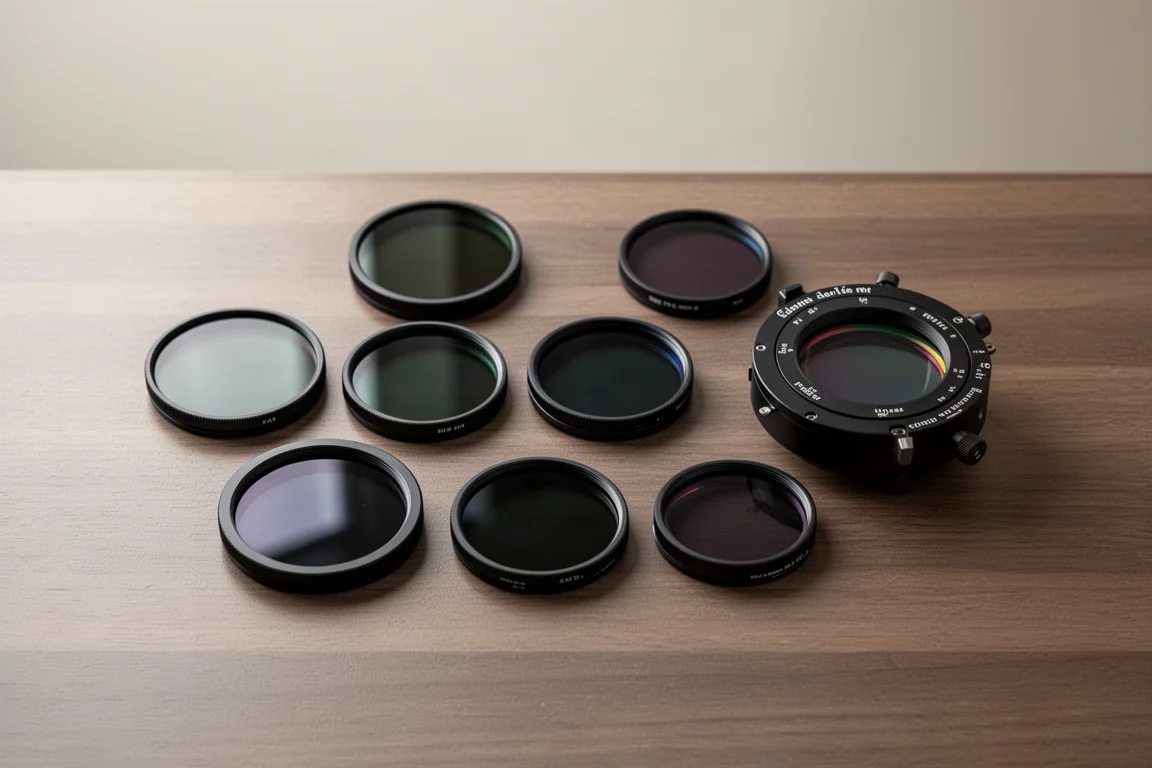
The accessories add up too. A color camera setup needs, at minimum, an IR cut filter for broadband work, a multi-band pass filter for narrowband, and possibly a filter drawer for convenient switching. A mono setup needs red, green, and blue filters, likely a luminance filter for LRGB, plus H-alpha and OIII filters, and usually SII as well for the full Hubble palette. With seven filters in rotation, an electronic filter wheel is the practical choice rather than a drawer, and that adds more cost. Even with the most affordable filter sets, a complete mono package carries roughly a $500 premium over the equivalent color package.
Which Is More of a Hassle?
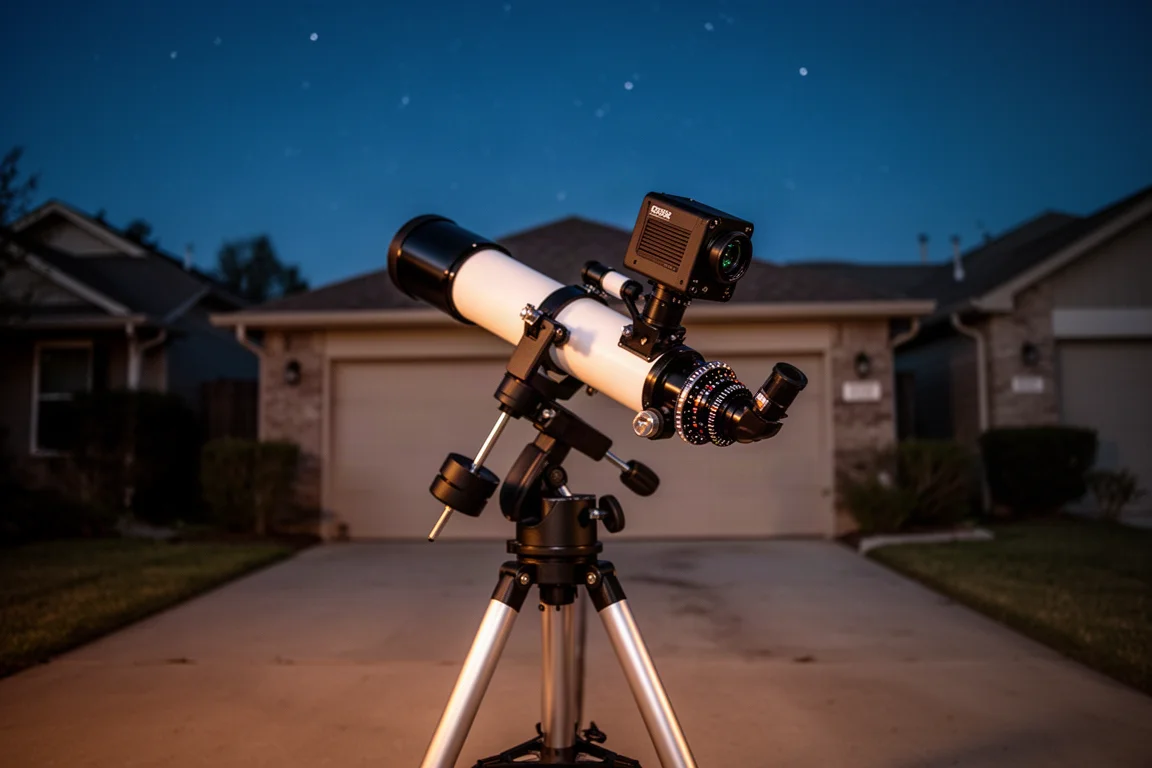
With one-shot color and a multi-band pass filter, you set up at the start of the night, focus, start your imaging run, and largely leave it alone, aside from occasional focus checks if the temperature shifts. With mono, every filter change usually requires a refocus, even with filters marketed as parfocal. Without an automated focuser, that means physically pausing and refocusing the telescope throughout the night.
Incomplete captures are another consideration. If you plan a bicolor image and clouds roll in just as you start the second filter, you cannot build a full color image, whereas a color camera with a multi-band pass filter would already have both channels. This matters less if you collect data over multiple nights, but if you like to finish one image per night, mono can occasionally be frustrating.
Mono also demands a separate set of flat frames for each filter, and pre-processing takes longer because each filter’s data must be calibrated, registered, and stacked separately before combining. Once past that stage, though, most imagers agree mono data is easier and more rewarding to work with: it is cleaner, stretches more aggressively, and offers more signal to play with.
QHY533M Overview
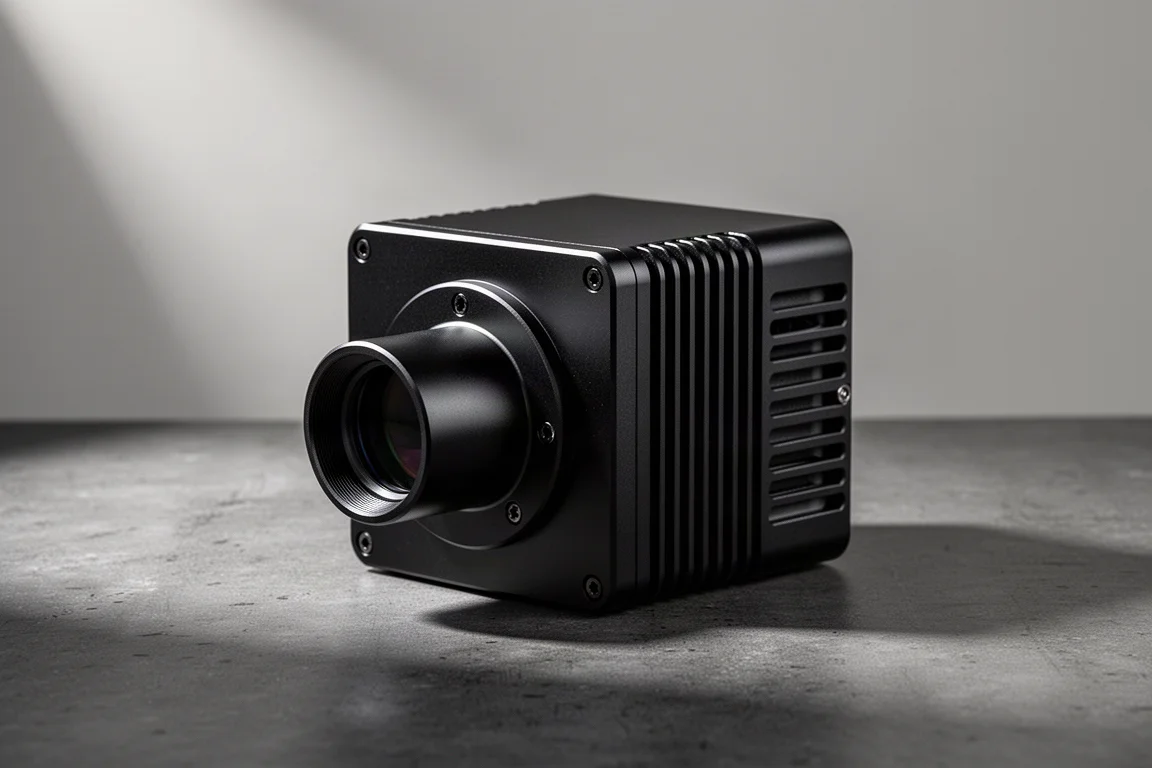
The QHY533M retails for $1,159 at the time of writing, which feels like a fair price for the technology. Its one-inch square sensor is fairly small for deep sky work, smaller than Micro Four Thirds, and the 1:1 aspect ratio differs from the typical 3:2 rectangle. At 300mm of focal length, the field of view is noticeably tighter than an APS-C or full-frame camera would offer.
Interestingly, the body is the same size as QHY’s larger 268M with its crop sensor, weighing 845 grams or 1.8 pounds. It feels like a premium camera. Design touches include a small metal foot for attaching the camera to a dovetail when mounting camera lenses, and a clever faceplate with adjustment screws that makes it easy to square the sensor to the filter wheel and telescope without thin spacers. The faceplate offers standard 42mm threads on the front, a departure from QHY’s bigger cameras, which only offer bolt-on connections.
Pairing the camera with QHY’s matched electronic filter wheel is worth considering, since the system is designed to work together and a dedicated cable between camera and wheel feels more robust than USB. The filter wheel comes with bolt-on spacers that, once installed, give a perfect 55mm back focus spacing with a 48mm female thread, exactly what most field flatteners and coma correctors require. Swapping the spacer stack for QHY’s 42mm EF adapter yields 44mm of back focus for Canon EF lenses, which worked beautifully with a Rokinon 135mm f/2 on a Sky-Watcher Star Adventurer GTi.
Imaging Performance
The 533M works like the 268M in high gain mode, with a dual gain amplifier that kicks in at gain 56, the sweet spot for maximizing dynamic range while keeping read noise low. Unlike the 268M, it offers a single readout mode and a 14-bit ADC rather than 16-bit. Measured with PixInsight’s Basic CCD Parameters script at gain 56, offset 35, it showed a read noise of 1.647 electrons and a full well capacity of 21,808 electrons. Those are excellent numbers for narrowband, and the same settings work well for broadband with shorter exposures.
A cooler setpoint of minus five Celsius proved sufficient. These sensors have very low dark current, so with dark frame calibration there is rarely a need to push cooling harder; the important thing is matching calibration frames to the lights using setpoint cooling. QHY guarantees no amp glow up to five-minute exposures with the latest firmware, and no amp glow was found at any exposure length in testing.
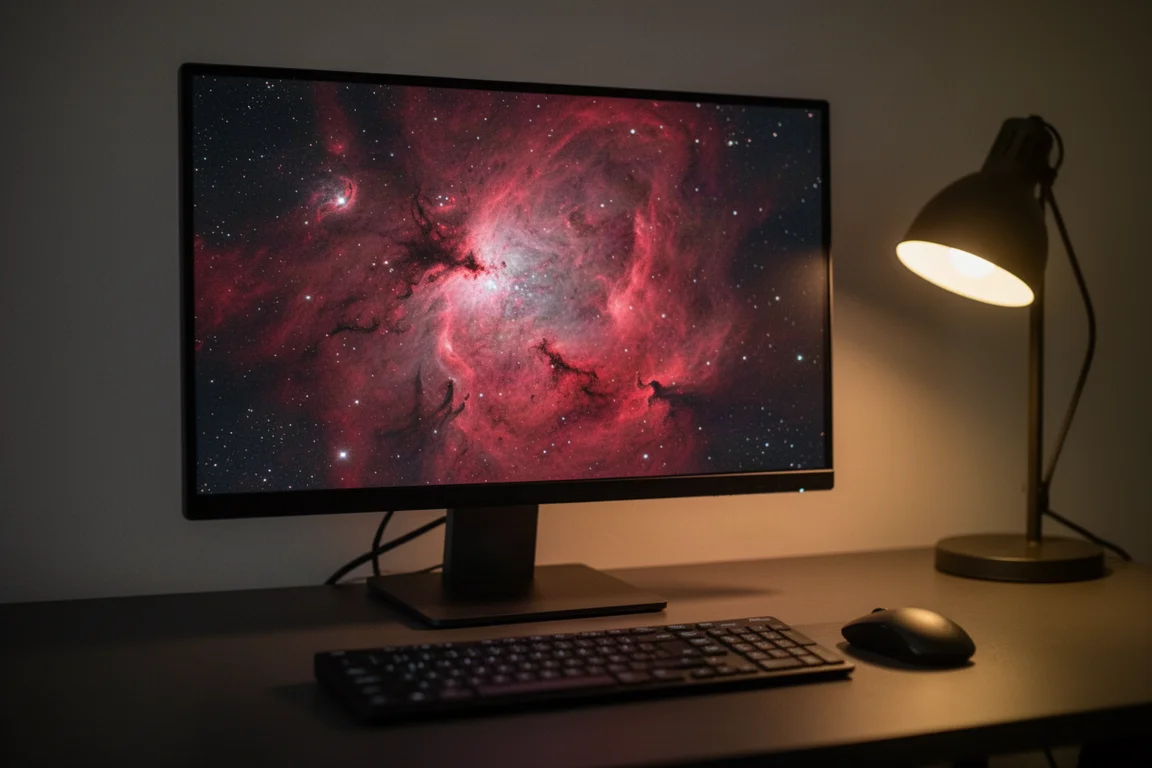
One caution: like the 268M, this camera is extremely sensitive to light leaks. Take darks in a genuinely dark location and make sure no light can reach the sensor, because this is a very sensitive detector.
What We Like About the QHY533M
The combination of very low read noise, strong full well capacity, setpoint cooling, and thoughtful hardware details like the rotation-adjustable faceplate and integrated back-focus spacers makes this an easy camera to live with. It rewards the extra workflow that monochrome imaging demands with cleaner data and better results on faint emission nebulae, especially from light-polluted locations.
Buying Advice
If narrowband imaging from the city is your main goal and the roughly $500 premium over a complete color setup fits your budget, mono is worth it. If the budget does not stretch that far, or you prefer a simpler one-image-per-night workflow, a one-shot color camera with a good multi-band pass filter remains a perfectly viable path. Both can produce excellent images; mono simply gets there faster and cleaner.
Conclusion
The QHY533M is a well-built, sensitive monochrome camera with a small square sensor, excellent noise performance, and a system-oriented design that plays nicely with electronic filter wheels and common field flatteners. For imagers ready to commit to filter-based workflows, it is a compelling entry into monochrome narrowband imaging.
Product link
View more details for QHY533M
This product is mentioned in the review. Check the specifications, options, and compatibility before buying.
View more details for QHY533MFurther reading
Related Reviews
Astrophotography
ASKAR FRA400C Review: A Versatile 400mm Refractor for Astrophotography and More
The ASKAR FRA400C is a compact 72mm refractor that balances reach, versatility, and portability for astrophotographers and visual observers.
Astrophotography
Askar SQA106 Review: A Premium 106mm Astrograph With Exceptional Optics
The Askar SQA106 is a premium 106mm quintuplet astrograph with impressive sharpness across full-frame sensors, though its price and weight demand careful consideration.
Astrophotography
Astro Imaging Gear 2026: Eight New Products Worth Watching
A look at the most interesting new astrophotography and astronomy products announced this year, from fast telescopes to smart cameras and wireless accessories.