Astrophotography
QHY miniCAM8 Mono Review: An All-in-One Mono Astrophotography Package
A cooled mono camera, filter wheel, and eight filters in one compact unit at $880. Here is how it performed in real deep sky testing.
Introduction
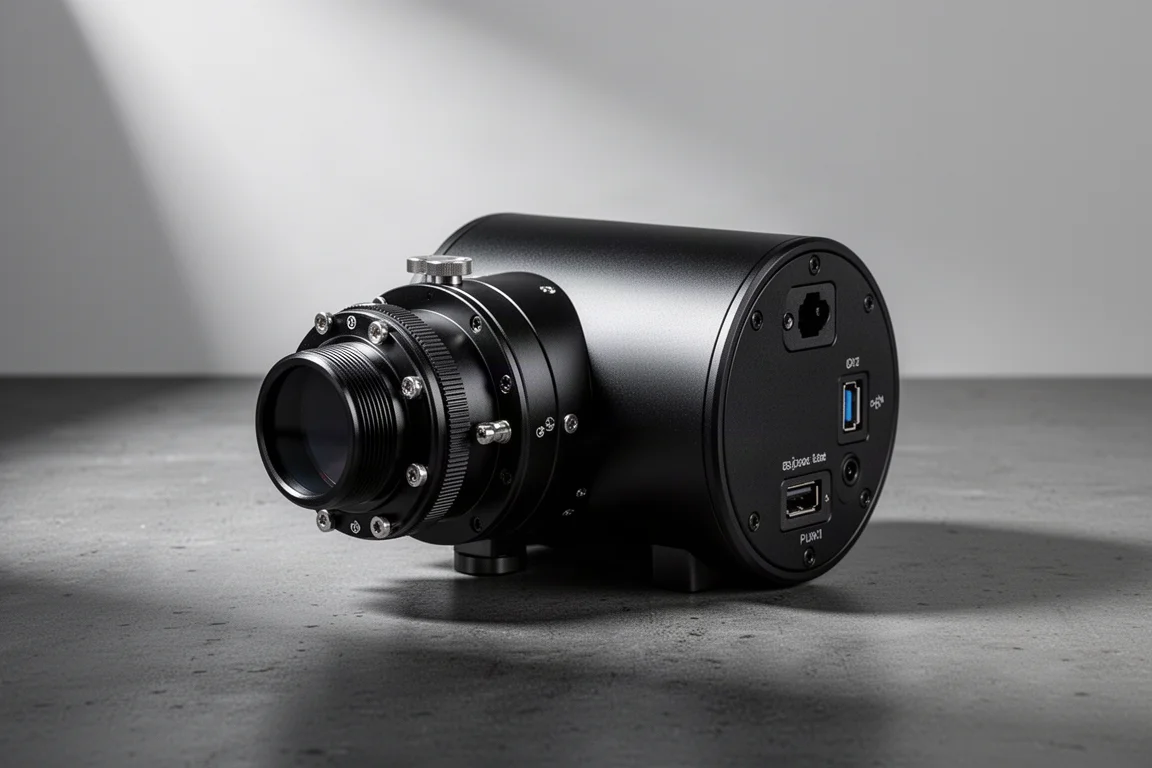
The QHY miniCAM8 Mono is an all-in-one monochrome astrophotography package: a cooled mono camera, an integrated filter wheel, and eight custom filters in one remarkably small unit. Fitting that much technology into a package this size is genuinely unusual on the market, and it opens up an interesting possibility: a complete deep sky rig where every component is the most compact version in its category. Pair it with a mini equatorial mount, a small apochromatic refractor, a mini guide scope and guide camera, and a tiny stick PC to run the whole thing, and you end up with a portable imaging kit that costs roughly a bit over $2,000 US in total, before likely upgrades such as an autofocuser and power management that could push it to $2,500 to $3,000.
Who This Camera Is For
This is not a kit recommended for someone just getting into astrophotography. For most beginners, it makes more sense to start with gear you already know and use, and if you are not already a photographer, a used DSLR is a better entry point. A setup this compact and this integrated is a little too complex for someone just learning focusing and basic capture, unless you are genuinely techy.
The clearer audience is the upgrading imager. If you already have a small mount and a small telescope and you have been shooting with a DSLR or a one-shot-color astronomy camera, you may have been curious about mono but hesitated at the cost. Getting into mono conventionally runs around $1,500 to $2,000 once you buy the camera, the filter wheel, and the seven filters (LRGB plus SHO) you will eventually want, even with a small sensor. The miniCAM8 Mono delivers everything you need for mono at $880, which is an outstanding value and may be one of the best values on the market in astro gear today.
Why move from color to mono at all? The biggest reason is light pollution and narrowband imaging. If you want the most out of narrowband, mono is the way to go: the data is cleaner and easier to work with, especially under significant light pollution. Mono also helps with dimmer targets, including faint OIII objects and dust regions, where a luminance channel and LRGB imaging simply work better than color for difficult objects. That said, this reasoning applies once you have some experience. For many people, the jump to mono makes sense after roughly a year of deep sky imaging.
Setup and Everyday Usability
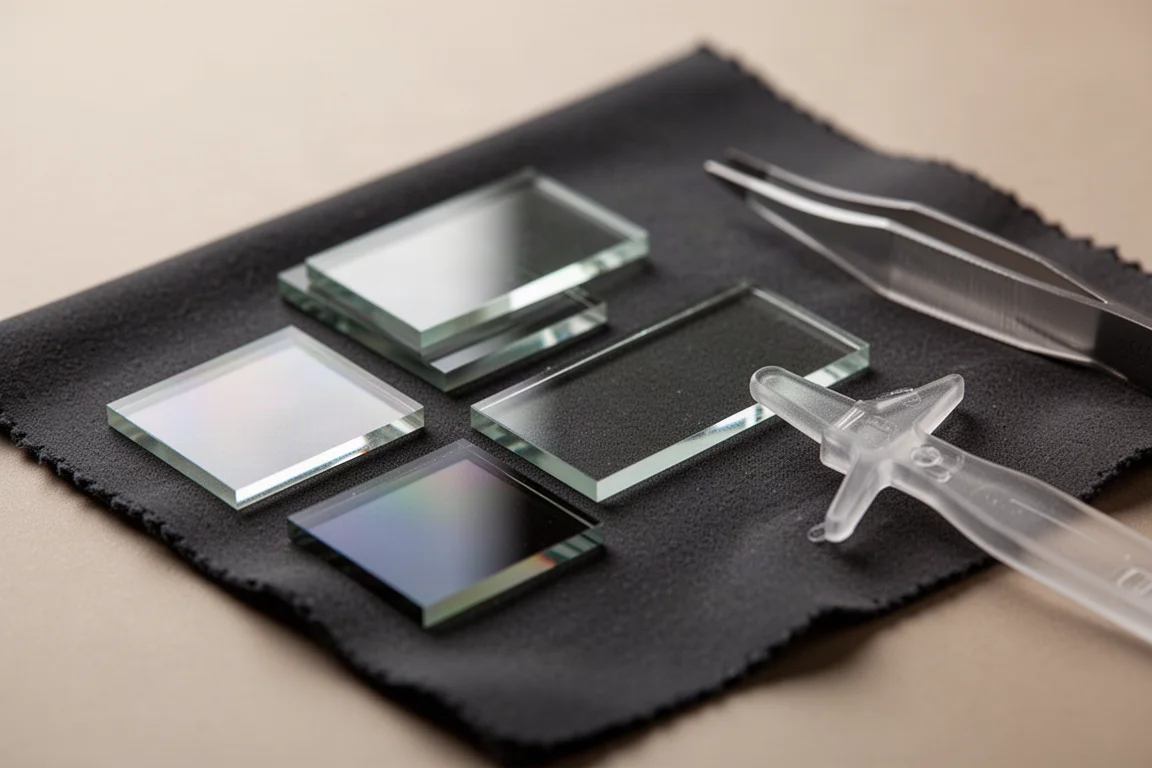
Getting going with the miniCAM8 was straightforward. The filters are unmounted and rectangular and arrive in a small plastic blister pack, which makes installation slightly fiddly if you are clumsy, but the instructions on the QHY website are well done and QHY supplies plastic tweezers and everything else you need. The camera also comes with the correct adapter stack to go from the small threads on the filter wheel to 48mm threads, landing right at the 55mm backspacing common on many telescopes.
On the back of the camera you get the locking 12V power port common to QHY cameras, along with a supplied locking cable, and a USB 3 port. You need to connect both USB and power for the camera to appear on your computer. ASCOM driver installation was easy, included in QHY’s all-in-one download, and there have been no driver issues with either the camera or the filter wheel.
Cooling Performance and Connectivity
One genuinely fun aspect of this camera comes from its small sensor: it can be cooled down to 50 degrees Celsius below ambient without the cooler breaking a sweat. With most cooled cameras, even on the coldest nights, you typically reach around minus 30 Celsius, so hitting minus 50 was a new record for deep cooling. Based on the cooler running at only around 30 to 40 percent power to reach that temperature, it would not be surprising to hit the same figure in summer, though that is speculation and will depend on ambient temperature.
Image Quality and Test Results
Paired with a small apochromatic refractor, the sensor samples at around 3 arcseconds per pixel, right at the diffraction limit for that aperture, while the short focal length still delivers a generous field of view. That means large emission nebulae and even famous nebula pairings can be captured without a mosaic: the Horsehead and Flame, Orion and the Running Man, the North America and Pelican nebulae, and the Cygnus Loop all fit comfortably. For big nebula scenes, this field of view is close to ideal.
Because it was spring with short gaps between clouds, test integrations were modest: about 30 minutes of RGB, a little over an hour each of SII and OIII, and about 90 minutes of H-alpha. The SHO filters included with the filtered version are 7nm. Exposures were set using the deep sky preset at gain 69, with 30 seconds for RGB and 3 minutes for SHO, which felt about right.
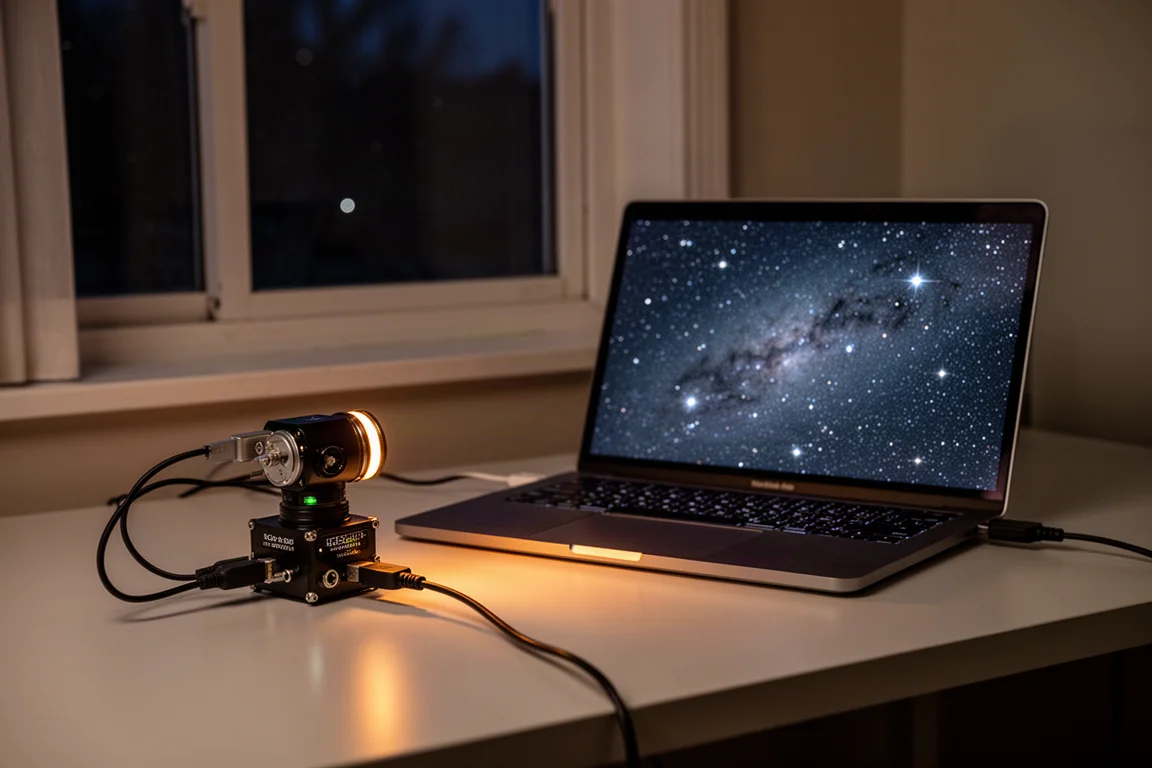
The raw stacks show plenty of signal: 90 minutes of H-alpha is clean, OIII picks up signal well in the Tadpoles region, and SII mostly mimics H-alpha while capturing the brighter areas, which is a fairly good SII signal for any part of the sky. An aberration inspection shows no elongation or particular corner issues, with the frame well equalized from center to corners, as expected from a small sensor. Processed starless, the H-alpha data shows nice depth. The OIII is still a bit noisy at only 72 minutes and shows some residual halos on bright stars, which is very common with OIII filters; only the highest-end filters are truly halo-free, so this was expected. The SII shows little to no halos, and the RGB starless image shows the usual minor halos on bright blue stars.
An H-alpha plus RGB naturalistic processing looked particularly appealing, with the blue reflection nebula contrasted beautifully against the red hydrogen. Adding SII and OIII brings real dynamism to the Tadpoles area, with strong contrast in the details. For a couple of hours of total data, the results look great and show a lot of promise for what this camera can deliver with enough integration time.
Things to Consider Before Buying
The camera itself earns its keep, but the complete ultra-compact rig concept has one weak link: the stick PC used to control it. Small stick PCs create a Wi-Fi hotspot you connect to with remote desktop software, and this one suffered from Wi-Fi dropouts and general flakiness. The fundamental issue with a device this small is that the antenna must fit inside the body, so it is tiny. The safer route is a slightly larger mini PC rather than a stick design. If you already own a capable mini PC, the miniCAM8 Mono on its own avoids that problem entirely.
Buying Advice
At $880 for a cooled mono camera, filter wheel, and eight filters, the value proposition is difficult to argue with. If you are an experienced deep sky imager shooting with a color camera and have been waiting for an affordable entry into mono and narrowband, this is one of the most compelling ways to make that jump. If you are a beginner, start simpler and come back to mono when the fundamentals feel comfortable.
Conclusion
The QHY miniCAM8 Mono packs a cooled mono sensor, a filter wheel, and a full set of filters into a package that makes mono imaging dramatically more affordable and more portable. Test images from a few hours of data showed clean signal, well-controlled aberrations, and plenty of promise for deep integration work. For upgraders curious about mono, it is an easy recommendation.
Product link
View more details for QHY miniCAM8 Mono
This product is mentioned in the review. Check the specifications, options, and compatibility before buying.
View more details for QHY miniCAM8 MonoFurther reading
Related Reviews
Astrophotography
ASKAR FRA400C Review: A Versatile 400mm Refractor for Astrophotography and More
The ASKAR FRA400C is a compact 72mm refractor that balances reach, versatility, and portability for astrophotographers and visual observers.
Astrophotography
Askar SQA106 Review: A Premium 106mm Astrograph With Exceptional Optics
The Askar SQA106 is a premium 106mm quintuplet astrograph with impressive sharpness across full-frame sensors, though its price and weight demand careful consideration.
Astrophotography
Astro Imaging Gear 2026: Eight New Products Worth Watching
A look at the most interesting new astrophotography and astronomy products announced this year, from fast telescopes to smart cameras and wireless accessories.