Powered Speakers
Q Acoustics M40 Review: A Compact Powered Tower That Replaces the Soundbar
A compact powered tower system that pairs a neutral midrange with deep, controlled bass, plus the treble and convenience trade-offs worth weighing before buying.
Introduction
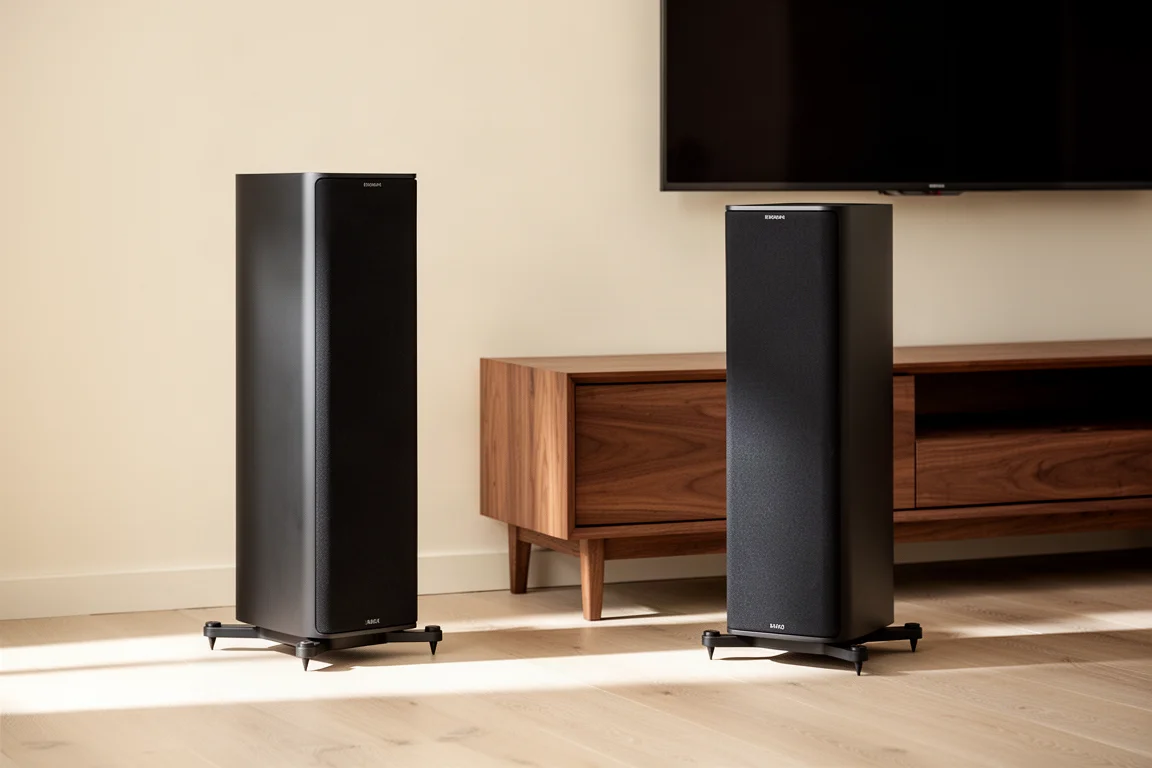
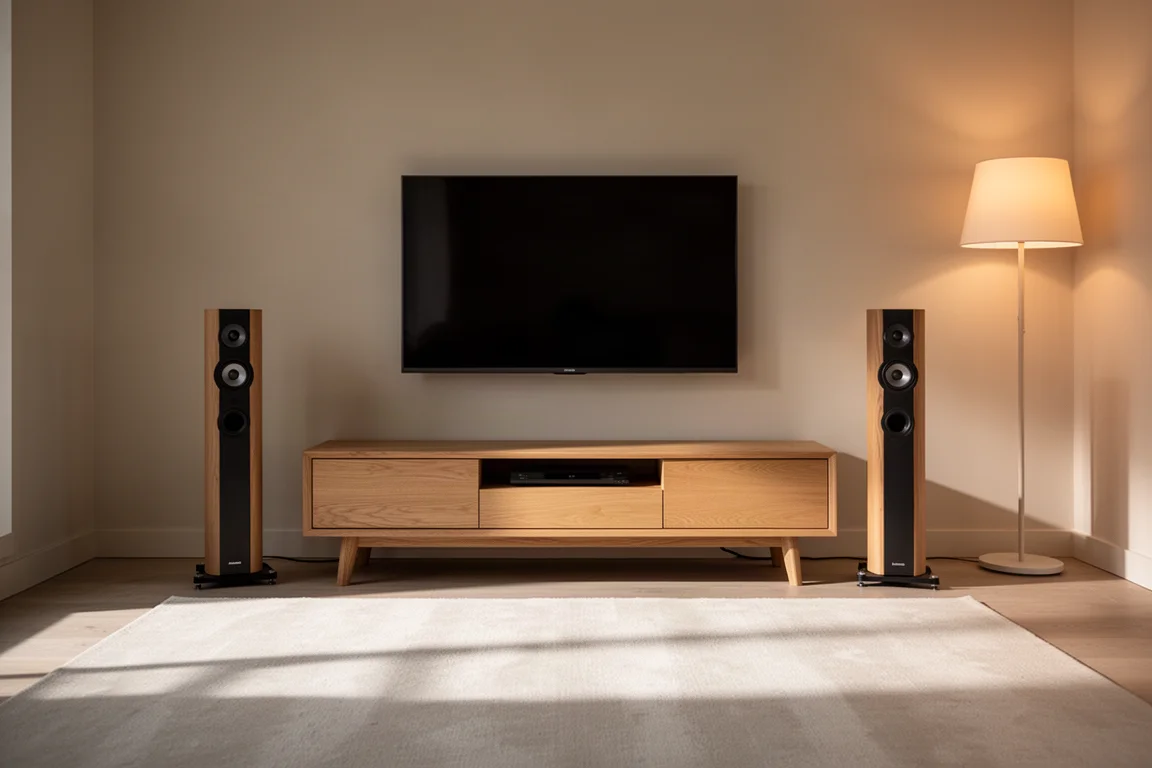
The Q Acoustics M40 is a powered micro tower speaker standing about 71 cm tall. One cabinet carries the amplification, the other is passive, and a single speaker cable joins the pair. There is no receiver, no separate amplifier, and no equipment rack required.
Q Acoustics builds the M40 around the same continuous cone driver design used in its larger 5000 series models. Inside each cabinet sits a 5-inch woofer and a tweeter crossed over at 2,500 Hz, with a claimed frequency response of 38 Hz to 22,000 Hz. Amplification is rated at 2 x 50 W RMS with 2 x 100 W peak.
That 38 Hz figure is the one worth pausing on. A cabinet this small has no obvious right to reach that low, and yet the M40 does reach it with control rather than boom.
Connectivity covers a full-size RCA input, a 3.5 mm analog input, an optical input, a full-size USB input, a subwoofer output, and Bluetooth. A remote control ships in the box, and the cabinets sit on outrigger feet with spikes at the front and rubber covers for anyone who would rather not mark a wooden floor.
Who This Product Is For
The M40 suits listeners who split their time roughly evenly between television and music. It handles dialogue cleanly, and it handles a bass-heavy track with genuine weight, so one pair can cover both jobs without a second system.
It also suits anyone who wants the setup to stay tidy. Two slim cabinets, a power cable, a speaker cable, and a source connection are the whole installation, and there is nothing to adjust afterwards beyond a few switches on the back.
It is a weaker fit for listeners who enjoy choosing each component. If picking a separate DAC, amplifier, and speaker cable is part of the appeal, a powered design removes that by definition. The M40 is a system bought once and used, not one upgraded piece by piece.
Main Strengths
Tonality is where the M40 earns most of its credit. The midrange is neutral and accurate, with no upper-midrange boost pushing vocals forward. Voices sound like voices, and baritone weight comes through without sounding padded.
Bass is the genuine surprise. It is taut rather than sloppy, it does not smear the midrange, and it reaches deep enough to reveal low-frequency passages that small speakers usually skip over entirely. At high volumes the output is strong enough to move furniture in the room.
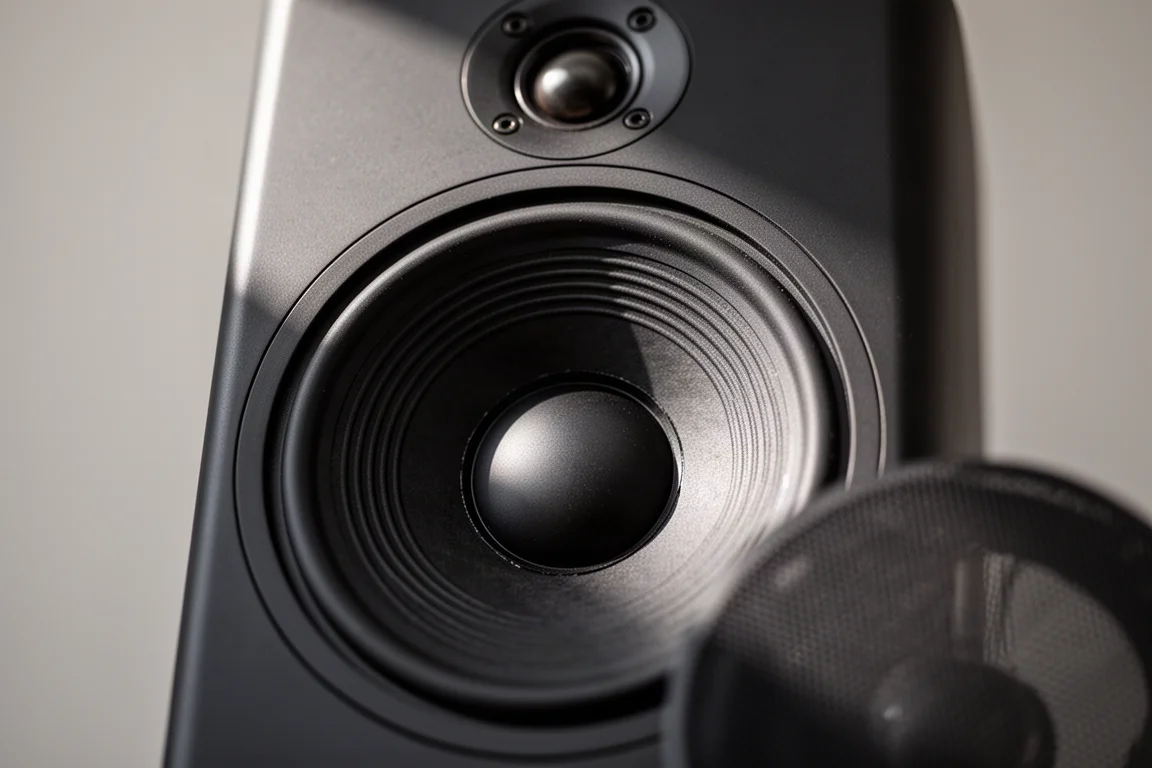
The soundstage is large for the cabinet size, closer to what a bigger floor-standing pair would suggest than what the dimensions imply. Presentation feels open rather than boxy.
For television and film, dialogue stays crisp and full-bodied without the thinness that smaller speakers often show in the vocal range. The M40 manages this without a subwoofer connected, which is unusual at this size.
Things to Consider Before Buying
Treble is the area with the most nuance. It never sounds rolled off or warm, but a little air and ambience is missing at the very top, so the presentation is clean rather than fully open.
Push the system past roughly 85 dB and the treble moves forward, with the highs picking up a touch of harshness and losing some naturalness. At normal listening levels the balance holds together well, so this only matters for listeners who regularly listen loud.
There is no automatic signal sensing. When the television and the source turn on, the M40 still needs switching on separately, which is the one place where the system asks for an extra step.
Decoding is handled internally with DSP rather than a traditional DAC chip, and it supports up to 24-bit/192 kHz. That is more than enough for most listeners, though it will not satisfy anyone who wants to choose their own converter.
The powered architecture also limits future flexibility, since the amplifier and the speakers are tied together. Finishes include black, white, and walnut, and the walnut is a vinyl wrap rather than real wood veneer.
Setup, Inputs, and Everyday Use
Setting the M40 up takes very little time. The master cabinet holds the amplifier and all of the inputs, the second cabinet connects with a single speaker cable, and the source plugs straight into the back.
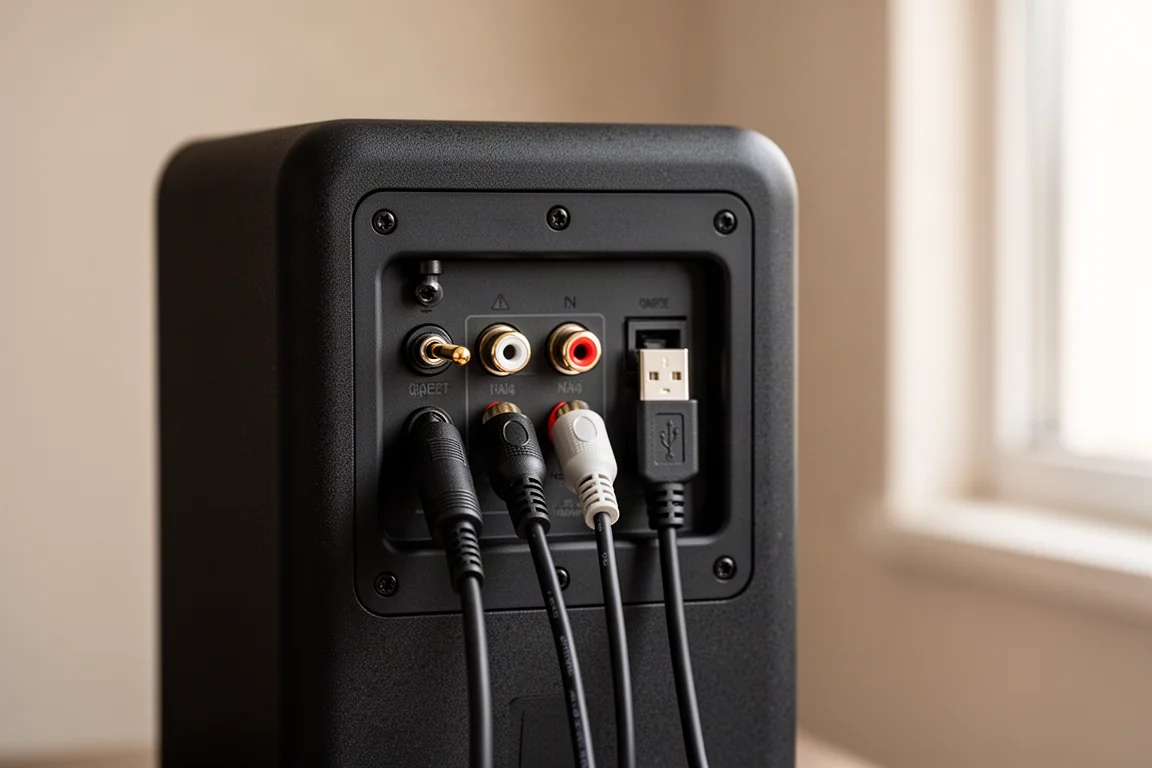
On the rear panel there is a full-size RCA input, a 3.5 mm analog input, an optical input, a full-size USB input, a subwoofer output, and Bluetooth. Optical decoding runs to 24-bit/192 kHz. Comparing the optical input against an analog connection from the same streamer produced almost no discernible difference in sound.
Three switches on the back adjust bass response for placement: close to a wall, at a moderate distance, and far from a wall. The intent is to compensate for room positioning, but they also work as a tone control for listeners who want more or less low end. A separate switch sets which cabinet is left and which is right.
A subwoofer can be added through the subwoofer output, and a wireless subwoofer connection kit keeps that run cable-free. For most rooms it will not be necessary, since the M40 already delivers bass on its own.
Buying Advice
The M40 is not an inexpensive purchase, and it costs more than a typical soundbar. What that money buys is a complete stereo system with amplification built in, no subwoofer required in most rooms, and a cable layout that stays out of sight.
Adding a streamer with HDMI switching turns the pair into a full living room system covering streaming, HDMI, and Bluetooth. That combination covers television, films, and music without any further boxes.
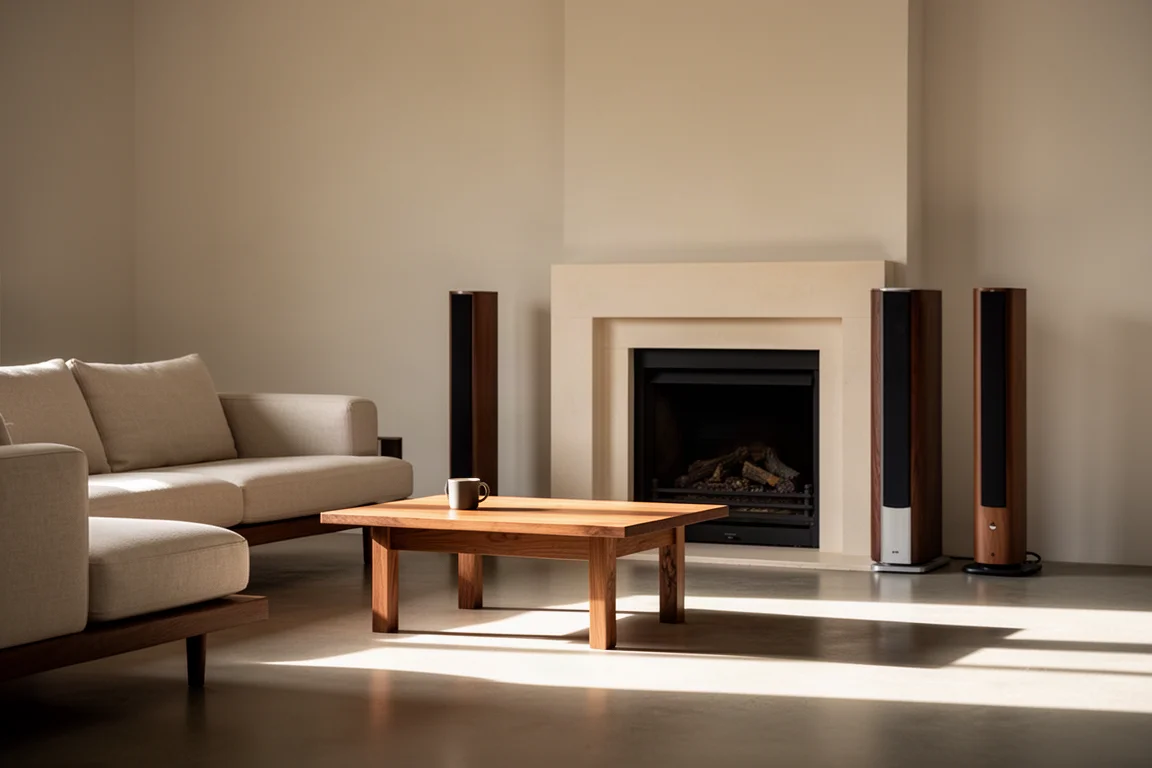
As a replacement for a soundbar, the M40 is a strong candidate. The slim cabinets sit quietly beside furniture, and in white or a light finish they blend into a wall or fireplace surround rather than announcing themselves.
If the goal is to enjoy music and television with as little fuss as possible, and to have it sound better than the size suggests, the M40 deserves serious consideration. If the goal is to choose a DAC, an amplifier, and cables individually, a passive system will serve that interest better.
Conclusion
The Q Acoustics M40 is a compact powered tower that behaves like a much larger system. Its neutral midrange, deep and controlled bass, and large soundstage make it a credible single answer for a living room, while the treble restraint at high volume is a narrow trade-off most listeners will never encounter.
Product link
View more details for Q Acoustics M40
This product is mentioned in the review. Check the specifications, options, and compatibility before buying.
View more details for Q Acoustics M40Further reading
Related Reviews
Powered Speakers
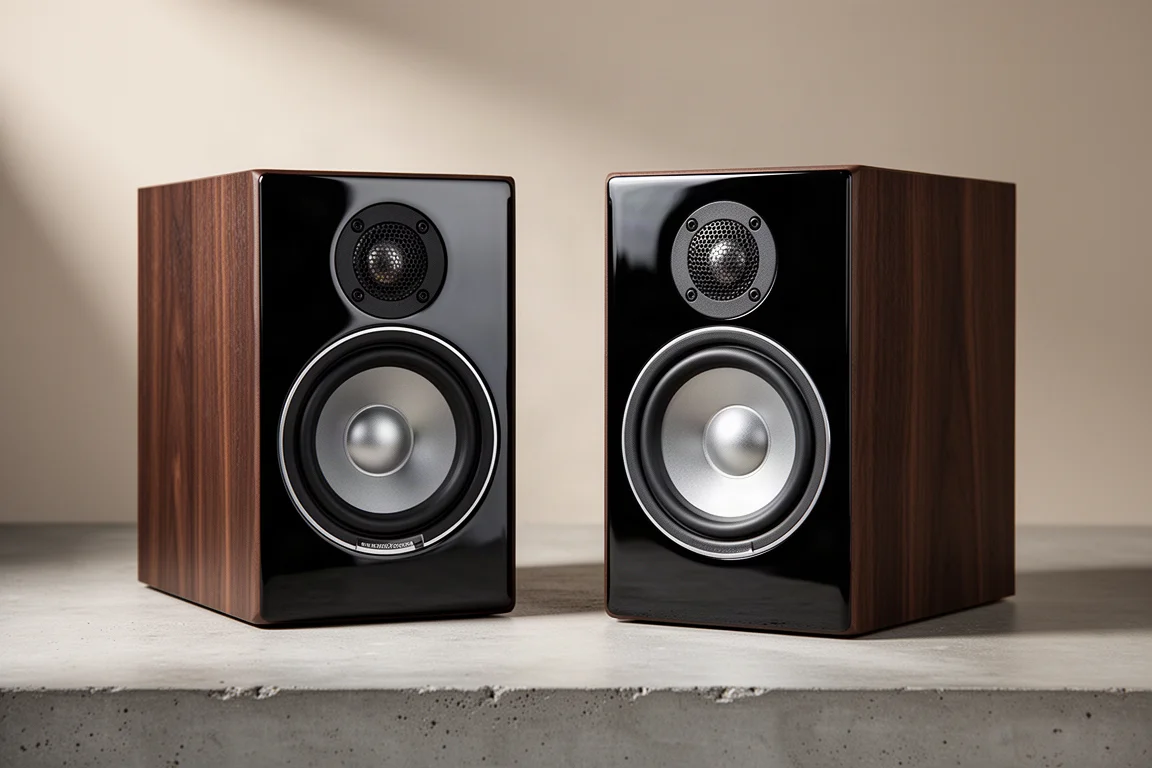
AbramTek X50 Review: Powered Speakers With Real Bass and a Full Feature Set
The AbramTek X50 pairs a phono preamp, HDMI ARC, optical, and Bluetooth with genuinely capable sound. Here is what it does well and what to check before buying.
Powered Speakers
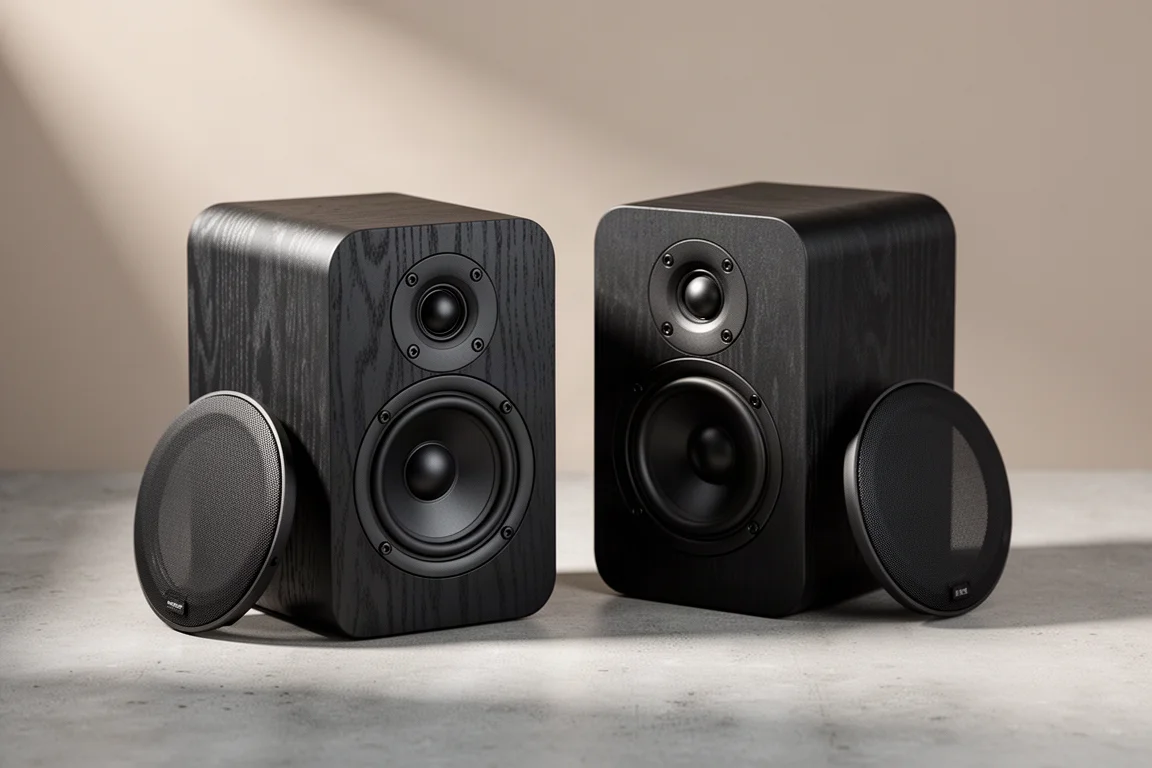
Amazon Basics Powered Speaker Review: Useful Features, Compromised Sound
A practical look at the Amazon Basics Powered Speaker: a handy remote and an optical input, held back by shouty upper mids, minimal bass, and erratic pricing.
Powered Speakers
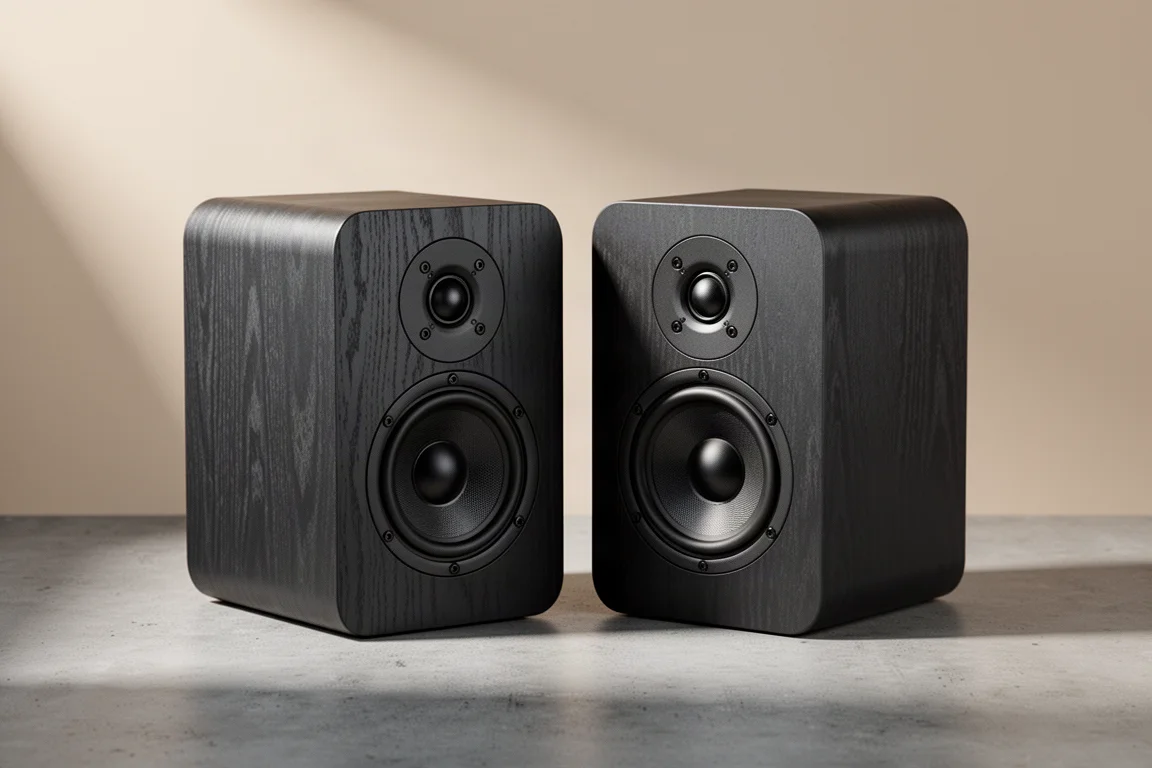
Aperion Audio Alaire Review: Compact Powered Speakers With Serious Bass
A compact two-way powered speaker with genuine low-end punch, excellent imaging, and a control scheme that depends entirely on its remote.