Stand-mount Speakers
Q Acoustics Concept 300 Review: Stand-Mount Engineering That Earns Its Price
A practical look at the Q Acoustics Concept 300, from its tensegrity stand and inert cabinet to its refined sound, amplifier pairing needs, and the trade-offs to weigh before buying.
Introduction
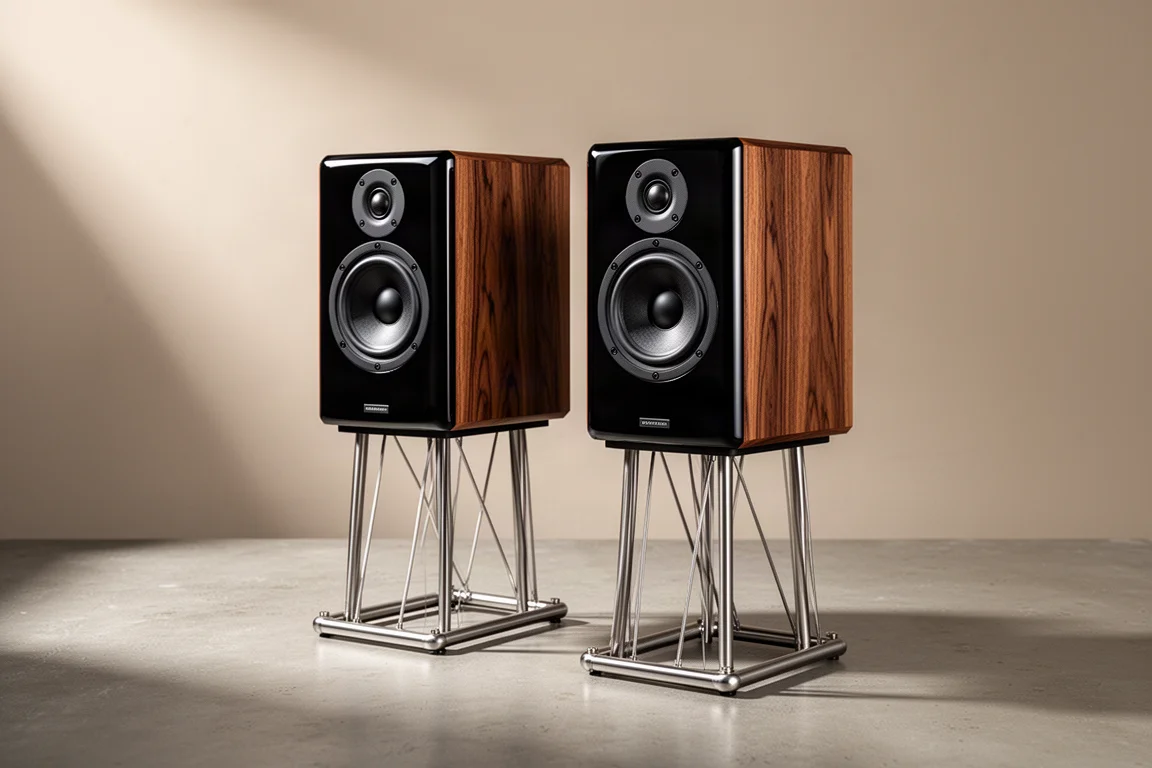
The Q Acoustics Concept 300 is a two-way stand-mount loudspeaker with a stated frequency response of 55 Hz to 30 kHz, where the 55 Hz figure represents the F3 point. It is priced at around $5,000 including its matching stand, and that money buys an unusual amount of engineering: a cabinet built from three layers of MDF with a gel layer between each one, a driver platform that floats on a spring-loaded mount, and a stand designed around a structural principle borrowed from bridge building.
It is a bass reflex design with a port tuned to roughly 44 to 45 Hz, and a foam port plug is supplied. That plug turns out to matter more than such accessories usually do.
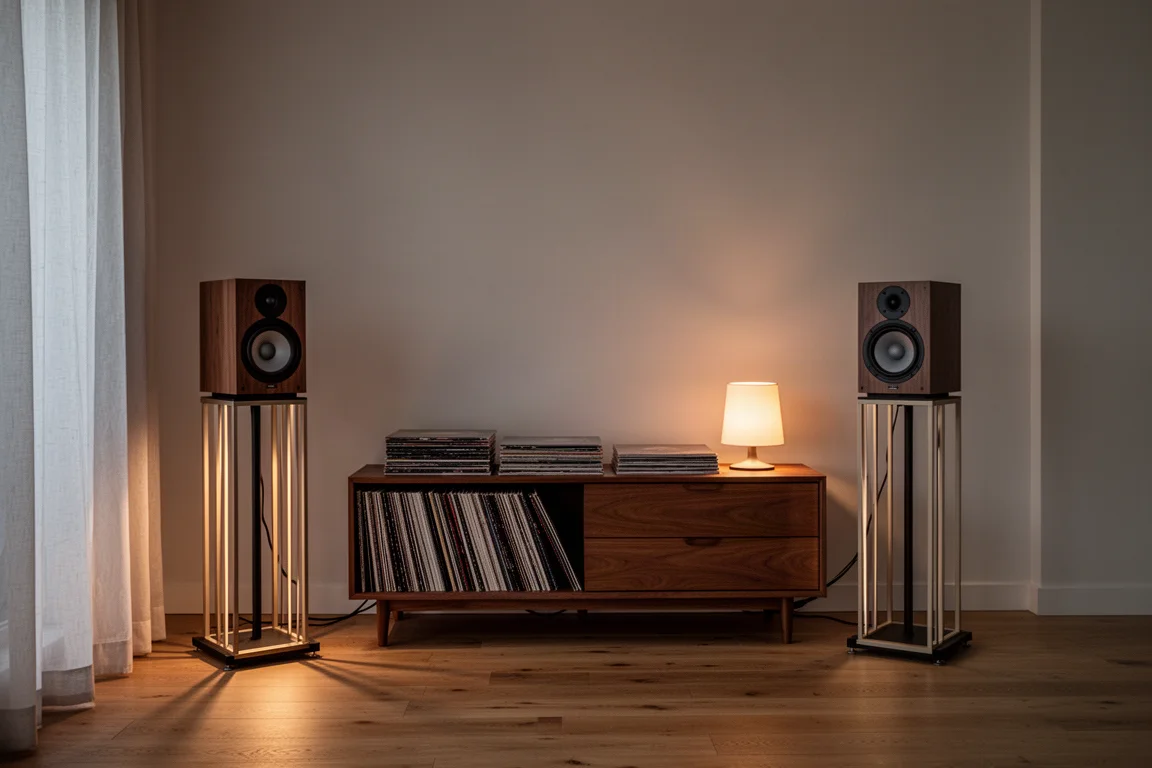
The result is a speaker that behaves quite differently depending on how it is set up and what drives it. This guide covers where the Concept 300 performs best, which amplifiers bring out its strengths, and which listeners should look elsewhere.
Who the Q Acoustics Concept 300 Is For
This speaker suits listeners who want a refined, fatigue-free presentation that holds up across many genres, including older and modern recordings alike. It rewards anyone who values soundstage depth and a quiet, well-defined space between instruments, and it fits rooms where a stand-mount speaker is the practical choice.
It is less suited to listeners who want maximum bass impact from a stand-mount cabinet, or who have a strong preference for either a very bright or a much warmer voicing. The Concept 300 deliberately sits between those two poles, and that balance is the whole point of its character.
The Tensegrity Stand and the Floating Mount
The Tensegrity stand is built on a principle known as tensional integrity, or floating compression. Stainless steel rods sit under constant compression while thin strings stay under constant tension, which means the rods never touch one another. The result is a rigid, physically stable platform that keeps vibration to a minimum while looking remarkably light on its feet. The same structural idea has been used in a large bridge in Australia.
Q Acoustics publishes measurements on its website showing how the stand performs in home audio use, which is a welcome level of transparency. The stand includes spike holders, its height is adjustable in the usual way, and it is sold separately for about $1,000 for use with other speakers.
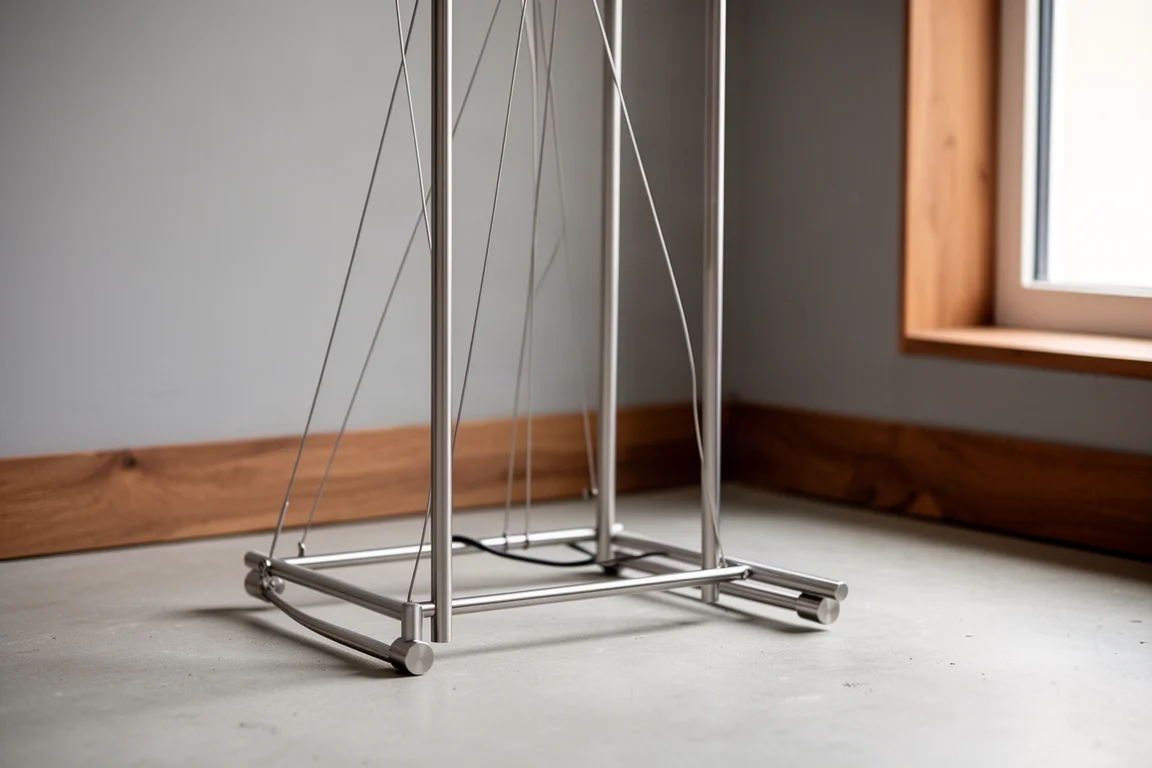
On the Concept 300, the stand is more than a perch. The padded base of the speaker bolts to the stand and is isolated further by a spring-loaded mechanism, so the cabinet can move in a controlled way, much like an aftermarket isolation foot. It looks as though the speaker might topple, but it will not. Among the many attempts at decoupling a cabinet from its support, this is one of the most convincing executions.
Cabinet Construction and Driver Design
The cabinet is exceptionally inert. Three layers of MDF with gel material sandwiched between them form the core, and the internal bracing is positioned using microscopic measurement of the cabinet rather than guesswork, so bracing goes where it reduces resonance most effectively. Knocking on the side panels produces a dull, dead thud that rivals some metal chassis. Play bass-heavy music at high levels, rest a hand on the cabinet, and almost no vibration comes through.
The driver complement is a soft-dome tweeter just over one inch in diameter and a 6.5 inch paper cone woofer, both mounted from the inside so no screw heads break up the front baffle. The two drivers sit close together for better integration and coherency, and the baffle carries a subtle curvature that reduces diffraction while adding to the speaker’s clean lines.
The crossover is mounted on a separate board on the suspension system at the bottom of the cabinet, and the parts used are of good quality. Around the back there are two sets of large binding posts of genuinely high quality, plus a small jumper that adjusts treble output by minus 0.5 dB, zero, or plus 0.5 dB. The jumper does exactly what it claims, though the audible effect is small. Finishes include the deep black gloss paired with real rosewood veneer, along with two other options.
How the Concept 300 Sounds
Three qualities stand out.
First, the soundstage. The speakers disappear, and with a little breathing room they create a holographic, effortless stage with real depth, closer to sitting in a venue than listening to a pair of boxes.
Second, the background. There is a darkness and quiet between instruments that is hard to put into words but easy to notice, and it makes individual details easier to follow.
Third, the balance. This is an all-round speaker with the silky smoothness often associated with British voicing, yet it keeps plenty of detail in a refined way. Long listening sessions pass without ear fatigue, and everything from acoustic material to modern pop recordings holds up well.
Bass is where the port plug matters. With the foam plug fitted, the speaker behaves much like a good sealed design, with more clarity and separation, and that is the more satisfying configuration. Without the plug, the port adds depth, and room gain can push usable output down to around 40 Hz. It is dynamic and tastefully textured rather than thunderous, and many listeners will not feel the need for a subwoofer when running without the plug.
The midrange is smooth and articulate. Vocals sound full without turning cloudy, and tonality sits between warmer and more analytical presentations. With the plugs in, it recalls classic sealed BBC-style monitors, though with more balanced detail than the softest of those designs. Treble is smooth and extended, and it can turn genuinely sparkling with the right amplifier. Placement is the better treble tool: tilting the speakers toward the listening position adds treble, and toeing them away reduces it. The off-axis response is good enough to make that approach work.
Amplifier Matching and Setup Notes
Rated sensitivity is 84 dB with a nominal impedance of 6 ohms, but the minimum impedance of 4.7 ohms means the load is not especially difficult. Most rooms will be well served by 50 to 100 watts. A well-built 20 watt per channel tube integrated also drove the Concept 300 to high levels with an enormous stage and a sweet treble, so power alone does not tell the whole story.
Pairing still matters a great deal. With an unsuited amplifier the speaker can sound dry and uninteresting, and the difference is obvious within moments. With a good match, listeners tend to stay in their seats and ask for one more track.
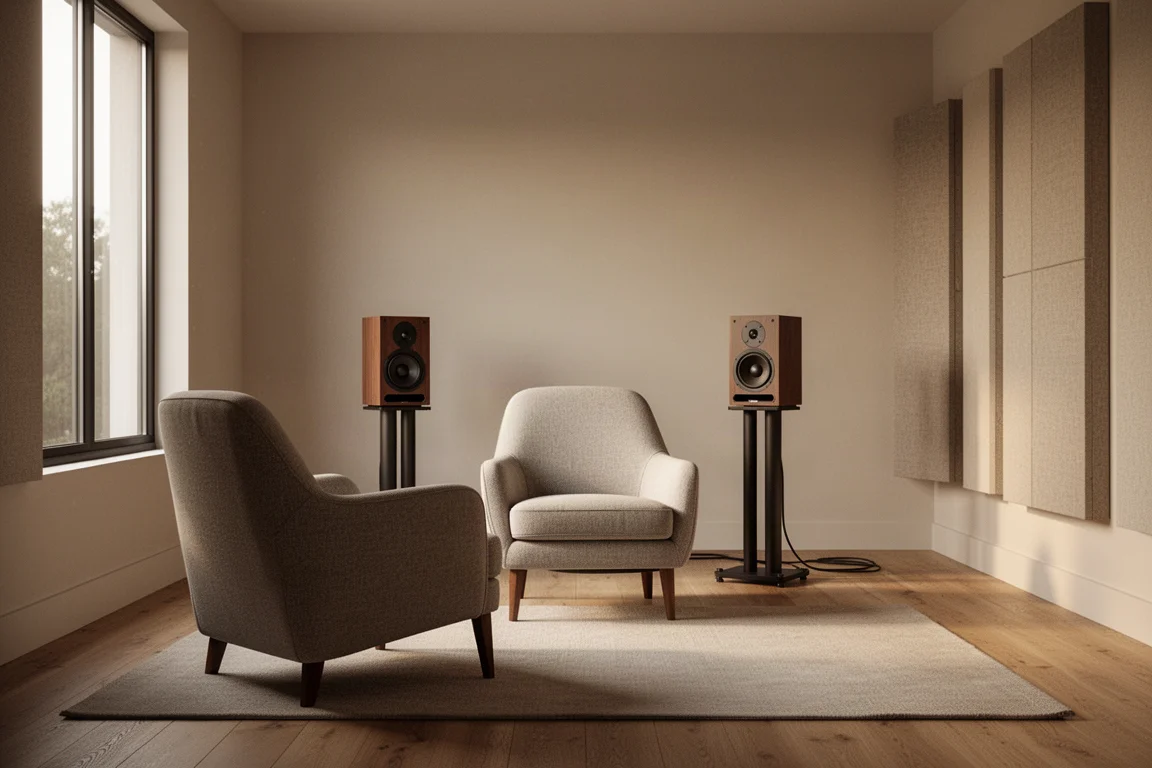
Setup itself is straightforward. A slight toe-in suits most rooms. Without the port plugs, leave at least about one metre between the speakers and the wall behind them so the bass does not become boomy. With the plugs fitted, they can sit closer to the wall. If you want more depth, pull them further out and experiment.
Things to Consider Before Buying
At low volumes the Concept 300 is merely competent, and it comes alive at medium to loud levels. Buyers who mostly listen quietly should weigh that carefully. Listeners with a strong preference for either a very bright or a much warmer presentation may also find that the balance here is not the one they want.
Amplifier matching is more consequential than usual, and the stand is part of the design rather than an optional extra, so the real system cost includes a suitable amplifier alongside the speaker.
Buying Advice
The roughly $5,000 asking price includes the Tensegrity stand, which matters because the stand alone sells for about $1,000 and the two were designed as a pair. Buyers who want the intended performance should plan around that complete package rather than shopping for the speaker alone.
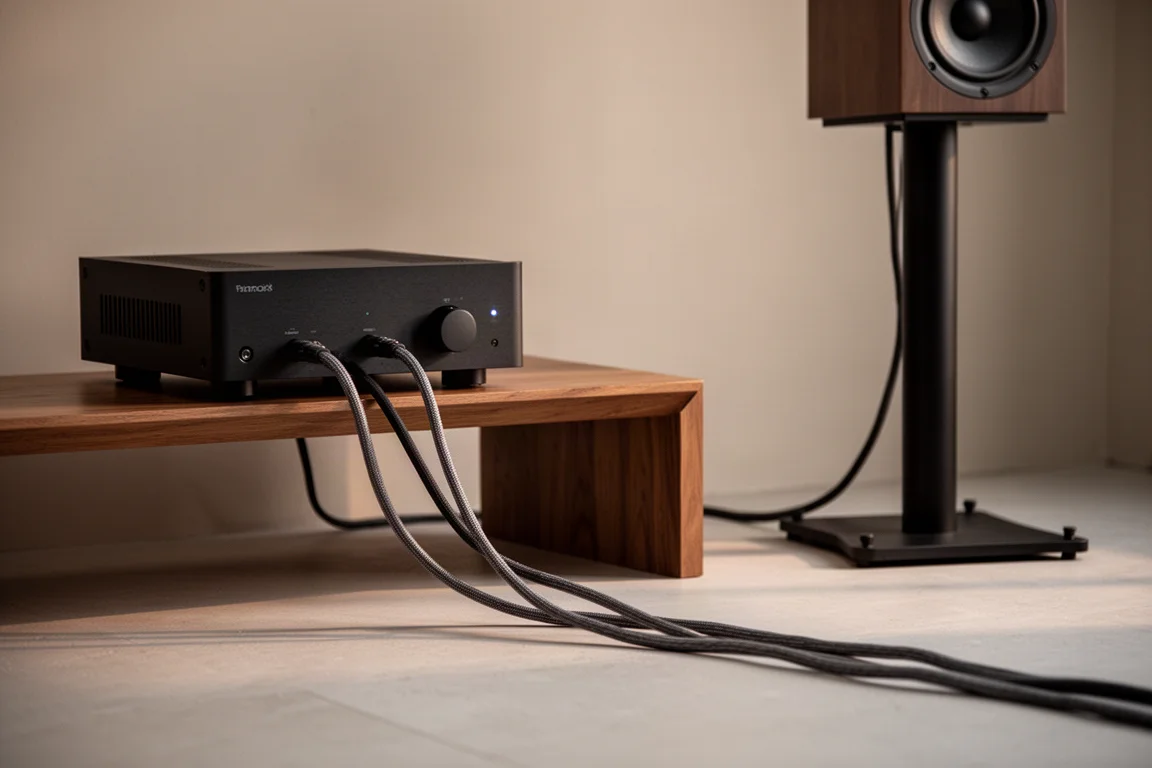
Before ordering, think about room size and how far the speakers can sit from the wall. A larger room will benefit from more amplifier power, while a smaller room with limited placement freedom gets useful flexibility from the supplied port plug. Pair the Concept 300 with an amplifier that suits its smooth, warm-leaning balance, and budget for that amplifier as part of the purchase rather than an afterthought.
Conclusion
The Q Acoustics Concept 300 delivers a level of engineering and execution that is rare at its price. The tensegrity stand, the sandwich-construction cabinet, the internal driver mounting, and the floating decoupling system all serve the sound rather than the spec sheet, and the result is a speaker with a deep, holographic stage, a quiet background, and a smooth, detailed balance that stays comfortable for hours.
It is not the right choice for listeners chasing maximum bass weight or an extreme voicing in either direction, and it asks for a little care in amplifier matching. Give it that care and a reasonable distance from the wall, and it stands as a genuinely reference-level stand-mount design at a fraction of the cost of the exotic speakers it invites comparison with.
Product link
View more details for Q Acoustics Concept 300
This product is mentioned in the review. Check the specifications, options, and compatibility before buying.
View more details for Q Acoustics Concept 300Further reading
Related Reviews
Hi-Fi Audio
Accuphase C-57 vs Allnic H-7000V: Two High-End Phono Stages Compared
A fully balanced solid-state phono stage with a pitch-black noise floor meets a tube design built for well-loved records. Here is how to choose between them.
Hi-Fi Amplifiers
Accuphase E-280 Review: Entry-Level Accuphase With Flagship Attention to Detail
A close look at the Accuphase E-280 integrated amplifier, covering its champagne build, AAVA volume control, sound quality, and the speakers and sources that suit it best.
High-End Audio
Accuphase E-3000 Review: A Class AB Integrated Amplifier Built to Last
The Accuphase E-3000 is the entry point into a legendary Japanese high-end line. Here is how it sounds, how it is built, and who should consider it.