Hi-Fi Speakers
Q Acoustics Concept 30 vs KEF LS50 Meta vs Sonus Faber Lumina 2: Standmount Speakers Compared
Three standmount speakers in the same price territory, compared on build, bass and character, with guidance on which one suits your room and your listening habits.
Introduction
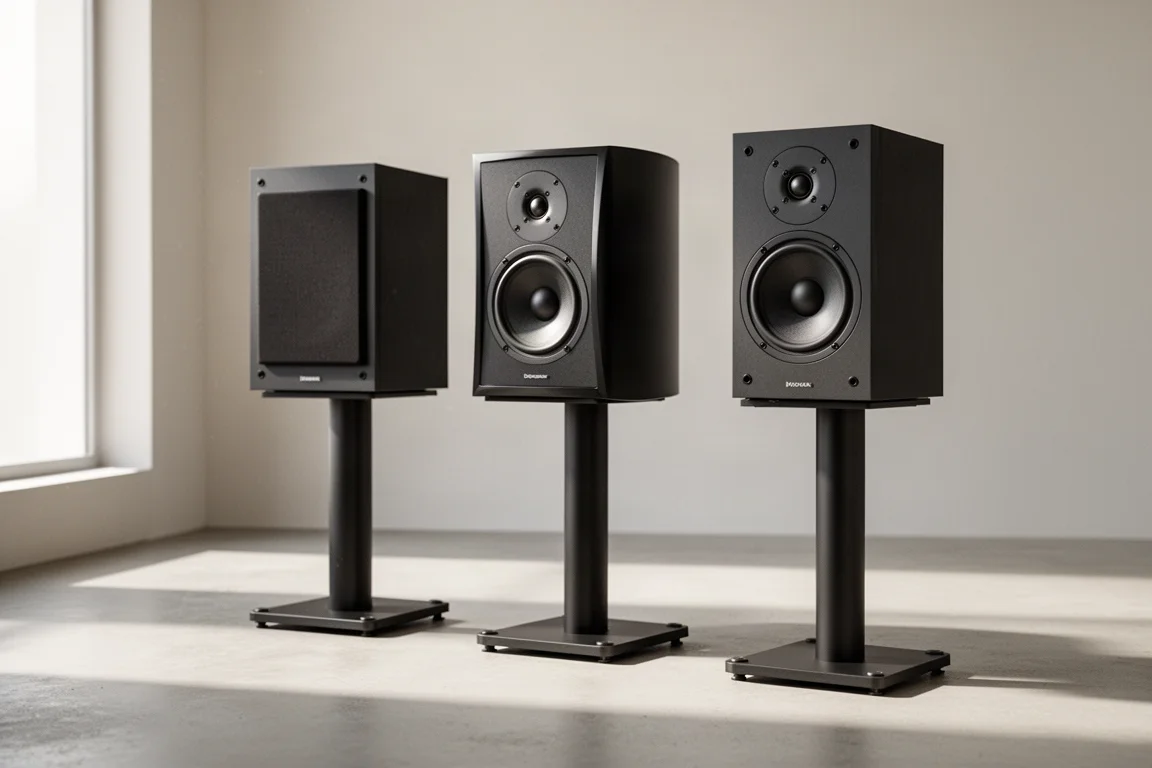
The Q Acoustics Concept 30 sells for €1,200 a pair and lands directly in territory already occupied by two well-established standmounts: the KEF LS50 Meta and the Sonus Faber Lumina 2. All three sit in roughly the same price band, and none of them has an obvious flaw. What separates them is character, specifically how bright each one sounds in the upper midrange, how much low bass it suggests, and how tiring it becomes after several hours.
This comparison looks at what each speaker does well, where each one asks for a compromise, and which is most likely to suit your room, your amplifier and your listening habits.
What Sets These Three Standmounts Apart
All three are passive standmount designs, so they share the usual strengths and limitations of the format. Each needs a reasonable amount of volume before it comes fully on song, and none delivers the weight and scale of a floorstanding speaker. Where they diverge is in the details.
Bass extension is one measurable difference. Q Acoustics rates the Concept 30 at minus 6 dB at 54 Hz, while KEF rates the LS50 Meta at minus 6 dB at 47 Hz. Played side by side, that shows up as a stronger suggestion of low bass from the KEF. The Sonus Faber Lumina 2 sits closer to the Concept 30 in this respect than to the KEF.
Treble behaviour is the other big divider. The KEF and the Sonus Faber are both more lit up in the upper midrange and lower treble than the Q Acoustics, which keeps a lid on that region.
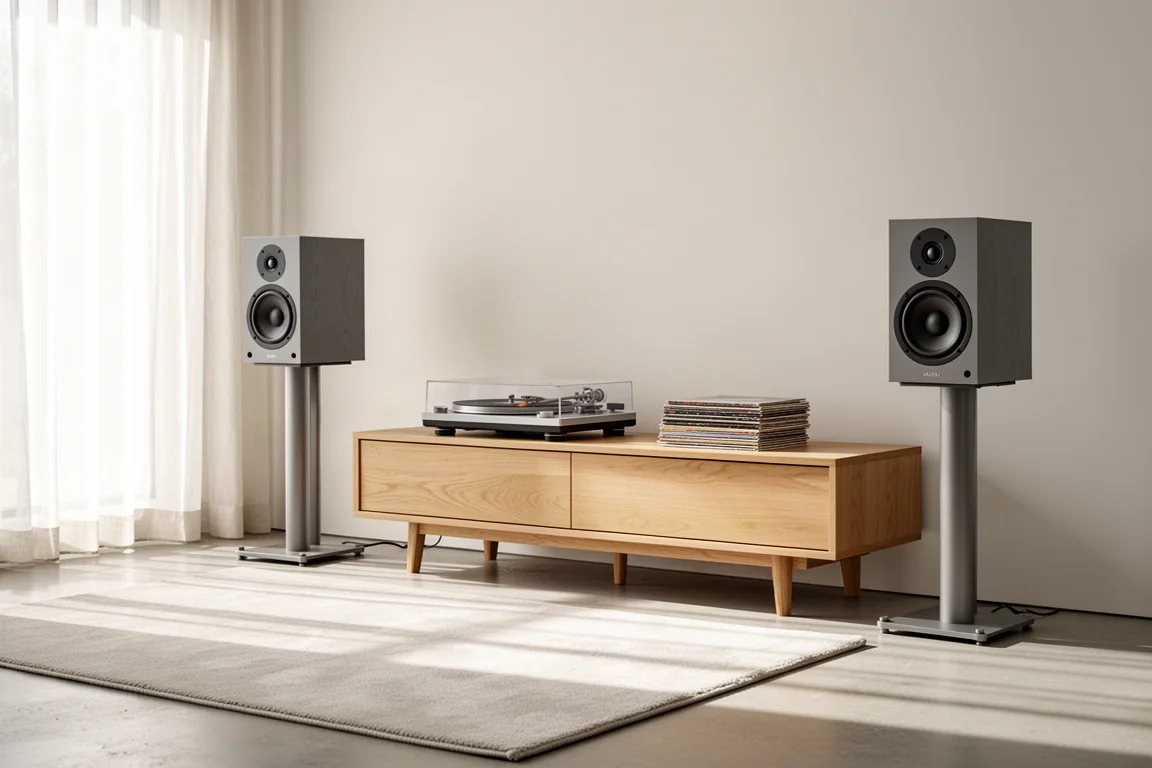
Cabinet construction also differs. The Concept 30 uses a damped front baffle plate and a gel-core cabinet, both covered in more detail below. The KEF matches it for build quality, while the Sonus Faber is a step behind the other two for fit and finish.
Q Acoustics Concept 30: The Balanced All-Rounder
The Concept 30 is the newest of the three and the younger sibling of the Concept 300, a much more expensive model that sold for around €4,000 a pair. At €1,200 a pair it competes directly with the other two speakers here, and its build is the first thing that stands out.
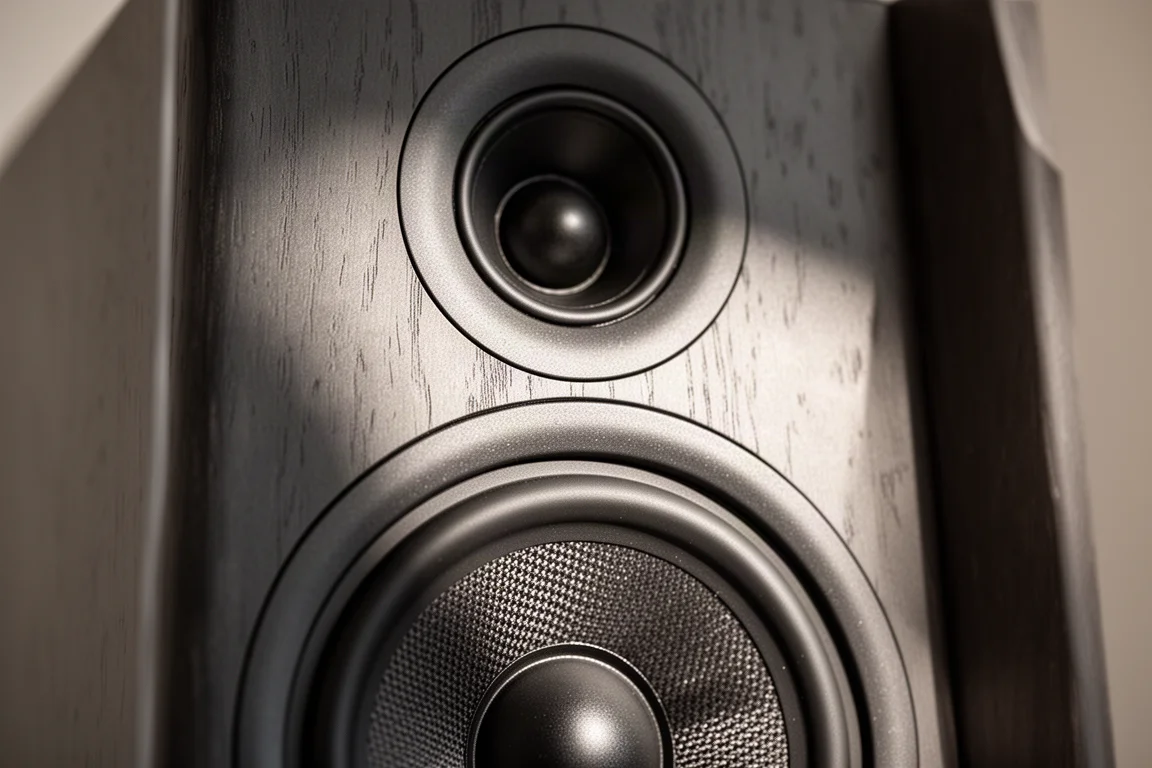
A 3 mm thick front baffle plate surrounds both drivers. The tweeter and the mid-bass driver are mounted to that plate, which is acoustically damped, and the assembly is then fitted to the cabinet. The drivers are bespoke units made specifically for this speaker rather than off-the-shelf parts, using technology carried down from the Concept 300. The cabinet is bass reflex, with a rear-firing port and two sets of binding posts for anyone who wants to bi-wire.
Q Acoustics also uses a gel-core construction. In the Concept 300 there were three cabinet layers with a gel-like layer between each one; in the Concept 30 there are two layers with a gel layer filling out the sandwich. The idea is that the gel absorbs high-frequency vibration and converts it into heat. The base plates are decoupled from one another using spheres, and the crossover is mounted to the upper base plate so that it is shielded from unwanted vibration. These are engineering choices that are difficult to verify by ear, but they are unusual at this price, and the finish is superb.
Optional Tensegrity stands cost around €400 and are not required. They use a four-legged, quadruped design rather than the tripod arrangement of the Concept 300 stands.
Sonically, the Concept 30 suggests neutrality rather than shouting about it. The presentation is cool and even, with occasional hints of richness rather than outright warmth, and it is not a squeaky-clean, forensic speaker. Soundstage width and height match what the Sonus Faber and the KEF produce, though it cannot quite match the KEF for depth.
Compared with the LS50 Meta, the Concept 30 gives up some upper-midrange clarity and urgency, and it is less crisp in the upper mid and lower treble. Microdynamic detail, the small ticks and pops that dart out of a recording, is more restrained here than on the KEF and the Sonus Faber. The upside is a delicacy and tenderness in the treble that keeps the speaker from sounding strained or overly lively, plus layer separation that comes across as natural and organic. In the midrange, detail is a step behind what the KEF and the Sonus Faber offer.
Rhythmically it is still snappy. Complex percussive material is handled with a nice sense of give and take, sitting slightly further back in the mix than the Sonus Faber manages, but never sounding slow.
The overall character is polite and reserved, which makes it the most agreeable of the three over long sessions. Lively music with plenty of percussion and abrupt, staccato sounds stays balanced. Female vocals that can turn sibilant and strident on other speakers are kept even here, so the Concept 30 stays comfortable rather than exhausting across hours of listening. It also pairs well with lively-sounding amplifiers, including Class D designs.
The trade-off is that it needs volume to come fully alive, and at low levels the low end is limited. A subwoofer is a sensible addition, and there is more on that below.
KEF LS50 Meta: Crispness, Detail, and Deeper Bass
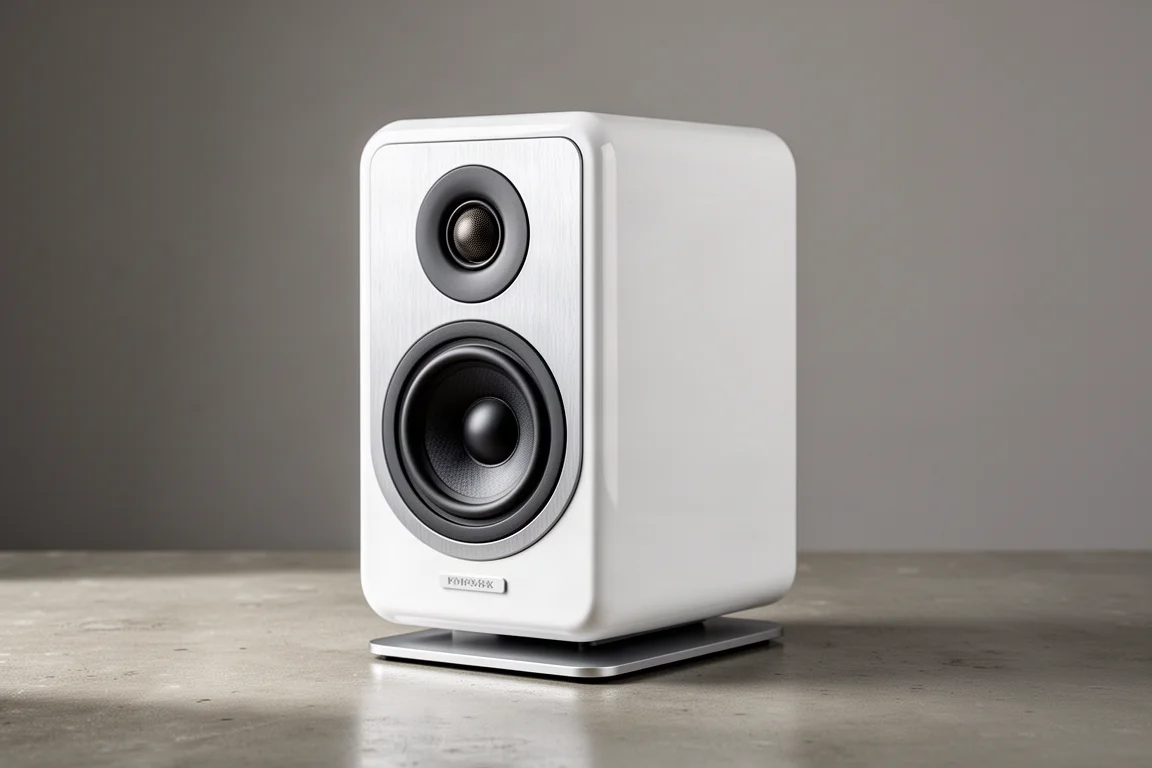
The LS50 Meta is the crisper of the three. It has more upper-midrange clarity and urgency than the Concept 30, along with a livelier lower treble. Microdynamic flare is stronger, so the small sounds in a recording step forward instead of sitting back. Soundstage depth is the best of the three, and the midrange detail it retrieves is a clear strength.
Bass is the other advantage. With a rating of minus 6 dB at 47 Hz, the KEF gives a stronger suggestion of low bass than the Concept 30 when the two are compared side by side. That extra extension does not come at the cost of build quality, which is on par with the Q Acoustics.
The flip side is that the same energy that makes the LS50 Meta so revealing can be too much for listeners who prefer a calmer top end. If the KEF upper midrange feels in-your-face, the Concept 30 is the natural alternative in this group.
It sits in the same price territory as the other two speakers here, which makes the choice a matter of taste rather than budget.
Sonus Faber Lumina 2: The Most Exciting of the Three
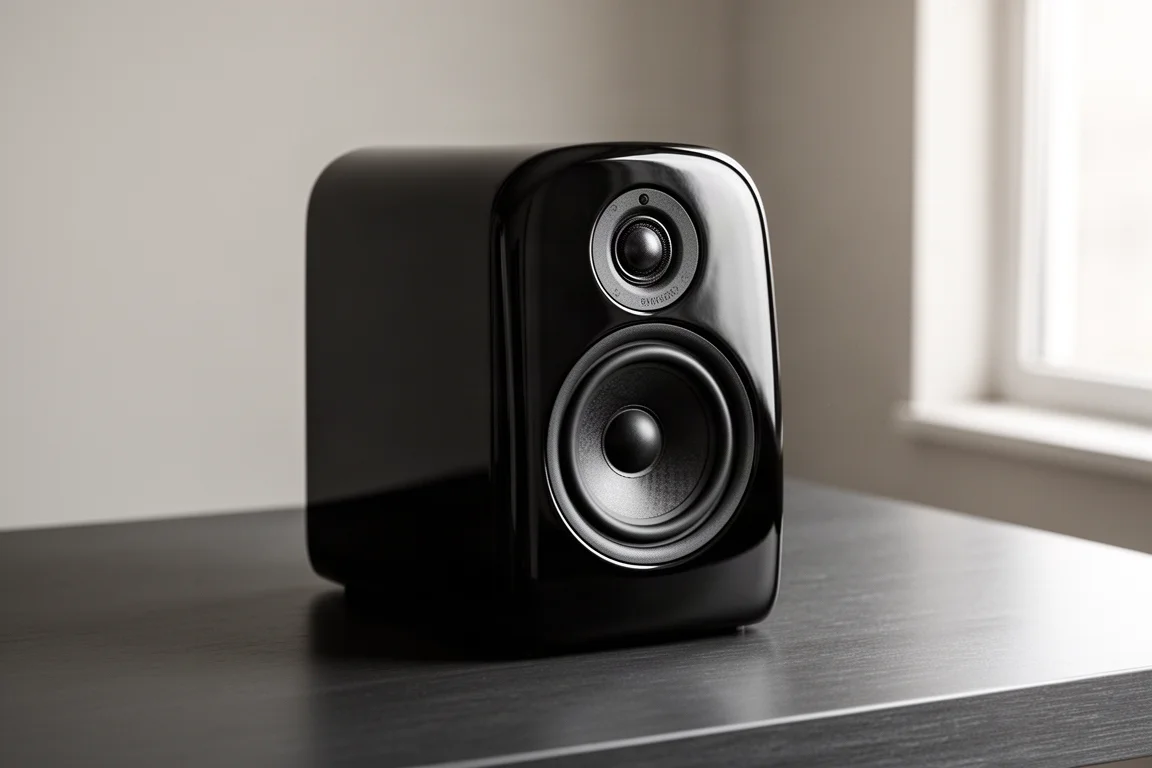
The Lumina 2 is the liveliest speaker of the three and the most exciting for rock and roll. It has plenty of zap and zing in the top end, and it pulls percussion forward in the mix rather than holding it back. On a track built around Latin percussion, it pushes the rhythm right to the front of the song.
That forwardness is a matter of taste. The Lumina 2 is the most lit up in the upper midrange and lower treble, and the same quality can turn strident. Female vocals that climb in range and become more excited can tip into unpleasantness, and an all-day session of strident indie rock would be tiring on this speaker in a way it would not be on the Concept 30.
Its low-end performance is closer to the Concept 30 than to the KEF, and its fit and finish, while perfectly respectable, is the least impressive of the three here.
If you want the most vivid, upfront presentation and you listen in shorter, energetic sessions, the Lumina 2 delivers it. If you want to listen for hours without fatigue, the Q Acoustics is the safer choice.
Standmounts, Volume, and Subwoofers
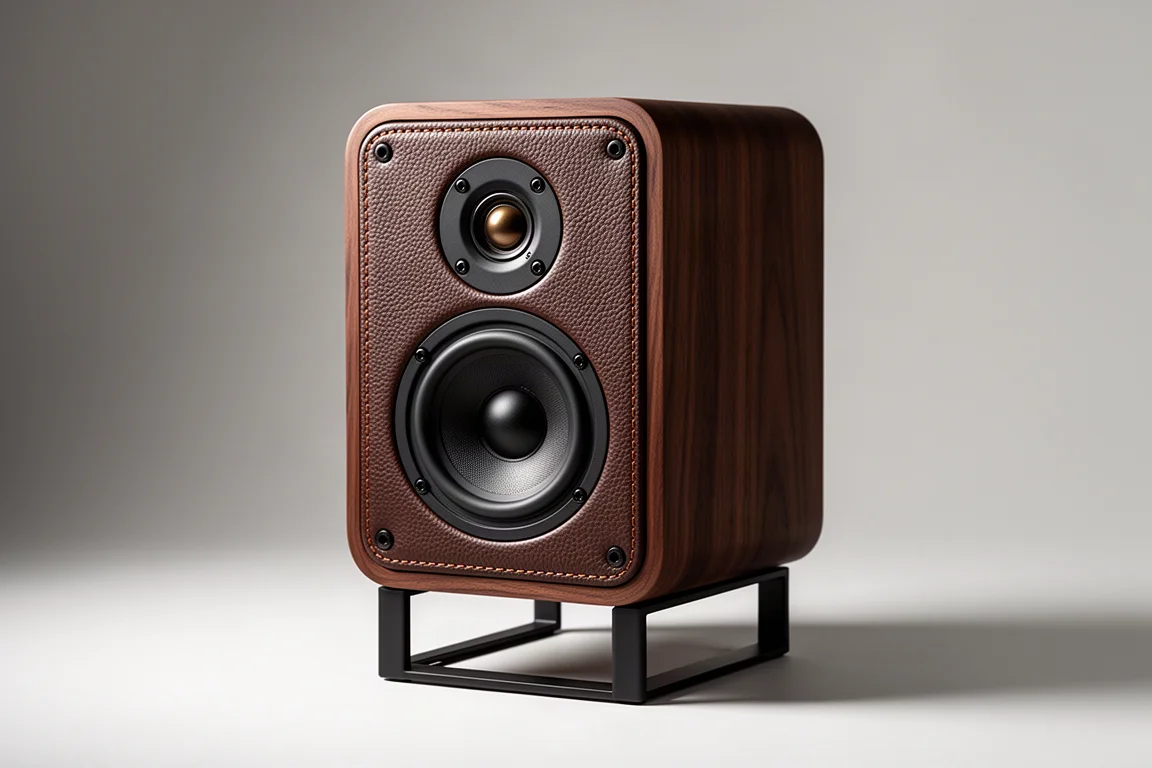
Every standmount in this group needs a reasonable amount of volume before it comes fully on song, and the Concept 30 is no exception. Played quietly, it gives more of a suggestion of low bass than the real thing, which is the usual compromise of the format.
A subwoofer solves most of that. Paired with a compact sub and an amplifier with built-in bass management, with the crossover set at 80 Hz, the Concept 30 becomes part of a genuinely convincing system with plenty of bass weight and low-frequency presence. That route also gives you control: the sub output can be turned up or down, and the unit itself can be moved around the room, which is not possible with the bass drivers built into a floorstanding speaker.
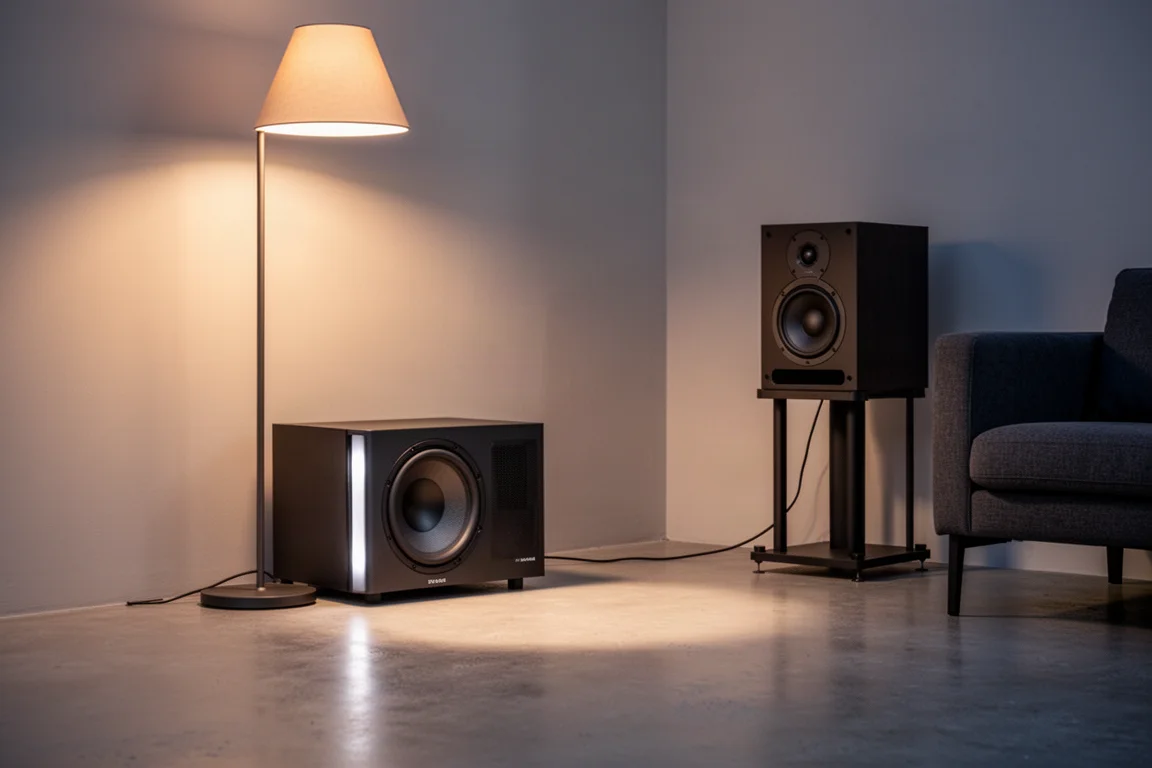
The trade-off is that standmounts plus a sub tend to sound slightly smaller than an equivalent floorstander, and can seem to be working harder to deliver the same weight and scale. In a smaller room, though, the flexibility of a separate sub is worth more than that last degree of effortlessness. Worth noting as well: the cost of the Concept 30 plus a sub of that kind works out at about the same as the floorstanding Concept 50, so the decision is about flexibility rather than price.
Build, Bass, and Character at a Glance
Set side by side, the three speakers separate cleanly.
Build quality: the Q Acoustics Concept 30 matches the KEF LS50 Meta and outshines the Sonus Faber Lumina 2 for fit and finish. The Concept 30 is one of the best-looking and best-built speakers at this price point.
Low bass: the KEF reaches lower on paper and gives the strongest suggestion of low bass of the three. The Concept 30 and the Lumina 2 are closer to each other than either is to the KEF.
Character: the LS50 Meta is the crispest, the Lumina 2 the liveliest and most forward, and the Concept 30 the most even and relaxed.
None of the three has a major flaw, and none is so strongly flavoured that it will alienate most listeners. The Lumina 2 comes closest to being a specialist taste, but it is also the one that will attract the most devoted following among listeners who want that particular excitement.
Buying Advice: Which of the Three Should You Choose
Choose the Q Acoustics Concept 30 if you have found other standmounts in this class too lively up top or too in-your-face in the upper midrange. It is the best of the three for long listening sessions, for lively percussion-heavy music, for female vocals that can turn strident, and for systems built around lively-sounding amplifiers, including Class D designs. It is also the most visually appealing of the three here.
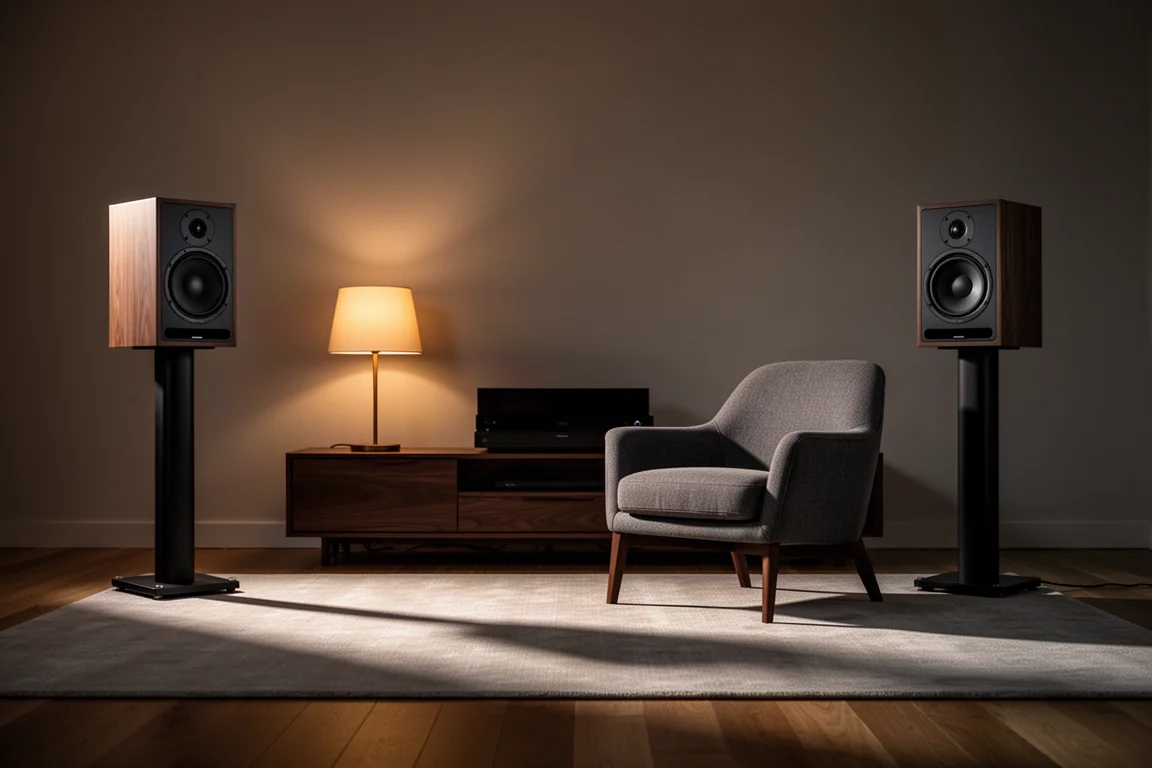
Choose the KEF LS50 Meta if you want the crispest upper midrange, the strongest microdynamic detail, the deepest soundstage and the strongest low-bass suggestion of the three. It is the more revealing speaker, and it rewards listeners who want to hear everything in a recording.
Choose the Sonus Faber Lumina 2 if you want the most exciting, upfront presentation, particularly for rock. Be prepared for it to be the most tiring of the three across a long session.
Whichever you pick, budget for a subwoofer if low-volume listening matters to you, and think about how much room you have. In a small room, standmounts with a sub offer more flexibility than a floorstanding speaker, while a floorstander will sound more effortless in its delivery of weight and scale.
Conclusion
The Concept 30 earns its place next to the KEF LS50 Meta and the Sonus Faber Lumina 2. It is more reserved than both, more even across the range, and easier to live with over long sessions, which makes it the most agreeable, every-listener option of the three. It does not reach as low as the KEF, and it does not have the bite or the excitement of either competitor, but those are deliberate trade-offs rather than shortcomings.
If you are choosing between the three, the deciding factor is character rather than quality. Pick the presentation that matches the music you play most and the amplifier you already own, and consider adding a subwoofer to whichever speaker you choose.
Further reading
Related Reviews
Hi-Fi Speakers
1723 THX Tower vs 1528 Bookshelf: Which Speaker Fits Your Room?
Two speakers at roughly the same price, built very differently. How the 1723 THX tower and the 1528 bookshelf compare on construction, bass, power needs, and sound.
Hi-Fi Speakers
Acoustic Energy AE 300 Review: Deep Bass From a Compact Standmount
A two-way standmount with real wood veneer, surprising low-end weight, and a warm, easygoing character. Here is what to know before buying.
Hi-Fi Speakers
Acoustic Energy AE1 40th Anniversary Review: A Modern Take on a British Classic
A compact standmount that revives a 1980s favorite with all-new parts, a warm mid-centric balance, and a price of £1,499 per pair.