Hi-Fi Speakers
Q Acoustics 3030c Review: Punchy Bass in a Compact Standmount
The Q Acoustics 3030c brings real bass weight and an expressive treble to a £499 standmount, but its mid-range is only average for the money.
Introduction
Q Acoustics has spent the better part of two decades building affordable standmount speakers that punch well above their price, and the new 3000c range replaces the commercially successful 3000i series. The 3030c is the largest of the range’s three standmounts, and it sells for £499 a pair.
The “C” in the name is easy to misread as a centre channel designation, but it actually covers an entire family of speakers. What matters more is what the 3030c does with its extra cabinet volume and larger driver: the goal is genuine bass weight in rooms where most compact standmounts run out of steam.
Who this product is for
The 3030c is a sensible choice if you want a small speaker that can still pressurize a moderately large room. Its 142 mm midwoofer and 16 mm MDF cabinet are tuned for bass impact rather than outright extension, so kick drums, snares and toms arrive with good definition for a speaker in this class.
If your priority is a punchy low end and a lively top end from a pair that is easy to drive, this is a natural audition. If you mostly listen to vocal-led acoustic music and care about the last word in mid-range articulation, other speakers at this price deserve a place on your shortlist.
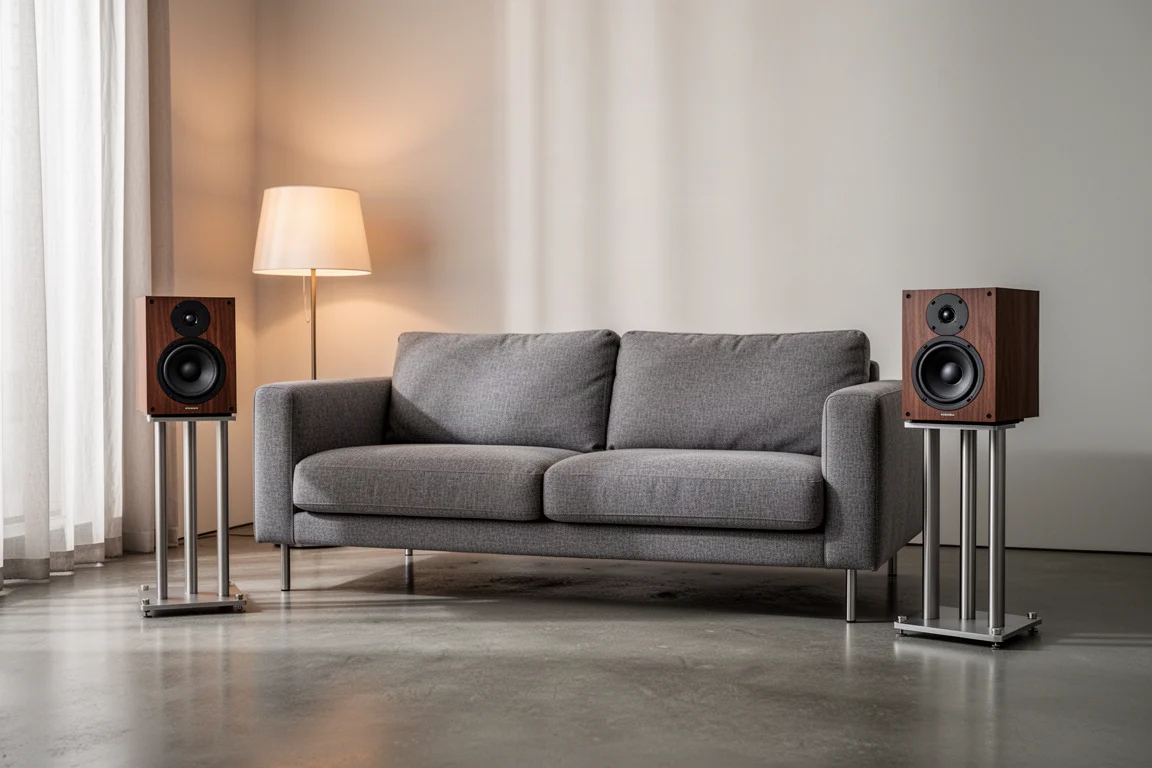
Either way, the 3030c rewards a listener who is willing to spend a little time on placement. It is a speaker that responds noticeably to small changes in how far it sits from the wall and where you sit relative to it.
Main strengths
The 3030c leans on technology carried down from the more expensive 5000 series, and two of those ideas shape almost everything it does well.
Bass weight and room-filling output
The midwoofer uses a continuous curvature cone with a flared conical central dust cap, paired here with a smaller voice coil and lower power handling than the 5000 series version. According to Q Acoustics, that cone profile delivers superior bass control without the breakup nodes that can appear further up the frequency range.
In practice, the extra cabinet volume and cone surface area translate into noticeably more bass impact than the smaller 5020. Officially the 3030c rolls off slightly earlier, with a minus 6 dB point at 60 Hz against 55 Hz for the 5020, but in a real room the difference in extension is not obvious. What is obvious is the extra weight behind low frequencies, which makes these speakers a better fit for larger spaces.
This is not a boomy speaker by any measure. The flared port keeps the low end reasonably tidy, and the driver keeps its composure when a track asks a lot of it.
Treble and driver design
The 22 mm silk dome tweeter is hermetically sealed and mechanically isolated from the front baffle, an approach borrowed from the 5000 series, though here it uses a ferrite magnet structure rather than neodymium. It is the most convincing part of the design: cymbal hits, brush strokes on a snare and the upper harmonics of electric guitar notes all carry a pleasant decay.
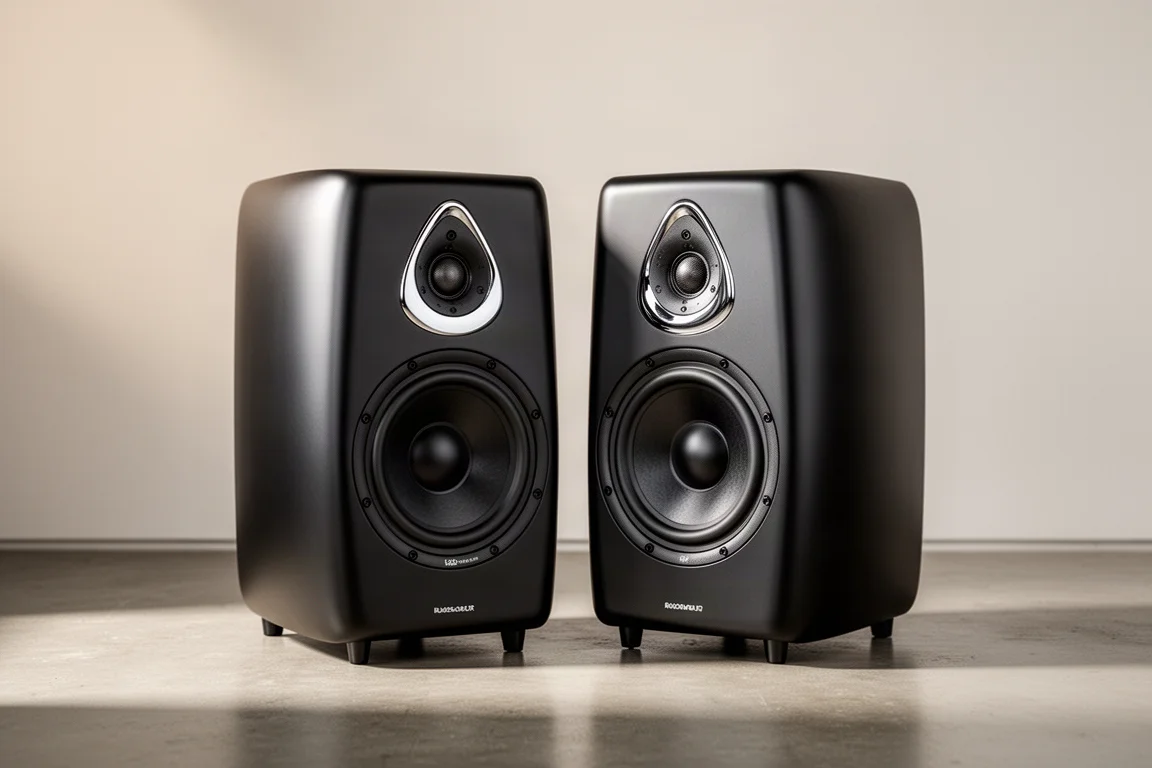
Behind the magnetic grille the drivers sit in a pear-shaped chrome trim that neatly conceals the mounting screws, and the heavily radiused side panels give the cabinet its familiar curved profile. A single set of low-profile binding posts at the rear is better quality than the price would suggest. Internally, the 16 mm MDF cabinet uses point-to-point bracing placed to add rigidity without eating into internal volume, while the front baffle is a thicker 25 mm HDF panel.
Setup and amplifier pairing
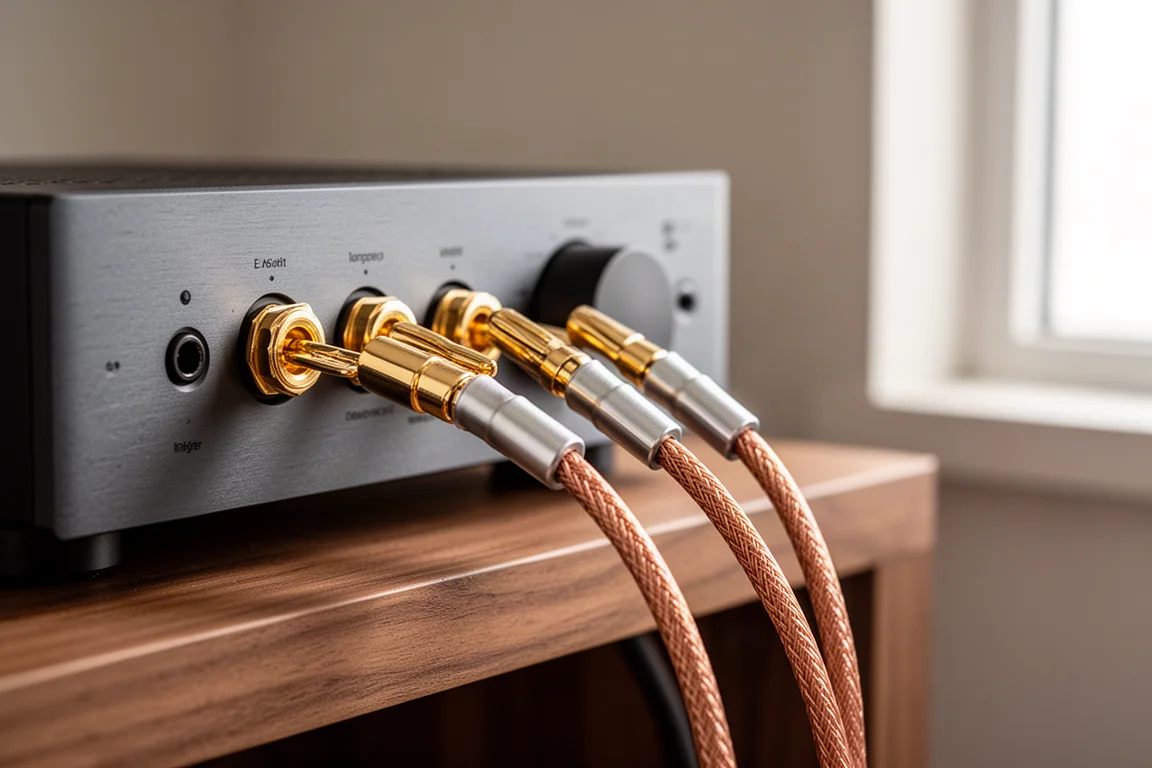
The 3030c is an easy load to drive. A small desktop amplifier with an external 48 V power supply that showed signs of strain with the 5020 had no trouble here at all.
Tonal matching matters more than power. These speakers sit on the warm side, so a neutral or slightly cool amplifier produces the best balance, while a warm-leaning budget integrated pushed the sound too far in that direction. A £449 integrated amplifier was as far as was needed, and a £2,000 model did not sound meaningfully better. The practical advice is to keep amplification price-appropriate rather than chase extra headroom.
Positioning also rewards patience. The lower mid-range can sound thick, and shifting the speakers and the listening seat a little can reduce that. If your streamer or DAC offers parametric EQ, a broad, low-Q cut of a couple of decibels somewhere between 150 Hz and 300 Hz will help as well.
Things to consider before buying
The mid-range is the weakest part of the package. There is a thickness to voices in the bass and baritone register, and singers who reach higher come across as a little understated, with less articulation than the best speakers at this price. Soundstage width stays largely between the speakers, and some rivals place performers more precisely.
Cabinet resonance plays a part. The 16 mm MDF panels are less inert than the 18 mm panels used higher up the range, and a larger cabinet is more prone to resonance in any case. It is also worth weighing the alternatives: the £799 Monitor Audio Silver 100 7G is an exceptionally resolving speaker with a leaner tonal balance, while the £279 Acoustic Energy AE100 Mk II gives up some bass impact and a little treble refinement in exchange for a more natural, articulate mid-range.
None of this makes the 3030c a poor speaker. It simply means the choice comes down to which compromise you would rather live with.
Buying advice
The 3030c makes the most sense when bass weight and room-filling scale matter more than absolute mid-range transparency. If you listen to a lot of rock, electronic or bass-driven music, or you have a room where smaller standmounts struggle, it is a strong candidate at £499.
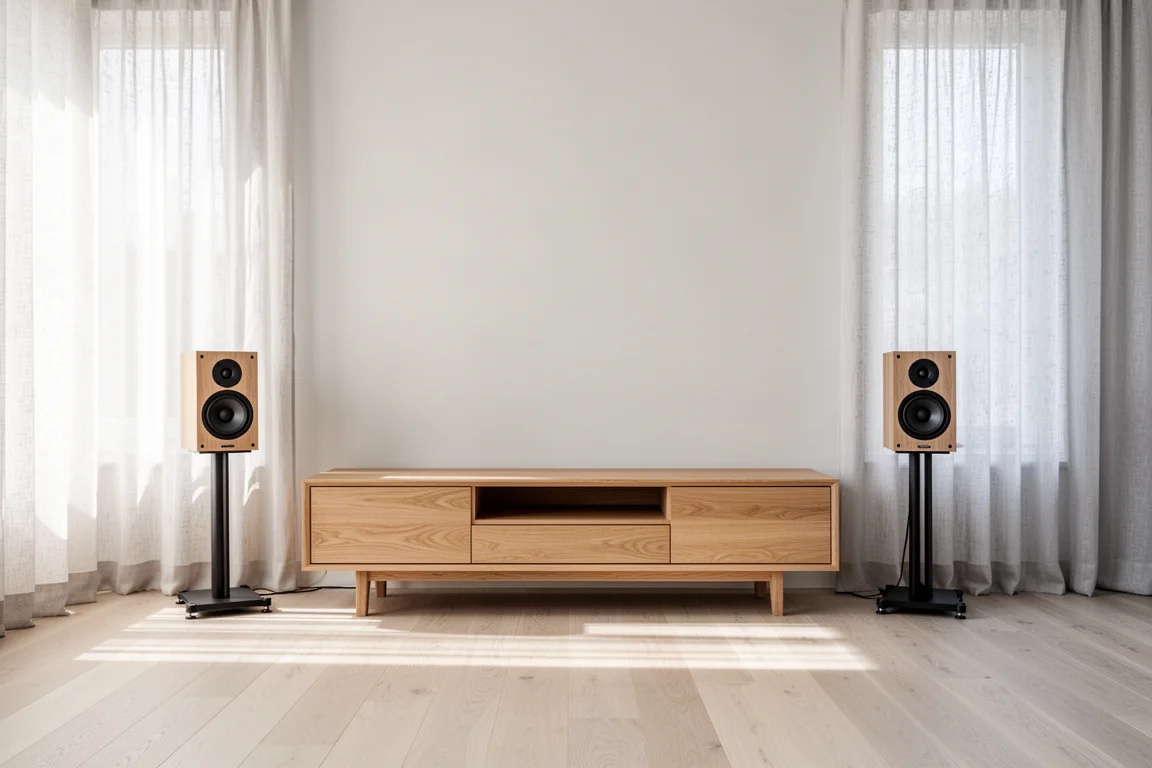
If vocal clarity is your first priority, audition the alternatives before committing. Whichever way you go, budget an hour or two for positioning, and pair the 3030c with a neutral or slightly cool amplifier rather than a warm one. Set up that way, it delivers far more low-frequency presence than its cabinet size suggests.
Conclusion
The Q Acoustics 3030c is an attractive, sensibly priced standmount that delivers excellent bass performance and a genuinely well-expressed top end. Its mid-range is a little thick and cloudy compared with the best of its rivals, and it is not a plug-and-play speaker, but it competes comfortably in a crowded and talented part of the market. For listeners who want small speakers that still fill a room, it earns a clear recommendation.
Product link
View more details for Q Acoustics 3030c
This product is mentioned in the review. Check the specifications, options, and compatibility before buying.
View more details for Q Acoustics 3030cFurther reading
Related Reviews
Hi-Fi Speakers
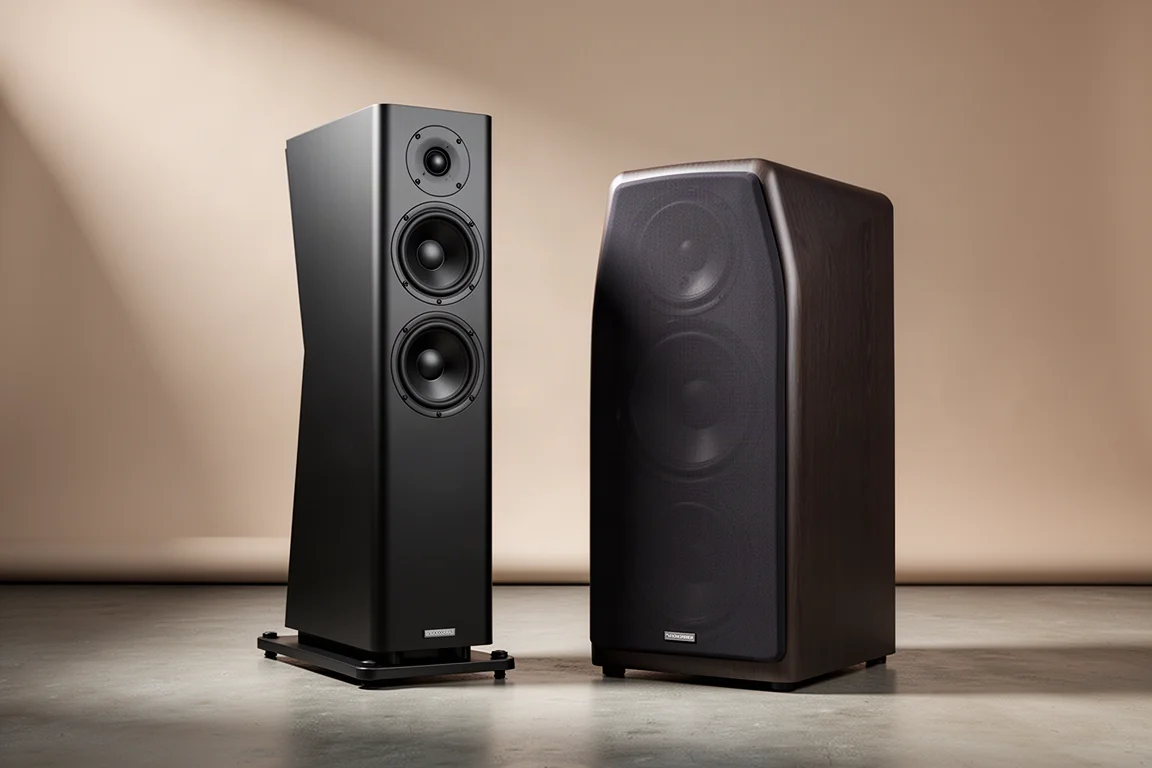
1723 THX Tower vs 1528 Bookshelf: Which Speaker Fits Your Room?
Two speakers at roughly the same price, built very differently. How the 1723 THX tower and the 1528 bookshelf compare on construction, bass, power needs, and sound.
Hi-Fi Speakers
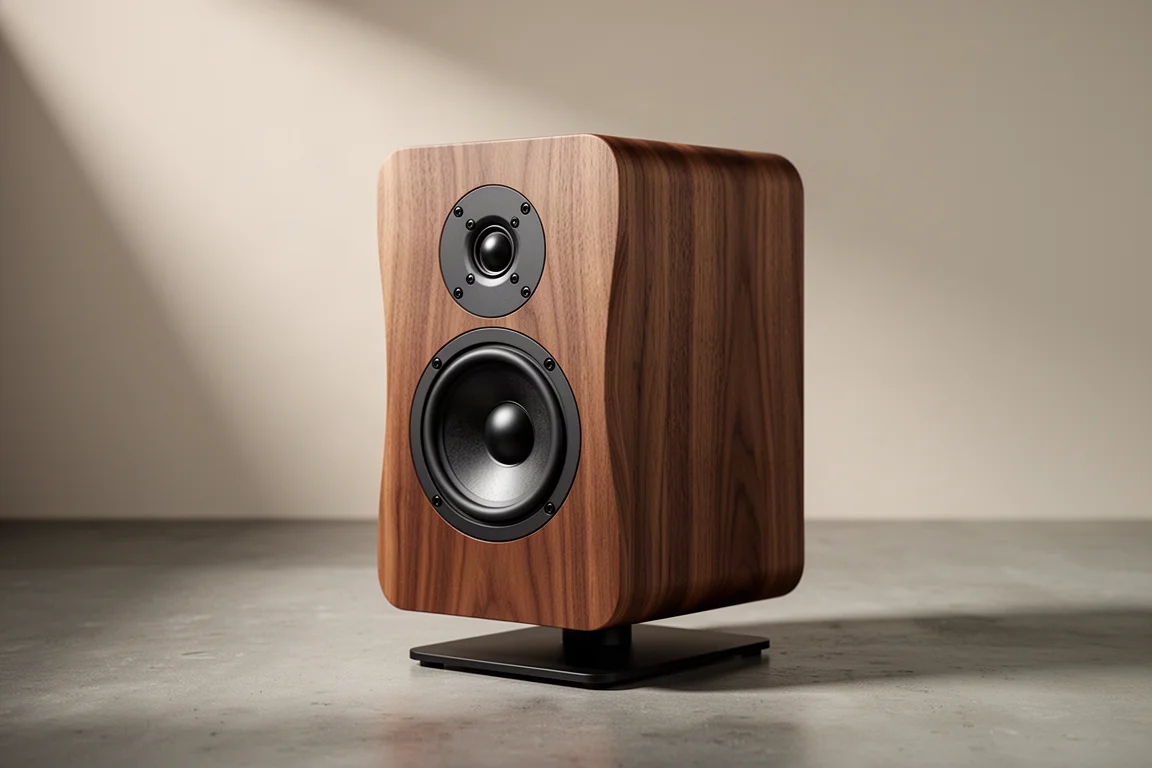
Acoustic Energy AE 300 Review: Deep Bass From a Compact Standmount
A two-way standmount with real wood veneer, surprising low-end weight, and a warm, easygoing character. Here is what to know before buying.
Hi-Fi Speakers
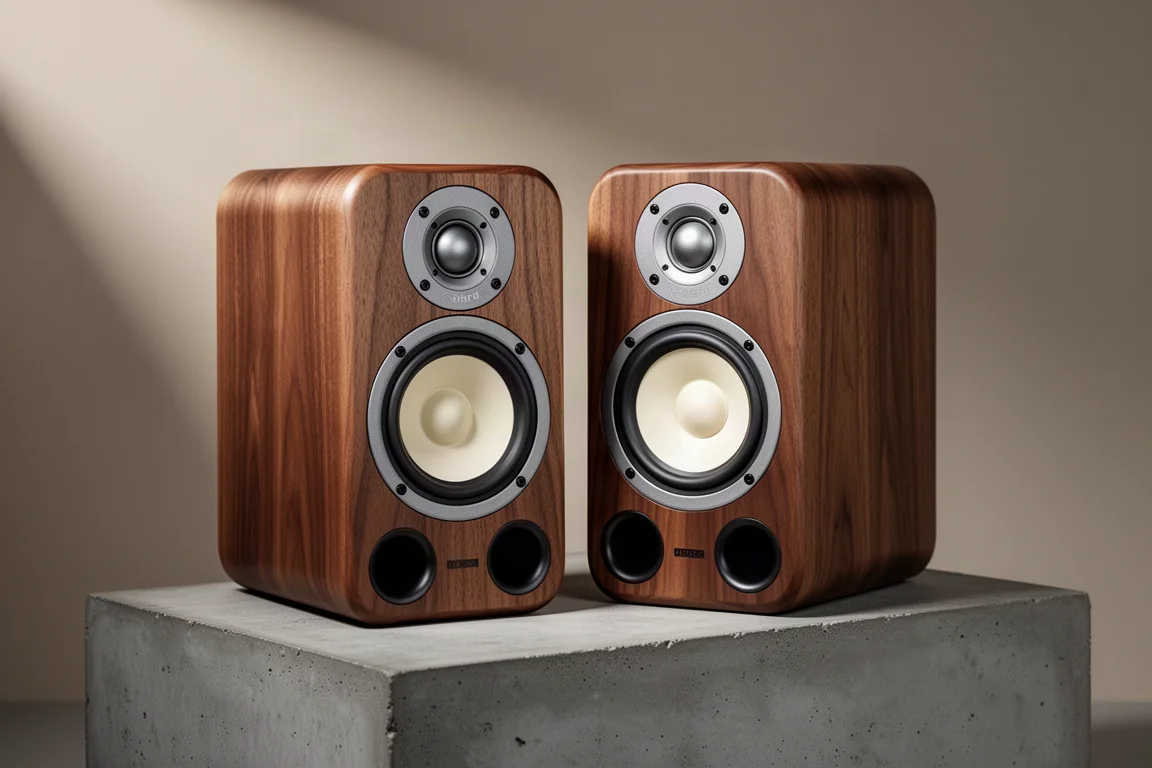
Acoustic Energy AE1 40th Anniversary Review: A Modern Take on a British Classic
A compact standmount that revives a 1980s favorite with all-new parts, a warm mid-centric balance, and a price of £1,499 per pair.