Audio Amplifiers
Pyle PDA29BU Review: What a $42 Mini Stereo Amplifier Actually Delivers
A close look at the Pyle PDA29BU, a compact budget stereo amplifier with Bluetooth, USB, and SD playback, plus the idle noise and bass clipping you should know about before buying.
Introduction
Pyle is a name most audio hobbyists recognise, even if they have never owned anything from the brand. For a long stretch it was the budget option in car audio, the amplifier or head unit you bought when the well-known premium brands were out of reach. It worked, it made music, and it sat firmly at the affordable end of the market.
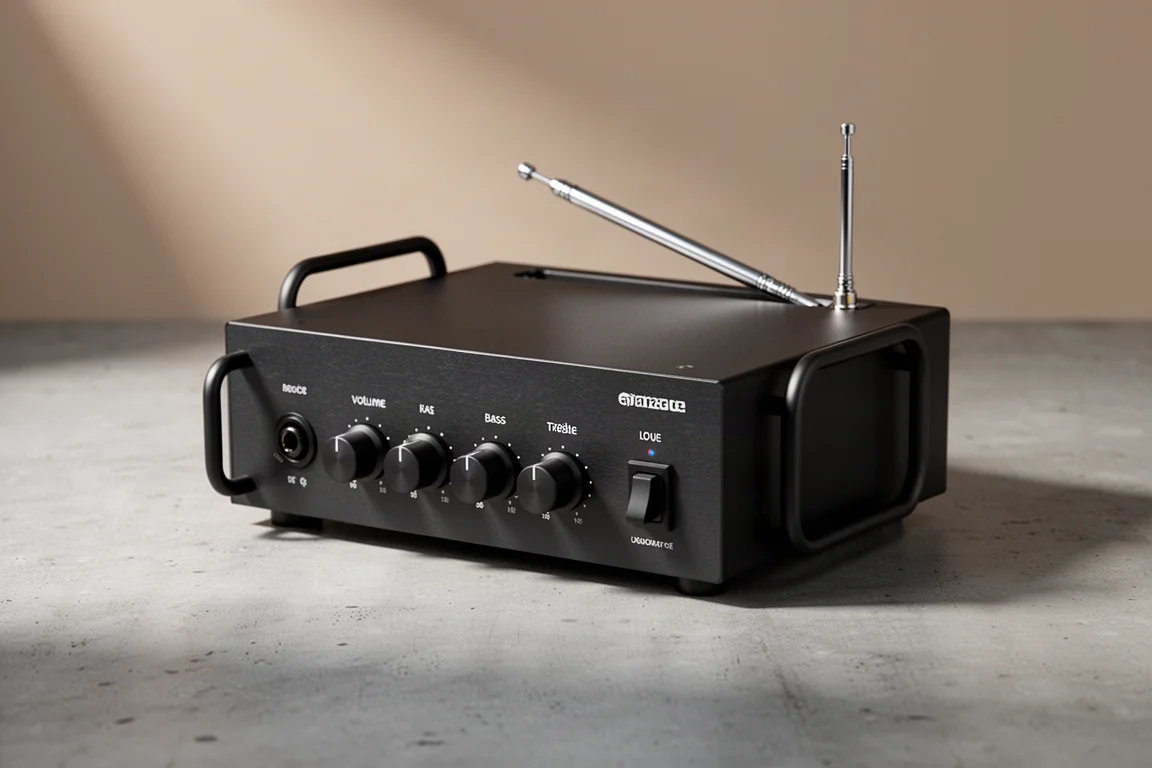
The Pyle PDA29BU is a desktop version of that same idea. It is a compact stereo amplifier with a front panel packed with controls and a price of $42. The published power figure is a 200 W peak rating, with no RMS number listed anywhere on the unit.
It arrives with Bluetooth, a USB input, an SD card slot, a single RCA input, two microphone inputs, bass and treble controls, and two speaker outputs rated for 4 to 16 ohms. There is a 12 V 5 A DC receptacle on the back alongside a fixed power cord, so it can run from a car or an RV as easily as from a wall outlet. The front carries handles, which makes it easy to pull out of a rack.
The question worth answering is whether that feature list translates into something you would actually want in a system, or whether the low price comes with compromises that show up the moment you connect a pair of speakers.
Who This Product Is For
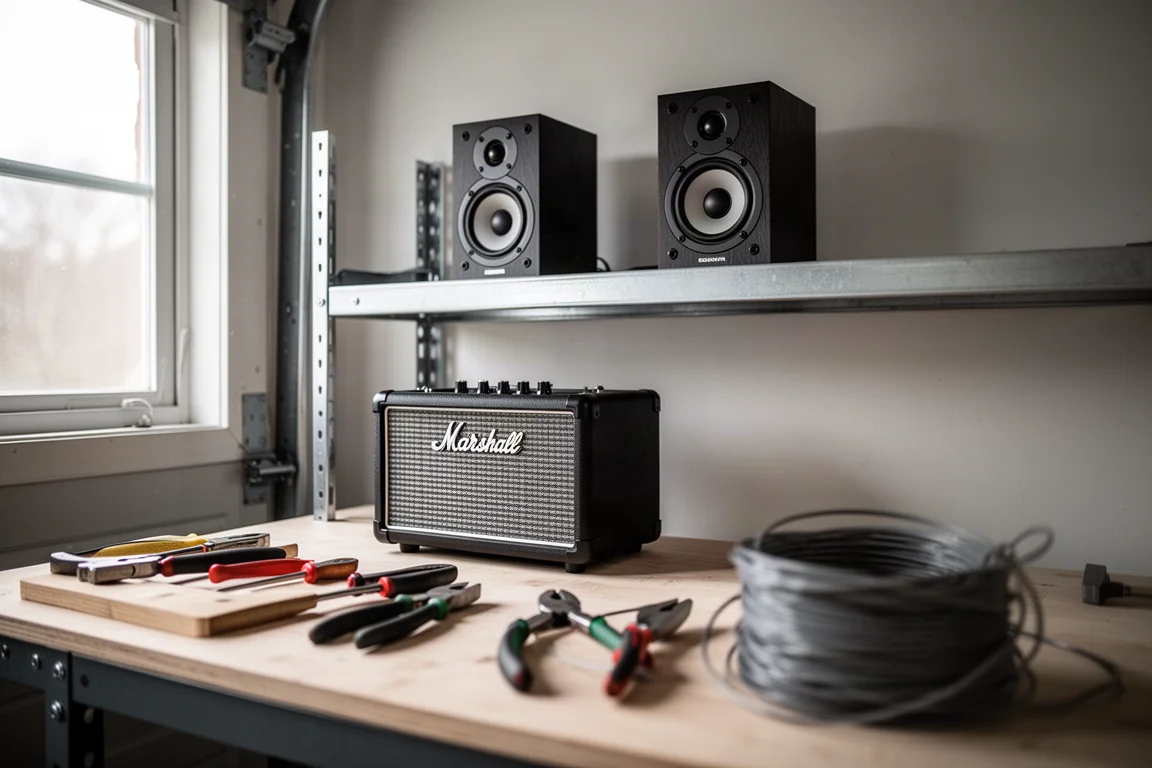
This amplifier makes most sense for people who enjoy the budget end of the hobby and want to experiment. It is a low-cost way to try out a separate amplifier, to power a pair of spare speakers in a garage or workshop, or to add background music to a space where a full hi-fi system would be overkill.
The 12 V input also makes it relevant for mobile use. A fixed power cord plus a DC receptacle means it can be wired into a car, a camper, or an RV without much fuss, and the small footprint suits tight spaces.
It is not aimed at listeners chasing clean dynamics at higher volumes. Anyone planning to drive demanding speakers at realistic listening levels should treat the PDA29BU as a curiosity rather than a foundation.
Main Strengths
The headline strength is how much connectivity Pyle has packed in for the money. Bluetooth streaming sits alongside USB and SD card playback, so you can play from a phone, a stick, or a card without adding anything else. There is a single RCA input for a wired source, two microphone inputs, and separate bass and treble controls for shaping the sound.
Speaker compatibility is broader than expected at this price, with outputs rated from 4 to 16 ohms. That covers most small bookshelf speakers you might already own. The front-panel handles and rack-friendly proportions also make it easy to slide into a shelf or rack bay.
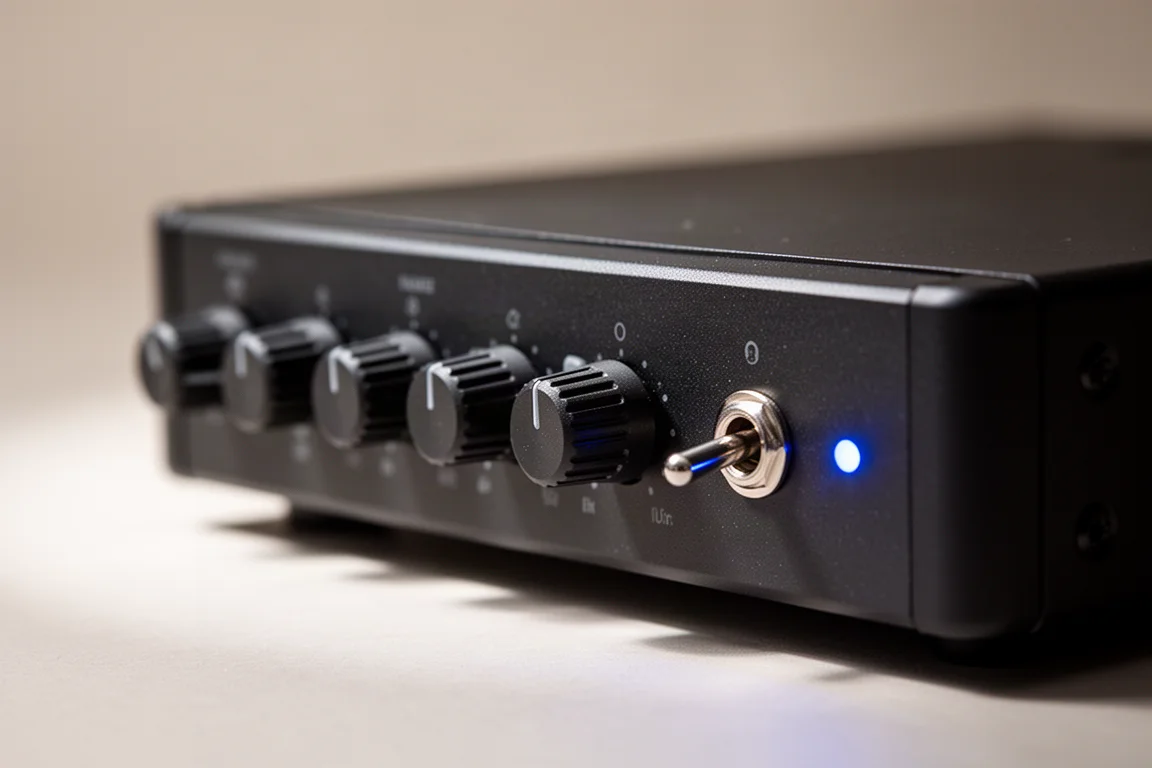
Physically it is genuinely small and light. The shipping weight came in at around 3.3 lb, and the unit sits comfortably in one hand. It also looks better in person than the price suggests, with blue illumination on the front panel that gives it a more considered appearance than a plain black box would.
Sound Quality in Practice
This is where expectations need to be managed. With the volume set low and no music playing, the amplifier produced an audible hum through the connected speakers. It was clearly audible from several feet away in a room with an air conditioner running, which is a level of background noise you would normally associate with an older receiver that has never been serviced.
With music playing at low levels, the result was more reasonable than the idle noise suggested. Simple material came through in a way that was perfectly listenable at modest volume.
Push it harder and the limits appear quickly. On bass-heavy tracks the amplifier struggled to hold the low end, and the sound gave out on bass notes at roughly 73 dB. At the beginning of a track it could keep pace with the bass for a few seconds before losing composure. Turning the volume up further did not feel like a safe option.
In other words, the PDA29BU can play music at low levels. It cannot play music loudly, and it will run out of headroom well before a typical pair of bookshelf speakers does.
Build Quality and Connectivity
The chassis is light and the front panel plastics are basic, which is expected at this price. On this particular unit there were small dents around the screw points, a reminder that quality control is not the priority here.
The telescoping rear antenna is the most fragile part of the package. It arrived slightly bent and does not feel like the sturdy antennas found on older gear, so it is best treated gently. The power cord is fixed to the chassis, while the 12 V 5 A DC input offers an alternative power route. That rating works out to roughly 60 W of available input power, which is a useful reality check against the 200 W peak claim on the box.
Speaker connections are straightforward, and the 4 to 16 ohm rating gives you room to experiment with different pairs of speakers without worrying about compatibility.
Things to Consider Before Buying
The first thing to weigh is the power rating. A 200 W peak figure with no RMS specification tells you very little about continuous output, and the 60 W DC input rating suggests the real usable power is far more modest.
The second is the idle noise. A constant hum through your speakers is not something you can tune out or ignore, and it is present even at low volume settings. If your listening space is quiet, that noise will be the first thing you notice.
The third is the clipping behaviour. Bass-heavy material caused the amplifier to lose the low end at moderate levels, so it suits quiet background listening rather than any kind of critical or energetic playback.
Finally, plan around the small stuff: the fragile antenna, the cosmetic imperfections that can show up out of the box, and the plastic feel of the front panel controls.
Buying Advice
At $42, the PDA29BU is priced like an experiment, and that is the right way to approach it. If you want a cheap way to add Bluetooth and USB playback to a pair of efficient small speakers in a workshop, garage, or camper, the feature set delivers real value for the money.
If you are hoping to drive a proper pair of speakers at normal listening levels, the idle hum and the bass clipping will get in the way quickly. Pair it with efficient speakers, keep the volume low, and treat it as a background music source rather than the heart of a system. Bought with those expectations, it is an inexpensive way to tinker with a separate amplifier without spending much.
Conclusion
The Pyle PDA29BU is a fascinating snapshot of what a very low budget buys in 2026. It offers Bluetooth, USB, SD playback, microphone inputs, tone controls, wide speaker compatibility, and even 12 V operation for the price of a modest dinner.
It also hums at idle, clips on bass around 73 dB, and ships with a fragile antenna and cosmetic imperfections. Those trade-offs are not surprises at this price, but they are real, and they define what the amplifier can and cannot do. Buy it as a cheap, characterful experiment, and it will do exactly what you paid for.
Product link
View more details for Pyle PDA29BU
This product is mentioned in the review. Check the specifications, options, and compatibility before buying.
View more details for Pyle PDA29BUFurther reading
Related Reviews
Audio Amplifiers
AGD Audion Mark III Review: A Compact Class D Amplifier With Tube-Like Musicality
A gallium nitride Class D amplifier that delivers tube-like midrange warmth, serious bass grip, and a modular upgrade path in a very small chassis.
Audio Amplifiers
Best Class D Amplifiers Under $100: Douk Audio A5 vs Fosi Audio V3
Two sub-$100 Class D amplifiers built on the same 3255 chipset, compared on bass weight, midrange body, treble presence, and real-world speaker matching.
Audio Amplifiers
Best Power Amplifiers Under $500: Six Stereo Amplifiers From $74 to $579
A practical roundup of six stereo power amplifiers under $500, covering real-world power, connectivity, cooling, and which kind of system each one suits.