Hi-Fi Amplifiers
Two Purist Amplifiers Worth Considering: Dayens Minto Custom and NVA AP20
A close look at two no-frills integrated amplifiers with high-grade internals, modest power outputs, and very different speaker requirements.
Introduction
Choosing an amplifier around the £1,000 to £1,500 mark usually means deciding how much convenience you are willing to give up. At this level, the most interesting designs often skip features entirely and put the money into the parts that shape the sound.
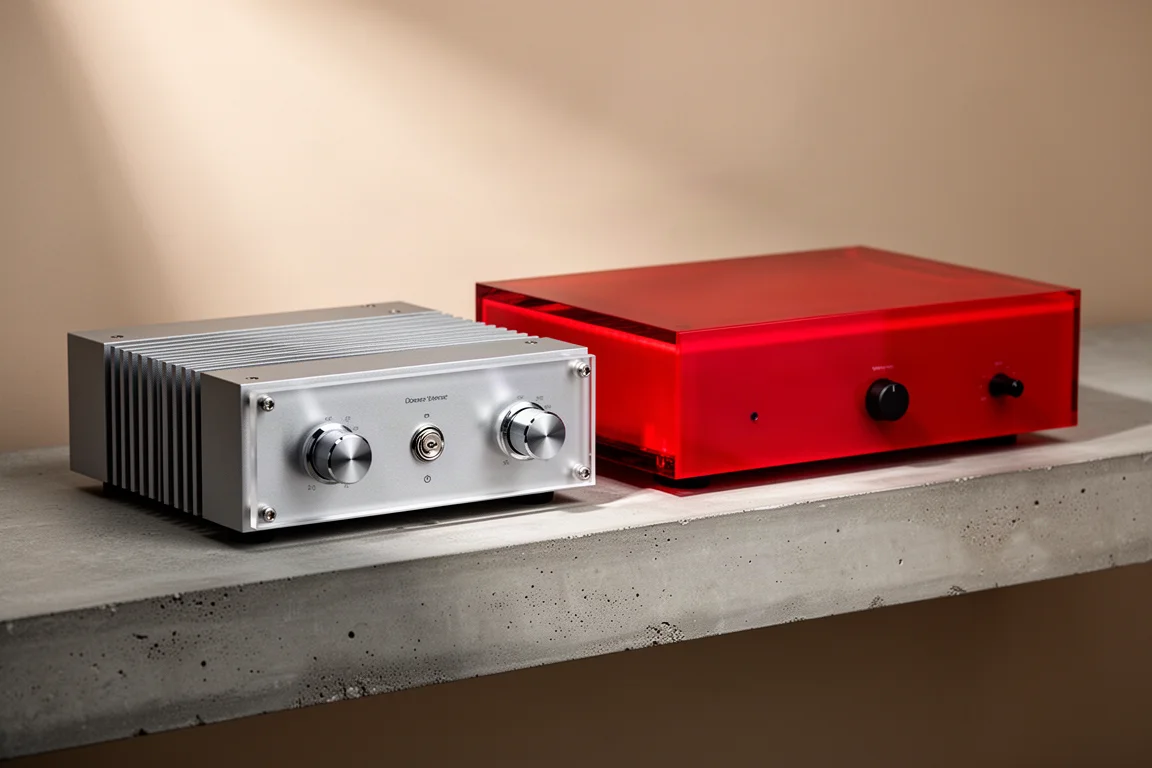
Two integrated amplifiers make that case well. The Dayens Minto Custom takes an existing £900 design and rebuilds it with premium components for £1,350, while the NVA AP20 is a £1,200 limited edition built around a cast acrylic chassis and a deliberately short signal path. Both are no-frills designs with modest power outputs, and both ask you to think carefully about the speakers you pair them with.
What Separates a Purist Amplifier From a Feature-Packed One
Purist amplifiers tend to share a set of characteristics. There is usually no built-in DAC, no streaming, no room correction, and sometimes not even a remote control. What you get instead is a shorter signal path, fewer compromises in the parts list, and a focus on the fundamentals of amplification.
That trade-off matters because it changes what you are actually buying. A feature-rich amplifier spreads its budget across digital inputs, processing and connectivity. A purist design puts the same money into capacitors, transformers, volume controls and connectors. Neither approach is automatically better, but they suit different listeners.
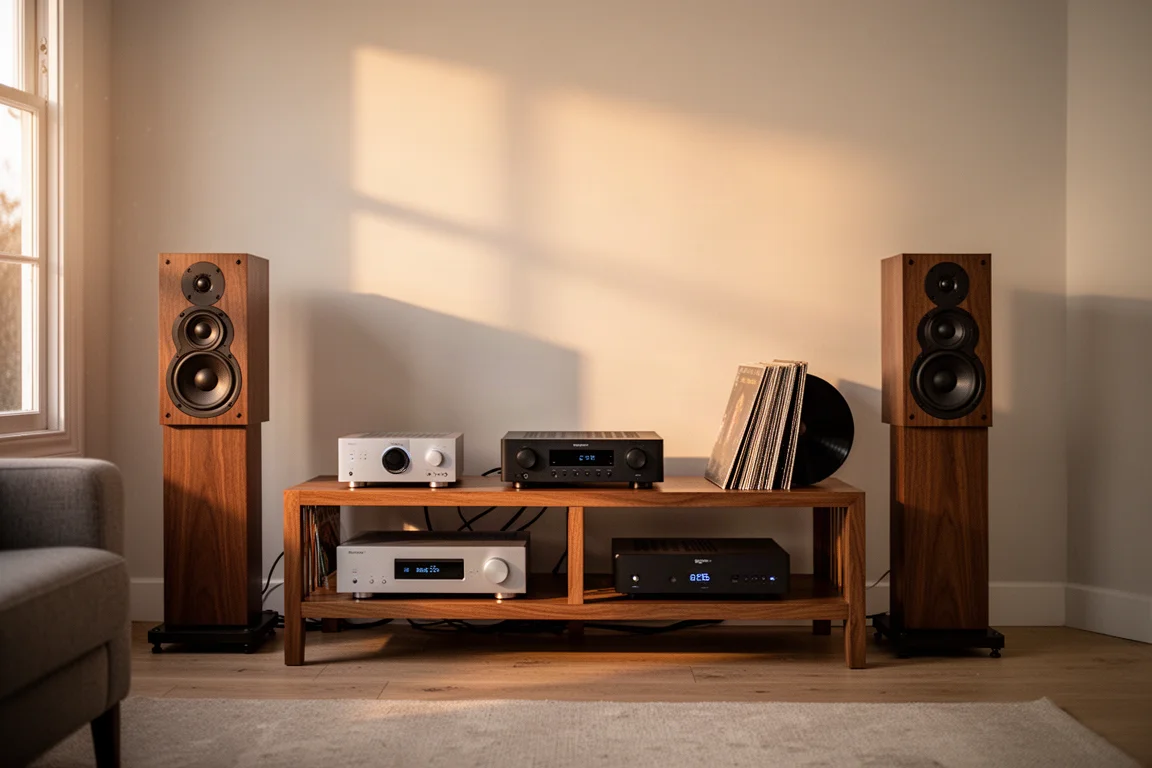
The catch is that purist amplifiers often deliver less power for the money. That is not a flaw in the design so much as a consequence of where the budget goes, and it makes speaker matching the single most important decision you will make.
Dayens Minto Custom: Component Upgrades in a Familiar Chassis
Dayens is a Serbian brand with a straightforward, no-nonsense approach, and the Minto Custom is its standard Minto amplifier rebuilt with significantly better parts. The standard version retails for £900, while the Custom costs £1,350.
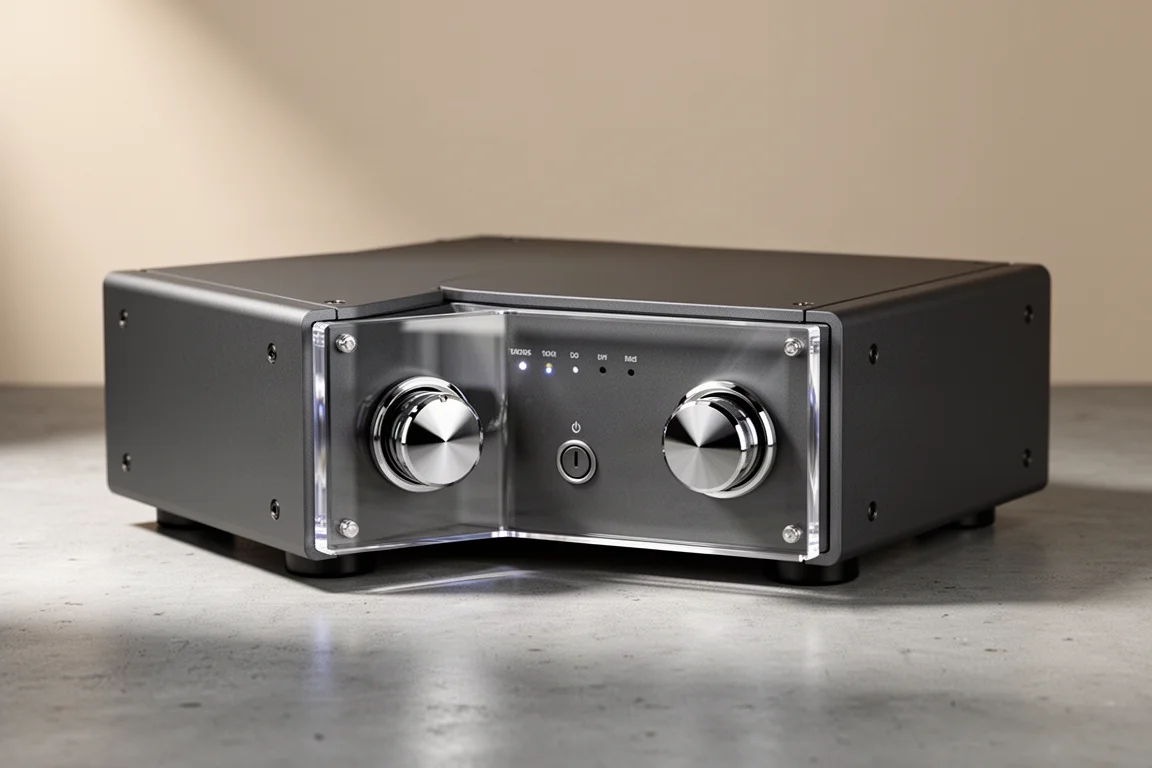
Externally, the two are identical. The Minto Custom is a half rack width unit with a folded steel chassis and an acrylic front panel. The power switch sits in the centre, with a chrome knob on the left for volume and an identical knob on the right to select between four inputs. Both dials have a pleasing resistance, and a remote control is included as the only nod to modern convenience.
The upgrades show up at the back and inside. The speaker binding posts are WBT connectors, and two of the four line level inputs are WBT as well. Internally, the volume control is an Alps Blue Velvet, the input capacitors are Mundorf MCap tin foil, and the power supply uses two 15,000 microfarad Mundorf Mlytic capacitors. Selected resistors have been upgraded too.
Power is unchanged from the standard model, at 50 watts per channel into 8 ohms and 70 watts per channel into 4 ohms. In listening, the Minto Custom came across as neutral, clean and dynamic, with a slightly rich tone that balanced well against articulate speakers. It kept a pair of 8 inch midwoofers under good control, and it was the easier of the two amplifiers to live with overall.
NVA AP20: Acrylic Casework and a Short Signal Path
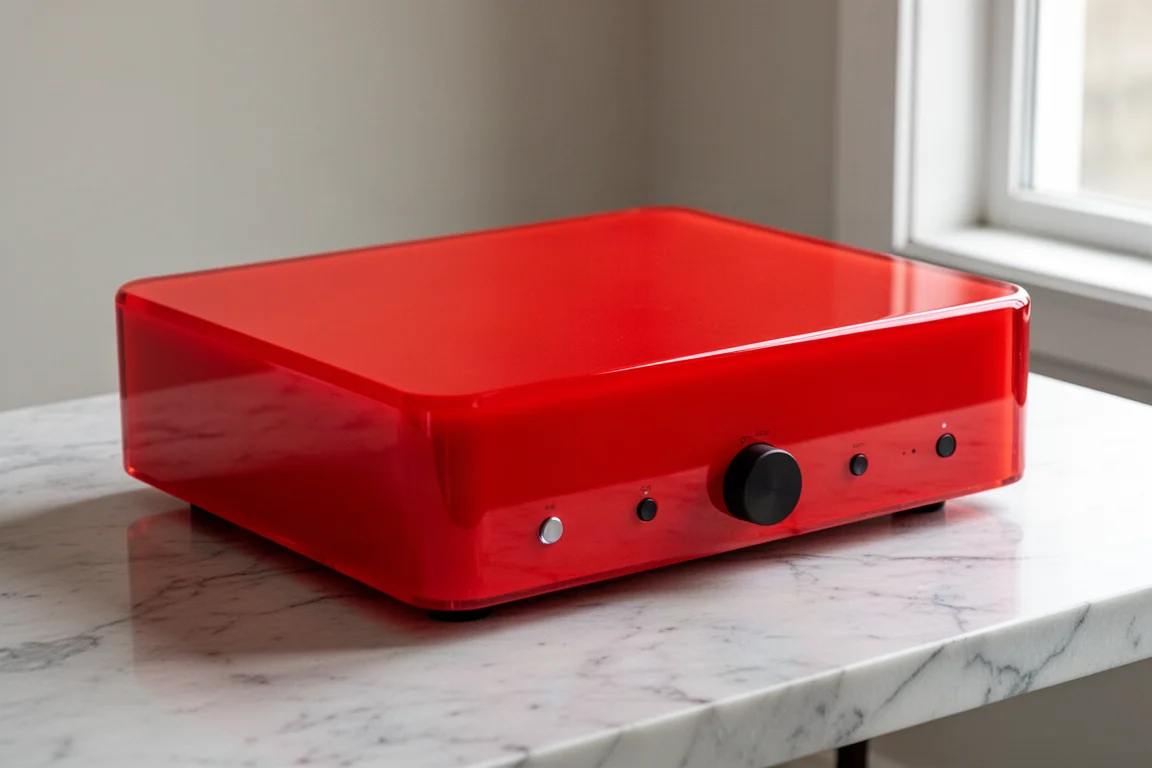
The NVA AP20 takes the opposite approach in almost every respect. It is a limited edition amplifier offered in three striking finishes and sold for £1,200 directly from the manufacturer.
Its most obvious feature is the cast acrylic case, which is not a cost-cutting measure. The material comes from the same company that manufactures durable display cabinets for the British Museum, and NVA chose acrylic over metal because it believes the eddy currents that circulate in metal casework have a negative effect on sound quality. The same reasoning explains why components are secured with adhesives rather than screws.
NVA includes only the features it considers necessary for operation or sound quality. There is no remote control. Instead you get a Japanese TKD volume control feeding a passive preamplifier stage, with four inputs to choose between. The AP20 is effectively a one-box version of the P50 preamplifier and S80 power amplifier with a beefed-up power supply, which keeps the signal path between the passive preamp and the power stage as short as possible. The speaker binding posts accept banana plugs only, and there are four RCA inputs plus a tape output for recording devices.
Inside, the parts list includes Vishay capacitors and toroidal transformers, and the transformer is rated at 120 VA rather than the 80 VA unit used in the S80 power amplifier. Output is 35 watts per channel.
Speaker Matching and Listening Levels
With 50 watts on one side and 35 watts on the other, the speakers you choose will shape your experience far more than any specification sheet suggests. Sensitivity and minimum impedance matter much more here than they would with a high-power design.
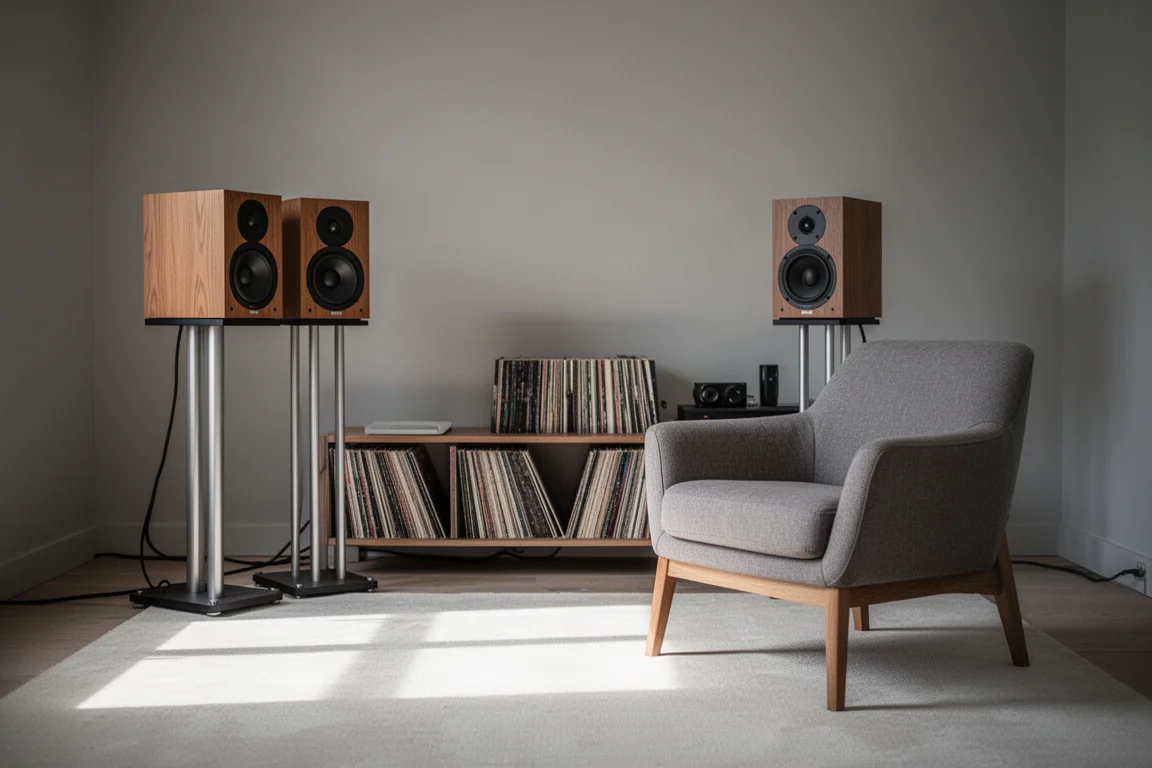
The AP20 showed both sides of this clearly. Driving a pair of stand-mount speakers with a minimum impedance of 4.9 ohms and a sensitivity of 87.5 dB, its resolution with simply recorded material was exceptional, but it began to lose composure as levels rose toward 80 dB with busier recordings. Paired instead with an easier load, a pair of speakers rated at 86 dB sensitivity into 8 ohms, it sounded clean and controlled at average levels in the low 80s with peaks approaching 90 dB.
That difference is worth understanding before you buy. If you are unsure what your normal listening level actually is, a sound level meter app on a phone is a reasonable starting point. It will not be as accurate as a calibrated microphone, but it gives you a useful sense of whether you listen at 70 dB or 85 dB, and that alone can tell you whether a modestly powered amplifier will feel comfortable in your room.
Where These Amplifiers Reach Their Performance Ceiling
Both amplifiers have a clear ceiling, and it is worth knowing where it sits. Driving a particularly revealing pair of speakers, neither the Minto Custom nor the AP20 delivered the control needed to hear them at their best. The AP20 had the clarity but not the control, while the Minto Custom offered a little more control but less clarity. A more powerful amplifier in the same listening room fared only slightly better, which suggests those speakers were simply asking for more than this class of amplifier can provide.
Against a more expensive reference amplifier costing £1,850, the differences were easier to describe. That amplifier delivered a similar tonal character to the Minto Custom with a little more detail, more impactful dynamics, a noticeably wider sound stage and better instrument separation. The AP20 still matched it for resolution with simply recorded material, and surpassed it once the music became busier.
None of that diminishes what these two amplifiers do well. For context, a well-regarded £1,100 integrated with 70 watts per channel and a built-in DAC will drive almost any speaker it is likely to meet, but it sits a class below both of these designs in outright sound quality. The trade is that you have to take more care with matching.
Power, Control and Realistic Expectations
More power usually translates into a bigger sound stage and better dynamics and control, but it does not automatically translate into more clarity. The AP20 makes that point neatly. Its transparency with simple recordings was the highest of the group, and with the right speakers it laid out a genuinely three-dimensional space with precise placement of performers.
The Minto Custom counters with rhythmic drive. Against the same easy-to-drive speakers, it gave up some of the AP20’s clarity in exchange for a more energetic sense of momentum. Which presentation you prefer is a matter of taste rather than a matter of one amplifier being better than the other.
Where the AP20 does reward care is in the conditions it needs. Pair it with speakers that are easy to drive and reasonably sensitive, keep listening levels sensible, and 35 watts per channel is plenty. Step outside those conditions and the amplifier will tell you quickly.
Feature Trade-Offs to Accept
It is worth being clear about what neither amplifier offers. There is no built-in DAC in either design, and no streaming, so your source components need to handle that side of the system. The AP20 has no remote control at all, and its binding posts accept banana plugs only. The Minto Custom includes a remote, though it is a basic handset rather than a premium one.
Both amplifiers are also limited to four line level inputs, which is generous enough for most vinyl, CD and streaming setups but leaves little room for expansion. If your system depends on digital inputs or app-based control, these designs will feel like a step backwards.
Overall Buying Advice
The choice between these two amplifiers comes down to the speakers you already own, or the speakers you plan to buy.
The Dayens Minto Custom is the more accommodating of the two. At £1,350 it comes close to the performance of some of the best amplifiers available below £2,000, and it is straightforward to match with a wide range of reasonably efficient speakers. If you want a no-nonsense integrated amplifier with high-grade internals and you are not chasing the last word in resolution, it is the safer purchase.
The NVA AP20 is a specialist piece. At £1,200 it delivers a natural tonality and a level of clarity that is hard to find elsewhere below £2,000, but only when it is paired with high-sensitivity, easy-to-drive speakers. Meet those conditions and it can outperform amplifiers costing considerably more. Miss them and it will run out of composure well before you expect it to.
For most listeners, the Minto Custom is the more sensible recommendation. For listeners who know their speakers are an easy load and who listen at moderate levels, the AP20 offers something genuinely special.
Conclusion
Both amplifiers show what happens when a manufacturer spends its budget on components rather than features. Neither is a general-purpose solution, and neither will flatter a demanding pair of speakers. Choose the Dayens Minto Custom if you want an easy-going, neutral amplifier that works with a broad range of systems, and choose the NVA AP20 if your speakers are efficient, your listening levels are sensible, and you want the highest resolution this price bracket can offer.
Further reading
Related Reviews
Hi-Fi Amplifiers
Accuphase E-280 Review: Entry-Level Accuphase With Flagship Attention to Detail
A close look at the Accuphase E-280 integrated amplifier, covering its champagne build, AAVA volume control, sound quality, and the speakers and sources that suit it best.
Hi-Fi Amplifiers
Advance Paris A10 Classic vs Yamaha A-S301: Two Integrated Amplifiers Compared
A practical comparison of a $350 integrated amplifier and a $2,500 reference model, covering the differences that matter and the ones that do not.
Hi-Fi Amplifiers
Affordable Chinese Amplifiers Worth Buying: Five Budget Hi-Fi Amps Compared
A practical look at five affordable amplifiers, what each one does well, and the trade-offs to weigh before you buy.