Speaker Drivers
Purify PTT Drivers Compared: 6.5 M, 6.5X and 8.0X
A practical comparison of three Purify driver units: the midrange-focused PTT 6.5 M, the aluminium-cone PTT 6.5X and the eight-inch PTT 8.0X flagship.
Introduction
Purify has only been part of the DIY audio conversation for a few years, but the company has made an outsized impression. Its drivers combine a distinctive motor architecture with an unusual surround profile, and the brand publishes far more technical documentation than most manufacturers of a similar size. The result is a small lineup where each model behaves quite differently from the next.
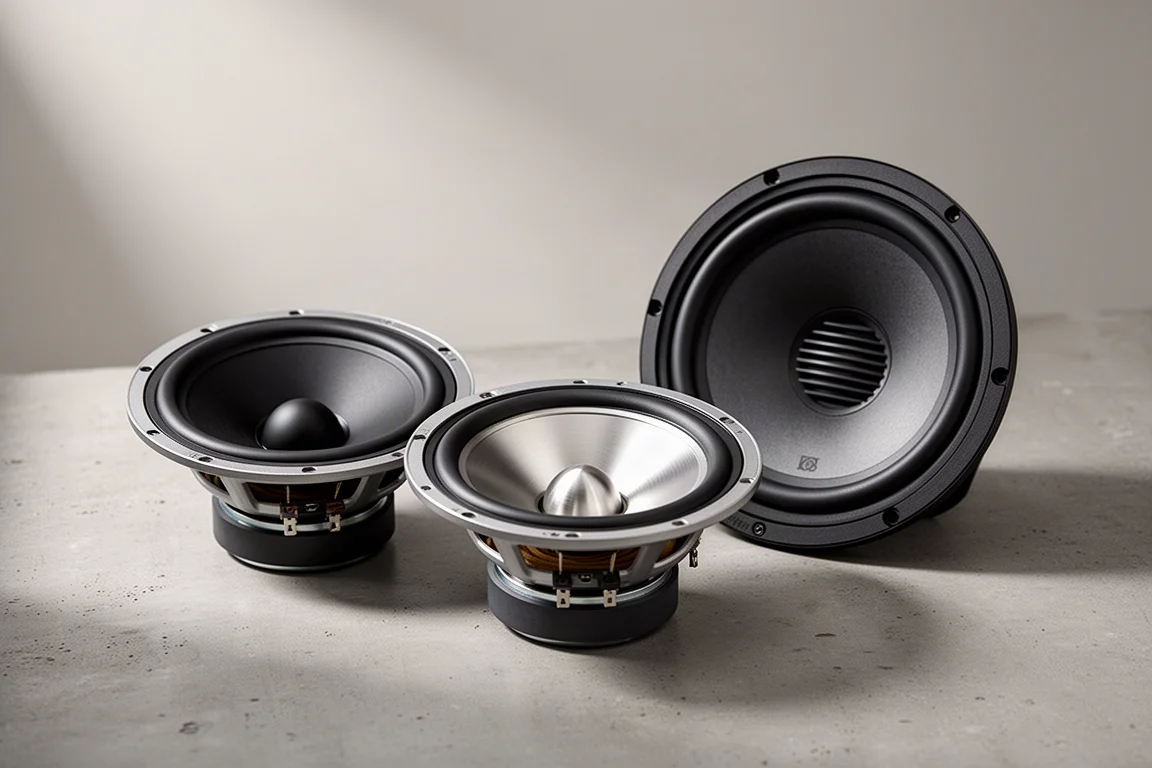
Three drivers sit at the centre of that lineup: the Purify PTT 6.5 M, the Purify PTT 6.5X and the Purify PTT 8.0X. They look similar at a glance and share a clear family resemblance in the motor and suspension, but they are built for genuinely different jobs. One is a dedicated midrange. One is a midwoofer with real linear travel. One is a large-format driver aimed at high-sensitivity designs.
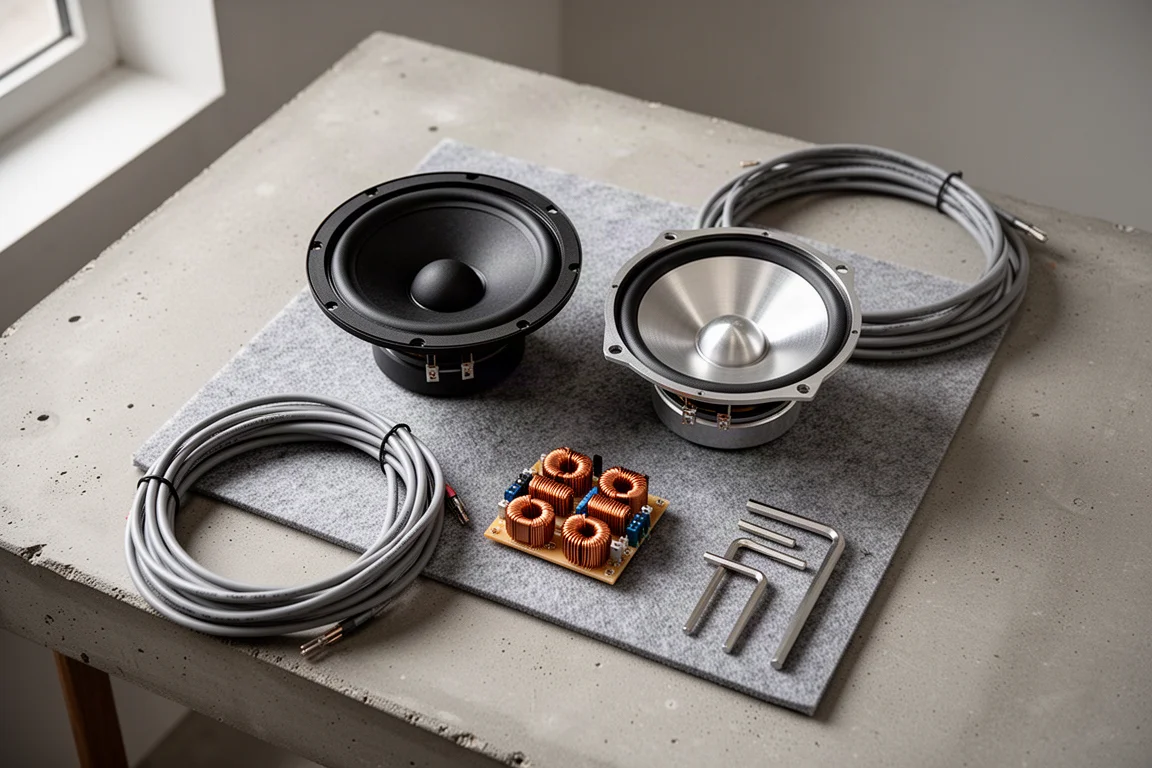
Price is a big part of the story. Direct from Purify, the 6.5 M lists at around $385 each, the 6.5X at around $425 each, and the 8.0X at around $630 each. None of these are budget components, and none of them pretend to be. What you are paying for is measured performance: low intermodulation distortion, controlled behaviour well past the crossover region, and enough linear excursion to let a properly filtered design sound effortless.
This guide walks through what each driver does well, where its limits sit, and how to decide which one belongs in your build.
Shared Design and Technology
All three drivers come from the same design philosophy, and understanding that philosophy makes the individual specifications much easier to read.
The most visible shared trait is the surround. It looks unusual compared with a conventional half-roll, and that is deliberate. On many drivers the radiating surface area changes as the cone approaches the extremes of its travel, which modulates the harmonics the driver produces. The Purify surround is shaped to keep the effective radiating area more consistent through the stroke, which helps hold that modulation in check.
The other common thread is the motor. Purify drivers are known for very low intermodulation distortion, and the published data supports that claim. The midrange detail these units produce is a direct consequence of how cleanly the motor behaves when two tones are reproduced at once.
What the three models do not share is how far they travel and how much of the frequency range they are meant to cover. That is where the choice gets interesting.
Purify PTT 6.5 M: The Midrange Specialist
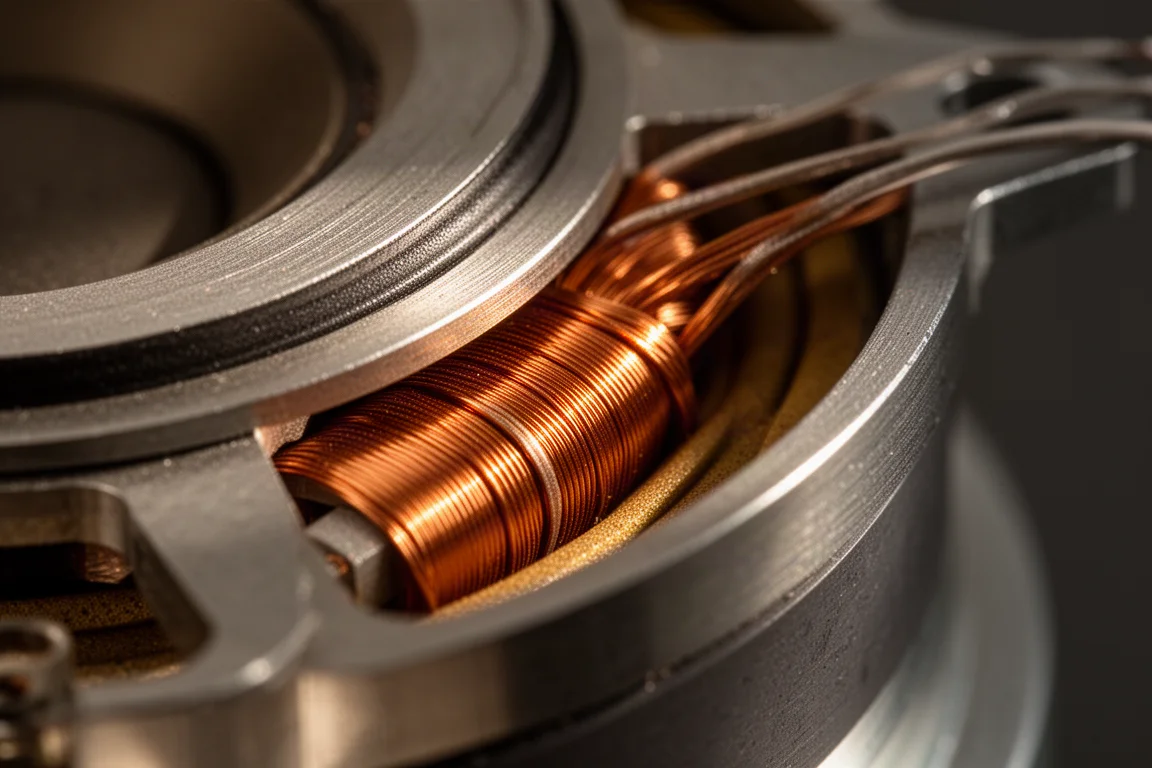
The M in PTT 6.5 M stands for midrange, and the driver is honest about it. The voice coil winding is visibly shorter than on its siblings, which means less copper sitting in the gap and, in turn, less linear throw. Measured linear excursion lands at roughly 3.3 mm one way, and that limit comes from motor force symmetry rather than from the suspension. In other words, the motor runs out of linearity before the spider and surround do.
Sensitivity averages around 88 dB at 2.83 volts at one metre, with output falling about 3 dB below that average by the time you reach 80 to 90 Hz. Beaming begins near 1.8 kHz and cone breakup starts around 3 kHz. Both are normal consequences of the cone diameter rather than design flaws.
That behaviour points to a crossover target near 2 kHz. Paired with a dome tweeter in a two-way, crossing in that region keeps the driver well clear of the rising breakup, and a notch filter around 3 kHz can flatten what remains. If you plan to use a waveguide, the radiation pattern can be matched more tightly, and you may be able to push the crossover a little higher.
Distortion stays below 1% THD until roughly 100 Hz and generally sits around 50 dB down, which is strong for a driver in this role. A high-pass filter trims the low-end distortion further and lets the motor do what it does best.
Purify PTT 6.5X: The Aluminium-Cone Midwoofer
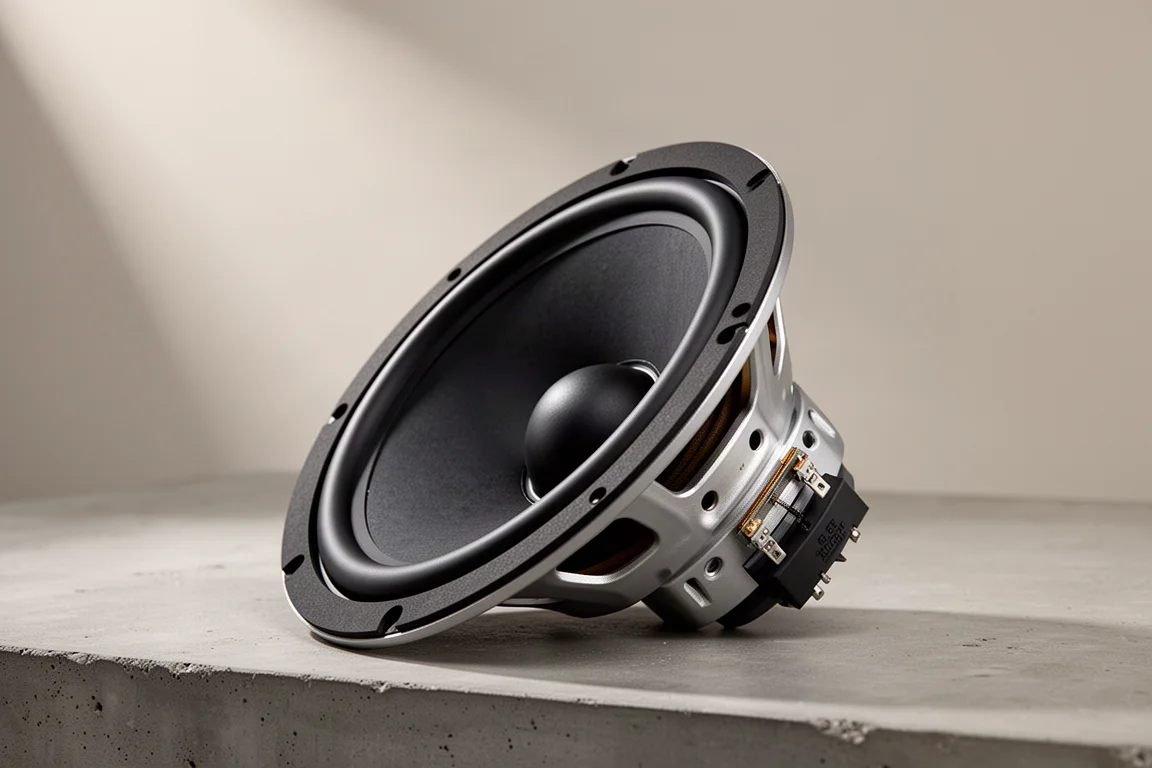
The PTT 6.5X swaps the cone material for aluminium and rebalances the motor for travel. The voice coil winding extends noticeably higher in the gap than on the 6.5 M, and the payoff is real: linear excursion reaches 5 mm one way at a 10% distortion threshold, limited by the suspension. Relax that threshold to 20%, the way you might for a subwoofer, and the figure rises to 7.6 mm one way. Motor force symmetry does not become the limiting factor until beyond roughly 8.7 mm one way, which is a great deal of clean travel for a driver this size.
The trade-off is sensitivity. Average output sits around 85 to 86 dB, a few decibels below the midrange model. Resonance and breakup are pushed out to about 5 kHz, and that mode is strong enough to justify a proper notch filter.
Free-air resonance is 26 Hz, but that figure should be read as a design reference rather than a target. A 6.5-inch driver asked to reproduce 26 Hz at high levels is being asked to do something it was not built for. A high-pass filter is the right approach, and once one is in place the suspension-driven excursion limits stop being the practical constraint.
The 6.5X is the natural choice when you want the Purify motor and surround in a midwoofer role, with enough stroke to hand off to a subwoofer cleanly.
Purify PTT 8.0X: The Eight-Inch Flagship
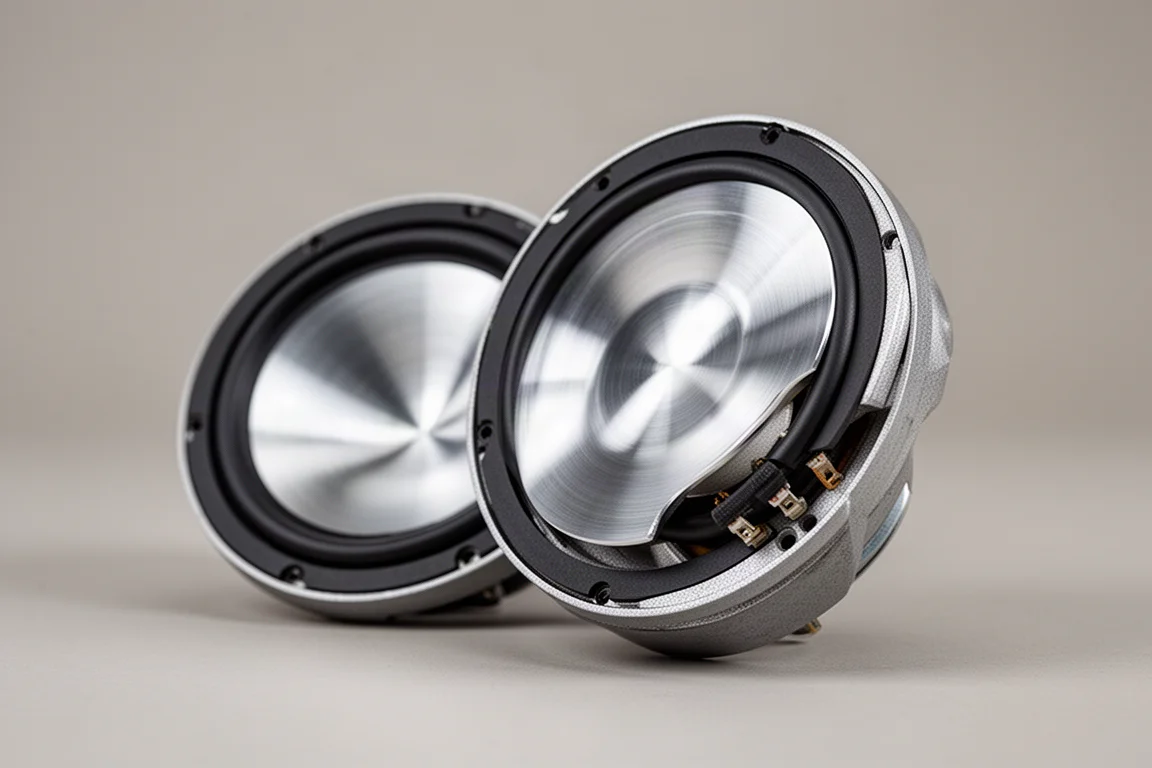
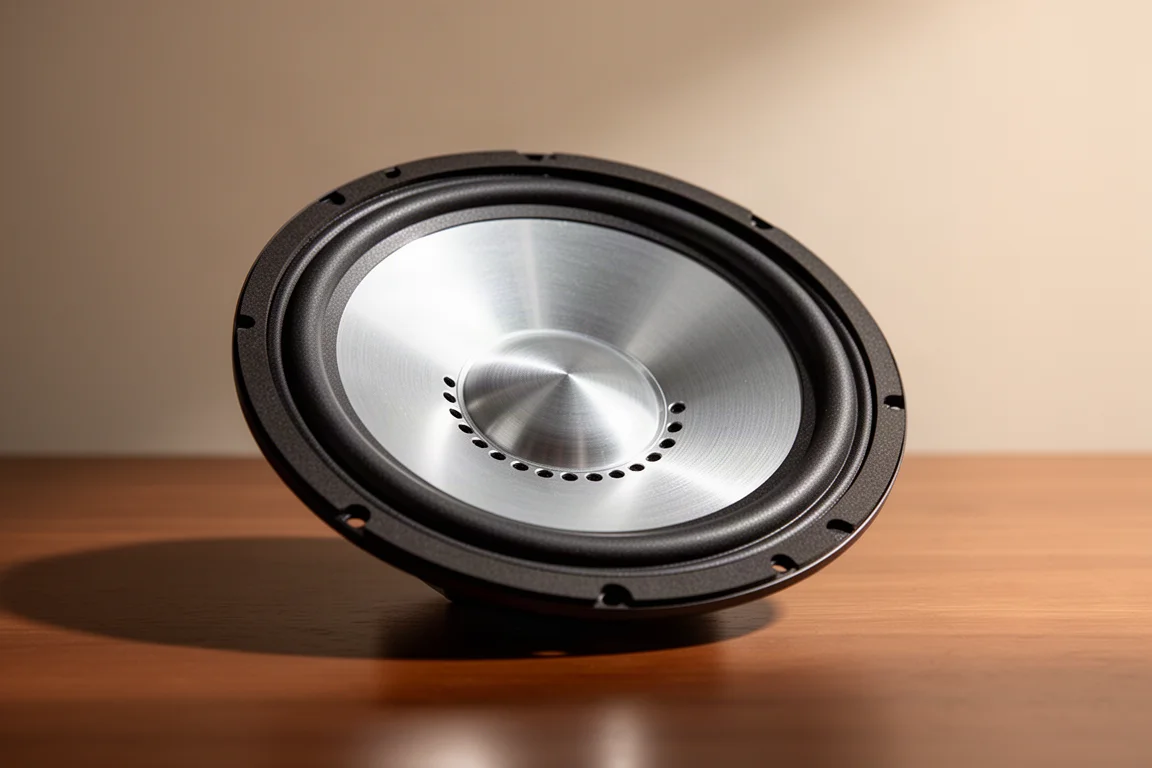
The PTT 8.0X is the largest and most expensive of the three at around $630 each, and it is also the most impressive on paper. The aluminium cone is paired with a ring of small holes under the dust cap that relieve pressure trapped beneath it, and there are more of them than you might expect.
Linear stroke measures 6 mm one way at a 10% distortion threshold and 7.8 mm one way at 20%, both suspension-limited. The motor’s BL curve is broad and flat, so with a proper high-pass filter in place the usable one-way excursion climbs to at least 9 mm. That “at least” matters: once the suspension was identified as the limit, testing stopped rather than pushing the driver further.
Free-air resonance is 20 Hz, measured with the driver in motion rather than at rest, and Qts is 0.30. That low figure raises eyebrows among car audio builders who have been told to look for something closer to 0.7 for infinite baffle use. The important nuance is where the crossover sits. Qts is defined at resonance, and once a steep electronic high-pass is applied well above resonance, the driver barely sees that region at all. A 24 dB per octave filter at 40 Hz puts the response around 48 dB down by 20 Hz, and Qts stops being the deciding factor. It matters far more in designs where the driver is expected to run near resonance without filtering.
Sensitivity is the headline: around 89 dB on average, which is remarkable given the excursion available. Beaming begins near 1 kHz, and breakup modes appear around 4 and 5 kHz. Unlike a simple resonance, these do not behave predictably off axis, so a notch filter cannot fully clean them up. Crossing over around 1 kHz to 1.2 kHz avoids the problem entirely. A second-order passive slope can work, and a fourth-order slope is better, though steep passive slopes mean large components, so DSP is often the more practical route.
Distortion performance is excellent. Measured at 96 dB, the driver holds roughly 50 dB down to about 90 to 100 Hz and stays under 1% THD until about 60 Hz. Combined with the sensitivity and the long linear stroke, this is a driver that suits a high-output two-way with a large waveguide, a three-way midbass position, or a car audio build where a midbass is filtered properly rather than run wide open.
How to Choose Between the Three
The decision comes down to role rather than quality, because all three drivers are built to a high standard.
Choose the PTT 6.5 M if you are building a three-way and need a dedicated midrange covering roughly 2 kHz down to a few hundred hertz with very low distortion. Its shorter throw is not a weakness in that role; it is the point.
Choose the PTT 6.5X if you want a 6.5-inch driver to carry more of the lower midrange and midbass, and you are willing to give up a couple of decibels of sensitivity in exchange for substantially more linear excursion.
Choose the PTT 8.0X if you need high sensitivity, long linear travel and a driver that stays clean well past 1 kHz. It is the most expensive option by a wide margin, but it is also the one that combines all three strengths at once, and it stands out most clearly against the wider market.
Buying Advice: Crossovers, Enclosures and System Fit
A few practical points apply to all three.
First, filter properly. Every one of these drivers is limited by its suspension at high excursion thresholds, and a high-pass filter removes that limitation from the equation almost entirely. What remains is motor force and inductance behaviour, which is where these motors are strongest. Running any 6.5-inch or 8-inch driver wide open invites problems regardless of how good the design is.
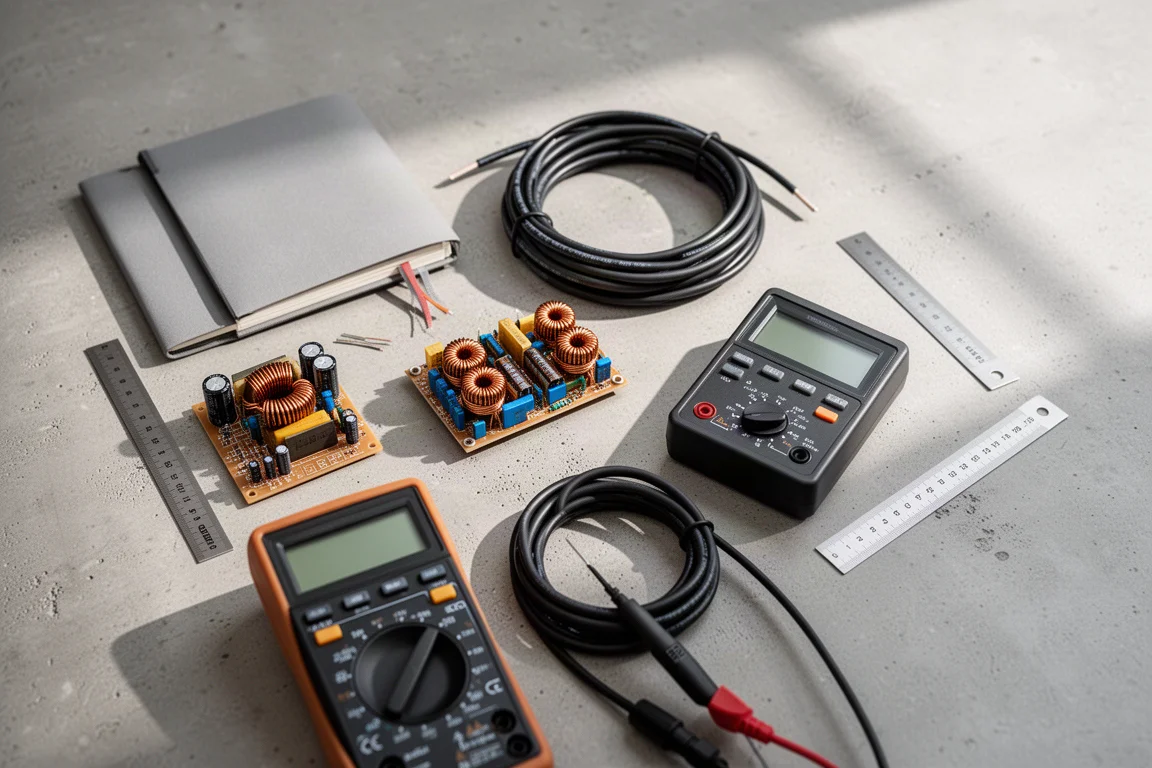
Second, cross where the data says to cross. Around 2 kHz for the 6.5 M, above its 5 kHz resonance for the 6.5X, and around 1 kHz to 1.2 kHz for the 8.0X. The breakup modes on the aluminium-cone models are not the kind a single notch filter resolves off axis, so keeping the crossover below them is the cleaner solution.
Third, budget for the whole build rather than the drivers alone. At around $385, $425 and $630 each, a stereo pair is a serious investment before you factor in crossovers, enclosures and amplification. That said, the measured performance is class-leading in each case, and the low intermodulation distortion is the reason these units deliver a level of midrange detail that cheaper drivers struggle to match.
Conclusion
The Purify PTT family is small but sharply differentiated. The 6.5 M is a purpose-built midrange with a shorter winding and a 3.3 mm one-way limit set by motor symmetry. The 6.5X trades sensitivity for travel, offering 5 mm one way at a 10% threshold with a strong resonance near 5 kHz to work around. The 8.0X is the standout: roughly 89 dB of sensitivity, at least 9 mm of usable one-way excursion with a high-pass in place, and distortion that stays remarkably low down to about 60 Hz.
If you want the best all-round combination of sensitivity, linear stroke and crossover flexibility, the 8.0X is the one to save for. If your design calls for a dedicated midrange or a midwoofer with a specific bandwidth, the two 6.5-inch models are more than capable of carrying their share of the load.
Further reading
Related Reviews

Backpacking Gear
Building a 10 lb Base Weight: An Ultralight Backpacking Gear List
A practical walkthrough of the ultralight pieces behind a 10 lb base weight, from a 765 g pack and a roomy one-person tent to a full camp chair and a dependable water filter.

Road Bikes
10 New Road Bikes Worth Watching: Aero, Titanium, Steel and Endurance Standouts
A practical roundup of 10 new road bikes, from aero flagships chasing single-watt gains to titanium, steel and endurance platforms built for real roads.

Bikepacking Gear
11 Bikepacking Essentials for Long-Distance Cycling
Eleven bikepacking essentials for long-distance cycling, from a steel gravel frame and a two-person tent to helmet lights, packable gloves, and a frame bag that puts weight in the right place.