Hi-Fi Speakers
Pure Audio Project Trio 10 H AMT vs Duet 15: Two Open-Baffle Speakers Compared
A practical comparison of two open-baffle speakers from Pure Audio Project: the fast, transparent Trio 10 H AMT and the relaxed, forgiving Duet 15.
Introduction
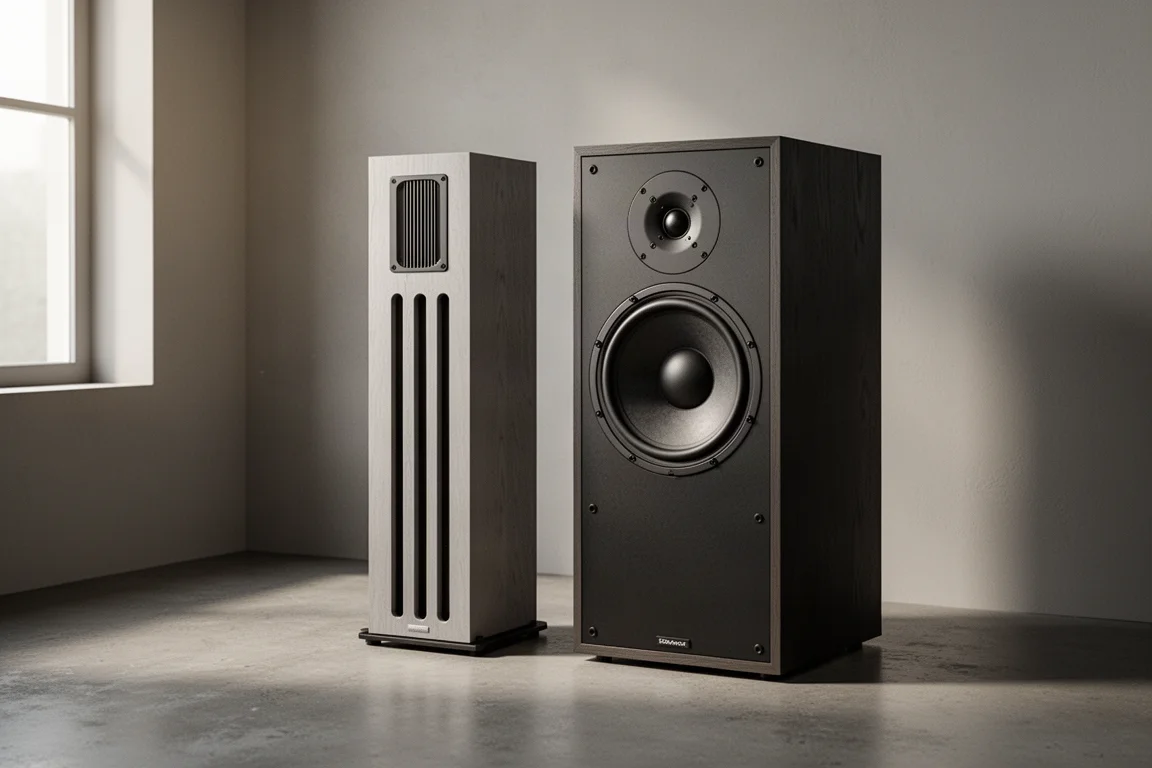
Pure Audio Project builds open-baffle loudspeakers and sells them direct to listeners worldwide rather than through a dealer network. Two of its models sit close to each other in size and price: the Trio 10 H AMT at $5,900 per pair plus shipping, and the Duet 15, a 15-inch-woofer design that has served as a reference speaker in open-baffle systems.
On paper the two look like siblings. In a room they behave like different speakers. The Trio 10 H AMT is the faster, clearer, more transparent of the pair. The Duet 15 is the calmer, warmer, easier listen. Choosing between them comes down less to which one is better and more to which one matches the way you actually listen.
This guide covers what each speaker does well, what each one asks of the rest of the system, and the practical details worth knowing before ordering.
Two Open-Baffle Speakers, Two Very Different Personalities
Open-baffle designs skip the box. Drivers mount on a flat baffle and radiate front and rear, which changes how the speaker loads a room and how it needs to be positioned. Both of these models follow that approach, and both use drivers built specifically for the task rather than off-the-shelf parts.
The differences show up quickly in the specifications. The Trio 10 H AMT is rated at 88 dB sensitivity. The Duet 15 is rated at 96 dB. That 8 dB spread is significant: it means the Trio 10 H AMT leans on amplifier power in a way the Duet 15 does not.
The voicing diverges just as clearly. The Trio 10 H AMT comes across as fast, clean, and transparent, with a level of leading-edge clarity that makes recordings feel immediate. The Duet 15 is more reserved and relaxed, softer on transients and mellower overall. Neither is dull. They simply aim at different things.
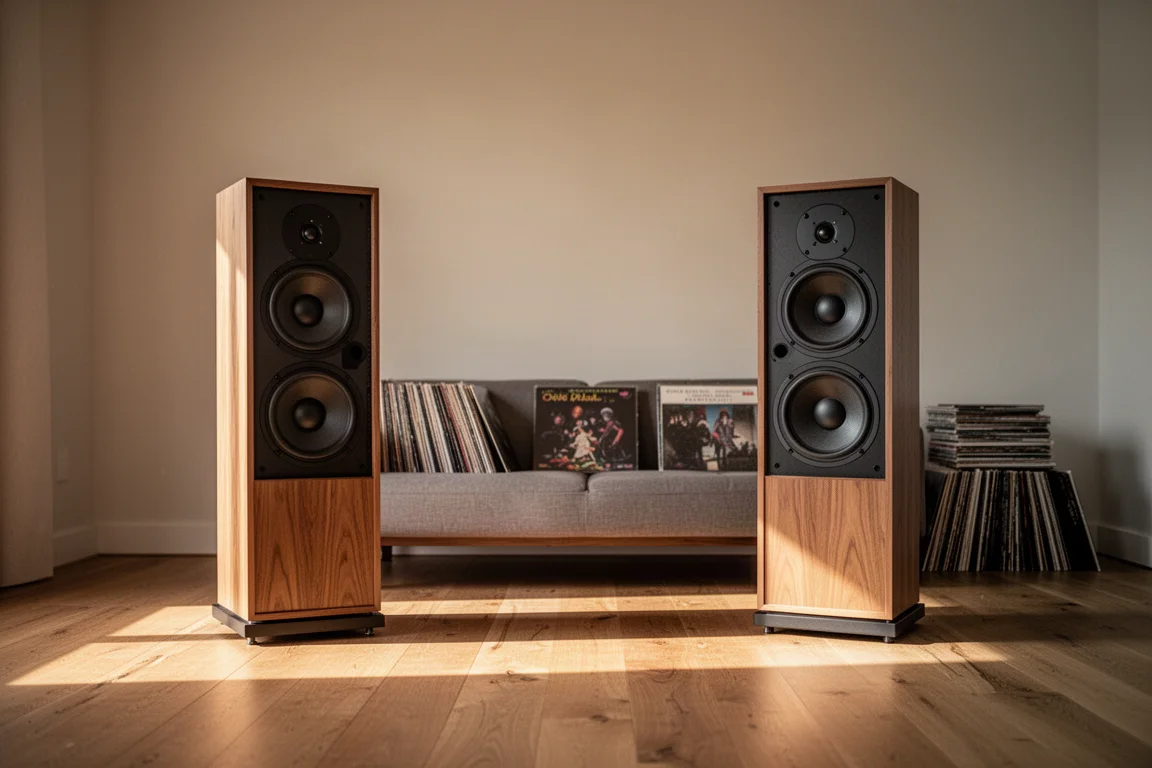
Those personalities hold across genres. On unaccompanied vocal recordings, the Trio 10 H AMT renders presence and body through a natural, uncolored midrange. On jazz, cymbals and vibraphone keep their air and separation. The Duet 15 takes the same material and softens the edges, trading some of that immediacy for a more laid-back presentation.
Pure Audio Project Trio 10 H AMT: Speed, Clarity, and an Unusual Tweeter
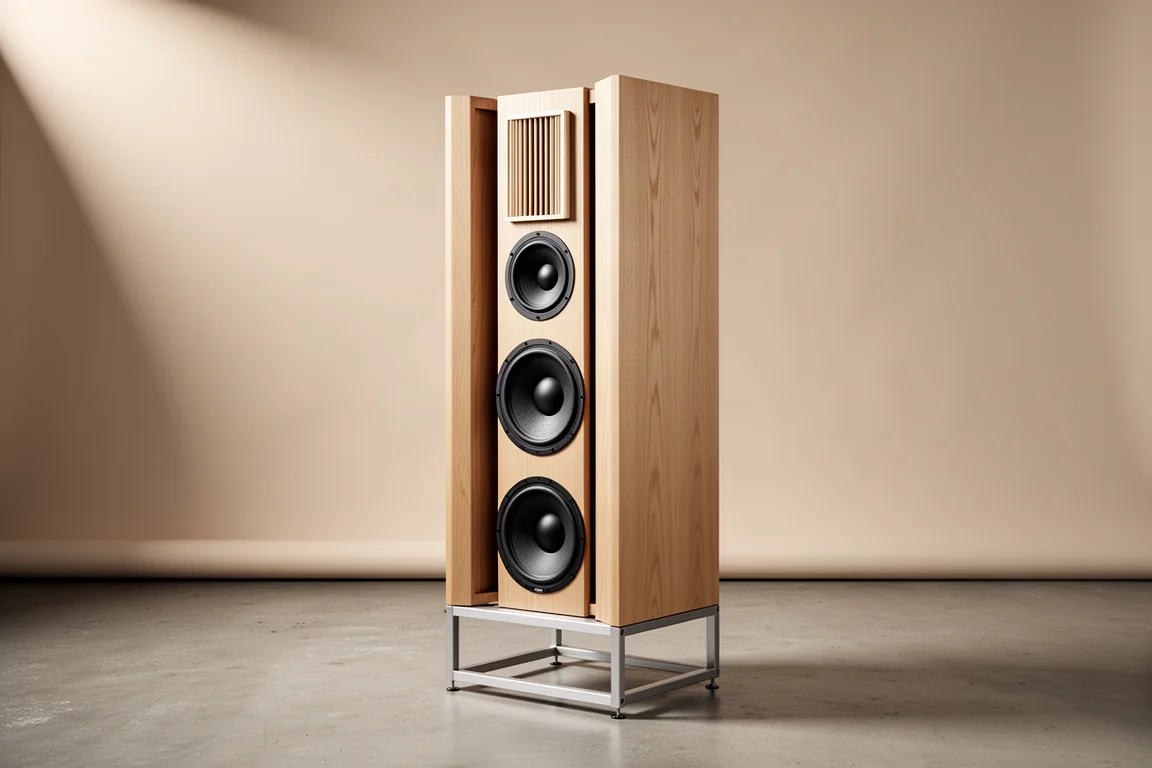
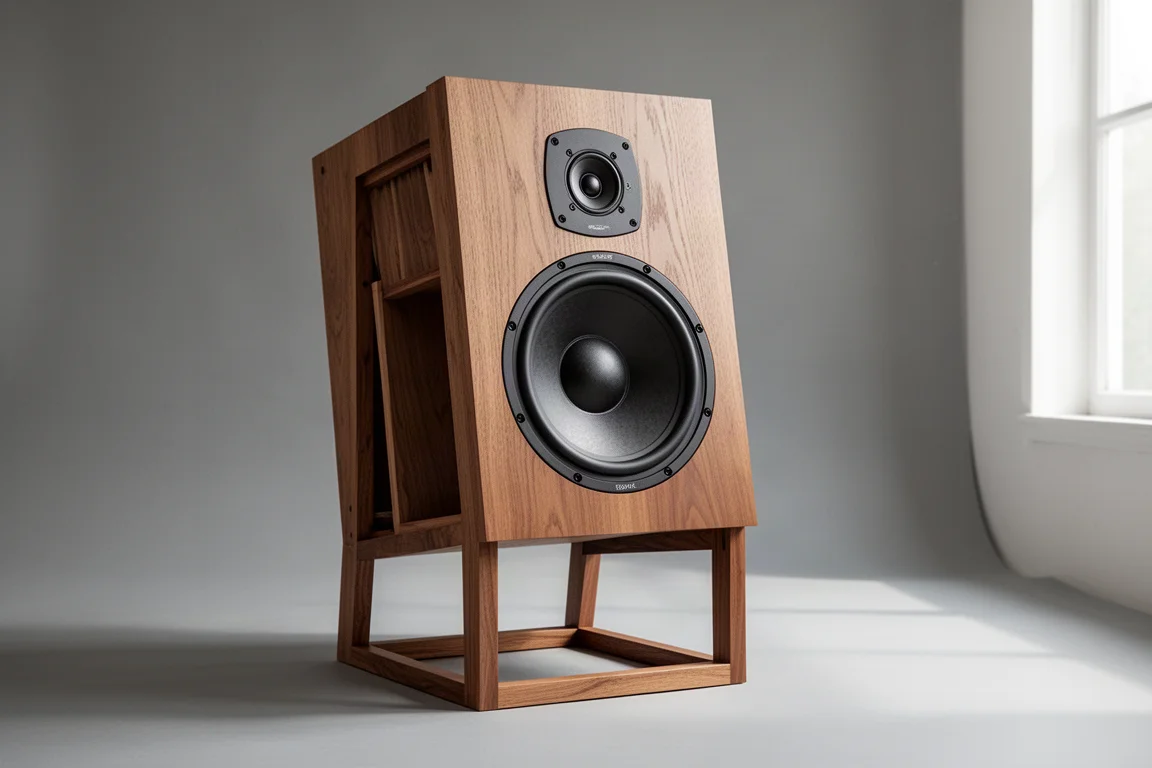
The name points to the driver at the top of the baffle. The H AMT uses an air motion transformer tweeter, and the rest of the speaker is built around it: two 10-inch woofers designed specifically for open-baffle use and made exclusively for Pure Audio Project by Morel, with 3-inch voice coils and enough power handling to move real air.
The enclosure, such as it is, consists of three front baffle panels available in a wide range of finishes. The speaker stands 38 inches tall, which is modest for a design that produces this kind of scale. Once dialed in, the presentation is genuinely large: a wall of sound with exceptional depth and focus, and a three-dimensional quality that holds up even for listeners accustomed to open-baffle and panel speakers.
The trade-off is sensitivity. At 88 dB, the Trio 10 H AMT favors higher-powered amplification, and it is not at its best when played very quietly. Late-night sessions at whisper levels are where the Duet 15 pulls ahead. Give the Trio 10 H AMT some volume and adequate power, and it answers with speed and clarity that are hard to match at the price.
The AMT Tweeter and the Driver Package
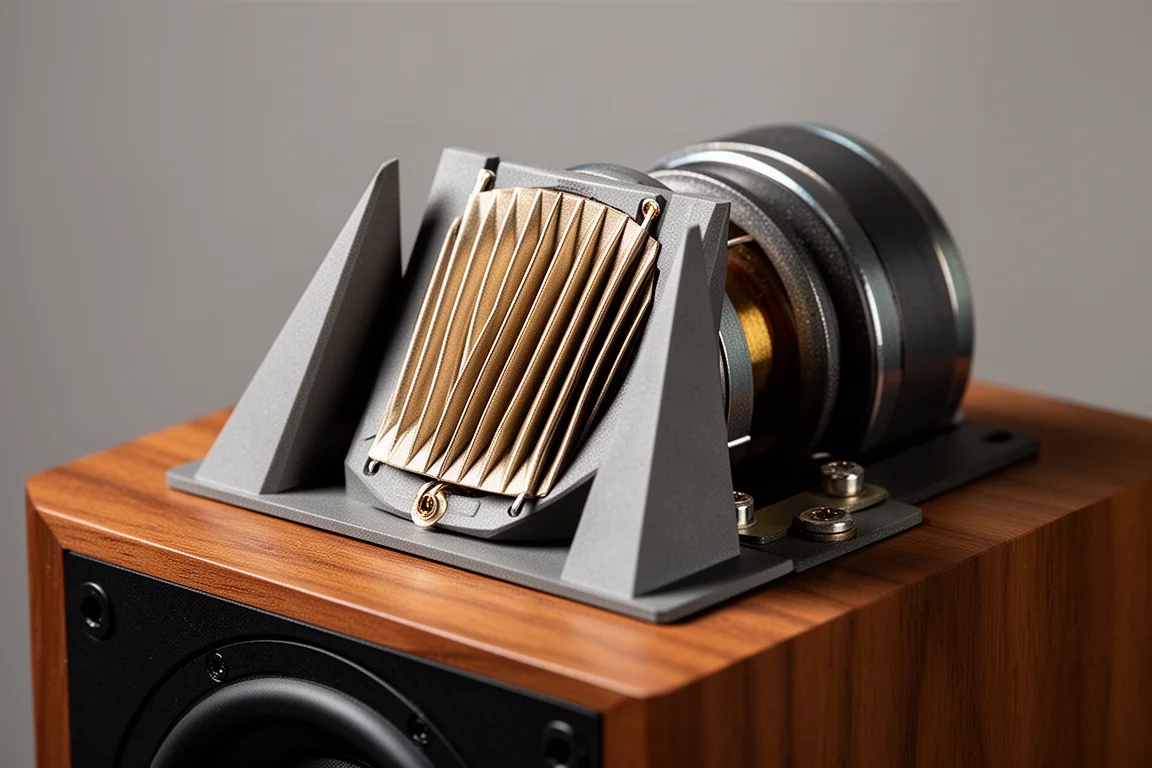
The tweeter is the most distinctive part of this speaker. It comes from ESS, a California company that has been building air motion transformer drivers since 1972, and it is a dipole: it radiates as much energy from the rear as from the front. Very few air motion tweeters are built this way.
It is also heavy. The tweeter alone weighs 14 pounds, a consequence of a large magnet assembly. The wedge-shaped structures on the front and rear act as waveguides for the diaphragm. They stabilize its movement and lower distortion, and they are part of the original design rather than a later refinement.
The supply chain is genuinely international. The magnets come from Germany, the plastic waveguides and tweeter frame come from China, and the diaphragm is made in California, where final assembly, testing, and quality control also take place.
One more specification stands out. The tweeter’s response extends down to 600 Hz. Most tweeters only reach down to 2 kHz, and some stop at 3 kHz, which leaves a much wider band for the woofer to cover. Crossing over at 600 Hz keeps the critical midrange with the tweeter and lets the two 10-inch woofers concentrate on the bass.
That arrangement helps explain the midrange character. Vocals arrive with presence and tonal accuracy, and nothing about the presentation is hyped, bright, or overly warm. It sits in a natural middle ground that suits long listening sessions.
Pure Audio Project Duet 15: The Relaxed Reference
The Duet 15 takes the opposite approach. Its 15-inch woofer and 96 dB sensitivity make it an easier load for almost any amplifier, and its voicing is deliberately gentler. Where the Trio 10 H AMT sharpens transients, the Duet 15 softens them, adding a little distance between the listener and the recording.
That makes it a forgiving speaker. Harsh or heavily compressed material does not bite the way it does on the Trio 10 H AMT. Bass is plentiful and, like the Trio 10 H AMT, quick and well defined rather than thick or muddy. The overall balance is fuller and warmer, and it holds together at very low volumes, which matters for late-night listening.
For listeners who want to sit down and enjoy a wide range of recordings without thinking about the system, this is the more comfortable choice. It cruises.
Bass, Midrange, and Amplifier Matching
Bass character is one of the clearest dividing lines. The Trio 10 H AMT sounds more dynamically powerful than the Duet 15, with more kick and impact, even though its woofers are smaller. Both speakers qualify as high-definition bass designs: fast, articulate, and free of the thickness that affects so many box speakers in this price range.
The midrange is where the Trio 10 H AMT makes its strongest case. On unaccompanied vocal recordings, the sense of live human presence, the tonal accuracy, and the dynamic believability all fall into place. Nothing is exaggerated in either direction.
Amplifier matching deserves attention. The Trio 10 H AMT has been driven by amplifiers ranging from 150 watts per channel into 8 ohms to a 25-watt-per-channel design, plus a modestly priced 250-watt class D amplifier and a $899 30-watt-per-channel model. With plenty of power on tap, the speaker produced a wall of sound with texture, energy, and rhythmic drive that made sitting still difficult. With the 30-watt amplifier, the limits showed at higher volumes: the speaker asked for more. At moderate levels and in a small room, that pairing remained very listenable.
The class D amplifier at a fraction of the price of the larger options held up well on its own terms, with nothing obviously missing once the listening settled in. A warmer-sounding 25-watt-per-channel amplifier took some edge off bright material and added richness.
That last point matters for listeners with imperfect libraries. The Trio 10 H AMT does not smooth over poor recordings; it exposes them. Softer-sounding electronics can take the worst of the bite away, but the speaker’s fundamental honesty remains. The Duet 15 stays the more forgiving option for compressed material.
Room Placement, Finishes, and Price
The Trio 10 H AMT is an open-baffle design, so placement is not optional. It needs at least 3 feet, or roughly 1 meter, of space between it and the wall behind it. The good news is that it can sit relatively close to the sidewalls, around a foot or 10 inches away, because its horizontal dispersion is limited and it fires straight ahead.
The three front baffle panels come in a wide range of finishes, so the speaker can be specified to suit a room rather than simply tolerated in it. Base price is $5,900 per pair plus shipping, and Pure Audio Project sells direct worldwide.
The Duet 15 sits at a similar size and a similar price, which is exactly what makes the decision between the two so close. Nothing in the pricing separates them. The separation comes from voicing and from how much amplifier power you have available.
Which Speaker Should You Buy?
The choice comes down to priorities and listening habits rather than to any gap in quality.
Choose the Trio 10 H AMT if you want resolution, leading-edge clarity, and transparency, if your amplifier has plenty of power on tap, if you listen at moderate to loud levels rather than at whisper volume, and if your library is well recorded and you want to hear exactly what is on it. Its soundstage depth, focus, and three-dimensional presentation are the strongest arguments in its favor.
Choose the Duet 15 if you want a warm, full, easygoing balance, if you listen at low volumes and often late at night, if you play a wide range of recordings including compressed material, and if you want a speaker that works happily with a broader range of amplifiers thanks to its 96 dB sensitivity.
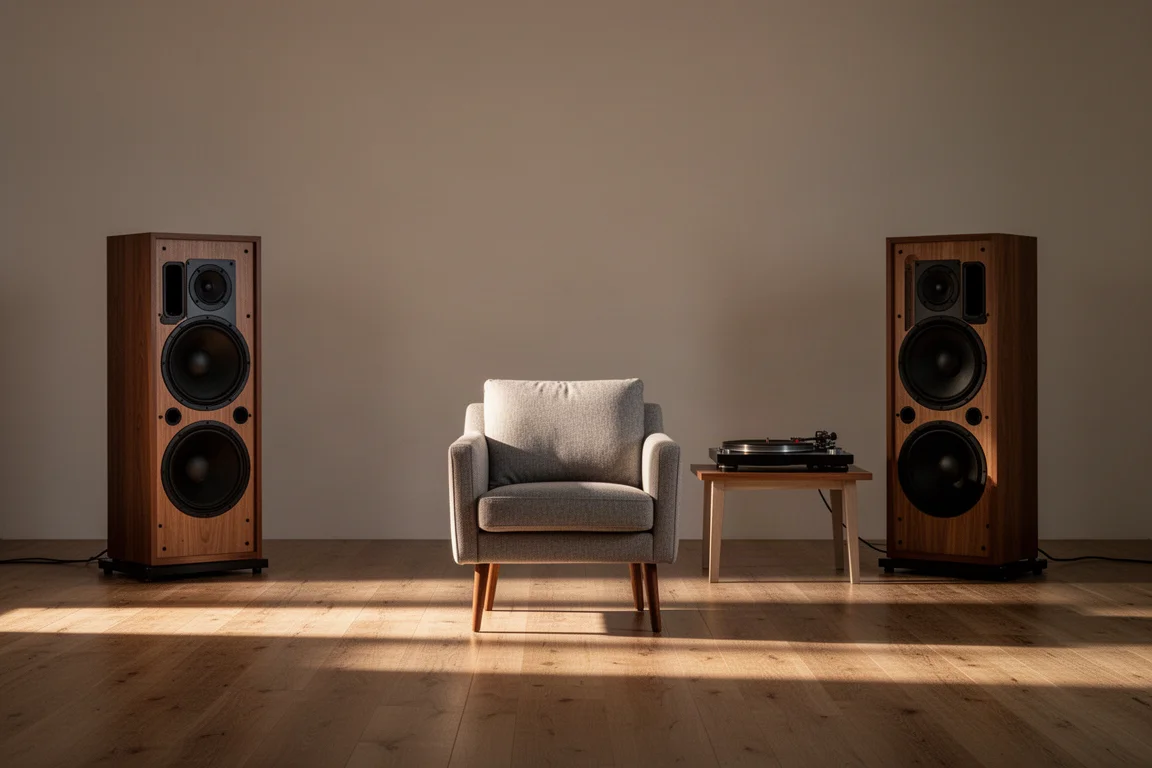
There is no wrong answer here. The Trio 10 H AMT is the more exciting speaker and the one that rewards attention. The Duet 15 is the one that disappears into daily life. Listeners chasing resolution will find the Trio 10 H AMT the more compelling choice, while those who want a system they can live with day in and day out will find the Duet 15 the easier companion.
Either way, plan for the room. Both are open-baffle designs that need space behind them and a little patience during setup. Get that part right and both speakers deliver a scale and a sense of space that box speakers at this price rarely approach.
Conclusion
The Trio 10 H AMT and the Duet 15 come from the same company, sit at a similar price, and share an open-baffle philosophy, yet they serve two different listeners. The Trio 10 H AMT is the speed and transparency option, built around a dipole air motion transformer tweeter that reaches down to 600 Hz and paired with two 10-inch woofers. The Duet 15 is the relaxed option, with a 15-inch woofer and 96 dB sensitivity that make it easy to drive and easy to live with.
If your priority is hearing deeper into recordings and you have the amplifier power to support it, the Trio 10 H AMT is the more rewarding speaker. If your priority is a warm, forgiving sound that flatters a wide range of music at any hour, the Duet 15 is the safer long-term partner.
Further reading
Related Reviews
Hi-Fi Speakers
1723 THX Tower vs 1528 Bookshelf: Which Speaker Fits Your Room?
Two speakers at roughly the same price, built very differently. How the 1723 THX tower and the 1528 bookshelf compare on construction, bass, power needs, and sound.
Hi-Fi Speakers
Acoustic Energy AE 300 Review: Deep Bass From a Compact Standmount
A two-way standmount with real wood veneer, surprising low-end weight, and a warm, easygoing character. Here is what to know before buying.
Hi-Fi Speakers
Acoustic Energy AE1 40th Anniversary Review: A Modern Take on a British Classic
A compact standmount that revives a 1980s favorite with all-new parts, a warm mid-centric balance, and a price of £1,499 per pair.