Hi-Fi Speakers
Pure Audio Project Duet 15 Horn One Review: Horn Speed on an Open Baffle
A detailed look at the Duet 15 Horn One, a 96 dB open baffle horn speaker with a 15-inch woofer, kit assembly, and a switchable crossover topology.
Introduction
Horn speakers and open baffle speakers tend to attract the same listener for different reasons. Horns deliver immediacy, dynamics and a direct sense of the performance. Open baffles trade the box for a panel, letting the driver radiate from the front and the back at the same time, which changes how a room fills with sound.
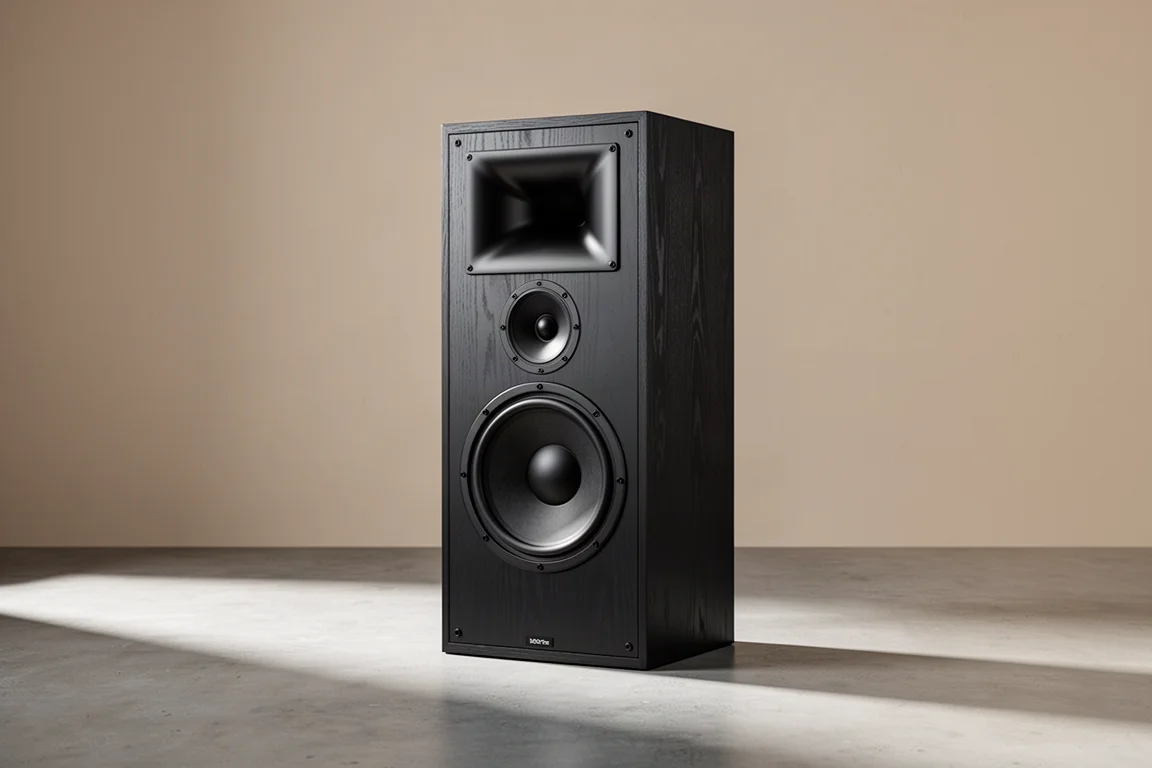
The Pure Audio Project Duet 15 Horn One is both at once. It pairs a horn-loaded compression driver with a 15-inch woofer on an open baffle, and it is rated at 96 dB sensitivity with an 8 ohm load. That combination makes it unusually easy to drive. A low-power amplifier in the region of two watts is enough to get real music out of it.
Pure Audio Project has been building speakers this way since 2013, selling direct and shipping them as kits that the owner assembles. The Duet 15 Horn One sits at roughly $6,950.
Who the Duet 15 Horn One Is For
The most obvious audience is the listener who has heard horn speakers at a show or at a friend’s place, enjoyed the immediacy, and then hesitated because some horns can sound harsh. This design is intended to remove that hesitation. The horn is fast and revealing, but it does not tip into hardness.
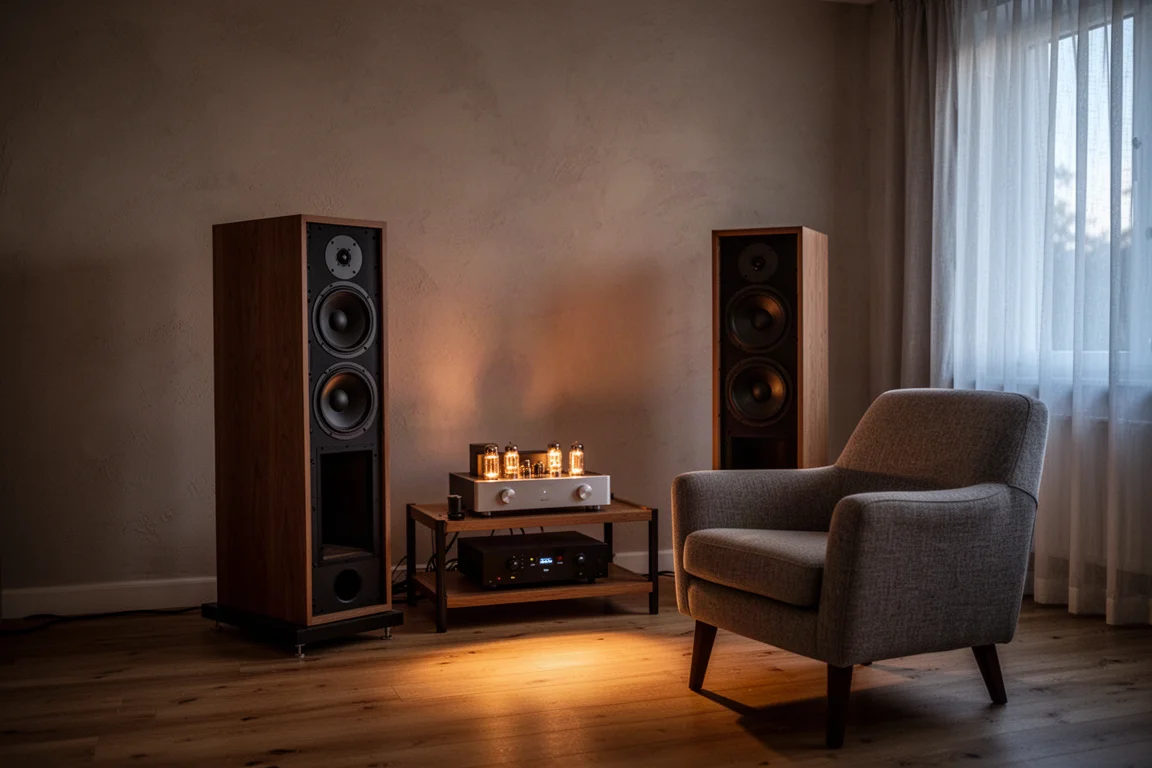
It is also a natural fit for owners of low-power amplifiers. At 96 dB with an 8 ohm load, the speaker asks very little of the amplifier, so single-ended tube designs and other low-wattage setups can be used without compromise.
A third group is the open baffle curious. If you have read about open baffle speakers and want to understand what the absence of a box does to bass and to the sense of space, this is a direct way to find out.
The kit format adds a fourth consideration. Buyers who are comfortable assembling a few parts, and who may later want to tune the sound, will get more out of the ownership experience than someone who simply wants a finished box delivered and forgotten.
Main Strengths: Speed, Immediacy, and Open Baffle Space
The first quality that stands out is immediacy. The speaker communicates rhythm and the pulse of a performance very directly, and that sense of momentum is easier to feel here than with most speakers. It is an engaging, propulsive presentation rather than a laid-back one.
The horn contributes much of that character. A compression driver has no cone membrane trailing behind the signal, so the leading edge of each note arrives cleanly and the result is a strikingly realistic sense of timing. The horn is also efficient enough that the amplifier is barely working.
The open baffle side of the design is what separates this speaker from a conventional horn. Because the driver radiates from the back as much as from the front, the speaker excites the room in a completely different way from a box design. The result is a spacious quality with fast, clean and very tight bass rather than the boom that boxed speakers can produce.
Design and Driver Details
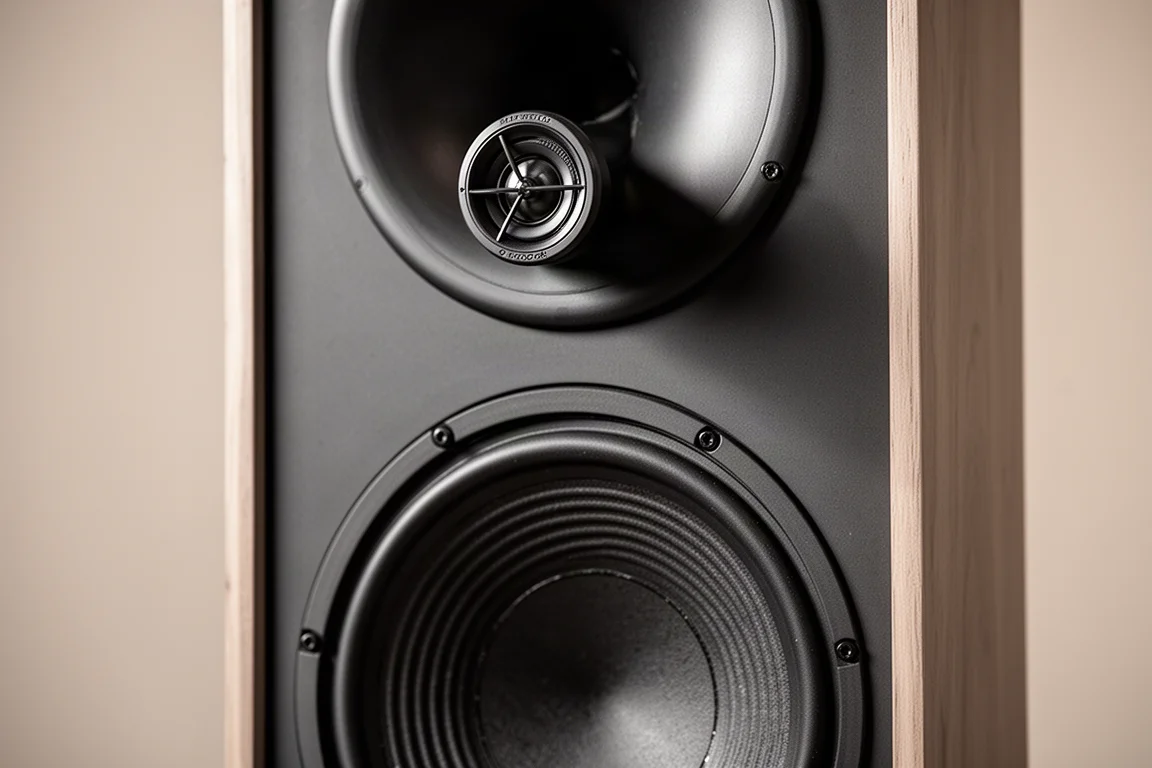
The horn section uses a compression driver with a 1.4-inch throat, a strong magnet and a polymer dome. The compression driver is made in Spain and the waveguide is produced in the EU.
The 15-inch woofer is the same driver used across this line and is built in the US by Eminence. It is a significant part of the speaker’s character. Once you have lived with a 15-inch driver, smaller woofers tend to sound small by comparison.
Panels come in more than one finish. A bamboo version is made in the US. The black panel is produced in Spain from wood sourced in Portugal, using an HDF material with the color embedded throughout rather than applied as paint, so no finishing work is needed.
Kit Assembly and Crossover Topology
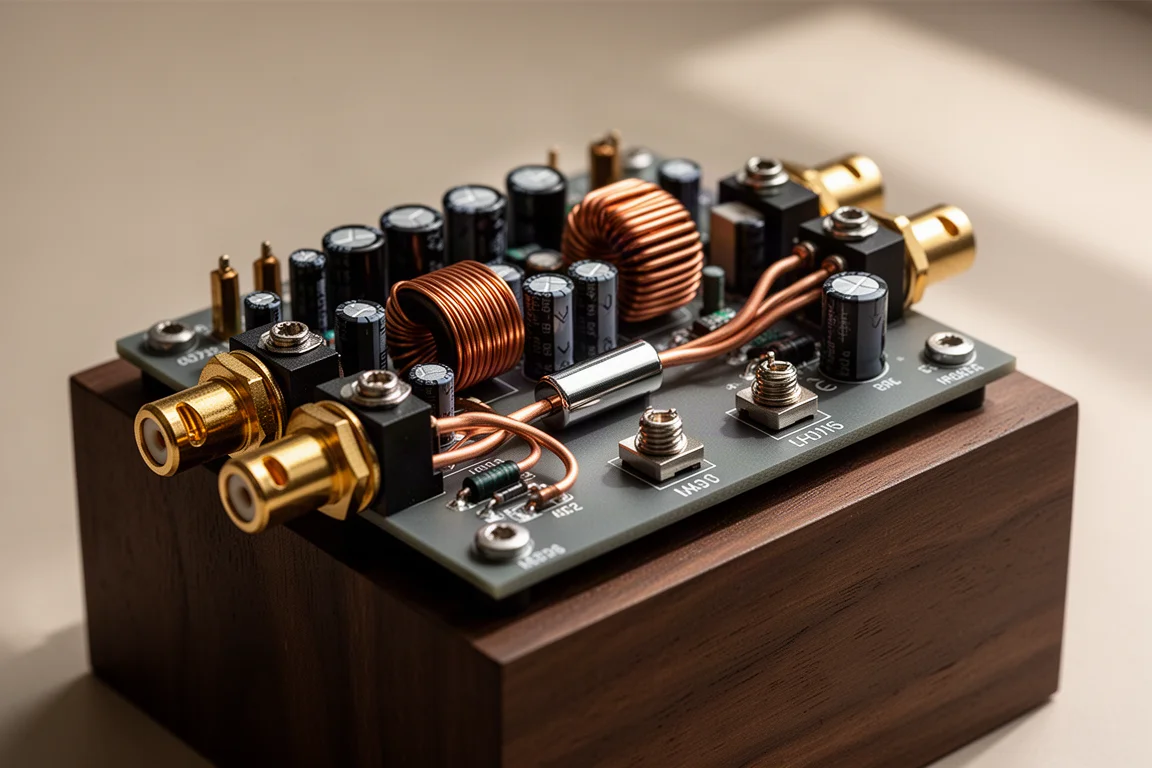
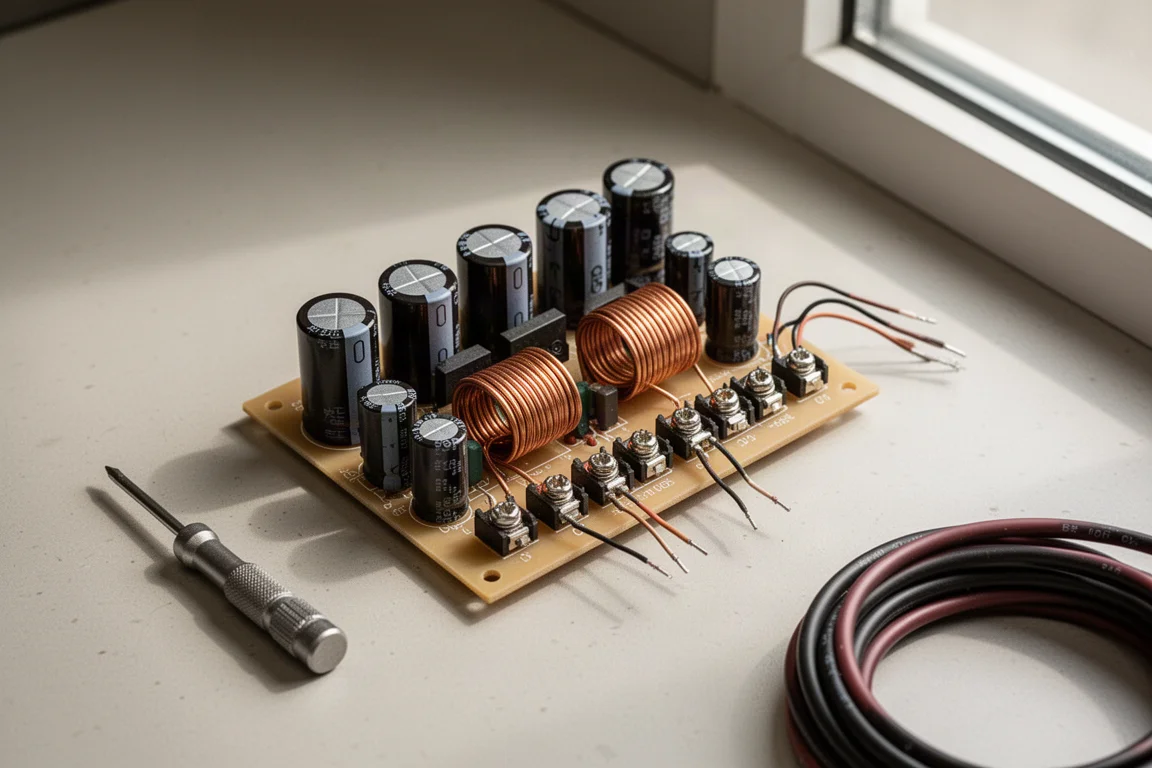
The speaker arrives as a kit, but it is a gentle one. All parts are finished, nothing needs soldering, and every crossover component mounts on screw terminals. The crossover itself is first order, and it can be wired in either parallel or series topology, switched with a single jumper.
Parallel is the standard configuration and the safer starting point. Series topology blends the drivers together in a way that is difficult to model on a computer, and the company describes it as magical when it works, with a more organic character. There is an interesting pattern reported by owners: in short comparisons most listeners prefer parallel, while after longer listening most of the same listeners prefer series.
Crossover parts are audiophile grade, including Mundorf components. Support is available by phone or text, and new builders often send photographs of their work to confirm everything is correct before powering up.
Things to Consider Before Buying
This is a kit, and that is the first thing to weigh. Assembly is straightforward and requires no soldering, but it is still an assembly step rather than a plug-and-play purchase.
The open baffle design also means the speaker interacts with the room differently from a box. Because it radiates from the rear as much as the front, it needs space around it to work as intended, so a room layout that places speakers tight against a wall is not the ideal setting.
Import and shipping procedures are currently unsettled. Roughly 30 percent of the speaker’s cost is produced outside the US, so any tariff-related change would apply to that portion rather than to the whole speaker. Pricing could shift somewhat as a result, though the company expects the effect to be limited. The current price is about $6,950.
Finally, there is the driver decision. The Duet 15 is also offered with the Voxativ AC 1.6 driver at the same price, and the two versions sound clearly different. It is worth deciding which presentation you want before ordering.
Driver, Panel, and Component Choices
The horn and the Voxativ AC 1.6 are two routes to the same speaker, and neither is simply better than the other. The useful way to think about it is where you sit in the hall. With the horn, instruments feel closer and more forward, as though you moved several rows toward the stage. With the Voxativ driver, you sit a little further back, hearing a slightly more distant but complete picture. Both are enjoyable, and the choice comes down to taste.
Panel finish is the simpler decision. Bamboo and the black color-embedded HDF are both finished surfaces that need nothing more than normal care.
Component choices are best left alone at first. The capacitor has a strong influence on the sonic signature, and every brand brings its own character, but swapping parts before you know the baseline makes it impossible to judge what actually changed. The recommendation is to buy with the standard audiophile-grade parts, break the speaker in, live with it, and only then decide whether you want a softer sound or a little more resolution. A capacitor change is a two-bolt job.
Buying Advice
The Duet 15 Horn One makes the most sense for a listener who wants horn speed and realism without harshness, values the spacious, tight-bass character of an open baffle, and owns an amplifier that does not need to be powerful. The 96 dB rating and 8 ohm load mean almost any amplifier will work.
Before ordering, settle two things: which driver version you want, since the horn and the Voxativ AC 1.6 cost the same and present music differently, and whether you are happy to assemble a kit. Assembly is simple and supported, but it is part of the ownership experience rather than an afterthought.
Plan to keep the standard crossover components for a while. They establish the reference point you will need later if you decide to tune the speaker to your taste, and the jumper makes it easy to compare the parallel and series topologies at home.
Conclusion
The Duet 15 Horn One is an unusual combination: the directness and speed of a horn, plus the space and tight bass of an open baffle, in a speaker that a two-watt amplifier can drive. It is a kit, it needs room around it, and it asks you to choose a driver version up front. For the right listener, those are reasonable conditions attached to a genuinely distinctive speaker.
Product link
View more details for Pure Audio Project Duet 15 Horn One
This product is mentioned in the review. Check the specifications, options, and compatibility before buying.
View more details for Pure Audio Project Duet 15 Horn OneFurther reading
Related Reviews
Hi-Fi Speakers
1723 THX Tower vs 1528 Bookshelf: Which Speaker Fits Your Room?
Two speakers at roughly the same price, built very differently. How the 1723 THX tower and the 1528 bookshelf compare on construction, bass, power needs, and sound.
Hi-Fi Speakers
Acoustic Energy AE 300 Review: Deep Bass From a Compact Standmount
A two-way standmount with real wood veneer, surprising low-end weight, and a warm, easygoing character. Here is what to know before buying.
Hi-Fi Speakers
Acoustic Energy AE1 40th Anniversary Review: A Modern Take on a British Classic
A compact standmount that revives a 1980s favorite with all-new parts, a warm mid-centric balance, and a price of £1,499 per pair.