Bookshelf Speakers
PSB Imagine B50 vs Q Acoustics 5020: Which Bookshelf Speaker Fits Your System?
A practical comparison of the PSB Imagine B50 and the Q Acoustics 5020, covering bass weight, midrange balance, sensitivity, build quality and which listener each speaker suits.
Introduction
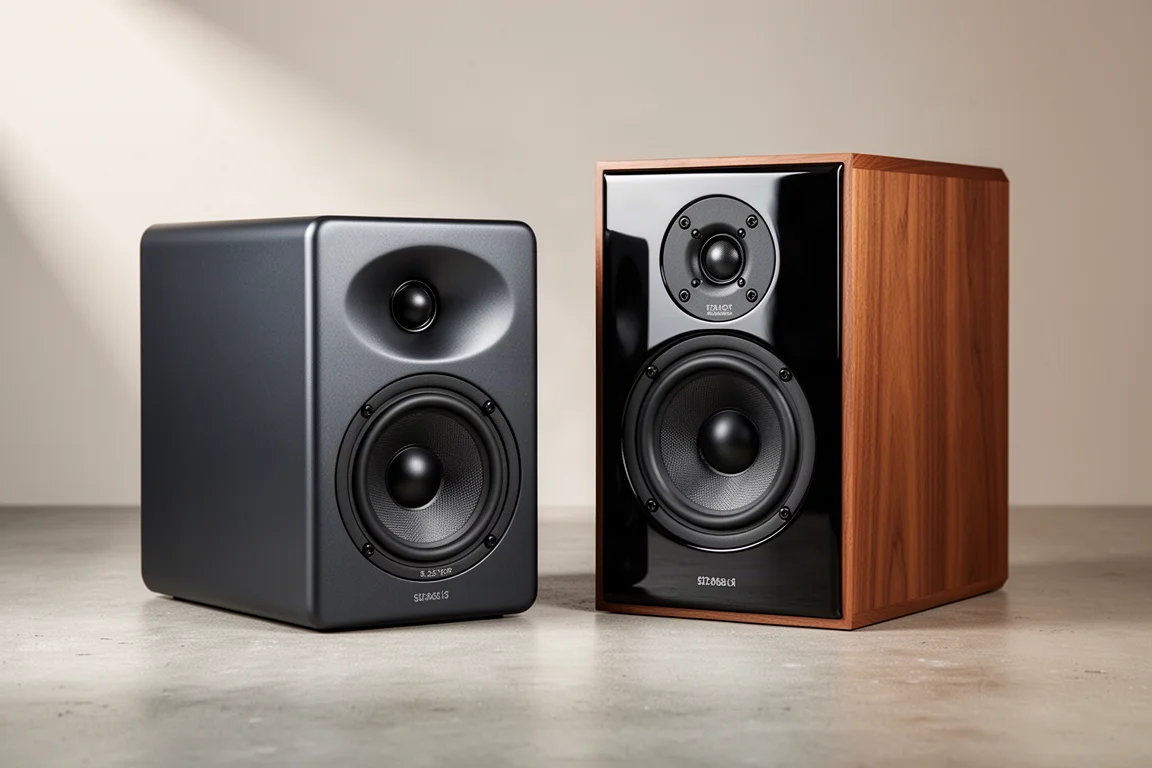
Two compact two-way bookshelf speakers, one at $800 and one at $900, close enough in price that the decision comes down to tuning rather than budget. The PSB Imagine B50 is a new two-way design built around a 1-inch titanium dome tweeter and a 5.25-inch woofer crossed over at 2,200 Hz. The Q Acoustics 5020 is the established alternative at $900, with a 5-inch C3 continuous curved cone woofer and a higher stated sensitivity.
This comparison covers the numbers that matter first, then the sound, then the practical details that decide which one belongs in your room.
How These Two Bookshelf Speakers Compare
The two speakers are not the same physical size. The PSB Imagine B50 weighs 11.3 lb per cabinet, while the Q Acoustics 5020 comes in at 15.4 lb each and is the larger of the two. Extra cabinet volume and mass tend to show up in the lower midrange and in how much low-frequency weight a speaker can produce in a normal room.
Sensitivity is the other headline difference. PSB rates the Imagine B50 at 85 dB, with a stated listening room figure of 87 dB, and lists a nominal impedance of 8 ohms with a 4-ohm minimum. Q Acoustics states 87.9 dB for the 5020. PSB also recommends amplifiers between 20 and 150 watts, so the B50 is not a difficult load, but it asks more of an amplifier than the Q Acoustics at the same listening level.
PSB lists the Imagine B50’s frequency response as 45 Hz to 23 kHz, and its low-frequency rolloff extends into the 40s. The 5020 is the leaner of the two at the bottom end.
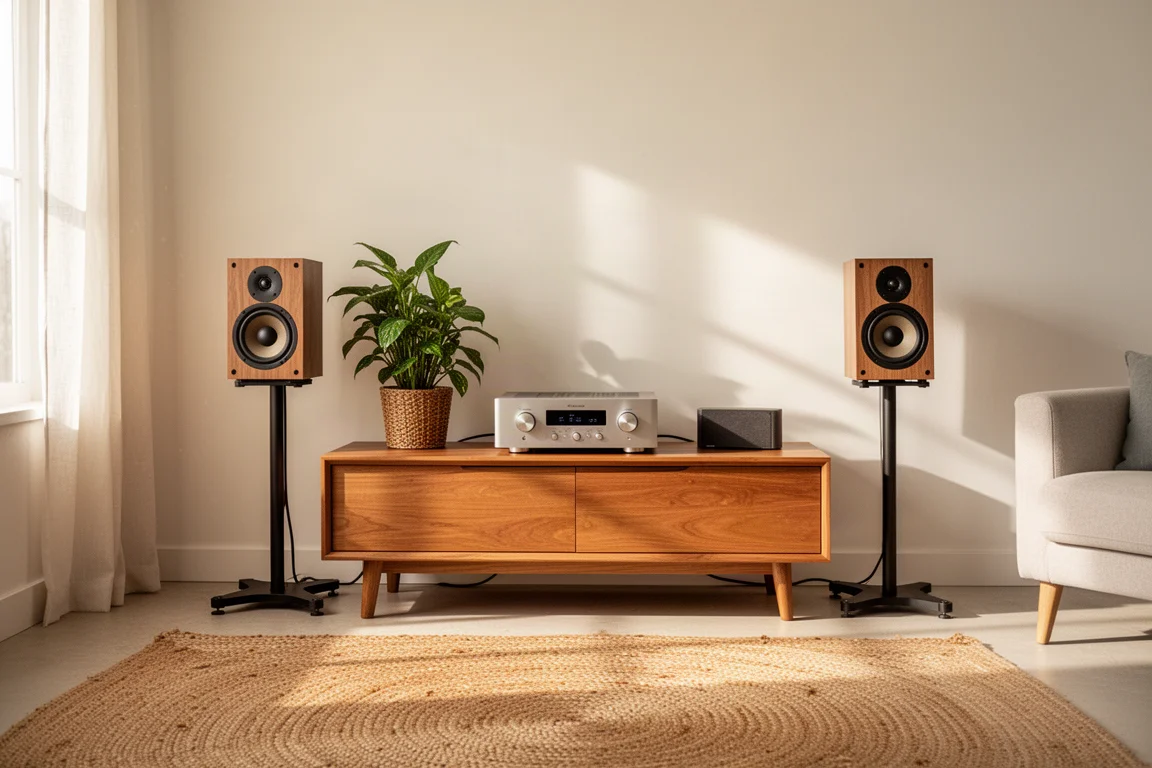
Build quality splits along similar lines. The Imagine B50 is a clear step forward from the previous generation of the same line, with a painted cabinet finish, a cleaner waveguide around the tweeter and a small trim ring around the driver surround. The binding posts still feel less substantial than the terminals on the Q Acoustics 5020, which uses a vinyl-wrapped cabinet with a reflective front baffle and better-feeling connections. Which finish you prefer is a matter of taste; the hardware difference is not.
PSB Imagine B50: Weight and Low-End Authority
The Imagine B50’s strongest argument is bass. On bass-heavy material it presents more low-end weight and power than the Q Acoustics 5020, and its low-frequency rolloff into the 40s gives it a fuller presentation than its cabinet size suggests. On dense, aggressive tracks the weight of electric guitars comes through more convincingly, and a live drum solo lands with more low-end information and respectable clarity and separation.
Sibilance is the other notable strength. Where the Q Acoustics 5020 shows audible sibilance in the 4 to 8 kHz region, the Imagine B50 is essentially free of it, so listeners who find that region distracting are likely to prefer the PSB.
The trade-offs sit in the midrange. The Imagine B50 has an upper midrange lift between roughly 2 and 3 kHz that pushes vocals forward, and there is a break in midrange coherence around 2.8 kHz where that emphasis becomes audible as a shift in balance rather than a subtle coloration. There is also a noticeable handoff between the woofer and the tweeter across the midrange, which costs some of the air and vocal articulation the 5020 delivers.
At lower listening levels this is easy to live with. Above roughly 80 to 85 dB the forward upper midrange starts to feel fatiguing over a long session. On television and film dialogue the handoff shows up as well: female voices come through cleanly, while some male voices sound slightly muffled.
At $800 the Imagine B50 sits a little high for what the cabinet and terminals deliver, though nothing cheaper offers quite the same character.
Q Acoustics 5020: Cohesion, Air and Midrange Balance
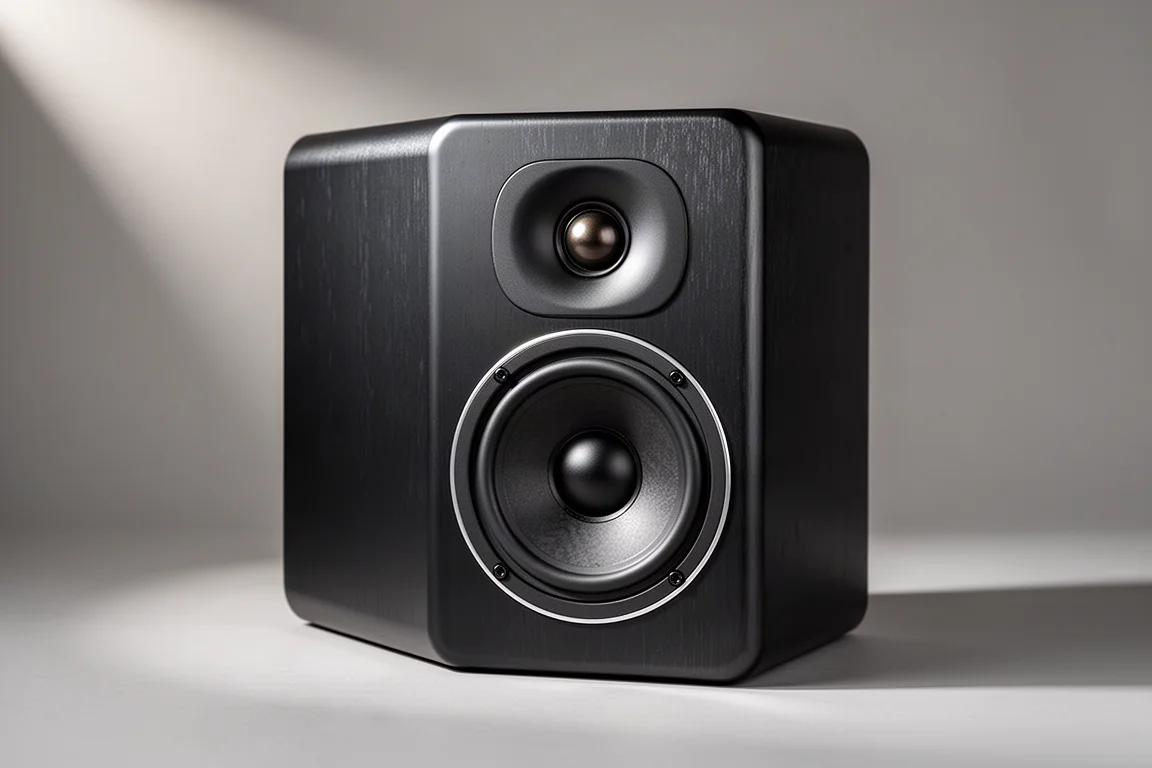
The Q Acoustics 5020 is the more cohesive speaker of the two. Its midrange holds together across a wider range of material, vocal harmonies separate more clearly, and there is more air and articulation around voices, with more layers audible in a well-recorded vocal. Above 4 kHz it is the stronger performer, and it stays balanced as the volume rises rather than leaning forward.
Its weakness is the opposite of the PSB’s. Sibilance in the 4 to 8 kHz region is audible on the 5020, noticeable without being overwhelming. Listeners who are sensitive to that region will hear it on the right recordings.
Bass is where the 5020 gives ground. It produces less low-end weight and power than the Imagine B50, and on bass-driven material it can feel as though the middle and top of the mix are present without the same foundation underneath. The larger, heavier cabinet and the 5-inch C3 continuous curved cone woofer do not translate into more low-frequency output than the smaller PSB driver in this comparison.
Physically, the 5020 is the better-finished cabinet in the details that matter: the binding posts are more substantial, the cabinet is larger and heavier, and the reflective front baffle gives it a distinct look. At $900 it costs $100 more than the PSB Imagine B50.
Where the Two Speakers Diverge Most
The two speakers represent different tuning priorities rather than different levels of quality. The PSB Imagine B50 leans toward low-end weight and a forward upper midrange, which makes it sound bigger and more energetic on rock, metal and bass-led material. The Q Acoustics 5020 leans toward midrange coherence and air, which makes it the more even-handed performer across acoustic, vocal and classical material.
The sensitivity gap reinforces that split. A 3 dB difference in sensitivity roughly doubles the amplifier power needed for the same output level, so the 85 dB PSB needs more power than the 87.9 dB Q Acoustics to reach a given loudness. In practice that means the PSB asks more of a modest amplifier.
Neither tuning is objectively correct. A listener who values punch and weight at the bottom will find the PSB more satisfying, while a listener who values balance through the middle and a sense of openness at the top will find the Q Acoustics more satisfying.
Sensitivity, Power and Amplifier Matching
PSB recommends 20 to 150 watts for the Imagine B50, with a nominal 8-ohm impedance and a 4-ohm minimum. That range covers most integrated amplifiers, but the 85 dB sensitivity means the B50 will use more of an amplifier’s available power than the 5020 at the same listening level. If your amplifier is modest, the Q Acoustics will play louder before it runs out of headroom.
For listeners who rarely push past background or moderate levels, the difference is small in practice. For anyone who likes to listen at 80 to 85 dB or above, amplifier headroom becomes part of the buying decision rather than an afterthought.
Living With Them: TV, Movies and Loud Listening
Both speakers work for television and film, but they behave differently with dialogue. The PSB Imagine B50’s woofer-to-tweeter handoff affects some male voices, which can sound slightly muffled, while female voices remain clean. The Q Acoustics 5020 keeps dialogue more consistent across the range.
Volume habits matter just as much. At moderate levels the Imagine B50’s upper midrange lift is unobjectionable, and its bass advantage is the dominant impression. At 80 to 85 dB and above, that lift becomes tiring over a long session, whereas the 5020 stays cohesive and easier to listen to for extended periods.
Metal is the one genre where the PSB has a broader advantage, because the weight of distorted guitars benefits from its low-end output. For most other material the Q Acoustics is the more balanced speaker.
A Practical Checklist Before You Buy
- Do you plan to run a subwoofer? If not, the PSB Imagine B50’s extra low-end weight matters more.
- How much amplifier headroom do you have? The 85 dB sensitivity of the PSB asks more of a modest amplifier than the 87.9 dB Q Acoustics.
- How loudly do you listen? Above 80 to 85 dB the PSB’s upper midrange lift becomes more noticeable.
- How sensitive are you to sibilance? The Q Acoustics 5020 shows it in the 4 to 8 kHz region; the PSB is essentially free of it.
- How much room do you have? The 5020 is the larger and heavier cabinet at 15.4 lb each.
- Do you care about terminal quality and finish details? The Q Acoustics has the more substantial binding posts.
Buying Advice: Matching the Speaker to Your Room and Taste
Choose the PSB Imagine B50 at $800 if you want the most low-end weight from a compact two-way, you do not plan to add a subwoofer, and you prefer a speaker that sounds energetic rather than neutral. It is also the safer pick if sibilance bothers you. Go in knowing that its upper midrange emphasis becomes more obvious at higher volumes and that its binding posts feel less substantial than the competition’s.
Choose the Q Acoustics 5020 at $900 if midrange coherence, vocal articulation and air matter more to you than bass weight. It is the more balanced speaker across a wide range of music, it holds together better at higher volumes, and it is built with better-feeling hardware. Accept that it produces less low-end weight and that its 4 to 8 kHz region is more forward.
Neither speaker is a compromise in the sense of being poorly made. The PSB is a step up in build from the previous generation of its line, and the Q Acoustics is the more refined cabinet. The decision comes down to which set of trade-offs suits the music you play and the amplifier you own.
Conclusion
At $800 the PSB Imagine B50 delivers bass weight and freedom from sibilance, with a forward upper midrange that suits lower volumes better than loud ones. At $900 the Q Acoustics 5020 delivers cohesion, air and better hardware, at the cost of low-end output and a more prominent 4 to 8 kHz region. Buy the PSB for weight and energy, and the Q Acoustics for balance and detail.
Further reading
Related Reviews
Bookshelf Speakers
Acoustic Energy A100 Mark II Review: A Compact Standmount With an Expansive Soundstage
The Acoustic Energy A100 Mark II brings clarity, natural tonality and a wide soundstage to an entry-level standmount, with a few setup details worth knowing first.
Bookshelf Speakers
Acoustic Energy AE-100 Mark II Review: Compact Bookshelf Speakers With Standout Imaging
A compact British two-way bookshelf speaker with deep, layered imaging, fast bass, and a slight treble lift to weigh against a crowded $500 field.
Bookshelf Speakers
Acoustic Energy AE100 MK2 Review: Measured Performance and Four Alternatives
A close look at the Acoustic Energy AE100 MK2 bookshelf speaker, what its measured performance reveals, and four alternatives with different trade-offs.