Bookshelf Speakers
PSB Alpha P3 Review: Compact Desktop Speakers With Surprising Bass
A compact passive bookshelf speaker pair with a big low end for its size, a relaxed top end, and a $249 price that keeps a desk system within reach.
Introduction
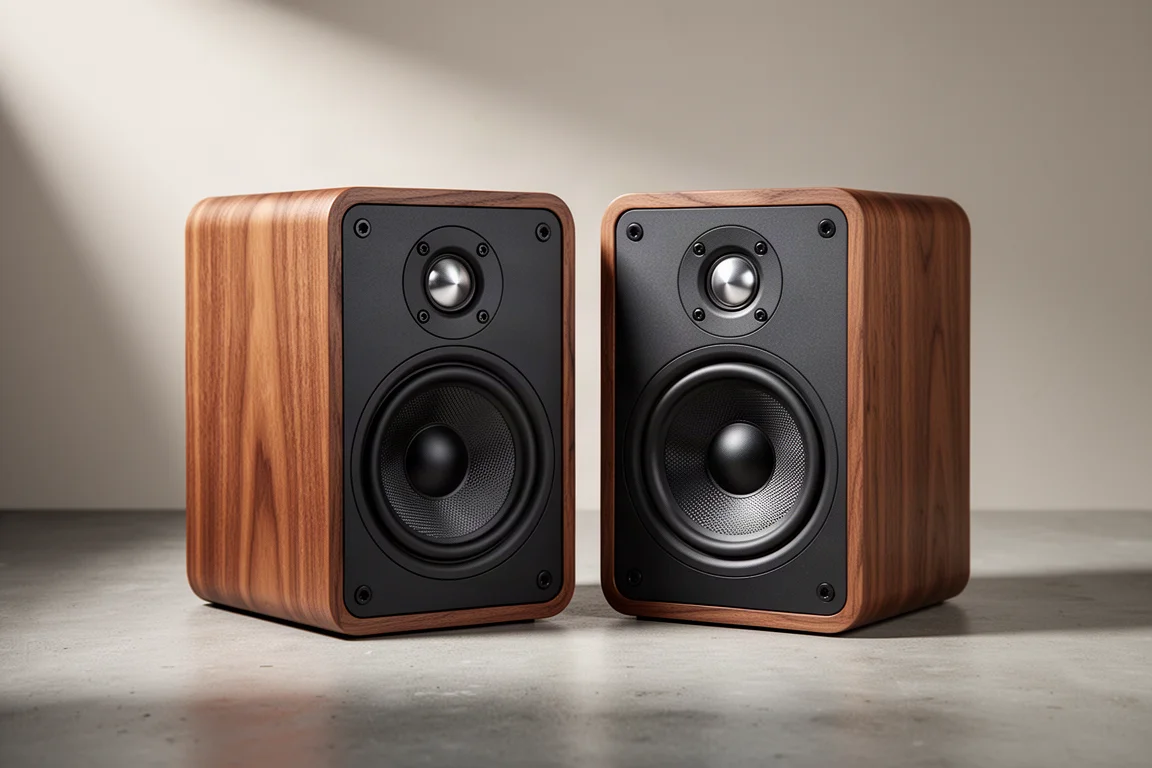
Compact desktop speakers usually ask for a compromise. You accept a small cabinet, a modest low end and a top end that only wakes up once the volume goes past comfortable. The PSB Alpha P3 is a passive bookshelf speaker that avoids most of that, and at $249 a pair it lands at a price that is easy to justify for a desk system.
PSB rates the Alpha P3 from 57 Hz to 21,000 Hz, with a sensitivity of 87 dB. That sensitivity figure is unusually high for a cabinet this size, and it goes a long way toward explaining how the speaker behaves at the volumes people actually use at a desk.
Who the PSB Alpha P3 Is For
This is a speaker for anyone building a small nearfield system around a computer, a compact streamer or a desktop amplifier. The cabinets are small enough to sit comfortably either side of a monitor or a laptop, and the nearfield position places the listener inside the soundstage in a way that a living room setup rarely manages.
It also suits listeners who care about quality at low volume. Much of what makes the Alpha P3 special shows up between roughly 60 and 70 dB, which is exactly where most desk listening happens.
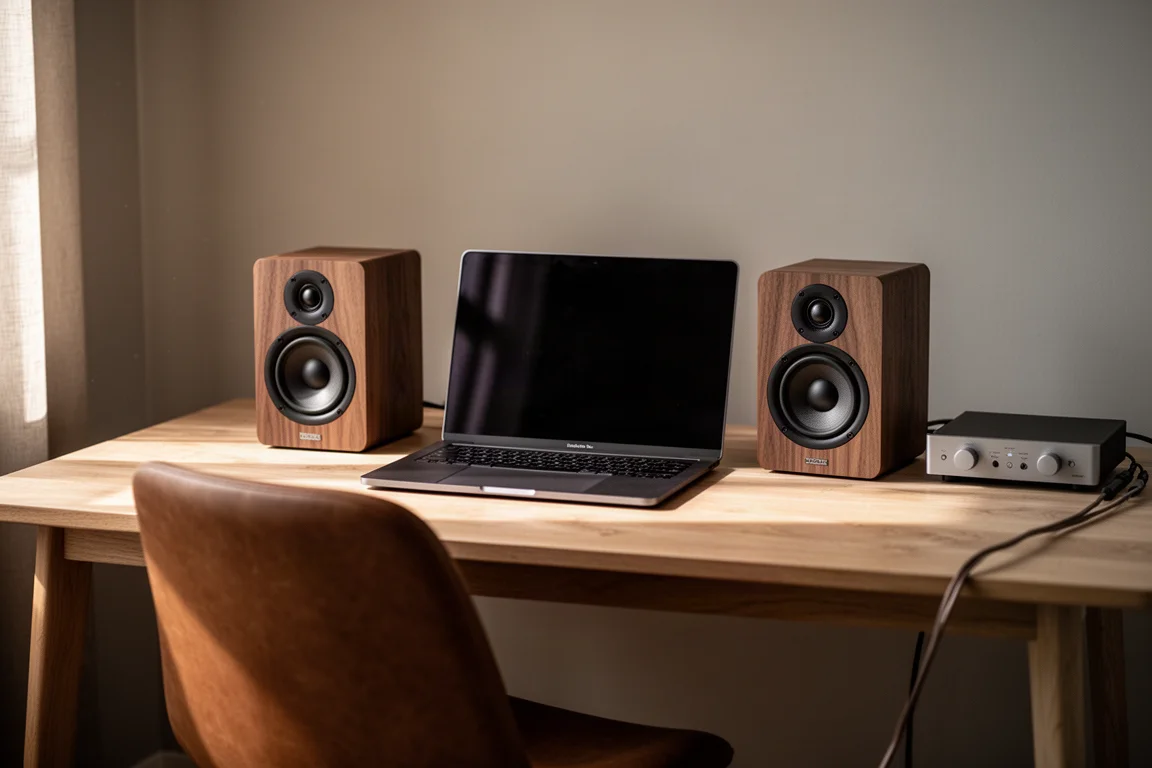
The Alpha P3 is a passive design, so it needs an amplifier, and it is available in walnut or black ash at $249 a pair.
Soundstage and Imaging at the Desk
Desktop placement does a lot of the work here. With the speakers angled inward and the listener sitting close, the Alpha P3 builds a deep, clearly defined stage, and a little balance adjustment is enough to lock the centre image in place.
The amplifier matters too. Different amp designs, and even different op-amps inside the same amplifier, change how wide and how deep that stage feels. The Alpha P3 is resolving enough to make those differences audible, which is a good sign at this price.
Bass Punch Without a Subwoofer
Low end is where most small speakers give up. Cabinet volume and woofer size set the physical limits, and a designer has to work hard inside them. The Alpha P3 is the most convincing small speaker in its price range at producing bass, and it does so without demanding a large amplifier. Many small speakers with a similar low-end punch run around 83 dB sensitivity and need serious power before they come alive. At 87 dB, the PSB reaches comparable weight with far less effort.
Just as important, it stays dynamic at low volume. Punch and contrast are present at the levels used at a desk, so no subwoofer is needed and no uncomfortable volume is required to get a full sound.
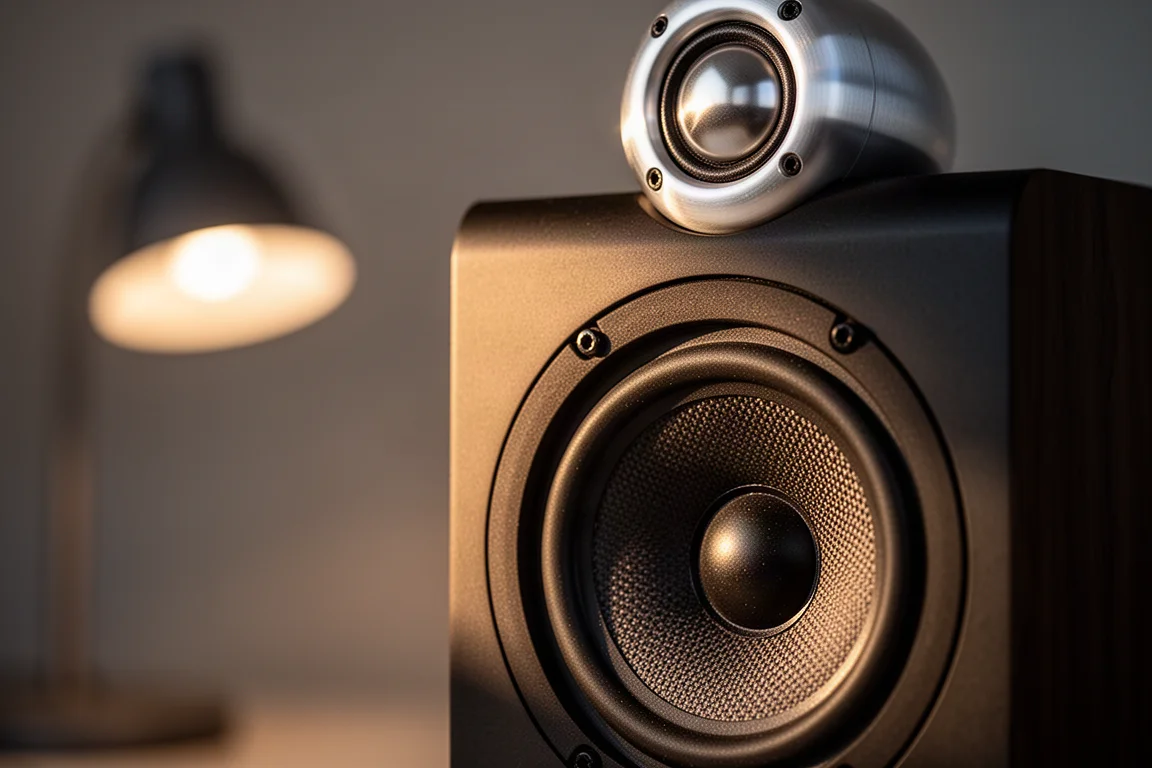
What makes this work is tuning rather than brute force. The result is a speaker that feels complete on its own for desk listening, with a subwoofer becoming optional rather than a requirement.
Top-End Detail and Low-Volume Listening
The tweeter is a 3/4 inch anodized aluminum dome, and it behaves like a far more expensive one. Cymbals sound like cymbals, with proper metallic decay rather than a splash. There is no forward push in the upper midrange, so the top end stays relaxed instead of edgy, yet at low volumes the aluminum dome still delivers more top-end activity than the ELAC BS41, and at those levels the PSB is the more enjoyable speaker of the two.
Against other small speakers, the Alpha P3’s balance holds up well. The Jamo S 801, often found for $99 a pair or less, makes tambourine and cymbal work far more prominent, and next to the PSB it sounds harsh. The Micca RB42X Gen 2, another roughly $99 speaker, attempts a similar trick with more low-end weight, but its bass and lower midrange are bloated and lack the PSB’s refinement. The real surprise was the ELAC BS41, roughly $100 less: the Alpha P3 produced tighter, more refined bass and matched or bettered it across the lower midrange from a cabinet of similar size.
Build, Design, and Practical Touches
The Alpha P3 uses a 4 inch textured polypropylene woofer with a rubber surround, which should hold up better over time than a foam or treated-paper edge. The cabinet is rear ported, with five-way binding posts that accept bare wire, spades or banana plugs, and a threaded insert on the back in case wall mounting is useful.
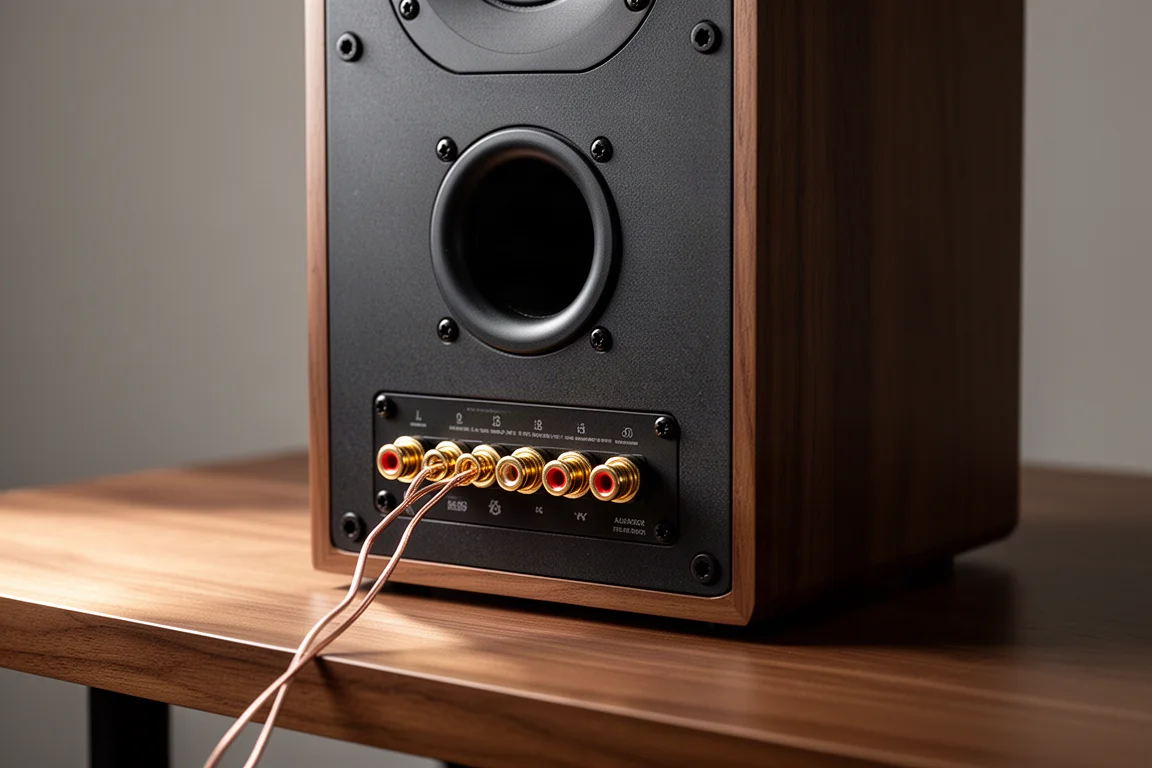
Finishes are walnut and black ash, both a vinyl wrap over the cabinet, with a black front baffle that gives the speaker a purposeful look. From a normal listening distance it looks tidy. The wrap is not the most premium-feeling surface and it shows handling marks if the speakers are moved often, so it rewards being left in one spot on a desk.
Things to Consider Before Buying
Two things are worth knowing before buying. First, the Alpha P3 is not a neutral speaker. There is deliberate tuning in the cabinet, which shows up as warmth in the lower midrange and a small amount of midrange detail loss. On acoustic guitar the reverb tail sits slightly further back, and some male vocals are a little covered. Anyone looking for a flat, studio-style presentation should look elsewhere.
Second, the finish is a vinyl wrap. It looks good from a listening position, but it is not a furniture-grade veneer, and it is happiest when it stays put.
The counterweight is that what is lost in midrange detail comes back as dynamics and a more engaging overall sound, and the low end that small cabinets usually lack is the Alpha P3’s strongest card.
Buying Advice
The Alpha P3 is passive, so budget for an amplifier. The obvious modern pairing is a compact class D integrated such as the Fosi Audio ZA3 or the Aiyima A07 Max, both of which are price-appropriate for a $249 pair. Older class D amplifiers from SMSL and Topping also work well. If a more traditional component appeals, the Yamaha A-S301 at around $350 is a good match. None of these need to be bass-heavy, because the speaker’s 87 dB sensitivity and its own low-end output mean an amplifier that is slightly thin at the bottom is not a problem.
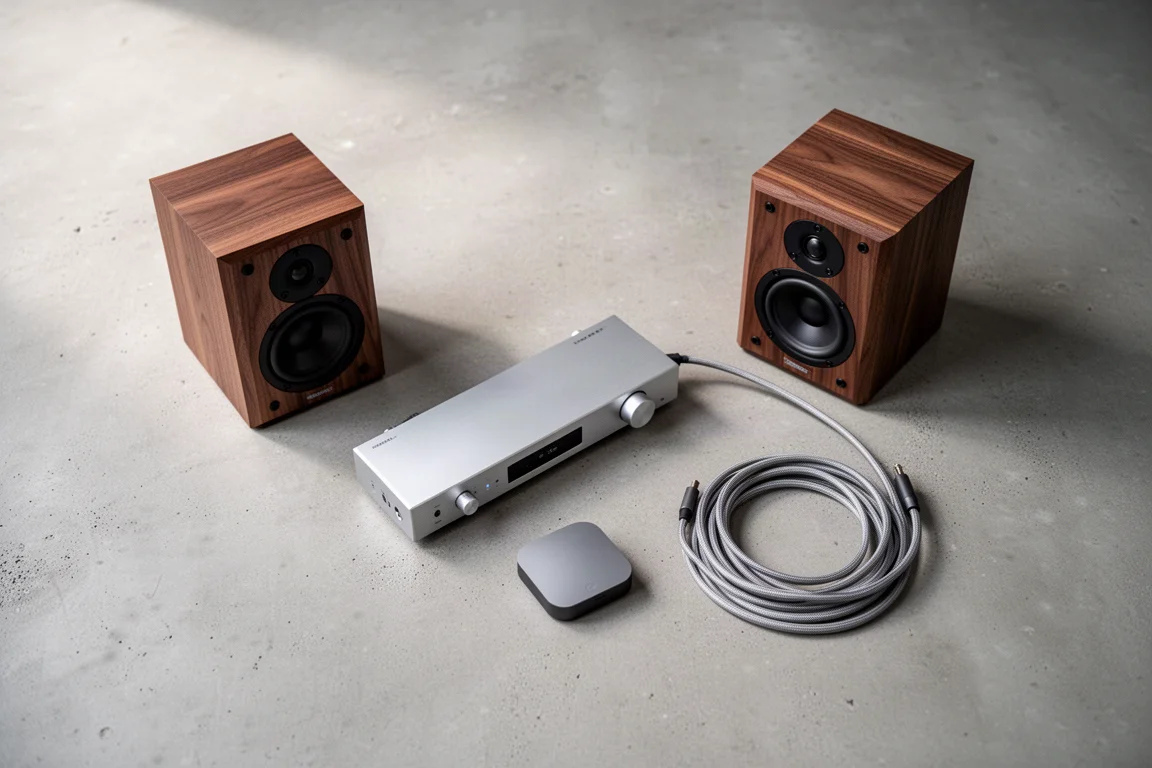
If the computer is the source, a small streamer rounds out the system. An Aiyima A07 Max with a WiiM Mini keeps a complete desktop chain close to $400, and swapping the WiiM Mini for a WiiM SU-1 lands at a similar total. No subwoofer is required.
On value, the Alpha P3 carries much of the character of PSB’s more expensive Imagine XB, a $600 speaker, at less than half the price. Cheaper small speakers exist, but at $249 a pair this one gets the size, the price and the low end right at the same time.
Conclusion
The PSB Alpha P3 solves the problem most desk systems have, which is bass. It stays dynamic at the volumes people actually listen at, it images well in a nearfield setup, and its aluminum dome tweeter remains detailed without turning sharp. The vinyl wrap finish and the warm lower midrange are the honest trade-offs, and for a desk they are easy to live with. At $249 a pair, it deserves a place at the top of any small-speaker shortlist.
Product link
View more details for PSB Alpha P3
This product is mentioned in the review. Check the specifications, options, and compatibility before buying.
View more details for PSB Alpha P3Further reading
Related Reviews
Bookshelf Speakers
Acoustic Energy A100 Mark II Review: A Compact Standmount With an Expansive Soundstage
The Acoustic Energy A100 Mark II brings clarity, natural tonality and a wide soundstage to an entry-level standmount, with a few setup details worth knowing first.
Bookshelf Speakers
Acoustic Energy AE-100 Mark II Review: Compact Bookshelf Speakers With Standout Imaging
A compact British two-way bookshelf speaker with deep, layered imaging, fast bass, and a slight treble lift to weigh against a crowded $500 field.
Bookshelf Speakers
Acoustic Energy AE100 MK2 Review: Measured Performance and Four Alternatives
A close look at the Acoustic Energy AE100 MK2 bookshelf speaker, what its measured performance reveals, and four alternatives with different trade-offs.