Hi-Fi Speakers
PSB Alpha iQ Review: Compact Streaming Speakers With a Price Question
A close look at the PSB Alpha iQ, a compact active speaker pair with BluOS streaming built in, including its inputs, setup, sound, and where the value case gets difficult.
Introduction
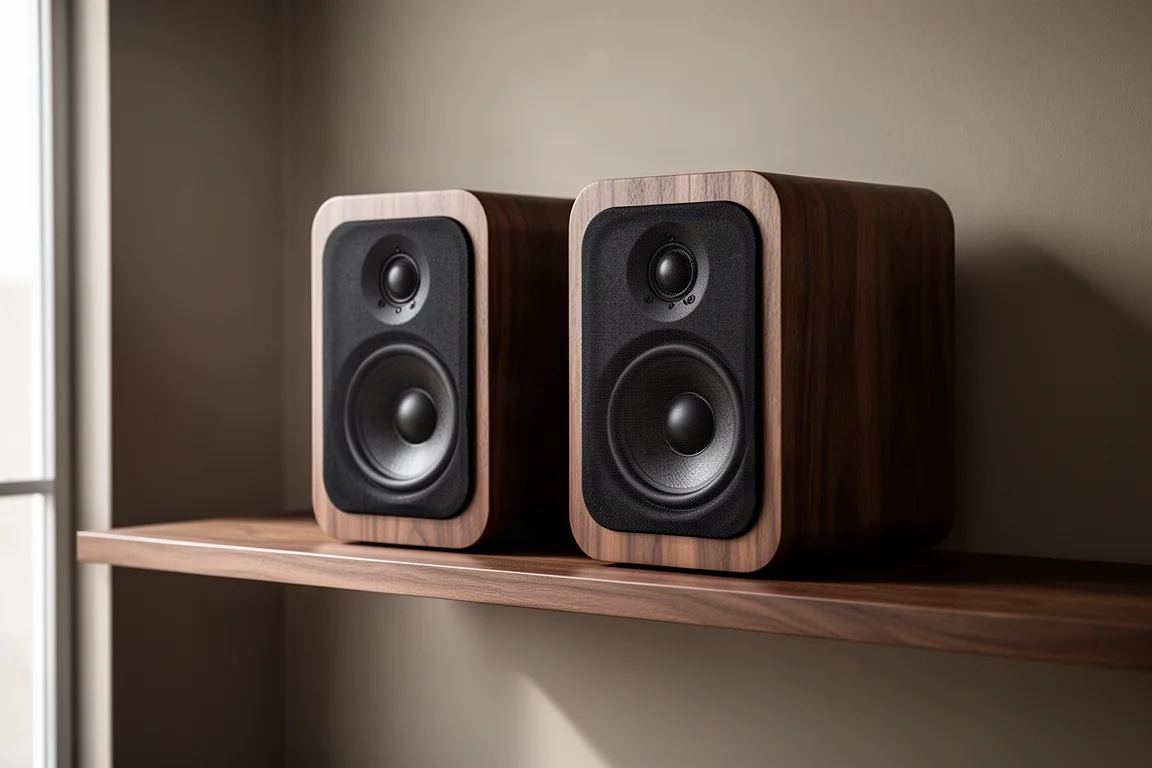
Powered speakers with a streamer built in are often presented as the future of hi-fi: fewer boxes, fewer cables, and an app instead of a rack of separate components. The PSB Alpha iQ is one of the clearest examples of that idea. It is a compact active speaker pair with BluOS streaming built in, sold at around $1,300 at retail and frequently discounted to $999.
The interesting question is not whether the concept is convenient, because it clearly is. The question is whether that convenience justifies the price for listeners who care about detail, and whether a speaker like this is really aimed at audio enthusiasts at all.
Who the PSB Alpha iQ Is For
The Alpha iQ makes the most sense for listeners who want one complete system rather than a project. If you like the idea of a small speaker pair that streams on its own, accepts a television over HDMI ARC, and can take a turntable without a separate phono stage, the feature list is genuinely appealing.
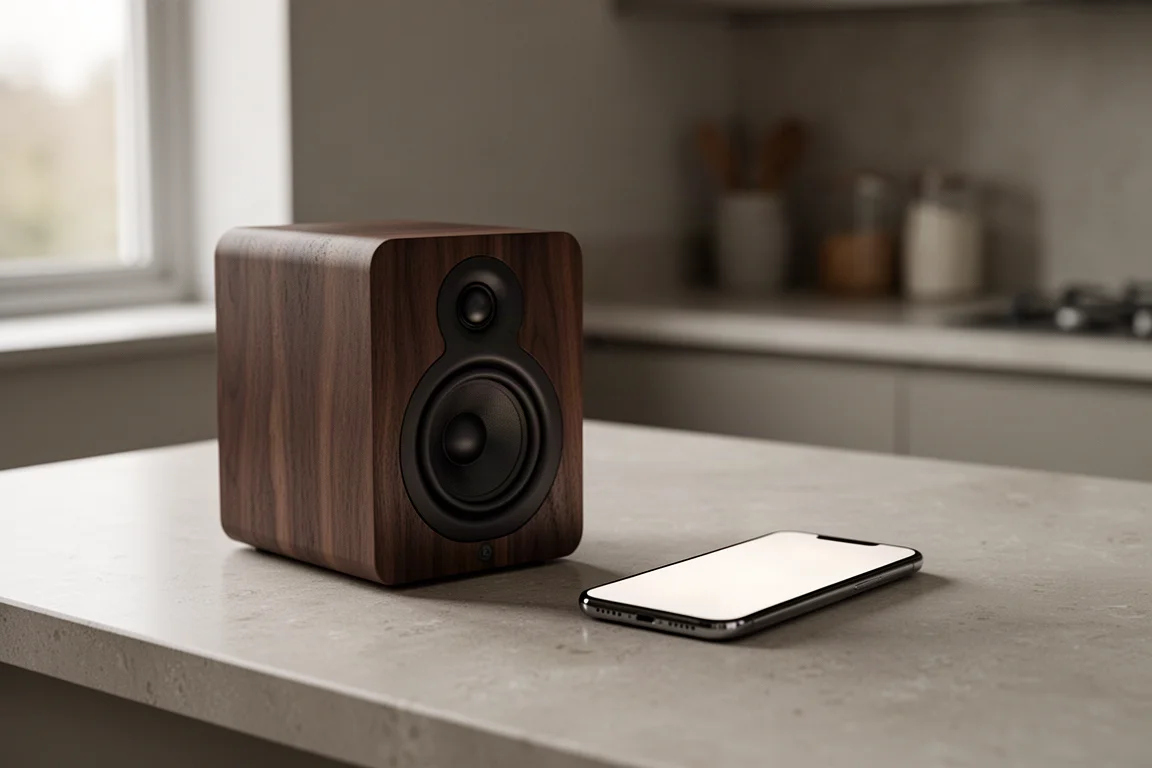
It is a harder sell for enthusiasts who enjoy choosing components individually, matching an amplifier to a pair of speakers at a budget they control, and building a system in stages over time. Separates can be assembled at almost any price point, which is part of the appeal for that audience. Buyers coming from a Sonos-style background, who want their music to sound good enough without chasing fine detail, are a much more natural fit for this speaker.
Connectivity: Every Input You Need
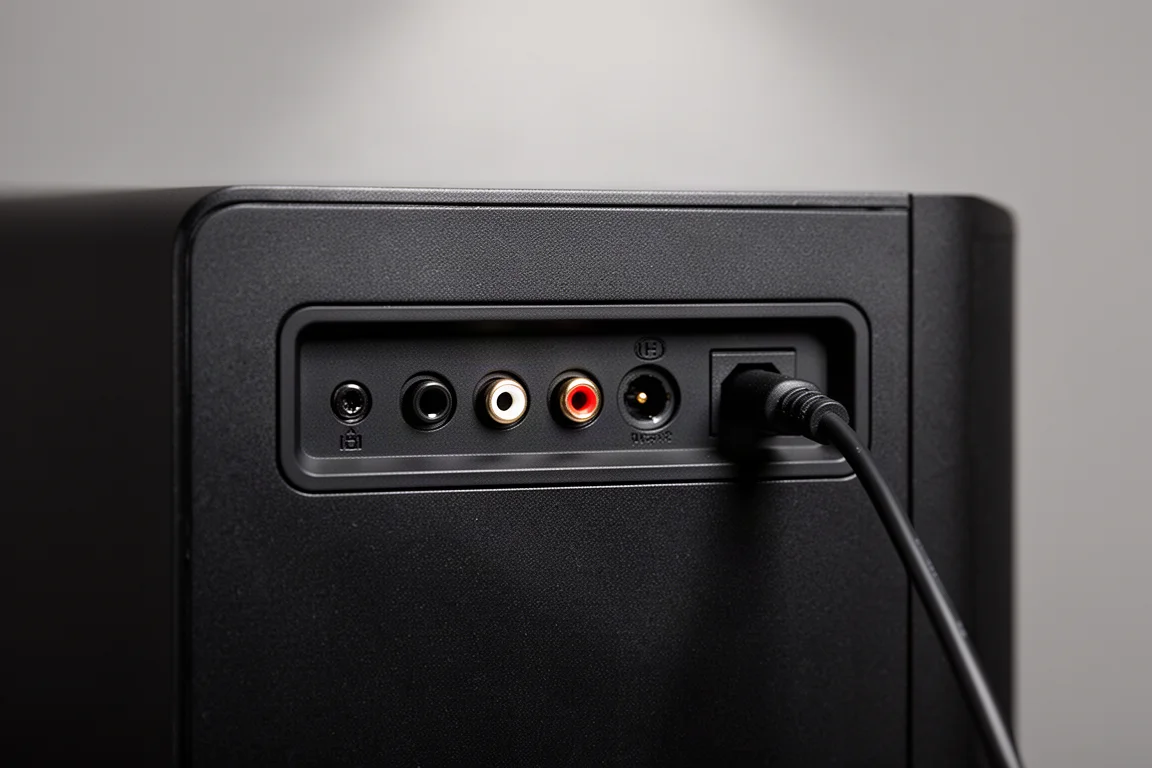
The rear panel is one of the strongest arguments for the Alpha iQ. There is a hardwired ethernet port for a wired network connection, HDMI ARC for a television, an optical input for a CD transport or a games console, and a 3.5 mm analog input, which needs an RCA to 3.5 mm cable for most analog sources. There is also a subwoofer output, which is useful for a speaker of this size, and a phono input with a phono preamp built in, so a turntable can connect directly.
Both speakers are powered and each has its own power cord. That means there is no umbilical cable running between the two cabinets, which is a genuine difference from many powered designs. The trade-off is that you need a power outlet near each speaker, and if you end up running an extension cord to the second one, you have partly recreated the cable run you were trying to avoid.
A remote control is available but is not included, so the BluOS app on your phone becomes the main control surface.
Size, Output, and Setup
The cabinets are small, and they play surprisingly loud for their size. That combination suits a desk, a kitchen, a bedroom, or a second home where a full separates system would be impractical.
Setup is straightforward in principle. You plug both speakers in, open the BluOS app, and search for the device. If it does not join your network automatically, it broadcasts its own Wi-Fi network that you connect to temporarily, after which your network details are shared, updates are downloaded, and the two speakers pair with each other. In practice the pairing step can take a few attempts, because the two cabinets have to recognise each other over Wi-Fi rather than through a physical link. Repeated power cycles may be needed before everything settles.
Once running, the system is tidy and easy to live with. The caveat is the outlet requirement mentioned above, which is worth checking against your room layout before buying.
How the BluOS App Fits In
The app is the operations centre for the speaker. It handles input switching, streaming, and tone adjustments. Those tone controls are limited to treble and bass, with no mid-range control and no multi-band equaliser.
That limitation matters more than it first appears. The WiiM platform, which is a direct competitor to BluOS in streaming and app functionality, offers a 10-band EQ and a parametric EQ. A WiiM Mini costs around $70 and could feed the Alpha iQ through its optical input, which would give you far more control over the tonal balance. Doing that, however, removes some of the point of buying a speaker with a streaming platform already inside it. Without mid-range adjustment, the built-in app is not quite flexible enough to shape the sound to taste.
Sound Quality and Tuning
The Alpha iQ leans warm. There is a noticeable lack of detail through the mid-range, and the overall presentation stays a little veiled rather than crisp. Boosting the treble and trimming the bass in the app did not bring back the clarity through voices and instruments.
There is a flip side that some listeners will appreciate: because the speaker does not dig out crystalline detail, poorer recordings still sound pleasant and nothing feels harsh. Music remains easy to listen to for long stretches. For listeners who mainly want background and casual listening, that forgiving character is a plus rather than a flaw.
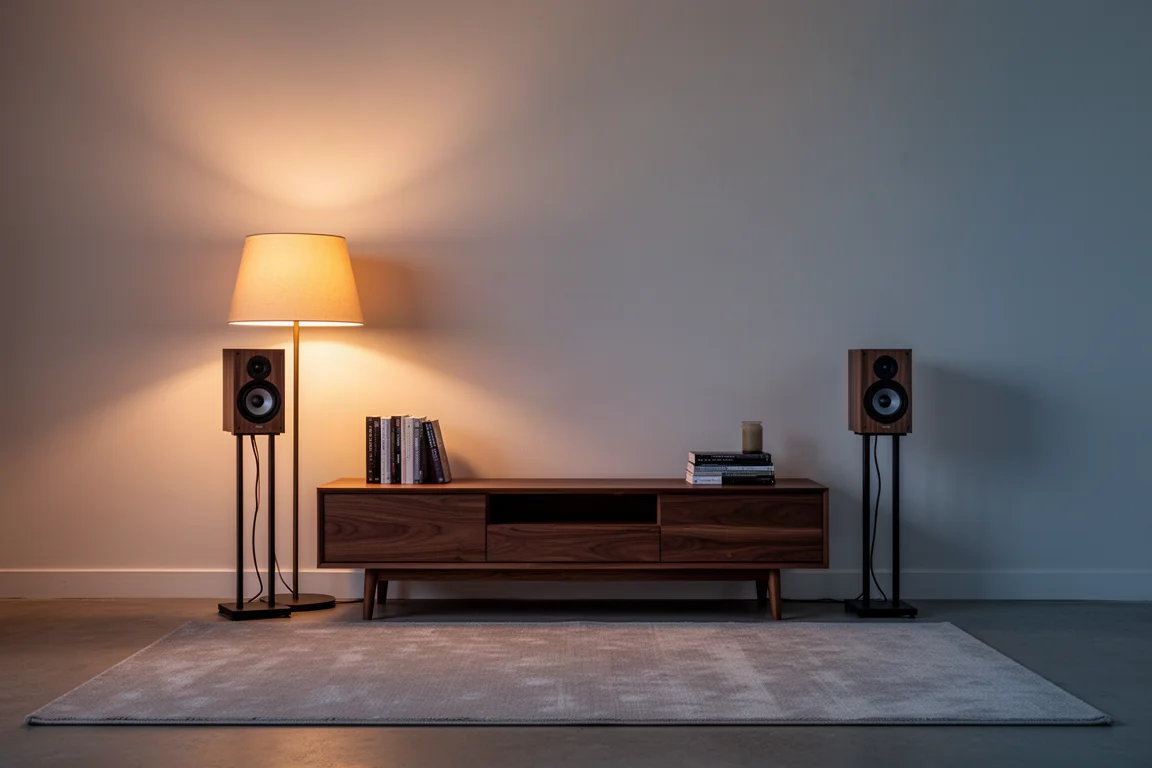
Judged purely on sound, the tuning is a matter of taste. Judged against the price, the missing mid-range clarity is the detail that makes a recommendation difficult, because it is the one thing the app cannot correct.
Things to Consider Before Buying
The value question is where the Alpha iQ struggles most. Its passive PSB Alpha siblings, in the same series, cost far less for the speaker alone, and a capable streaming amplifier can be added for a fraction of the difference.
Alternatives make the comparison sharper. A WiiM amplifier paired with well-regarded budget bookshelf speakers, such as the Polk R200, Polk R100, Emotiva B1+, Polk Signature Elite models, or Sony SSCS5 at around $150, plus an affordable subwoofer, can form a complete system that comes in under $600. The ELAC ConneX, at around $600 and sometimes discounted to $400, is another route, and a WiiM streamer can be added to it. Klipsch’s larger powered models sit near $1,200 and $1,500, and while they include mid-range controls, they do not include a streamer, which can be added for under $100.
The counter-argument is that the Alpha iQ is genuinely unique in its combination of size, inputs, and built-in streaming. The only inconvenience a comparable separates system adds is two speaker cables, which is a small price to pay for more tuning flexibility and often better mid-range performance.
Buying Advice
If the appeal of the Alpha iQ is a compact, app-controlled system for a kitchen, a bedroom, a cottage, or a secondary room, it does deliver on that promise. The input selection is generous, the cabinets are small, and the sound is easy to live with. It is a sensible purchase for a listener who wants one tidy box per side and does not want to think about component matching.
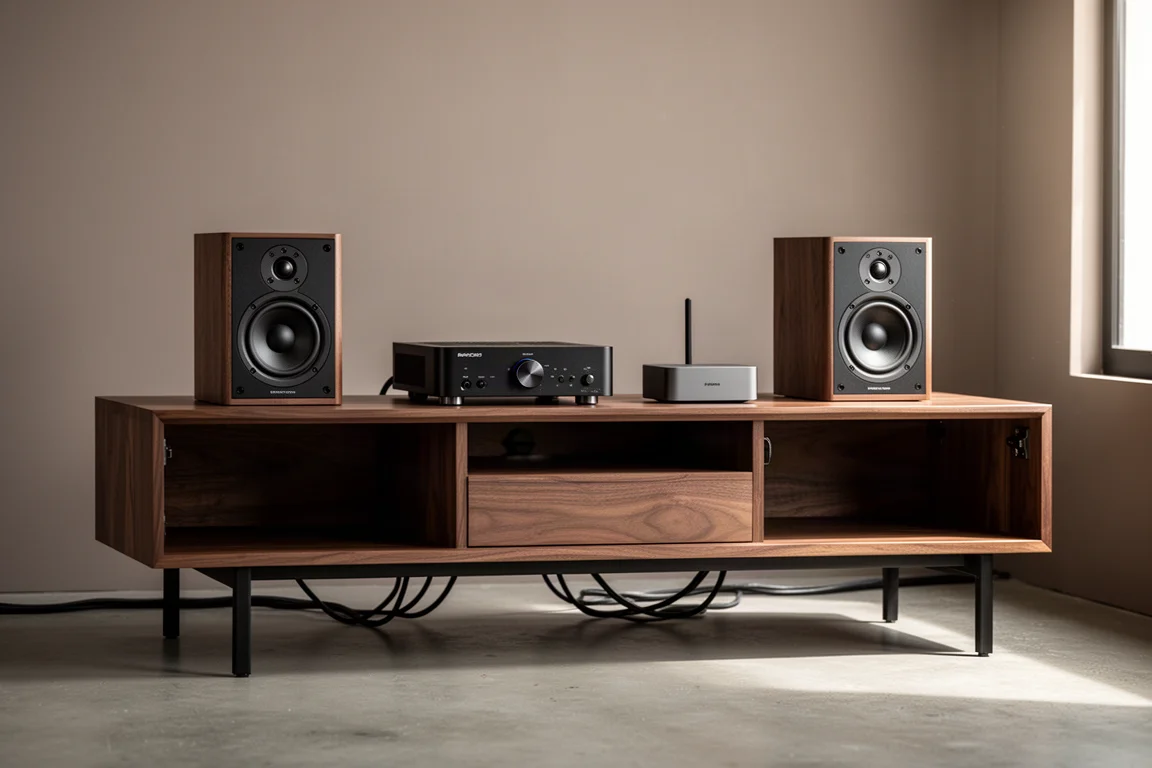
If mid-range clarity is a priority, the same budget goes considerably further elsewhere. A separates system built around a streaming amplifier and a pair of budget bookshelf speakers, with a subwoofer if space allows, offers more control over tone and often a clearer mid-range. At around $600 the Alpha iQ would be an easy recommendation. Even at the discounted $999, the case is hard to make, and at the full retail price it is harder still. Buyers who value convenience above all will be happy; buyers who value detail should look at the alternatives first.
Conclusion
The PSB Alpha iQ is a well-equipped, genuinely compact active speaker pair with a strong input list and the convenience of BluOS streaming built in. What holds it back is the combination of a warm, mid-range-light sound, app tone controls limited to treble and bass, and a price that sits within reach of far more flexible separates systems. For casual listening in a second room it makes sense. For a main system built around detail, it is a difficult recommendation.
Product link
View more details for PSB Alpha IQ
This product is mentioned in the review. Check the specifications, options, and compatibility before buying.
View more details for PSB Alpha IQFurther reading
Related Reviews
Hi-Fi Speakers
1723 THX Tower vs 1528 Bookshelf: Which Speaker Fits Your Room?
Two speakers at roughly the same price, built very differently. How the 1723 THX tower and the 1528 bookshelf compare on construction, bass, power needs, and sound.
Hi-Fi Speakers
Acoustic Energy AE 300 Review: Deep Bass From a Compact Standmount
A two-way standmount with real wood veneer, surprising low-end weight, and a warm, easygoing character. Here is what to know before buying.
Hi-Fi Speakers
Acoustic Energy AE1 40th Anniversary Review: A Modern Take on a British Classic
A compact standmount that revives a 1980s favorite with all-new parts, a warm mid-centric balance, and a price of £1,499 per pair.