Hi-Fi DACs
PS Audio StellarGold DAC Review: A Refined Take on the PS Audio House Sound
A close look at the PS Audio StellarGold DAC, from its parallel converter design and discrete output stage to its preamplifier flexibility, sound quality, and everyday usability.
Introduction
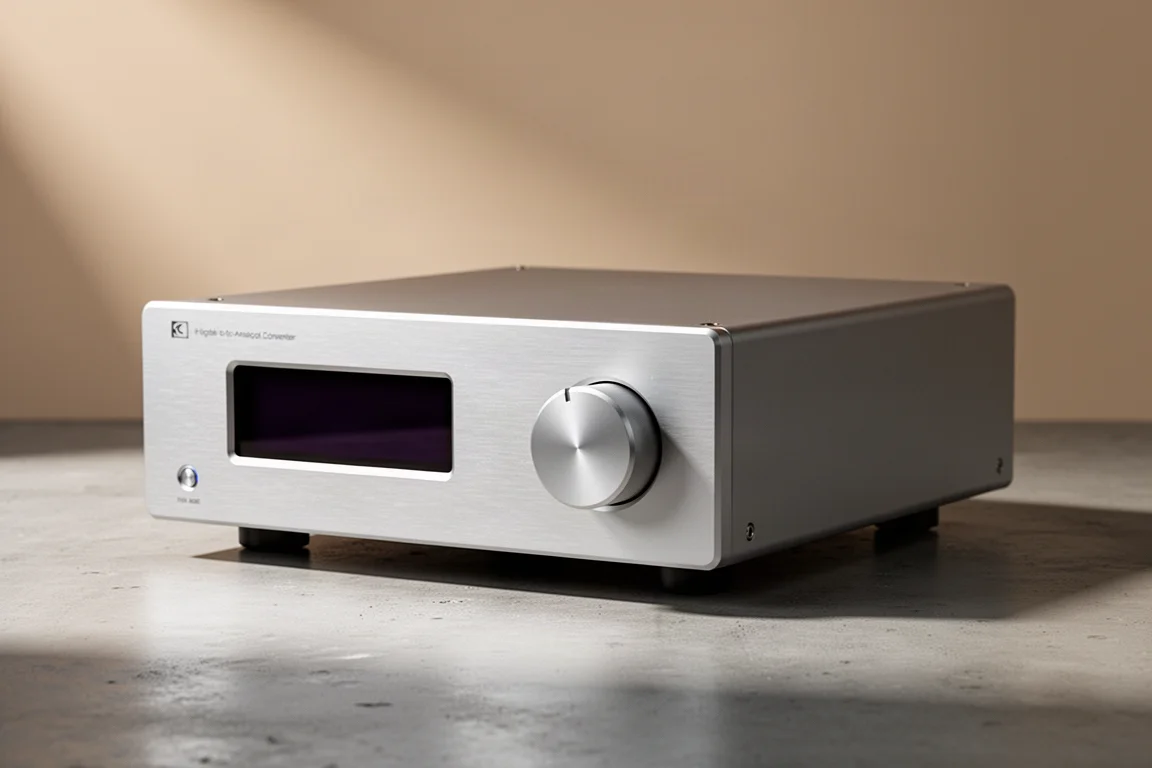
The PS Audio StellarGold DAC is the most convincing digital component the company has produced in recent memory. It keeps the warm, full-bodied character PS Audio components are known for, then adds the nuance and openness that earlier designs sometimes lacked.
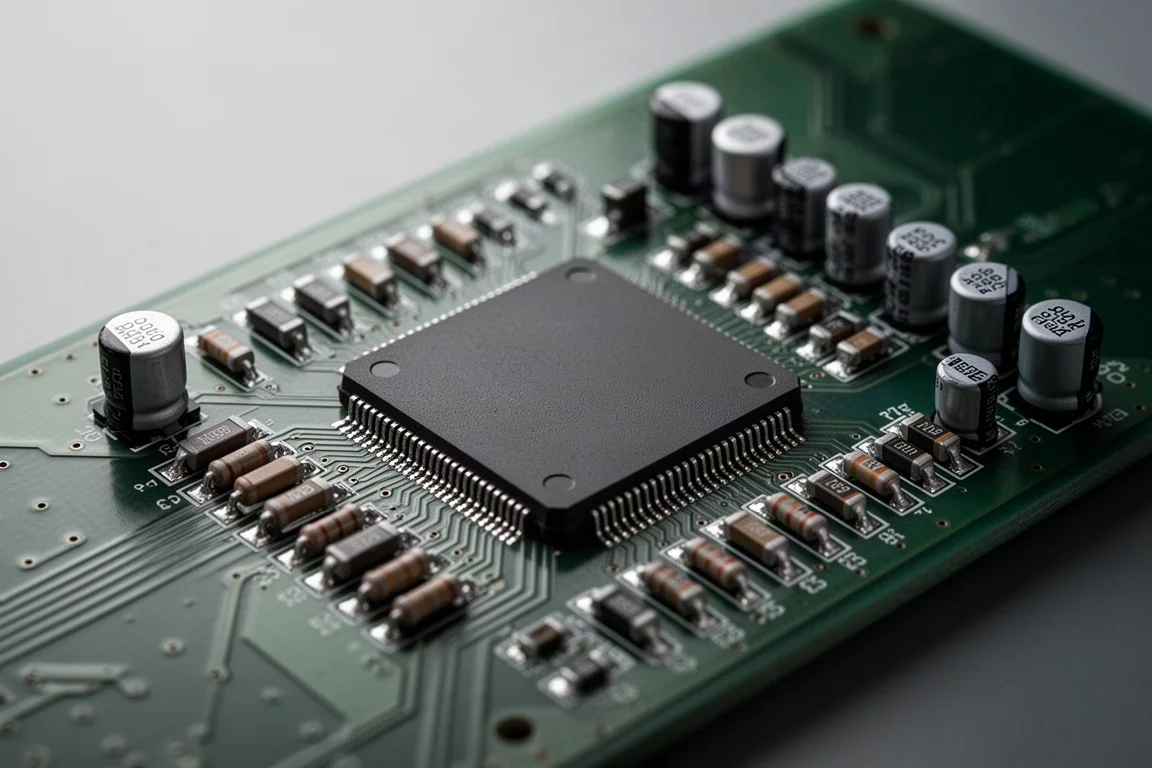
Inside, the StellarGold is built around a single eight-channel ESS 9038 Pro converter chip. PS Audio separates the channels and runs four in parallel per side, which is where the four-DACs-per-channel claim comes from. Running converters in parallel is said to cut distortion, and to give the sound a larger, more musical scale. The published distortion figures are strong, but the same chip appears in far less expensive designs, so the chip alone explains very little. The output stage and the power supply do the rest of the work here.
This review covers what the StellarGold sounds like over extended listening, how its discrete output stage and multiple linear supplies shape that sound, how it behaves as a preamplifier, and where its interface and feature set ask for patience.
Who This Product Is For
The StellarGold suits listeners who already like the PS Audio house sound: a warm balance that never turns bright, generous bass weight, and a midrange that stays easy to listen to for hours. What is new here is the refinement. Vocals and strings carry more texture, and instruments separate more clearly than they did before.
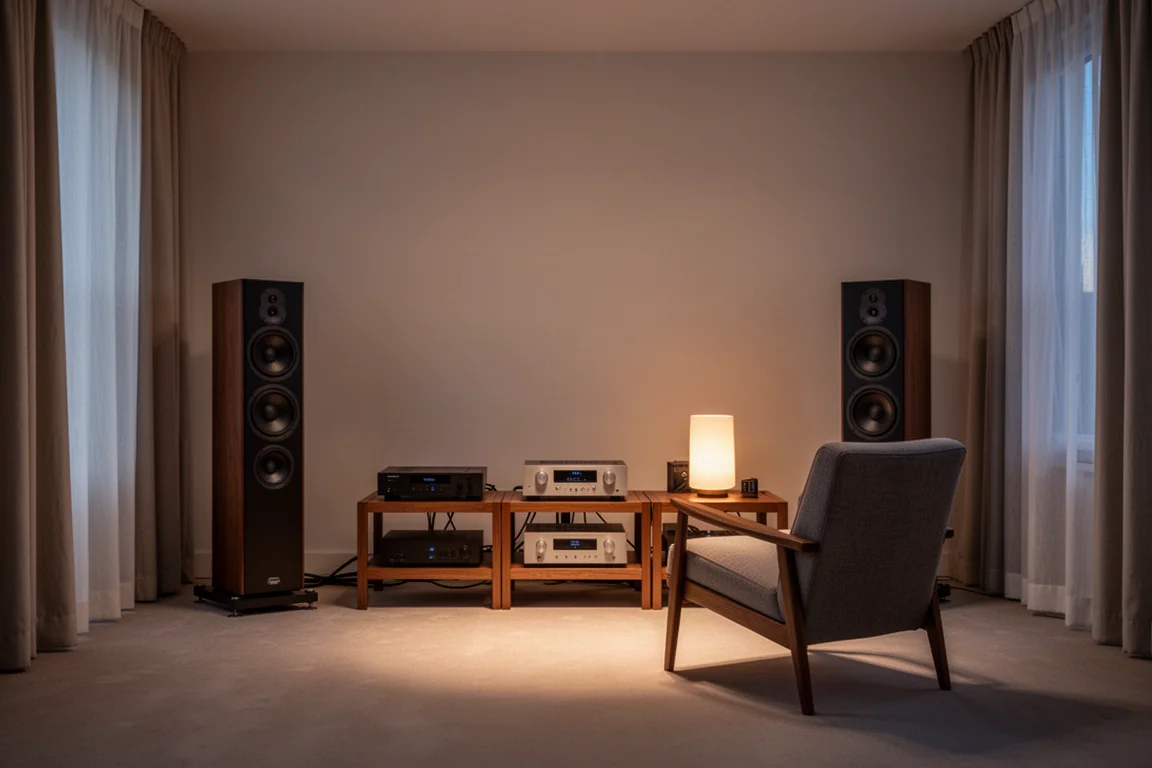
It also suits anyone who wants a converter that can double as a control centre. With variable output enabled, the StellarGold can drive a power amplifier directly, which means one fewer box and one fewer set of interconnects in the chain.
This is not a component for listeners who chase a lean, hyper-detailed presentation as their first priority, and it is not aimed at anyone shopping purely on the converter chip inside. Buyers who expect an app-driven interface with modern menus will also find the front-panel navigation dated.
Main Strengths
The strengths below are the ones that hold up over weeks of listening rather than a quick audition.
Sound Quality and the PS Audio House Sound
The StellarGold keeps the familiar PS Audio signature. Bass is full, muscular, and textured rather than thin. The midrange stays balanced and never becomes harsh, and the presentation remains soft and easy to listen to even at high volume.
Where it moves forward is in the middle of the range. Vocals and strings gain definition, the attack and decay of guitar strings and voices is easier to follow, and separation between instruments improves. The meat of the midrange is still there, but its edges are cleaner and more crisply drawn.
The top end opens up as well. High frequencies extend further and carry more air and spatial information than earlier PS Audio designs, without turning brighter. Soundstaging is a genuine strength, with both width and depth and clear layering of instruments. Against a well-regarded R2R converter such as the Denafrips Terminator, the StellarGold delivers the wider and deeper stage, while the Terminator counters with a leaner balance, sharper imaging, and more micro-detail.
Micro-detail and macro-dynamics are both present, and crucially the boldness in the bass and midrange is not sacrificed to get there. The overall impression is a more refined, more nuanced version of the PS Audio sound rather than a departure from it.
Output Stage and Power Supply Design
The converter chip is only part of the story. Many designs using the same ESS chip rely on op-amps in the analogue stage, while the StellarGold uses a JFET and BJT hybrid, fully balanced, discrete output stage with a high slew rate and low feedback. It was designed by Darren Myers during his time at PS Audio, and that topology is a large part of why this DAC sounds different from cheaper converters built on the same silicon.
The power supply is equally deliberate. Rather than one supply feeding everything, the StellarGold uses multiple linear regulated supplies, and the circuit layout is deliberately minimal. The board can look sparse at first glance, but that reflects a short signal path with everything placed where it needs to be.
Seven digital filters are available to fine-tune the presentation, and they can be switched from the supplied full-size remote rather than through the menu. In practice the differences are subtle, and the first filter sounds the most natural and is a sensible starting point. A useful extra is independent left and right channel level adjustment, which lets you compensate for an asymmetrical room or speaker placement so the centre image locks back into the middle.
Inputs, Outputs, and Preamplifier Flexibility
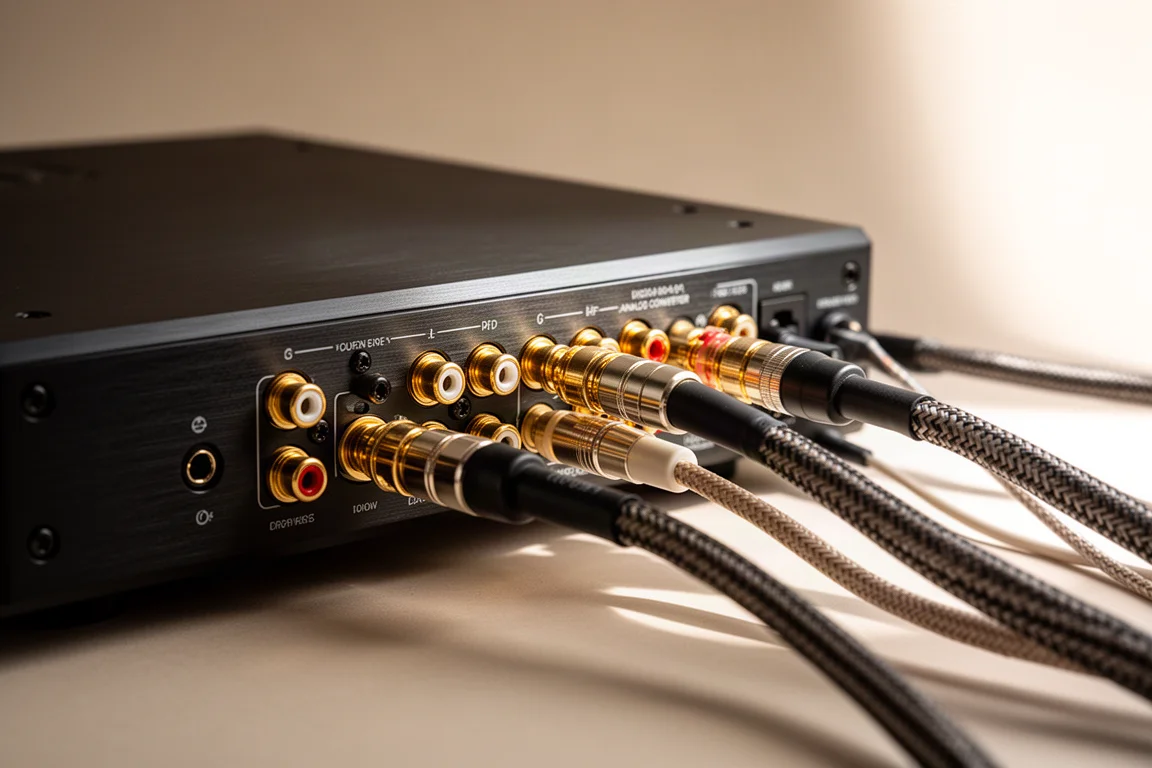
Connectivity is generous. There is USB, coaxial, and optical input, plus two I2S inputs, which covers a television over optical, a CD transport over coaxial, and streamers or computers over USB or I2S. A matching AirLens streamer connected over I2S produced an exceptionally quiet, pitch-black background with information sharply spotlit, and a USB-only reference streamer also worked without issue.
On the analogue side you get a fully balanced XLR output pair plus a set of RCA outputs. Those same outputs let the StellarGold act as a preamplifier: enable variable output in the menu and it can drive a power amplifier directly, or leave it fixed and feed an integrated amplifier that has its own volume control.
That internal preamplifier is better than most DAC-based volume stages. It matched well with a wide range of amplifiers, including NAT monoblocks that are known to be fussy about preamplifier pairing, and in some setups it was preferred over a separate BHK preamplifier. Adding the matching StellarGold preamplifier into the chain did improve performance, but only modestly: the internal stage delivered roughly 85 percent of what the separate preamplifier offered.
Things to Consider Before Buying
The interface is the weakest part of the package. A small front display shows status and sampling rate, and the menu system works, but navigating settings feels dated next to modern streamer and DAC platforms. By comparison, the EverSolo Z8 is far more convenient to operate and costs considerably less while using the same ESS 9038 Pro converter chip. That does not make the two equivalent, because the analogue stage and power supply differ substantially, but it is a fair reminder that the chip on its own is not the reason to buy this DAC.
The feature set is deliberately minimal. There is no streaming built in and nothing beyond the essentials, so this is a converter and preamplifier rather than an all-in-one hub. Buyers who want extensive digital processing or app-based control will need to look elsewhere.
The seven filter options are worth exploring, but expectations should stay realistic. Their effect is subtle in most systems, and many listeners will simply settle on the default and leave it there. Also plan for the size of the supplied remote: it is a full-size handset, which is welcome for filter and input switching but takes up more shelf space than the slim remotes common to this category.
Buying Advice
Buy the StellarGold if you want the PS Audio house sound with more detail, more air, and a wider stage, and if you would rather run a single box into a power amplifier than add a separate preamplifier. It rewards systems that already lean warm and speakers that benefit from full bass weight.
If you are weighing the internal preamplifier against a separate one, start with the built-in stage. It performs well enough that many systems will not need the extra box, and you can always add the matching preamplifier later if you want the last increment of performance.
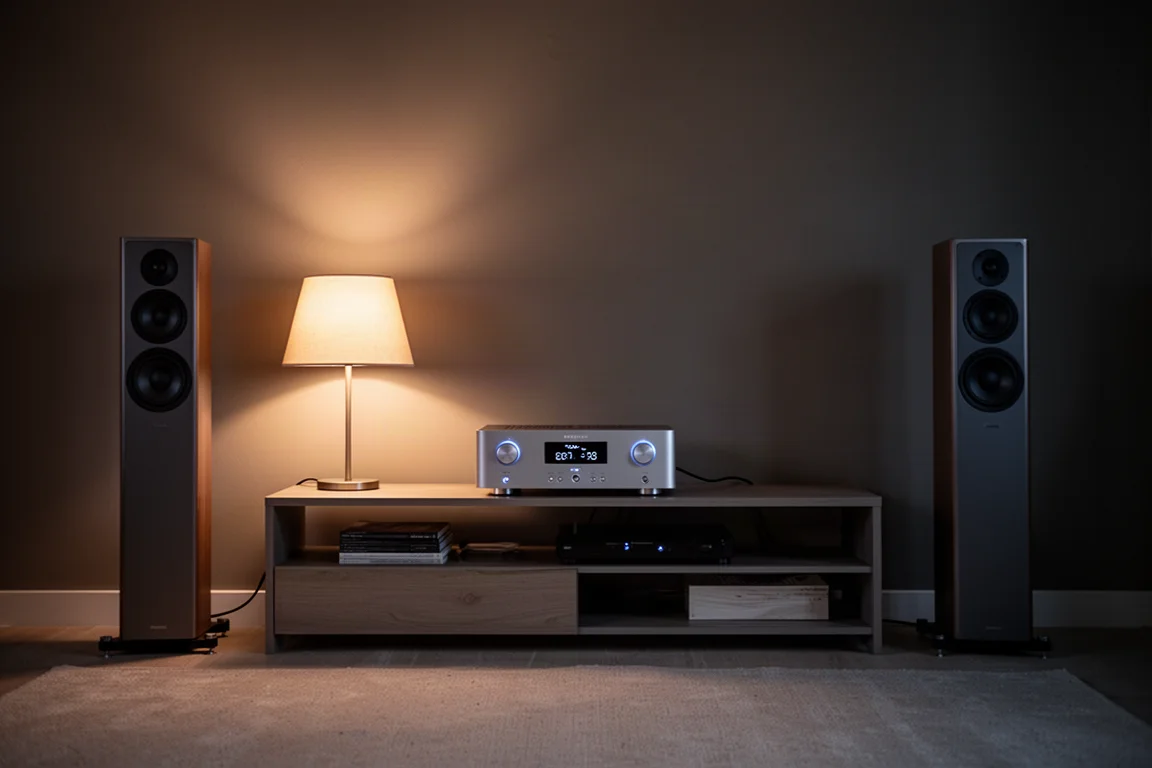
System matching matters more than feature counting here. The deck responds strongly to the quality of the source feeding it, and an I2S-capable streamer is the most rewarding connection. Give it a quiet, well-isolated shelf and a good amplifier, and the added refinement in the midrange and top end is easy to hear.
Conclusion
The PS Audio StellarGold DAC is a refined, more nuanced version of the sound the company is known for, backed by a discrete balanced output stage, multiple linear regulated supplies, and a genuinely capable internal preamplifier. Its interface and minimal feature set are the trade-offs, and cheaper converters use the same chip. For listeners who value a full-bodied, musical presentation with better separation and a wide, deep stage, this is a compelling digital centre for a serious system.
Product link
View more details for PS Audio StellarGold DAC
This product is mentioned in the review. Check the specifications, options, and compatibility before buying.
View more details for PS Audio StellarGold DACFurther reading
Related Reviews
Hi-Fi DACs
Denafrips Ares 12th-1 vs Geshelli Labs J2: Two Paths to a Better DAC
A two-DAC comparison of the Denafrips Ares 12th-1 and the Geshelli Labs J2, covering build, inputs, sound character, and which listener each converter suits.
Hi-Fi DACs
Denafrips Ares 12th Anniversary Review: A Purist R-2R DAC With an I2S Upgrade
A compact, fully balanced R-2R converter with a new I2S input, free anniversary firmware and a clear upgrade path at around £1,000.
Hi-Fi DACs
Denafrips Pontus 15th Generation DAC Review: Trickle-Down R-2R Sound
A two-box R-2R converter that carries the circuit of a far more expensive Denafrips model, with airy staging and a clear system-matching rule.