Hi-Fi DACs
Denafrips Ares 12th-1 vs Geshelli Labs J2: Two Paths to a Better DAC
A two-DAC comparison of the Denafrips Ares 12th-1 and the Geshelli Labs J2, covering build, inputs, sound character, and which listener each converter suits.
Introduction
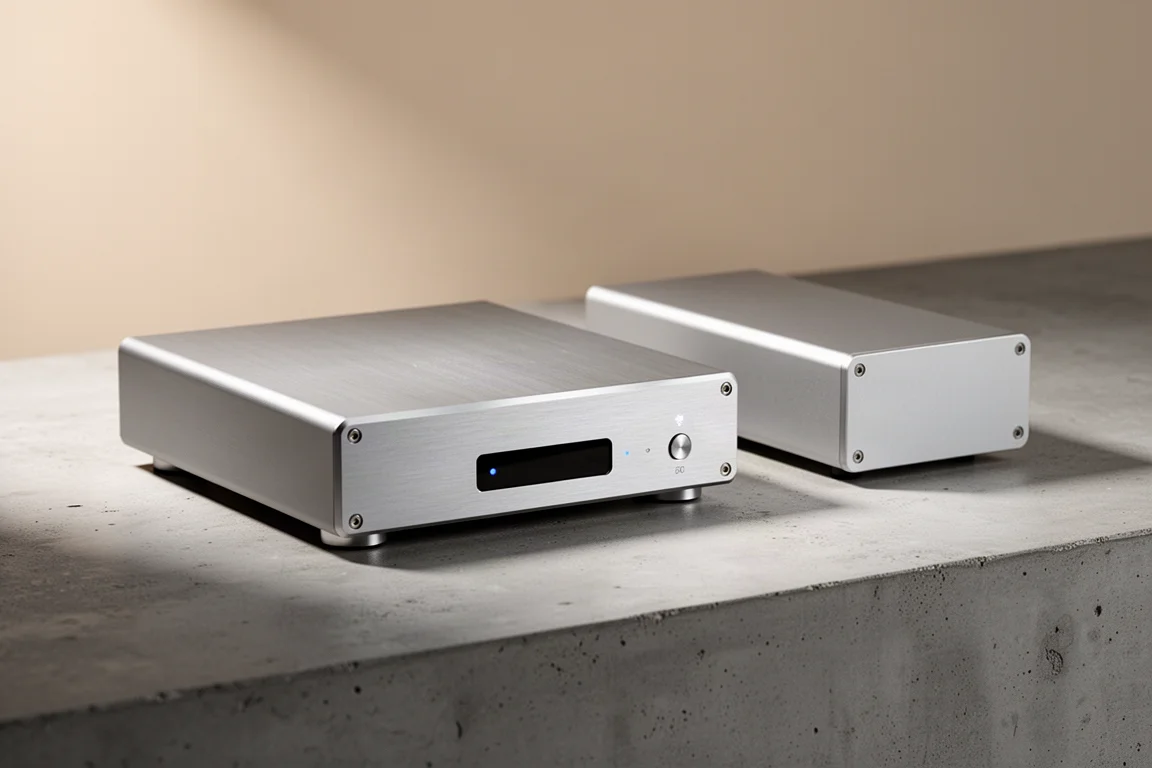
Two converters, one price neighborhood, two very different design philosophies. The Denafrips Ares 12th-1 arrives as a substantial brushed aluminium box with a resistor ladder inside and a $998 USD price tag. The Geshelli Labs J2 is the smaller, more configurable option, sitting around $700, or closer to $900 once a linear power supply is added.
Both are fixed-output DACs, so neither includes a volume control. In a desktop or living-room system built around an integrated amplifier or a preamp, that is not a limitation. It simply keeps the volume decision with the amplifier, where many listeners prefer it anyway.
This comparison covers what each converter does well, where each one asks for a compromise, and which type of listener is likely to be happier with which.
Why an R-2R DAC Changes the Character of a System
Most affordable DACs use a single delta-sigma chip to handle conversion. The Ares 12th-1 takes an older route instead: it builds its output from a ladder of resistors and capacitors, the approach digital-to-analog conversion used before integrated chips took over. The practical argument for a ladder design is character and longevity. It does not depend on a particular chip generation, and it tends to produce a distinctive kind of spatial presentation rather than a purely analytical one.
That difference in presentation is the reason this comparison exists. Two converters can both measure well and still place instruments in a room very differently, and that placement is often what makes a system feel convincing rather than merely clean.
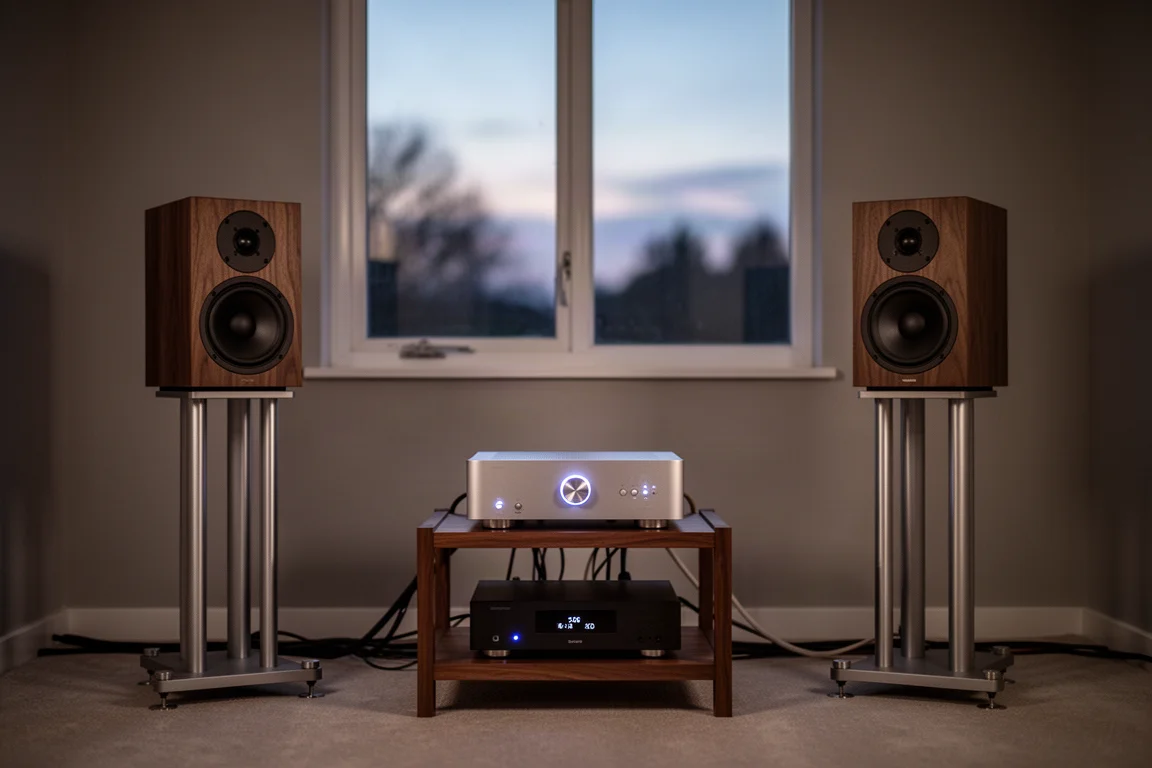
The rest of the chain matters here too. A converter that resolves detail cleanly can make an existing amplifier and speakers sound more controlled, particularly through the upper midrange, without changing anything else in the system.
Denafrips Ares 12th-1: Build, Inputs, and Specifications
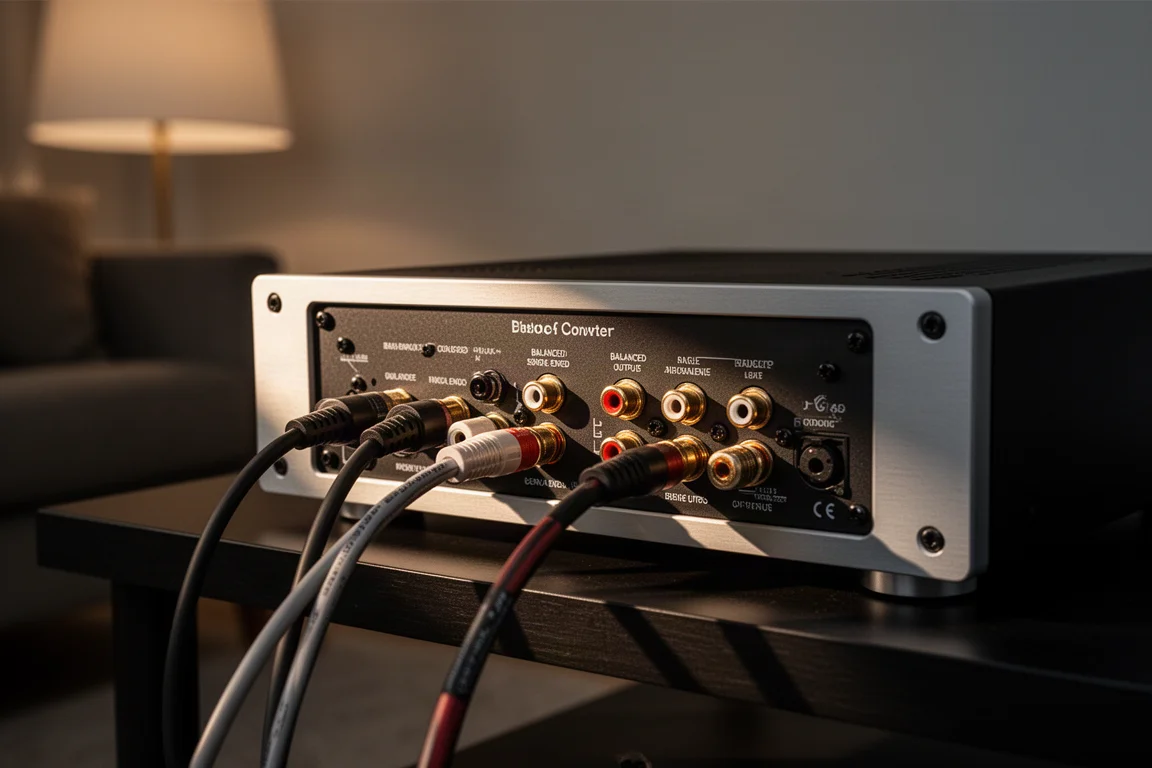
The Ares 12th-1 is a heavy piece of kit. The chassis is brushed aluminium, and the internal linear power supply accounts for much of the weight. Connectivity covers an I2S input, a single optical input, coaxial digital, and a full-size USB Type-B port, the printer-cable style rather than USB-C. Outputs are XLR balanced and RCA single-ended.
The specification sheet is quiet on paper: a signal-to-noise ratio of 115 dB, dynamic range above 119 dB, and stereo crosstalk of negative 124 dB. A femtosecond-grade crystal clock handles timing, the part of a DAC that file-focused listeners tend to think about most. The Ares plays PCM up to 24/192 as well as DSD. It does not decode MQA, so listeners invested in that format should look elsewhere.
Two practical details deserve attention. USB performance depends on firmware, and this generation ships with the current firmware, which addresses the occasional sputtering reported on the earlier Ares. The Ares also carries a three-year warranty with a service center in the United States, a meaningful detail for an imported component that would otherwise have to travel overseas for repair.
Denafrips Ares 12th-1: Sound and Character
The Ares is at its best with space and placement. On acoustic material, a piano recorded to the left of the stage sits firmly in the room rather than floating near the speaker, and that sense of a performance happening in front of you is what stands out first.
Midrange detail is the other strength. On a dense, voice-forward rock recording, the Ares pulls more texture and air out of a vocal line, and the first strike of a drum stick on a skin arrives with more clarity. The trade-off is warmth. The midrange is highly detailed but does not add much extra body to the sound.
Voices come across as slightly more forward than on the J2, which suits singer-songwriter material and acoustic recordings. It is a presentation built around precision and dimensionality rather than weight.
Geshelli Labs J2: Gain Settings, Upgrades, and Price
The J2 approaches the same job from a different angle. It offers three gain settings, low, medium and high, which makes it easier to match with a wider range of amplifiers and to fine-tune output level. The Ares offers a single fixed level, so the two are not perfectly matched out of the box, and small volume adjustments are needed for a fair comparison.
Price is the J2’s clearest advantage. It lands around $700, and even adding a linear power supply brings it to roughly $900, still below the Ares. Sparkos opamp upgrades are available as well. The stock switching power supply already sounds good, so the linear supply is an optional step rather than a requirement.
Like the Ares, the J2 has fixed outputs. Volume control stays with the amplifier or preamp.
Geshelli Labs J2: Sound and Character
The J2 leads with weight. Bass is fuller, and the converter hits harder on dynamic material, which is exactly what dense rock, metal and grunge recordings ask for. On percussion-heavy passages, the J2 delivers more smack and a fuller body, even if the very first attack is slightly less defined than on the Ares.
Voices carry a little more bare tone, and aggressive vocal lines stay slightly less intense rather than being pushed forward. That restraint is a matter of taste rather than a shortfall; it simply favors different material.
Soundstage and imaging are strong on both converters, and that is rarer than it sounds. Plenty of DACs in this range sound good without creating much depth. Neither of these two has that problem.
How the Two Compare on Real Recordings
The differences show up most clearly on demanding tracks. On a hard-charging rock recording, vocals and guitars come across as slightly less intense on the J2, while the Ares pushes voices further forward and reveals more air around them. On an acoustic jazz recording, piano placement is more convincing on the Ares, with the instrument sitting deeper into the room. On a percussion-heavy live recording, the J2 wins on fullness and impact while the Ares wins on the crispness of the initial hit.
Put simply, the Ares trades some warmth for detail, air and placement. The J2 trades some midrange air for weight, punch and flexibility. Both keep a firm grip on soundstage and imaging, so the choice is about the flavor of the presentation rather than about which converter is more competent.
Buying Advice for a Roughly $1,000 DAC Budget
Both converters are strong options, and neither is a compromise on soundstage. The decision comes down to the music you play most and the features that matter to you.
If your library leans toward acoustic recordings, singer-songwriter material, jazz and classical, the Ares 12th-1 is the more natural fit. Its detail retrieval, forward vocals and precise instrument placement reward well-recorded material, and the brushed aluminium chassis, balanced outputs, US service support and three-year warranty add practical value.
If you listen mostly to rock, metal and grunge, the J2 is likely the more satisfying converter. Its fuller low end and harder punch suit dynamic, aggressive music, and the three gain settings make it easier to integrate into an existing setup. Adding Sparkos opamps and a linear power supply keeps the total below the Ares while closing much of the gap in refinement.
Whichever you choose, budget for the rest of the chain. Both DACs have fixed outputs, so an amplifier or preamp with a good volume control matters. Neither decodes MQA, so if that format is central to your library, look at other options first.
Conclusion
The Denafrips Ares 12th-1 and the Geshelli Labs J2 reach a similar standard from opposite directions. The Ares favors detail, air and precise placement in a heavy, linear-powered chassis with balanced outputs and dependable warranty support. The J2 favors weight, punch and flexibility, with three gain settings and an upgrade path that keeps it cheaper even when fully loaded.
Neither is the wrong answer. Match the converter to the music you actually play, and either one will make the rest of your system work noticeably harder for you.
Further reading
Related Reviews
Hi-Fi DACs
Denafrips Ares 12th Anniversary Review: A Purist R-2R DAC With an I2S Upgrade
A compact, fully balanced R-2R converter with a new I2S input, free anniversary firmware and a clear upgrade path at around £1,000.
Hi-Fi DACs
Denafrips Pontus 15th Generation DAC Review: Trickle-Down R-2R Sound
A two-box R-2R converter that carries the circuit of a far more expensive Denafrips model, with airy staging and a clear system-matching rule.
Hi-Fi DACs
Denafrips Venus II vs Pontus II: Two Ladder DACs Compared
A practical comparison of two Denafrips ladder DACs, covering internal differences, sound quality, burn-in behaviour and which system each one suits.