Hi-Fi DACs
Denafrips Ares 12th Anniversary Review: A Purist R-2R DAC With an I2S Upgrade
A compact, fully balanced R-2R converter with a new I2S input, free anniversary firmware and a clear upgrade path at around £1,000.
Introduction
Denafrips used its twelfth anniversary to do more than add a badge to an existing product. The Ares 12th Anniversary keeps the compact chassis and R-2R converter architecture of the Series 2 model, then adds an I2S input, a dedicated oversampling control and the latest firmware. Vinshine Audio, the brand’s global distributor, is also rolling out anniversary firmware to owners of existing Series 2 DACs free of charge. The Ares 2 is currently the only model with that firmware available, and other models are expected to follow.
At around £1,000, the Ares 12th Anniversary is a deliberately purist design: no volume control, no remote, four digital inputs and a fully balanced analogue output. The interesting question is whether the anniversary changes are enough to keep it near the front of a very crowded market.
Who the Denafrips Ares 12th Anniversary Is For
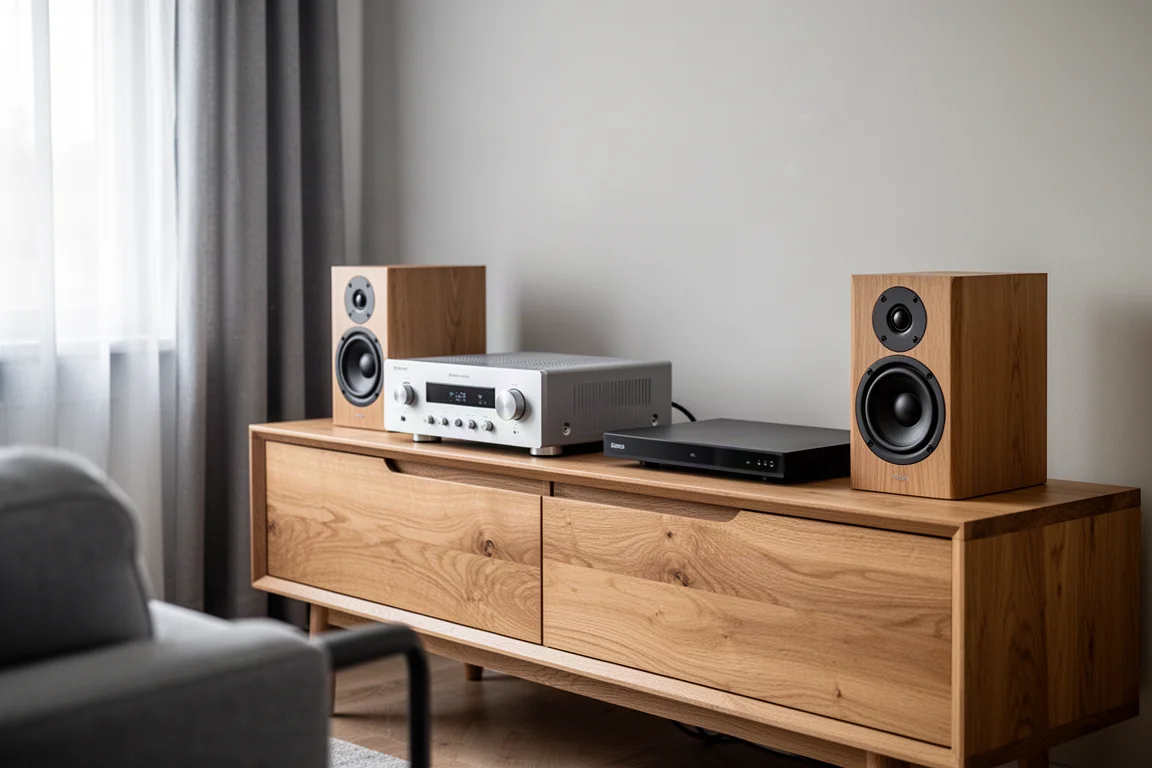
This is a DAC for listeners who already control volume somewhere else in the chain. It slots naturally into a system built around an integrated amplifier or a pre and power combination in the roughly £1,000 to £2,000 range, where a dedicated converter can lift the performance of an amplifier that either has no digital section at all or has one that is merely competent. An amplifier with a good phono stage but no built-in DAC is close to the ideal partner.
It also suits listeners who plan to grow the system over time. The I2S input is the reason: paired later with a digital-to-digital converter, it can take the Ares 12th Anniversary well beyond what its price suggests.
If you want a single box that handles streaming, volume and headphones, this is not that product. The Ares 12th Anniversary assumes the rest of the system is already doing that work, and it concentrates on conversion.
What the 12th Anniversary Update Adds
Three changes matter. The first is the firmware, which Denafrips designed to improve sound quality by optimising the DSP engine, to reduce latency when watching video so lip sync stays intact, and to revise the FIFO buffer and re-clocking architecture to further reduce jitter. Existing Series 2 owners get this update free of charge, and the chip that carries it is the Altera Cyclone FPGA already used in the earlier design.
The second is the I2S input, a new addition on the anniversary model alongside USB, coaxial and optical.
The third is the OS/NOS button on the front panel, which lets you switch between oversampling and non-oversampling operation without digging into a menu. A lit indicator means non-oversampling mode is active.
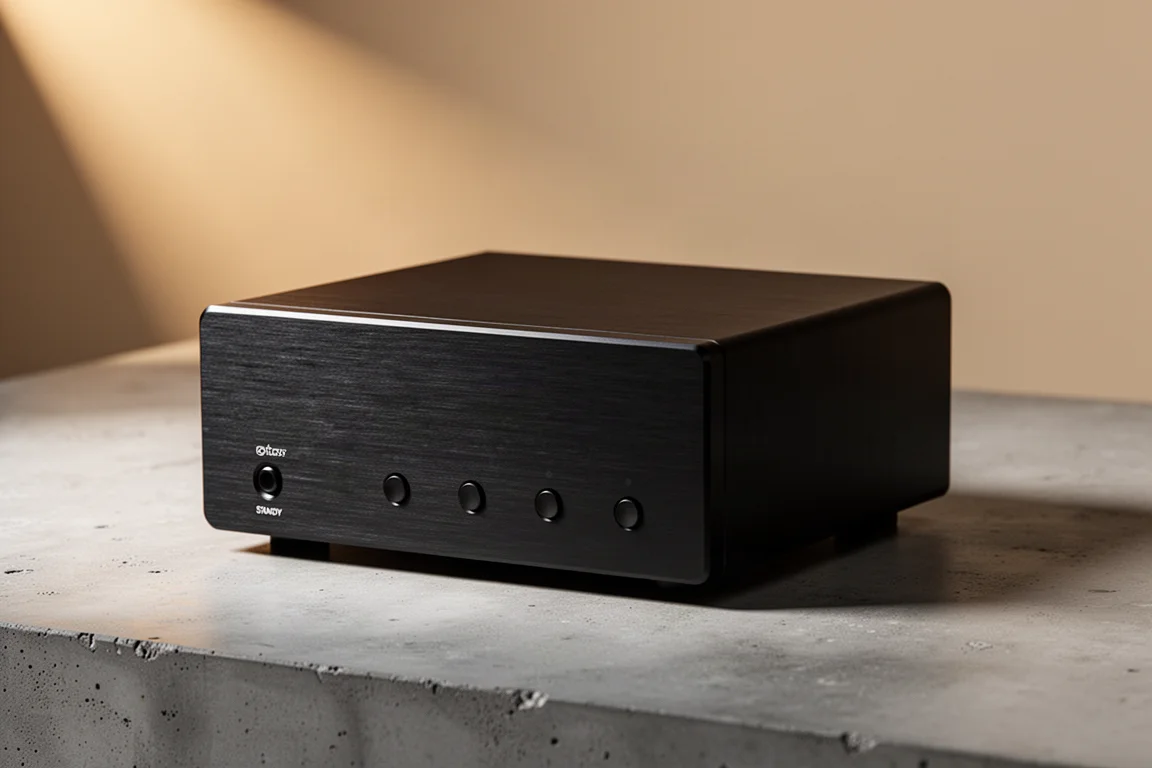
Physically, little has changed. The chassis is the same size as the Series 2, roughly the size of a cigar case, and weighs 3.5 kg (7.7 lb). The standby button stays where it was, while the remaining buttons have moved from the right side of the fascia to the centre. Phase inversion and mute are available, which is useful for recordings that benefit from a polarity flip.
Inputs, Outputs and Connections
The rear panel offers four digital inputs: USB, coaxial, optical and I2S. On the analogue side there are balanced XLR outputs and premium single-ended RCA outputs. Because the Ares 12th Anniversary is a fully balanced design, XLR is the better choice if you run a balanced amplifier or need long cable runs.
The connection types behave differently, and it is worth knowing why. S/PDIF, the format that dates back to the 1980s and arrives here as optical or coaxial, is synchronous: the digital transport, not the DAC, governs the timing of the data stream. Most transports have a weaker clock than a good DAC, and timing errors of that kind show up as jitter. Asynchronous USB was developed to move that responsibility to the DAC, with a handshake to confirm the data received matches the data sent. The trade-off is that USB audio requires more processing, and electrically noisy sources can disturb the sensitive electronics inside a converter if they are not handled well. In most setups, USB still tends to outperform S/PDIF.
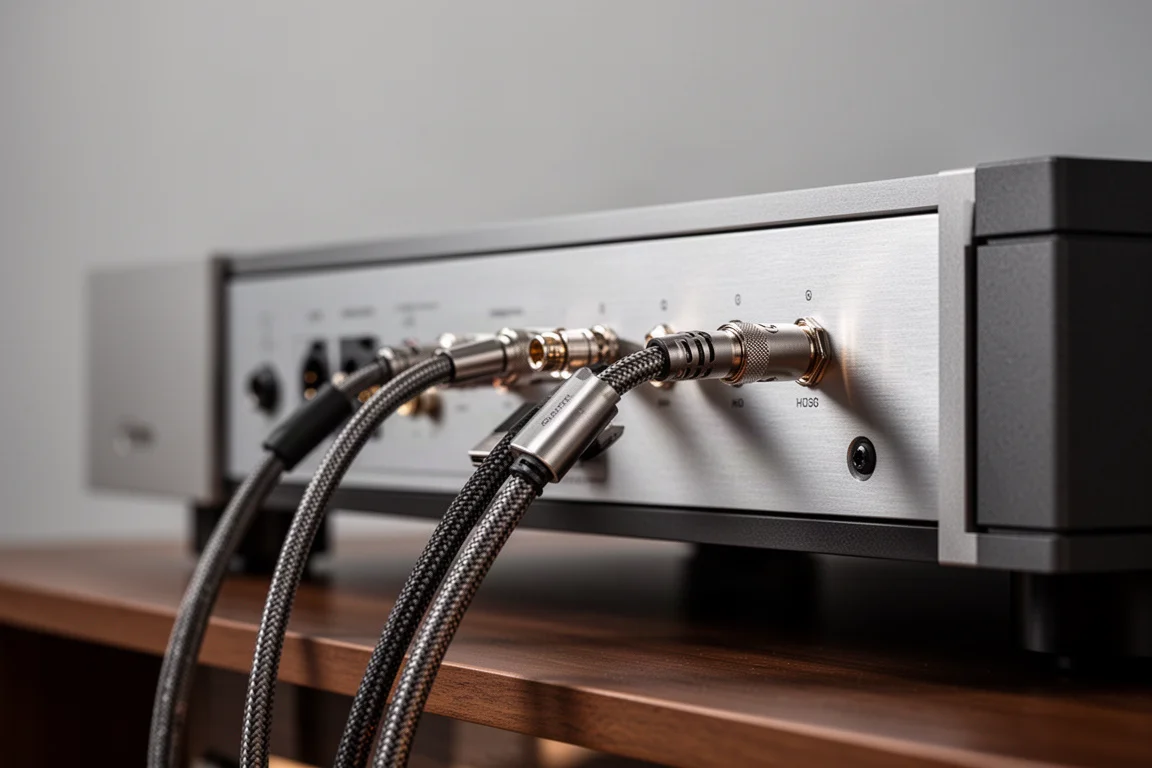
I2S works differently again. It is the format in which digital data is handled inside a DAC, with the master clock, the word clock and the music data kept separate rather than multiplexed together as they are in S/PDIF and USB. Presenting the data in the format the converter handles natively can bring a sonic benefit. There is no single standard protocol, though HDMI connectors are generally used because of their bandwidth and pin count. I2S is also synchronous, so the transport still controls timing, which is exactly where a digital-to-digital converter earns its place.
Inside the Ares 12th Anniversary
The power supply uses an O-core transformer, the same choice as the Series 2. O-core transformers are well suited here because they radiate less noise than toroidal types, whose iron cores have sharper edges.
The filter capacitance has changed. The earlier Ares 2 used more than 60 small capacitors from Nichicon, a leading Japanese manufacturer. The anniversary model uses fewer, larger capacitors branded by Denafrips and sourced from an OEM Chinese manufacturer. That is a cost-driven substitution, and worth knowing about if component provenance matters to you.
The conversion stage is the heart of the design: two R-2R ladders running in parallel in opposite polarity in differential mode, which makes the DAC genuinely balanced end to end. There is no traditional output stage. A variable voltage rather than a variable current comes off the ladder, which removes the need for one. Denafrips acknowledges this approach raises total harmonic distortion, and argues it lowers digital noise and benefits sound quality. A separate board handles the USB interface, and the latest firmware ships preinstalled.
How the Ares 12th Anniversary Sounds
The most striking quality is scale. The Ares 12th Anniversary presents a soundstage that extends beyond the speakers to the left and right and layers instruments front to back in a way that is rare at this price. There is a fullness to the presentation that some listeners will hear as coloration and most will hear as realism.
Compared with chip-based designs at similar money, the difference is easy to hear. A delta-sigma converter such as the SMSL VMV D1se can resolve a little more fine detail and represents strong value at around £700, sometimes less, but its soundstage is flatter and it lacks the harmonic richness that gives instruments body. Against the Gustard R26, which sells for around £1,600 and pairs tighter bass and crisper mids with a wide, deep stage, the Ares 12th Anniversary gives up some resolution and control.
Add a Denafrips Iris digital-to-digital converter over I2S and that gap narrows sharply. The Iris isolates the signal optically and re-clocks it, and its clock is a step above the one inside the Ares 12th Anniversary, using the same temperature-controlled crystal oscillators found in the far more expensive Denafrips Venus 2. The two-box combination costs roughly the same as the Gustard R26. The R26 still holds a small lead in outright resolution and control, but the Denafrips pairing pulls ahead on soundstage width and depth, dynamic impact, body and warmth, and the coloration becomes far less obvious. It sounds like the Ares 12th Anniversary with more maturity. Against the Venus 2, the larger converter still wins by tightening everything and revealing more micro detail and texture, yet at half the price the Ares 12th Anniversary and Iris combination gets much closer than it has any right to.
Things to Consider Before Buying
There is no volume control and no remote. You need a preamplifier, an integrated amplifier or a digital source that handles level, otherwise the DAC cannot be used on its own.
The I2S input only pays off if you are prepared to add a digital-to-digital converter later. Without one, you are paying for an input you may not use, and the cheaper Denafrips Enyo, around £150 less, becomes the more sensible buy.
The filter settings are cryptic. Two digital filter options are available, a sharp roll-off and a slow roll-off, and reaching them means pressing mute and then toggling the optical input button. A lit non-oversampling indicator selects the slow filter; with the light off you get the sharp filter. It is a clumsy interface for a feature that changes the character of the sound.
Finally, the switch from Nichicon capacitors to Denafrips-branded parts is a reminder that this is a cost-engineered product at a fixed price point. It is a reasonable trade for the sound on offer, but it is a trade.
Buying Advice
Two settings are worth trying first. Oversampling mode sounds cleaner and more dynamic than non-oversampling, where the digital input signal is fed straight to the R-2R ladder and bypasses the digital filters. Among the filter options, the slow roll-off setting sounds more open and refined than the sharp alternative, and it is the one to live with for a while before experimenting further.
Pairing matters more than usual. Amplifiers in the £1,000 to £2,000 bracket are the natural home for this DAC, where its R-2R tone and sense of space add something an internal converter cannot. It is not a mismatch to run it in a system costing considerably more, either. A revealing amplifier and speaker combination will simply show more of what the Ares 12th Anniversary does well.
Conclusion
The Ares 12th Anniversary takes a well-established design and makes it more flexible without changing its character. The free firmware programme for existing Series 2 owners, the new I2S input and the front-panel oversampling control are meaningful additions rather than marketing gestures, and the core sound, an open, layered and physically present presentation, remains the reason to buy it. If you want fine detail above all else, other converters at this price can edge ahead. If you want a DAC that makes performances feel solid and tangible, and that has a clear upgrade path through I2S, this one is hard to beat at around £1,000.
Product link
View more details for Denafrips Ares 12th Anniversary
This product is mentioned in the review. Check the specifications, options, and compatibility before buying.
View more details for Denafrips Ares 12th AnniversaryFurther reading
Related Reviews
Hi-Fi DACs
Denafrips Ares 12th-1 vs Geshelli Labs J2: Two Paths to a Better DAC
A two-DAC comparison of the Denafrips Ares 12th-1 and the Geshelli Labs J2, covering build, inputs, sound character, and which listener each converter suits.
Hi-Fi DACs
Denafrips Pontus 15th Generation DAC Review: Trickle-Down R-2R Sound
A two-box R-2R converter that carries the circuit of a far more expensive Denafrips model, with airy staging and a clear system-matching rule.
Hi-Fi DACs
Denafrips Venus II vs Pontus II: Two Ladder DACs Compared
A practical comparison of two Denafrips ladder DACs, covering internal differences, sound quality, burn-in behaviour and which system each one suits.