Preamplifiers
PS Audio PMG Signature Preamplifier Review: Class A Analog Done Properly
The PS Audio PMG Signature is a heavyweight Class A line stage with a fully balanced signal path, a touchscreen-only front panel, and a sound built around drive and soundstage depth.
Introduction
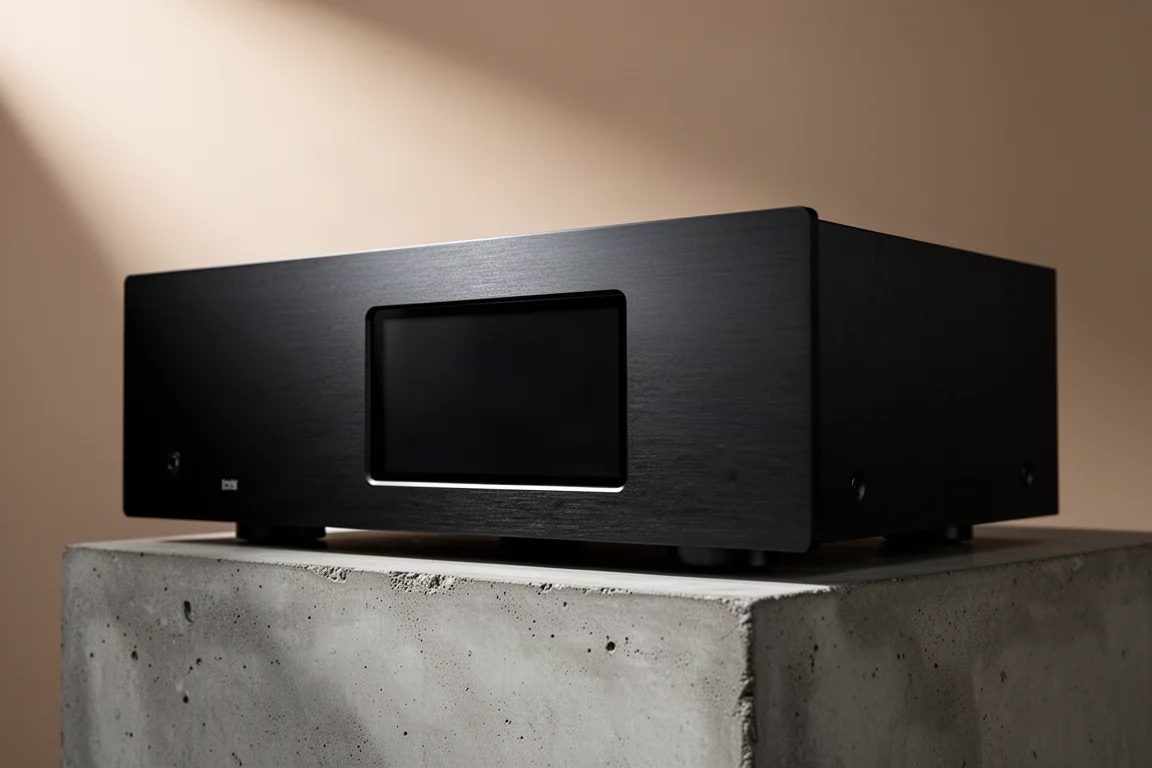
The PS Audio PMG Signature is the kind of component that announces itself before it plays a note. It is a heavy, solid line-stage preamplifier, in the region of 30 to 35 pounds, built around a chassis that stays inert and a front panel that could hardly be simpler. There are no buttons and no knobs, just a touchscreen display, and the implementation is clean enough to win over listeners who normally avoid touch interfaces.
It sits within a wider PMG Signature family that also includes a transport, a DAC, and a phono preamplifier. This particular unit is the line stage, and it is priced at $8,999 in either silver or black finishes. The aim here is straightforward: an analog-only preamplifier that asks the owner to bring their own digital and vinyl front ends rather than compromise with built-in extras.
Who this product is for
The PMG Signature is aimed squarely at listeners who have already settled their sources and want the preamplifier to be nothing more than a superb analog line stage. There is no built-in DAC, no phono stage, and no streamer, which means anyone buying it will pair it with a digital converter and a phono preamplifier chosen specifically for their system.
That approach rewards patience. If you enjoy selecting a converter and a phono stage that suit your turntable, cartridge, and arm, this preamplifier fits that philosophy rather than working against it. It is also a natural fit for systems that already sound good but feel a little short on drive and stage depth.
Main strengths
The PMG Signature makes its case through a combination of engineering choices and a very particular sonic character, and both are worth separating.
Sound character and staging
Solo piano recordings are where this preamplifier made its strongest impression. Tone, dynamics, touch, and phrasing all locked into place across a range of piano recordings, sounding correct in ways that are not always easy to achieve. That sense of correctness is the clearest sign that the fundamentals of the design are in good order.

Rhythm is the other half of the story. The PMG Signature has a strong sense of forward momentum, the quality that keeps a listener involved in a performance rather than analyzing it. It never tips into hardness, and long sessions pass without listening fatigue.
Design, build, and connectivity
Inside, this is a Class A design with an ultra-wide bandwidth, very low noise, and a film capacitor power supply. The circuitry is fully balanced from input to output, and the unit is designed and assembled in Boulder, Colorado at the PS Audio factory. Warranty coverage runs to three years.
The back panel covers analog needs generously. There are two RCA and four XLR inputs, plus two RCA and two XLR outputs. What you will not find is any digital connectivity at all, because this is a line stage: analog in, analog out.
Things to consider before buying
The analog-only design is deliberate rather than a shortcoming, but it does shape the total cost of ownership. Buyers should budget for a quality DAC and a phono stage that match their sources, because a preamplifier at this level will reveal the difference.
The supplied remote control is the weakest part of the package. It carries too many buttons and too much plastic, and it does not feel like a high-end remote. A much better remote with an actual knob is on the way, but it is not part of the current bundle.
Weight and interface are worth planning for as well. At roughly 30 to 35 pounds, the unit wants a solid shelf or rack. And since the front panel is entirely touchscreen, there is no knob to adjust, which will please some listeners and disappoint others.
How it compares with a tube reference
Against a reference tube preamplifier, the two designs take noticeably different routes. The tube design excelled at resolution and low-level detail, pulling information out of the deeper parts of a mix with real clarity. Switching to the PMG Signature opened the soundstage up: more space between instruments, better depth and front-to-back spaciousness, and more dimensionality to each instrument. By comparison, the tube design felt more crowded, with instruments sitting closer together.
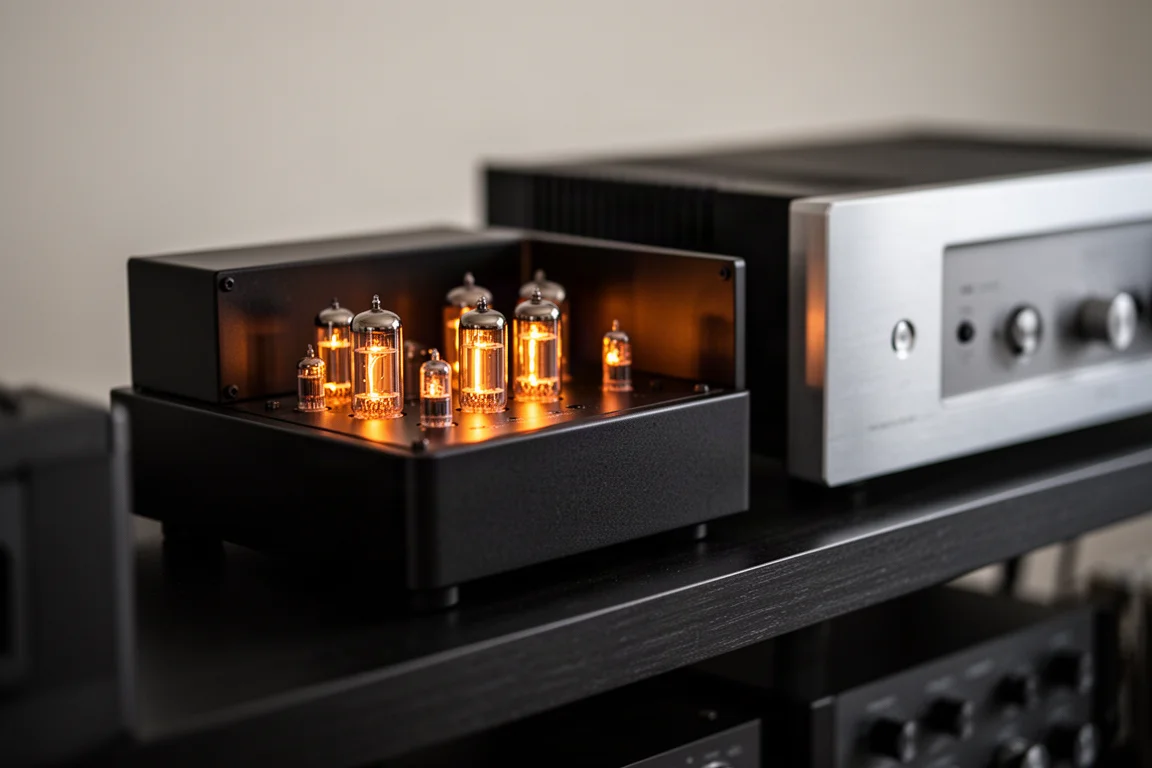
On a large-scale film score with wide dynamic swings, the PMG Signature pulled ahead on low-end power and delivery, giving the music more weight and physicality. The tube reference retained a touch more top-end air and sparkle, while the PS Audio came across as darker but arguably cleaner and more relaxed. These differences were clear and repeatable rather than dramatic, and both preamplifiers are excellent in their own right.
Setup and system matching
The PMG Signature makes an amplifier feel more capable than it is. With large-woofer floorstanding speakers in the chain, that extra drive was easy to hear, and the same quality should translate to most systems that need more authority at the bottom end.
Because the circuitry is fully balanced from input to output, balanced XLR connections are the logical choice where the rest of the system supports them. Give the unit a rigid shelf, keep cable runs tidy, and feed it from sources you trust. With no digital inputs on board, the quality of the DAC and phono stage you choose will shape the final result as much as the preamplifier itself.
Buying advice
This preamplifier makes sense for listeners who have already invested in good analog and digital sources and want a line stage that tells the truth about what is on a record. It is particularly appealing if your system needs more drive, deeper staging, and a sound that stays sweet over long listening sessions.
At $8,999, it sits in premium territory, so the decision comes down to priorities. If you want everything in one box, a built-in DAC, phono stage, and streaming will serve you better. If you prefer to choose those components yourself, and you value power and stage depth over a little extra top-end sparkle, the PMG Signature is a compelling and well-executed option. It is also worth factoring in the improved remote control that is planned, which should address the one part of the package that currently feels below the standard of the rest.
Conclusion
The PS Audio PMG Signature is a serious Class A line stage that earns its price through build quality, a fully balanced analog design, and a sound that combines resolution with real physical drive. Its analog-only philosophy is a deliberate stance rather than a gap, and for the right listener that clarity of purpose is exactly the point. Pair it with sources worth hearing, and it will reward the investment for years.
Product link
View more details for PS Audio PMG Signature Preamplifier
This product is mentioned in the review. Check the specifications, options, and compatibility before buying.
View more details for PS Audio PMG Signature PreamplifierFurther reading
Related Reviews
Preamplifiers
Akitika PR-102 Review: A Preamp That Sounds as Good as It Is to Build
The Akitika PR-102 is a discrete line preamp sold as a kit or fully assembled, with two amplifier outputs, swappable op amps, and a neutral, three-dimensional sound.
Preamplifiers
Ayre K-1 XE Review: A Restored Vintage Preamplifier With Unusual Depth
A close look at the Ayre K-1 XE, a fully balanced zero feedback preamplifier from 1996, covering its four-attenuator volume system, its sound character, and what to weigh before buying.
Preamplifiers
Holo Audio Serene KTE Review: A Balanced Line Stage With a Neutral Voice
A fully balanced line stage preamplifier with a detailed, neutral character, five inputs, buffered outputs, and no built-in DAC or phono stage.