Preamplifiers
Akitika PR-102 Review: A Preamp That Sounds as Good as It Is to Build
The Akitika PR-102 is a discrete line preamp sold as a kit or fully assembled, with two amplifier outputs, swappable op amps, and a neutral, three-dimensional sound.
Introduction
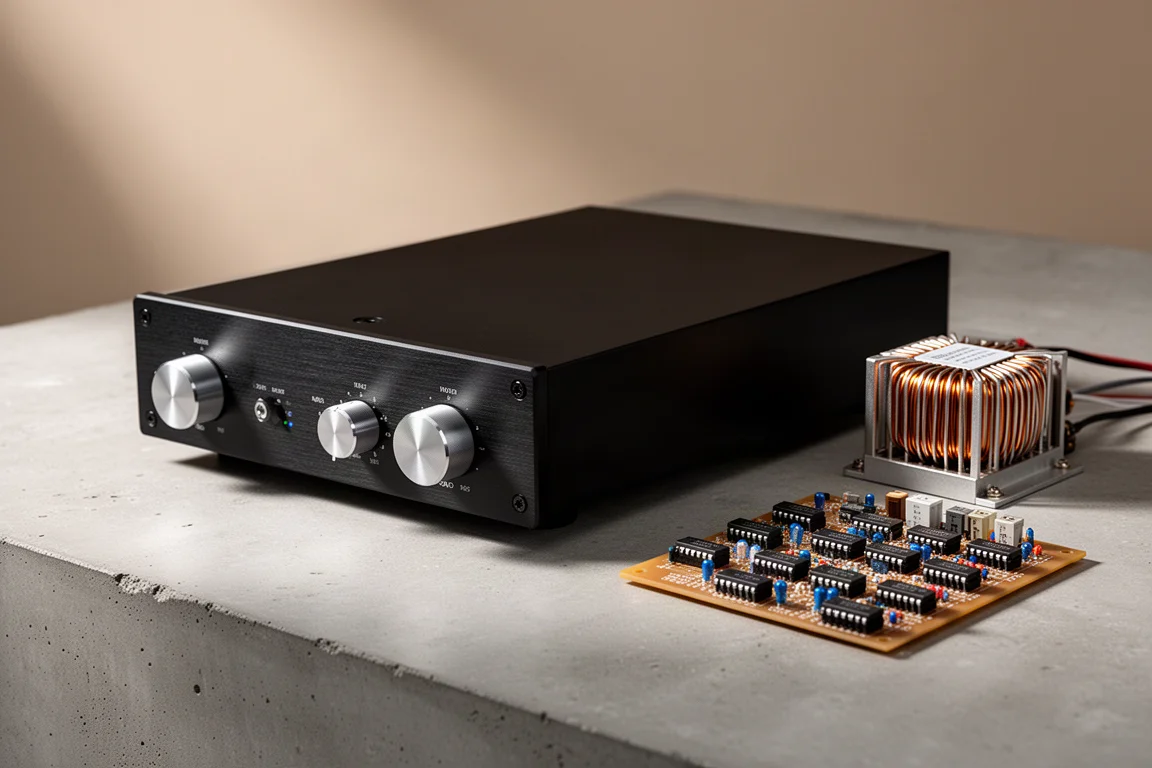
The Akitika PR-102 is a two-channel line preamplifier sold either as a build-it-yourself kit or fully assembled. It is a deliberately old-school design: separate capacitors, diodes, resistors and relays, a toroidal transformer, and op amps that sit in sockets so they can be lifted out with a screwdriver and replaced. Pricing starts at $480 for the kit with a remote control, or $680 assembled. Skipping the remote saves $80, which brings those figures to $400 and $600. Shipping is extra.
What makes the PR-102 worth a closer look is not only the parts list but the way it is assembled and the sound it produces. Many listeners reach a point where they want a cleaner separation between source switching and power amplification, and this is precisely the role the PR-102 is designed to fill.
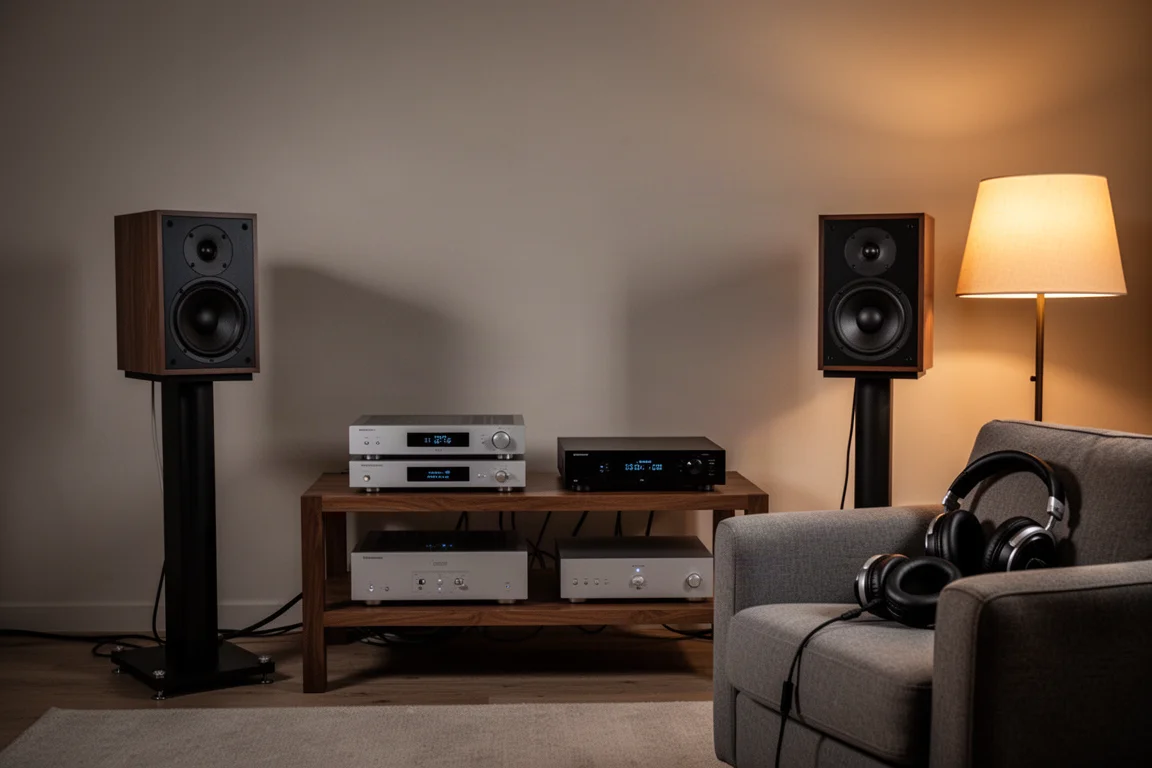
For the money, the feature set is unusually broad: two selectable amplifier outputs, a tone control section that can be bypassed entirely, a mono switch, and open expansion slots that leave room for future modules.
Who the Akitika PR-102 Is For
This preamp suits listeners who want a neutral, unfiltered line stage rather than a component that adds its own character. It offers no balanced connections and no built-in streaming or conversion, so it makes the most sense in a system built around separate sources, a separate DAC, and a separate power amplifier.
It is also aimed at people who enjoy the process of building. The kit is a genuine project rather than a quick assembly, and the assembled version exists for anyone who wants the result without the hours at the workbench. Buying assembled still represents fair value for a preamp with this feature set.
A third audience is the household that treats the build as a shared activity. The kit can be assembled with children or grandchildren over a holiday break, which turns a piece of audio equipment into a few evenings of instruction, laughter, and something concrete to show for the time.
What Comes in the Kit and How It Is Built
The parts inside the PR-102 read like a preamp from fifteen or twenty years ago, and that is meant as a compliment. Discrete capacitors, discrete diodes, discrete resistors, sealed relays, and a toroidal transformer sit alongside socketed op amps. The sockets are soldered to the board, and the op amps simply push in and pull out, so a curious owner can experiment with different op amps. Replacements are inexpensive, often only a few dollars each, and the ones supplied with the kit perform very well.
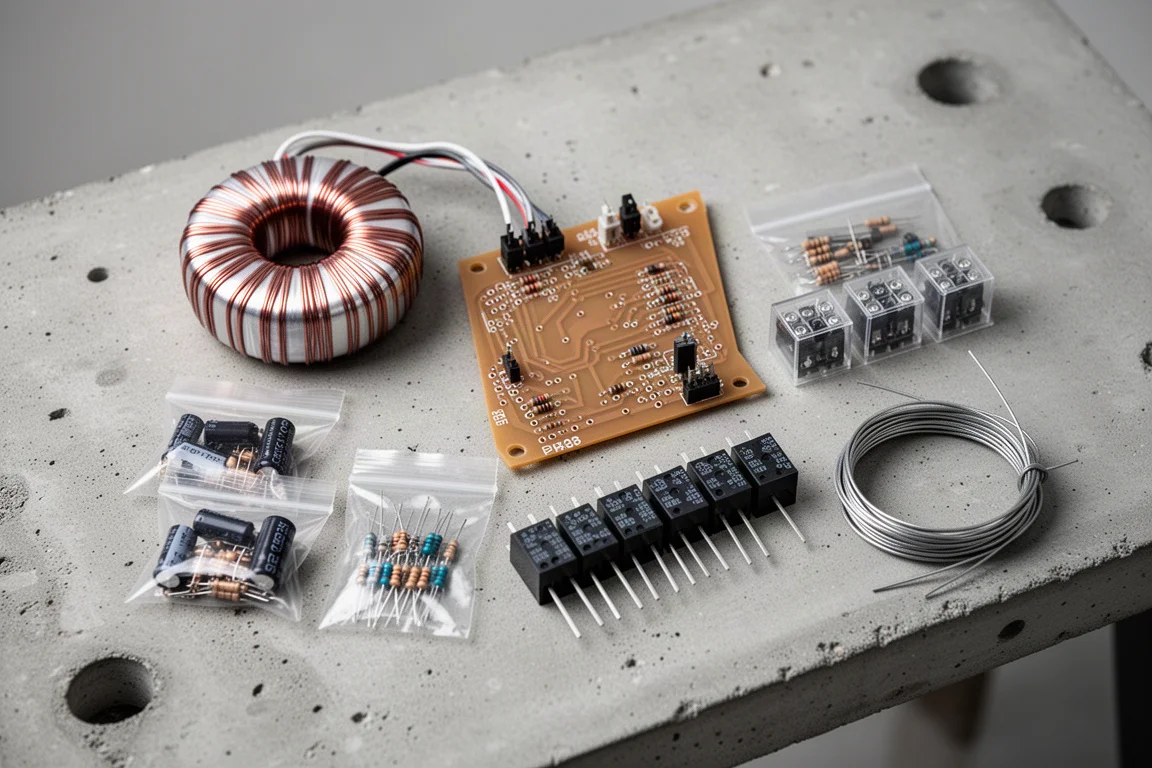
The front panel is laid out for everyday use. A selector knob steps through the inputs with a row of six indicator LEDs, followed by selectable amp A and amp B outputs, a tape loop section, and a small window for the remote control receiver. Tone controls can be switched in or bypassed, and there is a mono button, a hush control, a balance knob, and bass and treble adjustments. A 3.5 mm input and a headphone jack round out the front.
The rear panel carries a standard IEC power receptacle plus both switched and unswitched outlets, so a power amplifier can be plugged into the switched outlet and come on with the preamp. Inputs cover tuner, tape 1, tape 2 and CD, and there is a phono ground along with the F1 and F2 expansion positions. Those slots are currently open modules, leaving the door open to a phono stage, a DAC, or something else later. There is plenty of free space inside the chassis for exactly that kind of addition.
Main Strengths: Sound Quality and Flexibility
The standout quality of the PR-102 is its neutrality. It does not editorialize, but it is far from thin or clinical: there is body and soul to the presentation, and the music comes across as organic rather than analytical. That combination of even-handedness and warmth is harder to achieve than either trait on its own.
What it does exceptionally well is place instruments in space. Separation between individual instruments, a three-dimensional soundstage, and pinpoint imaging are the qualities that stand out, and they appeared even when the preamp was paired with a modest $250 pair of bookshelf speakers. Moving to better speakers made those strengths more obvious rather than revealing limits in the preamp.
Flexibility is the second strength. Two selectable amplifier outputs make it easy to run two power amplifiers or a power amp and a subwoofer arrangement without swapping cables. Bypassable tone controls let a listener keep the signal path clean or make a small correction when a recording needs it. The expansion slots mean the preamp can grow with the system instead of being replaced by it.
Things to Consider Before Buying
The PR-102 has no balanced inputs or outputs, so anyone running a fully balanced system should look elsewhere. Its connections are single-ended throughout.
Assembly is the other consideration. A skilled builder can expect to spend roughly six to eight hours on the kit, and a relaxed family build can stretch across a similar span or longer. Anyone not comfortable with soldering should either buy the assembled version or spend time practising first.
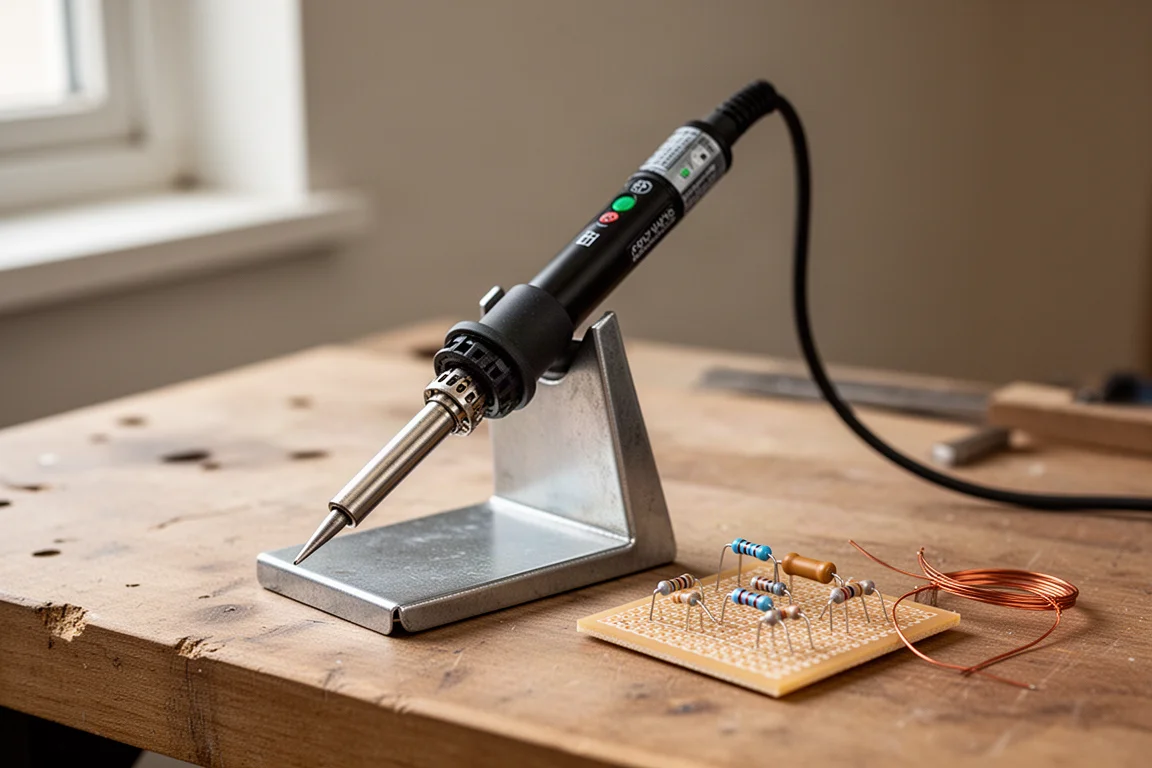
Practising is straightforward. A temperature-controlled soldering station can be found for around $60 to $70, and working through a practice board with a batch of resistors is a sensible warm-up before touching the real thing. Component orientation matters as well: a single indicator LED installed backwards will simply stay dark, which is a small annoyance that costs more time to fix than to avoid.
Visually, the PR-102 is understated rather than luxurious. The black and silver finish has a practical, working-aesthetic character, which will appeal to some buyers and feel plain to others.
Assembly Experience and Skill Requirements
The kit is supported by a thorough, clearly laid out manual that walks through each step in order. There is only one version of the documentation, which removes the confusion that can come from conflicting revisions, and the instructions read like a carefully written procedure rather than a rough parts list.
That structure is why a careful first-time builder can complete the kit and have it work on the first attempt. The process also teaches something: after a few hours of work, the internal layout of other equipment in the house starts to make sense.
For families, the appeal is broader than the finished product. Sitting down with children or grandchildren to work through the steps, teach a skill, and learn something in return is a reason to buy the kit even before the preamp plays a note. The finished component is the reward on top of the time spent.
Buying Advice
Two decisions shape the purchase. The first is kit versus assembled. Assembled at $680 is a fair price given the hours involved, and it is the right choice for anyone who wants the sound without the soldering. The second is the remote, which adds $80. If the preamp will sit within arm’s reach, skipping it brings the kit to $400 and the assembled version to $600, plus shipping.
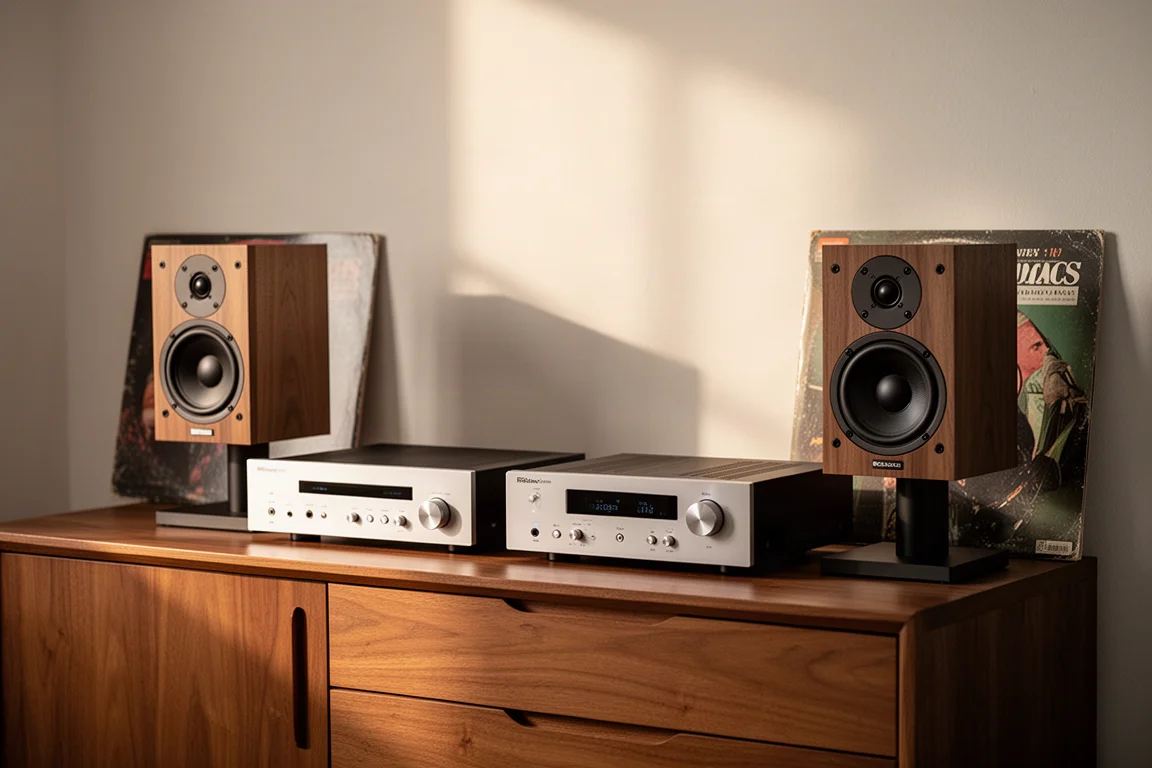
Pairing the preamp with the matching Akitika power amplifier is worth considering. Together they come in just north of $1,000, and the combination is among the strongest two-channel pairings available at that level. Buyers who already own a capable power amplifier can start with the preamp alone and add the rest later.
Conclusion
The Akitika PR-102 succeeds on two fronts at once. As a preamp it delivers a neutral, organic presentation with instrument separation and imaging that hold up well beyond its price bracket, along with two amplifier outputs, bypassable tone controls, and genuine expansion room. As a project it offers a well-documented build that a careful beginner can complete and that families can share.
Buyers who need balanced connections or who have no interest in assembly should weigh those points honestly. For everyone else, the PR-102 is a confident recommendation, whether it arrives as a box of parts or as a finished component ready to plug in.
Product link
View more details for Akitika PR-102
This product is mentioned in the review. Check the specifications, options, and compatibility before buying.
View more details for Akitika PR-102Further reading
Related Reviews
Preamplifiers
Ayre K-1 XE Review: A Restored Vintage Preamplifier With Unusual Depth
A close look at the Ayre K-1 XE, a fully balanced zero feedback preamplifier from 1996, covering its four-attenuator volume system, its sound character, and what to weigh before buying.
Preamplifiers
Holo Audio Serene KTE Review: A Balanced Line Stage With a Neutral Voice
A fully balanced line stage preamplifier with a detailed, neutral character, five inputs, buffered outputs, and no built-in DAC or phono stage.
Preamplifiers
Hovland HP-100 Review: An All-Tube Preamplifier Worth Seeking Out
A close look at the Hovland HP-100, a line-stage tube preamplifier with an optional moving coil phono input, covering its strengths, its matching requirements, and what to weigh before buying used.