Home Theater
Projector vs MicroLED: Can a Big Screen Setup Match a 157-Inch MicroLED TV?
We tested projectors from $1,559 to $17,500 against a 157-inch MicroLED TV to see how close a projector and ALR screen can get for a fraction of the price.
Introduction
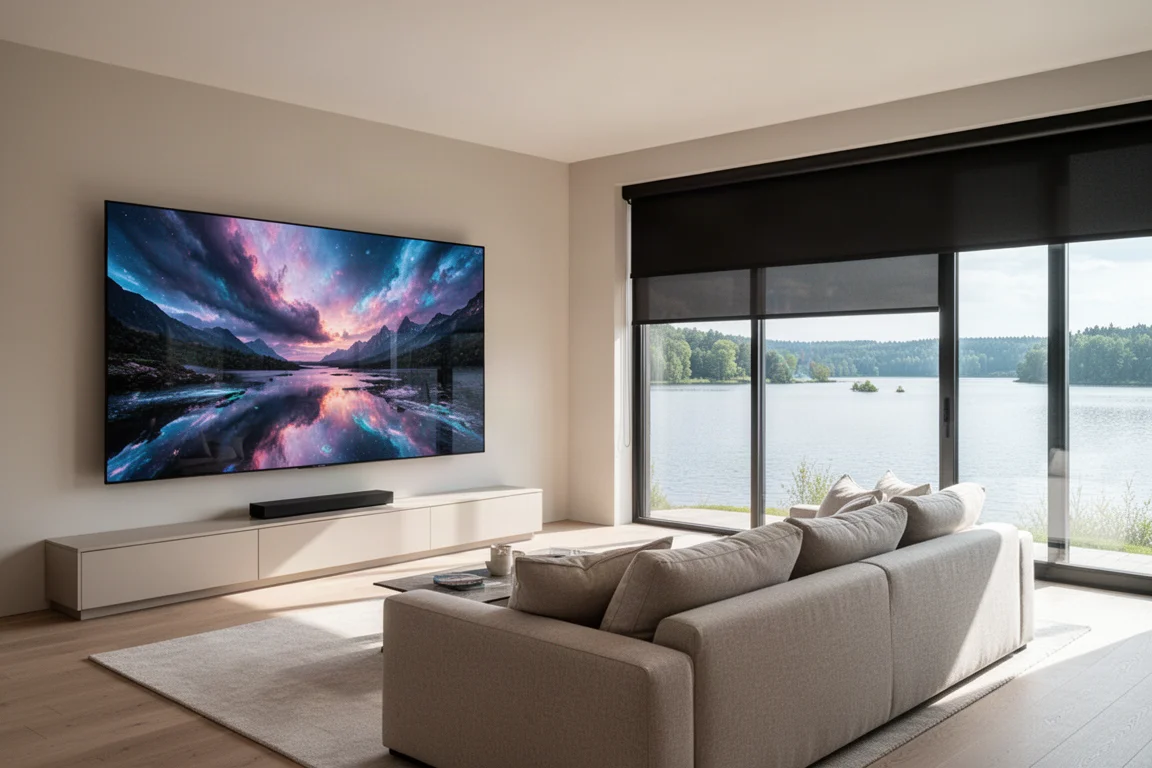
Can a projector setup with an ambient light rejecting screen match the performance of a 157-inch MicroLED TV for a fraction of the price? That is the question at the heart of this comparison. The goal was to find out what a $5,000, $10,000, or even $20,000-plus projector setup would look like compared to a MicroLED with varying amounts of ambient light, and also in a completely dark but untreated room.
The testing took place in a very bright living room with a lake view. The ultimate goal for this room was to be able to watch a big screen with the windows open. To give the projectors a fighting chance, the first step was getting some light control. The old blinds were replaced with battery-powered Z-Wave motorized Roman shades with blackout fabric from Smart Wings. Since they were installed above the windows rather than inside the frame, some light still leaks through the sides. For a true blackout, a roller shade mounted inside the frame combined with light blocking side rails would be needed. But pitch black was never the goal for this room.
The Setup: Light Control and Screen Choice
After getting the blinds installed and programmed, the next step was assembling the massive ambient light rejecting screen. For the standard throw projectors, a custom 153-inch diagonal Spectra Shadowscape was used. This is a long throw lenticular screen with a 0.6 gain, measuring 141 inches wide and 59 inches tall for a true 2.40:1 aspect ratio. That is the same size Cinemascope screen that the AWOL MicroLED produces. The Shadowscape can go up to a max of 160 inches for Cinemascope screens or 130 inches for 16:9 screens because the material is limited to 63 inches in height.
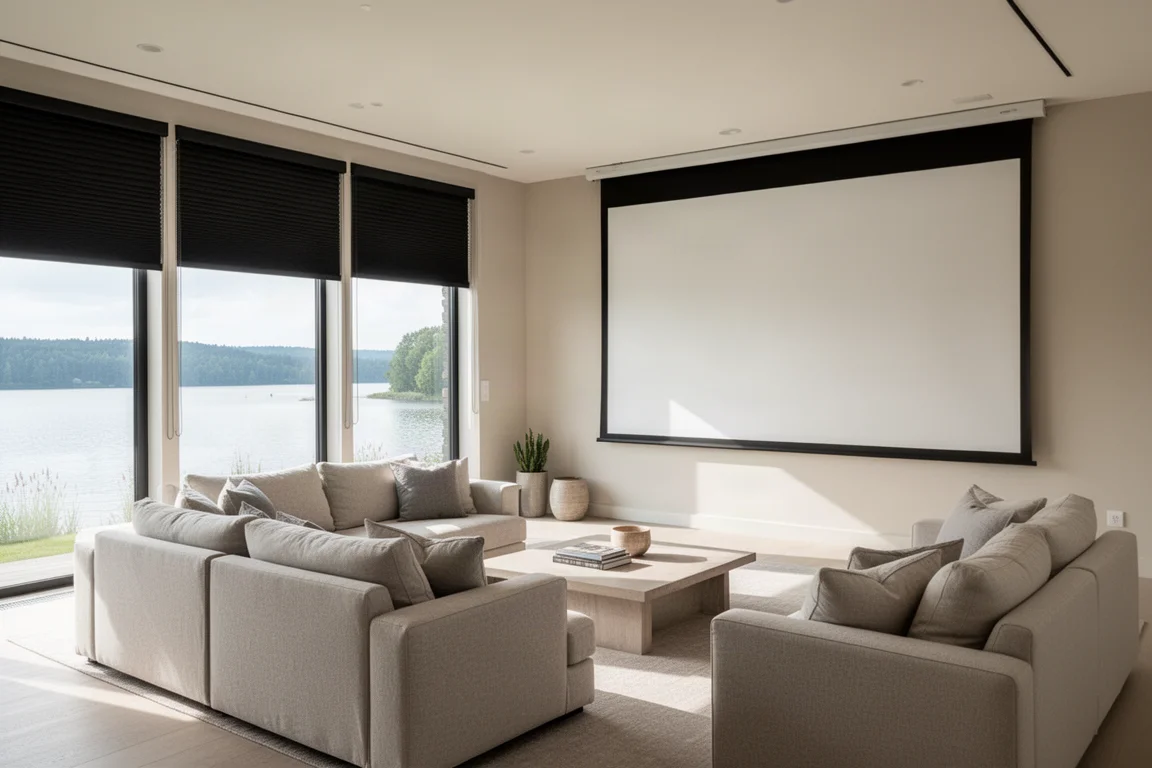
For testing the ultra short throw projectors, a 150-inch Spectra Equinox 0.7 gain lenticular screen was used, since those 150-inch Fresnel screens that were all over CES are not for sale yet. Unfortunately, there are no custom-sized Cinemascope Fresnel screens available yet either. Unlike normal side-by-side testing, multiple projectors could not be filmed at the same time due to the size of the screen. The camera was set to manual and all settings were kept identical for every test.
Round One: XGIMI Horizon 20 vs Horizon 20 Max
Starting with daytime testing, the least expensive projector in this comparison is the $1,559 XGIMI Horizon 20. It went up against its big brother, the $2,699 XGIMI Horizon 20 Max. During the day with the windows open, the more expensive and significantly brighter Horizon 20 Max does a better job of cutting through the ambient light. But even with that extra brightness, neither projector is particularly watchable in these conditions. Bright scenes are easily visible but definitely not good, and darker scenes are hard to follow with a lot of missing detail.
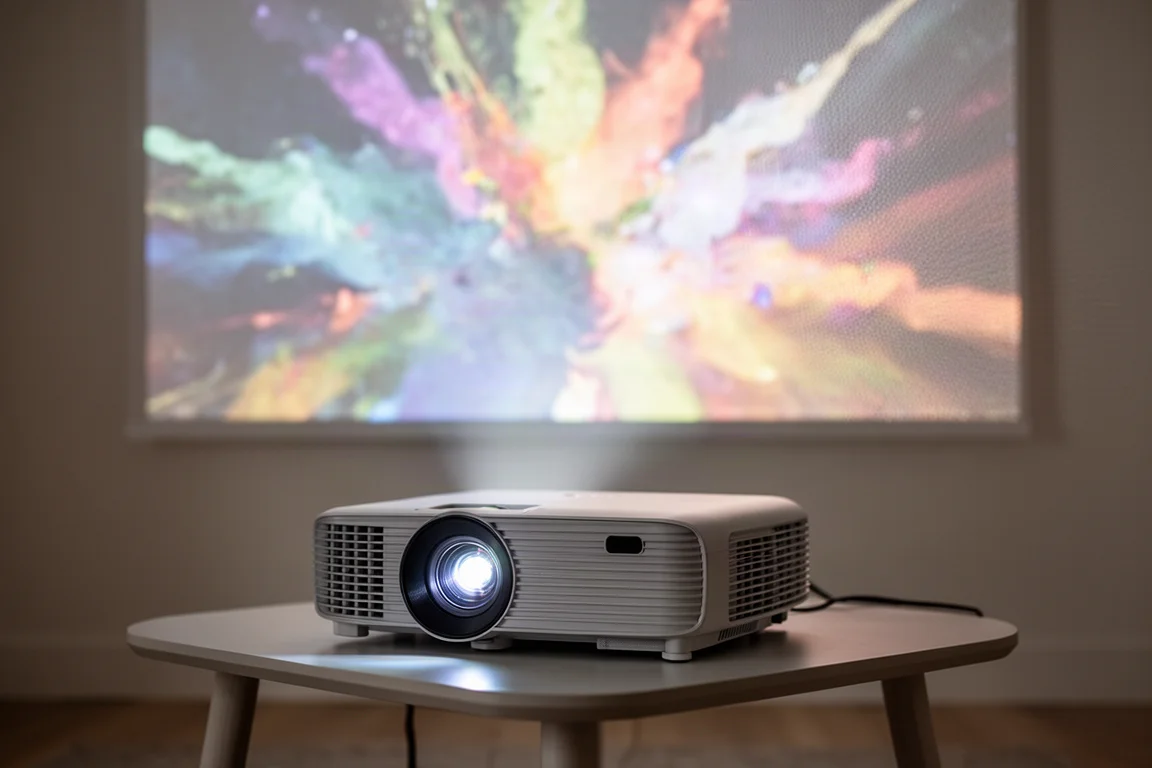
With the blinds closed but the overhead lighting on, both projectors become at least watchable. The Horizon 20 Max’s extra brightness makes a big difference when viewing conditions are relatively poor. In the brightest scenes, the Max’s colors look much more vibrant thanks to the extra brightness. Any advantage that the Horizon 20 might have in terms of a lower black floor is completely negated by the ambient light in the room.
With the blinds closed and the lights off, the Horizon 20’s performance is surprisingly similar to the Horizon 20 Max. The Max’s extra brightness is visible, especially in the highlights, but so is its higher black floor. In the darkest scenes, the less expensive Horizon 20 actually appears to have a slight advantage.
At night with the blinds closed and all the lights off, the lower overall brightness of the Horizon 20 makes dark room viewing much more enjoyable since the black floor is also significantly lower. While there is a clear difference in maximum brightness, the Horizon 20 is preferred for dark room viewing. The Horizon 20 Max takes the win for daytime viewing, and the Horizon 20 base takes the win at night.


Round Two: XGIMI Horizon 20 Max vs Nexigo Aurora Pro MK2
In round two during the day, the Horizon 20 Max faced off against the $3,199 Nexigo Aurora Pro MK2. This is not exactly an apples-to-apples comparison. Not only because the floor riser screen is 0.7 gain versus 0.6 on the Spectra Shadowscape, but also because the floor riser is a 150-inch diagonal 16:9 screen. When displaying Cinemascope content, it is actually only 142 inches diagonal versus 153 inches on the custom Shadowscape.
Even with those two brightness advantages and the Aurora Pro MK2 set to its ultra bright settings, the Horizon 20 Max appears to be significantly brighter. Again, neither screen is particularly watchable with the blinds open. With the blinds closed and the lights on, the Horizon 20 Max is again significantly brighter and more vibrant both in bright and dark content. It actually looks really good when there are not too many completely black areas on the screen.
Turning the lights off, the strengths of the Nexigo, which are its excellent native contrast and dynamic iris, started to come through. But the XGIMI Horizon 20 Max was still strongly preferred even with a small amount of ambient light in the room. The Horizon 20 Max remains in the top spot for daytime viewing.
For nighttime viewing, the XGIMI Horizon 20 base was on the left and the Nexigo Aurora Pro MK2 on the right. With the Nexigo’s dynamic iris, dark scenes are significantly dimmer overall, which makes the contrast difference harder to detect. But in person, the darkest parts of the scene on the Nexigo had an extremely low black floor, which made the highlights just as impactful as your pupils dilate to the lower light level. Breaking it down to just pure black level and contrast performance, the Nexigo clearly took the win at night.
Round Three: XGIMI Titan vs Nexigo Aurora Pro MK2
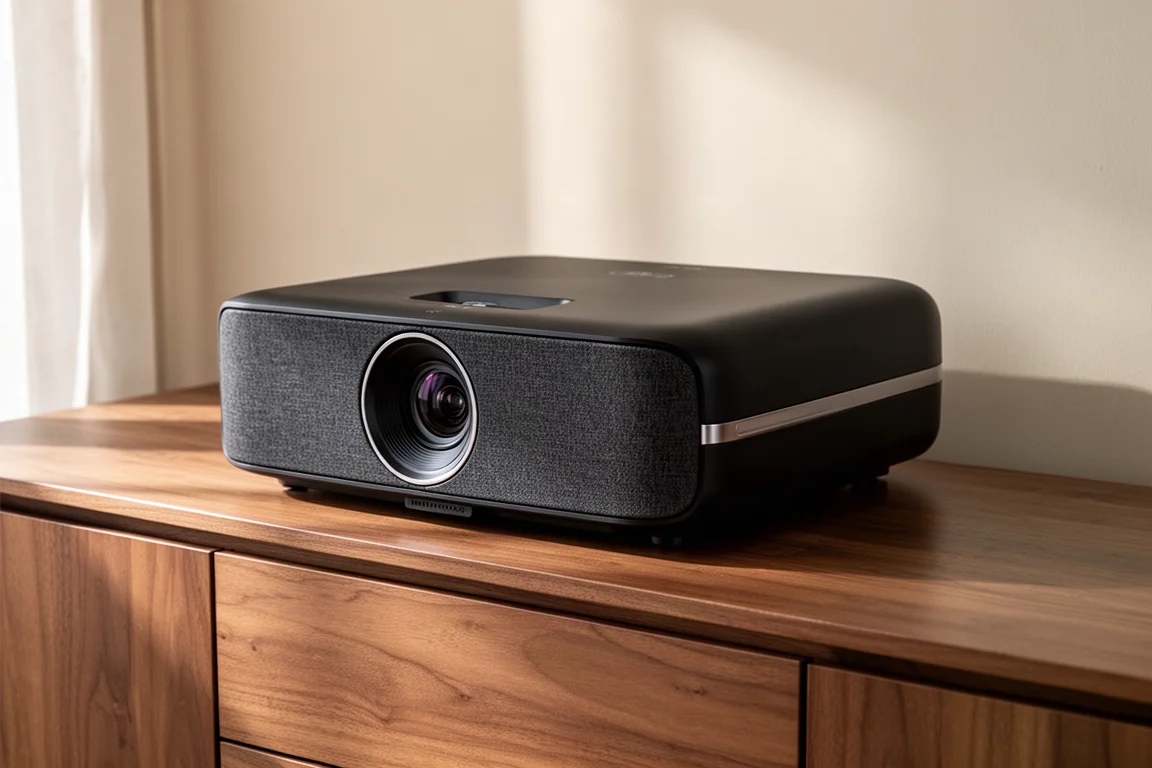
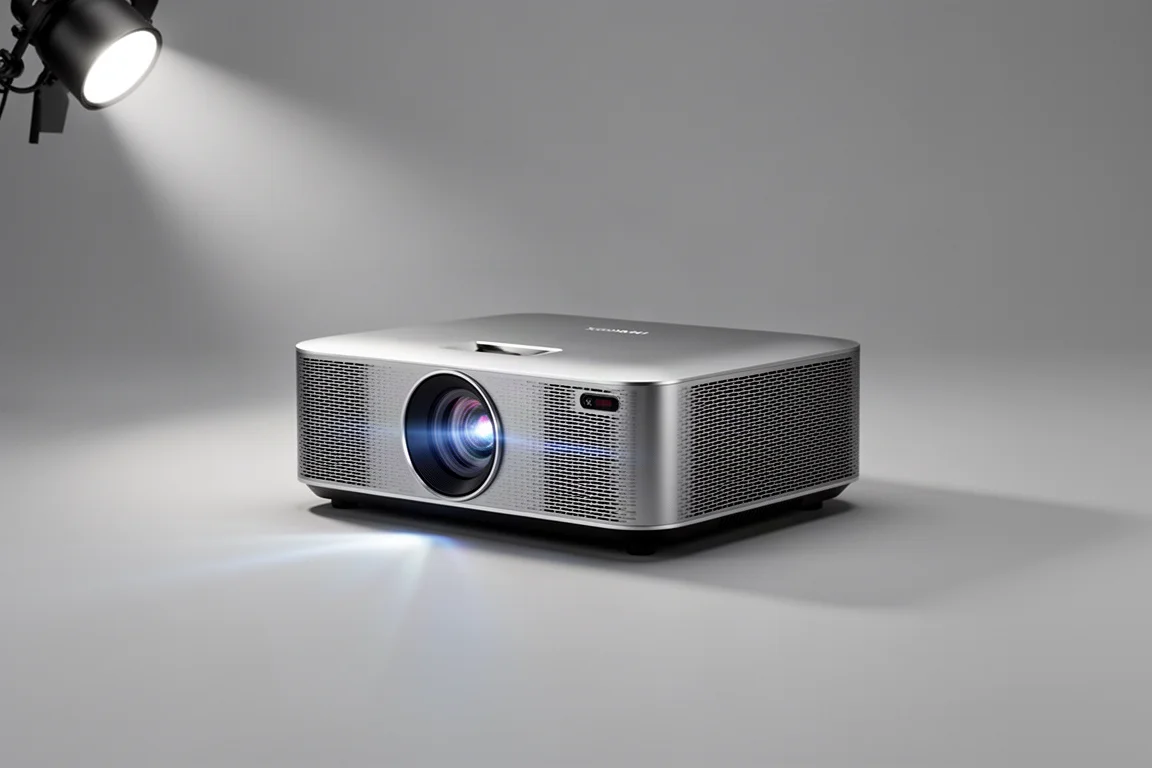
Round three put the current daytime leader, the XGIMI Horizon 20 Max, against the new $3,999 XGIMI Titan. Compared to the Horizon 20 Max’s roughly 3,000 usable lumens, the Titan puts out 4,750 lumens in TV mode. TV mode was used instead of movie mode, which currently has a bug that causes color shifts when using the dynamic black level enhancement. TV mode does not exhibit any noticeable color shifts.
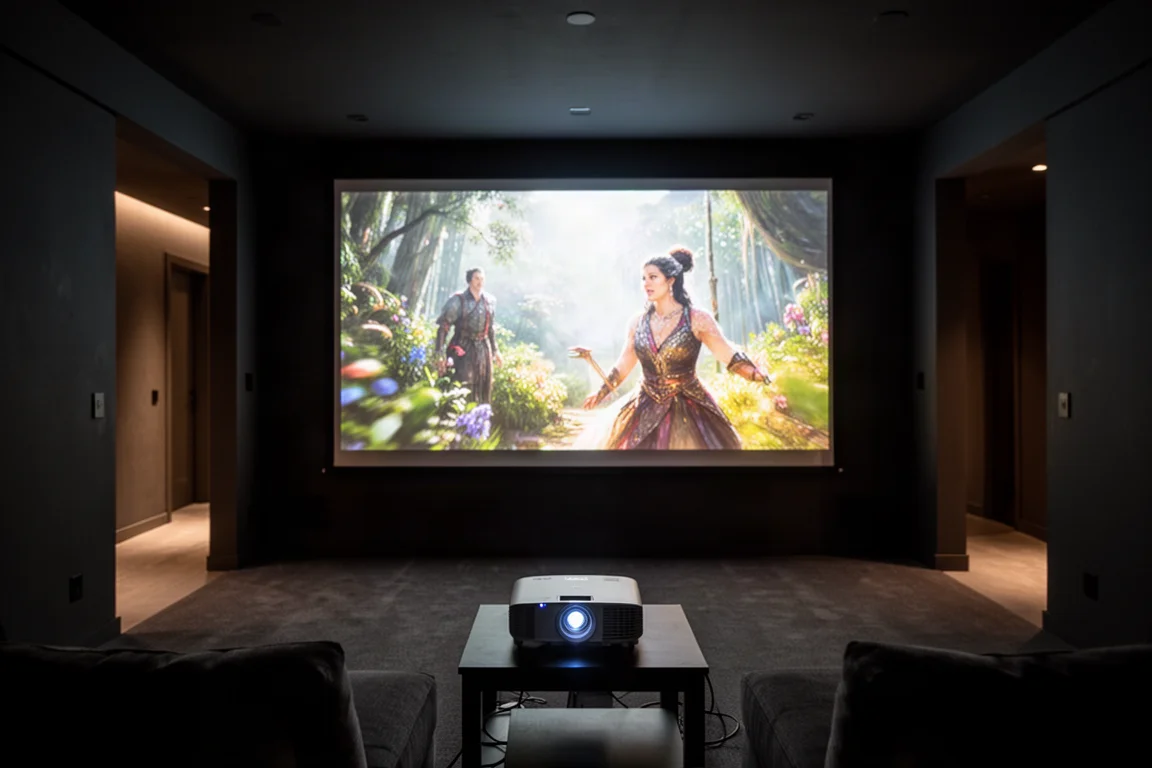
With the blinds open, neither projector is great just due to the amount of ambient light on the screen. But once the blinds are closed, they both become very watchable. The extra 1,700 lumens of brightness of the Titan does a great job punching through the overhead lights. During the day with the blinds closed and the lights off, the Titan took an even more commanding lead, making it the clear leader so far for daytime viewing.
Switching over to nighttime viewing, the Titan was also surprisingly good, much better than expected. The Titan’s full fade to black really helped accentuate the highlights, which were incredibly bright compared to the Nexigo. While the Nexigo’s absolute black floor was slightly lower due to its dynamic iris, the Titan’s overall brightness made interesting contrast appear higher. The only complaint about the Titan’s nighttime performance is that it has a lot more light leak around the screen than would be ideal.
Overall, the Titan takes a win specifically for these massive low gain ALR screens where the Nexigo Aurora Pro MK2 just does not have enough raw brightness to properly display the extreme highlights. That makes the XGIMI Titan the current leader for both daytime and nighttime viewing.
Round Four: XGIMI Titan vs Valyrian Max
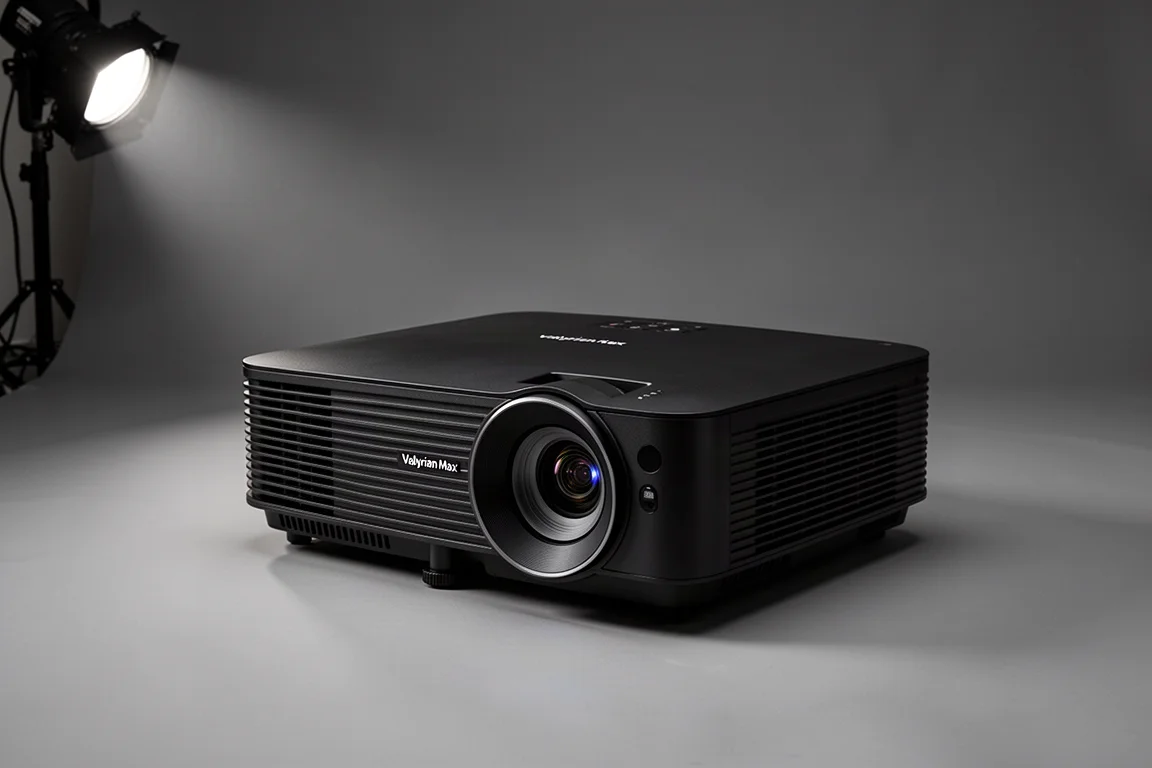
In round four, the Titan went up against the $3,999 Valyrian Max. The Valyrian Max had an extra trick: the first test of Specsman’s custom Cinemascope lens. This lens stretches the native width and compresses the native height of the Valyrian’s image to fit natively onto a Cinemascope widescreen. Unlike a normal 16:9 projector that displays a 3840x2160 image and then has 280 pixels at the top of the screen and 280 pixels at the bottom that get projected off the screen, the Specsman lens bends the light to fit natively onto a 2.40:1 aspect ratio. This not only increases pixel density and brightness by roughly 25% by utilizing that screen area that would normally be in the letterboxes, but it also prevents the light spill above and below the screen when using a Cinemascope screen.
With the blinds open and the lights on, the two projectors looked surprisingly similar, which is impressive considering the Titan has a couple thousand extra lumens compared to the Valyrian. With the blinds closed, the difference in brightness of the highlights that the Titan can provide is clearly visible. Even with the lights off, the Titan looked considerably better due to its extra brightness and excellent intra-scene contrast.
At night, the Valyrian Max was expected to dominate. But keeping its iris at level two to maintain enough brightness to fill this massive low gain screen, the Valyrian Max only had a slightly better overall contrast during the Tron Aries trailer. The Titan avoided the clipping that is commonly associated with Valyrian’s EBL high setting. However, in the darkest scenes, EBL on the Valyrian not only achieved a slightly lower black floor, but also resulted in a more dramatic image, again with occasional clipping. In the raw black level test with the intro to Plurabus, the Valyrian came out ever so slightly ahead. It gets a narrow win here over the Titan, but it was extremely close.
Round Five: XGIMI Titan vs Hisense L9Q
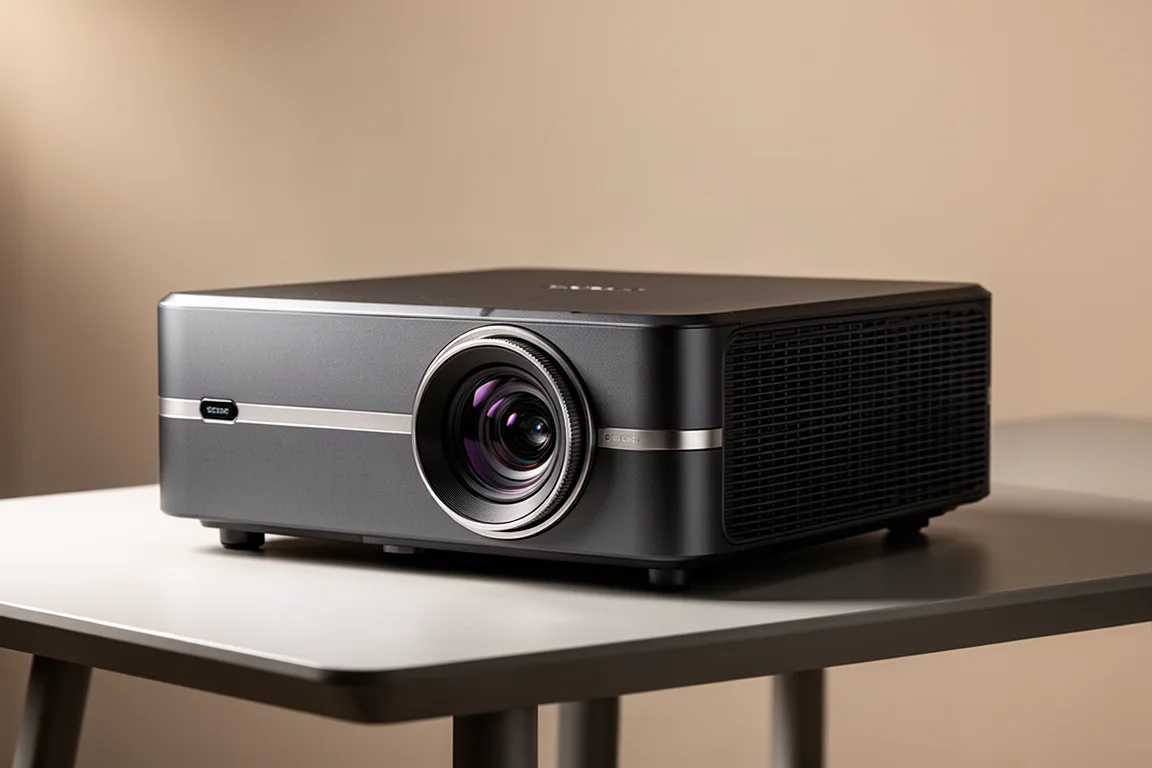
For round five, the current daytime leader, the XGIMI Titan, was on the left and the $5,997 Hisense L9Q on the right. This is a 150-inch floor riser that is about 10 inches diagonal smaller than the Shadowscape. Still, neither of these projectors was able to compete with the ambient light in the room with the blinds open.
With the blinds closed, the Hisense was about equal to the Titan in terms of brightness. But the Equinox screen was significantly more washed out than the Shadowscape. The same was true with the lights off, where the Hisense did not necessarily look bad, but in scenes that included dark portions, it overall just felt washed out and gray compared to the Titan.
At night, the current leader, the Valyrian Max with the Specsman anamorphic lens, was on the left and the Hisense L9Q on the right. These results are strange since the L9Q is supposed to be 1,500 lumens brighter than the Valyrian and have higher native contrast. But the L9Q did not even come close in terms of brightness, contrast, black floor, or color vibrance.
Round Six: XGIMI Titan vs Epson QL3000
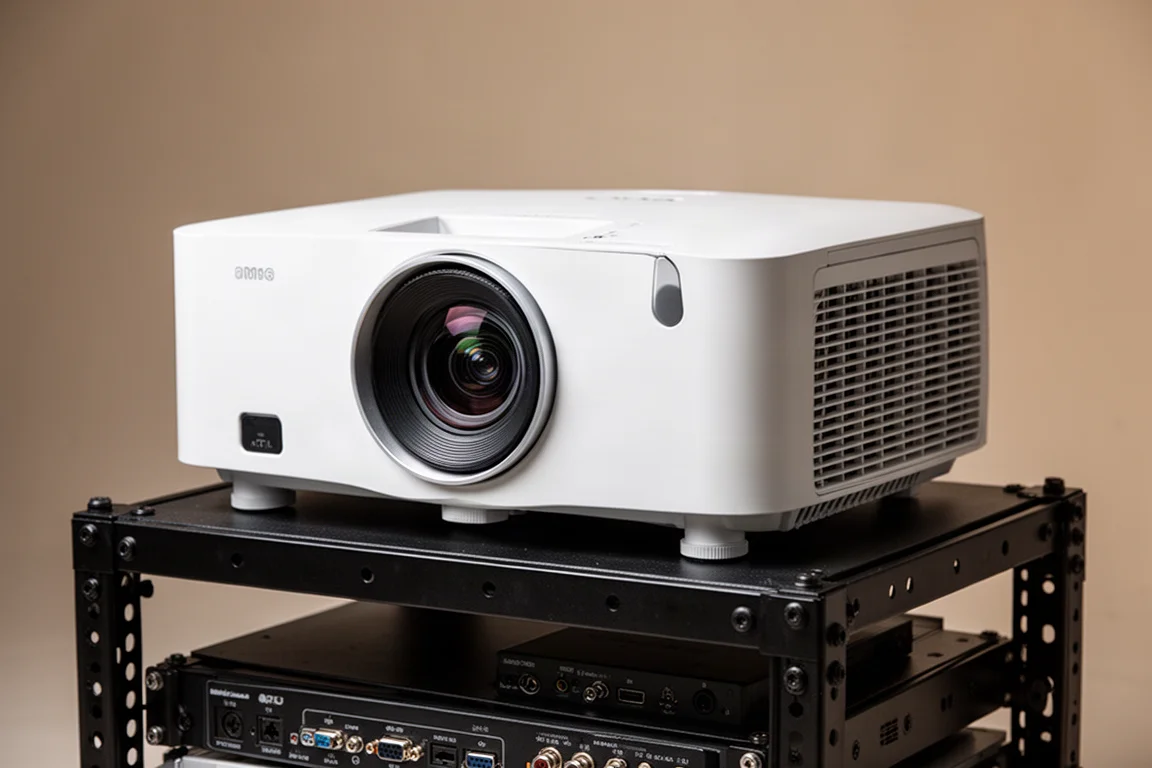
Heading into the last round of projectors, the current daytime leader, the XGIMI Titan, was on the left and the $17,500 Epson QL3000 on the right. Although the 6,000-lumen Epson is easily the best performing and most watchable image yet, it still does not look good with the blinds open.
Closing the blinds and leaving the lights on, both projectors get substantially better. The Epson is ever so slightly better in terms of overall brightness and color volume. Again, this is just a limitation of the screen and the ambient light in the room, but neither projector can get dark enough to really show detail in darker content.
With the lights off and the blinds closed, the Epson stayed firmly in the lead. It takes the first place spot away from the XGIMI Titan for daytime viewing, though not by as large of a margin as might be expected given the price difference.
Moving on to nighttime viewing with the current leader, the Valyrian Max with the Specsman anamorphic lens, on the left and the Epson QL3000 on the right. The Valyrian was expected to easily win this round, but in reality it was extremely close. Aside from some extra highlights from EBL on the Valyrian and some slightly different color space handling, both projectors were almost identical when viewing Tron Aries. In testing raw black level with the intro to Plurabus, the black floor on the Epson may have been ever so slightly lower than the Valyrian. But in the interrogation scene from Obi-Wan, the Epson got weird with color space, causing some strange blotchiness and loss of detail. The slight edge goes to the Valyrian here, but the QL3000 was surprisingly good even for dark room viewing.
Projector vs MicroLED: The Final Comparison
Now that the highest performing projectors have been determined, the last step is to compare them to the 157-inch AWOL MicroLED. The best projector for daytime viewing, the Epson QL3000, was on the left and the AWOL on the right. With the blinds open and the lights on, there is just no comparison. The black level that the MicroLED can achieve is just not comparable to any ALR screen on the market.
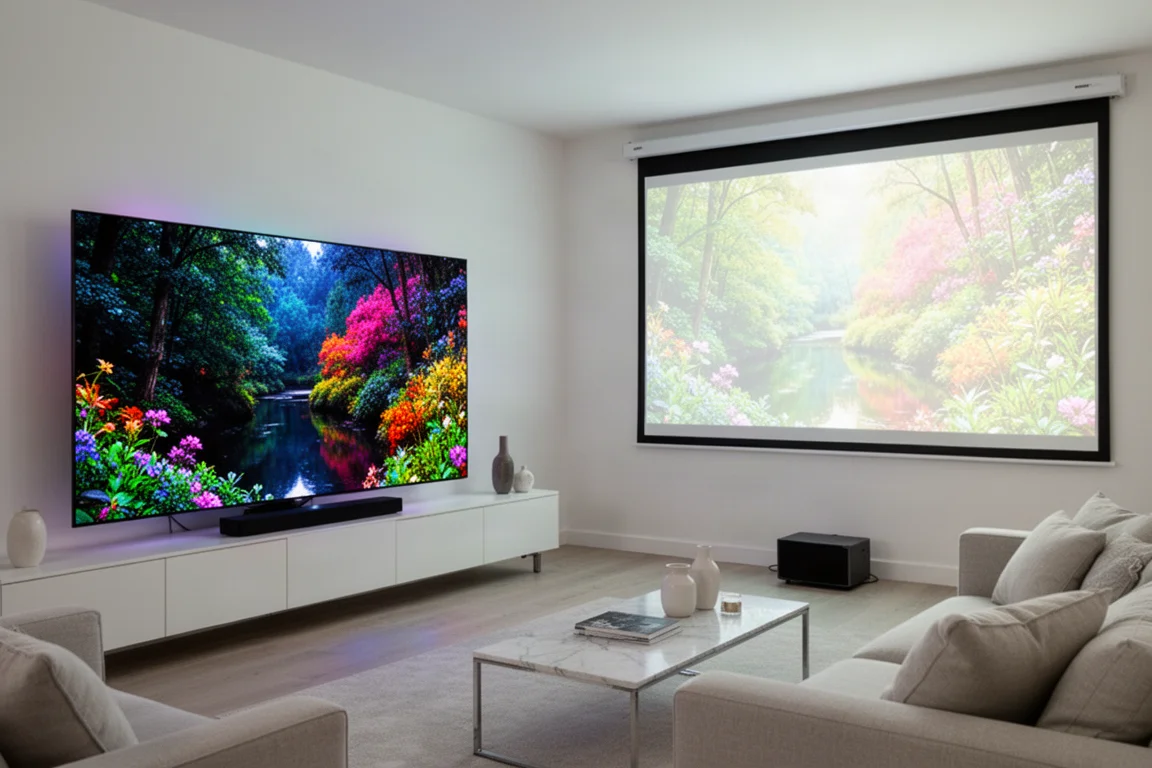
This is the AWOL actually at 30% brightness in its night mode, because maintaining the same camera settings that were used throughout the video resulted in a completely overexposed image if full brightness was used on the AWOL. With the blinds closed, the AWOL gets even better and looks absolutely unreal, even with the lights on. If the lights are turned off, the gap closes a little bit. But the $50,000 AWOL is still head and shoulders above the $20,000 combination of the Spectra Shadowscape and the QL3000.
At night, the top performing projector, the Valyrian Max with the Specsman anamorphic lens, was on the left and the AWOL MicroLED on the right. Again, it is set to 30% brightness, which somewhat limits its HDR abilities. But the AWOL still basically looks as good as you could ever want it to, with bright, vibrant colors and a deeper black floor than ever seen on a screen this big. It did not matter what the content was. The AWOL’s self-emissive microLEDs consistently produced one of the most impressive images ever seen. And that is at 30% brightness. Unleashing all 1,200 possible nits for eye-searing HDR highlights is unlike anything else.
Buying Advice
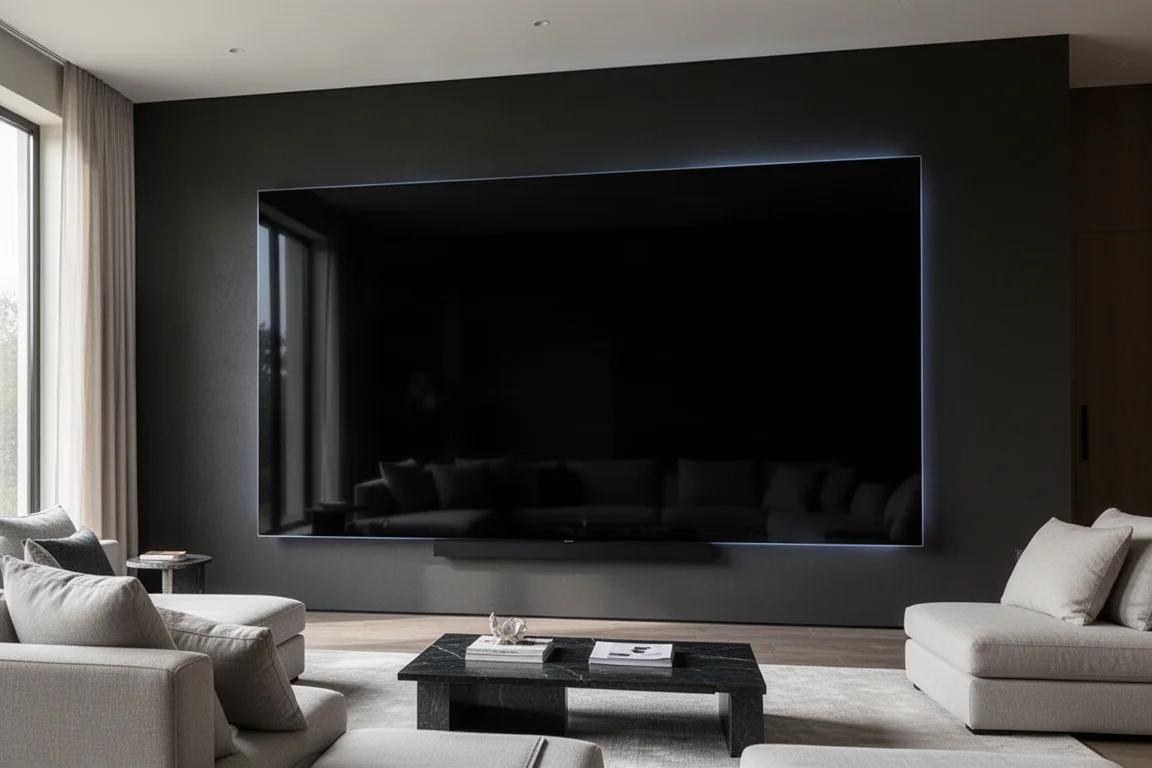
Getting back to the original question: can you match the performance of a 157-inch MicroLED screen for a fraction of the price? Unfortunately, no, not really. If you have a room where you want to leave the blinds open and the lights on, there is no combination of projector and screen that can even come close to competing with a MicroLED in terms of brightness, contrast, black floor, and color vibrance.
However, if you are willing to control the light in the room by closing the blinds and keeping the lights off, a bright projector like the Epson QL3000 or XGIMI Titan paired with a high-quality long throw ALR screen like the Spectra Shadowscape can get you about 70% of the performance of a MicroLED for a lot less money.
For purely dark room performance, the AWOL performed better than any projector ever seen. It is like watching a 157-inch version of a 65-inch OLED. But for a lot less money, you could get yourself a Valyrian Max, a scope lens, and a giant Cinemascope screen, and get about 90% of the performance of the MicroLED for 20% of the price.
Conclusion
The answer depends entirely on your room and your priorities. If you want a big screen with the windows open and the lights on, a MicroLED is in a league of its own. But if you are willing to control the light, a high-brightness projector with a quality ALR screen can deliver a surprisingly large portion of that experience for a fraction of the cost. For dark room viewing, the Valyrian Max with an anamorphic lens offers exceptional value, while the Epson QL3000 and XGIMI Titan are the top choices for brighter conditions.
Further reading
Related Reviews
Home Theater
Best Home Theater Receivers 2026: Three Strong Contenders for Music and Movies
Three capable AV receivers that balance home theater performance with music listening, each with distinct strengths in power, connectivity, and room calibration.
Home Theater
Best Premium Soundbar Systems 2026: Eight Flagship Setups Compared
Eight premium soundbar systems from $1,000 to $4,000 tested for vocal clarity, sound stage, surround effects, height performance, and bass.
Home Theater
Best Wireless Surround Sound Systems 2026: Three Options Compared
We compare three wireless surround sound in a box systems from Highense, Valyrian, and Sony to see which offers the best home theater experience without the hassle of running speaker cables.