Turntables
Pro-Ject T2 Turntables Compared: T2, T2 Super Phono, T2 W, and Debut Evo
A close look at the Pro-Ject T2 lineup: what the three T2 models share, what each one adds, and how the Debut Evo fits into the decision.
Introduction
The Pro-Ject T2 range takes the platform introduced with the original T1 and moves it forward. The tonearm is longer, the bearing assembly runs with less friction, and the supplied Sumiko Rainer cartridge arrives pre-aligned and balanced. Three models share that foundation: the T2, the T2 Super Phono, and the T2 W. Just above them in the Pro-Ject lineup sits the Debut Evo, which trades some setup simplicity for upgraded materials.
This guide covers what each model adds, where the extra money goes, and which one suits a particular listening setup.
Inside the T2 Platform
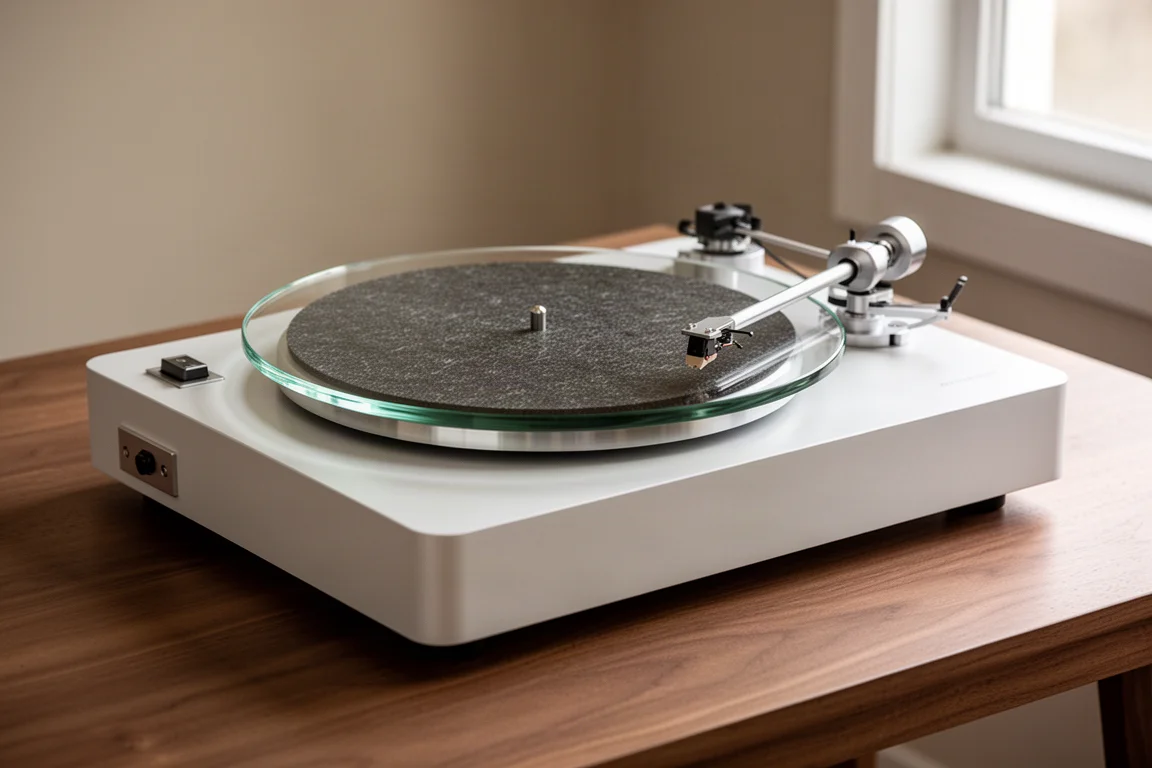
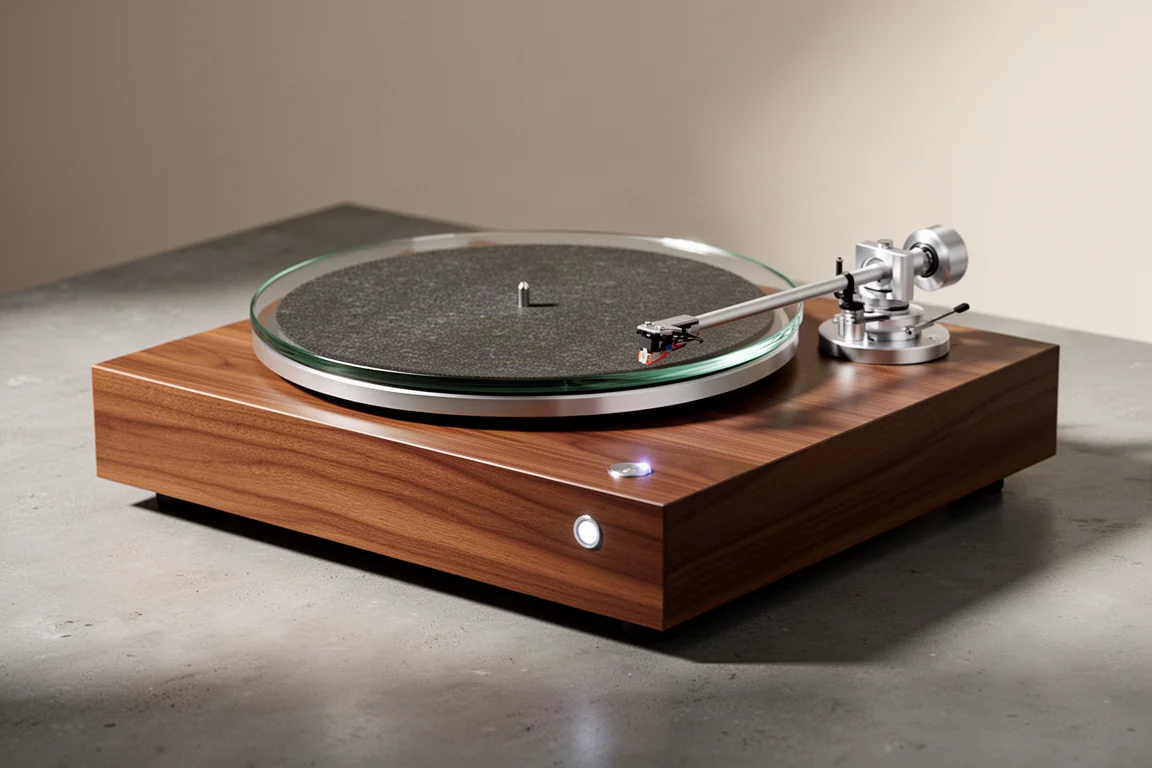
All three T2 models are built on the same turntable, so the core engineering is identical across the range. The design is a manual belt drive. You press a button to start the platter, cue the arm over the record using the damped lowering mechanism, and reverse the sequence when the side ends. Fewer moving parts sit near the signal path, which helps keep noise and vibration away from the cartridge.
The plinth is CNC machined from a solid composite of MDF with a foil wrap, a material chosen to reduce resonance inside the chassis. The motor mounts to the plinth through an isolating material and runs on an advanced electronic control system that holds a constant speed. A switch on the left side changes between 33 and 45 rpm without moving the belt.
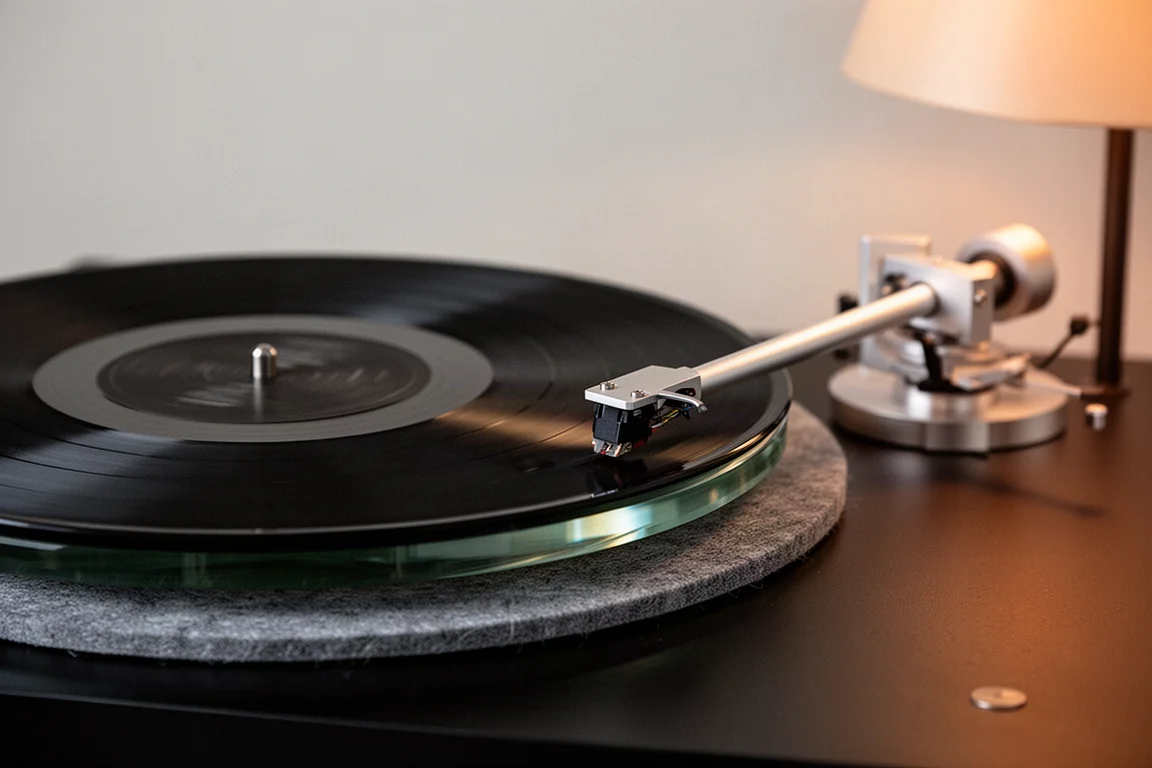
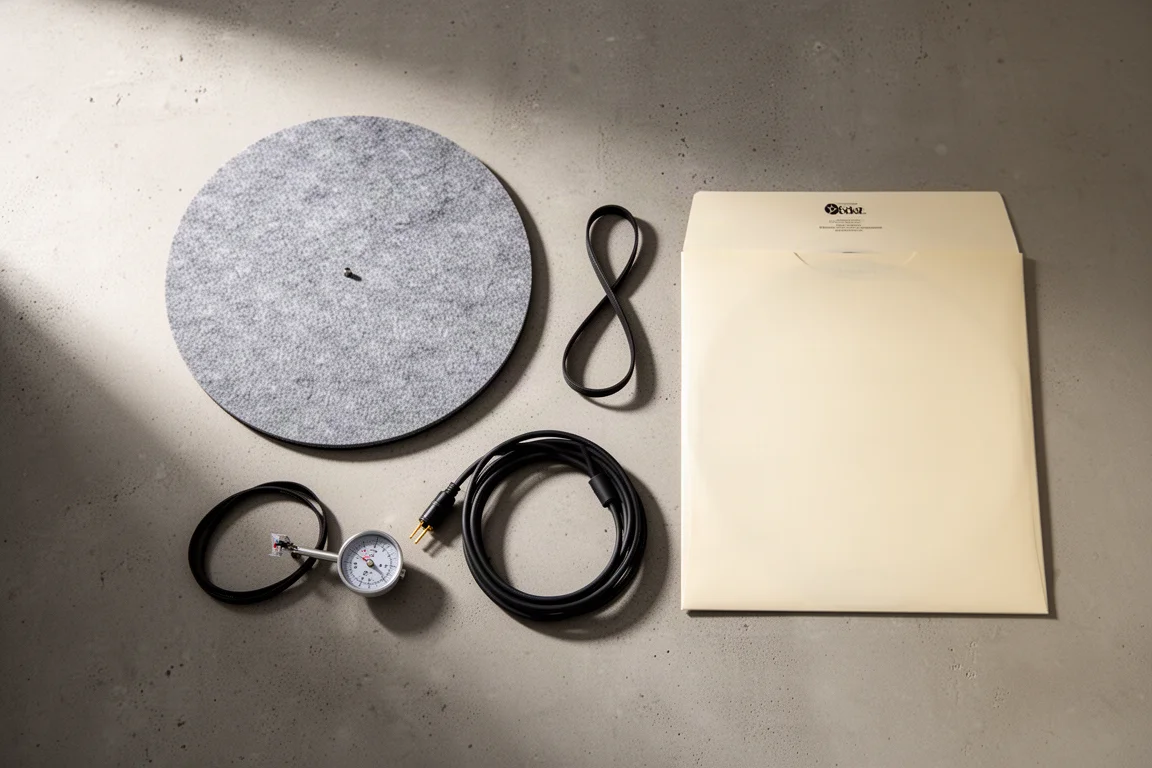
Under the platter, the subplatter rides on a precision main bearing with tolerances down to 0.001 mm, built around a hardened steel axle and a brass bushing. The blasted tempered glass platter weighs almost four pounds and behaves like a flywheel, improving speed stability, with a felt mat on top. Three vibration-resistant feet support the deck, though they are not adjustable for leveling, so a separate isolation base is worth considering if your shelf is uneven.
Pro-Ject T2: The Entry Point
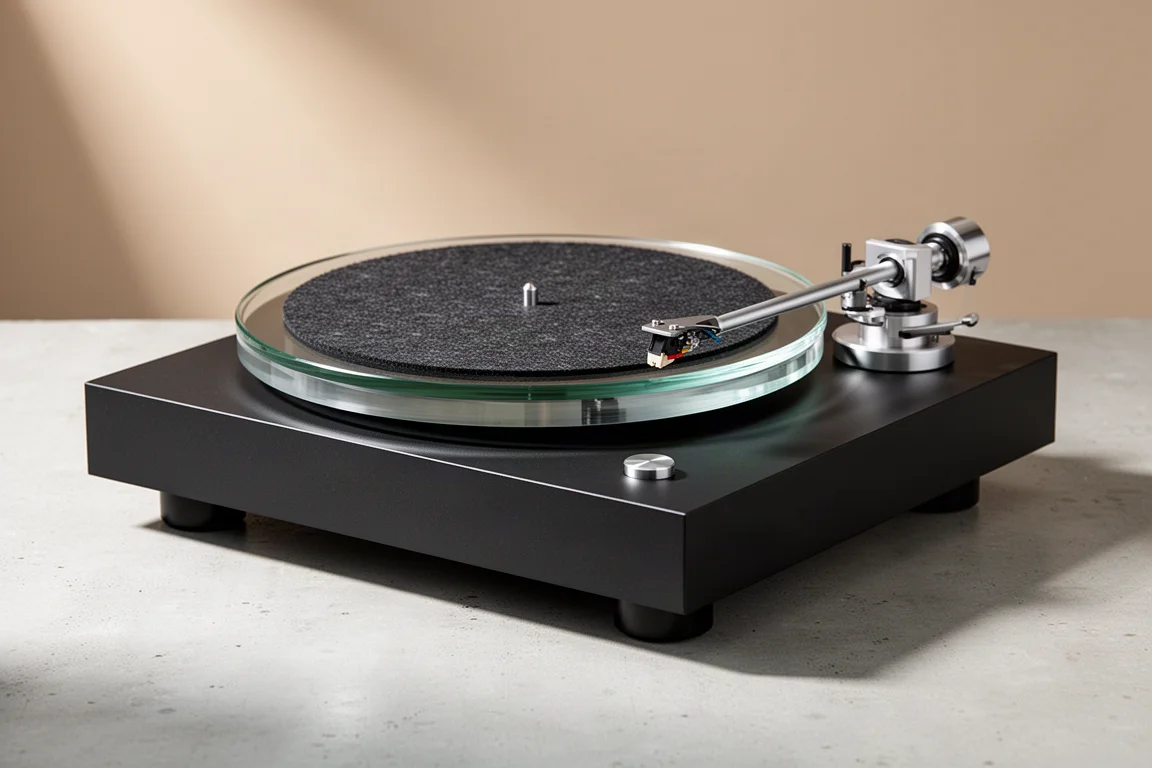
The T2 opens the range, and its tonearm is the clearest upgrade over the earlier T1. The effective length is 9 inches, a figure common on higher-end arms, and the extra length reduces tracking error. The bearing assembly was updated for lower friction to suit the longer arm, and the arm is a one-piece design that includes the headshell for better vibration control.
The polished nickel-plated rear counterweight is decoupled from the arm and comes preset for the included Sumiko Rainer cartridge. Swapping in a different cartridge means loosening a set screw, setting tracking force with the stylus pressure gauge supplied in the box, and locking the screw again. Anti-skating is variable and adjusted with a knob on the side of the arm. Because the cartridge ships aligned and balanced, turning that knob to two is the only adjustment required during setup.
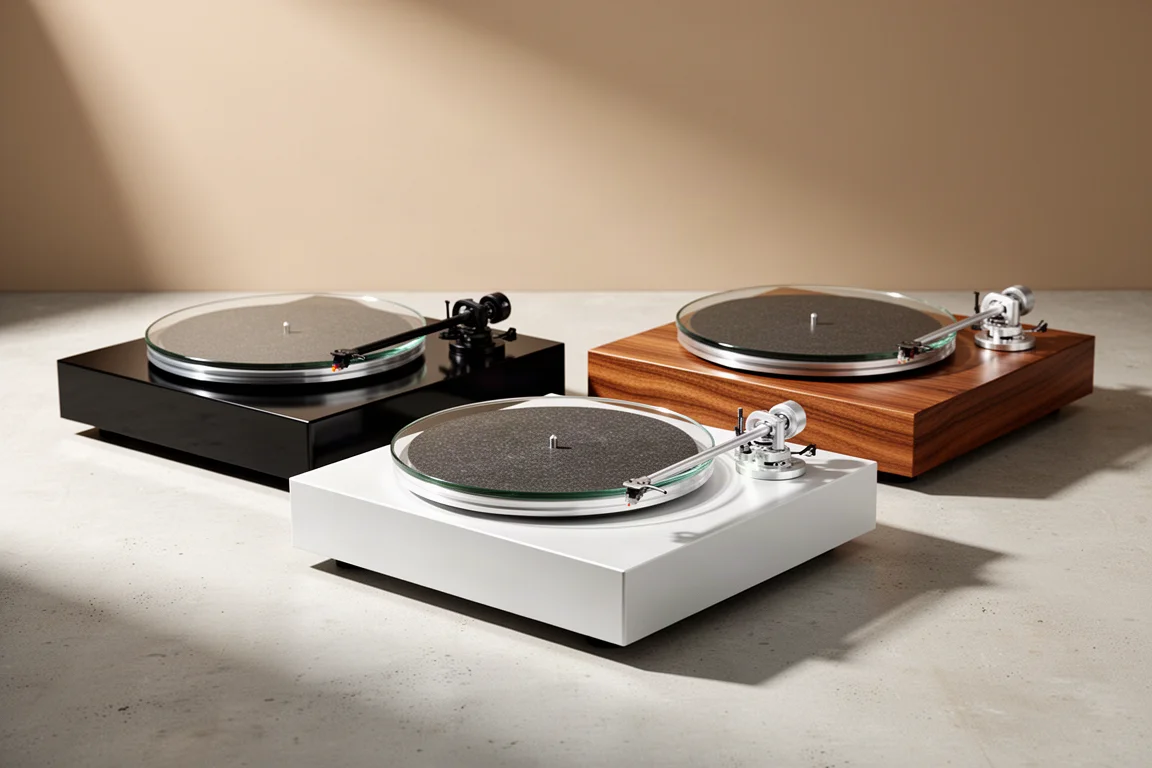
The T2 is available in piano black, satin white, or vinyl wood laminate, and it includes the Pro-Ject Connect phono cable.
Pro-Ject T2 Super Phono: The Best Value
The T2 Super Phono is the same turntable as the T2 with one meaningful addition: a built-in phono preamp. That stage is based on the Pro-Ject Phono Box S2, a standalone unit that sells for around $200, and it uses a very similar moving magnet circuit. In practice, the built-in stage should comfortably outperform the phono inputs in most stereo receivers and integrated amplifiers until you reach the multi-thousand-dollar range.
There is a noise advantage as well. Because the signal leaves the turntable at a higher level, there is less opportunity for interference to enter the cables on the way to the amplifier. If you later move to a better phono stage or a moving coil cartridge, a single button defeats the internal preamp.
For most listeners this is the simplest upgrade in the lineup: about $100 more than the standard T2, in exchange for a phono stage that would cost roughly twice that as a separate purchase. If you already own an excellent phono preamp, the standard T2 remains the more logical choice.
Pro-Ject T2 W: Vinyl Streaming Over Wi-Fi
The T2 W is the most expensive model in the range and is identical to the T2 Super Phono apart from built-in Wi-Fi streaming. It supports current wireless standards and 2x2 MIMO, with theoretical throughput above what a typical home internet connection provides. It can stream standard compressed audio or 24-bit/48 kHz, and it can send the signal to an unlimited number of devices. Setup runs through the Pro-Ject app.
The use case is specific: a whole-home system, or a second audio system in another room that you want to feed with your vinyl. If your turntable and amplifier already share a room, that capability may go unused.
Cost is the main consideration. The T2 W is priced at roughly twice the standard T2, which places it well above the rest of the line for a feature many listeners will not need.
Pro-Ject Debut Evo: The Step-Up Alternative
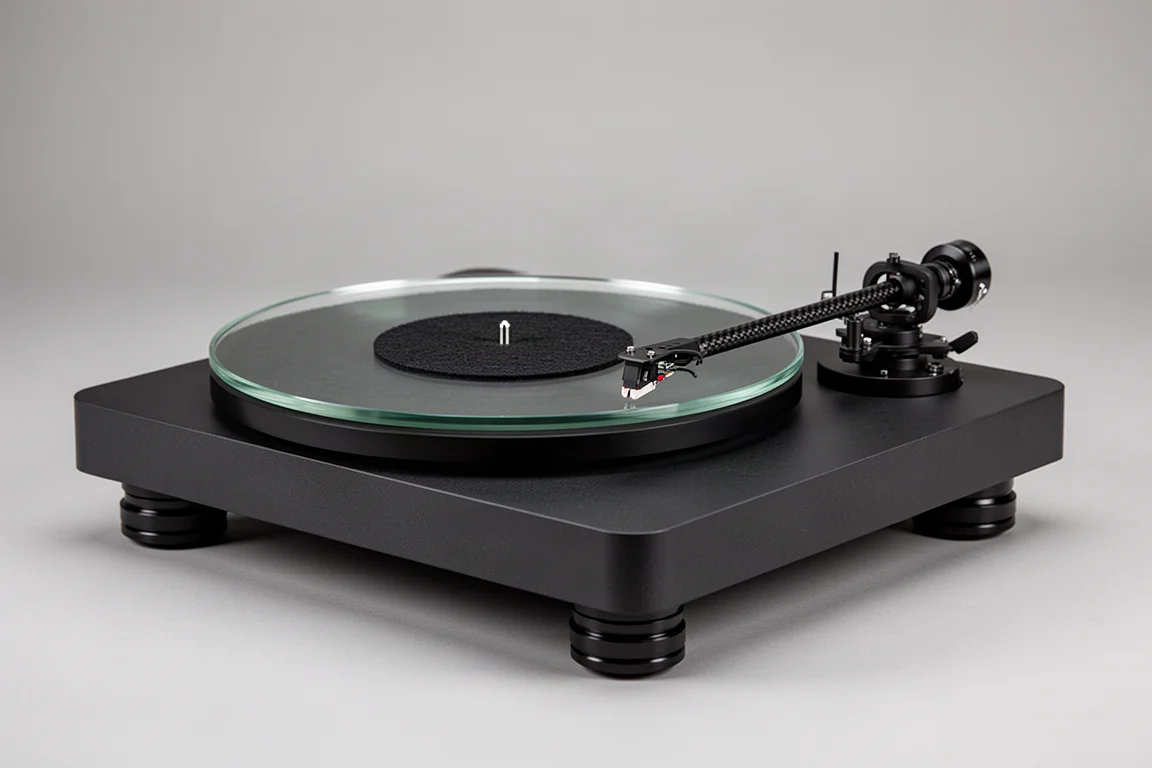
Just above the T2 line sits the Debut Evo. Its tonearm is slightly shorter, but the bearings are better and the arm is made of carbon fiber. The platter is better damped, and the deck uses upgraded feet and an improved motor mount.
The trade-off is setup. The Debut Evo expects you to balance the tonearm properly, while the T2 models arrive essentially ready to play. Choosing between them comes down to whether you prefer an easier setup or a little more performance.
Setup, Cartridge, and Upgrade Path
Setup on a T2 is short. Everything arrives pre-mounted, aligned, and balanced from the factory. You make the audio connections, fit the belt, add the outer glass platter, set the anti-skate, connect the power supply, and you are ready to play.
The supplied Sumiko Rainer cartridge is handmade in Yokohama, Japan. It tracks well and delivers a sweet yet detailed presentation, and it can be upgraded simply by fitting a better stylus, with two steps up currently available.
Tonearm height is not adjustable, but it is preset to give correct vertical tracking angle for all of the Oyster models in the Sumiko range, so a later move to one of those cartridges does not require VTA changes.
Buying Advice
The T2 line is positioned around the $550 to $650 mark, and the step up to the Super Phono costs about $100. Given that the built-in phono stage is based on a $200 standalone design, that upgrade is the one most listeners should take.
Beyond that, the decision is about how far you expect to go. The T2 W doubles the price for Wi-Fi streaming that only pays off with a second system or a whole-home setup. The Debut Evo costs more than the T2 and asks for proper tonearm balancing, but it brings a carbon fiber arm, better bearings, and a better-damped platter.
Improvements in turntables tend to be easy to hear, and the sound begins at the table, so a better deck lets you pull more music out of the records you already own. The right question is how deep you expect to go into vinyl rather than which model is objectively best.
Conclusion
The T2 range keeps things simple. All three models share a well-built belt-drive platform with a 9-inch one-piece tonearm, a tempered glass platter, and a cartridge that arrives ready to use. The T2 Super Phono is the version most listeners should choose, because the built-in phono stage is a genuine upgrade rather than a convenience. The T2 W makes sense only when you need vinyl in another room. The Debut Evo is there for anyone who wants better materials and does not mind balancing an arm to get them.
Further reading
Related Reviews
Turntables
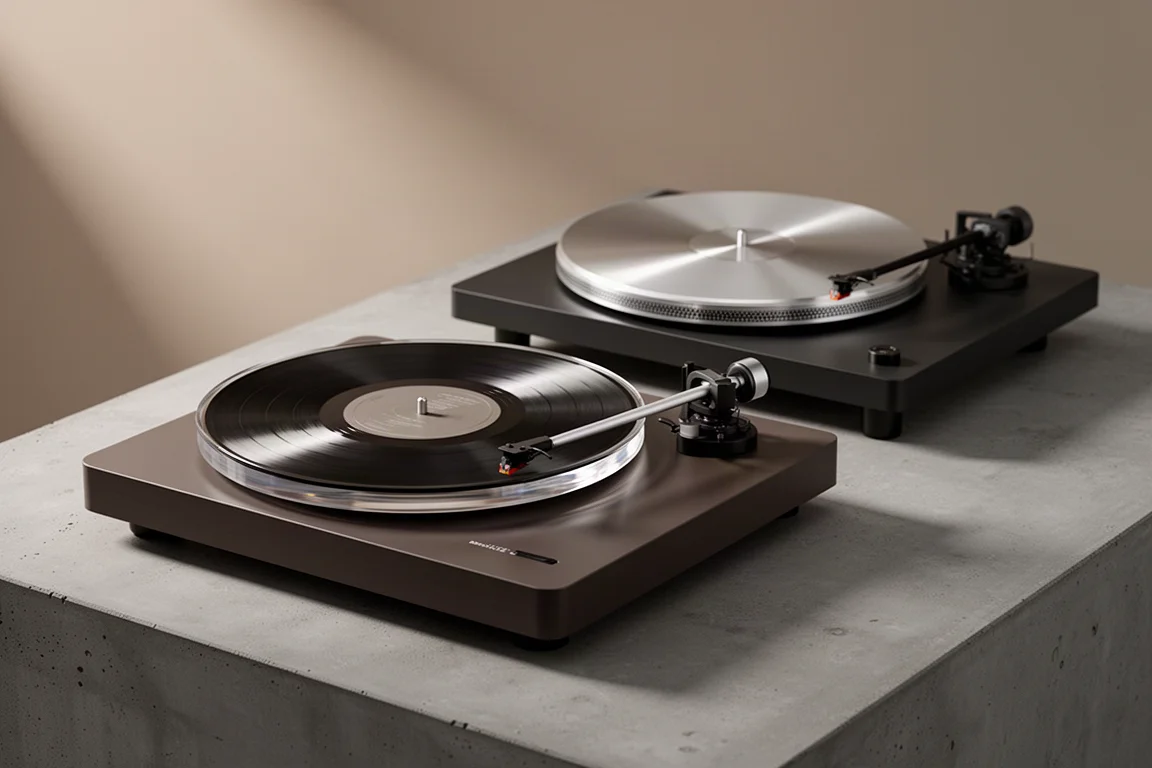
Best Turntables 2026: Seven Standout Picks From Entry Level to Premium
A practical roundup of seven turntables worth considering, from a US-made budget deck to small-batch premium models with a clear upgrade path.
Turntables
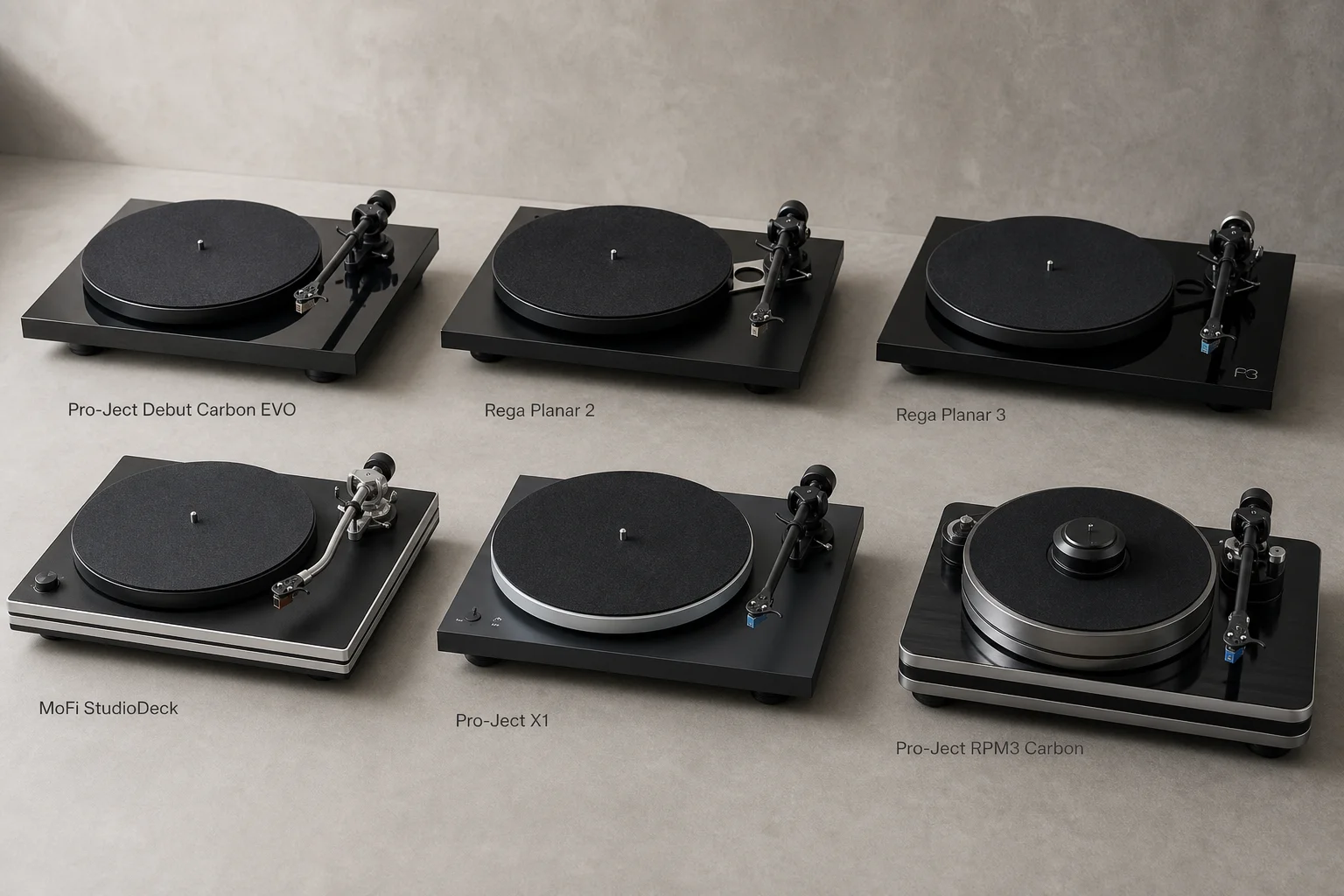
Best Turntables Under $1,000: Five Fully Manual Picks Worth Considering
Five fully manual turntables under $1,000, compared on build quality, cartridges, upgrade potential, and the character of sound each one brings to a system.
Turntables
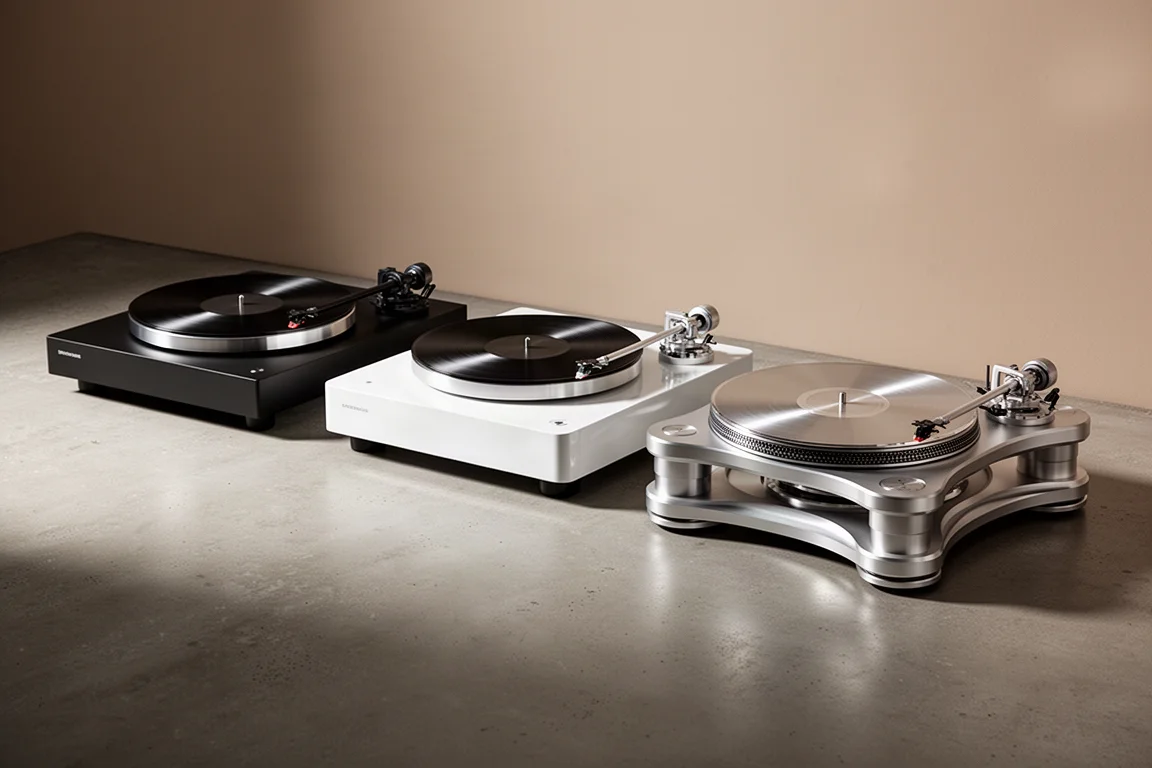
Best Turntables Under $2,000: Six Vinyl Decks Worth Building a System Around
Six turntables under $2,000, from a value-focused belt-drive deck to a fully balanced design, with the strengths and trade-offs that matter before you buy.