Turntables
Pro-Ject T1 Evo and Debut Evo 2 Turntables: Which One Should You Buy?
A practical guide to the Pro-Ject T1 Evo, T1 Evo Phono, T1 Evo BT and Debut Evo 2, and how to choose the right one for your system.
Introduction
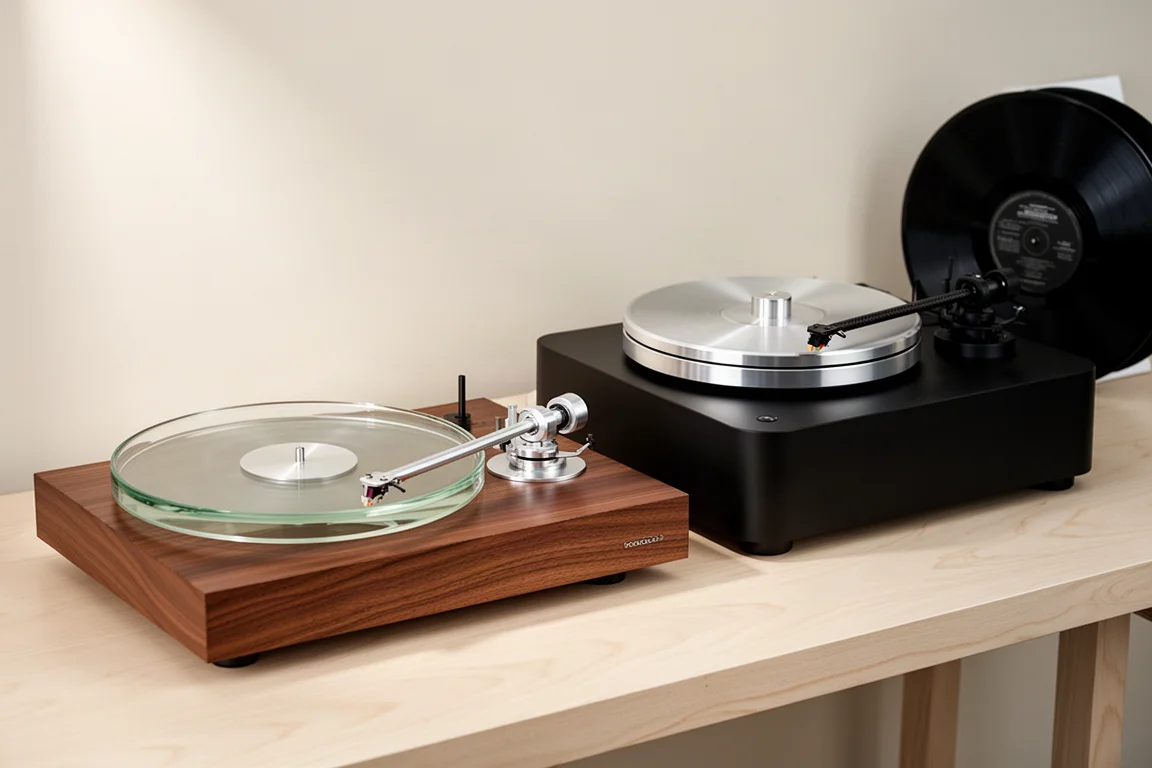
Vinyl has become a genuinely popular hobby, and it rarely stays inexpensive for long. New LPs average around $25 each, so a collection can quickly become worth more than the turntable playing it. That changes what you should expect from a record player. The grooves on a record are microscopic, and a cheap automatic deck can wear them down permanently. A high-performance turntable is built to track those grooves carefully, protect the record, and pull more of the music out at the same time.
Pro-Ject has been building affordable turntables since 1991, when the company launched in Austria at a time when vinyl was widely considered finished. More than three decades later it is one of the largest turntable manufacturers in the world, with a design team in Austria and factories in Germany, the Czech Republic and Slovakia. The downside of that success is choice: the lineup runs to 46 models priced from $299 to $14,999, which makes it hard to know where to start.
The T1 Evo and the Debut Evo 2 sit at the more accessible end of that range, and both are aimed at listeners moving up to a first serious turntable.
What Matters in a High-Performance Turntable
A turntable is a mechanical analog device, so the goal is simple to state and difficult to achieve: extract everything in the groove without adding anything that was not there.
The cartridge is where it starts, since it is the part that physically reads the record. Cartridge quality shapes the sound, but the turntable has to support it properly so it can retrieve all of that information. The tonearm holds the cartridge and must avoid adding resonances while keeping the stylus perfectly in the groove with minimal friction from its bearings. The motor, platter and platter bearing then need to spin the record at a consistent speed, and the whole assembly should be isolated from external vibration that could color the sound.
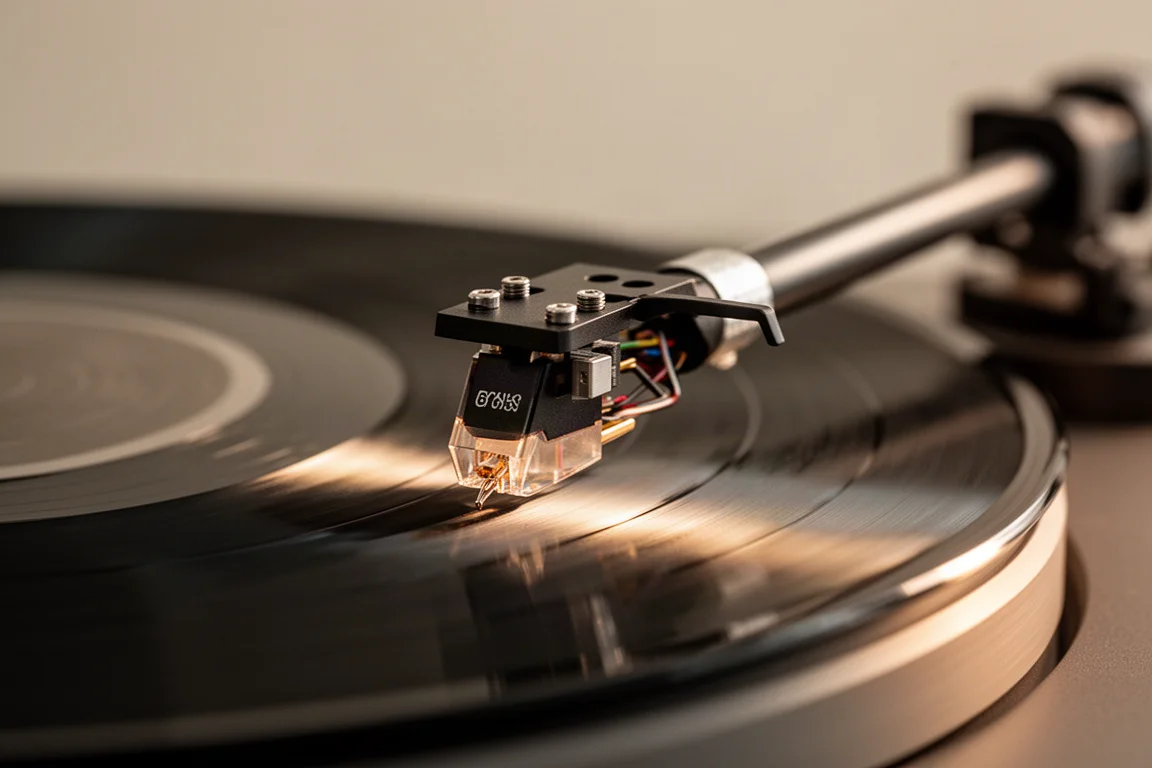
One practical isolation tip applies to any turntable: keep it away from speakers that produce a lot of bass energy, and avoid sharing a shelf with them.
Pro-Ject T1 Evo: The Entry Point
The T1 Evo is a straightforward, well-executed manual turntable. Manual operation means you move the tonearm over the lead-in groove, lower it with the cueing lever, and lift it again at the end of the side. Removing automatic mechanical parts is one of the reasons so many high-performance turntables are manual. Both the T1 Evo and the Debut Evo 2 also include electronic speed control, so switching between 33 and 45 RPM is a matter of a switch rather than moving the belt to a different position on the motor pulley.
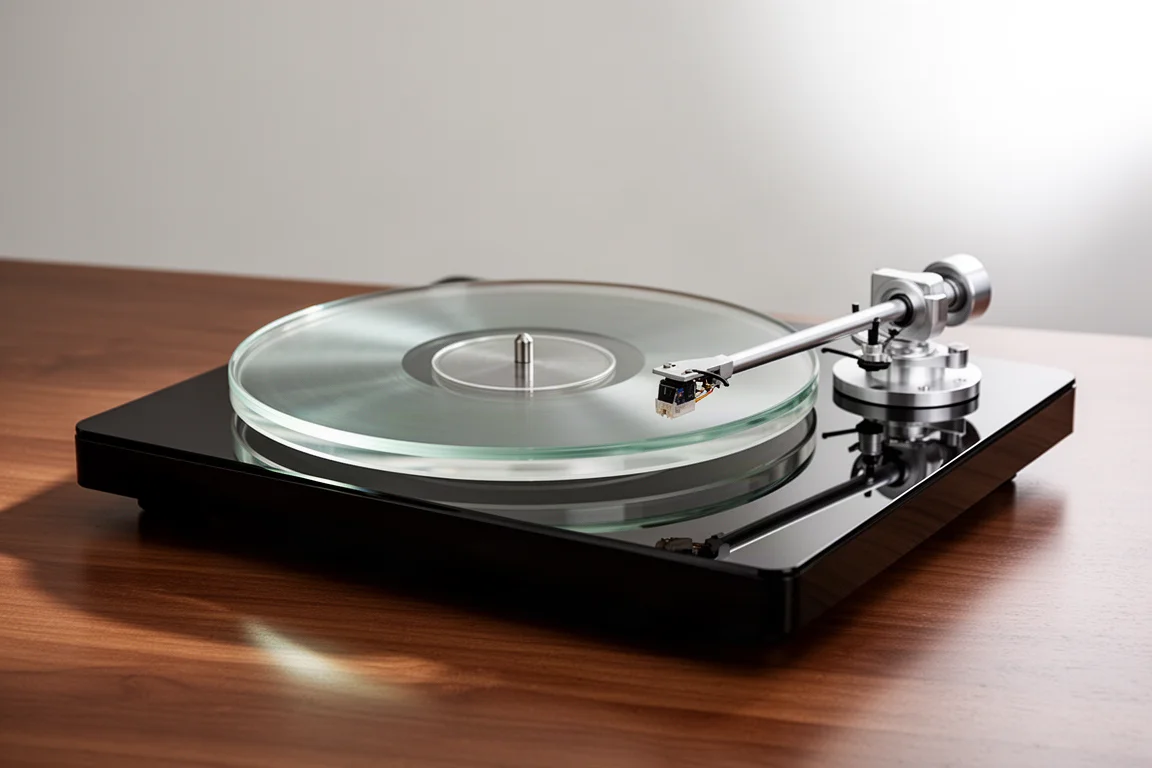
The tonearm is a one-piece aluminum design with friction-free bearings, and it arrives with the popular Ortofon OM10 moving magnet cartridge already mounted and aligned. The counterweight is set for the correct tracking force out of the box, which keeps setup simple. Given the price, the arm feels like a first-class piece of hardware, and its low-friction bearings feel solid for the money.
The plinth is CNC machined to reduce resonance, and the feet use a special material to keep external vibration away from it. The feet are not adjustable, which makes leveling slightly less convenient. The motor is mounted to the plinth with isolators, and it drives an 8 mm thick glass platter. A heavier platter improves rotational stability and speed consistency, and here the subplatter sits on a bearing assembly machined to tolerances of 0.0001 mm.
Finish options are gloss black, satin white and satin walnut, and the included Connect It E cables are a genuine bonus: they are designed for phono use and sell separately for around $60, while many turntables in this class ship with much cheaper cables. The T1 Evo is priced at $449.
Pro-Ject T1 Evo Phono: Built-In Preamp Convenience
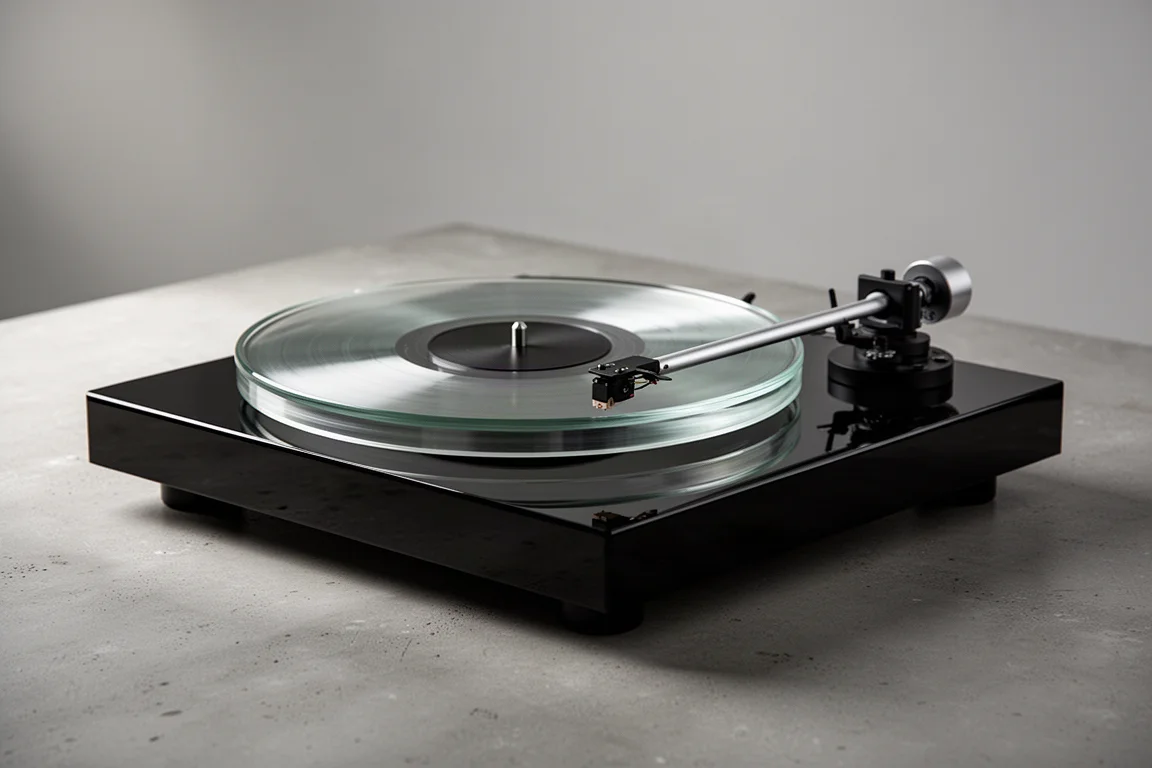
The T1 Evo Phono is the same turntable with a built-in phono preamp, at $499, or $50 more than the standard version. That preamp is designed specifically to match the Ortofon OM10, so the pairing is already worked out for you.
That matters if you use powered speakers or any system without a phono input, since the cartridge output needs amplification and equalization before it reaches your amplifier. The built-in stage is also defeatable, so if you later add a better external phono preamp, the internal one can be switched out of the signal path instead of limiting your upgrade.
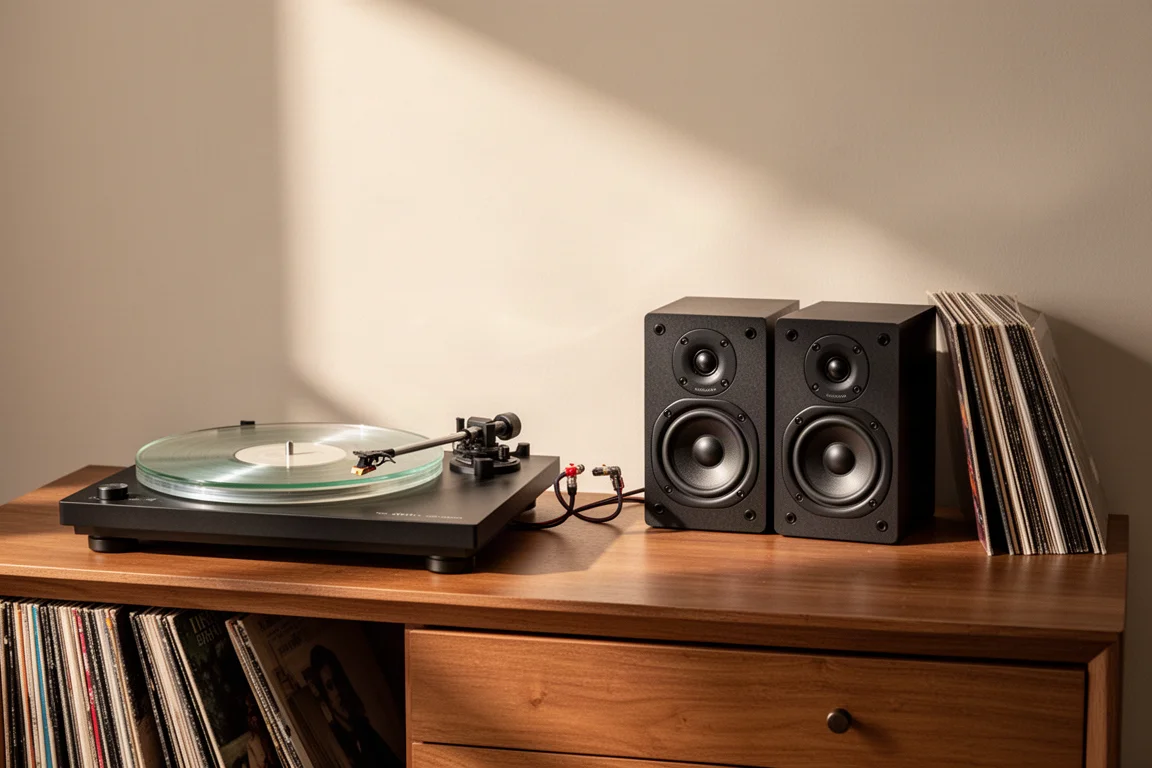
If your amplifier already has a good phono stage, the standard T1 Evo saves the $50. If it does not, the Phono version removes an extra box and an extra cable from the setup.
Pro-Ject T1 Evo BT: Wireless Flexibility
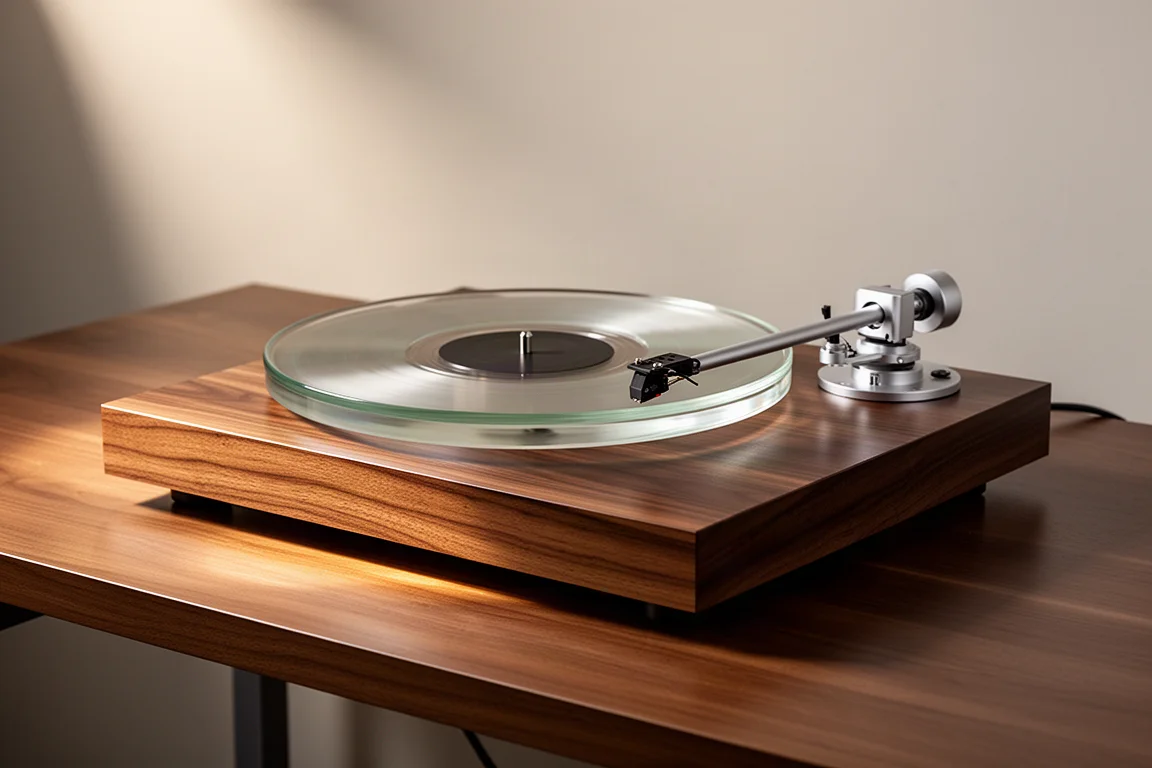
The T1 Evo BT takes the same foundation and adds Bluetooth on top of the built-in phono preamp. It costs a little more than the T1 Evo Phono.
For anyone who wants to send records to a wireless speaker or a pair of Bluetooth headphones without a wired connection to an amplifier, this is the version that makes it possible, while the wired analog path remains available for a conventional system.
Pro-Ject Debut Evo 2: The Big Step Up
The original Debut was the model that put Pro-Ject on the map and remains the company’s best-selling turntable. The Debut Evo 2 is the latest generation, and it borrows heavily from models further up the range. From a few feet away it looks similar to the T1 Evo, but the differences show up in the details.
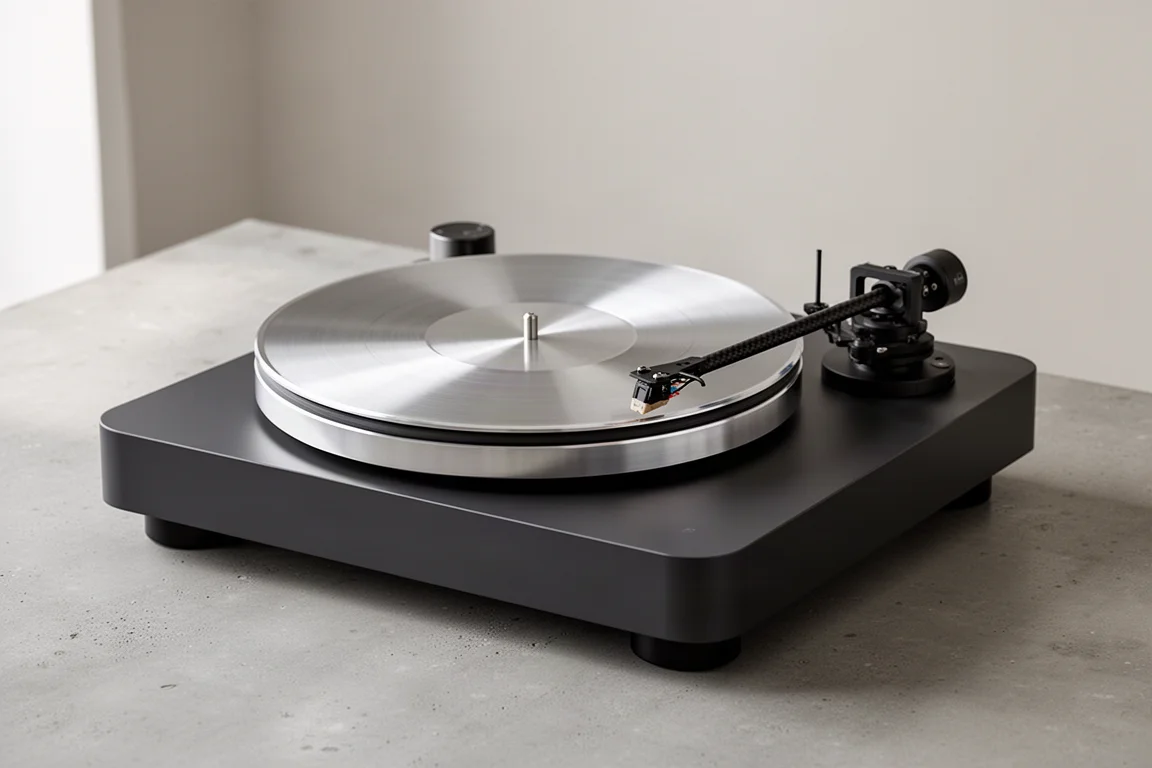
Start with the feet: they are better damped using thermoplastic elastomers and are height adjustable, which makes leveling easier. The plinth has more mass for resonance reduction, and the complete turntable weighs almost 60 percent more than the T1 Evo. The motor is better isolated and driven by a more sophisticated power supply, which helps speed accuracy.
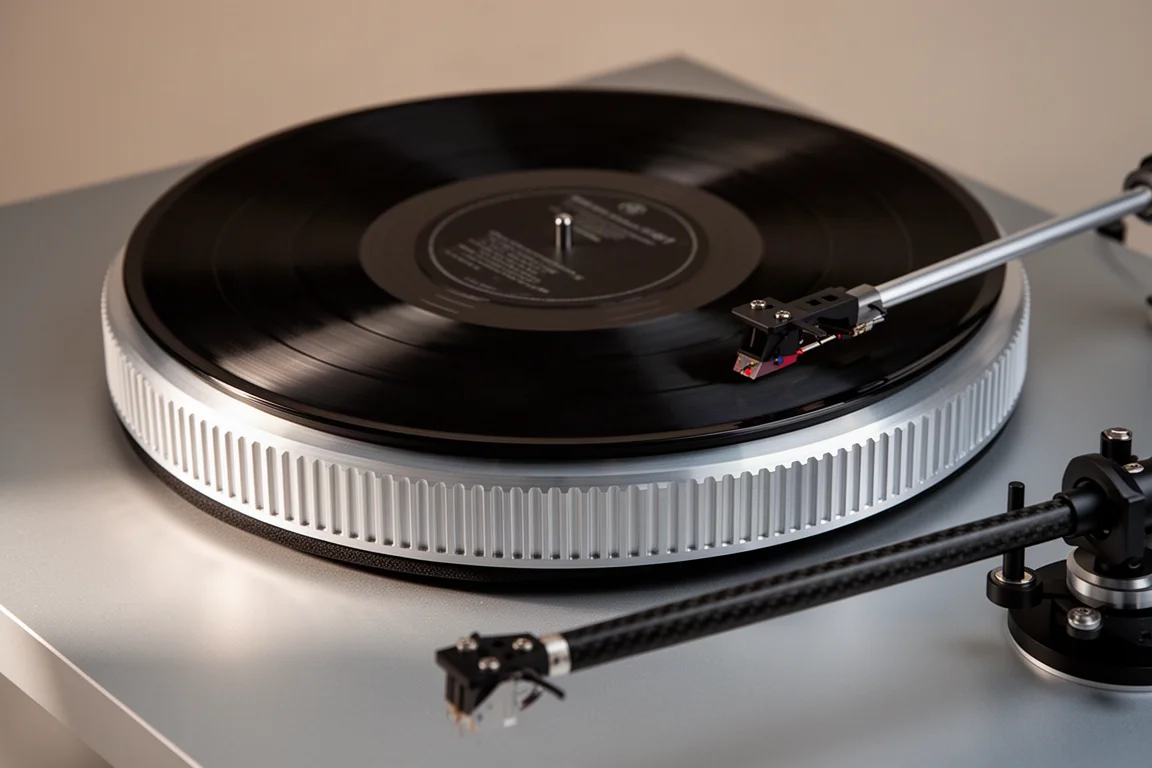
The platter is CNC machined from aluminum and individually balanced for rotational stability. A ridge machined into its outer edge is filled with thermoplastic elastomer, which damps resonance and gives the platter a stronger flywheel effect.
The tonearm is a one-piece carbon fiber design of the same length as the T1 Evo arm, but it uses the same bearing block as the more expensive Debut Pro, with more mass and lower-friction bearings. Its counterweight includes thermoplastic elastomer isolation to reduce resonance. Together, these changes let the cartridge retrieve more micro detail.
The cartridge is a bigger step as well. Pro-Ject worked with Ortofon to design the Pick it MM Evo specifically for this tonearm, and it is matched to the arm’s mass, which is 10 g. That mass also leaves room for a future upgrade to a moving coil cartridge, provided it is a fairly high compliance design.
Around the back, the Debut Evo 2 does not offer a built-in phono preamp, but it uses more solid surface-mounted RCA connections and includes a high-quality phono cable. It also supports an optional balanced connection upgrade, which is rare at this price. A balanced signal path eliminates noise by design, which is useful because a phono cartridge’s output is extremely low compared with a streamer or CD player. Taking that route requires a different cartridge, a different cable and a phono preamp that can handle a balanced signal, so it is a genuine upgrade path rather than a plug-and-play feature.
The Debut Evo 2 also offers ten color choices with an eight-coat finish, one of the widest selections you will find on a turntable. It costs about $250 more than the T1 Evo.
Which Pro-Ject Turntable Is Right for You
Both turntables will take proper care of a record collection. The honest bottom line is that the Debut Evo 2 will simply sound better than the T1 Evo, and the $250 gap buys real mechanical improvements in the platter, tonearm, motor and cartridge.
That does not make the T1 Evo a compromise. If you are moving up from a very inexpensive turntable, the T1 Evo is likely to be a revelation, and the gain in clarity will feel larger than the price suggests. The question is how far you want to take your listening.
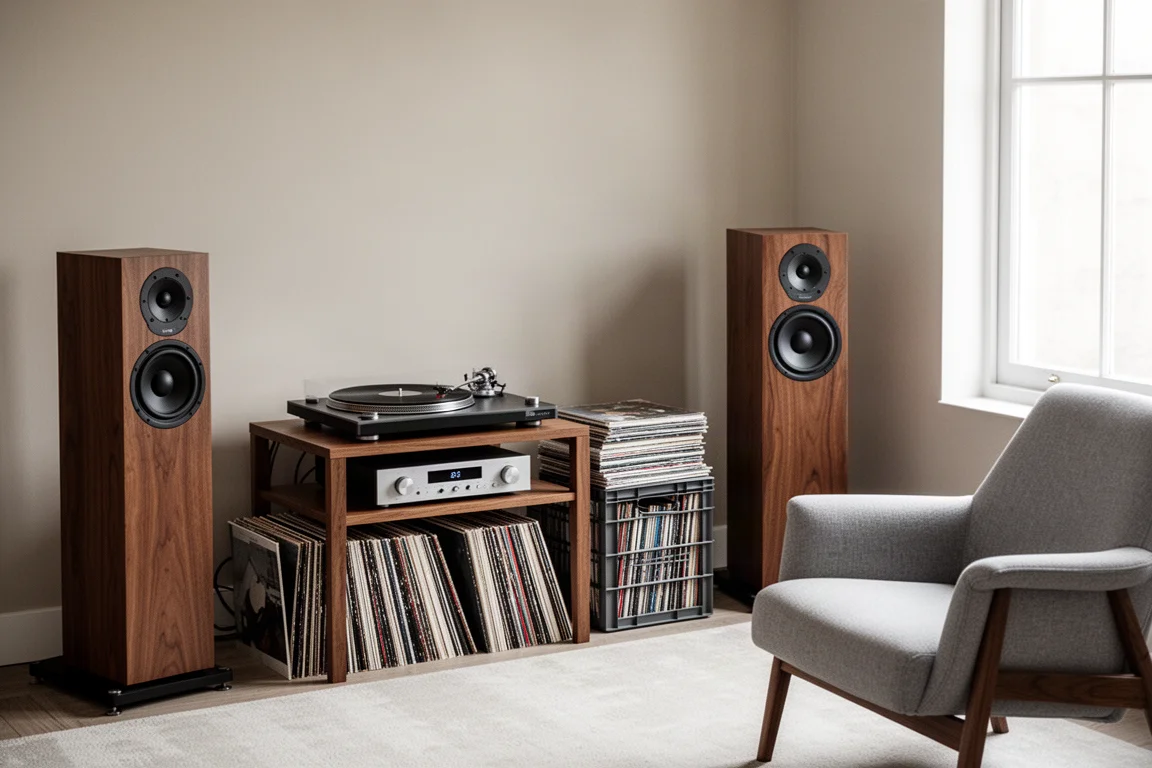
It also helps to think of the turntable as the starting point of the whole system. If it does not capture the subtle details that make music engaging, no speaker or amplifier downstream can recreate them. Amplifier, speakers and room acoustics all shape the final result, so it is worth balancing the budget across the system rather than spending everything on one component.
Among the T1 Evo versions, the choice comes down to connectivity: the standard model if you already have a phono stage, the Phono version if you do not, and the BT version if you also want wireless playback.
Conclusion
The T1 Evo family is an easy recommendation for a first serious turntable, with a pre-mounted Ortofon cartridge, a well-machined arm, a glass platter and quality phono cables at $449, or $499 with the built-in preamp. The Debut Evo 2 costs about $250 more and earns that premium with a balanced aluminum platter, a carbon fiber tonearm, a better-isolated motor, a purpose-built cartridge and an optional balanced output. If your budget allows it, the Debut Evo 2 is the more capable long-term choice. If you are stepping up from a budget deck, the T1 Evo will already deliver a serious improvement and protect the records you are investing in.
Further reading
Related Reviews
Turntables
Best Turntables 2026: Seven Standout Picks From Entry Level to Premium
A practical roundup of seven turntables worth considering, from a US-made budget deck to small-batch premium models with a clear upgrade path.
Turntables
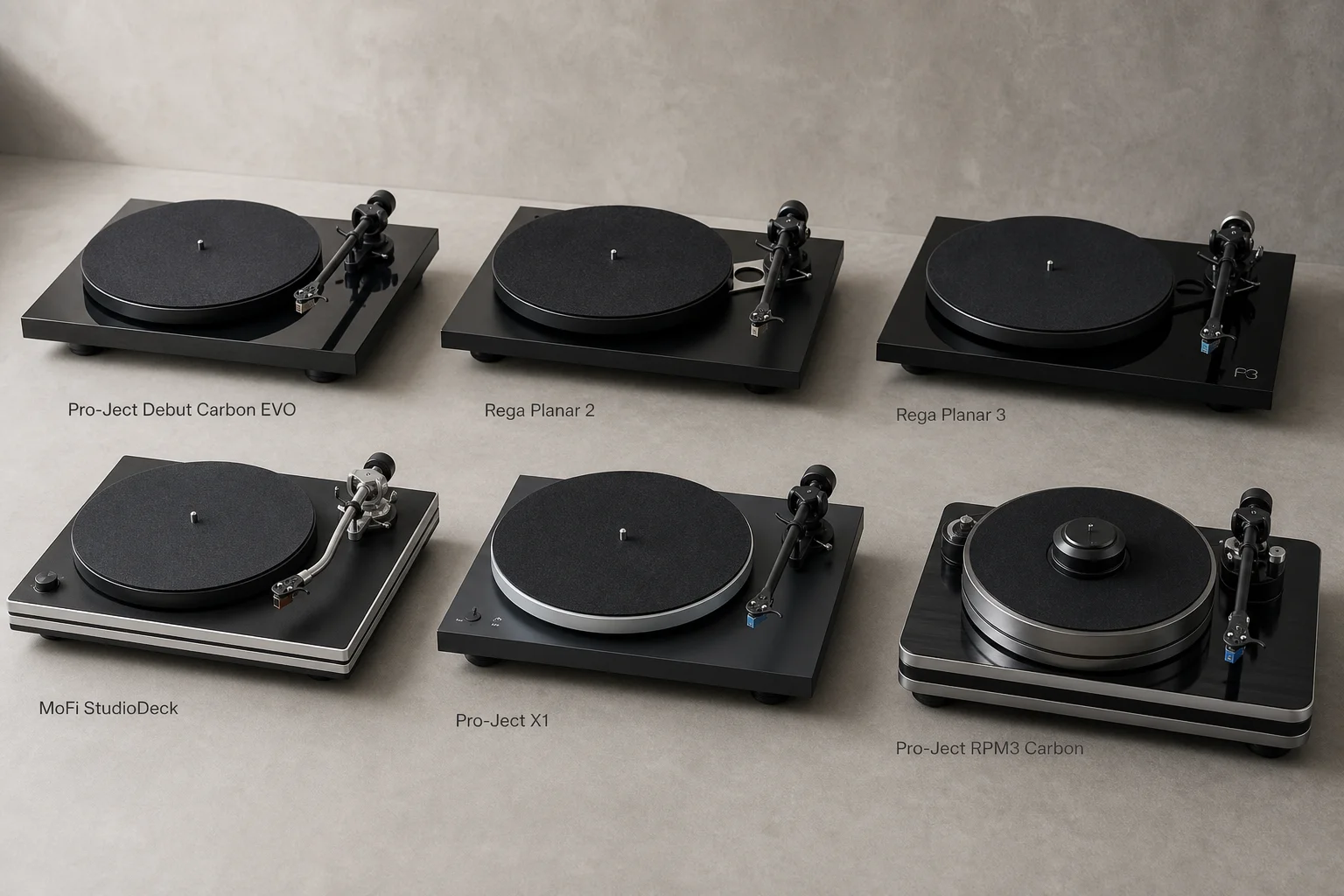
Best Turntables Under $1,000: Five Fully Manual Picks Worth Considering
Five fully manual turntables under $1,000, compared on build quality, cartridges, upgrade potential, and the character of sound each one brings to a system.
Turntables
Best Turntables Under $2,000: Six Vinyl Decks Worth Building a System Around
Six turntables under $2,000, from a value-focused belt-drive deck to a fully balanced design, with the strengths and trade-offs that matter before you buy.