Bookshelf Speakers
Pro-Ject Speaker Box 5 S2 Review: A Hand-Built Bookshelf Speaker Built Around Neutrality
A close look at the Pro-Ject Speaker Box 5 S2, a compact two-way bookshelf speaker with an inert cabinet, a linear midrange, and a satin green finish.
Introduction
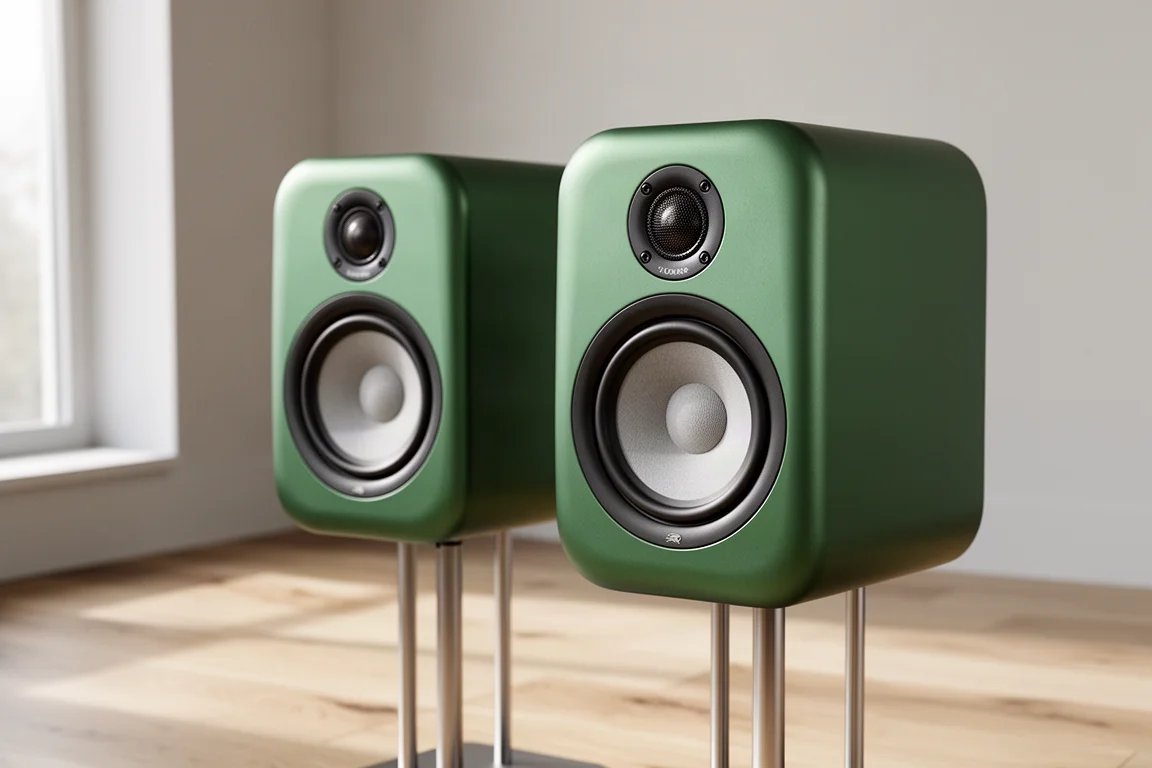
Pro-Ject is a brand most listeners associate with turntables, which is exactly why a compact two-way bookshelf speaker carrying the same badge is easy to overlook. The Speaker Box 5 S2 deserves a closer look. It is a small, hand-built passive design that sells for just under $800 a pair, and it approaches the job with priorities that are unusual at the price: an inert cabinet, a linear tonal balance, and a finish that stands well clear of the usual black vinyl wrap.
The first impressions are physical. Each cabinet weighs close to 11 pounds, which is a great deal for a speaker of this size, and the satin green version is a rich, smooth colour rather than a flat painted surface. Walnut, white, and black options exist for listeners who prefer something more conventional.
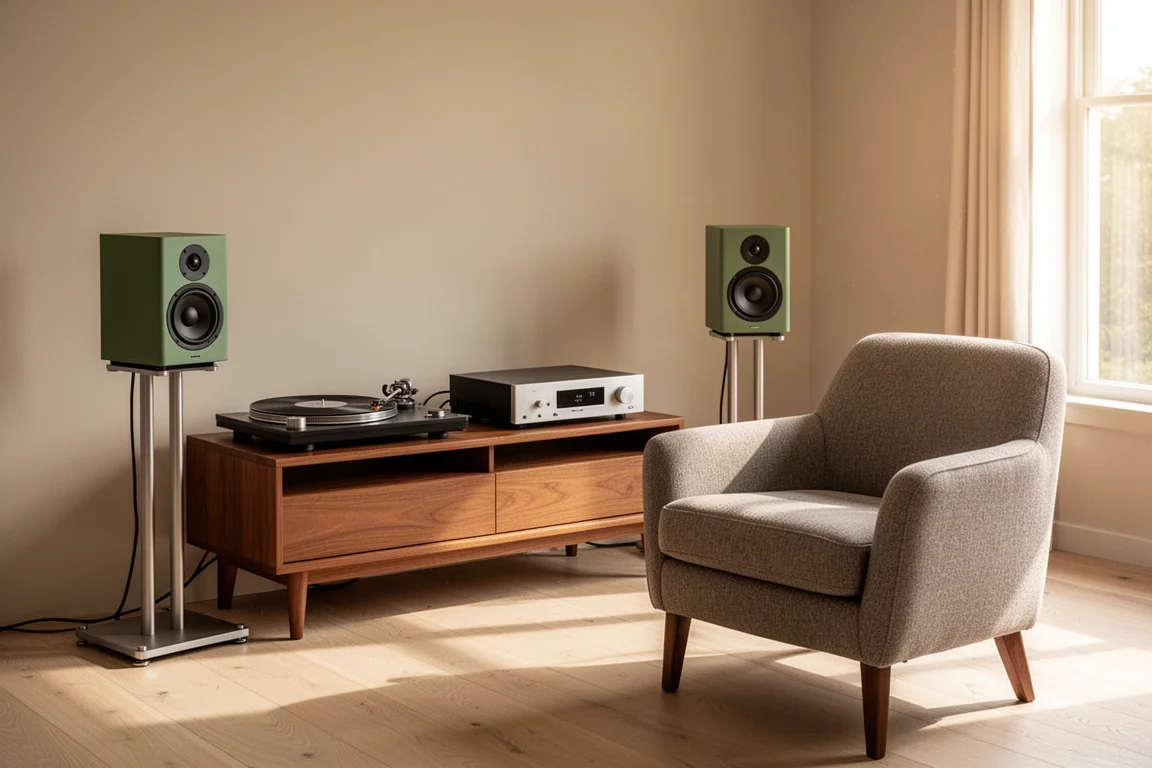
Knock on the side of the cabinet and it answers with almost nothing, because the enclosure is practically free of internal resonance. That is rare at this price point, and hand-built construction in Europe reinforces the sense that the budget went into the parts you cannot see.
Who the Speaker Box 5 S2 Is For
This is a speaker for listeners who value accuracy over excitement. The design stays linear through the low bass, upper bass, and midrange, and it does not add the bass lift or the smile-shaped response curve that many affordable bookshelf speakers use to sound immediately impressive. Anyone hunting for a rich, punchy, excitable presentation should look elsewhere.
It suits smaller rooms and modest systems especially well. An 8-ohm impedance and 88 dB sensitivity mean it does not need a muscular amplifier to come alive; the speaker was driven comfortably by a 50 watt per channel integrated amplifier as well as by two 70 watt per channel models. It also scales in the other direction. Performance stays consistent whether you sit a few feet from the drivers or more than a dozen feet back, so the speaker can move with you from a compact apartment setup into a larger room later on.
Listeners who want one pair of speakers for quiet background listening and occasional louder sessions are the natural audience here. The design holds its composure at low volume and plays up to roughly 95 dB without a hint of strain or distortion.
Build Quality and Finish
The cabinet is the headline. Close to 11 pounds per speaker in a box this small points to thick panels and real internal bracing, and the payoff is an enclosure that stays quiet while the drivers work. That absence of resonance is a large part of why the midrange arrives clean instead of smeared.
The driver complement is a one-inch silk dome tweeter and a five-inch fibreglass woofer, supported by a small rear-facing port. Together they produce a reported frequency response of 55 Hz to 20 kHz. The low end is honest rather than generous: the speaker never pretends to deliver deep bass, and it does not colour the rest of the range trying to fake it.
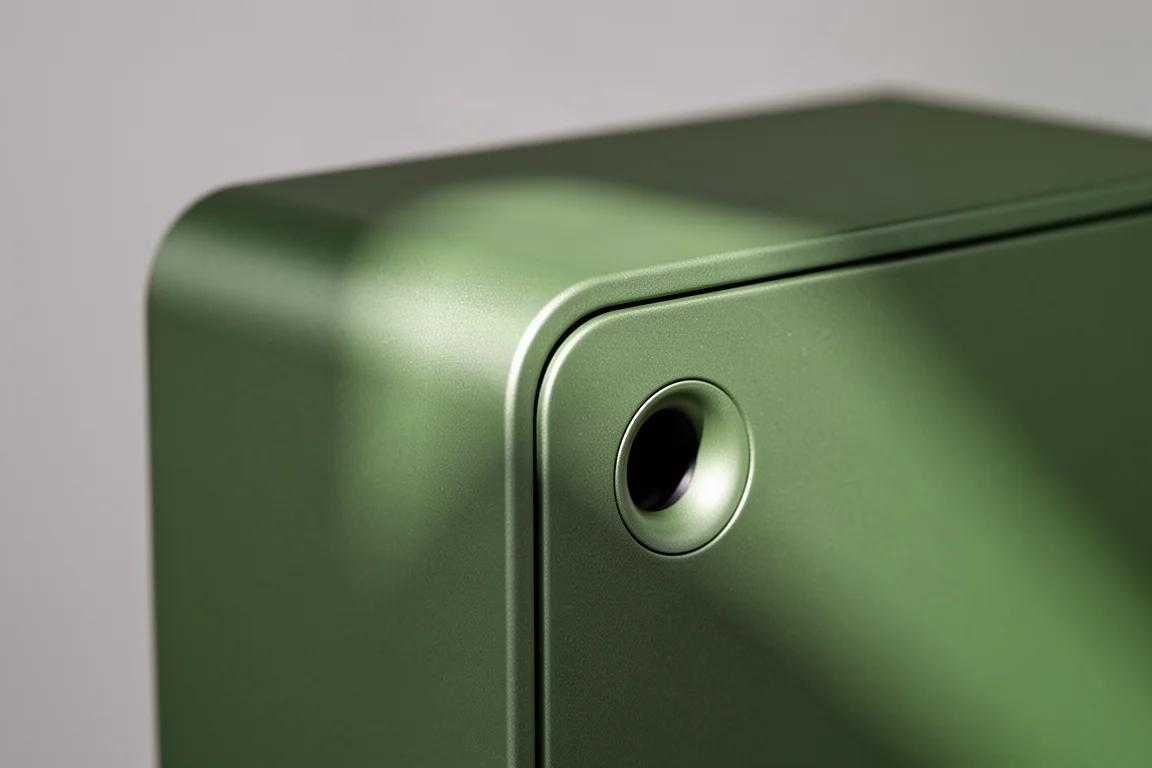
Finish quality matches the construction. The satin green example is even and smooth across the panels, and the walnut, white, and black alternatives keep the same restrained, modern character. One naming note is worth repeating: the Speaker Box 5 S2 is not an update to the original Speaker Box 5. That earlier model was cheaper, built in China from different materials, and not hand built in Europe.
Sound Quality: A Linear Midrange and a Controlled Treble
A full-range sweep showed the Speaker Box 5 S2 measuring essentially flat from about 100 Hz to 2 kHz, which covers the low bass, upper bass, and midrange, with only a gentle roll-off as the response approaches the treble. That linearity defines the character of the speaker. The midrange is neither warm nor cool, neither laid back nor forward; it simply presents what the recording contains, and that evenness is why intelligibility is so high. Lyrics, dialogue, and individual instrumental lines come through with focus and presence because the midrange is not fighting a boosted bass region.
The silk dome tweeter carries some presence in the upper range, but it stops short of the aggressive, fatiguing brightness that some affordable designs chase. There is more treble energy here than a Polk Audio R200 offers, and less than the brighter Sonus Faber Lumina II.
Soundstage, Dynamics, and Room Behaviour
The speaker images far larger than its dimensions suggest, yet it does not throw a wall of sound. What you get instead is pinpoint placement, with a stable centre image that holds together as you move from side to side. Voices and instruments sit inside a detailed, almost holographic stage rather than smearing into a shapeless mass.
Dynamics are controlled rather than explosive. This is a well-mannered speaker that prioritises composure over brute impact, so it will not recreate the feeling of a live concert in your room. What it will do is stay consistent across a wide listening window and across a range of volumes, which makes it easy to live with over long sessions.
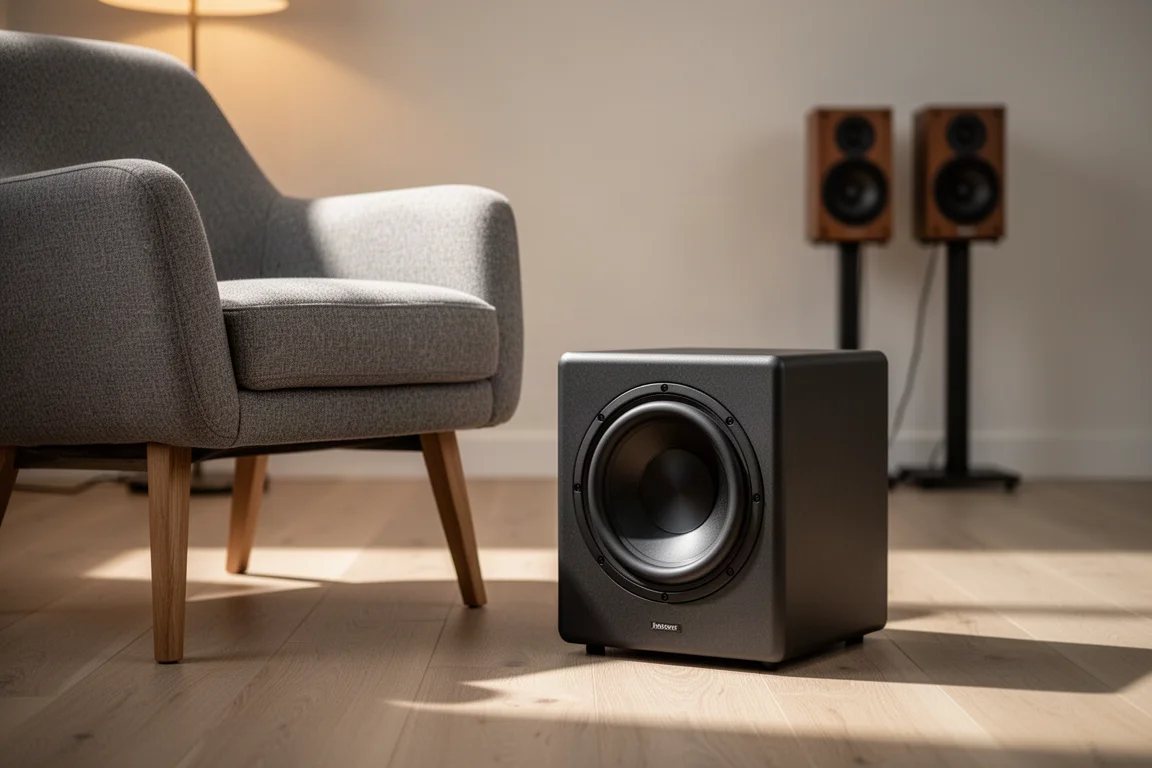
Bass is the one area that needs planning. On its own, the Speaker Box 5 S2 has little output below roughly 50 Hz, so full-range listening calls for a subwoofer. Crossing a sub over at around 60 Hz fills in the bottom end and lets the small speakers behave like much larger monitors, without the boom or port coloration that budget towers often introduce. A single compact subwoofer such as the SVS 3000 Micro is enough to complete the system, and an Arendal 1961 is another option that works well. It is worth resisting the urge to run the sub hot, because excess low end masks the midrange clarity that makes this speaker special.
Things to Consider Before Buying
The most important consideration is bass. Buyers who want a two-piece system with no subwoofer and no intention of adding one should weigh the alternatives carefully, because the Speaker Box 5 S2 deliberately trades low-end weight for midrange purity. A subwoofer is effectively part of the purchase if you want full-range playback.
The second consideration is character. Neutrality is a virtue for some listeners and a disappointment for others. If your reference for a good speaker is a warm, full-bodied sound with extra low-end presence, this is not that speaker, and no amount of listening time will change its personality.
The third consideration is price. At just under $800 a pair, the Speaker Box 5 S2 competes with several well-established bookshelf designs, and the roughly $50 premium it carries over the Klipsch RP-600M II is worth weighing against the cabinet quality and finish you receive for it.
How It Compares With Other Bookshelf Speakers
The Klipsch RP-600M II and the Polk Audio R200 are the most obvious rivals, and both are strong speakers. The Klipsch is the livelier option with more low-end oomph, and it costs around $50 less, but from roughly 80 Hz upward the Pro-Ject is the more neutral and the better constructed of the two. The Polk R200 sounds fuller, richer, and warmer, largely because of the bass that the Speaker Box 5 S2 does not provide; it remains an excellent buy and a sensible choice for anyone who wants satisfying low frequencies without adding a subwoofer.
The Wharfedale Evo 4.1 sits somewhere between the two. It matches the Pro-Ject closely on build quality, and it carries more bass than the Speaker Box 5 S2 without the extra boost of the Polk. The Sonus Faber Lumina II is the pricier alternative at around $1,100 a pair. The Pro-Ject measures more linear, but the Lumina II sounds more open and more dynamic, livelier without tipping into fatigue. Both handle intelligibility and room size well. If the Lumina II price is a stretch, the Speaker Box 5 S2 is the value pick; if the budget allows, the Lumina II is arguably the better speaker overall.
Buying Advice
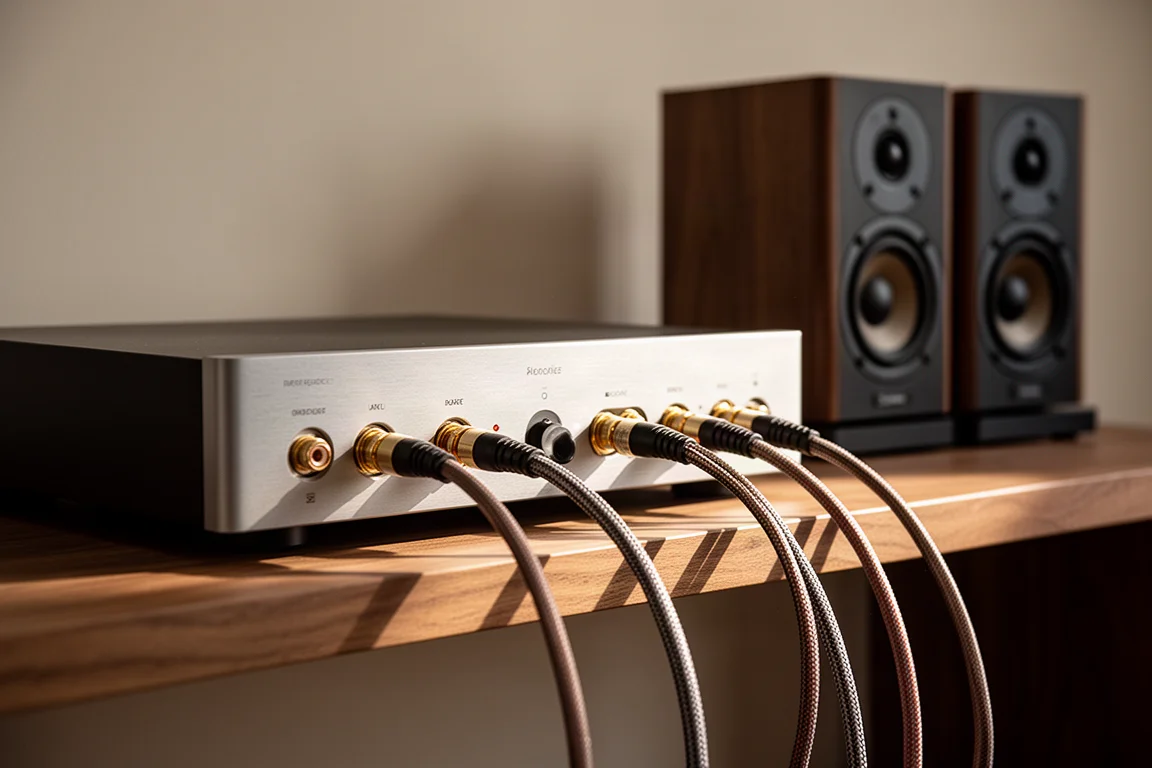
At just under $800 a pair, the Speaker Box 5 S2 is an easy recommendation for listeners who want a neutral, beautifully built bookshelf speaker that will work in a small room and grow into a larger one. Pair it with a modest integrated amplifier, give it a solid stand, and plan for a subwoofer if you want full-range playback. Keep the crossover near 60 Hz and the sub level modest, and the system will sound far bigger than the cabinets suggest.
If you already own a Polk Audio R200 or a similarly warm, full-bodied bookshelf speaker, you own a very good speaker; the Pro-Ject is a different flavour rather than a strict upgrade. If you are starting fresh and you want accuracy, a quiet cabinet, and a finish that looks like it belongs in a designed room, the Speaker Box 5 S2 makes a strong case for itself. Pro-Ject also offers tower speakers in the same S2 line for listeners who want this character with more cabinet volume.
Conclusion
The Speaker Box 5 S2 is the kind of product that resets expectations. A turntable brand has no obvious business building a bookshelf speaker this good, yet the result is a compact two-way with an unusually inert cabinet, a genuinely linear midrange, and a controlled treble that stays informative without becoming sharp. It needs a subwoofer to go deep, and it will not flatter poor recordings or deliver a club-like low end, but it is honest, consistent, and easy to recommend to anyone who wants a small speaker that behaves like a much larger one.
Product link
View more details for Pro-Ject Speaker Box 5 S2
This product is mentioned in the review. Check the specifications, options, and compatibility before buying.
View more details for Pro-Ject Speaker Box 5 S2Further reading
Related Reviews
Bookshelf Speakers
Acoustic Energy A100 Mark II Review: A Compact Standmount With an Expansive Soundstage
The Acoustic Energy A100 Mark II brings clarity, natural tonality and a wide soundstage to an entry-level standmount, with a few setup details worth knowing first.
Bookshelf Speakers
Acoustic Energy AE-100 Mark II Review: Compact Bookshelf Speakers With Standout Imaging
A compact British two-way bookshelf speaker with deep, layered imaging, fast bass, and a slight treble lift to weigh against a crowded $500 field.
Bookshelf Speakers
Acoustic Energy AE100 MK2 Review: Measured Performance and Four Alternatives
A close look at the Acoustic Energy AE100 MK2 bookshelf speaker, what its measured performance reveals, and four alternatives with different trade-offs.