Turntables
Pro-Ject E1 Review: A Plug-and-Play Entry Turntable With a Few Trade-Offs
The Pro-Ject E1 arrives pre-aligned and ready to play, with an Ortofon OM 5E, easy 33 and 45 switching, and an optional built-in phono stage worth knowing about.
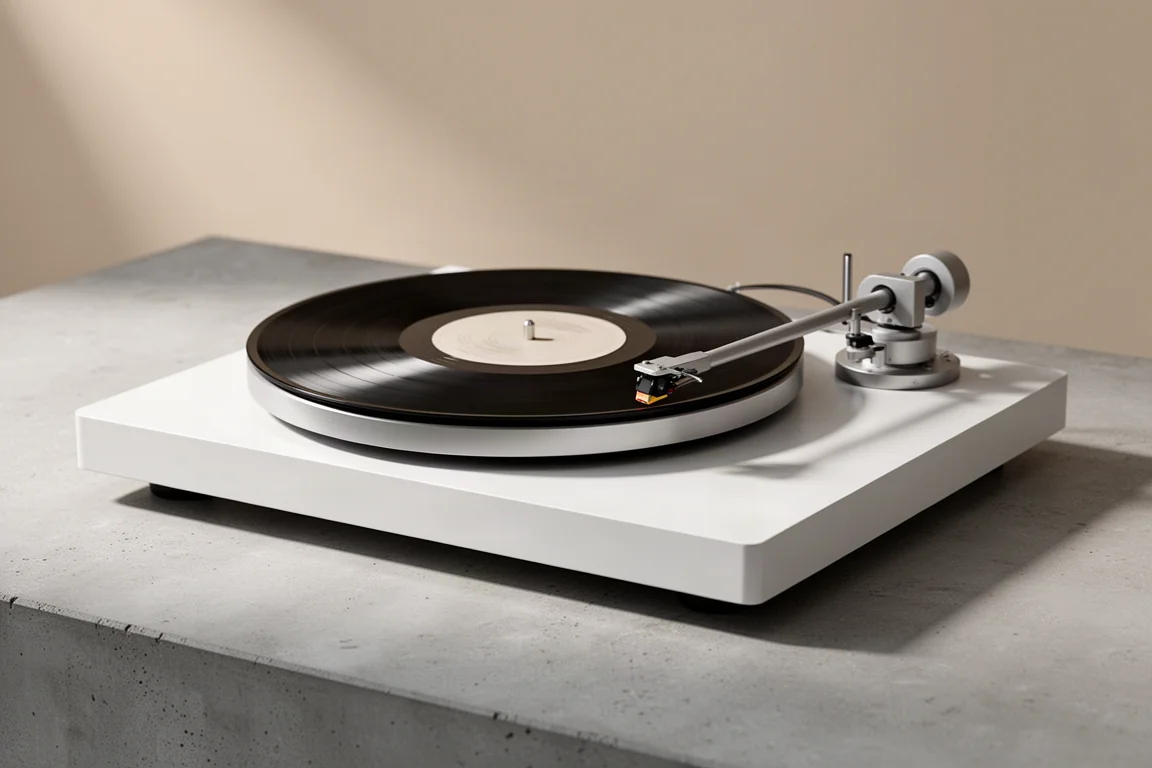
Introduction
The Pro-Ject E1 is Pro-Ject’s push into the affordable end of the turntable market, a belt-driven deck built for listeners who are comparing options such as U-Turn and Fluance. It ships in three configurations: the E1 as a plain turntable at $350, the E1 Phono with a built-in phono preamp at $400, and the E1 Phono BT, which adds Bluetooth, at $450. All three are offered in white, black, and walnut.
The appeal is simplicity. Every unit leaves the factory pre-aligned and pre-balanced, so the gap between unboxing and playing a record is short. Plug it in, switch it on, drop the needle, and it works. For a first turntable, that removes most of the setup anxiety that usually comes with the format.
Who This Turntable Is For
This is a deck for people who want to start listening rather than start adjusting. Buyers who have never balanced a tonearm or aligned a cartridge will find nothing to do here beyond placing the platter and connecting a cable.
It also suits listeners who move between record formats. Speeds are selected with a switch on the side of the plinth, one position for 33 and one for 45, with no belt repositioning required. Anyone with a mix of LPs and 12-inch singles will notice the difference in daily use.
Buyers outside the United States have an additional reason to look closely. Pro-Ject distributes widely through dealers internationally, which generally makes the E1 easier to find than direct-to-consumer brands that focus on one market.
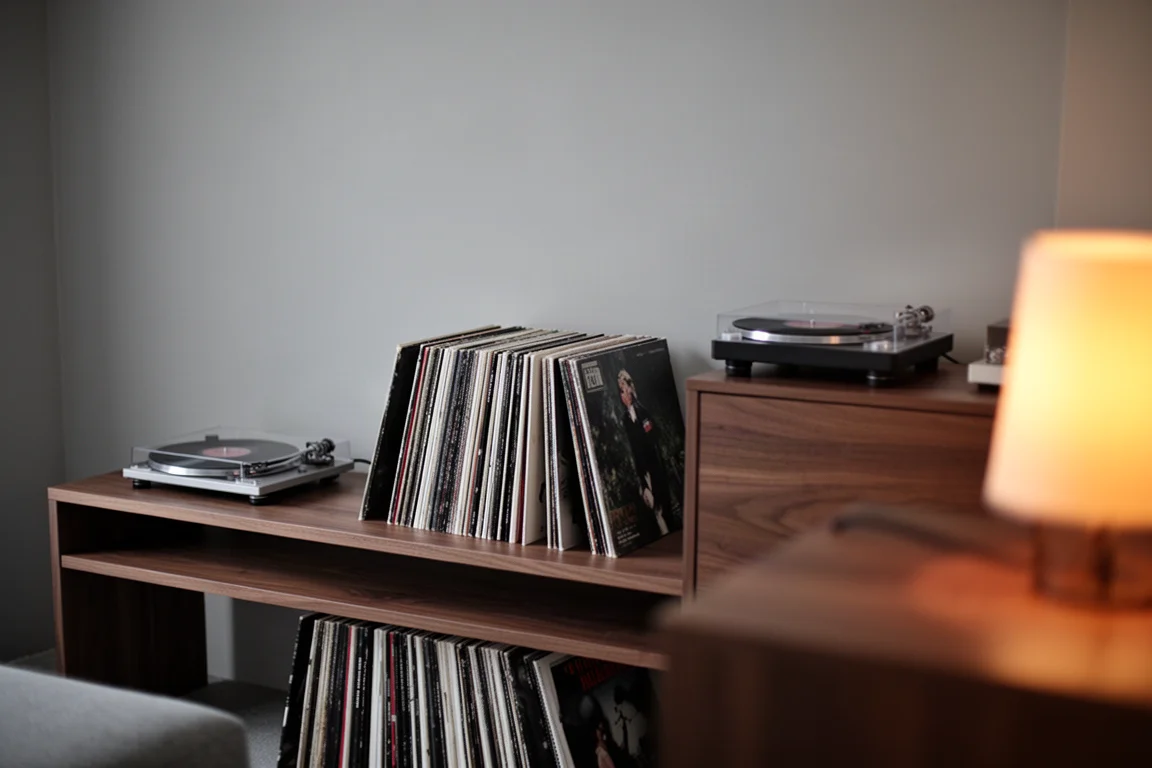
The deck is not aimed at listeners who already own a high-end analogue front end. It is an entry point with a sensible cartridge and a clean, unfussy design, and it is priced accordingly.
Main Strengths
The pre-installed Ortofon OM 5E is the strongest argument for the E1. It is a neutral, balanced cartridge that holds up well beyond beginner duty, and it compares favourably with the more expensive Ortofon 2M Red, which can sound forward in the upper midrange. Moving up to something like the 2M Blue is where a genuinely larger step in performance tends to appear. Listeners who prefer a fuller, richer bottom end may prefer a Nagaoka MP-110, but the OM 5E’s balance is a safe and satisfying starting point.
The optional built-in phono stage is the second surprise. Compared directly against the phono stage inside a Yamaha A-S801 integrated amplifier, the Pro-Ject’s internal stage sounded more dynamic and richer. That runs against the usual expectation that integrated turntable phono stages are a compromise. A switch on the back of the E1 Phono lets owners defeat the internal stage and route signal to an amplifier or external phono stage instead, so the flexibility is there either way.

Speed control is handled by a two-speed motor rather than a pulley swap. The belt runs underneath the platter on the sub-platter, and it is noticeably thicker and flatter than the round, thin belt found on a comparable U-Turn deck, closer in character to what Fluance supplies.
The platter is the most debated part of the design. It is made from plastic rather than metal or acrylic, and its glossy finish makes it look less expensive than the rest of the deck. The upside is resonance: tapping it produces less ring than the heavier platter on a Fluance deck, and low resonance is exactly why acrylic and glass platters are used in the first place. A quieter platter is a real functional benefit, even if the finish divides opinion.
The tonearm is aluminium, includes a cue lever, and terminates in a fixed headshell. It comes pre-balanced for the OM 5E, and cartridge changes require loosening a hex screw and adjusting the counterweight rather than swapping a headshell.
Things to Consider Before Buying
Weight is the first thing to plan around. The E1 comes in at roughly 3.5 kg, a little over seven pounds, and a similarly equipped U-Turn deck weighs about five pounds more. That difference shows up in practice: the light chassis can shift slightly when the dust cover is closed, so it belongs on a stable surface rather than the edge of a rack.
The fixed headshell is a second consideration. Turntables with removable headshells, including some Fluance and Monoprice models, make cartridge swaps considerably easier. On the E1, changing cartridges is a bench job rather than a quick one.
The platter finish is a matter of taste, but the upgrade path is less clear. There is no established route to fit a different platter, so buyers who like to tinker over time should weigh that against decks with documented acrylic platter upgrades.
Price positioning deserves a fair look. A similarly specified U-Turn with the same cartridge and a cue lever came in at about $284.65, roughly $65 less, though it requires a belt change on the pulley to switch speeds. Adding a phono preamp to that U-Turn brought it to around $354, about $46 less than the E1 Phono. Fluance’s RT82 uses an Ortofon OM10 at $300 without a phono preamp, and adds auto stop, a heavier plinth, and a removable headshell, in a distinctly different and thicker design.
Part of the price gap comes down to how the brands sell. Pro-Ject moves product through dealers and manufactures at scale in its own factories, while U-Turn and Fluance sell direct to customers. Neither approach is automatically better for the buyer, but it explains why the E1 sits slightly above its closest rivals rather than undercutting them.
Buying Advice
The configuration question answers itself quickly. If your amplifier or receiver already has a phono input, the base E1 at $350 covers everything you need. If it does not, the E1 Phono at $400 saves you the cost and clutter of an external phono stage, and its internal stage performs better than expected. The E1 Phono BT at $450 adds Bluetooth for listeners who want to send audio to a wireless speaker or headphones alongside a wired setup.
For anyone who switches between 33 and 45 often, the E1’s side-mounted speed switch is the most convenient option in this price bracket. For anyone outside the United States, dealer distribution makes it the more practical purchase. For anyone who plans to swap cartridges regularly or wants a heavier, more inert chassis, a U-Turn or Fluance deck may fit better.
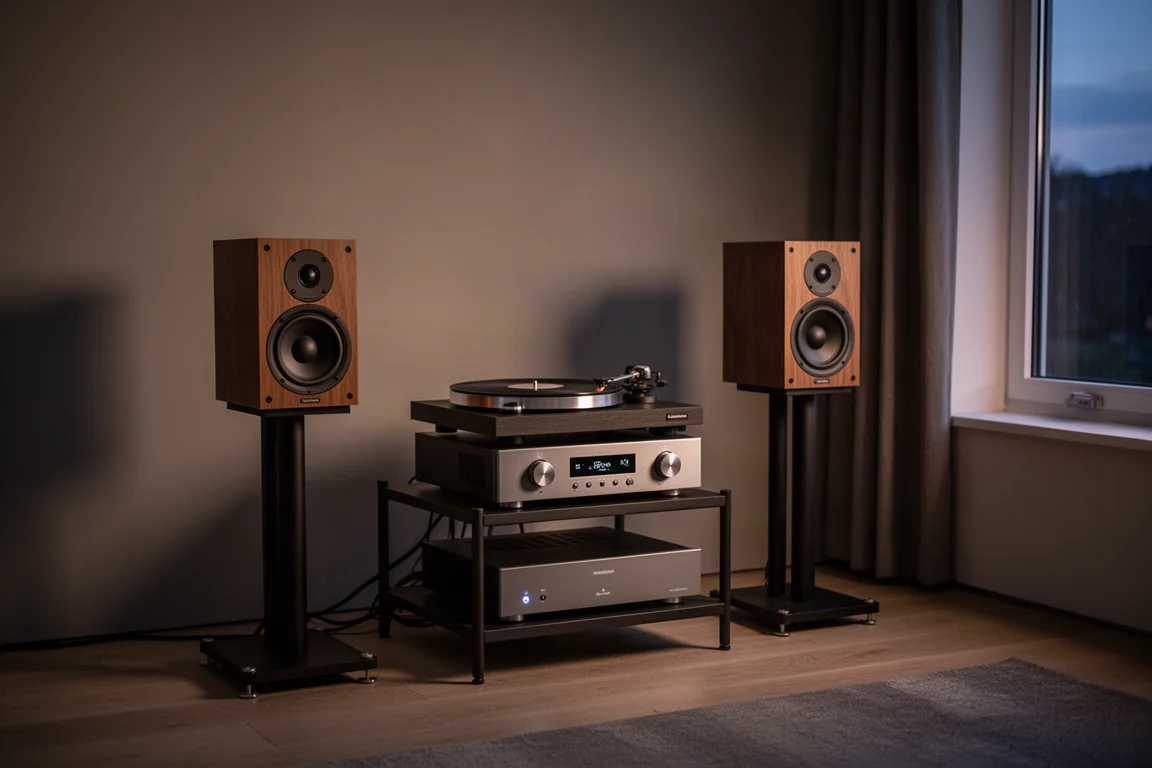
Set against that, the E1 does the fundamentals well: a neutral cartridge, a factory-aligned arm, a low-resonance platter, and a genuinely useful phono stage option. Buyers who want a deck that simply plays records without ceremony will find the trade-offs easy to live with.
Conclusion
The Pro-Ject E1 earns its place among the strongest entry-level turntables. It is quick to set up, easy to live with, and paired with a cartridge that punches above its class. The plastic platter and light chassis are the compromises to accept, and the price sits slightly above the closest alternatives.
For listeners who value convenience, international availability, and simple speed switching, the E1 is a confident recommendation. Choosing between it and a U-Turn or Fluance deck comes down to which of those trade-offs matters most, and at this price level that is a good problem to have.
Product link
View more details for Pro-Ject E1
This product is mentioned in the review. Check the specifications, options, and compatibility before buying.
View more details for Pro-Ject E1Further reading
Related Reviews
Turntables
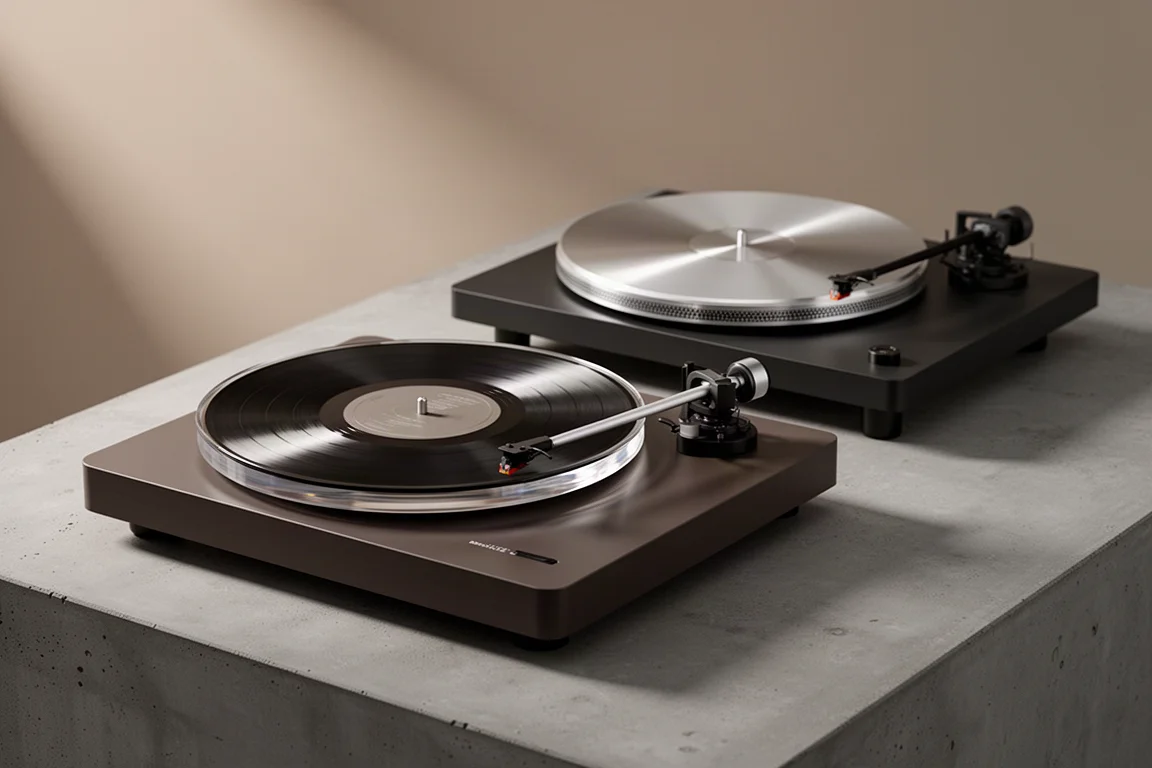
Best Turntables 2026: Seven Standout Picks From Entry Level to Premium
A practical roundup of seven turntables worth considering, from a US-made budget deck to small-batch premium models with a clear upgrade path.
Turntables
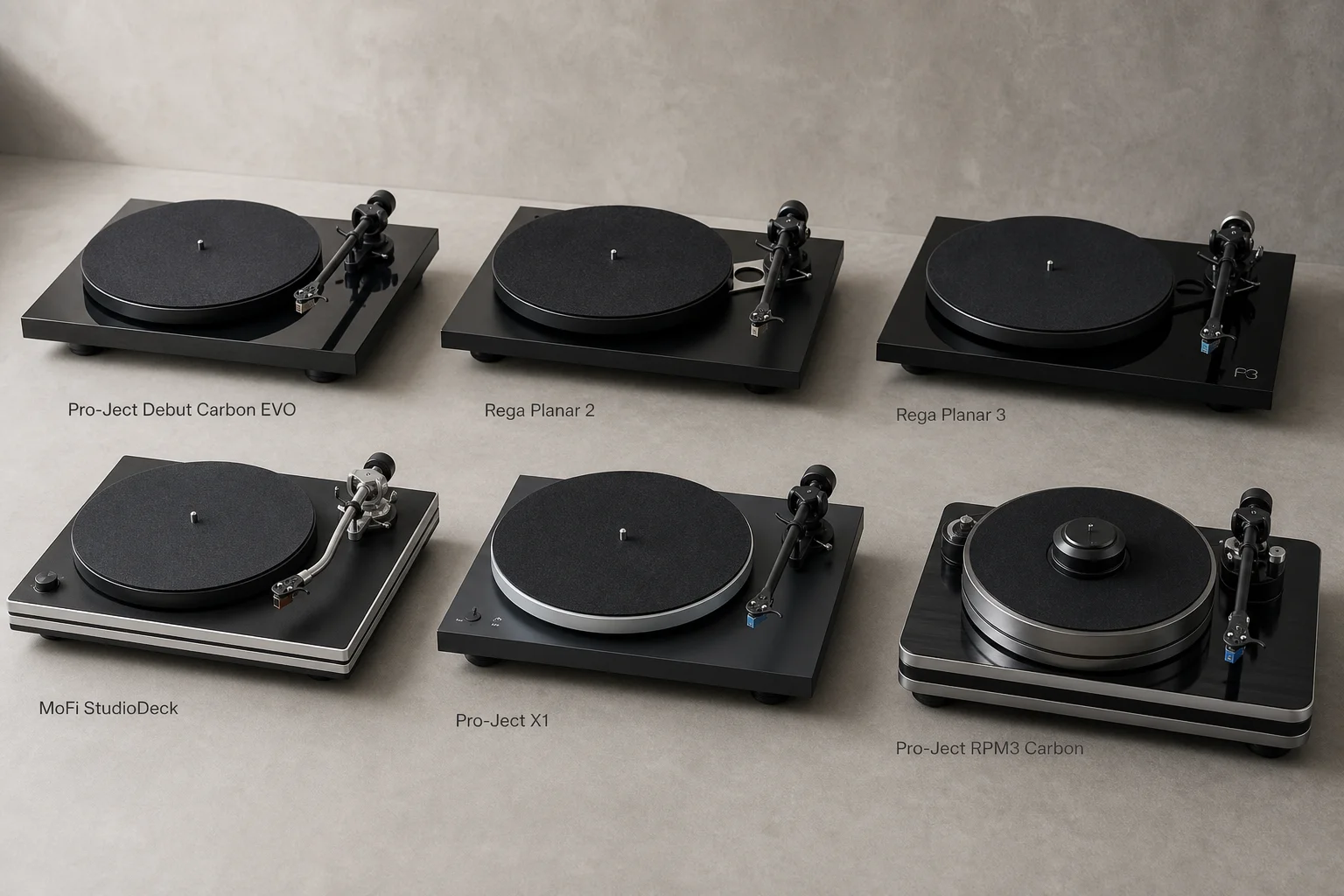
Best Turntables Under $1,000: Five Fully Manual Picks Worth Considering
Five fully manual turntables under $1,000, compared on build quality, cartridges, upgrade potential, and the character of sound each one brings to a system.
Turntables
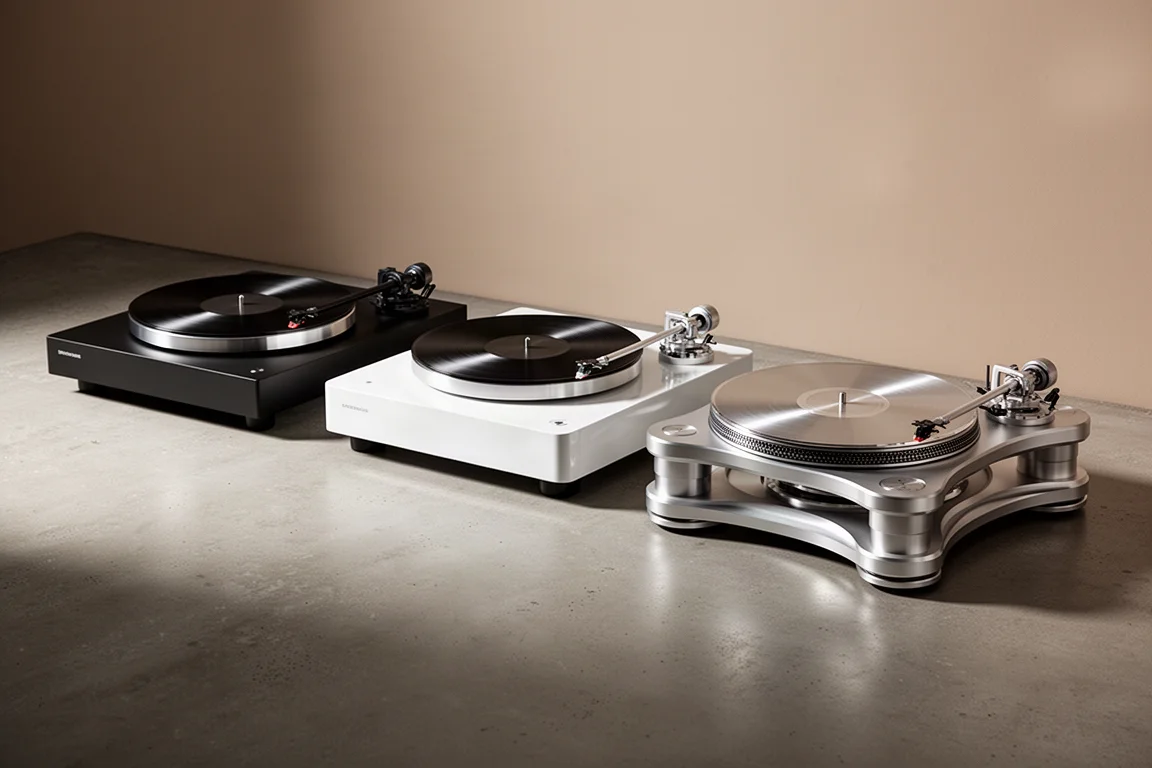
Best Turntables Under $2,000: Six Vinyl Decks Worth Building a System Around
Six turntables under $2,000, from a value-focused belt-drive deck to a fully balanced design, with the strengths and trade-offs that matter before you buy.