CD Players
Pro-Ject CD Box RS2 Tube vs Dunu Concept R: Two Top-Loading CD Players Compared
Two top-loading CD players from opposite ends of the market: a half-width tube-equipped mains player and a portable deck that costs far less.
Introduction
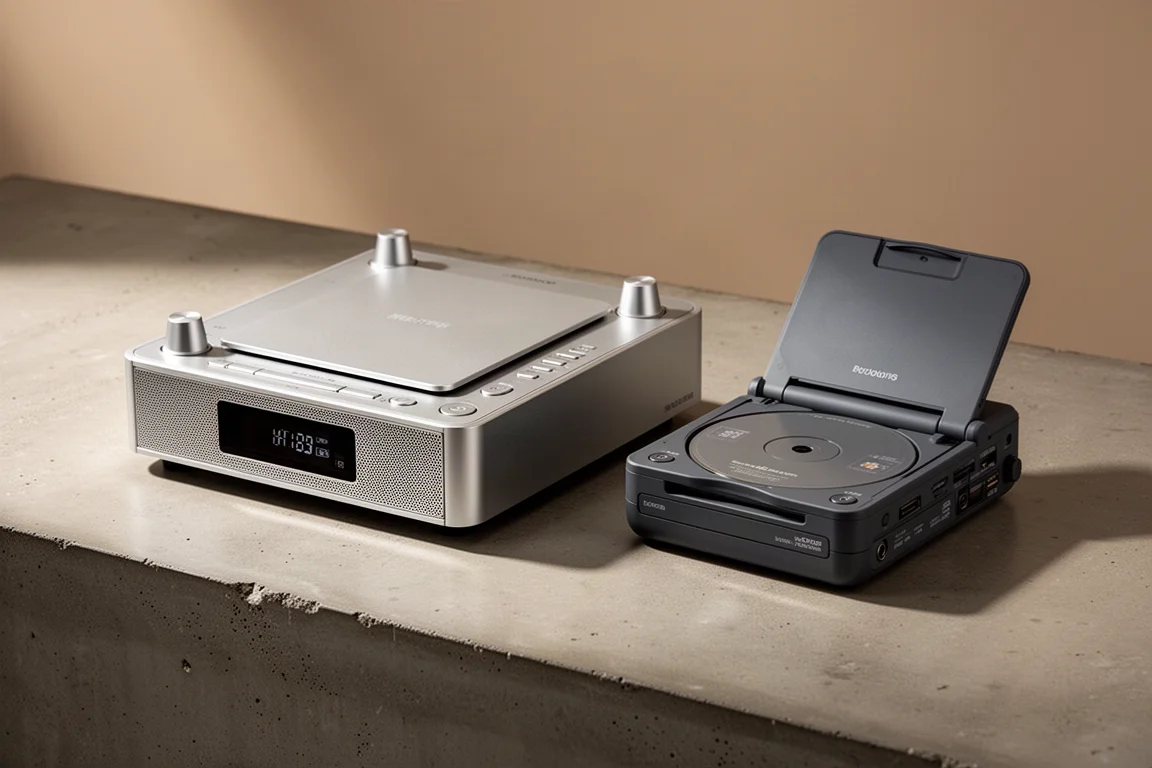
Compact discs keep attracting new hardware, and top-loading players are a big part of that. This pair arrives from opposite ends of the market: one is a half-width mains component built around a tube output stage, the other is a portable deck that costs a fraction as much. Both make you place a disc by hand, and both ask you to think about how you actually listen.
This comparison looks at what each player does well, where they differ, and which kind of listener each one suits.
How These Two CD Players Compare
Both players are top-loading designs, which means the disc goes in from above rather than sliding into a tray or a slot. That shared approach shapes everything else: the loading ritual, the footprint, and the way each machine feels in daily use.
They diverge on almost everything else. One is a mains-powered component intended for a full hi-fi system. The other is portable and can be used away from a system. One has a tube output stage, the other does not. One costs more than twice as much as the other.
The practical questions come down to three things: how each player loads and feels in the hand, how each one sounds, and what each one needs downstream in a system.
Pro-Ject CD Box RS2 Tube: A Top-Loading Tube Player
The CD Box RS2 Tube succeeds the transport-only CD Box RS2 T, and the name change is meaningful: this model has grown from a transport into a complete CD player. It is made in Europe and sells for around 2,000 euros, or roughly 2,500 US dollars, which is 500 euros less than the transport-only model it replaces.
Loading Ritual and Build Quality
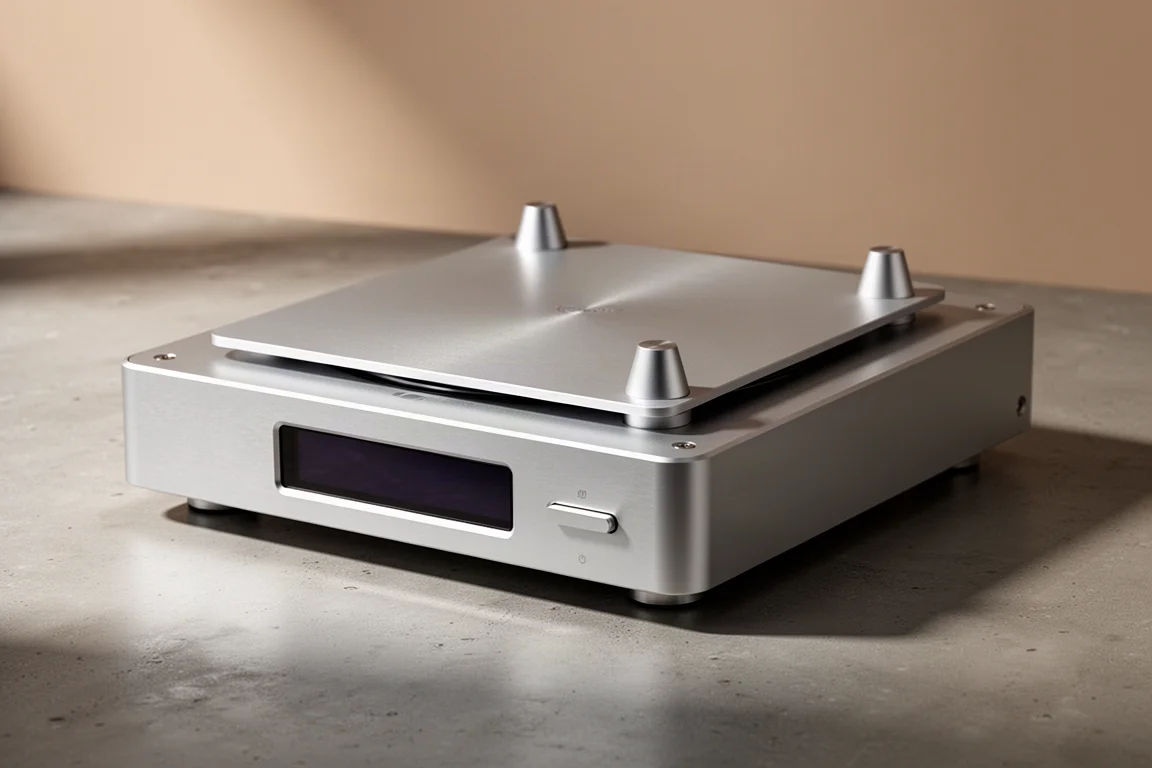
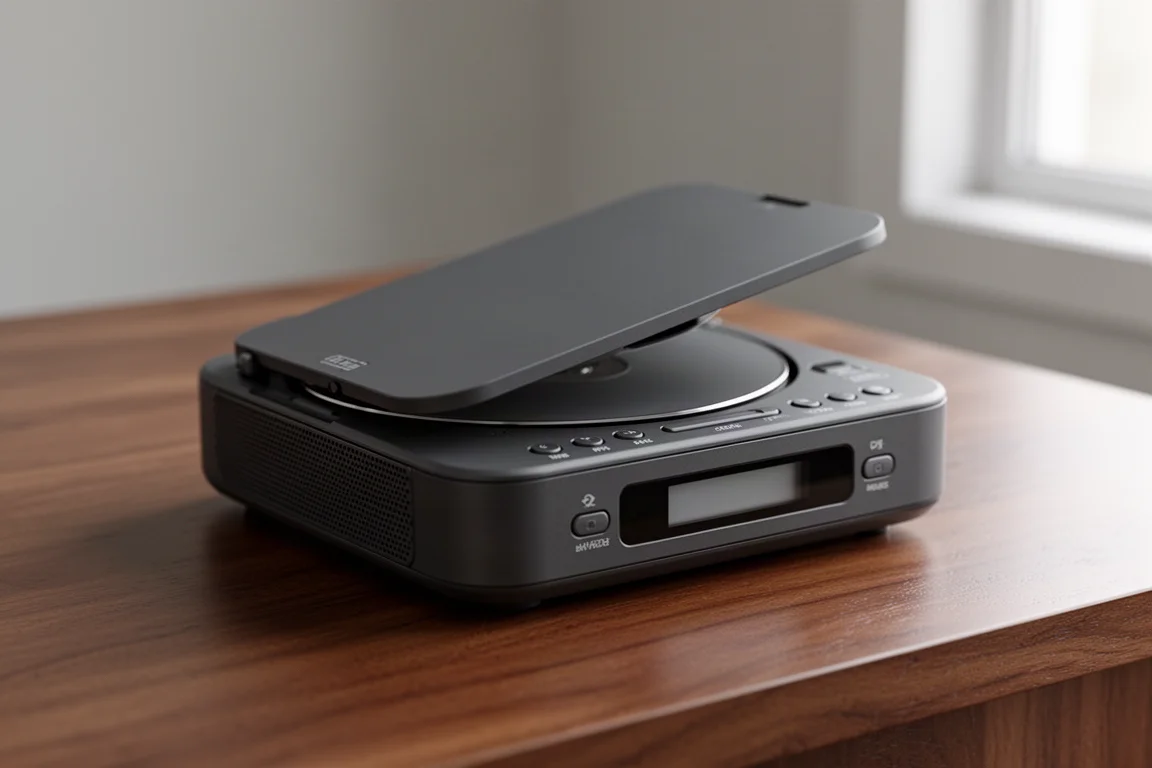
Loading works in four steps. Lift off the aluminium cover plate, lift off the magnetic clamp, drop in the disc, then replace the clamp and the cover plate. Pro-Ject calls this a gravity design, and the player will not spin the disc up until the cover plate is back in place. The cover plate lifts clean away rather than hinging back, so there is no flimsy support to snap and no split-second guesswork about when a slot mechanism will grab the disc.
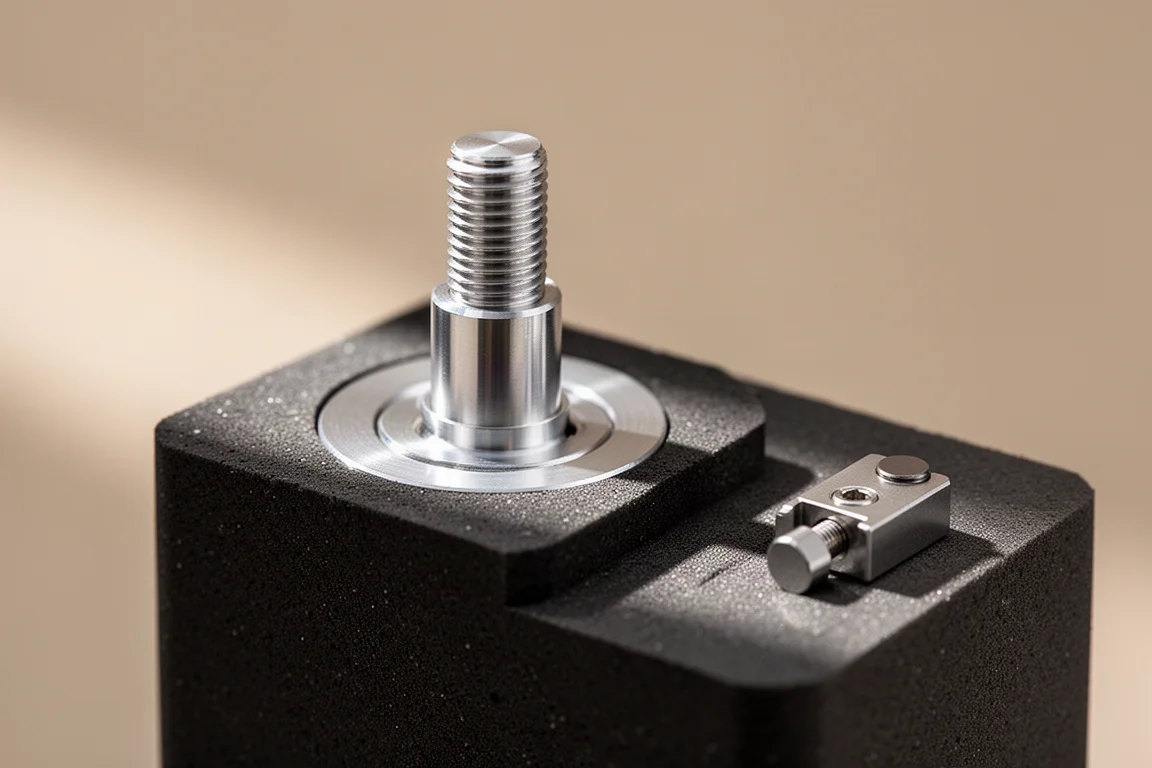
The reading mechanism sits inside a heavy, vibration-damped aluminium block, and the whole unit weighs just over three kilograms, a little more than the transport-only model. It feels densely packed rather than hollow. The chassis is slightly taller than before to accommodate what now lives inside.
The drive itself is a generational change rather than a cost-cutting one. Where the earlier model used a premium top-loading mechanism from Stream Unlimited, this one uses a newer red book mechanism paired with an updated servo, both developed by the same engineering team behind the earlier design.
Two finishes are available, silver and black, and the remote is silver either way. The black version shows dust and smudges more readily than the silver one.
Tube Output Stage and Sound
Inside, a Texas Instruments PCM 1796 differential DAC feeds a fully balanced dual E88CC tube output stage, and the tops of the tubes poke through the lid under small protective turrets. Pro-Ject describes the tube buffer as lending warmth, fluidity, and natural harmonic structure, and the audible result is a gentle, buttery bloom that softens the onset and decay of each note. It reads more as a lightness of touch than as deep richness.
That character shows up across different kinds of material. Sparse electronic work takes on an ethereal quality, gritty indie productions lose some of their bite in the upper mids, and heavily compressed records become far easier to sit through for long stretches. Set against a leaner-sounding digital source, the analogue outputs here come across as livelier, fuller, and more tonally colourful.
If the internal voicing is not to your taste, the digital outputs let you send the signal to an external DAC, in which case the tubes step out of the picture entirely.
Connectivity, Footprint, and Daily Use
The back panel is where the transport became a player. The older model’s AES/EBU output is gone, replaced by a pair of RCA analogue outputs and a pair of balanced XLR analogue outputs, which sit alongside Toslink and coaxial digital outputs. The balanced outputs make it easy to place the player several metres from an amplifier without worrying about long cable runs.
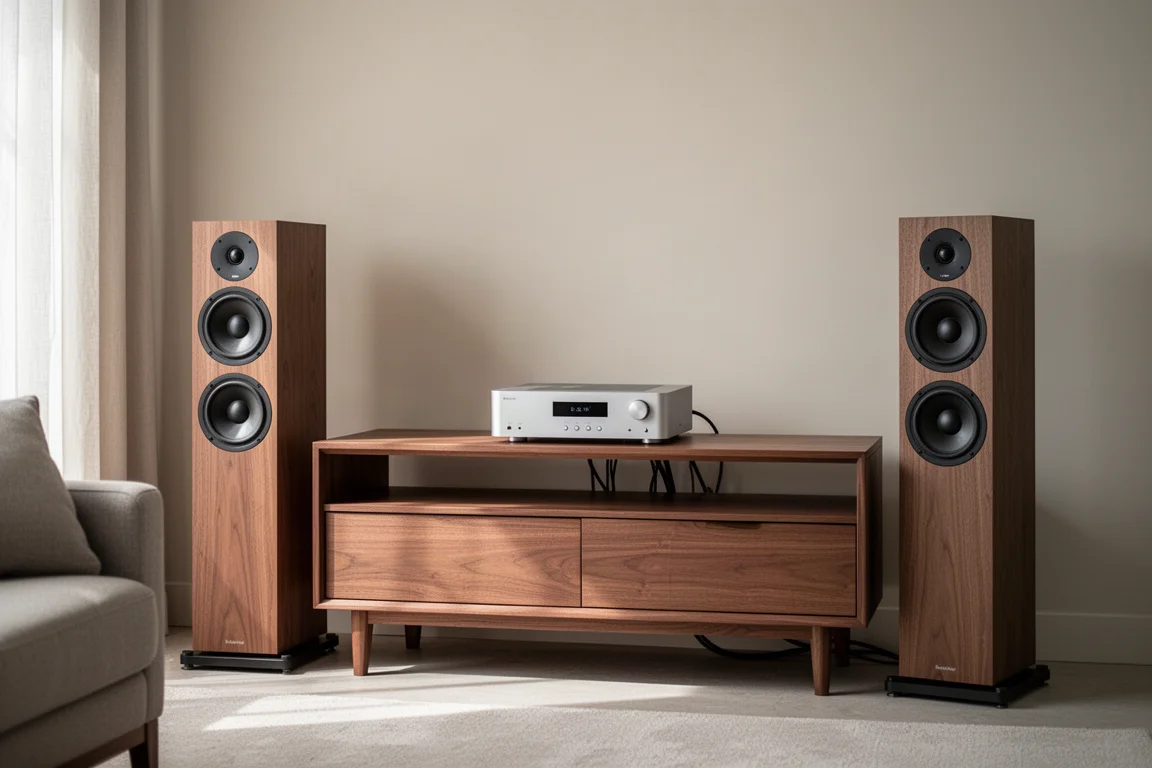
The output is a fixed line-level signal, so it needs a preamplifier or an integrated amplifier with its own volume control downstream. It cannot drive a power amplifier directly, because there is no internal volume control. There are also no DAC inputs and no headphone outputs.
Day to day, the top loader is pleasant to use. The front display reports playing time, track numbers, and CD text when a disc carries it. It is large by CD player standards, though small next to the touchscreens found on some modern players, and it can be read from the listening position. A repeat-playback lock-up that appeared during overnight burn-in was resolved through a firmware update.
The 20-volt outboard power supply carries over from the transport model, and the aluminium remote carries over too. The on-off toggle switch is satisfying to use, and the display can be dimmed or switched off.
Dunu Concept R: Portable Top-Loading Value
The Concept R is a top-loading, portable CD player at around 750 euros, and it is built to a standard rarely seen at that price. It also offers a 4.4 mm balanced line-level output, and it can be used away from a main system.
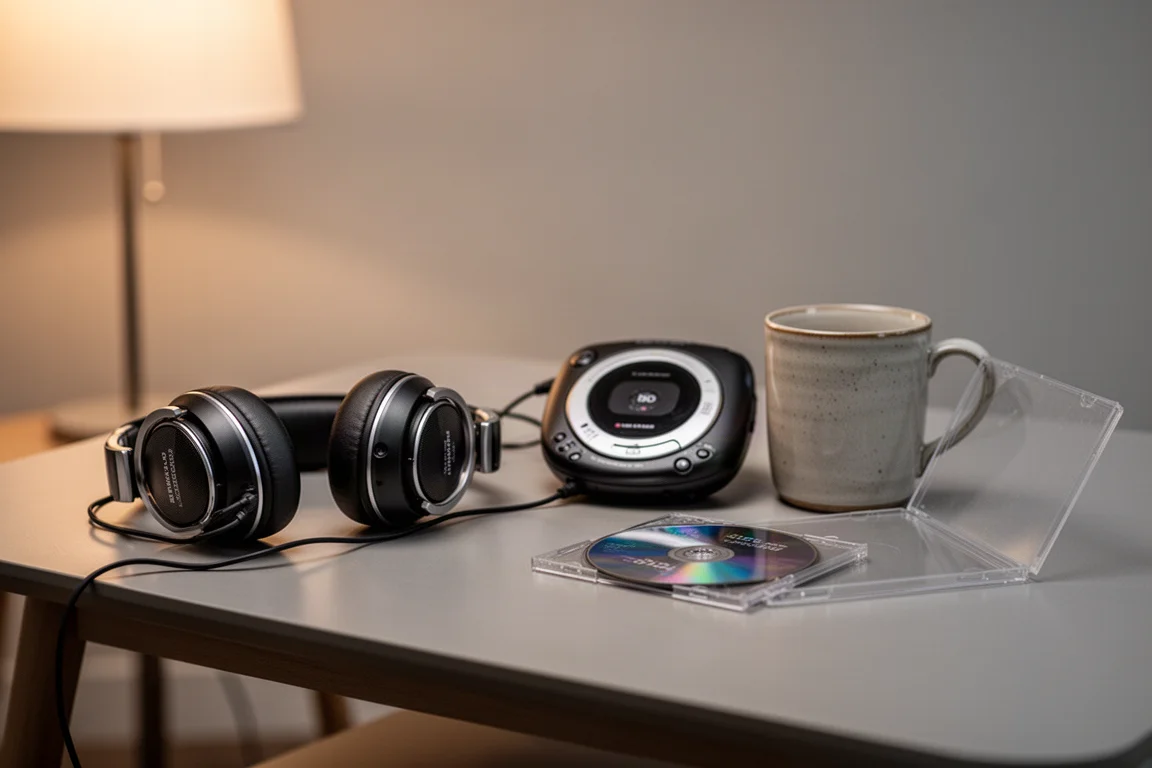
Its presentation is flatter and plainer than the Pro-Ject, more matter-of-fact, and plenty of listeners will prefer that. Loading takes a little more effort: there is a clip to unlock and a hinged cover that feels stiff, and the display is harder to read from across the room. Build quality between the two barely separates, which is a compliment to both, but the Pro-Ject costs more than twice as much.
Sound Quality Head to Head
The two players are clearly different even though they are closely matched in overall sound quality, which is more than you might expect from two digital sources. The tube stage in the Pro-Ject is the obvious explanation.
The Pro-Ject comes across as softer, more billowy, and more forgiving of rough source material. It stages a little wider and perhaps a little taller, with more emphasis on soundstage depth. The Dunu reads as flatter and plainer by comparison, more matter-of-fact.
Neither approach is better in absolute terms. If you want that tube character in a different system, matching it is not straightforward: the Dunu’s balanced line output would need a balanced tube buffer downstream to chase the same effect, and well-regarded options of that kind can cost more than the Pro-Ject itself.
Living With Each Player Day to Day
As a CD player inside a hi-fi system, the Pro-Ject is the easier machine to live with. There is no clip to unlock and no stiff hinged cover to wrestle with, and the top loader simply feels better in the hand over months of use. Its display is also easier to read from the listening position.
The trade-off is fixed: the Pro-Ject is not portable and has no internal battery, so it is a main-system component and nothing else. The Dunu covers couch and coffee-table listening in a way the Pro-Ject cannot.
Things to Consider Before Buying
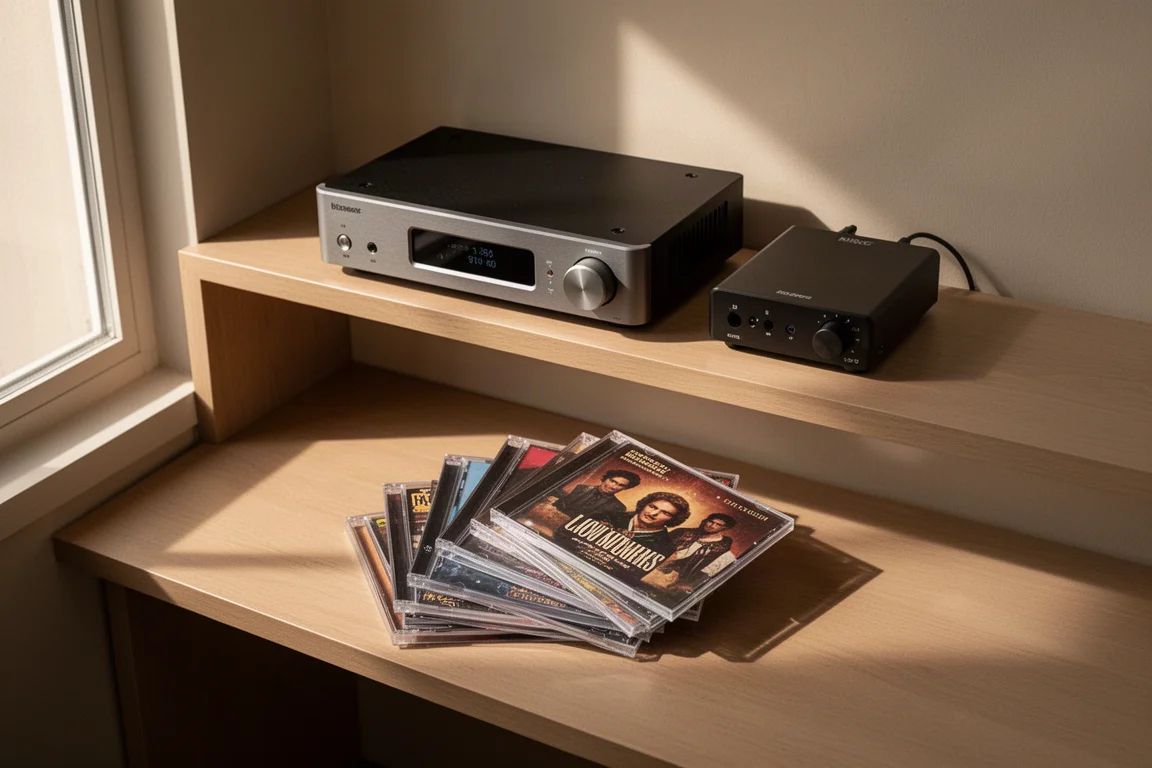
Footprint matters more than it first appears with top-loading designs, because both players need clear space above them. The Pro-Ject takes only half of a shelf’s width despite that top access, which leaves room for an equally compact DAC alongside it if you decide to use the digital outputs. That half-width approach is a large part of why this format stays practical in smaller rooms.
There is one niggle worth knowing about on the Pro-Ject: the graphic shown when no disc is loaded looks dated, and the display can visibly flicker while scrolling CD text. Both are cosmetic, but they are the kind of details you notice every day.
Buying Advice
Choose the Pro-Ject CD Box RS2 Tube if you want a mains-powered player for a main system and the tube character appeals to you. It adds a genuinely different presentation rather than a subtle refinement, and its loading ritual and half-width chassis make it easy to enjoy as a physical object. Budget for a preamplifier or an integrated amplifier with a volume control, since the output is fixed line level.
Choose the Dunu Concept R if portability or budget matters more, or if you prefer a plainer, more matter-of-fact presentation. It is a well-built machine at its price, and it keeps the same hands-on top-loading interaction in a package you can move around the house.
If you are choosing between them on sound alone, the honest answer is that they are closely matched in overall quality and differ mainly in character. The decision is usually made by the rest of your system and by how much you value the loading ritual itself.
Conclusion
Both players earn their place, but they earn it differently. The Pro-Ject CD Box RS2 Tube turns the top-loading ritual into a full-featured CD player with a tube output stage, balanced connections, and a half-width footprint that suits a proper system. The Dunu Concept R keeps the same hands-on loading in a portable, far more affordable package with a plainer, more matter-of-fact sound.
If you want a system player with a distinct character and you have the budget, the Pro-Ject is the more rewarding long-term companion. If you want portability, a lower price, or a more neutral presentation, the Dunu is the sensible pick.
Further reading
Related Reviews
CD Players
Advance Paris X-CD9 Review: A Tube CD Player That Also Works as a Transport
A close look at the Advance Paris X-CD9, a tube CD player that doubles as a CD transport, with listening notes, handling details, and a comparison against an external DAC.
CD Players
Best CD Players and DACs in 2026: Five Ways to Get Great CD Sound
Five CD player and converter options from roughly $80 to $600, plus what actually matters for sound quality and how buying discs supports the artists you love.
CD Players
Best CD Players Compared: Budget, Mid-Range, and High-End Picks
A practical comparison of four CD players across price points, from an entry-level deck to a reference-grade player that doubles as a DAC and headphone amplifier.