Turntables
Pro-Ject Automat A1 Review: A Fully Automatic Turntable Built for First-Time Vinyl Listeners
A practical look at the Pro-Ject Automat A1, the brand's first fully automatic turntable, covering the automatic system, build, sound, and who should buy it.
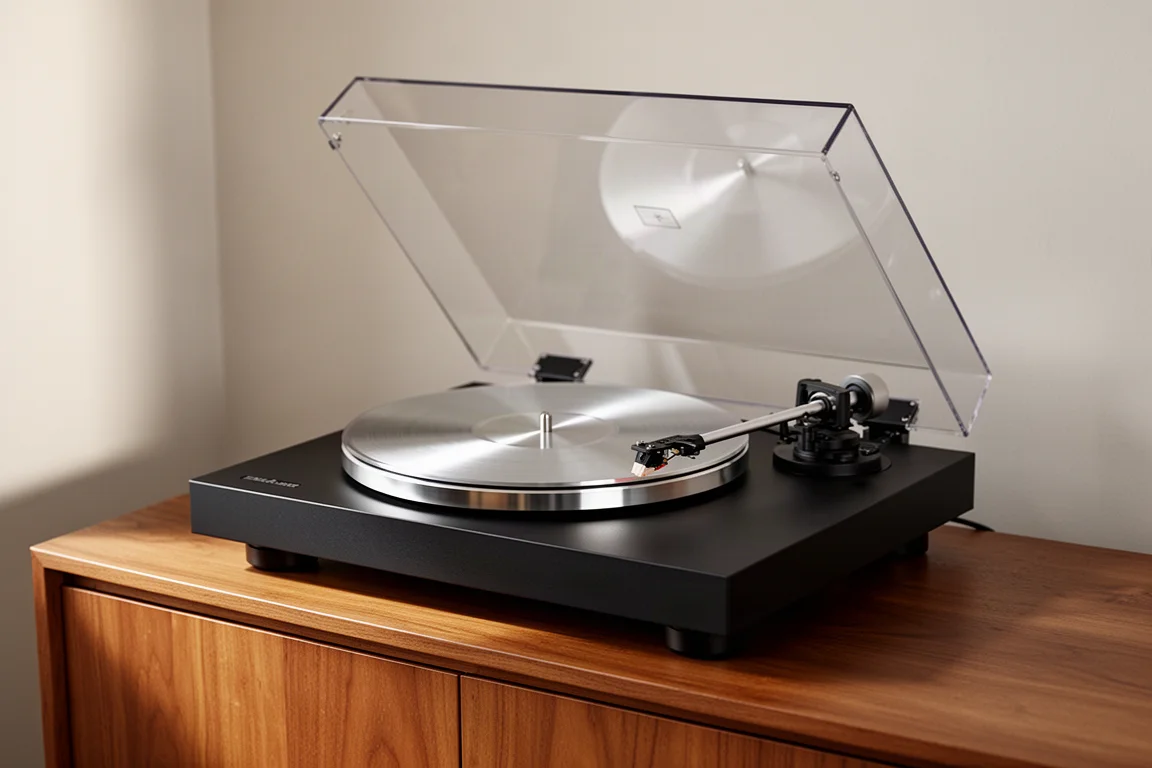
Introduction
Pro-Ject has been building turntables since 1991, when the company launched its first model, and the Debut series that arrived in the late 90s helped make the brand one of the best-selling audiophile turntable names in the world. Every Pro-Ject turntable is assembled in the company’s European factories, with raw materials sourced from local suppliers.
The Automat A1 is a genuine departure. It is Pro-Ject’s first fully automatic turntable, and the first to use an automatic system that has no detrimental effect on sound. For anyone who has wanted to try vinyl but has been nervous about damaging a fragile stylus or a favourite record, that combination is the entire point.
This overview covers how the automatic system works, what the build and technology bring to the table, how it sounds, and when a manual turntable remains the smarter buy.
Who the Pro-Ject Automat A1 Is For
A manual turntable asks a fair amount of its owner. You press power, raise the tonearm, move it over the lead-in groove, lower it gently with the cue lever, then reverse the whole routine when the side ends. It is not difficult once you know how, but it is a sequence many newcomers are wary of, especially around the stylus.
The Automat A1 removes that sequence. Press start and the turntable handles the rest: the tonearm moves across, lowers onto the record, and when the side finishes it lifts the arm, returns it to its rest and shuts everything down. If the hesitation has been about the stylus and the records rather than the sound, this is the model aimed squarely at you.
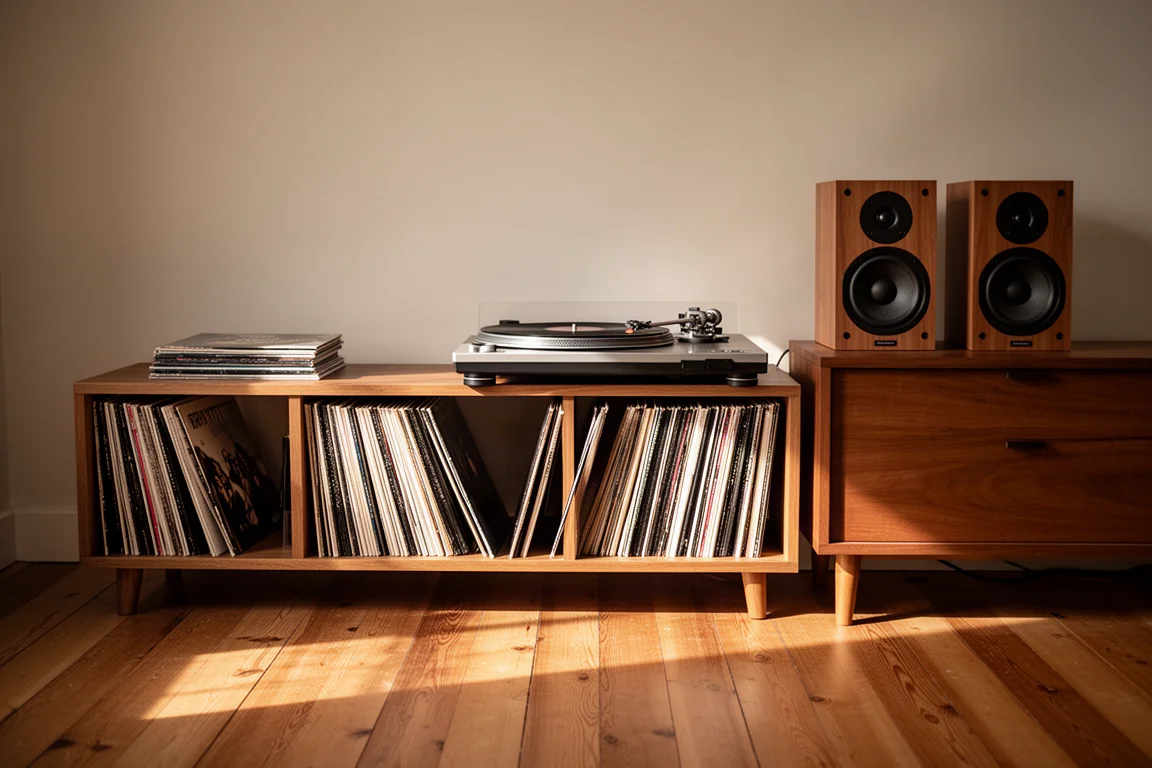
It also suits listeners who want a simple vinyl setup rather than a project. With a built-in phono preamp, the A1 can connect directly to powered speakers or to an amplifier that has no phono input, and Pro-Ject’s stated goal with this deck is to bring more people into vinyl listening.
Main Strengths
Fully Automatic Operation Without the Usual Compromises
Historically, automatic turntables carried a penalty. The mechanical parts needed to move the tonearm sat beneath the platter, adding friction and drag to the arm. Pro-Ject’s approach sidesteps that: once the arm has dropped onto the record, the automatic system disengages completely, so nothing interferes while the side plays. The mechanism only re-engages at the end of the record to return the arm safely.
There is still a cue lever for raising and lowering the tonearm by hand, plus a stop lever that brings the arm back and shuts the deck down. The A1 can even be used semi-automatically: move the tonearm over the platter and the platter starts spinning on its own, then lifts the arm and switches off at the end of the side.
Setup follows the same philosophy. Remove a protective piece or two, connect power and your amplifier or speakers, take the stylus guard off and press play. There is no tracking force, tonearm height or anti-skate adjustment to make.
Build Quality and Damping Technology
The A1 does not carry the watch-like fit and finish of Pro-Ject’s more expensive turntables, but it is extremely well put together for its cost and uses components that normally appear further up the range. Except for the Ortofon cartridge, which is made in Denmark, the turntable is fully assembled in Germany, with the vast majority of components either produced in Pro-Ject’s own factory or sourced from local companies.
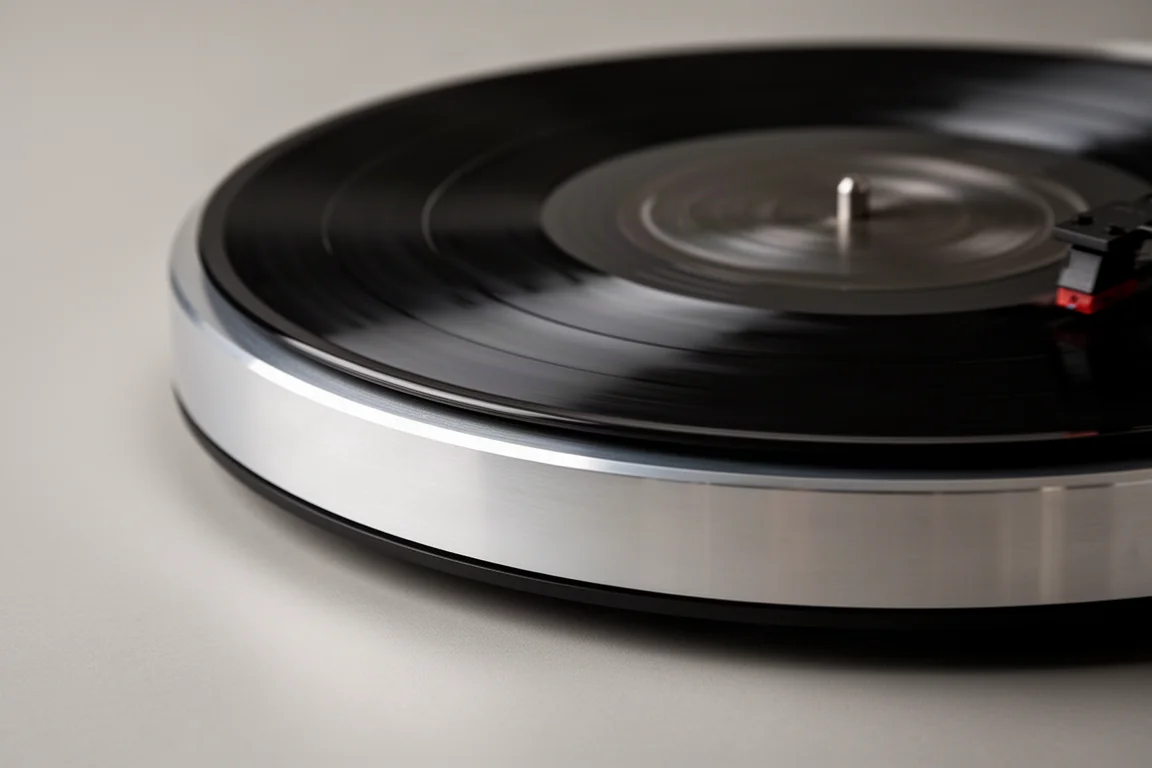
The plinth is built from MDF panels glued together to reduce resonance, finished in a basic but tidy black. The damping feet, developed for the Evo turntables in 2021, use a silicone layer to decouple the deck from the surface it sits on, which helps keep external vibrations out of the sound when the volume goes up. The platter is a German-made aluminium piece with a damping ring around its perimeter that reduces resonance and improves speed stability through a stronger flywheel effect. Each platter is individually balanced and tuned for very low wow and flutter, a step normally reserved for more expensive designs. The belt drive motor is isolated from the platter bearing to further reduce noise and resonance.
Sound Quality and the Ortofon OM10
The A1 is a real turntable rather than a novelty. Its most striking character trait is rhythm and pacing, which likely comes down to the way the platter is balanced and damped. Isolation from acoustic feedback is another highlight: even with large full-range speakers pushed hard, the deck showed no trace of audible feedback.
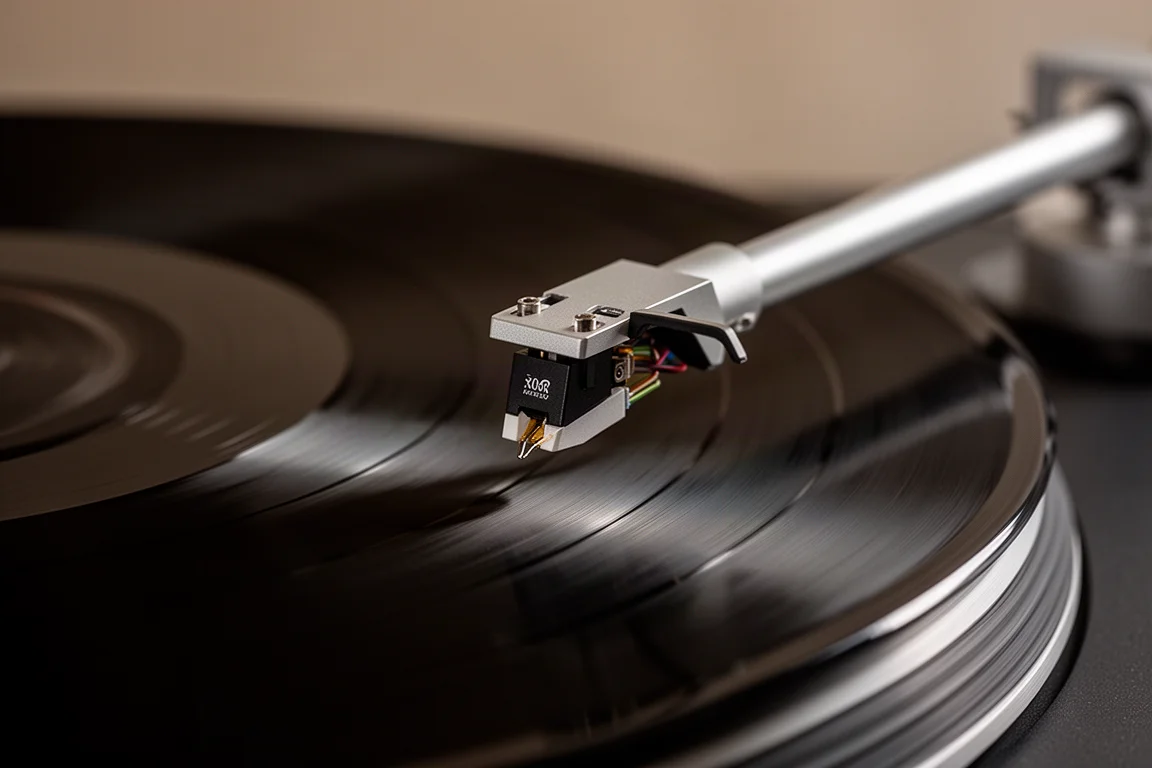
The Ortofon OM10 moving magnet cartridge is a strong value choice and tracks well, pulling small musical details out of the grooves. Complex vocal tracks reveal subtle harmonics rather than smearing them together. The OM series was designed for low-mass arms, which suits the 8.3 inch low-mass aluminium tonearm and its carbon fibre reinforced polymer headshell.
One notable detail sits around the back. Pro-Ject fits its Connect it E leads, purpose-built turntable cables that sell separately for around $60, which is unusual to find on a deck at this level.
Things to Consider Before Buying
Everything on the tonearm is fixed. Tracking force, tonearm height and anti-skate cannot be adjusted, and the arm is designed around the Ortofon OM series. That is the trade-off for plug-and-play setup. You can improve the sound later by fitting the stylus from the OM20 cartridge when the original wears out, but you cannot move to a different cartridge family.
It is also worth being honest about performance. Pro-Ject’s own manual turntables in roughly the same price category, such as the Debut Evo, are better turntables on every count. What they will never be is automatic, and the A1 is aimed squarely at listeners who value that ease above everything else. If you are not worried about your ability to set up and use a manual deck, a manual deck remains the better-sounding choice.
The built-in phono preamp is switched on and off with a switch located under the platter, so it is worth deciding early whether you will run the A1 into powered speakers or into an amplifier with its own phono stage.
Buying Advice
The Automat A1 is easy to recommend for one specific listener: someone who wants to hear what draws people to vinyl, who plans to start growing a record collection, and who does not want the setup or handling of a manual turntable to stand in the way. Paired with a good set of powered speakers, it makes a compact and genuinely simple vinyl system with no adjustments to get wrong.
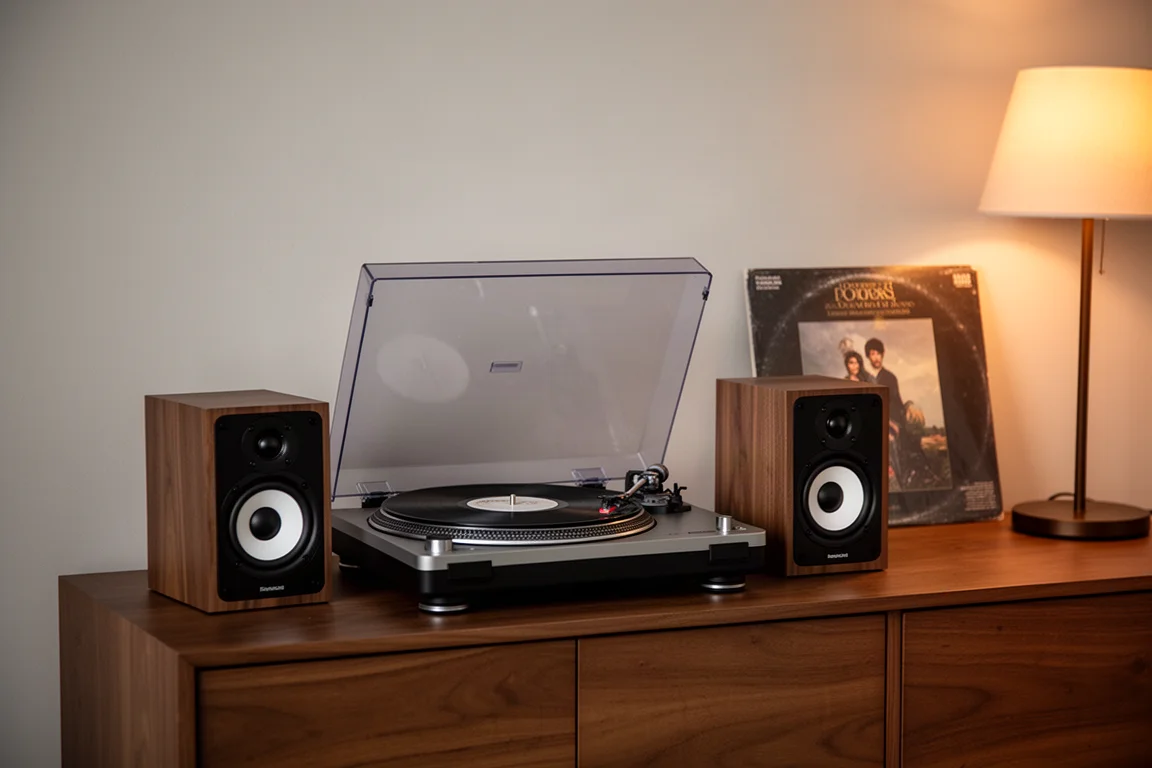
If you are already comfortable with a cue lever and a tracking force gauge, put your money into a manual turntable instead. The A1 does nothing wrong and is a pleasure to use, but its value is concentrated in the automation, and that is the feature you would be paying for.
Conclusion
Pro-Ject set out to bring more people into vinyl, and the Automat A1 achieves that. It removes the fear around the stylus and the records, it is assembled in Germany from mostly local components, and it borrows genuine trickle-down technology in the platter, the damping feet and the motor isolation. It is not the best-sounding turntable at its price, and it deliberately limits cartridge upgrades. For the right buyer, those compromises purchase something more valuable: a turntable that makes playing a record as simple as pressing start.
Product link
View more details for Pro-Ject Automat A1
This product is mentioned in the review. Check the specifications, options, and compatibility before buying.
View more details for Pro-Ject Automat A1Further reading
Related Reviews
Turntables
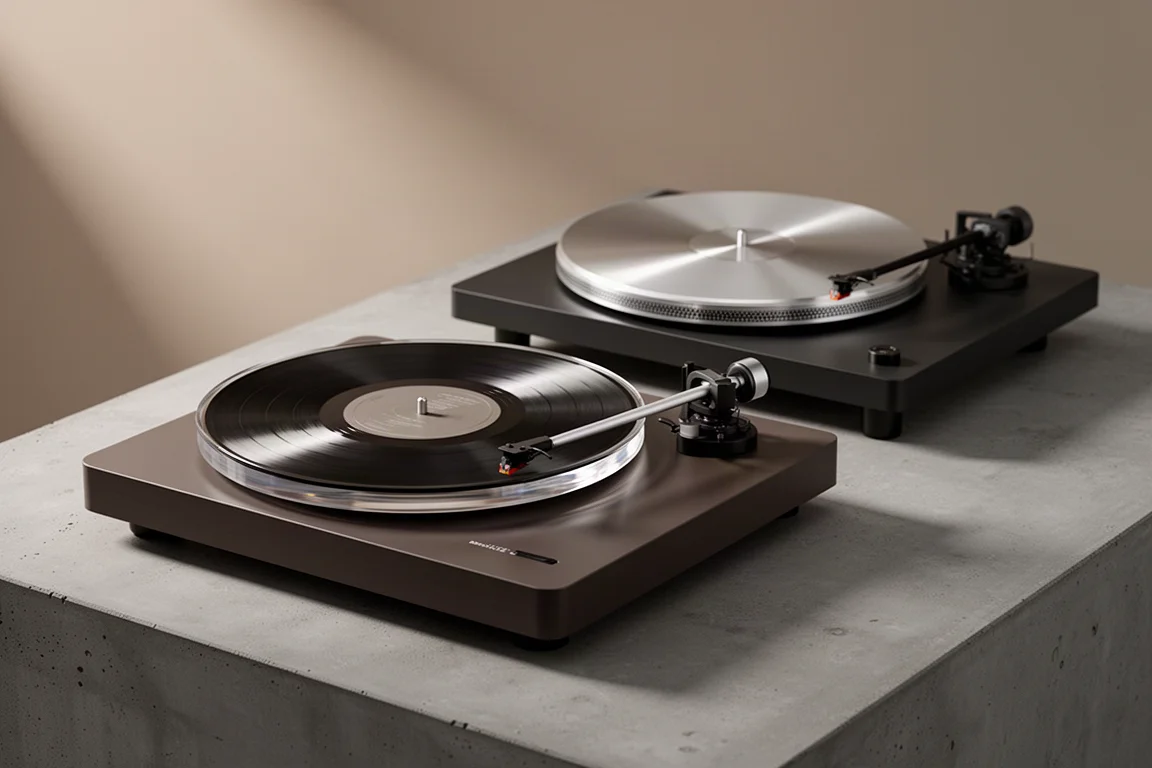
Best Turntables 2026: Seven Standout Picks From Entry Level to Premium
A practical roundup of seven turntables worth considering, from a US-made budget deck to small-batch premium models with a clear upgrade path.
Turntables
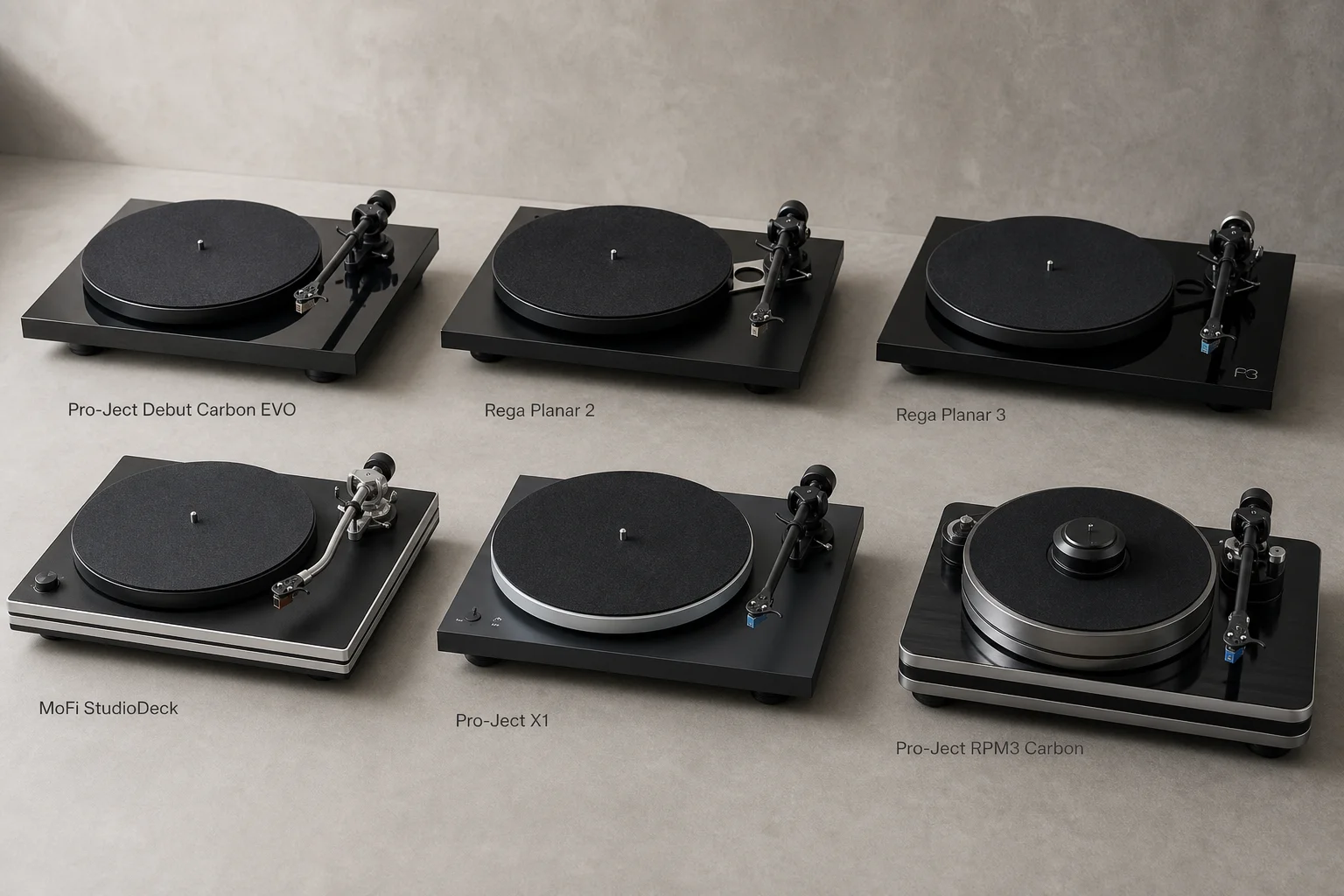
Best Turntables Under $1,000: Five Fully Manual Picks Worth Considering
Five fully manual turntables under $1,000, compared on build quality, cartridges, upgrade potential, and the character of sound each one brings to a system.
Turntables
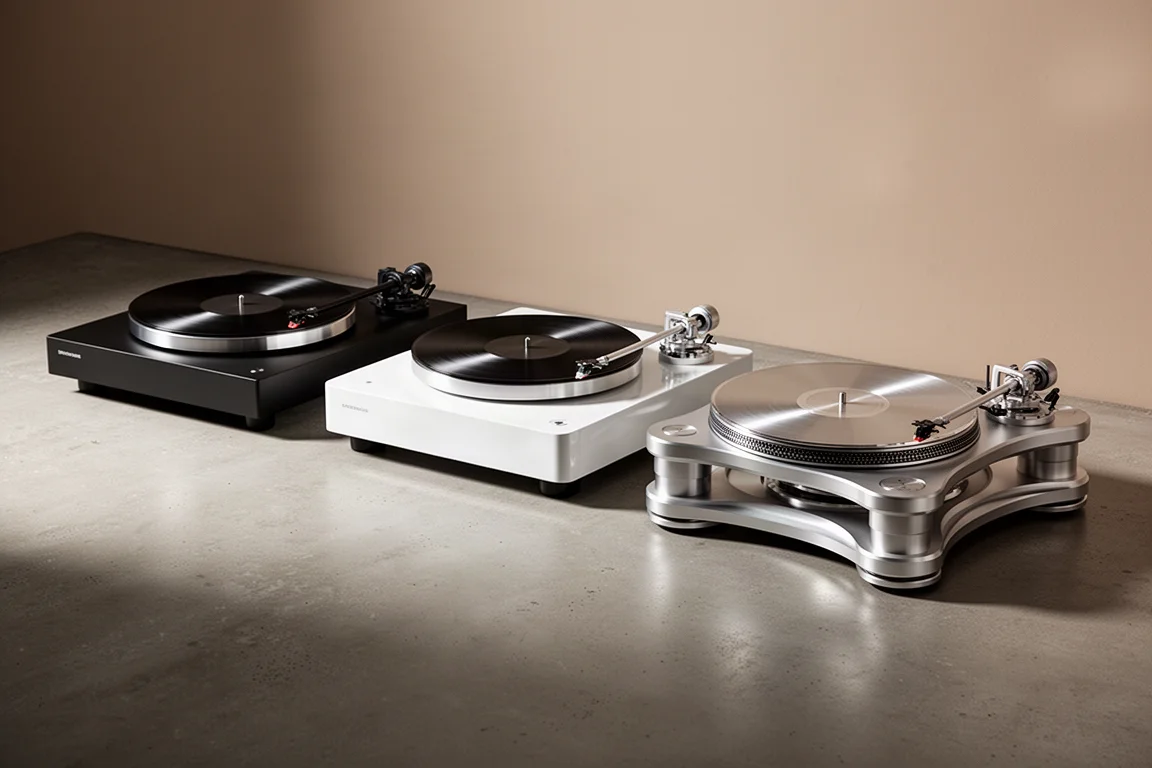
Best Turntables Under $2,000: Six Vinyl Decks Worth Building a System Around
Six turntables under $2,000, from a value-focused belt-drive deck to a fully balanced design, with the strengths and trade-offs that matter before you buy.