Turntables
Pro-Ject A1 Review: Fully Automatic Vinyl With a Built-In Phono Stage
The Pro-Ject A1 brings push-button automatic operation and a switchable built-in phono stage to a belt-drive turntable, with a few upgrade limitations worth knowing first.
Introduction
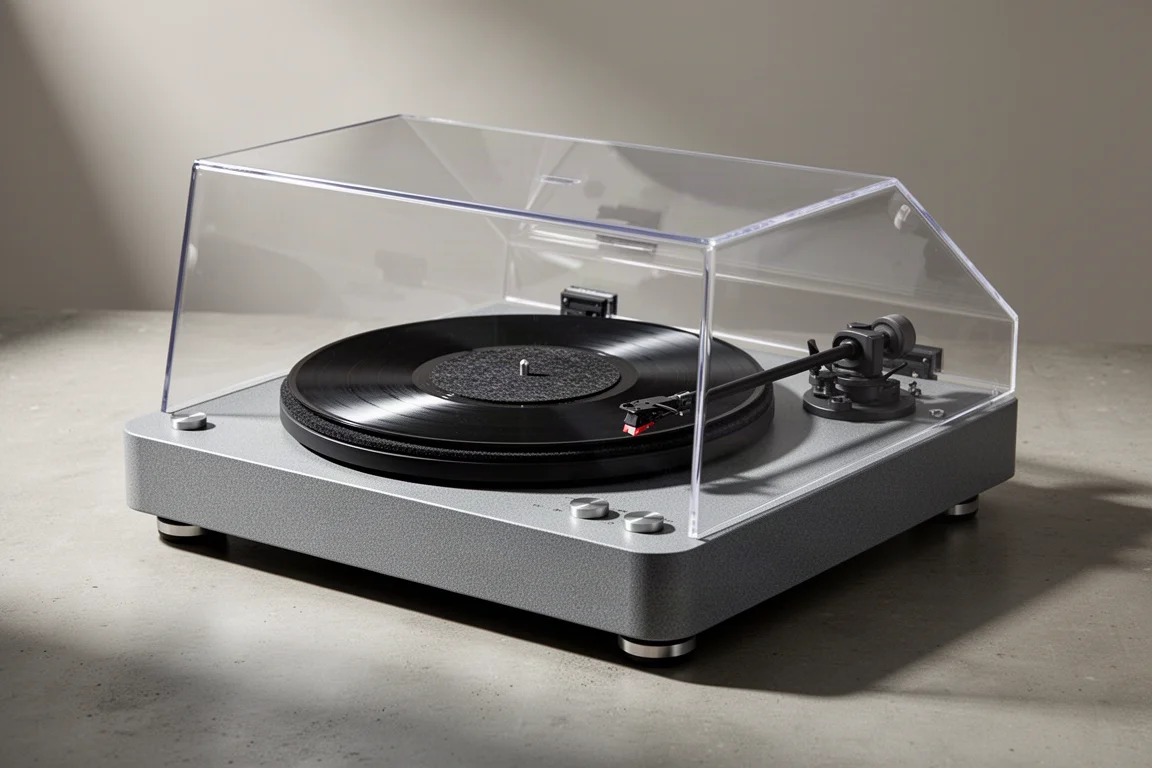
Fully automatic turntables were a standard part of home audio in the 1970s and 1980s. You pressed a button, the tonearm lifted, swung across, and lowered onto the record, and when the side finished the arm returned to its rest by itself. That convenience faded out of affordable hi-fi as manual decks became the norm. The Pro-Ject A1 brings it back: a belt-driven turntable with automatic start and stop, a built-in phono stage you can switch off, and an Ortofon OM10 cartridge fitted at the factory. It sells for around $400.
Setup is genuinely short. The platter drops into place, the belt loops over the pulley, the lid hinges slot in, and you can be playing records in less time than it took to unpack the box. The deck is handmade in Germany, and the automation is handled entirely by the turntable itself, so there is nothing extra to configure.
Who the Pro-Ject A1 Is For
The A1 is for listeners who want vinyl to be effortless. Press one button and the record starts. When the side ends, the arm lifts and returns on its own. If you have less steady hands, or you like to fall asleep with a record playing and would rather it stopped itself, that behaviour is the whole point of this deck.
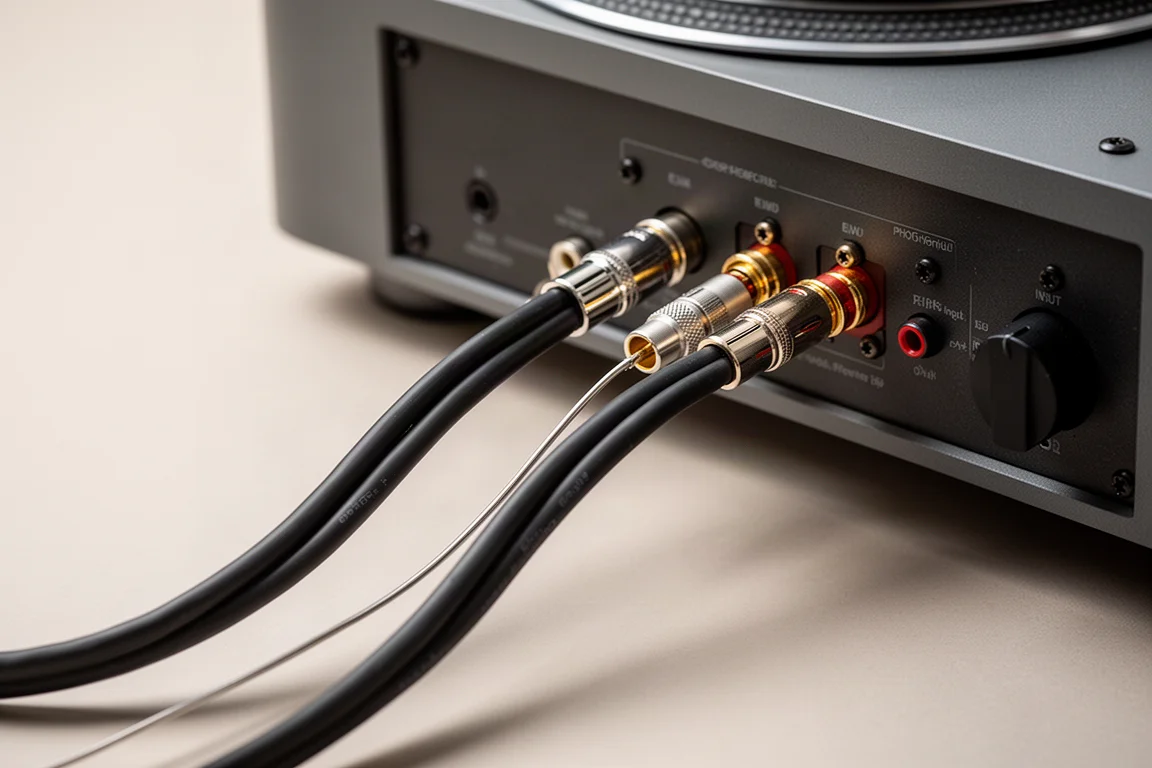
It also suits anyone who wants a complete signal chain in a single box. The internal phono stage means the A1 can run straight into a line-level input on an integrated amplifier or a pair of powered speakers, with no separate phono preamp required. If you already own a good external phono stage, a small switch on the deck turns the built-in one off completely, and the A1 behaves like a conventional turntable.
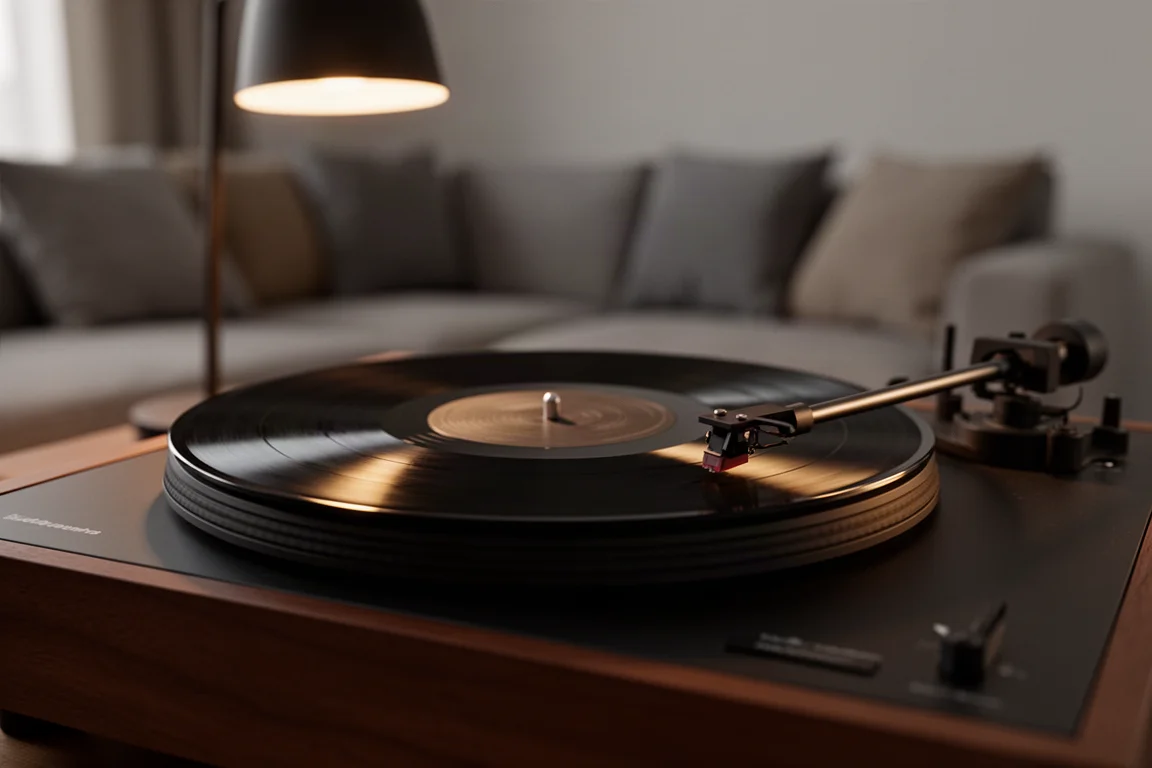
Where the A1 makes less sense is for anyone who enjoys tinkering. It is a closed, set-and-forget design rather than a platform for upgrades. If you like swapping cartridges, experimenting with cables, or fine-tuning a setup over months, the fixed counterweight and permanently attached output cable will frustrate you long before the automation wins you over.
Main Strengths
Fully Automatic Start and Stop
Automation is the headline here, and it works exactly as you would hope. Hit start and the arm lifts off its rest, moves over the record, and lowers into the lead-in groove. At the end of the side it lifts, returns to the rest, and settles down. A stop button halts playback at any point during the record. There is also a cueing lever, so you can lift the arm, move to another track, and lower it again while the platter keeps spinning.
Simple Setup and a Defeatable Phono Stage
Out of the box, the A1 is one of the quickest turntables to get running. Fit the lid hinges, drop the platter into place, loop the belt over the pulley, remove the twist ties, and you are done. Speed selection is a switch on the deck for 33 and 45 rpm, so moving between a 12-inch album and a 7-inch single takes a second.
The built-in phono stage is switched on and off with a small toggle on the deck. Leaving it on keeps the setup minimal; switching it off opens the door to a better external stage later.
Sound Quality and the Built-In Phono Stage
Paired with a quality external phono stage, the A1 sounds excellent. It has the open, engaging character that makes vinyl worth the effort, and it is clearly capable of more than its price suggests when the signal path is good.
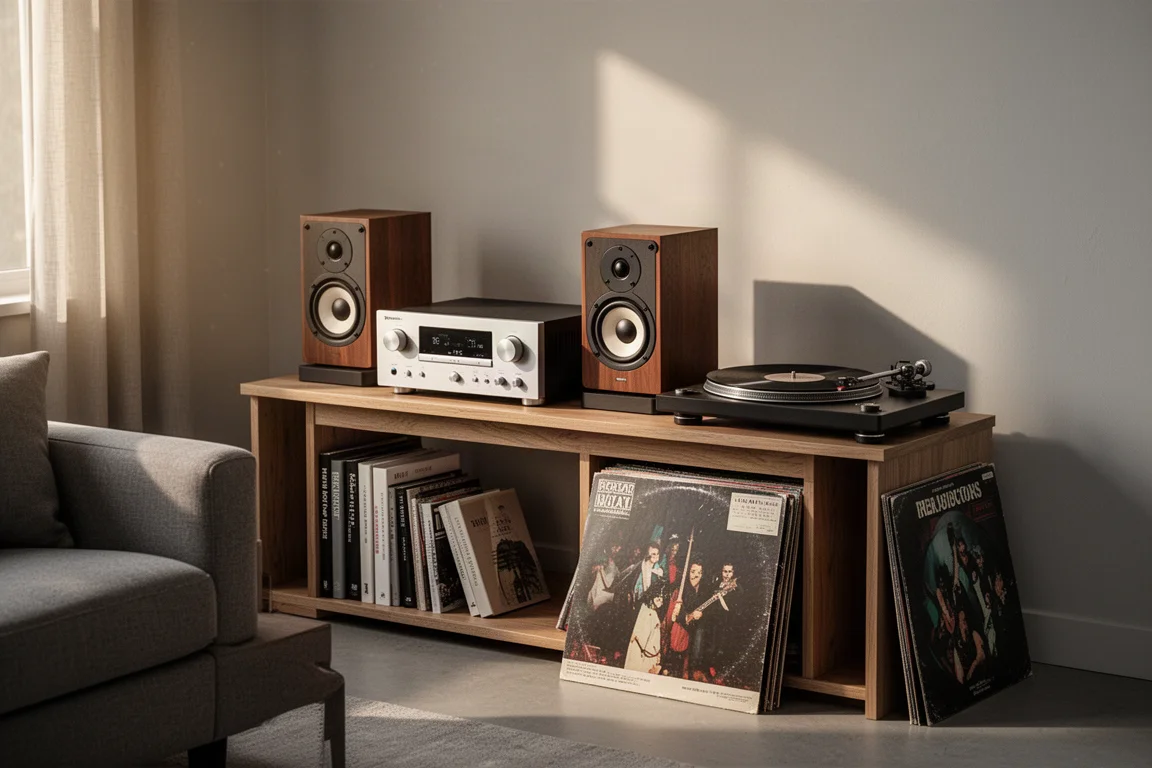
The built-in phono stage is a different story, though not a bad one. It is perfectly usable and delivers detail, but it sounds noticeably less dynamic and less punchy than a good outboard stage, and the presentation leans sterile rather than lively. Even an inexpensive external phono preamp adds dynamics and a sense of drive that the internal stage cannot quite match. If you want the most from this deck, plan on an external stage at some point.
The supplied Ortofon OM10 is a capable cartridge, roughly a $70 to $80 component in its own right, and it tracks well. It is also the cartridge the A1 is designed around, which matters for the reasons covered below.
Build Quality and Design Notes
The plinth wears a textured, slightly rough vinyl finish, and it is executed well. Seams are hard to spot, and the deck feels reasonably heavy in the hand. The platter sits on a mat with a retaining ring, and there is a pulley visible inside the plinth, confirming the belt-drive layout.
The four feet are fixed rather than adjustable, which is worth noting if your shelf is not perfectly level. The tonearm itself is fine, while the headshell and switches are plastic. That plastic does not affect sound quality at all, but it does make parts of the deck feel less refined than the plinth, and it is the main place where the A1’s price shows.
Things to Consider Before Buying
The counterweight on the tonearm appears to be fixed, with no obvious way to adjust it. That matters if you want to change cartridges: a replacement will need tracking force characteristics close to the OM10’s, and there is no published list of compatible options.
The output cable is permanently wired into the deck. It is a good cable, thick and well made, with a ground wire included, but it cannot be swapped for a different one.
The feet are not adjustable, so a shelf that dips or slopes will need shimming. There is also no real upgrade path here: no removable cable, no adjustable counterweight, and no adjustable feet. The A1 is best treated as a finished product rather than a project, and buyers who want to modify their setup over time should look at a manual deck with an adjustable arm instead.
Where the Pro-Ject A1 Fits in the Market
At around $400, the A1 sits above the $300 Fluance RT82, which includes an Ortofon OM10 and offers some semi-automatic functions but will not start a record for you or return the arm at the end of a side. Many listeners consider the Fluance the better-built deck for the money. Pro-Ject’s own T1 Phono SB, at $450, also includes an integrated phono stage and feels more premium in places, though it shows more visible seams than the A1.
What none of those alternatives offer is full automation at this price. That is the A1’s real argument: for listeners who want the arm to do the work, it is close to the only option in this bracket, and the extra cost over a manual deck buys exactly that convenience.
Buying Advice
If automatic operation is the feature you care about, the A1 is an easy recommendation. It sets up fast, sounds strong with a decent phono stage, and the automation works reliably. Pair it with a modest external phono preamp when your budget allows and it will reward the investment.
If you plan to change cartridges, upgrade cables, or tweak the setup over time, a manual turntable with an adjustable counterweight is the better fit, and the A1’s fixed arm hardware will hold you back. Buyers who simply want to press a button and listen, however, will find very little to complain about here.
Conclusion
The Pro-Ject A1 answers a question the budget vinyl market had stopped asking: can a turntable be fully automatic and still sound good? It can. Automatic start and stop, a defeatable built-in phono stage, an Ortofon OM10, and a quick setup make it one of the friendliest decks at its price. The fixed counterweight, captive cable, and plastic fittings are real limitations for anyone who likes to tinker, but for the listener who wants convenience first, the A1 is a confident choice.
Product link
View more details for Pro-Ject A1
This product is mentioned in the review. Check the specifications, options, and compatibility before buying.
View more details for Pro-Ject A1Further reading
Related Reviews
Turntables
Best Turntables 2026: Seven Standout Picks From Entry Level to Premium
A practical roundup of seven turntables worth considering, from a US-made budget deck to small-batch premium models with a clear upgrade path.
Turntables
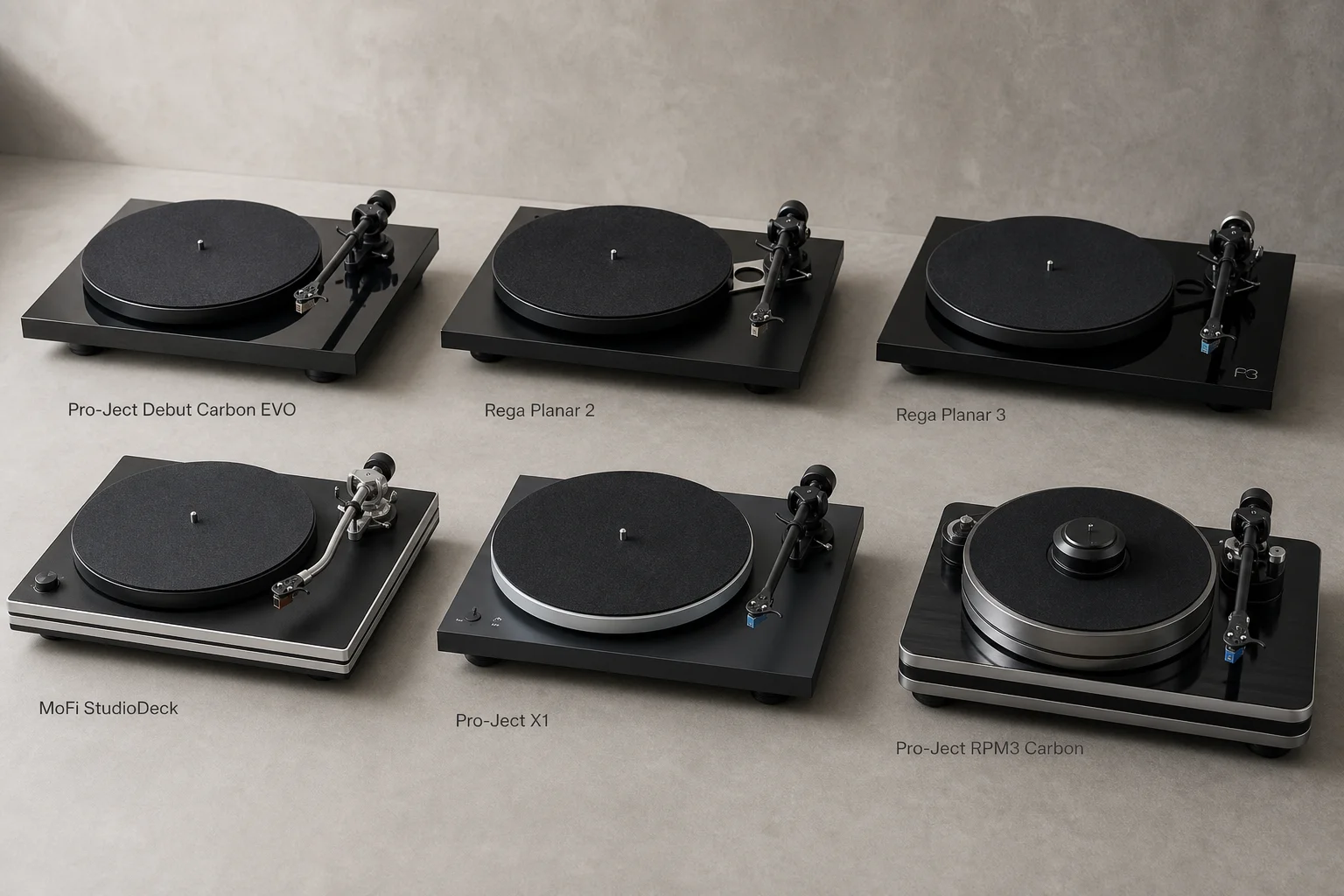
Best Turntables Under $1,000: Five Fully Manual Picks Worth Considering
Five fully manual turntables under $1,000, compared on build quality, cartridges, upgrade potential, and the character of sound each one brings to a system.
Turntables
Best Turntables Under $2,000: Six Vinyl Decks Worth Building a System Around
Six turntables under $2,000, from a value-focused belt-drive deck to a fully balanced design, with the strengths and trade-offs that matter before you buy.