Hi-Fi Amplifiers
Primare I35 Integrated Amplifier Review: Neutral, Transparent, and Modular
A slim Swedish integrated amplifier with serious current delivery, a genuinely modular upgrade path, and a purity-first sound that rewards good recordings.
Introduction
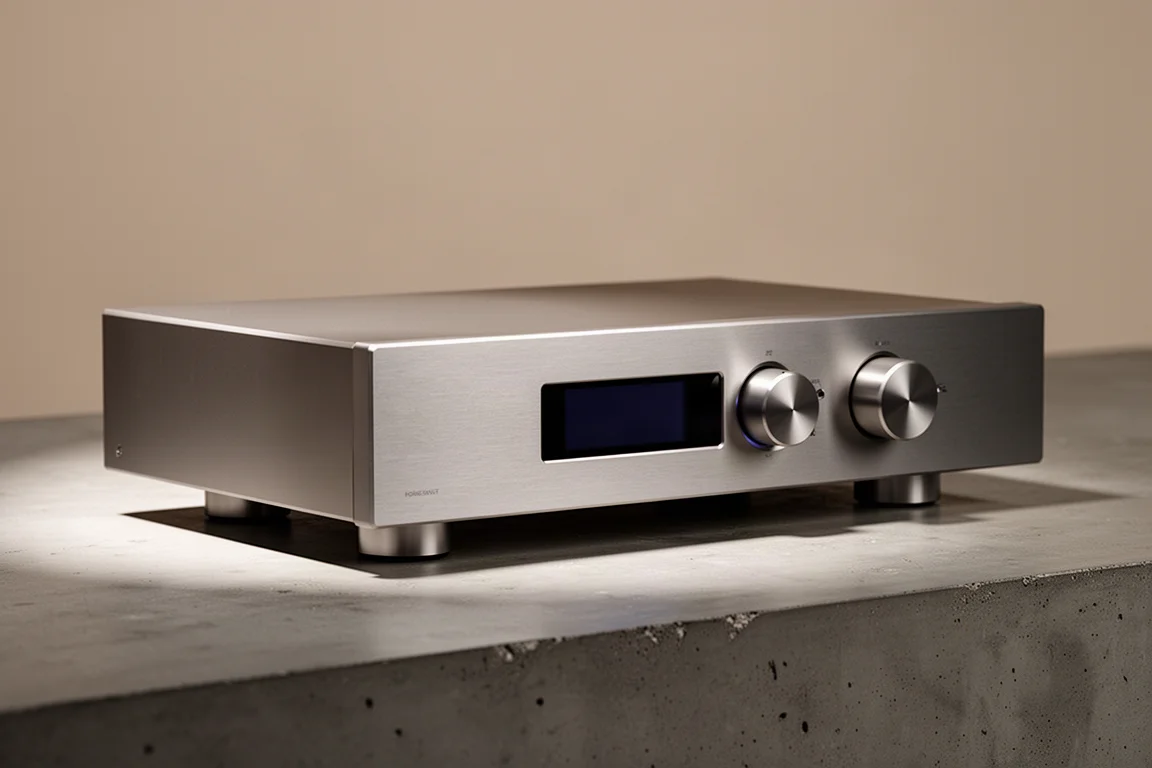
Primare is a Swedish audio manufacturer founded in 1985, and the I35 is the company’s slim, low-slung integrated amplifier. The specification is more serious than the chassis suggests: 150 watts per channel into 8 ohms, 300 watts per channel into 4 ohms, and stability into 2-ohm loads, a demand that requires substantial current delivery rather than a generous number on a spec sheet.
The I35 is a Class D design, but it does not use an off-the-shelf power module from Purifi, Hypex, or ICEpower. Primare builds its own UFPD 2 output stage and pairs it with a switching power supply tuned specifically for that stage, an approach the company explains in detail on its own site. The base version reviewed here is the all-analog model at $4,400, offered in titanium or black.
Who This Amplifier Is For
This is an amplifier for listeners who put purity, clarity, transparency, and immediacy at the top of the list. It behaves like a clear window onto a recording rather than a tone-shaping device, which makes it a natural fit for anyone who wants to hear into a mix and follow individual instruments without effort.
It is also a strong candidate for buyers who dislike being locked into a manufacturer’s digital choices. The I35 is a genuinely modular design, so the analog base version can be upgraded later with a DAC board or a network player board rather than replaced. Listeners who want warmth, weight, and a more rounded tonal signature will find the presentation here leans the other way, which is worth understanding before ordering.
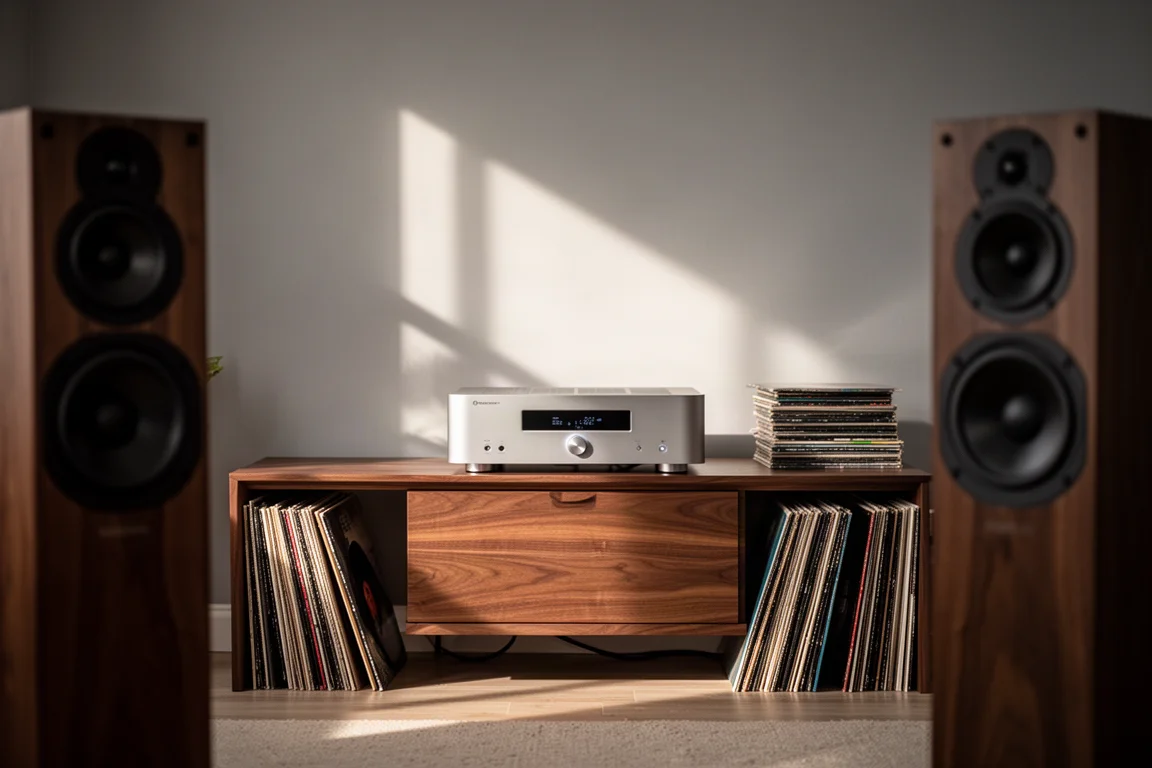
If your priority is a single box that flatters everything you play, this is probably not the amplifier for you. If your priority is hearing what is actually on the recording, the I35 makes a persuasive case for itself.
Build Quality, Controls, and Modular Design
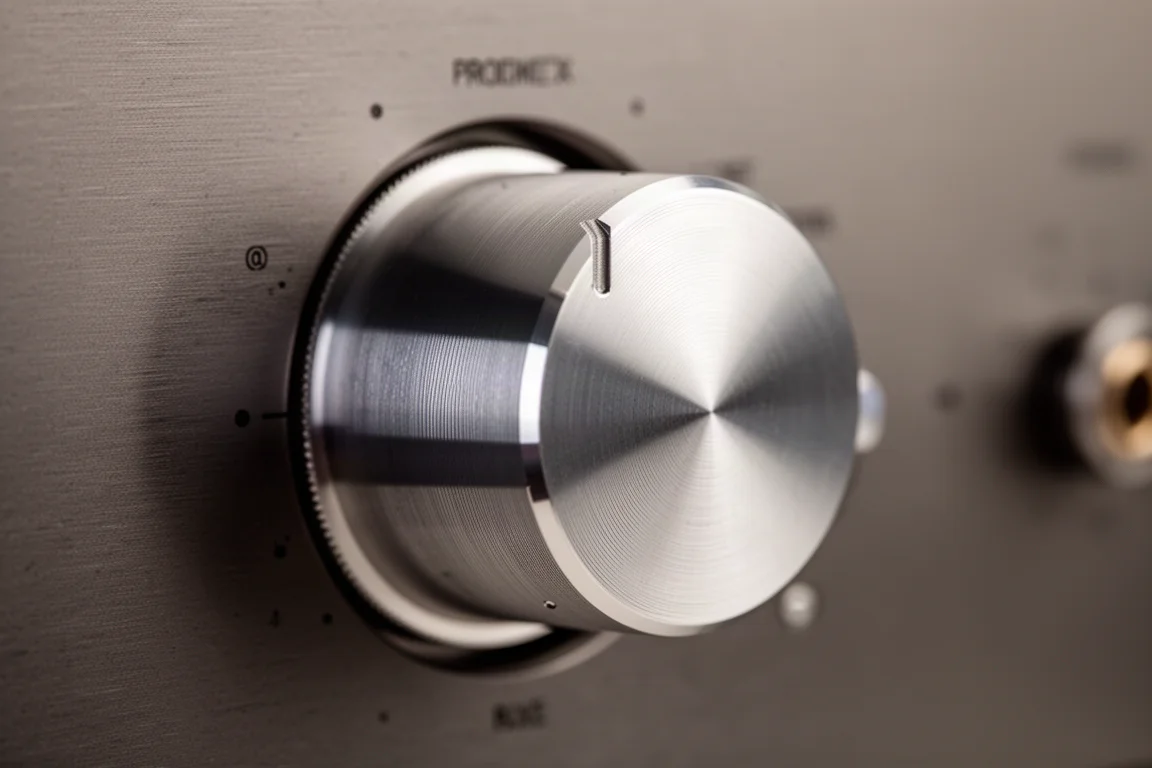
Build quality is impeccable, and the finish is gorgeous in either available colour. The knobs are solid machined pieces of metal with an extraordinary feel in the hand, and the detents on the input selector are executed cleanly. The volume knob rotates smoothly and precisely. This is the kind of physical quality that quietly changes how you interact with a system.
That tactility makes the supplied remote a small disappointment. It is a plastic handset, and it breaks the spell created by the front panel. Some owners may find themselves setting the remote aside and operating the amplifier by hand instead.
The front panel carries an OLED display that is clean and dimmable, but small. Menu text for settings such as left and right balance, display dimming, auto power on, and standby is very small and requires close proximity to read. These are set-once options rather than everyday controls, which softens the issue considerably.
Connectivity on the analog base version covers two sets of XLR inputs, three sets of RCA inputs, a fixed line-level output, and a preamplifier output that can also drive one or two subwoofers. Internally, Primare uses two-layer and four-layer circuit boards, and the warranty runs to two years. The modular path is straightforward: the matching DAC board is $995 and the network player board is $650, both of which can be installed after purchase. Buying the amplifier with those boards already fitted costs less than adding them later, so it pays to decide your configuration up front.
Sound Quality: Purity, Transparency, and Effortless Detail
The recurring theme across listening sessions is purity of presentation. Leading-edge transient response on brass is spot on, and the sense of breathiness, of air moving through a saxophone, comes through clearly. Bass has real precision, conveying the sense of moving air inside a large wooden-bodied instrument rather than a generic low-frequency thump. Cymbals are airy without ever turning bright, and the top end has a clarity and extension that is genuinely striking.
That transparency cuts both ways. Well-recorded material sounds superb, and the amplifier makes it easy to hear into a mix. Poorly recorded material has its flaws revealed rather than smoothed over. This is the trade-off that comes with a neutral, low-coloration design.
Soundstaging is big and spacious with a reasonable sense of depth, though not expansive in the way some listeners prefer. Instruments are placed with confidence, and the overall image is relaxed rather than forced. Driven hard, the amplifier stays composed, which is what the 2-ohm stability and current delivery are there to provide.
How It Compares With Other Amplifiers
Placed alongside alternative amplification, the I35’s character becomes easier to pin down. A tube preamplifier feeding a 25-watt class A power amplifier produced a fuller, weightier, warmer presentation, one with a more voluptuous quality and a larger sense of dynamic scale on a dense live-to-two-track recording, but also less top-end sparkle and clarity. The I35 was clearly the more neutral of the two.
Swapping the tube preamplifier for a solid-state preamplifier feeding the same power amplifier moved the balance back toward neutral, yet that combination still sounded fuller and more dynamically expansive. Even so, the I35 stayed ahead on top-end purity and bass definition, which suggests its leanness is a deliberate voicing choice rather than a limitation.
Against a less expensive integrated amplifier priced at $1,650, the gap was wider. The I35 was more powerful, more dynamic, and more controlled in the bass, with a top end that is pure, clear, extended, and effortless. Its soundstage was also larger and more three-dimensional, where the cheaper amplifier’s stage was smaller, flatter, and more two-dimensional. The I35 simply breathed more freely.
What It Reveals About Recordings
A late-1950s stereo jazz session showed what the amplifier does with genuinely good source material. The trumpet had exactly the right leading edge, the saxophone carried that sense of air and breath, and the bass communicated the precision and moving air of a large wooden instrument. The stereo image was modern and convincing rather than the hard left-right spread of the era, and the cymbals were airy without brightness.
A Chesky Records session recorded live to two-track in a Brooklyn church, using a single stereo microphone with no overdubs, no dynamic range compression, and no equalisation, made the same point from a different angle. The I35 acted as a clear window onto that performance, and the purity of the presentation was the defining quality of the session.

On a classic singer-songwriter album, the voice appeared as a complete human presence between the speakers, with phrasing and breath control rendered convincingly and dynamics intact. A legendary live funk recording charged through the system with real electricity. What living with the I35 ultimately provides is the feeling of hearing into the mix, and on the best recordings that feeling is genuinely spine-tingling.
Things to Consider Before Buying
The base analog version has no digital connectivity at all. If you need a DAC or network streaming, budget for the $995 DAC board or the $650 network player board, and consider ordering them factory-fitted because that costs less than adding them afterwards. The upside is that you can also choose your own external converters and streamers instead, which is exactly the flexibility the modular design is meant to provide.
The display is small and the menu text is very small, so setup adjustments require getting close to the front panel. The remote is plastic and does not match the quality of the machined controls. The tonal balance leans neutral and can feel lean on some material, especially for listeners who value warmth and fullness above all else. The two-year warranty is worth noting for a component at this price. Finally, the amplifier is honest about poor recordings, which is a strength for some listeners and a frustration for others.
Buying Advice
If you prioritise purity, clarity, transparency, and immediacy, the I35 earns a strong recommendation. It is at its best with well-recorded acoustic, jazz, and vocal material, and it pairs naturally with a wide range of loudspeakers, having driven two very different pairs over the course of listening, including large floorstanders.
The modular architecture is the other half of the argument. Rather than paying for digital hardware you may never use, you can start with the analog version and add a DAC or network board only when you actually need one, or keep using your own external components. That flexibility is unusual and genuinely useful.
Buyers who want a fuller, weightier, more forgiving presentation should listen carefully before committing, because that is not what this amplifier delivers. Those who want to hear into the recording, and who accept that lesser recordings will be exposed, will find the I35 exceptionally satisfying.
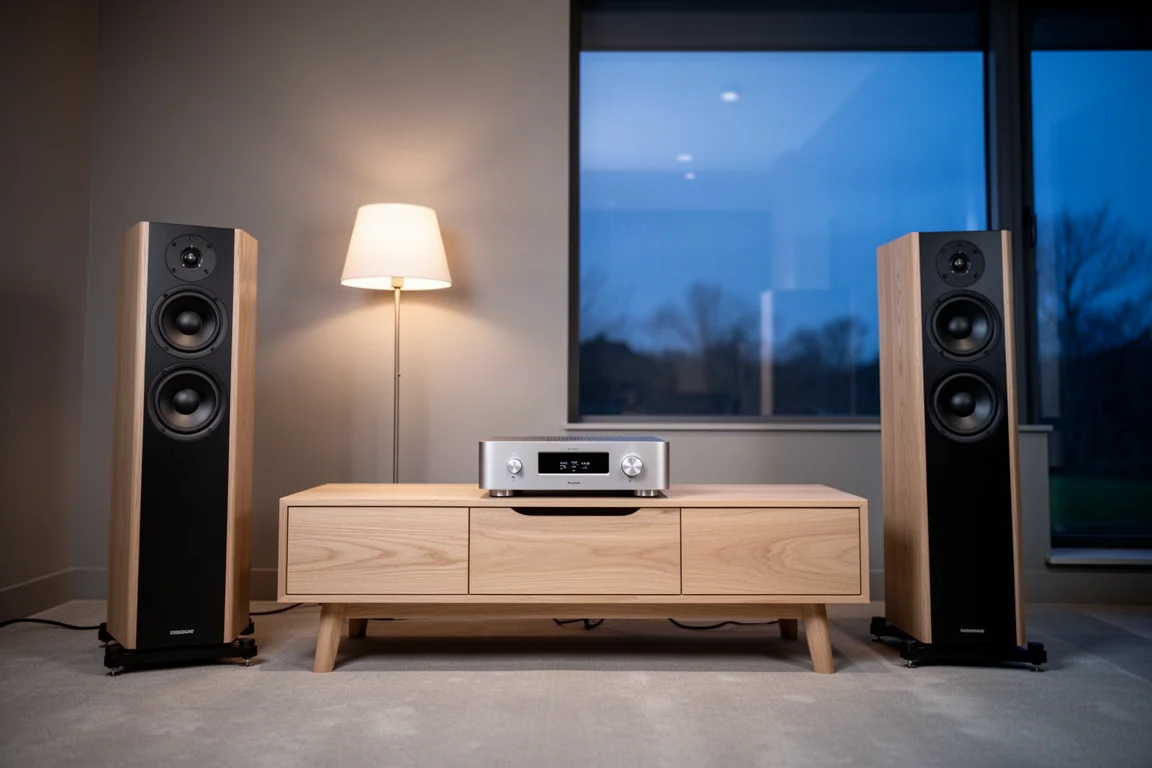
One practical suggestion: decide on your configuration before ordering. Factory-fitted DAC and network boards cost less than retrofitting them, and the analog base version remains fully upgradeable either way, so there is no penalty for planning ahead. Also give some thought to the speakers you intend to use, since a neutral amplifier rewards a well-matched pair.
Conclusion
The Primare I35 is a slim, beautifully built integrated amplifier that behaves like a clear window onto whatever you play through it. Its transient response, bass precision, and airy, extended top end are its defining strengths, and its modular design gives buyers a rare degree of control over which digital features they pay for and when.
The caveats are honest ones: a small display with tiny menu text, a plastic remote that undercuts the superb machined controls, a neutral balance that can read as lean, and a willingness to reveal the shortcomings of lesser recordings. For listeners who value purity, transparency, and immediacy above warmth and weight, those trade-offs are exactly the point.
Product link
View more details for Primare I35
This product is mentioned in the review. Check the specifications, options, and compatibility before buying.
View more details for Primare I35Further reading
Related Reviews
Hi-Fi Amplifiers
Accuphase E-280 Review: Entry-Level Accuphase With Flagship Attention to Detail
A close look at the Accuphase E-280 integrated amplifier, covering its champagne build, AAVA volume control, sound quality, and the speakers and sources that suit it best.
Hi-Fi Amplifiers
Advance Paris A10 Classic vs Yamaha A-S301: Two Integrated Amplifiers Compared
A practical comparison of a $350 integrated amplifier and a $2,500 reference model, covering the differences that matter and the ones that do not.
Hi-Fi Amplifiers
Affordable Chinese Amplifiers Worth Buying: Five Budget Hi-Fi Amps Compared
A practical look at five affordable amplifiers, what each one does well, and the trade-offs to weigh before you buy.