Hi-Fi Audio
Primare CD15 Prisma and I-15 Review: A Slim Scandinavian CD Player and Amplifier Pairing
A close look at the Primare CD15 Prisma CD player and the matching I-15 integrated amplifier, covering build quality, Prisma streaming, sound character, and speaker matching.
Introduction
Physical media still has a strong pull for a lot of listeners. Pulling a disc from its case, dropping it into a tray, and letting an album play end to end is a ritual that streaming has never quite replaced. The Primare CD15 Prisma and the matching Primare I-15 integrated amplifier are aimed squarely at that listener, but with a modern twist: the CD player also carries Primare’s Prisma network streaming platform, so one slim box can handle discs and streaming sources.
This guide looks at what each component offers, how they are put together, how they sound on their own and as a pair, and which speakers and system choices make the most sense.
What Makes This Primare Pair Worth a Look
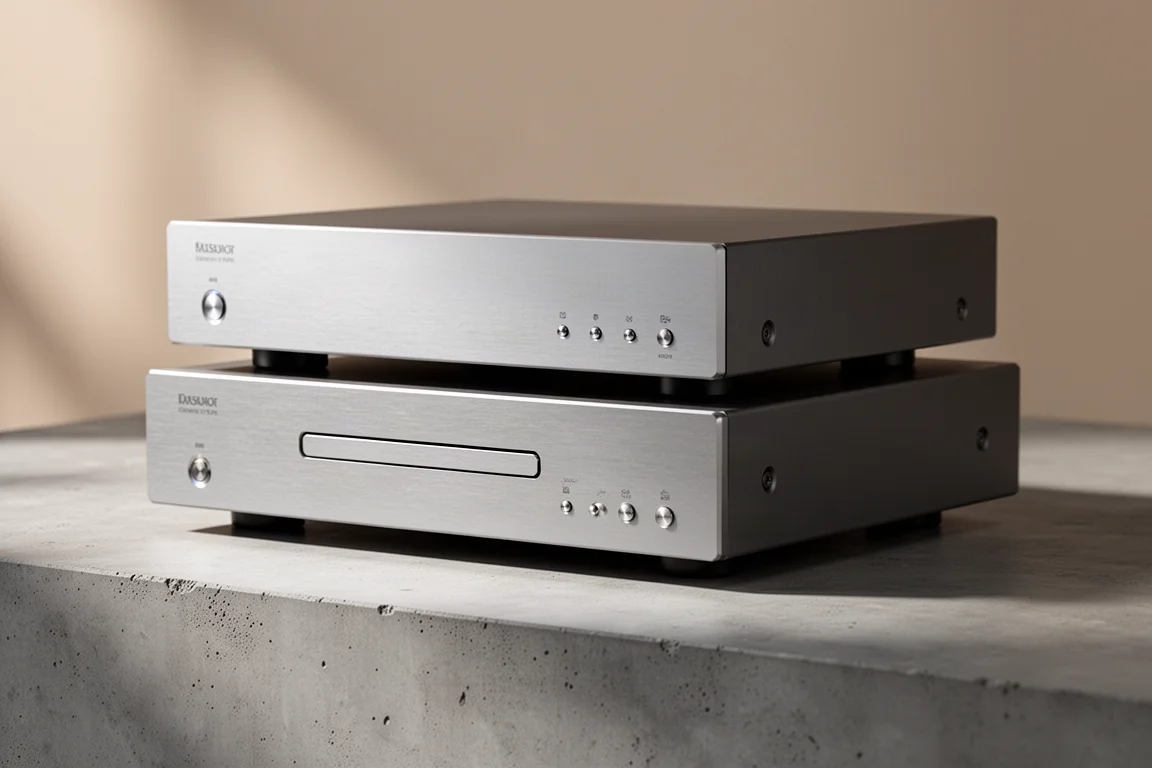
Both units share the same restrained Scandinavian approach. The CD15 Prisma retails at around £1,650 and is available in a titanium finish or anodized black. It measures 350 mm wide and only 73 mm high, or 13.8 by 2.9 inches, so it fits neatly on a shelf where a full-size player would not.
The I-15 amplifier uses an identical chassis, which means the two stack as a visually matched pair. The amplifier starts at around £1,200 on its own, with a moving magnet phono stage version at around £1,450 and a version with the Prisma streaming module and a built-in DAC at around £1,700.
Build quality is a clear part of the appeal. The aluminium faceplate is substantial, the top cover is thick enough to feel genuinely solid, and the way the top plate is recessed to expose part of the chassis gives the design a distinctive, considered look. The embossed logo and the small polished aluminium buttons reinforce the same impression. For listeners who care about how a system looks as much as how it sounds, this is a cohesive two-box solution with a small footprint.
Primare CD15 Prisma: A Slim CD Player With Streaming Built In
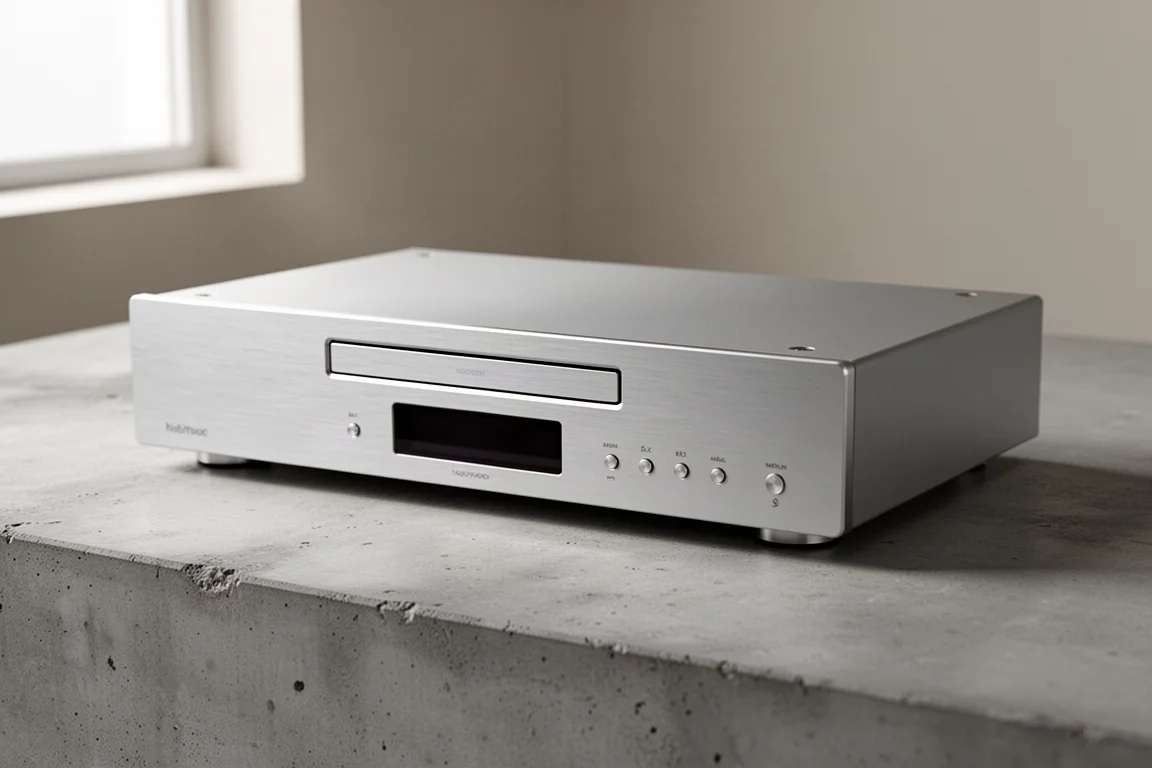
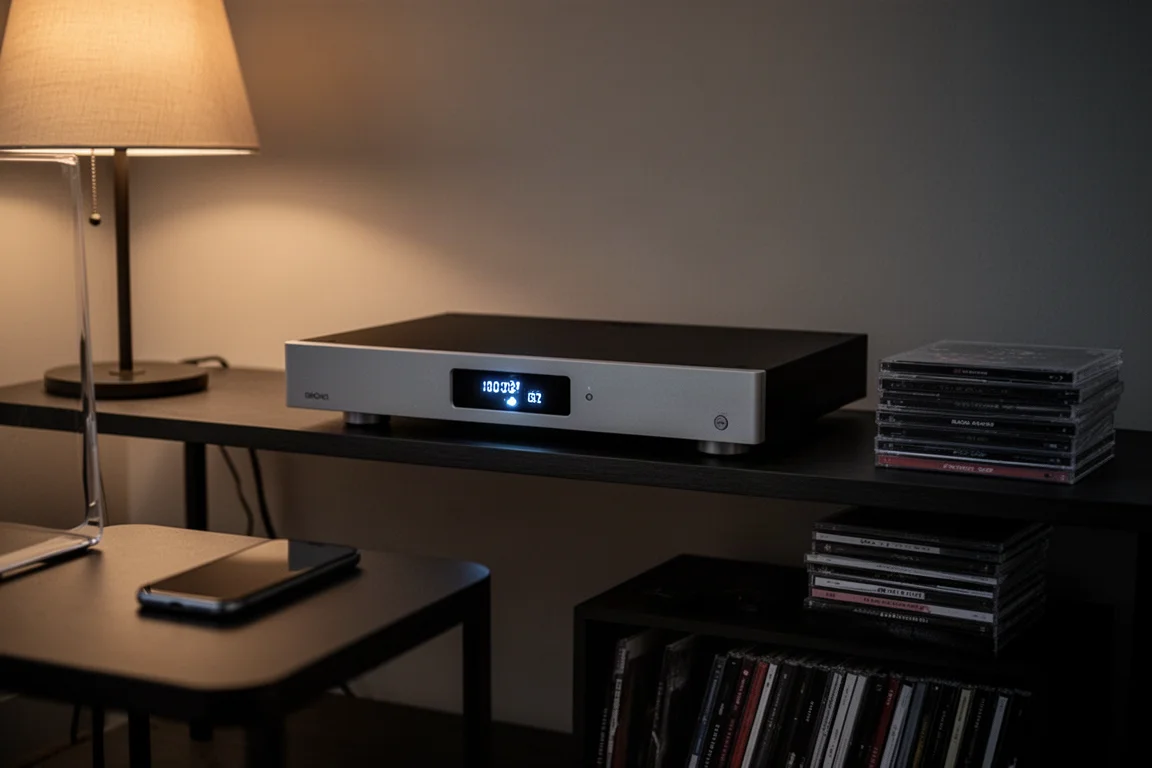
Controls on the CD15 Prisma are deliberately minimal. On the left there is a standby button. Below the front-loading CD slot sits a clear OLED display. On the right, one button handles play and skip forward, while the other pauses, stops, and ejects. Some listeners may feel the eject control would be more natural on the top of the unit, though it is easy enough to live with.
Deeper settings are handled through the supplied remote control. The remote is plastic rather than metal, but it is a sensible size and the buttons are laid out logically, so it becomes intuitive quickly. It can also operate other Primare components. Menu options include fixed or variable volume control, the auto dim interval, and the time before the unit drops into standby.
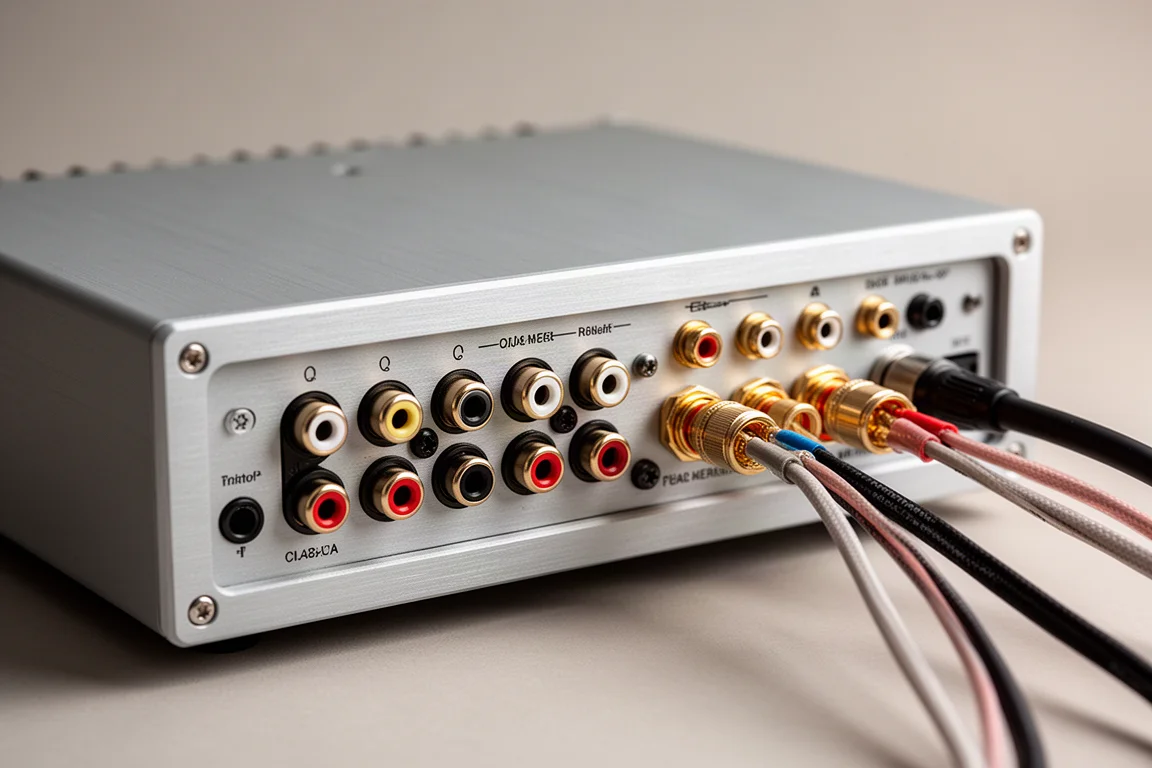
Around the back there is one set of single-ended RCA analogue outputs, plus optical and coaxial digital outputs for feeding an external DAC. There are no digital inputs, so the CD15 Prisma cannot serve as a standalone DAC for other digital sources. An Ethernet port and a USB-A port handle network and stored music, with RS232, 12 volt trigger, and IR connections for custom installation use.
Primare I-15: A Compact Integrated Amplifier
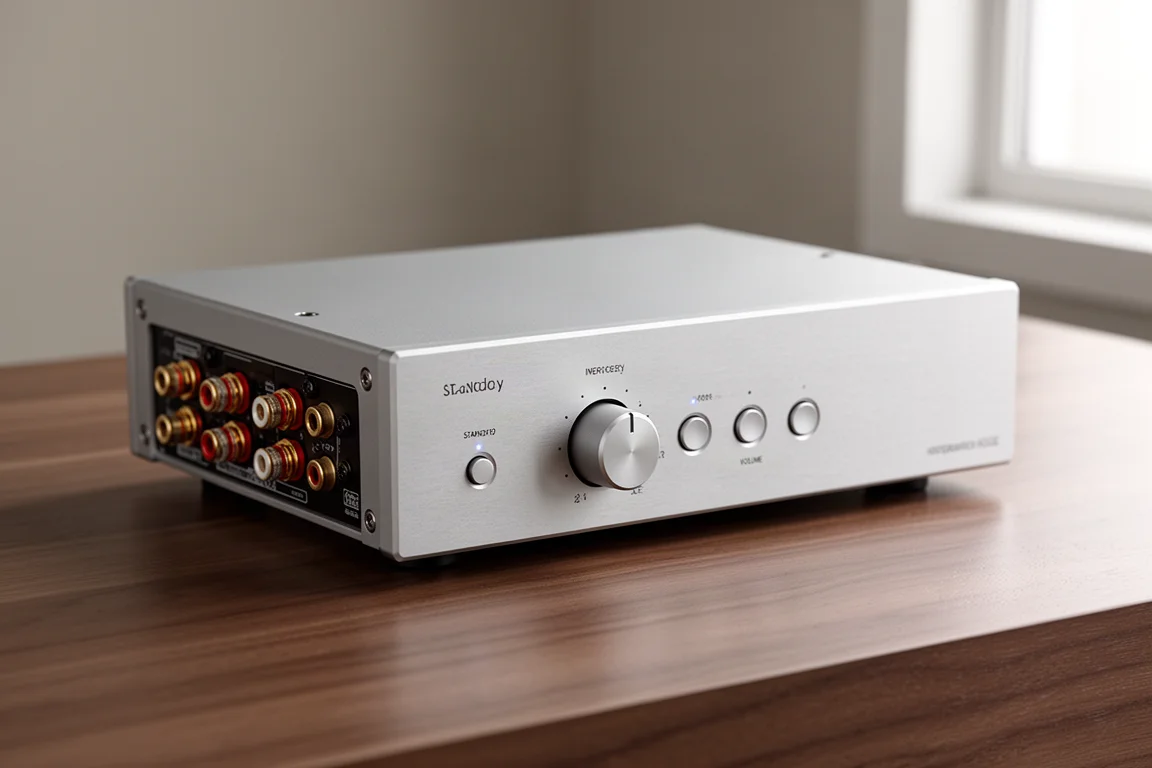
The I-15 keeps the same minimalist control set: a standby button, an input selector that toggles between the phono stage and four analogue inputs, and volume up and down buttons. Everything else lives in the shared remote, including input renaming, startup and maximum volume limits, and the auto dim and standby settings.
The rear panel carries five single-ended RCA analogue inputs, a line output for recording devices, and pre-outs for connecting power amplifiers or powered subwoofers. System and home integration connections are present here too, and the speaker binding posts are of the quality expected at this price point.
Under the cover, the compact dimensions make sense. The I-15 uses a switch mode power supply and a Hypex UcD class D amplifier module of the type also found in some NAD C-series products. This version delivers 60 watts per channel into 8 ohms and 100 watts into 4 ohms, and the main circuit board is laid out neatly.
That power figure is the key context for everything else. The amplifier’s compactness and its efficiency come from the same design decisions, and those decisions shape how it behaves with demanding speakers. Pairing it with relatively easy-to-drive speakers is the sensible starting point rather than an afterthought.
How the Two Sound Together
The CD15 Prisma is the stronger performer of the two. Across a wide range of genres it never sounded thin or sterile, which is a common complaint about chip-based digital sources at this price. Clarity is excellent, and the more impressive quality is its sense of scale in every direction, along with a natural tonality that stays consistent whatever is playing.
Against a well-regarded compact streamer upgraded with a linear power supply, the CD15 Prisma came out ahead on clarity and scale, with less digital glare and a more natural overall presentation. Against that same streamer feeding a separate DAC that costs more than the CD player itself, the separate DAC combination went slightly further: a touch wider and deeper, a little more focused, and more at ease with large dynamic swings. That is a fair outcome given the price difference.
The I-15 is close to being a great sounding amplifier, with the same strong tonality as the CD player and very good clarity. Its presentation is fluid rather than forensic, so detail sits in the mix rather than being pushed forward. What it lacks is scale and dynamic drive. Soundstage depth is genuinely good, but width is limited, and dynamically it comes across as polite, largely because mid bass punch is in short supply.
Compared with a cheaper class D integrated, the I-15 keeps its composure. That rival is similarly short on oomph but is far more analytical, with a thin midrange that the Primare avoids. Against a more expensive integrated priced around £1,700 that offers a well-regarded phono stage, the Primare matches on tonality but gives away clarity, background silence, lateral scale, and dynamic punch. Stacked together, the amplifier is the limiting factor, and a more powerful sibling would likely be the better partner for the CD player.
Streaming, App Control, and Everyday Usability
Prisma is Primare’s network streaming platform, and it is built into the CD15 Prisma. Setup is done over Ethernet or Wi-Fi, configured through the Google Home app on Android or iOS. Because it leans on Google’s operating system, initial configuration is straightforward.
The Prisma app covers internet radio, music stored on USB flash drives, and services including Spotify, Tidal, and Qobuz, alongside most of the streaming services a listener is likely to want. The player also supports Chromecast, AirPlay 2, Spotify Connect, Bluetooth, and Roon.
It is worth being clear about what this is. The Prisma interface works best as a basic streaming solution rather than a full library management system. Moving between screens in the app can feel laggy, the on-screen display is plain, and there is no seamless integration between different sources and services, so switching from one to another is not as fluid as it is on more mature platforms. Anyone used to a dedicated high-end streaming ecosystem should treat the built-in streaming as a convenience rather than a replacement.
Buying Advice: Speakers and System Matching
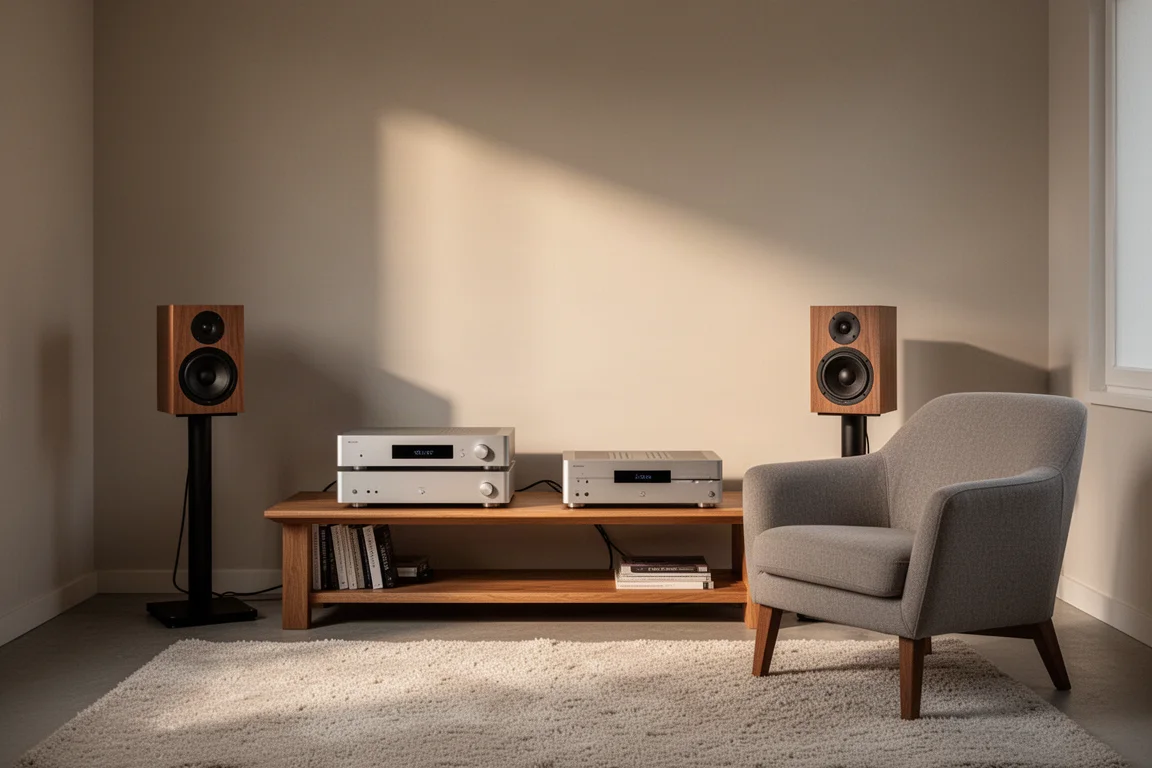
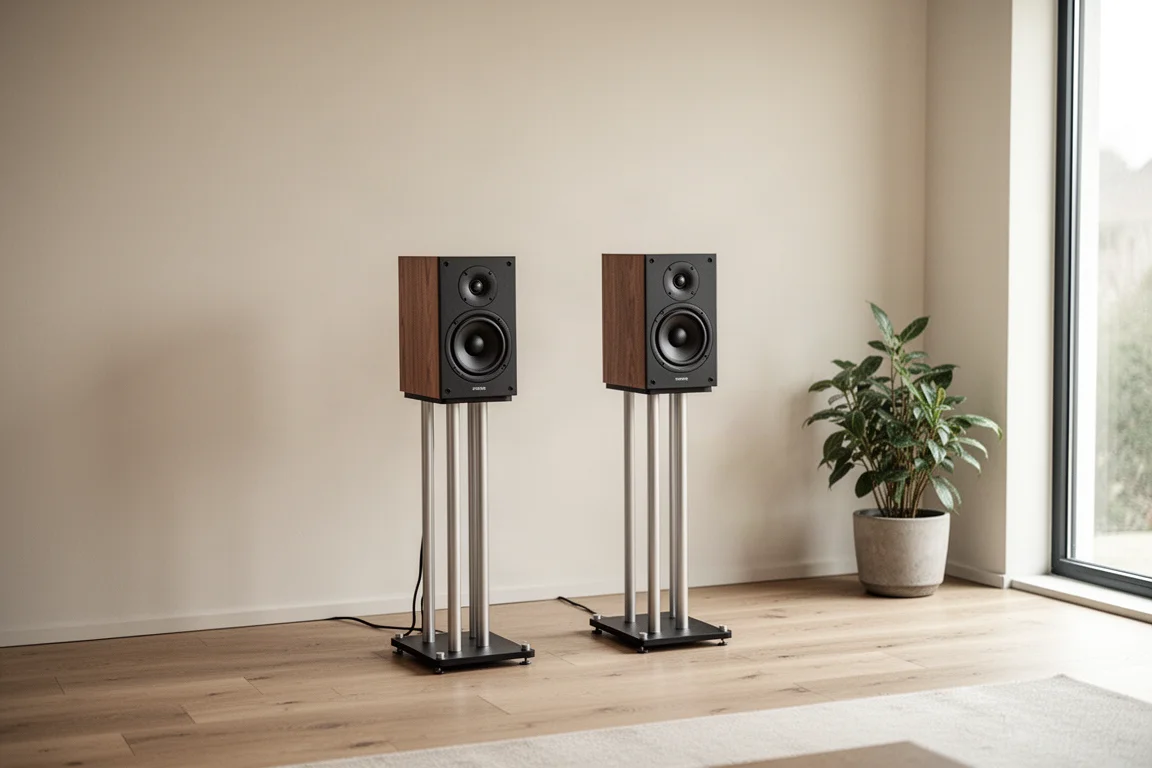
Speaker choice matters more here than with most amplifiers. The I-15 rewards speakers that are easy to drive. During listening, three pairs were used: a ProAc model retailing at around £2,500, a Dali standmount at around £1,500, and a Q Acoustics Concept 30 at around £900. None of them could be described as forgiving loads, which is exactly why the amplifier’s dynamic limits became so apparent.
If you are building a system around these two components, prioritise speakers with reasonable sensitivity and a friendly impedance curve. If you already own harder-to-drive speakers, plan on auditioning the amplifier with them before committing, or consider stepping up to a more powerful Primare integrated.
The amplifier’s own options are worth weighing carefully. The base version is the most affordable route. The phono version adds a moving magnet stage for vinyl listeners. The Prisma version adds network streaming and a built-in DAC, which makes sense if you want a second streaming zone or a one-box digital hub, but it duplicates functionality if you already own the CD15 Prisma. On the player side, a version with more digital inputs would make it a more complete digital front end, since the current model cannot accept other digital sources.
Who Should Consider Each Component
The CD15 Prisma suits listeners who still buy and play CDs and want a slim, well-built player with a natural, large-sounding presentation. It also suits anyone who wants basic network streaming in the same box without committing to a separate streamer. It is less suitable for those who want a full-featured streaming platform or who need a DAC with multiple digital inputs.
The I-15 suits listeners building a compact, visually matched system who prioritise tonality and clarity, and who own or plan to own easy-to-drive speakers. Those who want strong rhythmic drive and a wide soundstage from an integrated at this price should compare alternatives, or look further up the Primare range.
Conclusion
The Primare CD15 Prisma is an excellent sounding CD player, with great tonality, clarity, and scale. Its streaming side is competent but basic, and that is the main reason it lands short of the highest praise on functionality alone. The I-15 shares the same tonal strengths and offers clarity that is hard to fault at the price, but its lack of rhythmic drive is what holds the pairing back. Chosen with the right speakers, both components make a handsome, coherent system for listeners who still value physical discs.
Further reading
Related Reviews
Hi-Fi Audio
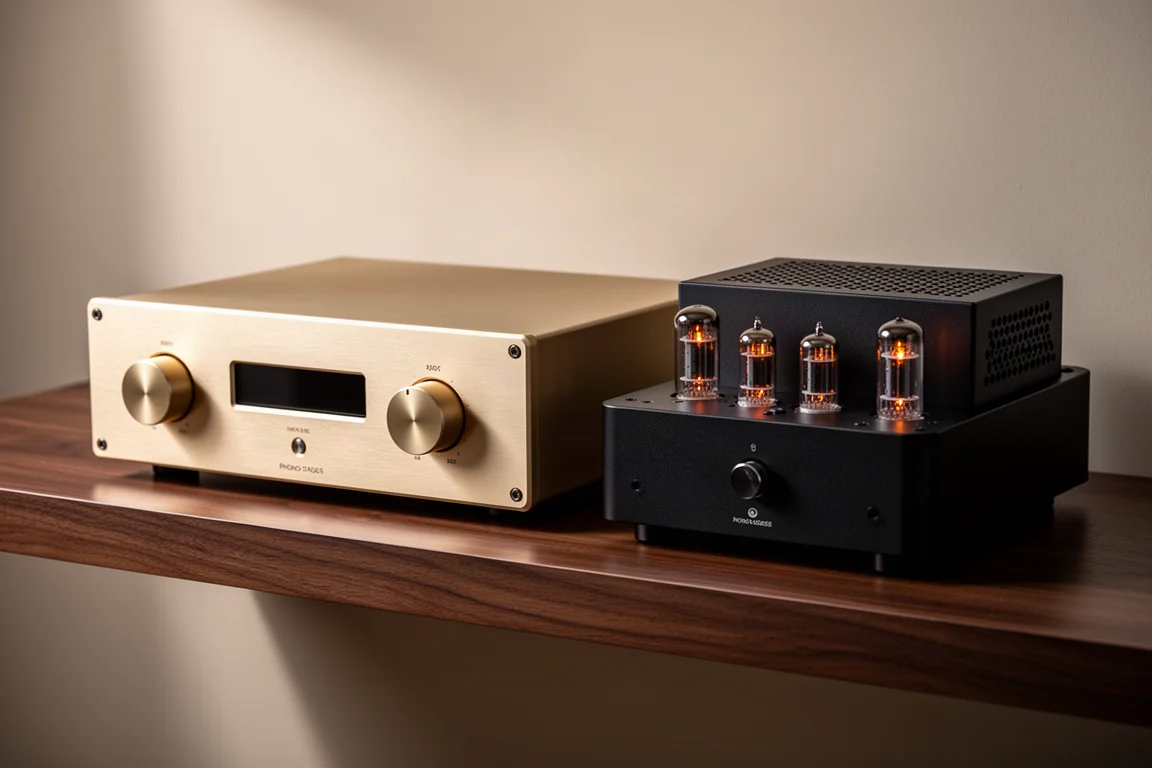
Accuphase C-57 vs Allnic H-7000V: Two High-End Phono Stages Compared
A fully balanced solid-state phono stage with a pitch-black noise floor meets a tube design built for well-loved records. Here is how to choose between them.
Hi-Fi Audio
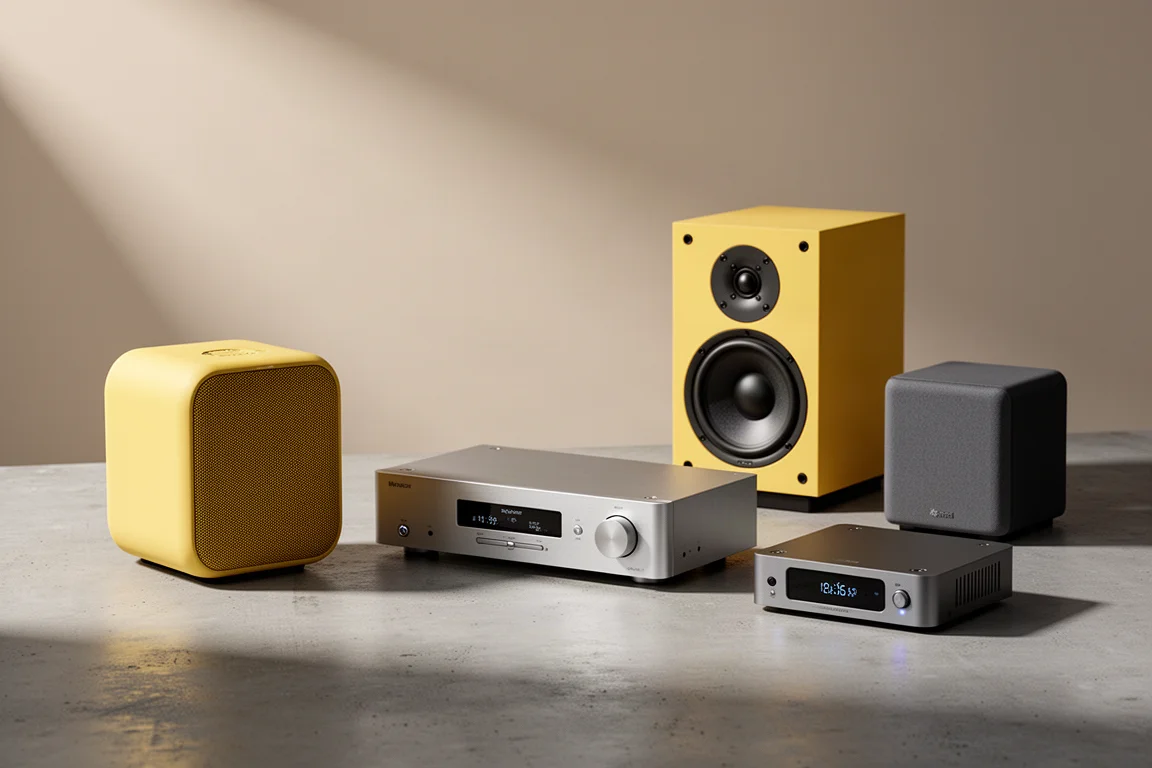
Active vs Passive Hi-Fi: Five Components for a Modern System
Five components that define modern active and passive hi-fi systems, with the strengths, trade-offs and setup details worth weighing before you buy.
Hi-Fi Audio
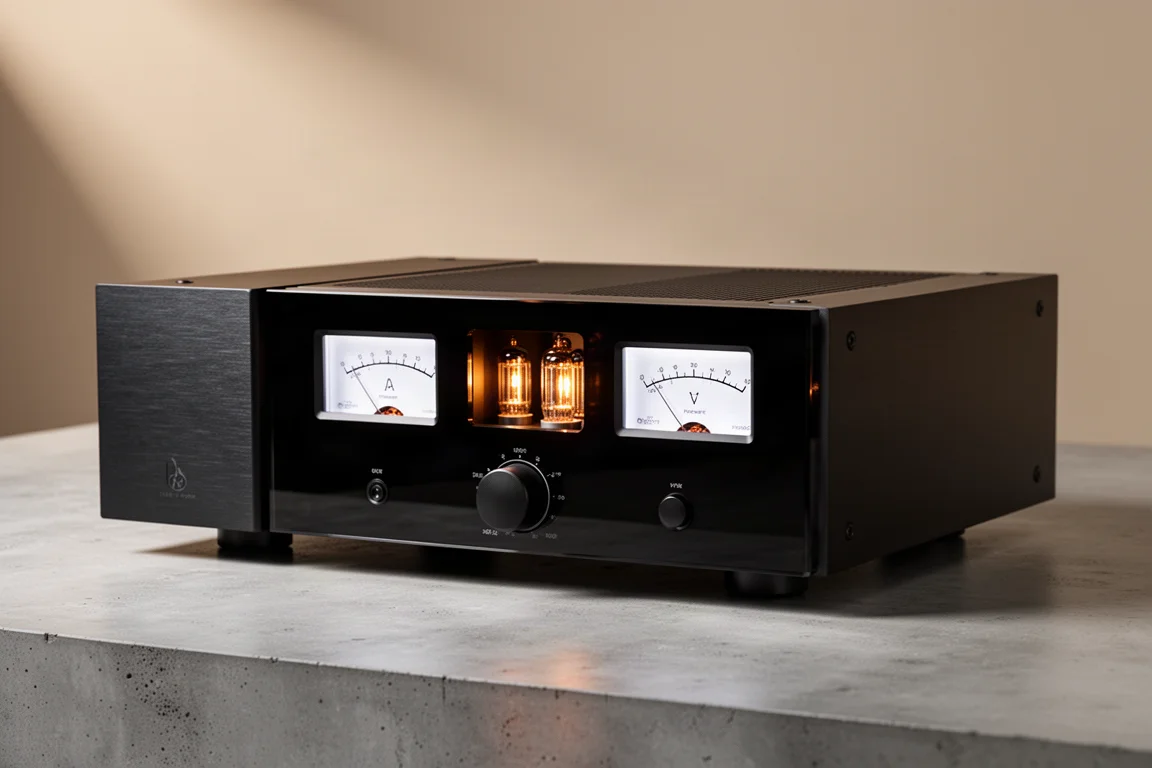
Advance Paris A10 Apex Review: A Hybrid Integrated Amplifier That Covers a Lot of Ground
A French hybrid integrated amplifier with a class A tube preamp stage, analogue power meters, and an internal DAC and phono stage good enough to make extra boxes unnecessary.