Camp Lighting
Power Practical Lumi Noodle vs Haven Ridge Light: Two Camp Light Strips Compared
A practical comparison of the Power Practical Lumi Noodle 10-FT Light Strip and the Haven Ridge Light, covering output color, power draw, weight, controls, and value.
Introduction
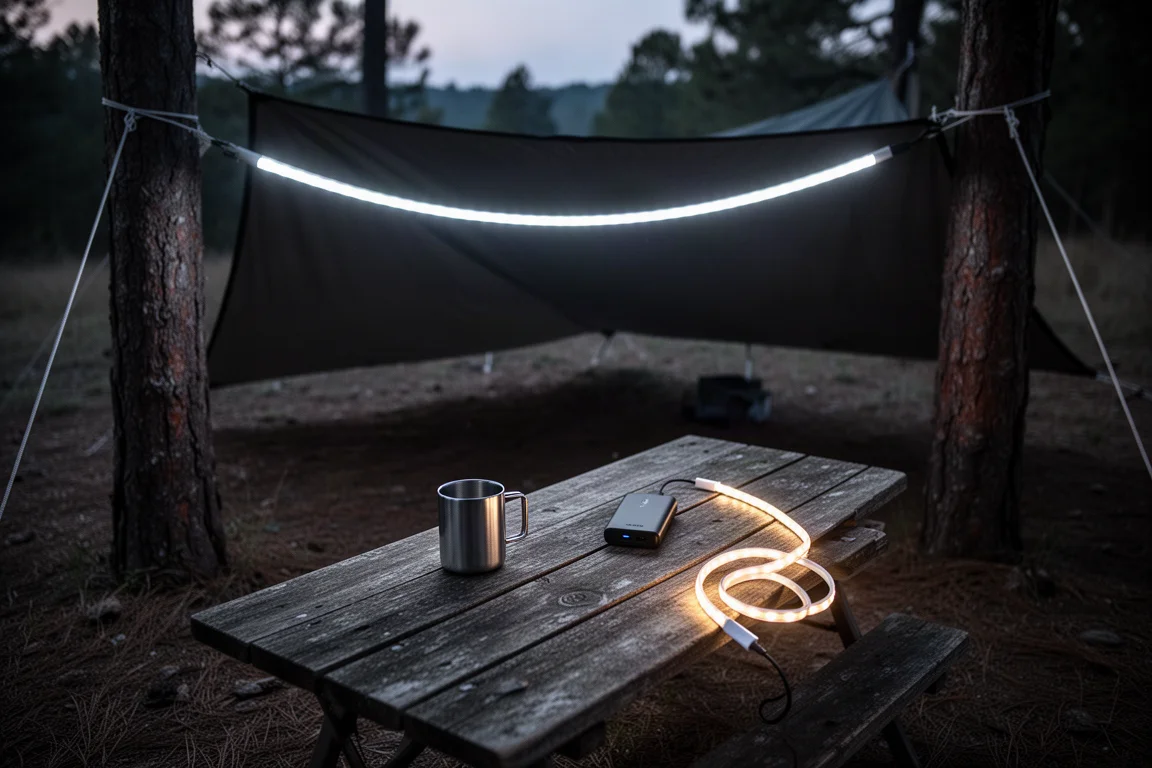
A camp light strip has one job: turn a dark site into somewhere you can cook, read, and find your gear without carrying a lantern. The Power Practical Lumi Noodle 10-FT Light Strip approaches that job with length and flexibility, offering ten feet of LED strip, fifteen colors, and ten brightness levels that run from a power bank you already own. Alongside it sits the Haven Ridge Light, a shorter strip with a distinctly warm output that covers much of the same ground.
This comparison looks at both strips on the details that matter after the first night out: output color, usable brightness range, power draw, weight, mounting options, and how the controls behave when your hands are cold.
What Matters in a Camp Light Strip
Four things separate a light strip you keep reaching for from one that stays in the bin. The first is color temperature. A warm, yellow-heavy output feels cozy around a tent, but it shifts the color of everything it touches, which matters if you photograph or film your campsite. A cool white output keeps colors closer to neutral.
The second is length and reach. A six-foot strip covers a hammock or a small tarp, while ten feet can run along a vehicle, across a cooking area, or between two trees. The third is power draw, because the strip shares a battery with your phone and headlamp. The fourth is weight, since anything carried on a backpacking trip has to earn its place.
Mounting flexibility rounds out the list. Magnets, loops, and clips decide how quickly you can rig the strip and how well it stays put in wind.
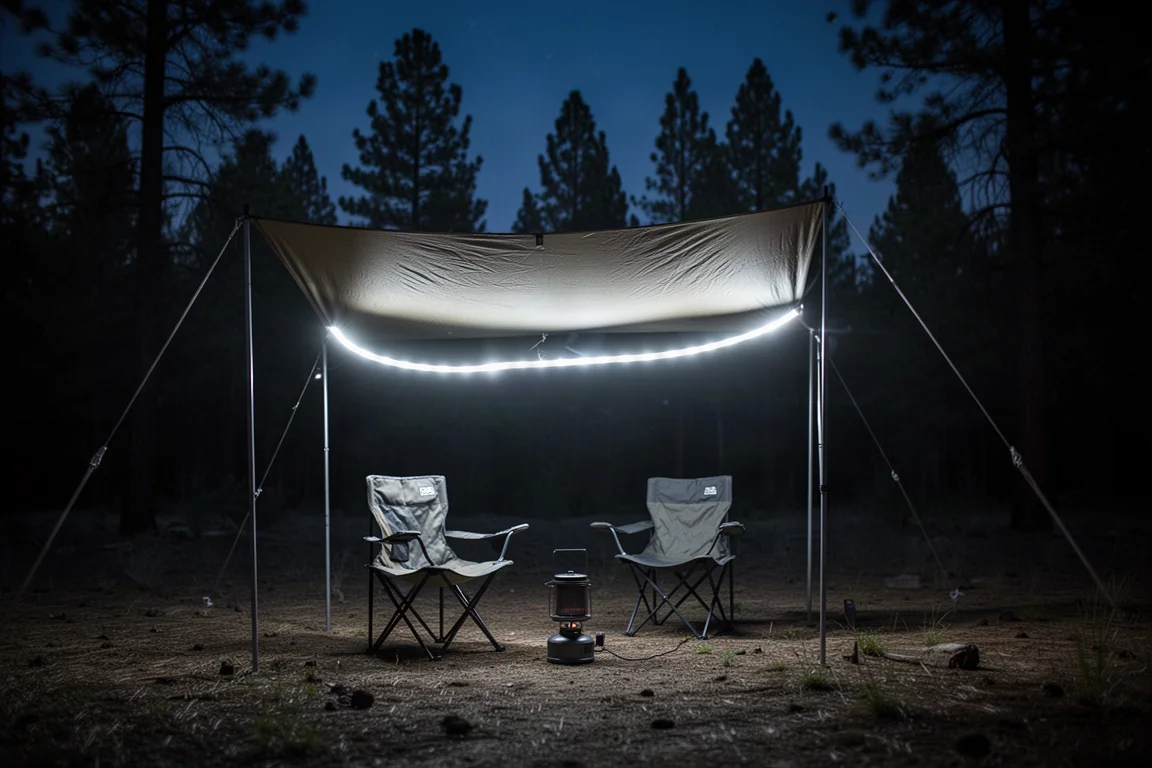
In practice, most campers end up choosing between a warmer, lighter strip and a longer, more adjustable one. Both approaches work. The real question is which compromise you would rather live with on a wet, dark evening.
Power Practical Lumi Noodle 10-FT Light Strip: Full Breakdown
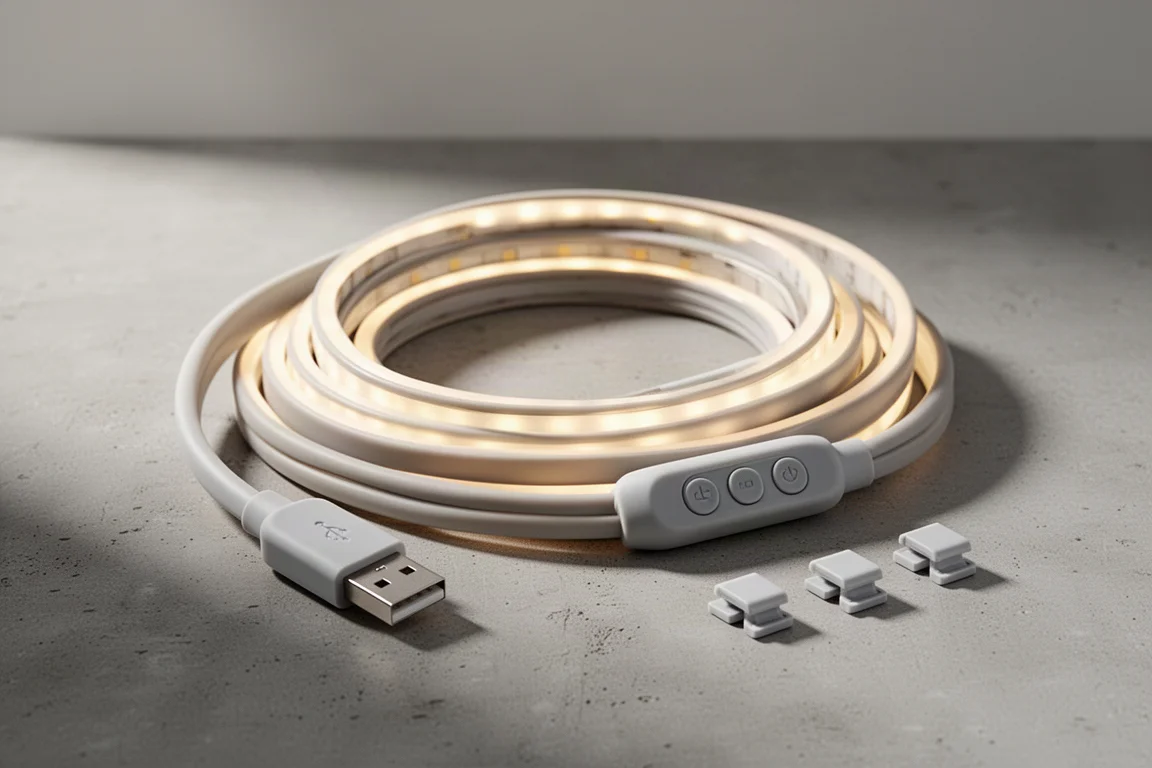
The Lumi Noodle is a ten-foot LED strip protected by a rubber membrane. It is offered in two lengths, five feet and ten feet, and the longer version carries five magnetic points that slide along the strip so you can position them wherever they are useful. That makes it straightforward to attach the strip to a vehicle body, a roof rack, or a tarp frame without extra hardware. A corded loop at one end adds another hanging option.
Power comes from a USB-A connector that plugs into a power bank. No battery is included, which keeps the package light and lets you use whatever capacity you already carry. At the brightest setting the strip draws roughly ten watts, and at the lowest it measures about 1.3 watts. On a 10,000 mAh power bank that translates into many hours of run time.
Fifteen colors and ten brightness levels are available, and the strip is controlled from a small inline switch. A single tap turns it on, a double tap turns it off, and another tap starts a fast cycle through every color. The plus and minus buttons step through colors in either direction, while pressing and holding the center button ramps brightness up and down.
Everything weighs 7.3 ounces including the accessories, and the retail package includes a storage bag, the strip, the magnetic connector points, three quick strips, and a remote control. The storage bag can be rolled around the strip and used as a soft lantern.
Haven Ridge Light: The Warm-White Alternative
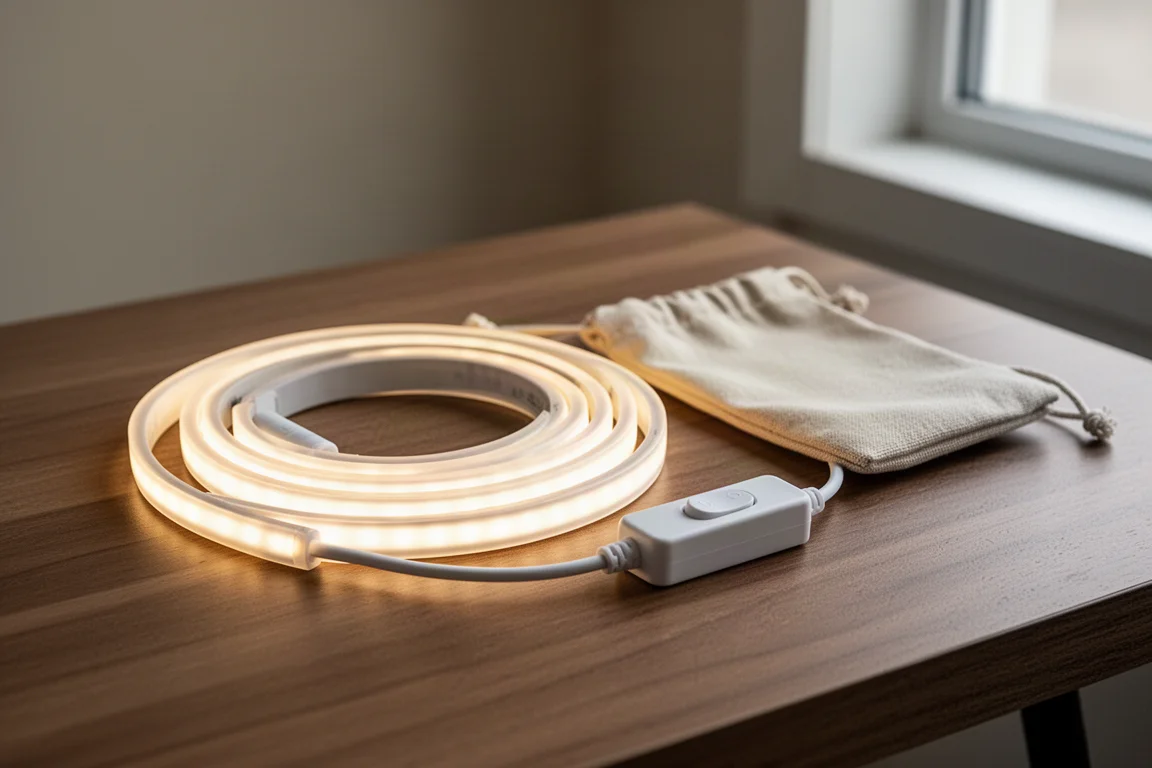
The Haven Ridge Light is a 6.5-foot LED strip with a noticeably warm, yellow-leaning output. It attaches to tarps, hangs over a hammock, or spreads across a campsite, and it covers the same practical ground as the Lumi Noodle in a shorter package. At 3.4 ounces it weighs less than half of the ten-foot strip with its accessories, which matters on backpacking trips.
Power draw is lower as well: a maximum of about 6.3 watts and a minimum of roughly 0.1 watts. That minimum is remarkably efficient, but it also produces very little light, so the useful range sits higher up the scale. The strip costs less than the Lumi Noodle, and like its rival it can be rolled into its storage bag to work as a lantern. Controls are simple once you learn them.
The trade-off is the output color. Warm light is comfortable around a tent, yet it casts a strong yellow tone over whatever it illuminates.
Brightness, Power Draw, and Weight Compared
Side by side, the numbers favor the Lumi Noodle on output and the Haven Ridge Light on weight and efficiency. Ten watts at full brightness against 6.3 watts gives the longer strip a clear advantage in raw light, which is what you want when the goal is lighting a whole site rather than a small bubble around a hammock.
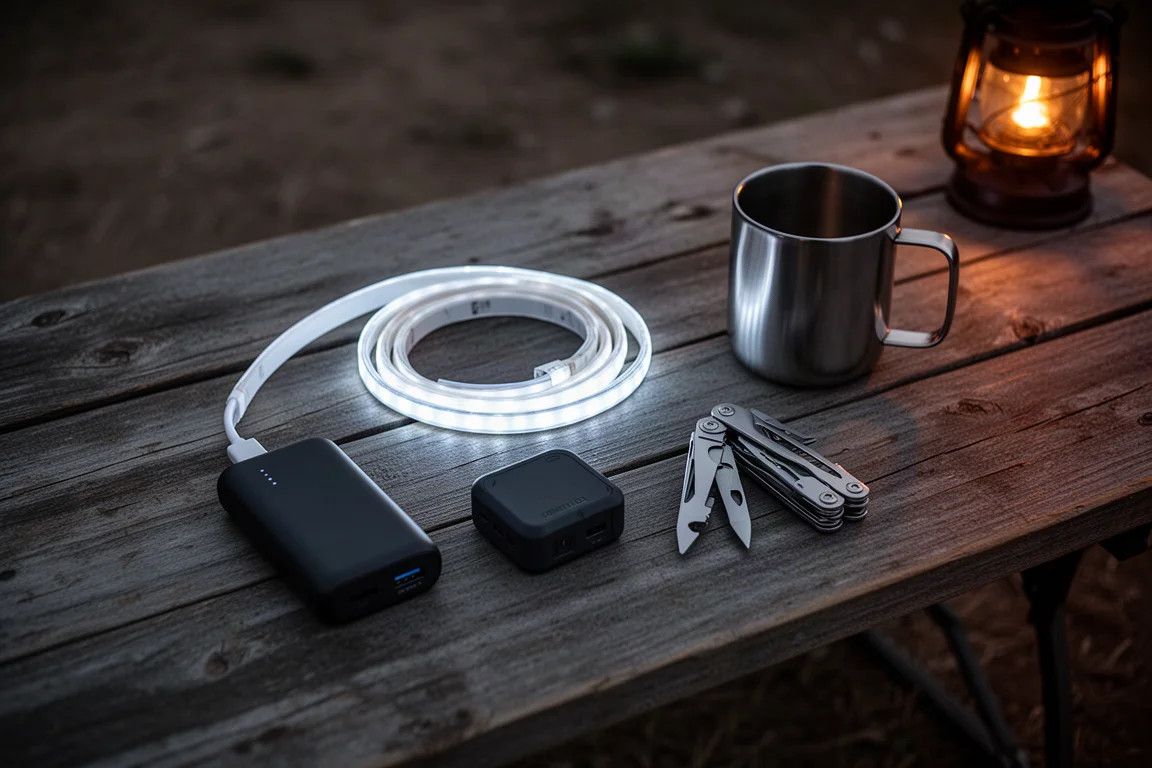
Weight tells the opposite story. The Haven Ridge Light comes in at 3.4 ounces, while the Lumi Noodle and its accessories total 7.3 ounces. For car camping, truck camping, or overlanding, that difference disappears into the rest of your kit. For backpacking, it is worth thinking about before you commit.
Cost sits close together, with the ten-foot strip at $40 and the shorter warm strip at $34. Neither is expensive for what it does, and both run from a power bank that most campers already carry.
Build Quality and Real-World Handling
The Lumi Noodle feels well made. An LED strip runs beneath a rubber membrane that protects the emitters, and the connectors and magnetic points have held up without issue. The magnets themselves are strong enough to be genuinely useful, and being able to slide them along the strip is a small design decision that pays off every time you rig it somewhere new.
The rubber coating has one clear downside: it attracts dust and sand. Fine grit clings to the surface and stays there until you wipe it down, which is worth knowing if you camp in dry, dusty terrain. The strip has handled heavy airborne moisture without trouble, but the USB-A connection point and the power bank should be kept dry regardless of any waterproofing claims.
Setup, Controls, and Everyday Use
Rigging the strip is quick. Magnets handle metal surfaces, the quick strips and corded loop cover everything else, and breakdown is just as fast. The inline switch does what it should, and the color and brightness controls respond reliably.
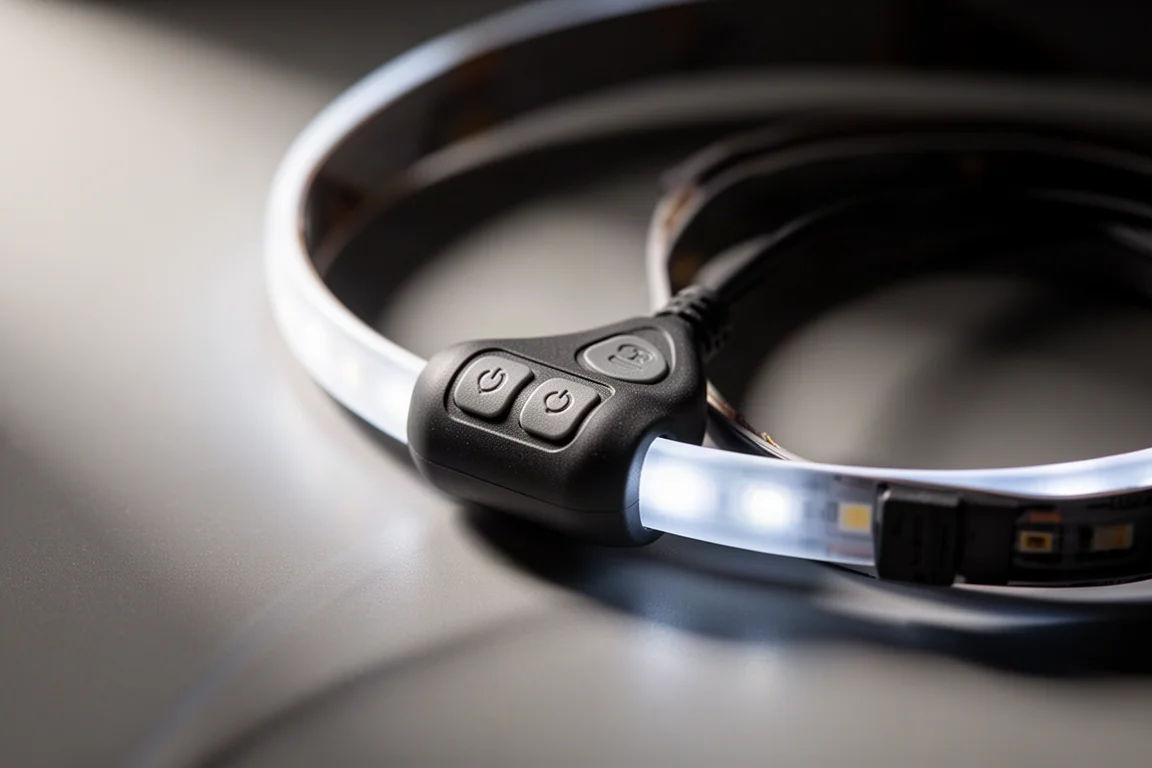
Brightness adjustment is the weak point. Holding the center button ramps the level up or down through a flash, so stopping on an exact setting is fiddly and easy to overshoot. A working remote control would solve that, but the remote supplied with this unit arrived broken, and replacing the battery did not bring it back to life.
There is also an intermittent power issue worth flagging. On several occasions the strip was switched off and the connected battery pack was still flat by morning. In one case the strip measured a draw of about 9.9 watts while switched off, matching its full-brightness consumption. The behavior does not happen every time, but the practical response is simple: unplug the strip from the power bank whenever it is not in use. A USB-C connector would also be a welcome update over the current USB-A plug.
Things to Consider Before Buying
Waterproofing appears in the product marketing, but it has not been fully verified here. The strip has handled heavy airborne moisture, and the sealed membrane leaves few obvious entry points for water. The USB connection is the exception and should never get wet.
It is also worth reading the label. The brand’s marketplace listing states that it does not sell Chinese junk and describes its products as designed in the United States, while the product itself is labeled as made in China. That inconsistency does not change how the strip performs, but buyers who care about origin and marketing claims should know about it before ordering.
Buying Advice
Choose the Power Practical Lumi Noodle if you want maximum coverage and color control: ten feet of strip, fifteen colors, ten brightness levels, and magnets that make vehicle mounting easy. It suits car camping, truck camping, overlanding, and any trip where you are carrying a power bank anyway. The $40 price is reasonable for the length and output, as long as you remember to unplug it when the site goes quiet.
Choose the Haven Ridge Light if weight and simplicity matter more than reach and color options. At 3.4 ounces and $34, it disappears into a backpack and still lights a tarp or hammock well. The warm output is the main compromise, and for plenty of campers it is not a compromise at all.
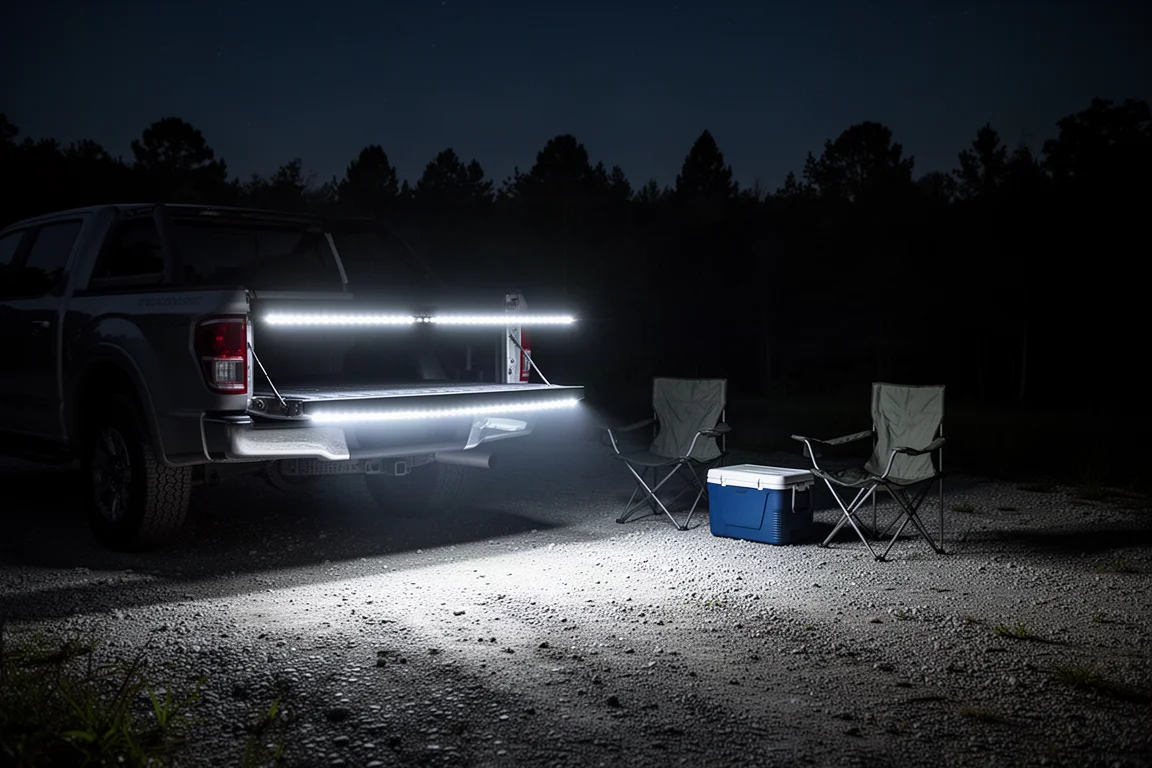
Either way, both strips share the same core strengths: they run from a power bank you already own, they pack down small, and they cost less than most dedicated camp lanterns. Matching the strip to the way you actually camp matters far more than the spec sheet.
Conclusion
Both strips solve the same problem in different ways. The Power Practical Lumi Noodle 10-FT Light Strip wins on length, brightness, and color flexibility, with the caveats of a broken remote, a fussy brightness ramp, and an off-state power quirk that makes unplugging a habit. The Haven Ridge Light wins on weight and efficiency, at the cost of a strongly warm output and a shorter run of light.
If your campsite is a vehicle or a large tarp, the longer strip is the more capable tool. If your campsite is on your back, the lighter strip is easier to justify. Neither is a bad purchase, and both do the job they were bought for.
Further reading
Related Reviews
Camp Lighting
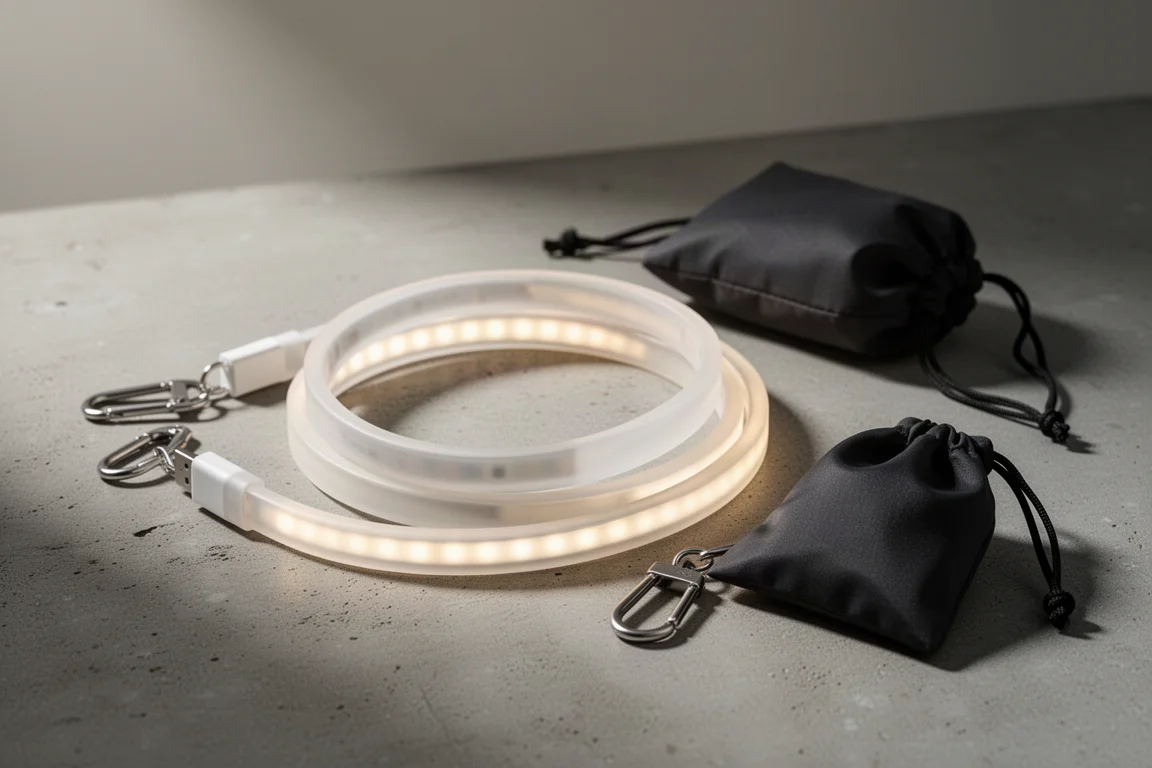
Haven Ridge Light Review: A 3.3-Ounce USB String Light for Camp and Van Life
A packable USB string light that doubles as a lantern, with touch dimming, sliding carabiners, and a very low weight.

Backpacking Gear
Building a 10 lb Base Weight: An Ultralight Backpacking Gear List
A practical walkthrough of the ultralight pieces behind a 10 lb base weight, from a 765 g pack and a roomy one-person tent to a full camp chair and a dependable water filter.

Road Bikes
10 New Road Bikes Worth Watching: Aero, Titanium, Steel and Endurance Standouts
A practical roundup of 10 new road bikes, from aero flagships chasing single-watt gains to titanium, steel and endurance platforms built for real roads.