Bookshelf Speakers
Polk R200 Review: A Bookshelf Speaker With More Bass Than Its Spec Sheet Suggests
A two-way bookshelf speaker with genuine low-frequency weight, a slightly warm mid-range, and articulate treble, plus the placement and amplifier details worth knowing first.
Introduction
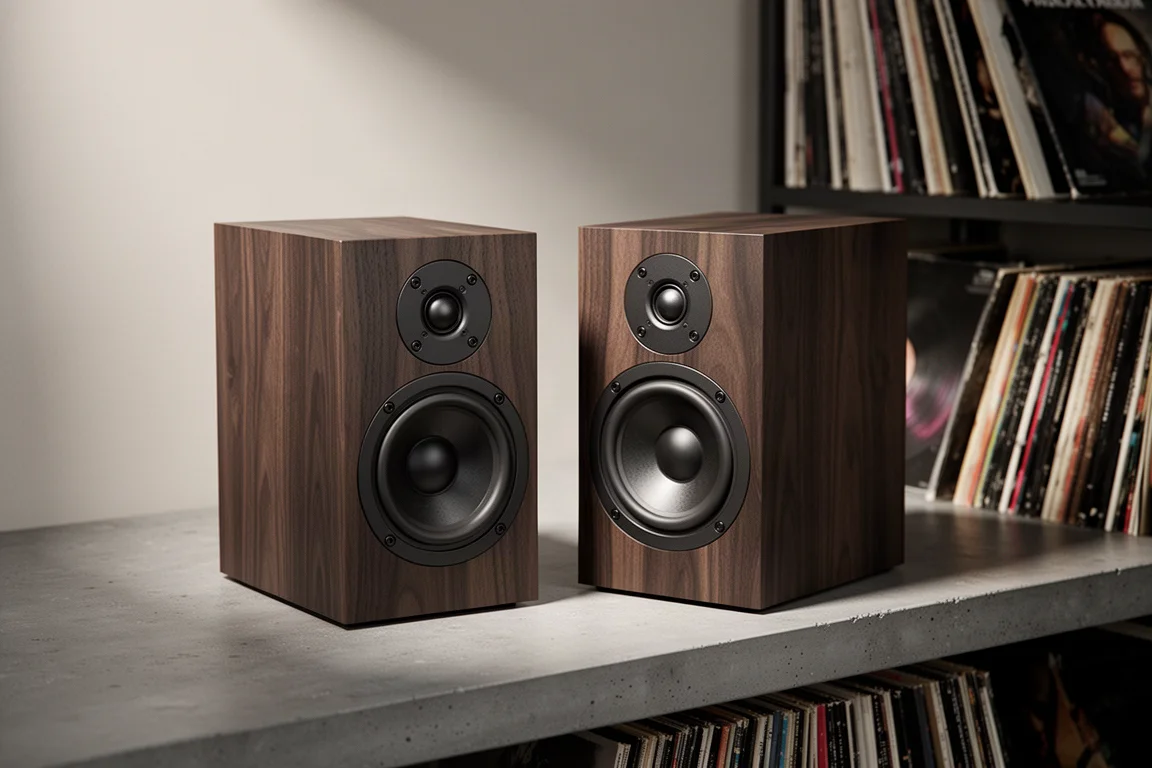
The Polk R200 is a two-way passive bookshelf speaker from Polk’s Reserve series, which brings technology down from the considerably more expensive Legend line. It pairs a 6.5-inch mid-bass driver with a 1-inch ring tweeter, and Polk rates it at 8 ohms nominal with 86 dB sensitivity and a 51 Hz to 38 kHz frequency response.
Regular pricing sits around $750, and the speaker has been available at promotional pricing near $630. At either figure it lines up against several well-established bookshelf models in the same bracket, and it makes a strong case for itself.
Who the Polk R200 Is For
This is a speaker for listeners who want bookshelf-sized cabinets with genuine low-frequency weight and a tonality that leans slightly warm rather than clinical. It suits medium and large rooms, where it has space to breathe and where its bass output stays composed instead of piling up.
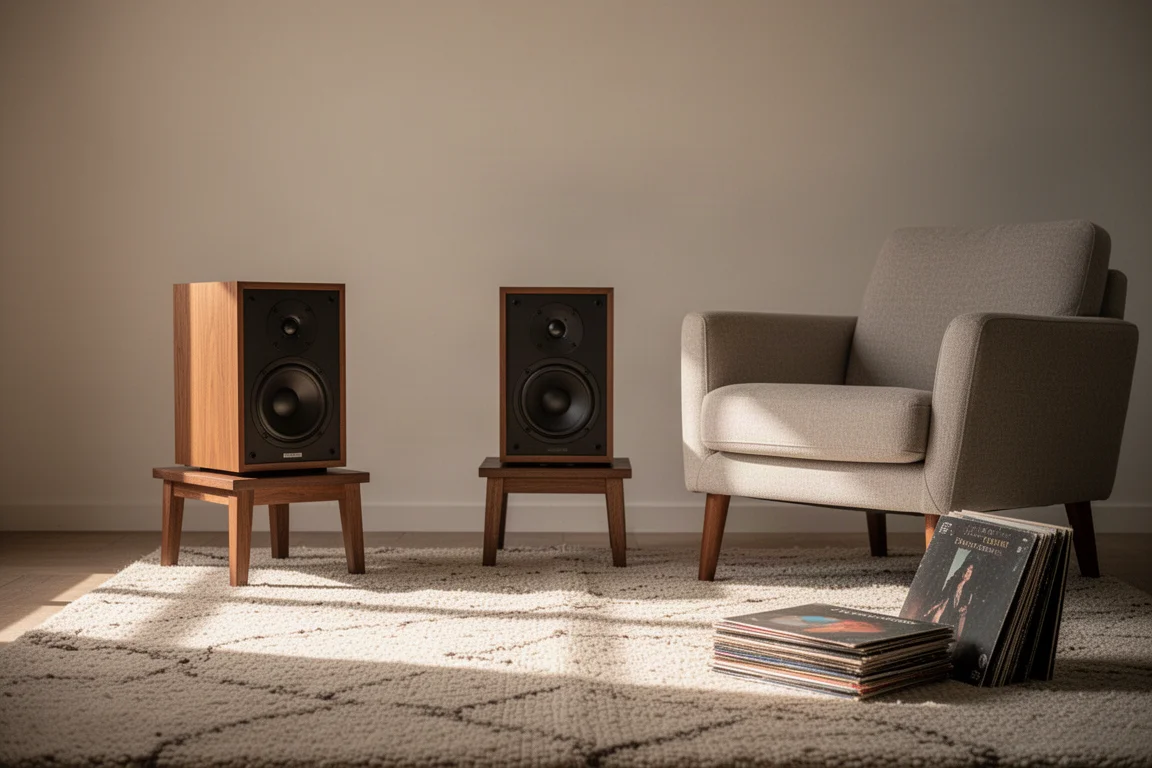
It is a less obvious fit for small rooms, for placement tight against a wall, or for near-field desktop setups where the drivers sit close and directly at ear level. In those situations both the bass energy and the treble presentation can become more than the room absorbs comfortably.
Design, Build, and Placement Notes
The cabinet uses a curved front baffle and feels more heavily braced than its price suggests. Grilles attach magnetically and use a heather gray fabric that reads as a deliberate design choice rather than an afterthought. The rear panel carries a single pair of binding posts, so bi-wiring and bi-amping are not supported without modification, and a redesigned rear port handles low-frequency output.
Physically, the R200 is noticeably deeper than the smaller R100, roughly three inches more front to back, with about an inch of extra height and width. Finishes include a black vinyl wrap and a wood-tone option, and the wood-tone version has the stronger visual appeal of the two. Because the port fires rearward, leaving some distance between the cabinet and the wall behind it helps the speaker image properly.
Main Strengths: Bass and Mid-range
Bass is the headline. The R200 is rated down to 51 Hz, a figure that looks modest next to speakers quoting 40 Hz or lower, yet in practice it delivers extension and punch the number does not suggest. Output stays fairly neutral with a gentle rise rather than a pronounced hump, and low-frequency texture and clarity are excellent, with a thick, leathery character that stays articulate on demanding material.
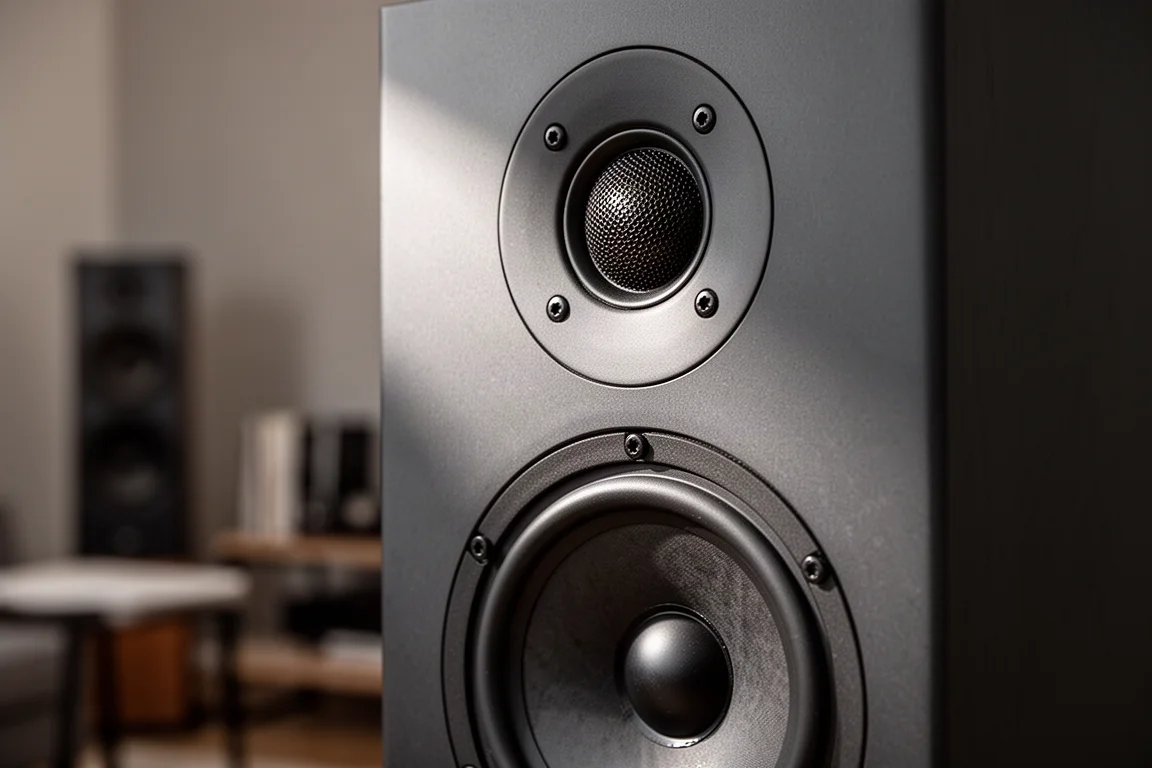
Mid-range performance is equally strong. Vocals come through with body and detail, and the slight warmth does not smear clarity or push the mids into a recessed, distant presentation. Nothing here sounds fatiguing in a normal room.
Treble, Soundstage, and Imaging
Treble is crisp, clear, and believable, with cymbal decay that hangs in the air rather than stopping abruptly. Dense, brightly recorded material stays listenable, and the tweeter behaves like a hybrid in character, combining the smoothness of a well-executed soft dome with some of the speed and air associated with ribbon or AMT designs.
Imaging is a clear strength. Instruments lock into precise positions across the stage, and the presentation has a vertical dimension as well, which places some vocalists above the cabinets. Given room behind the speakers, the stage extends convincingly backwards. The one caveat is treble energy at close range with the tweeter aimed straight at ear level, where the presentation can become tiring.
Amplifier Pairing and Room Placement
With an 8-ohm nominal rating and 86 dB sensitivity, the R200 asks for a little more volume than sensitive designs but does not demand a high-current amplifier. Impedance dips below 8 ohms regularly, yet a modest 35 watts per channel into 8 ohms drove the speaker without strain, and stepping up to a far more powerful two-channel amplifier did not change the fundamental character.
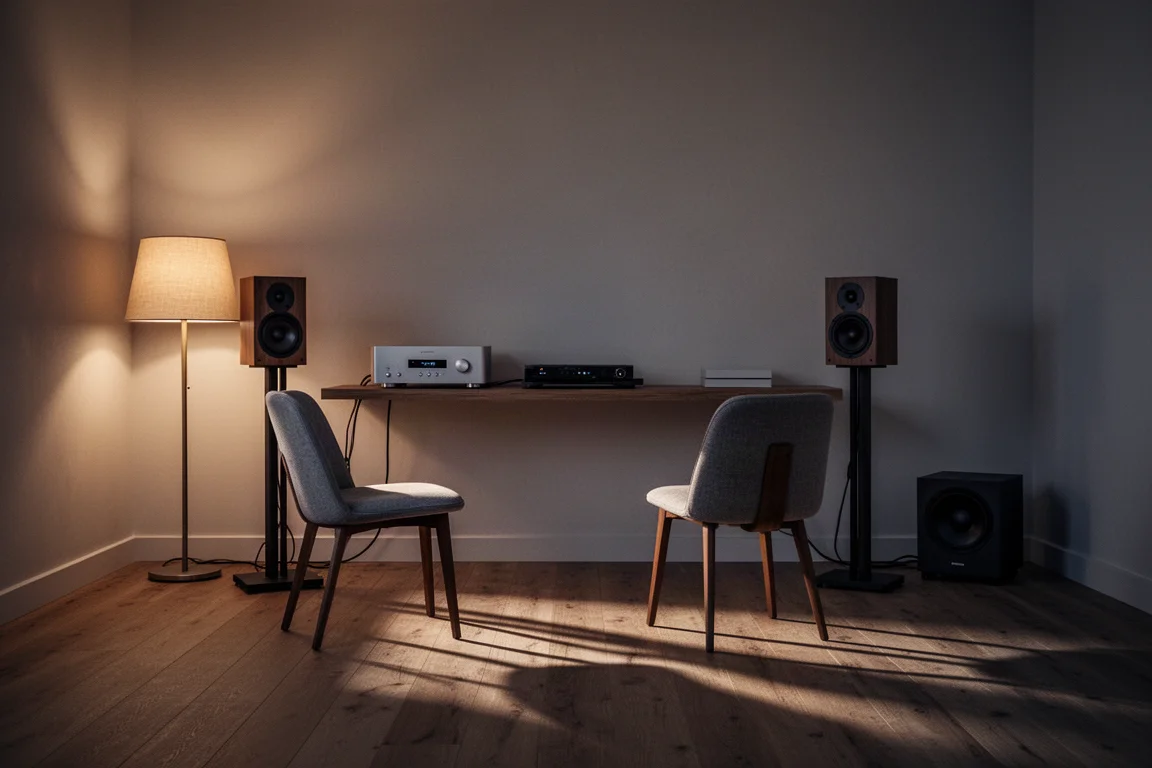
Room size matters more than amplifier muscle. Medium to large rooms let the bass integrate naturally. In a small room, or pushed close to a wall, the low end can build up energy that no amount of amplifier power will fix. Aim for a setup with breathing room on all sides.
Things to Consider Before Buying
Bass output can overwhelm a small room or a placement close to a wall, so the R200 rewards a space that can accommodate it. The 86 dB sensitivity means some amplifiers will need a higher volume setting for the same loudness. There is no bi-wiring or bi-amping provision, the black finish is a vinyl wrap rather than a real wood veneer, and the treble can become tiring if the speaker is aimed directly at the listening position from close range.
On paper the 51 Hz rating may look unremarkable next to alternatives such as the ELAC Debut Reference, the ELAC Uni-Fi 2.0, or the Wharfedale Evo 4.1. Those designs have their own advantages, including a more strictly neutral balance or a wider sense of immersion in some cases, but the R200 counters with deeper bass punch and a larger overall sense of scale.
Buying Advice
At promotional pricing near $630, the R200 is one of the more compelling bookshelf speakers in its bracket, and it remains worth considering at the roughly $750 regular price. It suits listeners who want warmth, clarity, and genuine bass extension from a pair of standmount speakers in a medium or large room.
If a perfectly flat, studio-neutral balance is the priority, or if the room is small, other designs in the same price range may fit better. For most listeners with adequate space, the R200 delivers a well-rounded, confident performance that is difficult to fault at this price.
Conclusion
The Polk R200 takes technology from a far more expensive speaker line and packages it in a bookshelf cabinet that punches well beyond its spec sheet. Its bass weight, slightly warm mid-range, and articulate treble make it an easy recommendation for medium and large rooms, provided the buyer accounts for placement and a modest amount of amplifier headroom. At sale pricing it stands out; at full retail it is still a serious contender.
Product link
View more details for Polk R200
This product is mentioned in the review. Check the specifications, options, and compatibility before buying.
View more details for Polk R200Further reading
Related Reviews
Bookshelf Speakers
Acoustic Energy A100 Mark II Review: A Compact Standmount With an Expansive Soundstage
The Acoustic Energy A100 Mark II brings clarity, natural tonality and a wide soundstage to an entry-level standmount, with a few setup details worth knowing first.
Bookshelf Speakers
Acoustic Energy AE-100 Mark II Review: Compact Bookshelf Speakers With Standout Imaging
A compact British two-way bookshelf speaker with deep, layered imaging, fast bass, and a slight treble lift to weigh against a crowded $500 field.
Bookshelf Speakers
Acoustic Energy AE100 MK2 Review: Measured Performance and Four Alternatives
A close look at the Acoustic Energy AE100 MK2 bookshelf speaker, what its measured performance reveals, and four alternatives with different trade-offs.