Bookshelf Speakers
Polk R100 vs Polk R200: Which Reserve Bookshelf Speaker Should You Buy?
A close comparison of the Polk R100 and Polk R200 bookshelf speakers, covering imaging, midrange character, bass, dynamics, and which one suits your room and music.
Introduction
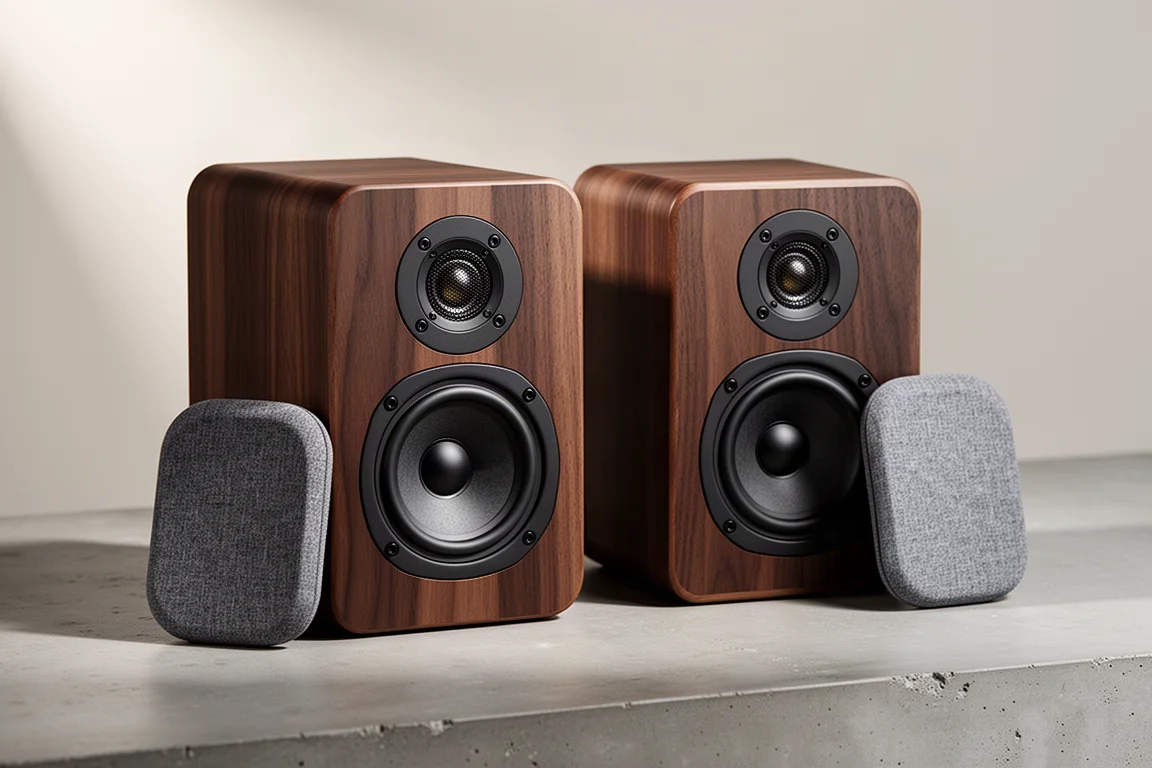
Polk’s Reserve series borrows technology from the company’s more expensive Legend line, and the two bookshelf models at the heart of that range are the R100 and the R200. They look like siblings, they share a tweeter, and they carry the same reported sensitivity, so it is fair to ask whether the larger model is simply the better buy. The honest answer is that the two are tuned differently, and the right choice depends on the music you play and the room you play it in.
This comparison covers what the R100 and R200 share, where they diverge, and which one makes more sense for a given setup.
Shared Design and Build Quality
Start with the specifications, because the two speakers are closer than their price gap suggests. Both are rated at 86 dB sensitivity, which describes how loud a speaker plays for a given power rating, so in theory they should reach similar loudness from the same amplifier. In listening, that is exactly how it works out. Both use the same ring tweeter, and both are rated to roughly 38,000 to 39,000 Hz at the top of their range.
The differences sit lower down. The R100 uses a 5.25-inch woofer and is rated down to 58 Hz, while the R200 uses a 6.5-inch woofer and reaches a rated 51 Hz. The R200 cabinet is also larger, roughly an inch taller and about three inches deeper, which gives the bigger woofer more air to work with.
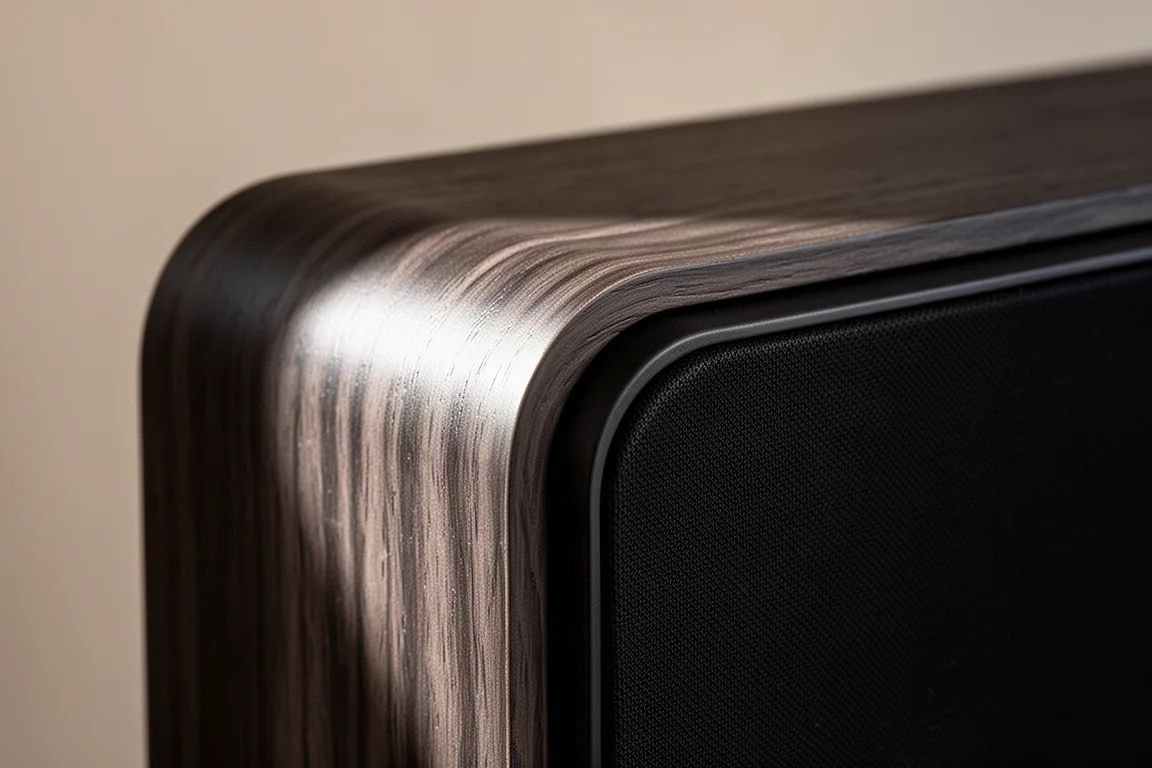
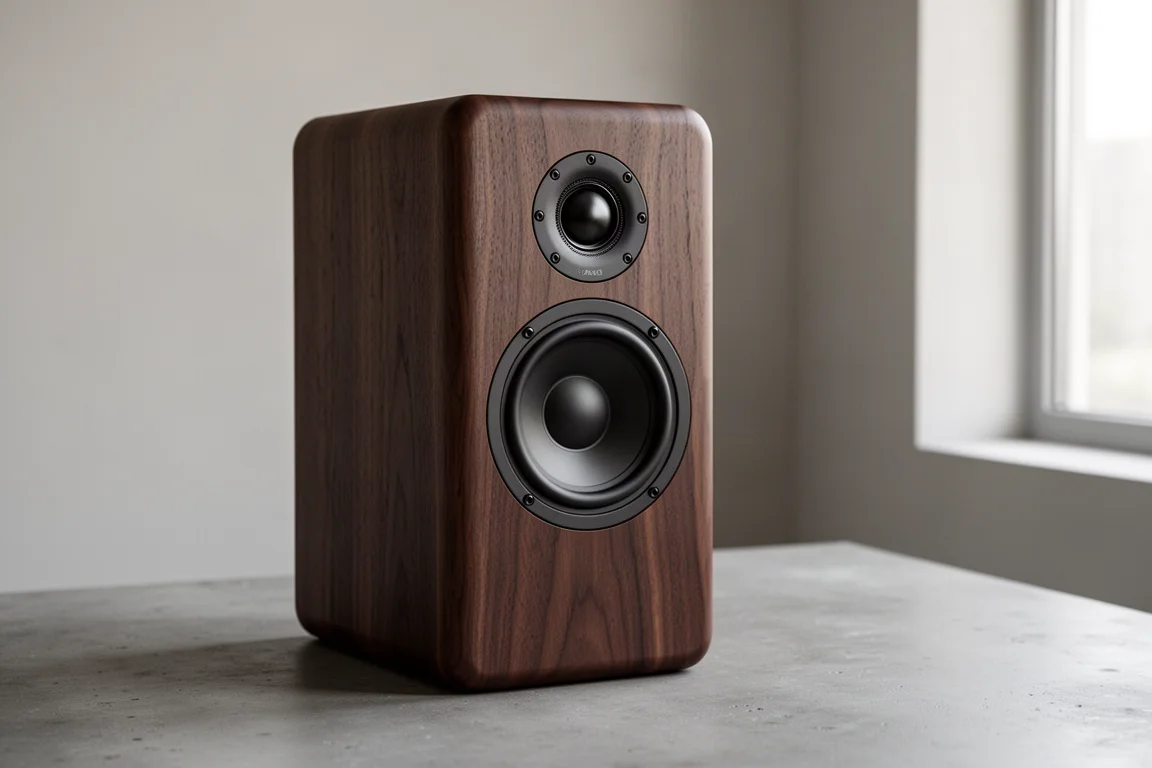
Both cabinets are braced well and feel inert, so the enclosure should not start vibrating and add unwanted frequencies to the sound. Rounded front edges and magnetic heather gray grilles give both models a two-tone look, and buyers can choose between a black vinyl wrap and a wood-effect finish. The black option is a straightforward vinyl covering rather than an imitation of black ash, and both finishes look handsome in person.
Polk R100: Articulate and Cool in the Midrange
The R100 leans toward detail. Its midrange has a cooler, more neutral character, and it pulls a lot of information out of a recording. Female vocals are a particular strength, and acoustic instruments come across with strong separation between them. Lateral imaging and centre focus are where this speaker is at its best, placing performers across the stage in a way that is easy to follow.
That precision does not come across as sterile or overtly analytical. It simply trades some warmth for clarity, which suits listeners who want to hear what is on the recording rather than a smoothed-over version of it.
Soundstage and Imaging: Two Different Strengths
This is where the comparison stops being a simple question of size. The R100 does the better job of lateral imaging and centre imaging, keeping individual instruments and voices distinct from left to right. The R200 produces more depth instead, with more of the performance seeming to sit behind the speakers and a little in front of them.
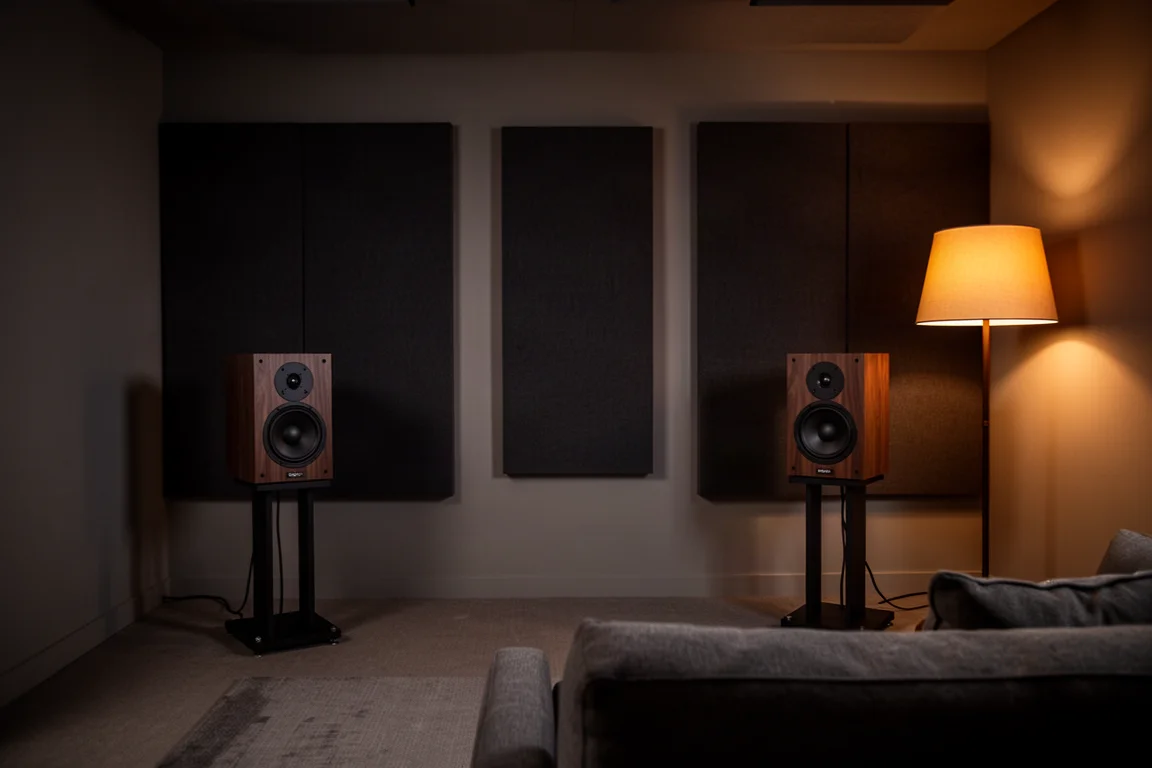
Neither speaker wins outright here. If a wide, clearly defined left-to-right stage matters most, the R100 is the more convincing of the two. If a deep, layered stage is the priority, the R200 delivers more of it. Room placement matters for both. Pulling them well out from the front wall reduces room interaction, and the larger R200 is the more sensitive of the two to being pushed close to a wall, where its extra low-frequency output can start to sound boomy.
Polk R200: Bigger Bass, Warmer Tone, Deeper Stage
The R200 uses its larger cabinet and 6.5-inch woofer to deliver more bass presence and deeper extension, and it hits noticeably harder than the R100. Its midrange is warmer and richer, which flatters male vocals, and the overall presentation is more relaxed and laid back. It has also earned speaker-of-the-year recognition, which reflects how well it performs in its class.
Dynamics are the other clear advantage. The R200 moves from quiet to loud passages with more ease and handles heavy hits better, which makes it a stronger match for electronic music, rock, and metal.
The trade-off is refinement at the low end. The R200 was never muddy and never placed a veil over the midrange, but its bass is not as clean or as quick as the R100’s, and instrument separation through the lower mids is not quite as good.
Midrange, Treble, and Bass Compared
Treble is effectively a draw. Because both speakers use the same ring tweeter, they share the same character at the top end: detailed and clean, with good decay and timbre. Cymbals do not sound overly metallic or carry the hard edge often associated with a metal dome, and the ring design sits somewhere between a metal dome and a soft dome in character, with a little more detail than the soft dome and less metallic bite than the metal dome. The treble seems more prominent on the R100 only because the R200’s extra bass shifts the overall balance.
The midrange splits along the same lines as the rest of the sound. The R100 is the cooler, more detailed option, especially with female vocals and acoustic material, while the R200 is warmer and more romantic, with a little less detail but a fuller tone.
Bass comes down to quantity against quality. The R200 plays deeper and louder and will fill a larger room more convincingly. The R100 is tighter, faster, and cleaner, and it keeps the lower mids better separated. Listeners who want weight and impact will prefer the R200. Listeners who want agility will prefer the R100.
Who Each Speaker Suits
The R100 suits listeners who value articulation, a neutral midrange, and precise lateral imaging, and who work in a smaller room or a nearfield setup. Its cleaner bass also helps when the speakers cannot sit far from the wall.
The R200 suits listeners who want more low-end weight, a warmer midrange, and a deeper soundstage, and who have the space to let a larger cabinet breathe. It is the more dynamic of the two and the better choice for electronic music, rock, and metal.
Buying Advice
Retail pricing is $650 for the R100 and $750 for the R200, and both regularly sell below those figures. The R200 has dropped to around $550 during promotions, so timing a purchase around a sale is worthwhile. Even at full retail, both are worth the money.
The decision is not really about which speaker is better, because they are tuned for different tastes. The R100 is the more articulate speaker overall and the one to choose if clarity and imaging come first. The R200 is the more physical and dynamic speaker and the one to choose if depth and bass weight matter more.
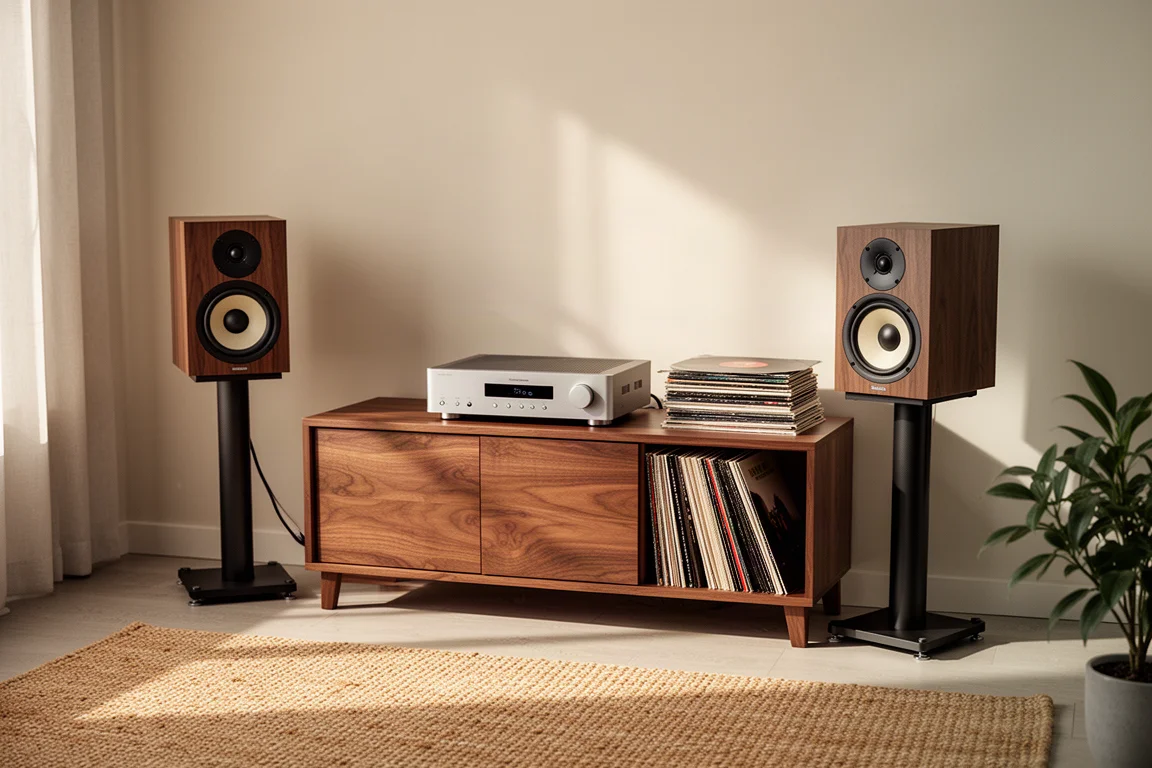
One practical note applies to both. Give them room to breathe, and if the R200 is going to sit close to a wall, plan on some low-frequency management, because its extra bass output is the first thing that will suffer in a tight position.
Conclusion
The R100 and R200 sound more alike than different in the treble, but they part ways in the midrange and bass. The R100 is cooler, faster, and more detailed, with better lateral imaging and a cleaner low end. The R200 is warmer, deeper, and more dynamic, with bass that hits harder and a soundstage with more depth. Neither is a mistake. Match the tuning to your music and your room, and either speaker will be a satisfying long-term partner.
Further reading
Related Reviews
Bookshelf Speakers
Acoustic Energy A100 Mark II Review: A Compact Standmount With an Expansive Soundstage
The Acoustic Energy A100 Mark II brings clarity, natural tonality and a wide soundstage to an entry-level standmount, with a few setup details worth knowing first.
Bookshelf Speakers
Acoustic Energy AE-100 Mark II Review: Compact Bookshelf Speakers With Standout Imaging
A compact British two-way bookshelf speaker with deep, layered imaging, fast bass, and a slight treble lift to weigh against a crowded $500 field.
Bookshelf Speakers
Acoustic Energy AE100 MK2 Review: Measured Performance and Four Alternatives
A close look at the Acoustic Energy AE100 MK2 bookshelf speaker, what its measured performance reveals, and four alternatives with different trade-offs.