Bookshelf Speakers
Polk ES15 Review: A Warm, Detailed Bookshelf Speaker Under $300
The Polk ES15 pairs a strong, slightly emphasized low end with a smooth, fatigue-free treble. Here is what it does well, where it holds back, and who should buy it.
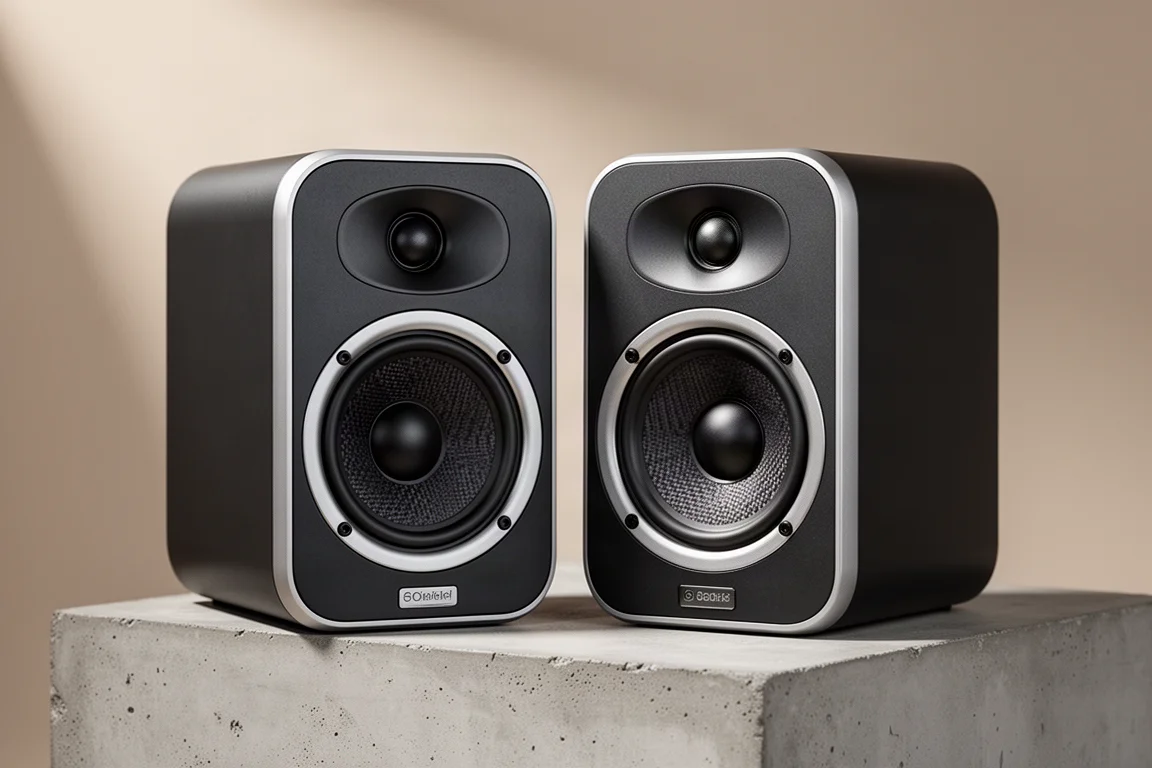
Introduction
The Polk ES15 is the smallest bookshelf model in Polk’s Signature Elite range, which sits above the entry-level XT series. It is a two-way design built around a 5.25-inch woofer and a 1-inch soft dome tweeter, and it sells for roughly $270 while discounted, against a list price of about $299.
What makes it interesting is not the spec sheet but the tuning. Rather than chasing maximum detail and a bright top end, the ES15 leans warm, keeps a confident low end, and stays comfortable when the volume goes up. That combination is uncommon in this price bracket, where speakers often trade midrange body for extra sparkle.
Who This Speaker Is For
The ES15 suits listeners building a first serious two-channel system, and anyone who finds bright speakers tiring over long sessions. Its warmer balance and smooth top end make it easy to live with for hours, which matters if you listen while working or late into the evening.
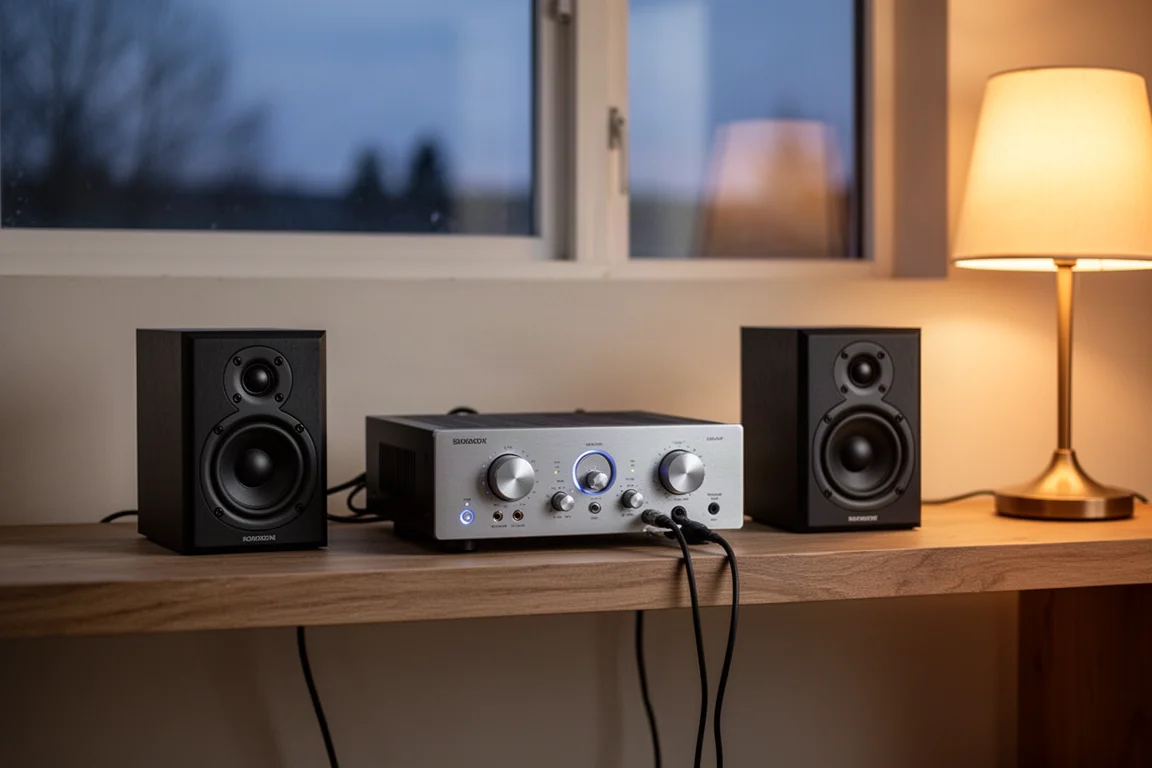
It also rewards sensible placement. Across three different rooms, with side and rear walls in consistent positions, it produced a stable, well-defined image. It works from roughly 12 inches to 2.5 feet from the wall behind it, so it fits small offices, bedrooms, and modest living rooms without demanding a dedicated listening space.
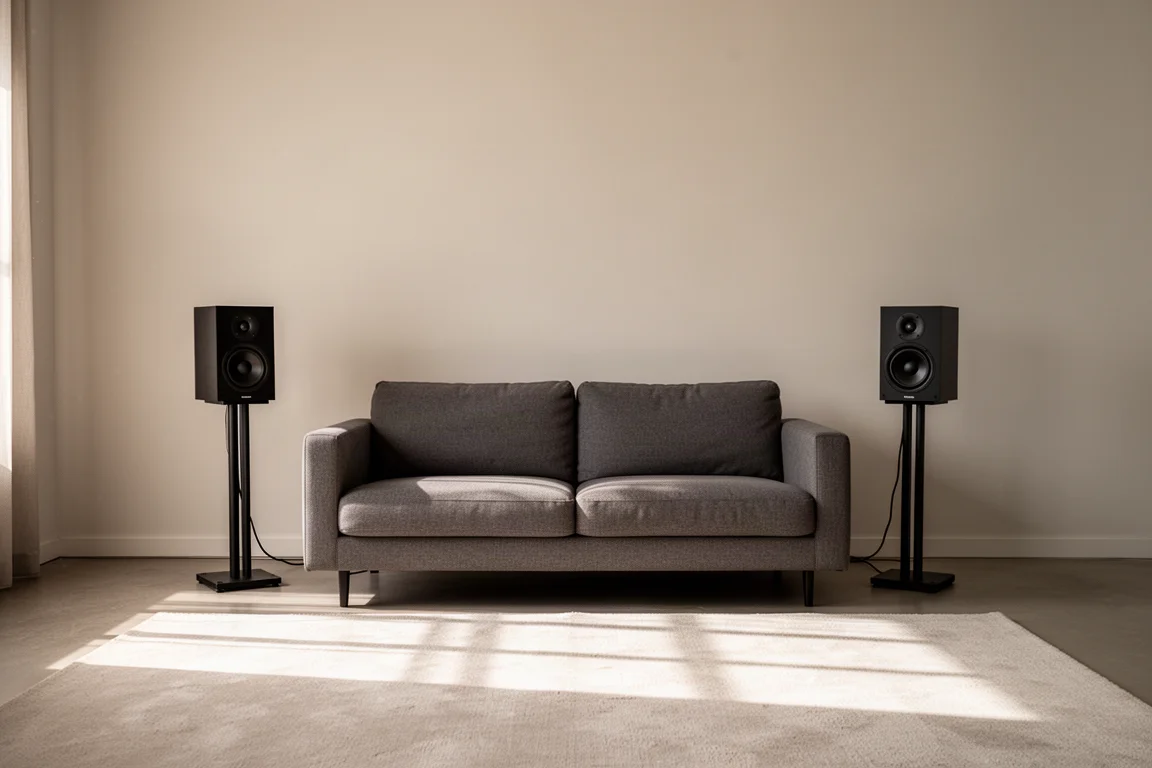
You can also hang it on a wall or use it as a surround, but the design clearly deserves a proper stereo pair rather than a background role.
Design and Build Quality
The review sample is black with silver highlights, and Polk offers the model in several finishes. The cabinet is wrapped in a vinyl wood-grain covering over a plastic faceplate rather than real veneer, but the finish looks tidy and the construction is where the money went.
Bracing and the crossover have both been revised compared with the earlier S series, and the cabinet feels notably inert. On the rear there is a Power Port, a funnel-shaped port structure that reduces port noise and extends bass output by up to 3 dB. For the money, this is among the best-braced Polk cabinets outside the step-up Reserve series.
How It Sounds: Bass, Midrange, and Treble
The ES15 was driven by a range of amplifiers, from vintage integrateds to a compact class D unit, with a Geshelli Labs J2 DAC as the main source. It behaved consistently across all of them.
Bass and Low-End Presence
Polk rates the ES15 from 44 Hz to 40,000 Hz, and the low end feels more generous than that figure suggests. Bass is emphasized, with a lift in the 80 to 100 Hz region that gives recordings a sense of scale. Big kick drums land thicker than on many similarly priced speakers, and the boost never smears the midrange or turns muddy.
The trade-off is nuance. Low-frequency tone and texture are good rather than exceptional, and listeners who prize the fine detail of bass notes will find more refinement elsewhere. For a genuinely full-range result, a subwoofer is still required.
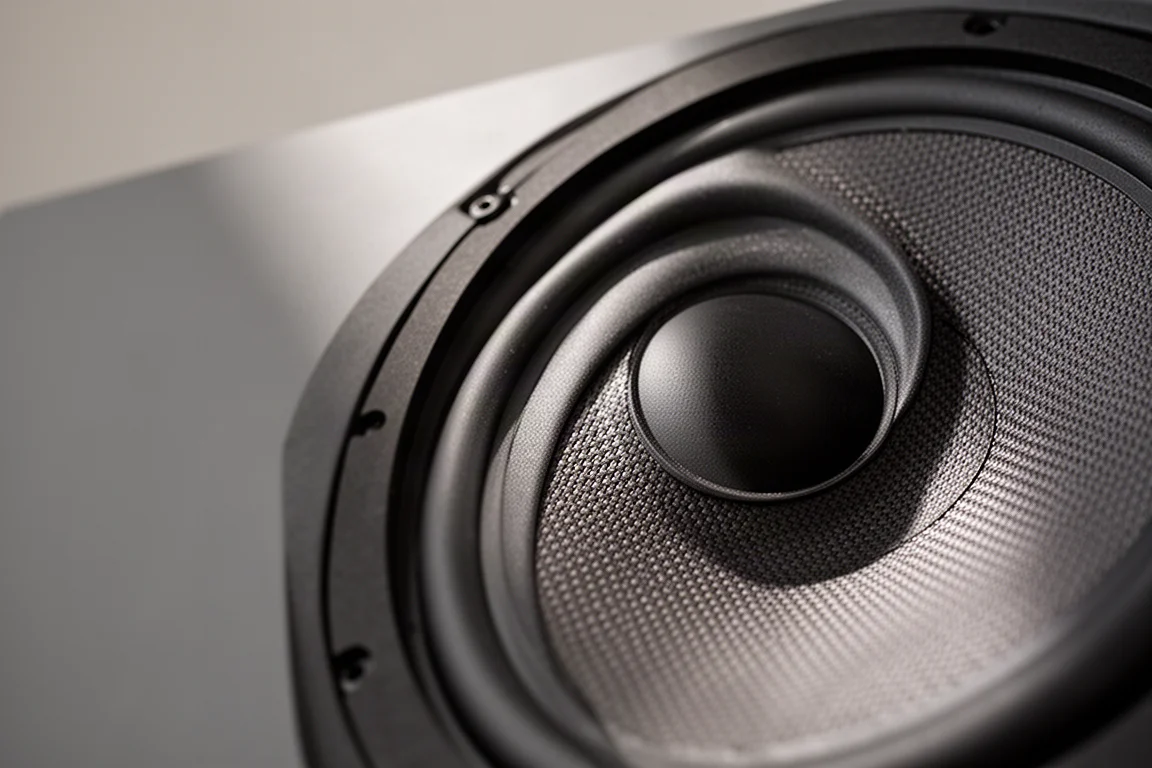
Even so, extension is impressive for a cabinet this size, and the tuning keeps the low end musical rather than bloated.
Midrange Warmth and Detail
The midrange is warm and detailed at the same time. Male vocals and the lower register of acoustic guitars come across richer and fuller, and the result is a smooth, soulful presentation rather than an analytical one.
Female vocals are less forward than on speakers with a lift in the 1 to 2 kHz range, but they are never veiled or covered up. There is still detail there, just delivered more gently.
Treble and Long-Listening Comfort
Treble is smooth and slightly rolled off. It is detailed without being especially airy, and cymbal decay is present without being pushed forward. Compared with brighter designs, the top end is less of a spectacle.
That restraint is the point. The ES15 can be played loudly without becoming shouty or fatiguing, which is rare at this price and makes it an easy speaker to keep on for long stretches.
Things to Consider Before Buying
- The balance is mildly U-shaped, so it is not a neutral monitor. Listeners who want pure accuracy should look at a more neutral alternative.
- The bass lift adds scale and weight, but it can thicken some recordings.
- Bass tone and texture are solid rather than class-leading.
- A subwoofer is needed for full-range listening.
- The smooth treble means slightly less air and sparkle than brighter competitors.
- Placement matters. It performed best with consistent side and rear walls, between roughly 12 inches and 2.5 feet from the wall behind it.
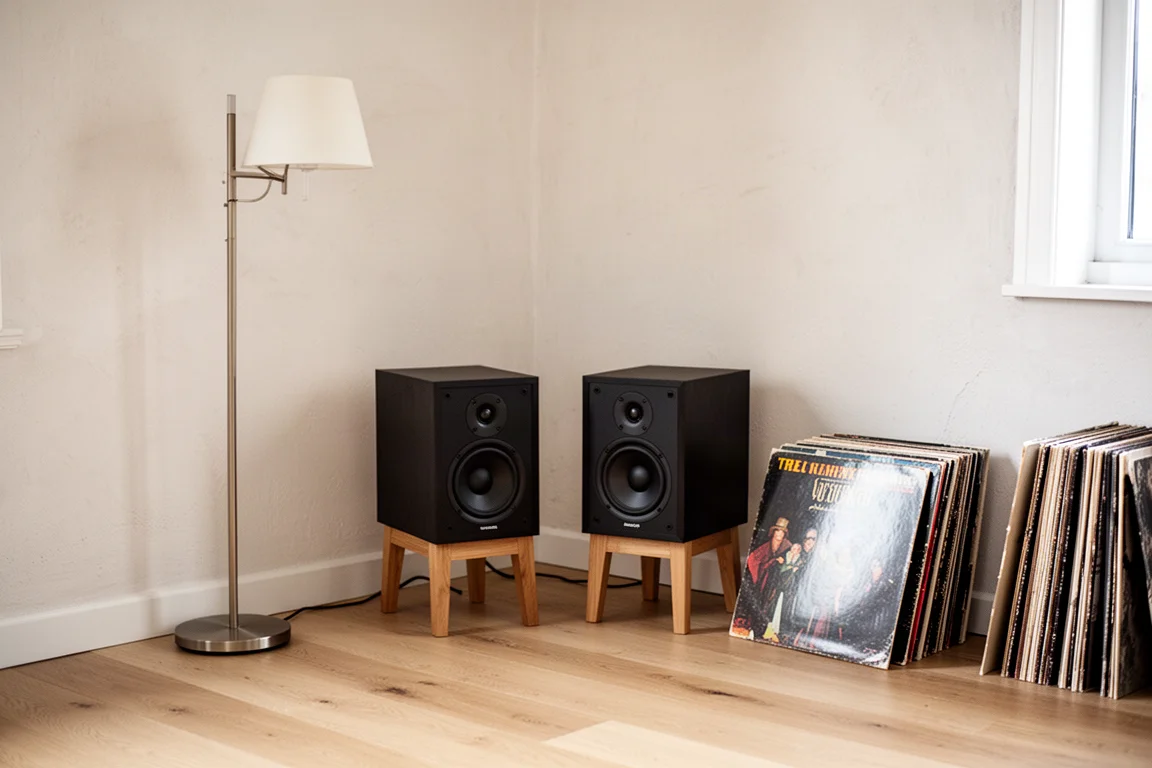
None of these are dealbreakers at this price, but they are the reasons to choose the ES15 for its character rather than for flat, studio-style accuracy.
How the ES15 Compares
The ES15 takes a warmer, more forgiving route than the more neutral Q Acoustics 3020i, which remains the pick for listeners who want the most even balance. Within Polk’s own range, the ES15 offers tighter control and a less sparkling top end than the XT20, which uses a larger cabinet and reaches down to 38 Hz.
Against the Emotiva B1+, the ES15 leans warmer and softer, which makes the two complementary companions rather than direct substitutes for someone assembling a second system. Its closest relative in character is the ELAC Debut Reference, which shares that buttery quality but costs considerably more.
Buying Advice
At around $270, the ES15 is one of the strongest options in its price class, and it earns that position on character rather than specification. Buy it if you want a warm, detailed, fatigue-free speaker that handles a wide range of music and stays enjoyable at higher volumes.
Before ordering, decide on a finish, budget for stands or wall mounts, and plan for a subwoofer if deep bass matters to you. Price protection is also worth checking: some retailers offer a price-match window of around 60 days, which means a sale that lands shortly after purchase can still be credited back, while others do not match at all.
If your priority is neutrality instead, the ES15 is not the obvious choice, and a more even-sounding speaker will serve you better.
Conclusion
The Polk ES15 does something specific and does it well. It pairs a confident, slightly emphasized low end with a warm midrange and a smooth treble, then stays composed when pushed. Build quality is excellent for the price, and the cabinet bracing is the best Polk offers below its Reserve series.
If you want a compact, affordable bookshelf speaker that is rich, detailed, and never tiring, the ES15 deserves a serious look. If you want flat accuracy above all else, look elsewhere.
Product link
View more details for Polk ES15
This product is mentioned in the review. Check the specifications, options, and compatibility before buying.
View more details for Polk ES15Further reading
Related Reviews
Bookshelf Speakers
Acoustic Energy A100 Mark II Review: A Compact Standmount With an Expansive Soundstage
The Acoustic Energy A100 Mark II brings clarity, natural tonality and a wide soundstage to an entry-level standmount, with a few setup details worth knowing first.
Bookshelf Speakers
Acoustic Energy AE-100 Mark II Review: Compact Bookshelf Speakers With Standout Imaging
A compact British two-way bookshelf speaker with deep, layered imaging, fast bass, and a slight treble lift to weigh against a crowded $500 field.
Bookshelf Speakers
Acoustic Energy AE100 MK2 Review: Measured Performance and Four Alternatives
A close look at the Acoustic Energy AE100 MK2 bookshelf speaker, what its measured performance reveals, and four alternatives with different trade-offs.