Bookshelf Speakers
Polk Audio R200 AE Review: A Limited 50th Anniversary Bookshelf Speaker
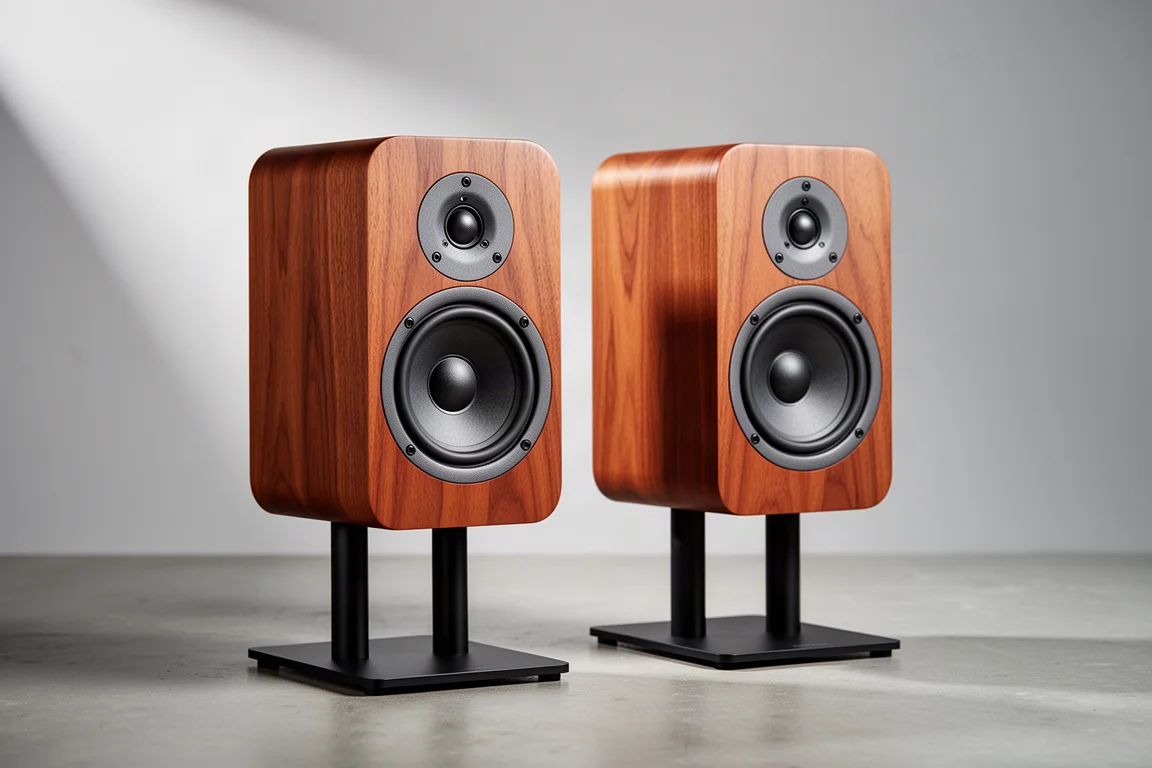
The Polk Audio R200 AE wraps the Reserve R200 in a furniture-grade cherry cabinet and caps the run at 1,000 pairs, while delivering the same neutral sound as the standard model.
Introduction
Polk Audio has been building loudspeakers since 1972, and the company’s first consumer model, the Monitor 7, arrived in 1974. Five decades later, the brand marked the milestone with a special edition of one of its most respected current designs, the Reserve R200. The Polk Audio R200 AE takes that stand-mount speaker, dresses it in a cherry wood cabinet, adds a few hardware touches, and caps the run at 1,000 pairs worldwide.
That raises the question any careful buyer should ask first: does the anniversary treatment change anything you can actually hear, or is this purely a cosmetic celebration? The answer turns out to be straightforward, and it matters for how you spend your money.
Who This Speaker Is For
The R200 AE is a compact stand-mount design, which makes it unusually flexible for a speaker at this level. It can sit on stands in a dedicated listening room, on a sideboard in a living space, or in a smaller apartment where floorstanding cabinets simply will not fit. Because the tuning stays neutral rather than aggressive, it works as well with films as it does with music.
The limited run of 1,000 pairs also gives it a collector angle. Each retail pair carries a brass plaque with Matthew Polk’s signature and its own serial number, so the speaker is aimed at listeners who want a numbered piece of the brand’s history alongside the sound quality.
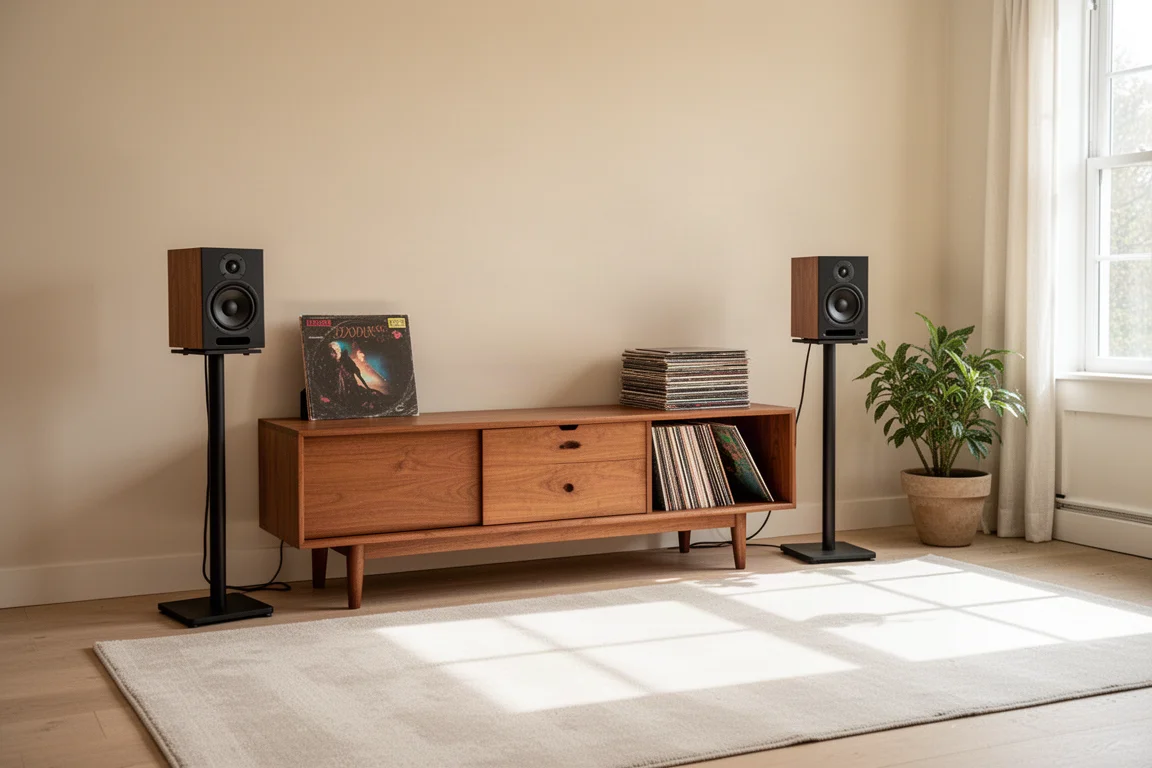
Practically speaking, this is a speaker for someone who wants one pair to do everything reasonably well: two-channel listening, movie nights, and long sessions without fatigue. If you already own the standard R200, the case is different, and that is worth understanding before ordering.
What the Anniversary Edition Changes
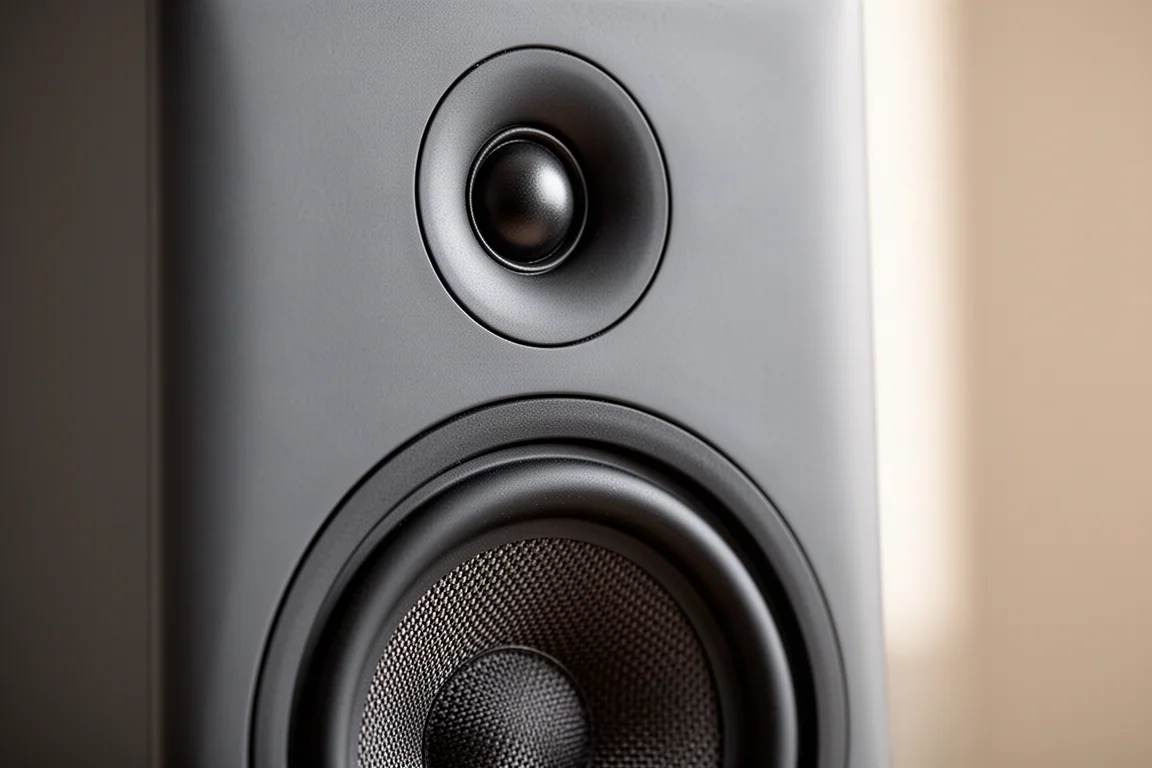
Underneath, the two speakers are closely related. The R200 AE keeps the same one-inch Pinnacle ring radiator tweeter and the same 6.5-inch turbine cone mid-bass driver, paired with a rear-facing port. The reported frequency response is identical at 39 Hz to 50 kHz, with the same 86 dB sensitivity and 3.8 ohm impedance. Polk states that the anniversary model uses upgraded crossover parts, though those changes do not show up in the published specifications.
What is immediately visible is the cabinet. The cherry wood finish on the anniversary edition is a clear step above the standard model, with a furniture-grade quality that reads as noticeably more expensive in person. Around the back, the binding posts have been upgraded and the brass plaque sits alongside them, carrying the founder’s signature and the speaker’s unique serial number.
Note that the pairs supplied for evaluation were unnumbered press samples, so a retail pair is the only way to own one of the 1,000 numbered sets.
Main Strengths
Sound quality is where this speaker justifies its reputation. The presentation is impressively linear, with a taut and rich low end, a neutral and intelligible midrange, and smooth, extended treble. That combination holds up across genres and works just as convincingly with film dialogue and effects as it does with music.
Dynamically, the R200 AE needs a little volume before it comes alive. Given some power, it responds with confident, agile reflexes rather than sounding strained or compressed. It is a speaker that rewards a normal listening level rather than background playback.
Soundstaging is the other standout. With roughly eight to nine feet between the two cabinets, the R200 AE opens up into a wide, holographic stage with excellent separation and a solid centre image. That sense of space is one of the more persuasive reasons to choose this speaker over a smaller or more forward-sounding alternative.
Things to Consider Before Buying
The rear-facing port means placement deserves attention. Allow roughly 18 inches of clearance from the wall behind the speakers. Pushing them closer to a wall will add boundary reinforcement and a fuller low end, but the most linear transition between bass and midrange appears when the cabinets sit further out into the room.
The second consideration is honest but important: in both objective and subjective testing, no discernible difference in sound quality emerged between the R200 AE and the standard R200. Frequency sweeps from 20 Hz to 20 kHz, run at the listening position and in the near field, showed no meaningful variation. Whatever Polk has changed inside, it has not altered measurable performance.
Finally, the run is genuinely limited. With only 1,000 pairs available worldwide, availability is likely to tighten rather than improve, and the cherry finish will not suit every room.
Setup and Placement
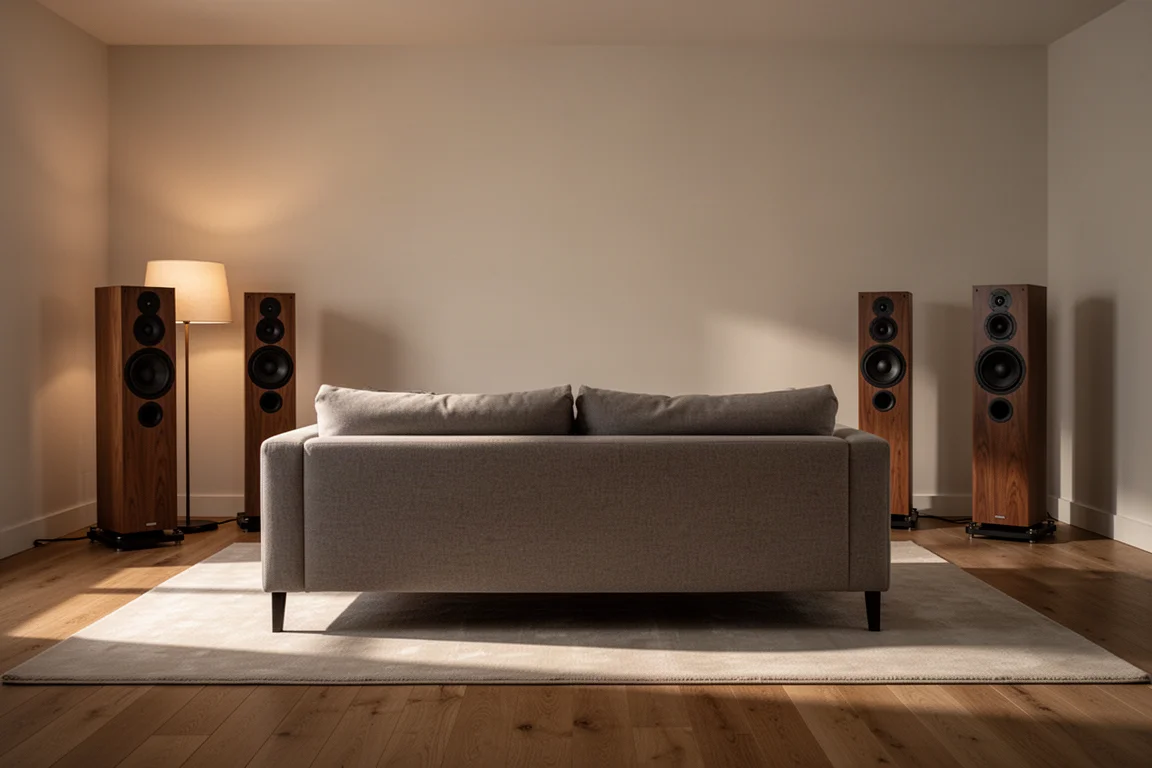
Setup itself is uncomplicated. In testing, the speakers were placed about nine feet apart and gently toed in toward a listening position roughly 11 feet away, with no subwoofer used to extend the bottom end. The cabinets ended up around two and a half feet out from the wall, which produced the most linear bass-to-midrange handover.
Amplification proved undemanding. A range of amplifiers drove the speakers to reference levels with little to no trouble, including a budget-oriented AV receiver, which is a useful signal for anyone building a system around a modest electronics budget. For critical listening and measurement, a Marantz Model 40n and a Technics model were used, and the Marantz was considered the more appropriate financial match for a speaker at this price.
How It Compares With Other Speakers
At just under $1,300 per pair, the R200 AE sits in a competitive bracket. Against the Sonus Faber Lumina II, which shares a similar price and build quality, the Polk is the more neutral and accurate of the two, while the Lumina II leans brighter with a more immediate sense of detail and a more pronounced lift in the bass. Against the Pro-Ject Speaker Box 5 S2, the two are neck and neck from the midrange upward, with the Polk reaching deeper in the bass while keeping the same neutrality it maintains elsewhere. Moving upmarket, the Bowers & Wilkins 705 S3 delivers a stronger first impression of detail, but the Polk stays more even-keeled across a wide range of material and is far less likely to be described as forward or fatiguing.
That is a strong position for a speaker that costs less than several of its rivals. The anniversary edition does not buy you extra performance, but it does buy you a finish and a set of details that the standard model cannot match, and the price does not stretch into the territory where that trade-off would be hard to defend.
Buying Advice
If you are choosing between the two versions, decide what you are actually paying for. The standard R200 delivers the same measured and subjective performance, and it remains the better value if sound quality is your only criterion. The R200 AE makes sense if the cherry cabinet, upgraded binding posts and signed plaque are worth the premium to you, or if you want a numbered piece of a 50-year story.
For anyone building a first serious two-channel system, the case is easy to make. A neutral, linear stand-mount that plays deep for its size, stages convincingly when given room to breathe, and works with affordable amplification is a sensible long-term purchase. Pair it with an amplifier in the same general price band, leave space behind the cabinets, and the speaker will not be the limiting factor in the system.
If you already own the R200, there is no sonic reason to upgrade. Enjoy what you have, and treat the anniversary model as what it is: the same excellent speaker in its best suit.
Conclusion
The Polk Audio R200 AE is a limited-edition version of a speaker that was already best in class at its price. The cherry cabinet, upgraded binding posts and serial-numbered brass plaque make it the more handsome and better-finished of the two, and the run of 1,000 pairs gives it a collectible edge.
Sonically, it matches the standard R200 exactly, which is a compliment rather than a criticism. Buy it for the finish, the ownership experience and the milestone it represents. Buy the standard model if you simply want the sound. Either way, you are getting a reference-calibre stand-mount speaker that should serve happily for years.
Product link
View more details for Polk Audio R200 AE
This product is mentioned in the review. Check the specifications, options, and compatibility before buying.
View more details for Polk Audio R200 AEFurther reading
Related Reviews
Bookshelf Speakers
Acoustic Energy A100 Mark II Review: A Compact Standmount With an Expansive Soundstage
The Acoustic Energy A100 Mark II brings clarity, natural tonality and a wide soundstage to an entry-level standmount, with a few setup details worth knowing first.
Bookshelf Speakers
Acoustic Energy AE-100 Mark II Review: Compact Bookshelf Speakers With Standout Imaging
A compact British two-way bookshelf speaker with deep, layered imaging, fast bass, and a slight treble lift to weigh against a crowded $500 field.
Bookshelf Speakers
Acoustic Energy AE100 MK2 Review: Measured Performance and Four Alternatives
A close look at the Acoustic Energy AE100 MK2 bookshelf speaker, what its measured performance reveals, and four alternatives with different trade-offs.