Fitness Tech
Polar H10 vs H9 vs Verity Sense: Which Heart Rate Monitor Fits Your Training
Three accurate Polar heart rate sensors, three different wear styles. Here is how the chest straps and the arm band differ, and which one makes sense for your workouts.
Introduction
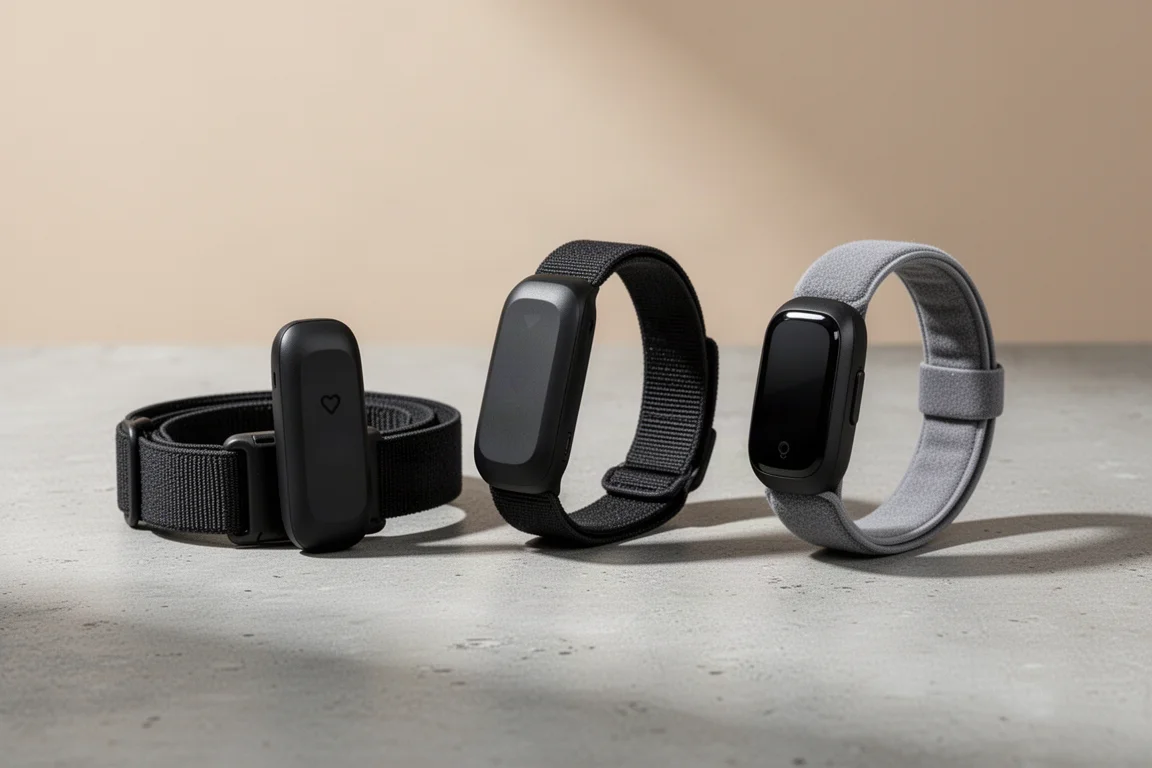
When it comes to external heart rate monitors, Polar makes some of the most accurate options in the industry, and three of them cover very different needs: the Polar H10, the Polar H9, and the Polar Verity Sense. All three are sensors many athletes use as reference points when comparing heart rate accuracy with other devices. The question is not which one is best in the abstract, but which one fits how you actually train.
Why You Might Need an External Heart Rate Monitor
Wrist-based optical heart rate sensors in smartwatches and sports watches keep improving, but the wrist is simply not the most ideal place to capture heart rate. For running, indoor cycling, and some road biking, wrist-based readings generally do a good job, mostly because those activities do not involve a lot of wrist flexion or arm movement.
There are, however, activities that are very challenging for wrist-based optical sensors to track accurately, namely weight training, high intensity interval training, and mountain biking. That is where an external heart rate monitor comes into play. These provide the most accurate heart rate, so the training and performance feedback you receive from your watch or fitness app is as meaningful as possible.
Two Styles of Sensing: Chest Strap vs Armband
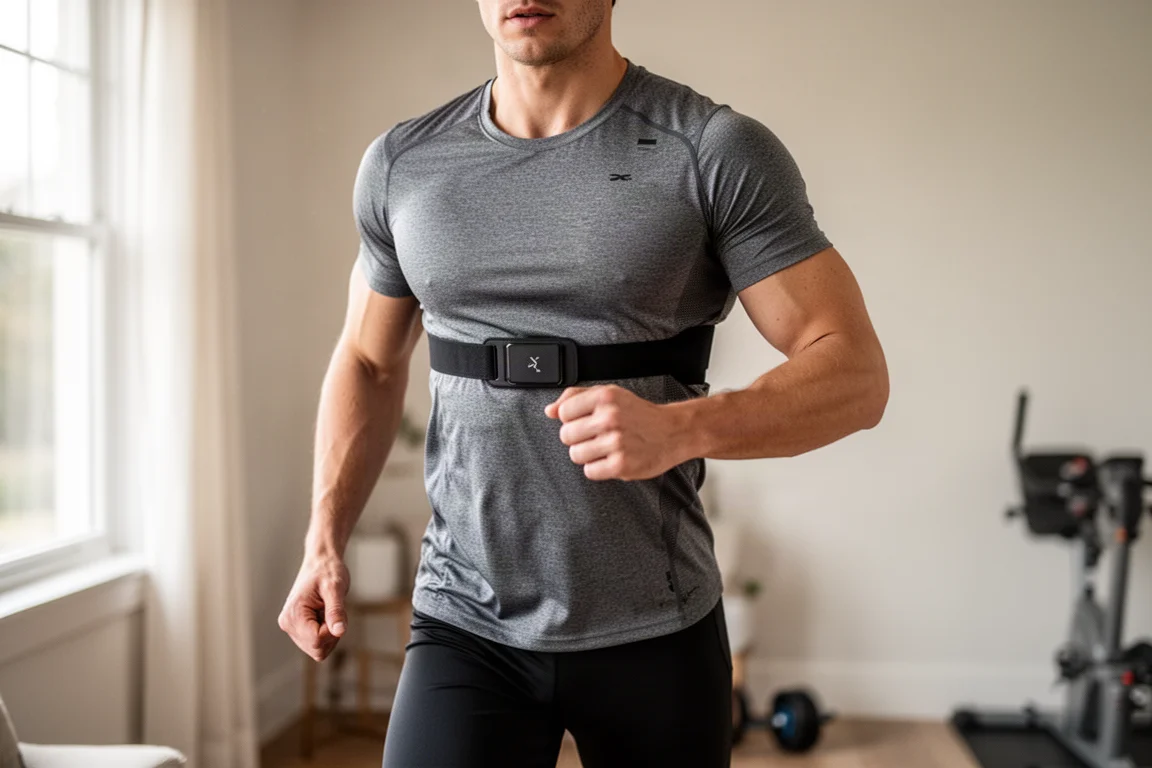
The H10 and H9 are chest straps that measure heart rate from the electrical signals of your body, essentially an ECG reading. The Verity Sense instead uses an optical heart rate sensor, similar to what you find in a watch, shining light through your skin and measuring heart rate through blood flow.
Even though the Verity Sense uses the same type of sensor as a watch, its advantage is that it is designed to be worn on the arm, where there is more flesh for the sensor to work with. That placement delivers more accurate results than the wrist.
In general, the chest straps are the most accurate in pretty much all situations, though there are edge cases where they may not work quite as well, such as extremely cold conditions or when the strap is dry. The Verity Sense is also very accurate, but as an optical sensor there may be a delay of roughly one to four seconds during extremely quick heart rate changes, since readings are not always displayed in real time.
Comfort matters too. Plenty of people do not want to wear a chest strap, and plenty of others do not want something on the arm. You have options on both fronts.
Straps and Comfort: H10 vs H9
The Polar H9 comes with the Soft strap, a soft, stretchy material that is comfortable to wear, adjustable in length, and attaches using a hook and loop. The H10 comes with the Pro strap, which has small grippy silicone dots that help keep the strap from shifting or slipping down during intense workouts with a lot of movement. The Pro strap also uses a snap closure rather than the hook on the Soft strap, which many find slightly more convenient.
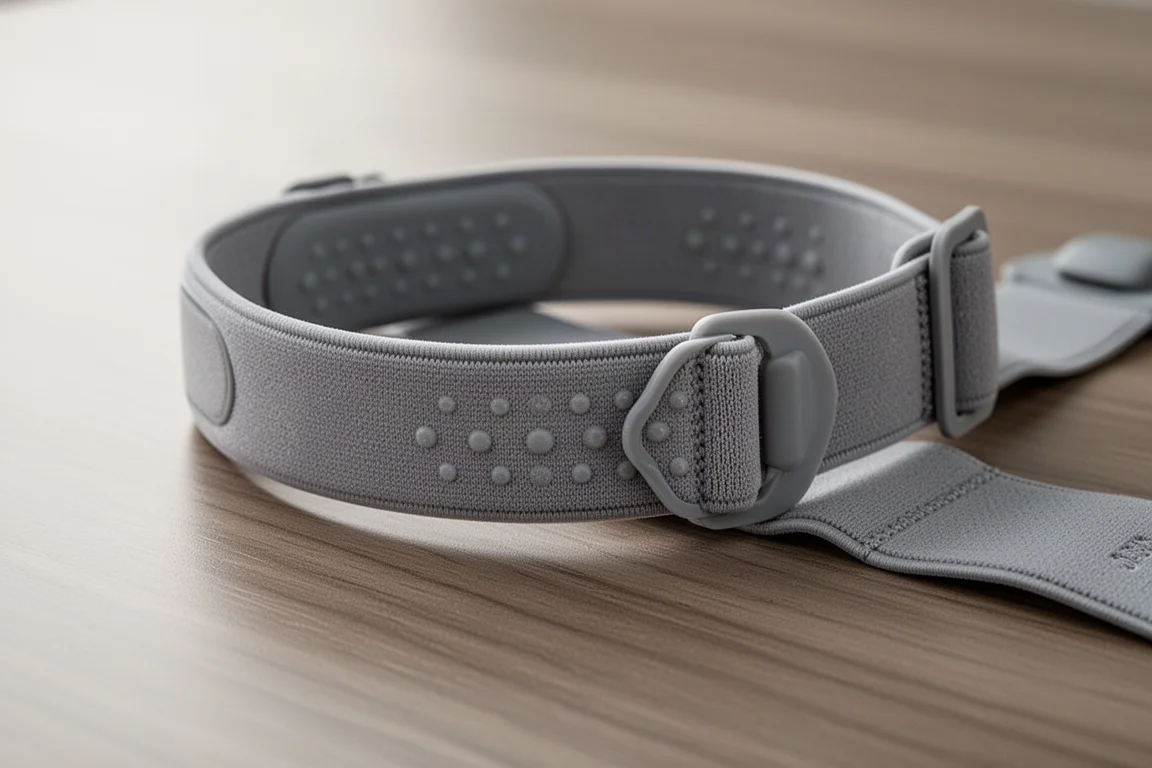
Polar claims the Pro strap has extra interference-preventing electrodes that make it extremely sensitive to heart signals, and the sensor area is a bit larger, giving it more contact area if it shifts around. In practice, though, both straps deliver great results.
Here is the useful part: the straps are interchangeable. You can use an H10 pod with a Soft strap, or an H9 pod with a Pro strap, and Polar sells the straps separately from the pods. If you buy the H9 and want to upgrade to the Pro strap later, you can.
Connectivity: Bluetooth, ANT+ and Gym Link
Both chest straps connect to pretty much any watch, bike computer, or fitness app using Bluetooth or ANT+. Both can also connect to compatible gym equipment via GymLink, which uses a 5 kHz transmission frequency. When you start a workout on compatible gym equipment, it automatically detects your heart rate sensor and starts displaying your heart rate on the machine.
The main connectivity difference is that the H10 has two Bluetooth connections while the H9 has one. For most people, one Bluetooth connection is fine. Two connections come in handy when you want to train on an indoor cycling platform like Zwift while also pairing the monitor with a watch that only accepts Bluetooth external sensors, such as Apple Watches, Polar watches, and the Coros Vertix 2.
If your watch or bike computer accepts both Bluetooth and ANT+ external sensors, including Garmin and Wahoo bike computers, the Wahoo rival smartwatch, and earlier COROS watches like the original Vertix and Apex Pro, you may not need the second Bluetooth channel at all.
Onboard Recording and Battery Life
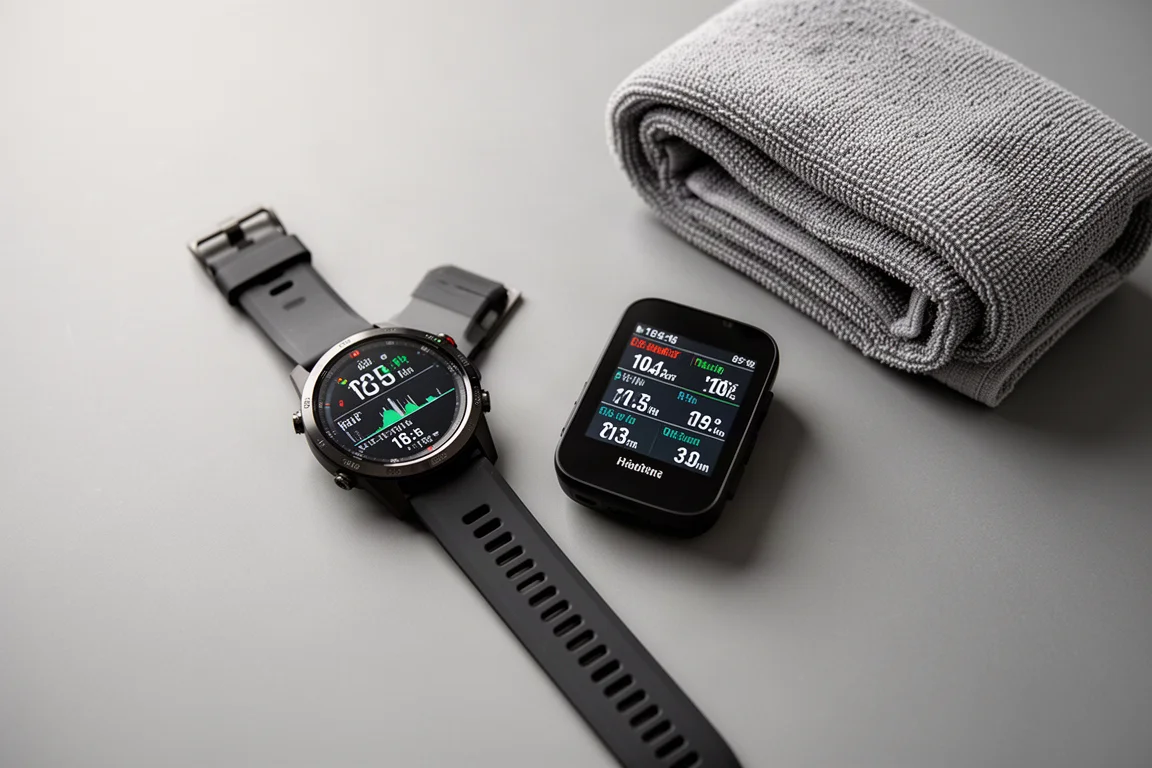
The other big difference between the H9 and H10 is that the H10 can record heart rate data on the pod itself for one training session. This is especially useful if you do not want to or cannot wear a watch. You start the workout in the Polar Beat app with the H10 paired, do your session, then return to the app and stop the workout so the data downloads from the pod. It is not the smoothest experience, but it works.
Both the H10 and H9 run on a CR2025 coin cell battery that lasts up to about 400 hours of training. With a schedule of six training days a week at an hour or more per day, that works out to a battery change roughly every ten months, and swapping the battery is very easy.
Both chest straps are waterproof but are not designed for swimming. That is where the Verity Sense stands apart.
Polar Verity Sense: The Arm-Based Option
The Verity Sense is an optical heart rate sensor worn primarily on the arm, with a comfortable strap and a simple Velcro closure that makes it easy to take on and off. Like the chest straps, it connects to both Bluetooth and ANT+ devices, and like the H10 it offers two Bluetooth connections. Unlike the H10, it does not have the 5 kHz GymLink transmission, so it will not work with that same category of gym equipment.
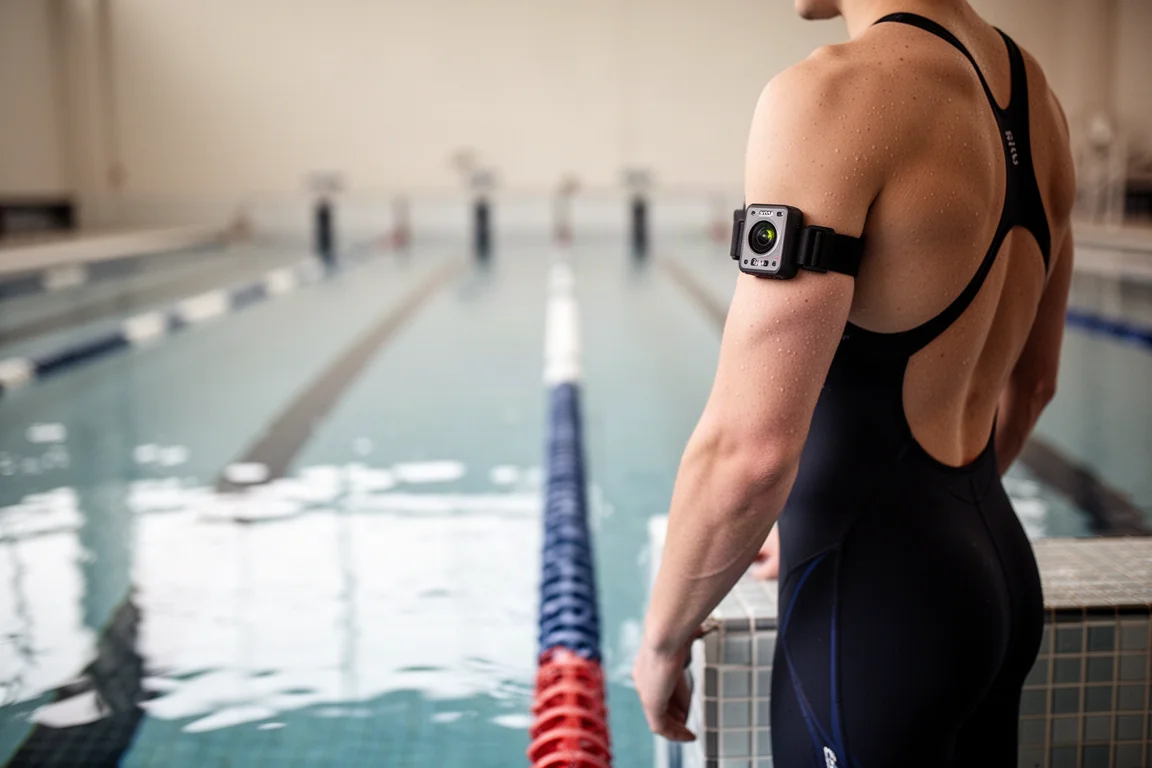
The big advantage is onboard storage: up to 600 hours of heart rate data on the pod, across multiple sessions, with a much less cumbersome workflow than the H10. You simply turn it on, then press the button again to toggle into one of two offline modes: a regular recording mode or a dedicated swimming mode.
The swimming mode automatically tracks laps, distance, and time. You just make sure the correct pool length is specified in the device settings in the Polar Flow app. To save your swim or any other offline activity, have your phone nearby when you turn the sensor off; the light turns blue as it syncs, and your activity appears in Polar Flow like anything else. For swimming you can use the arm strap, or the included clip that attaches to your goggles and measures heart rate from your temple, which is a surprisingly good measurement spot.
Battery life is up to 30 hours, recharged with a small USB charger that snaps into place.
Pricing and Buying Advice
The H9 runs $60, while the H10 and the Verity Sense both run $90. That framing makes the decision fairly straightforward:
- Choose the Polar H9 if you want a highly accurate chest strap at the lowest price and only need one Bluetooth connection.
- Choose the Polar H10 if you want the most complete chest strap: two Bluetooth connections, the Pro strap with silicone grip dots, and onboard recording for one session.
- Choose the Polar Verity Sense if you prefer an armband, want long offline recording with multiple sessions, or need a swim-friendly heart rate option with lap, distance, and time tracking.
Conclusion
All three Polar sensors are accurate enough to serve as reference points for other devices, so the real choice comes down to wear style and features. A chest strap remains the most accurate option in nearly all situations, and the H10 adds connectivity and storage flexibility over the H9 for a modest price bump. If chest straps are not for you, the Verity Sense brings arm-based optical accuracy, generous onboard storage, and genuine swim tracking. Match the sensor to your training, and the feedback from your watch or app becomes meaningfully better.
Product link
View more details for Polar H10
This product is mentioned in the review. Check the specifications, options, and compatibility before buying.
View more details for Polar H10Further reading
Related Reviews
Fitness Tech
Garmin HRM 200 Review: A Heart Rate Strap Built for the Next Few Years
Garmin's new HRM 200 adds a button, a light, and encrypted heart rate broadcasting to a familiar chest strap formula, at a reasonable price.
Fitness Tech
Garmin Connect Plus Nutrition Logging: A Hands-On Look at Food Tracking Inside Garmin Connect
Garmin has added food and nutrition logging to its paid Garmin Connect Plus tier. Here is how the feature works, where it excels, and the trade-offs to know before subscribing.
Fitness Tech
Garmin Forerunner 255 Review: A Complete Beginner's Guide to Garmin's Mid-Range Running Watch
A practical walkthrough of the Garmin Forerunner 255, covering the interface, training tools, HRV status, race widgets, GPS accuracy, battery life, and music support.