Camping Tents
Polar 4-Person Pop-Up Tent Review: A $300 Shelter That Leaks in the Rain
A fast-pitching four person pop up tent that struggles where it matters most. Testing in light and heavy rain revealed repeated leaking, and the roughly $300 price is hard to justify.
Introduction
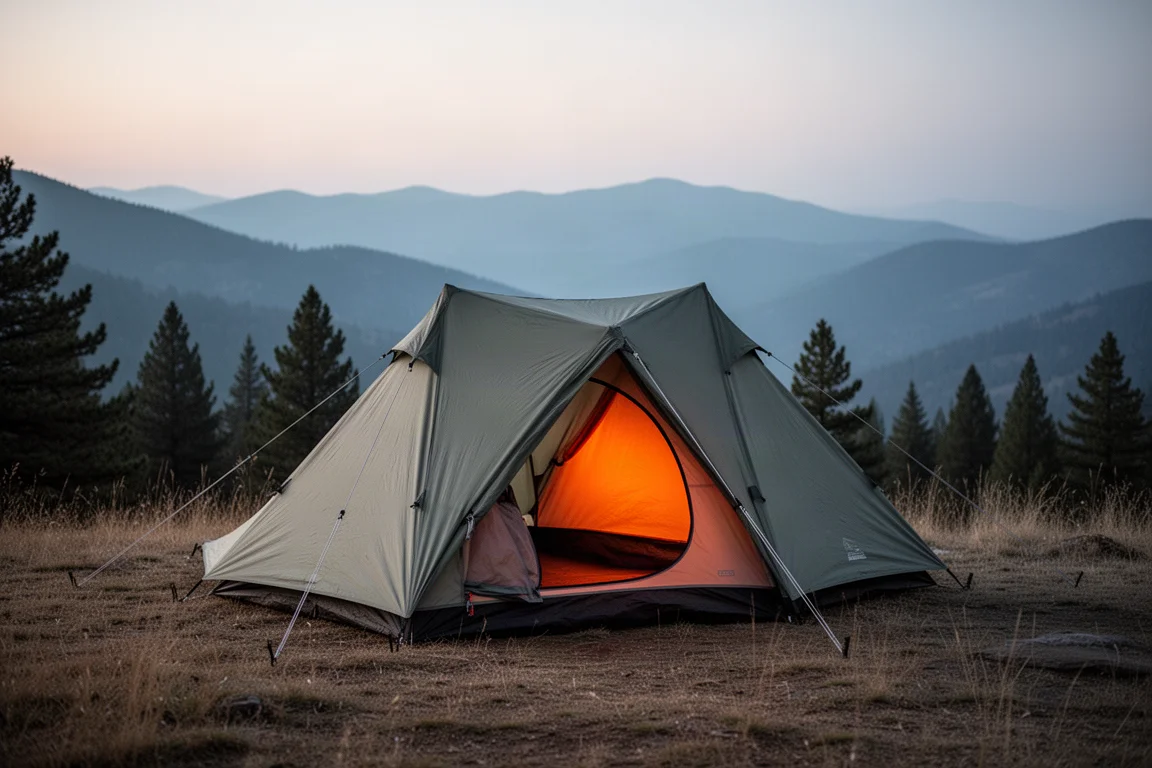
A four person pop up tent that pitches in minutes sounds like an easy win for car camping. The Polar four person pop up tent takes that idea and wraps it in an A frame design that unfolds from two sides, which makes it appealing for anyone who wants a fast, low effort shelter. At around $300, however, it sits in a price bracket where buyers reasonably expect the fabric, seams and waterproofing to hold up in real weather. That expectation is where this tent runs into trouble. Across two separate outings, including a full day and night of sustained rainfall, the shelter consistently let water inside. This review looks at how the tent is built, how it performs in wet conditions, and who, if anyone, should consider it.
Who This Tent Is For
The appeal here is speed. The frame folds out from two sides, locks into position and forms a stable A frame shape, and the fly then goes over the top and is staked out. There is no threading of long poles and no complicated sequence to memorise, which makes it a natural fit for car campers, festival weekends and short trips where a vehicle carries the load and setup time matters more than packed size.
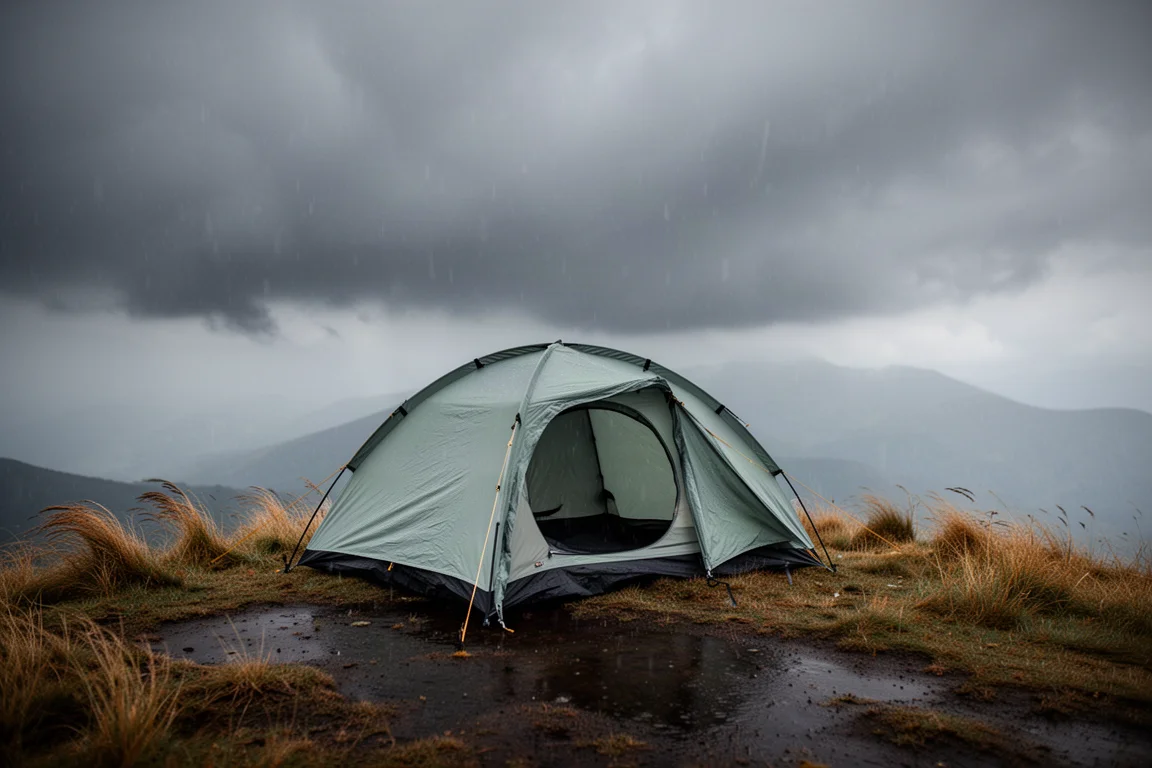
Where the tent makes less sense is anywhere rain is likely. It suits dry, warm conditions and campers who can retreat to a vehicle or a cabin if the weather turns. For anyone planning multi day trips in wet climates, the design’s limitations become the deciding factor rather than its convenience.
Setup and Packed Size
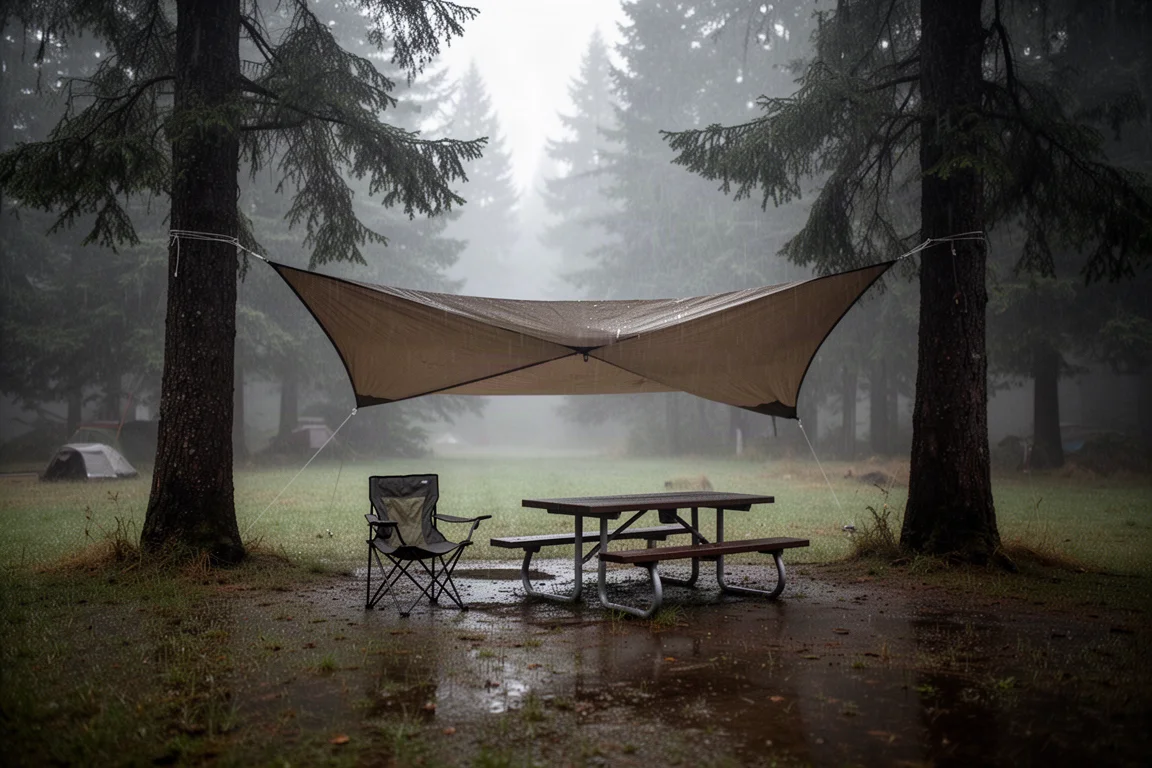
Setting up is genuinely straightforward. The two folding sides release from the frame, lock into place, and the tent takes its A frame shape almost immediately. The fly then goes over the top and is staked out at the corners. Pitching it underneath an existing tarp is just as easy, which is how it was first assembled in wet conditions, and the whole process takes only a few minutes.
The practical trade off of a pop up design is bulk. A shelter built around a folding frame carries more material and hardware than a simple pole tent, so this is a format that points to car camping rather than backpacking. That is worth weighing against the convenience, because the tent still has to be carried, stored and dried out after a wet trip.
Rain Performance: Where It Falls Short
This is the core problem. On an earlier overnight trip, only a small fraction of the tent, less than five percent, was left outside the cover of a large tarp, and the tent still leaked in three separate locations.
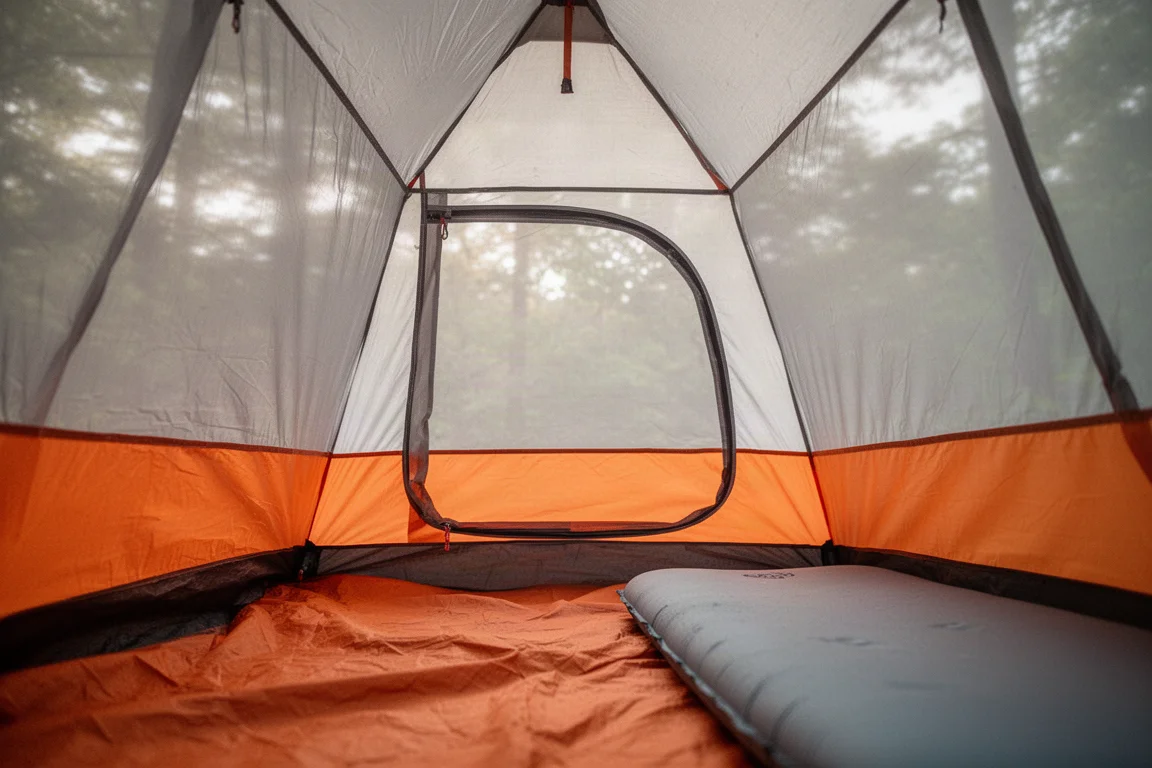
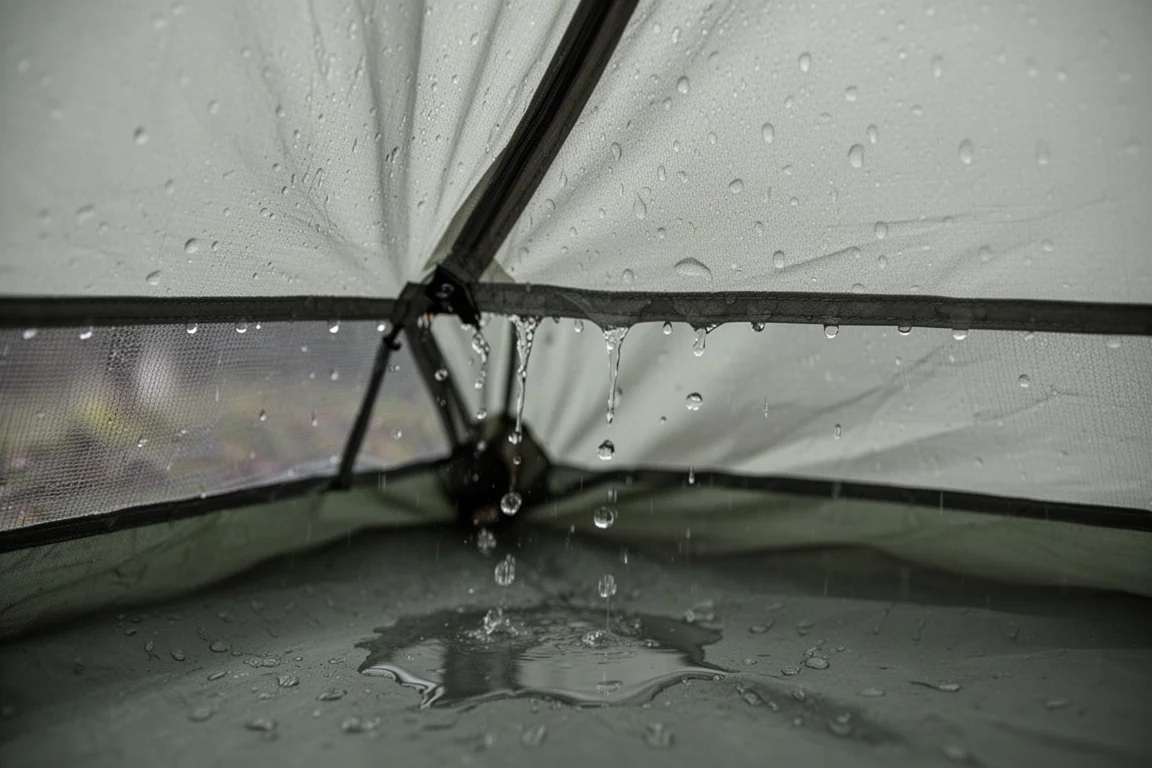
The follow up test was more thorough. With the tent fully pitched and exposed, it began leaking during light rain, before any heavy weather arrived. Water ran down the fly and dripped onto the mesh on one side, and on the other side it reached the floor. After a night and a morning of heavier rain, the floor was wet with small water drops scattered across it, one corner had pooled water, and the inside body of the tent was soaked along one side. In total, at least six leak points were counted.
The pattern matters more than the count. A shelter that only fails in a downpour is one thing, but this tent let water in during light rain, which suggests the problem is structural rather than a matter of extreme conditions. Put simply, the tent is not waterproof.
Materials and Build Quality
The fabric is polyester, and it is the cheapest grade of it. The interior is bright orange, which looks distinctive but also makes it harder to spot water on the floor or against the walls.
The leaks could stem from a manufacturing defect or a quality control issue rather than from the design itself, and the company has been told about the problem. Whether a revised batch resolves it is not something buyers can count on today. What the testing makes clear is that the tent, as supplied, does not keep water out.
What the Price Gets You
At roughly $300, this tent sits at the upper end of what most casual campers spend on a four person shelter, and that price is difficult to justify here. The materials are inexpensive, the waterproofing does not hold up, and there is no obvious feature or construction detail that explains the cost.
There is also the question of support. Replies from the company have been polite and courteous, but very slow, with responses arriving roughly every three to five days. That pace is frustrating when the issue at hand is a product that fails in the rain.
Customer Support and Communication
Communication with the company has been friendly and professional throughout. The problem is speed. Replies have arrived roughly every three to five days, which stretches even a simple defect conversation into a multi week process. Buyers who need a fast resolution on a leaking tent should factor that into their decision, because the timeline is set by the response rate rather than by the seriousness of the fault.
Buying Advice
The honest advice is to look elsewhere. A tent that leaks in light rain, costs around $300 and uses basic polyester is a poor value at any price, and the problems appeared across two separate outings rather than in one unlucky night.
If the pop up format itself appeals, that convenience is real, and a fast pitching shelter is genuinely useful for car camping. The format is not the issue. The waterproofing is. Before buying any tent in this price range, look for clear information about how the fabric and seams are sealed and how the shelter behaves in sustained rain, and treat claims that cannot be verified with caution.
For dry climates, fair weather weekends and campers who always have a backup, the tent may still serve as a quick shade and sleeping space. For anyone who camps where rain is a regular possibility, it is not a shelter to rely on.
Conclusion
The Polar four person pop up tent gets the pitching experience right and the weather protection wrong. It sets up quickly, forms a tidy A frame and packs away without fuss, but it leaked in light rain, leaked in heavy rain, and was eventually found leaking from at least six locations. At around $300, with basic polyester fabric and slow support replies, it is difficult to recommend. Campers who need a dependable four person shelter in wet conditions should keep looking.
Product link
View more details for Polar 4-Person Pop-Up Tent
This product is mentioned in the review. Check the specifications, options, and compatibility before buying.
View more details for Polar 4-Person Pop-Up TentFurther reading
Related Reviews
Camping Tents
3F UL Gear Taiji Two-Person Tent Review: Field Waterproofing Results and Buying Advice
The Taiji pairs an attached fly with a removable inner, but sustained rain exposed untaped vent seams that need sealing before this shelter can be trusted.
Camping Tents
3FUL Gear Lanshan 2 Pro 4-Season Review: A Sub-$200 Single-Wall Trekking Pole Tent
An early look at the 3FUL Gear Lanshan 2 Pro 4-Season, covering its straightforward pitch, generous interior space, and the condensation and seam-sealing questions that come with any single-wall shelter.
Camping Tents
Alps Mountaineering Lynx 1-Person Tent Review: Big Value in a Small Budget Tent
A close look at the Alps Mountaineering Lynx 1-Person Tent, covering real interior dimensions, materials, setup time, ventilation limits, and who should buy it.