Hi-Fi Speakers
Platon VC1 and VC2 Review: A Modular Speaker System Worth Growing Into
The Platon VC1 stand-mount speaker and the VC2 base module can run separately or combine into a floorstanding system, with manual tuning that changes the sound signature.
Introduction
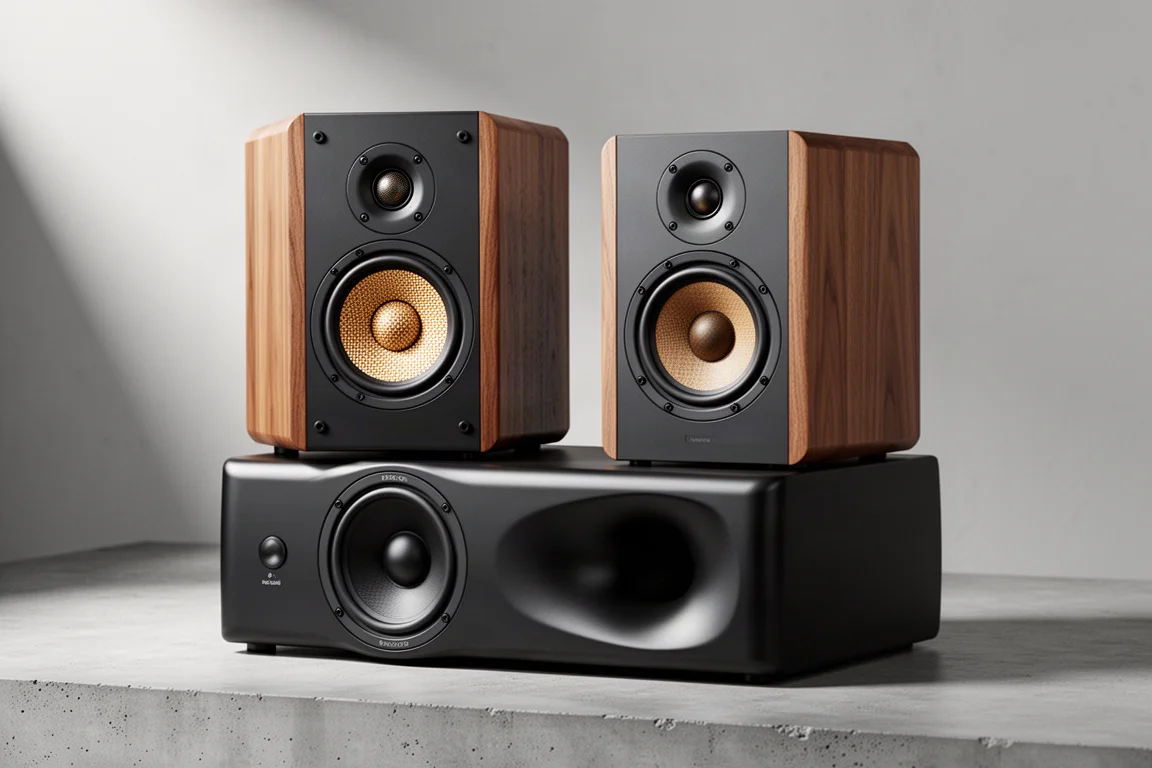
The Platon VC1 and the Platon VC2 are two halves of one idea. The VC1 is a passive stand-mount speaker priced at $6,000. The VC2 is a base module priced at $11,000 that sits underneath it and turns the pair into a floorstanding system for $17,000.
What makes the combination interesting is that it is not a bookshelf speaker with a subwoofer bolted on. The VC2 carries its own drivers, its own crossover and its own tuning controls, and it can be wired in two different ways that produce two genuinely different presentations. Buy the pair and the company counts six distinct sonic signatures in the box.
How the VC1 and VC2 Fit Together
The VC1 stays the same in every configuration. It is a passive stand-mount cabinet with a dual port layout specified for horizontal dispersion and soundstage depth, pairing German-made drivers with an American-made tweeter.
The VC2 changes what the system can do. It is a low base module that supports the VC1 and adds an 8-inch woofer developed in house and produced through an OEM partner, together with a super tweeter behind a waveguide. Its own dual port arrangement at the bottom is specified to reach down to 20 Hz.
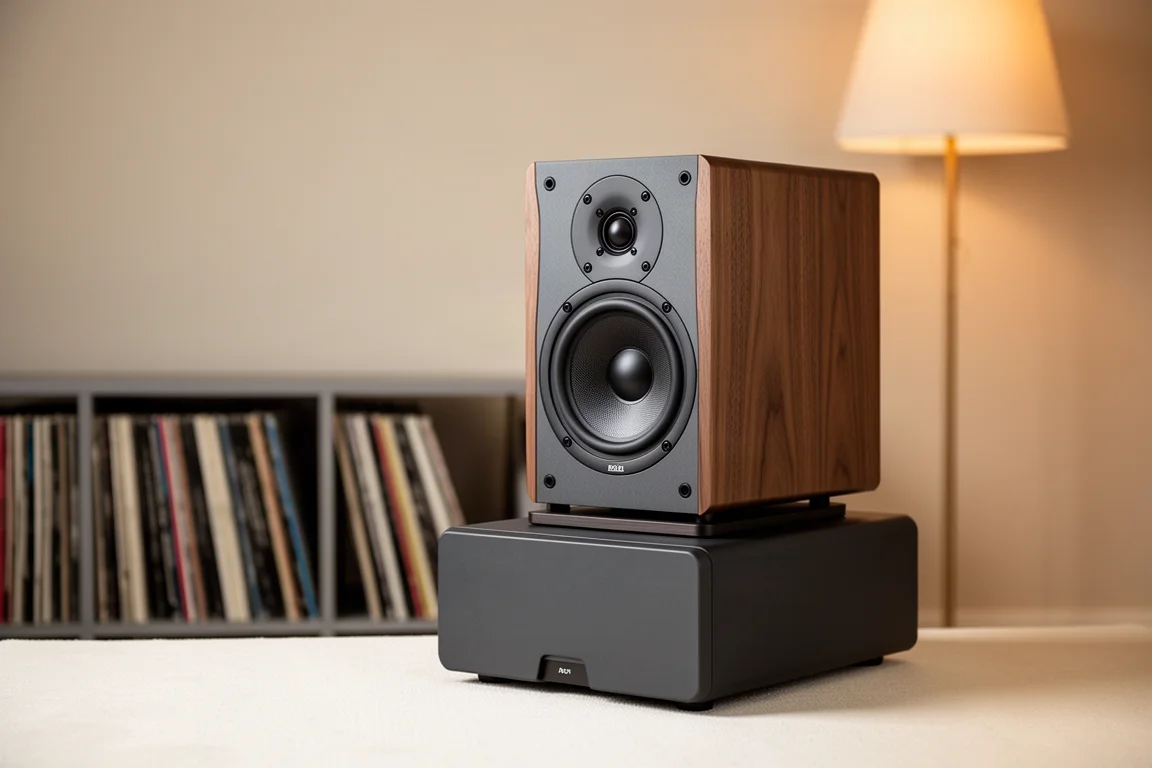
The practical result is a speaker that can be intimate when you want it intimate and large when you need it large. A VC1 on its own is a complete stand-mount speaker. A VC1 sitting on a VC2 is a full-range floorstander with additional tuning available on the rear panel.
Platon VC1: The Stand-Mount Foundation
The VC1 is the part of the system that does not change. Its dual port design is aimed at horizontal dispersion and a sense of depth, which is what allows a compact cabinet to present a stage that feels wider than its physical size. The driver complement mixes German units with an American-made tweeter, a combination that gives the design its own character rather than a generic house sound.
The model also arrives with product of the year recognition behind it, which matters if you would rather buy a proven design than a brand new one.

For anyone building a system in stages, the VC1 is the sensible starting point. It works on its own, it works on a stand, and it leaves a clear upgrade path open. Nothing about the way it is built assumes you will eventually add the base module.
At $6,000 it is a considered purchase rather than an impulse one, and the value case rests on how long you intend to keep it. A speaker that can later become the top half of a larger system has a longer useful life than one that cannot.
Platon VC2: The Base Module That Completes the System
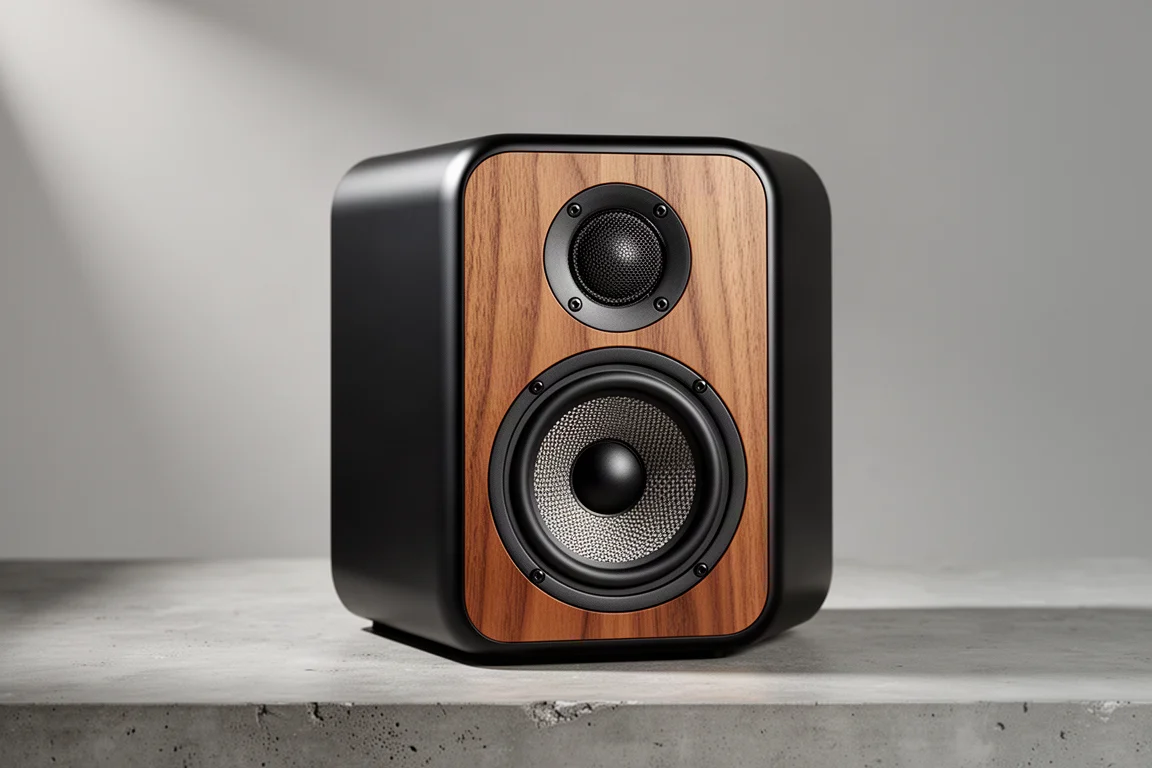
The VC2 is not an ordinary bass extension for a bookshelf speaker, and the company is direct about that. It is a separate loudspeaker that happens to be shaped like a plinth.
Its 8-inch woofer is the company’s own design, produced through an OEM partner, and it marks a step toward in-house driver development. Above it sits a super tweeter with a waveguide, and the cabinet uses a dual port arrangement at the bottom for bass extension. The stated reach is 20 Hz, which is full-range territory for a passive design.
The module carries its own crossover, and that detail is the key to how the combined system behaves. It also ships with bundled cables, so the system is ready to run as delivered.
At $11,000 the VC2 is the larger investment of the two, and it only makes sense if you already own, or intend to buy, the VC1. Bought as a pair the system totals $17,000, and the additional spend buys bass extension, an extra tweeter and a set of tuning options that the VC1 alone does not have.
Harmonic Tweeter and Flexible Connectivity
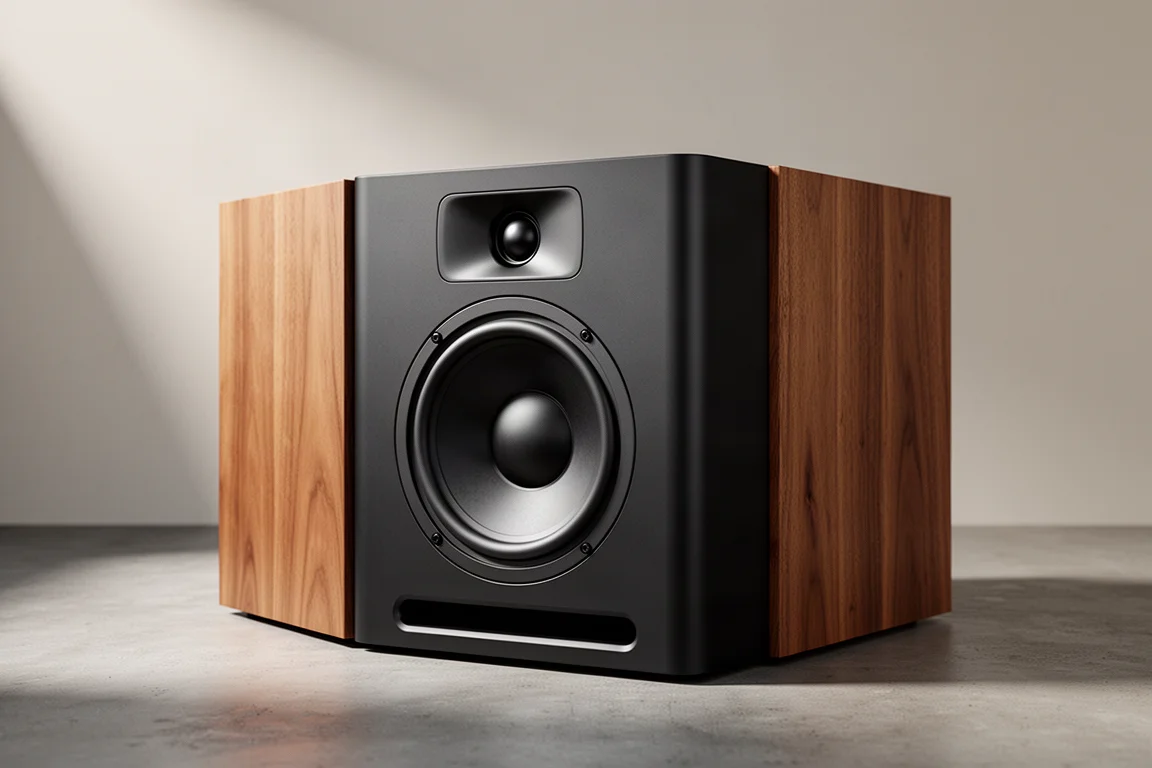
The most distinctive part of the VC2 is the harmonic tweeter. It operates from 25,000 Hz upward, which sits above the range most listeners hear directly. The design intent is that extending that far changes how lower frequencies are perceived, particularly the spatial cues and the harmonic character of bass and string instruments, rather than adding a bright top end on its own.
Tuning is entirely manual. The rear panel offers an off position plus five additional settings: two super tweeter configurations and three ambient configurations. There is no app and no digital signal processing involved. The company likens it to having the flexibility of an active speaker’s processing, except that every adjustment is made by hand on a passive cabinet. In practice that means the speaker can be adapted to a room or a personal taste without touching the electronics.
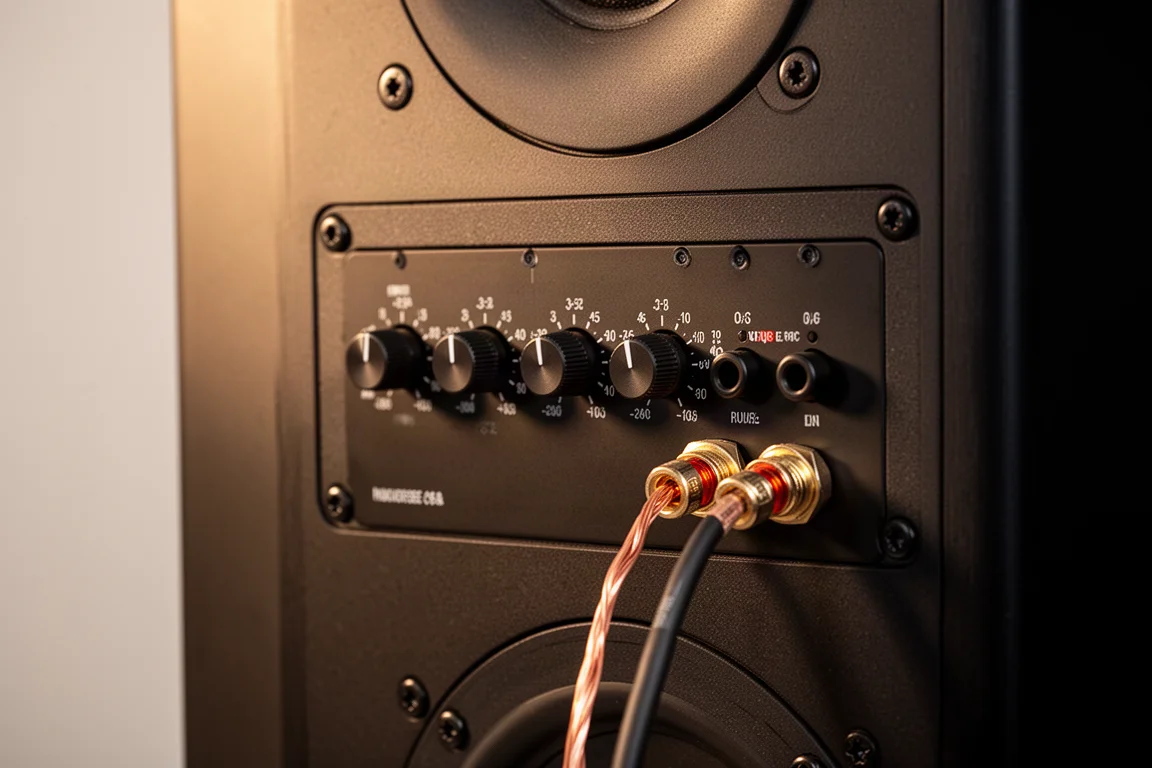
Connectivity is where the flexibility really shows. The two cabinets can be wired as a 3.5-way system, in which the VC1’s crossover still governs its own section and its rear ports continue to contribute. Alternatively they can be wired as a 4-way system, in which the VC2’s crossover takes over the whole speaker and it behaves as a single floorstander. The two arrangements do not present the same way, and choosing between them is part of owning the system.
Buying Advice: Which Path Makes Sense
If your room is modest, or you prefer the look and placement freedom of a stand-mount, the VC1 on its own is the straightforward choice. At $6,000 it delivers a complete speaker with a dual port design built around dispersion and depth, and it keeps the door open for a later upgrade.
If you want a full-range floorstander and you like the idea of tuning the sound by hand, the pair is the more complete answer. The $17,000 total buys bass extension down to a specified 20 Hz, the extra super tweeter, and the wiring choice between a 3.5-way and a 4-way configuration.
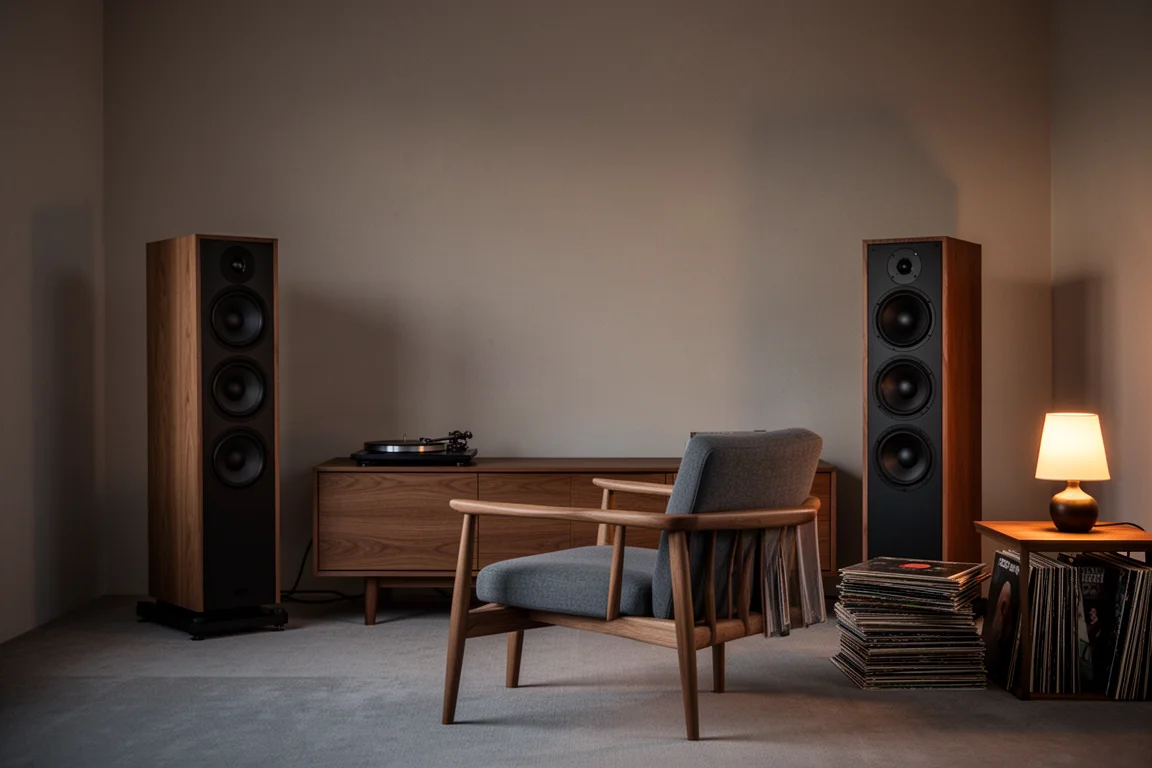
It is worth being honest about the tuning dials. They are a genuine feature, not a gimmick, but they reward owners who enjoy experimenting. Listeners who find the extra high-frequency information fatiguing can move to one of the ambient settings or switch the harmonic tweeter off entirely, which keeps the speaker comfortable over long sessions. Buyers who never want to touch a control will still get a good result, but they will not be using everything they paid for.
The other practical consideration is space. The two-piece stack needs a stable floor position and enough room behind it for the rear ports to work, so measure before committing to the larger configuration.
Conclusion
The Platon VC1 and VC2 are best understood as one system sold in two parts. The VC1 is a self-contained stand-mount speaker with a dual port design and a mixed driver complement, and it stands on its own merits. The VC2 is a base module with its own 8-inch woofer, super tweeter, crossover and manual tuning, and it only makes sense when paired with the VC1.
For buyers who want a smaller footprint now and a clear upgrade later, the VC1 is the confident first step. For buyers who want a full-range floorstander with unusual configurability, the pair at $17,000 delivers bass extension, six selectable settings including off, and a choice of two wiring layouts. Both routes are coherent, and the right one depends on how much room and how much curiosity you bring to the system.
Further reading
Related Reviews
Hi-Fi Speakers
1723 THX Tower vs 1528 Bookshelf: Which Speaker Fits Your Room?
Two speakers at roughly the same price, built very differently. How the 1723 THX tower and the 1528 bookshelf compare on construction, bass, power needs, and sound.
Hi-Fi Speakers
Acoustic Energy AE 300 Review: Deep Bass From a Compact Standmount
A two-way standmount with real wood veneer, surprising low-end weight, and a warm, easygoing character. Here is what to know before buying.
Hi-Fi Speakers
Acoustic Energy AE1 40th Anniversary Review: A Modern Take on a British Classic
A compact standmount that revives a 1980s favorite with all-new parts, a warm mid-centric balance, and a price of £1,499 per pair.