Bookshelf Speakers
Platamon Acoustics Speakers: Aluminum Build, Warm Sound, and One Stand Caveat
A compact aluminum two-way speaker with a leather-lined cabinet, detailed but forgiving highs, and supplied decoupling stands that place the tweeter lower than many listeners need.
Introduction
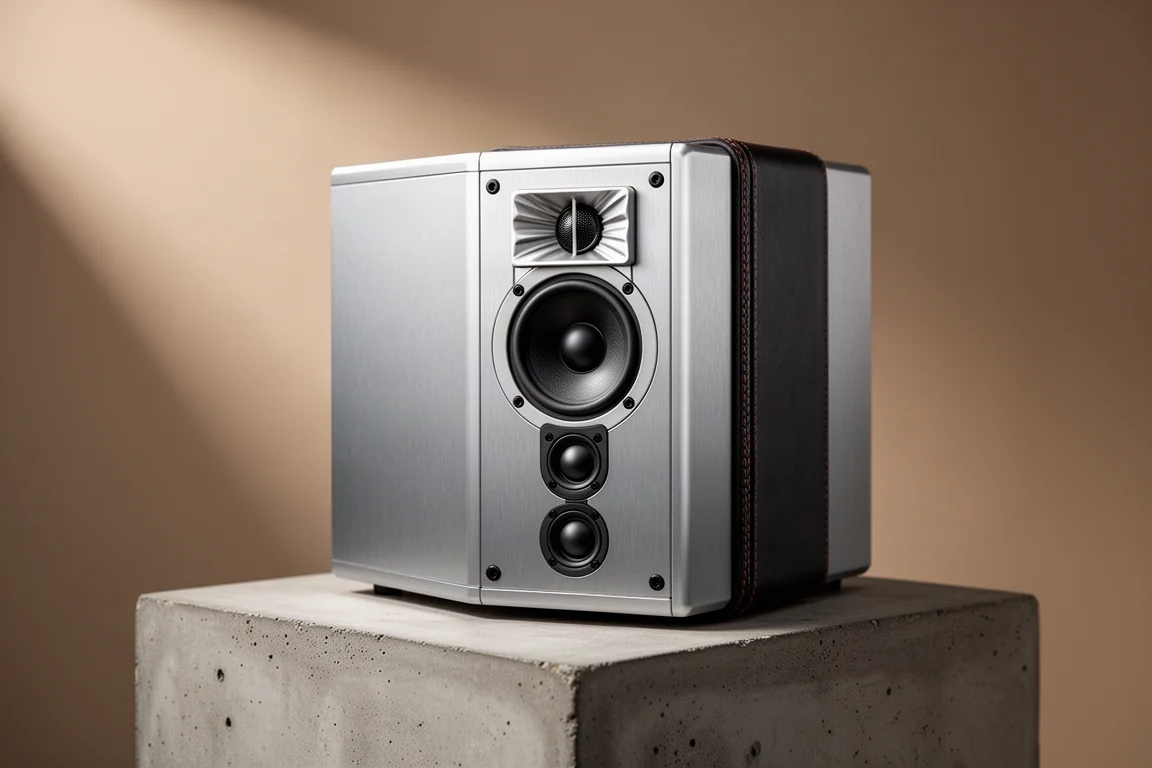
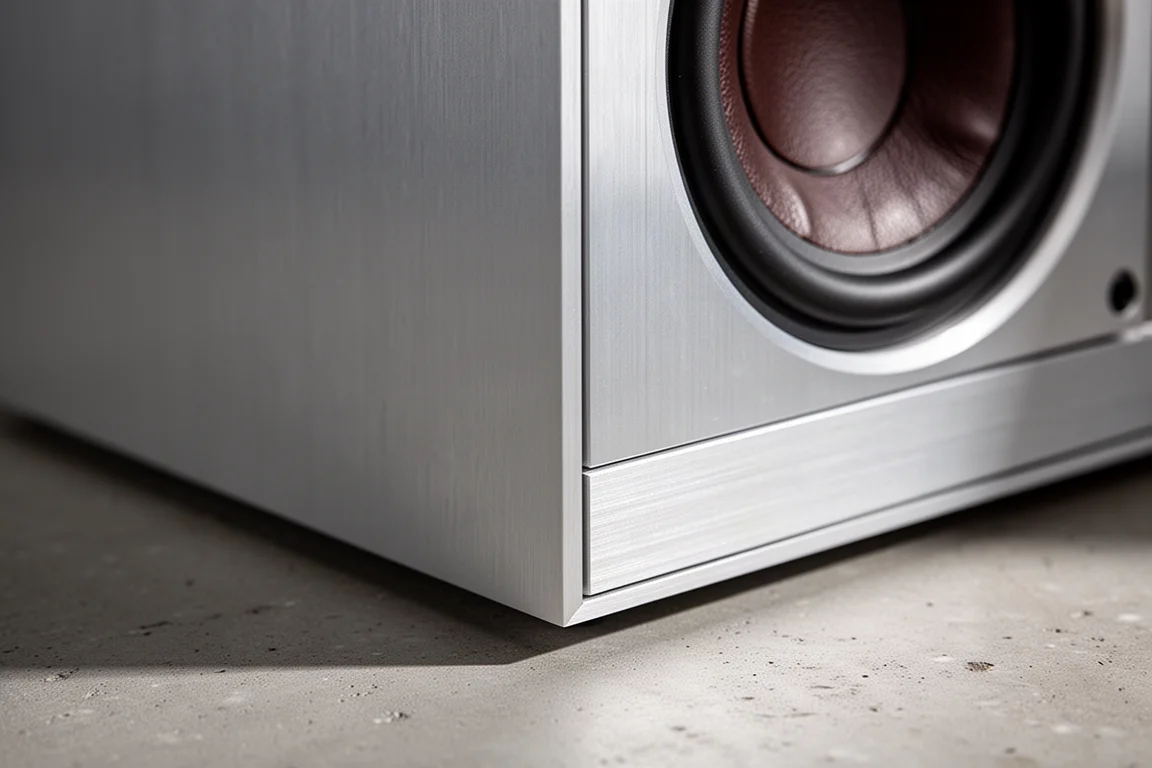
Compact speakers rarely feel this substantial. The Platamon Acoustics speakers are built from aluminum rather than wood or wood-composite panels such as MDF or HDF, and the result is a cabinet that feels unusually dense and rigid for its size. Panel seams meet precisely, and the enclosure has a solid, inert quality that is obvious the moment you lift it.
The numbers explain part of that impression. Each cabinet measures 7.5 inches wide, 17 inches high and 10.6 inches deep, and weighs 32 pounds. That is serious mass for a compact two-way speaker, and it sets expectations for how the cabinet behaves once the music starts.
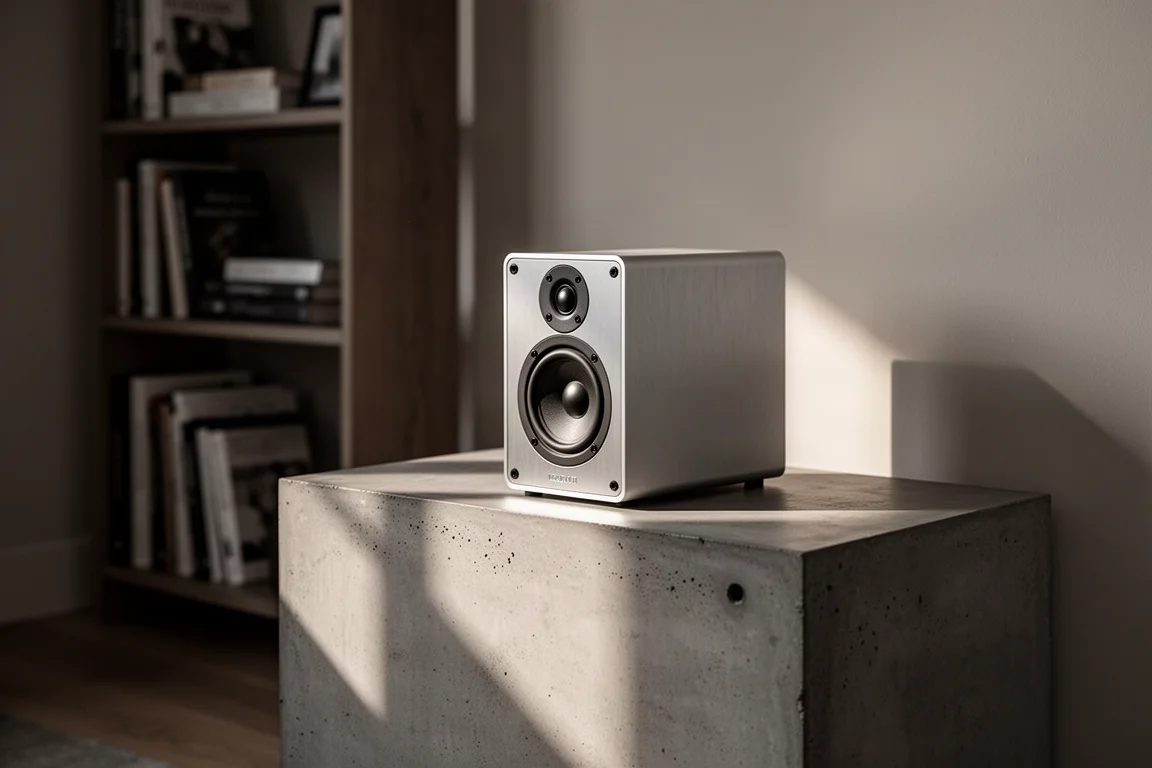
This article covers what the aluminum construction and leather-lined interior actually contribute, how the speakers perform in a real room, and where the supplied stands fit into the buying decision.
Who this product is for
These are speakers for listeners who want resolution without fatigue. The presentation is smooth and warm rather than sharply analytical, which suits long sessions and recordings that are less than pristine.
They are also a natural fit for smaller rooms. The compact cabinet and the claimed 45 Hz to 28 kHz frequency response let them carry most music on their own, with subwoofers available later if you want a deeper foundation. Anyone who values cabinet craftsmanship and industrial design alongside sound quality will find plenty to appreciate here.
They are less of an obvious choice if you want a speaker that digs into every flaw in a recording, or if you need a tower that fills a large space without help.
Design and build quality
The Platamon Acoustics speakers use a two-way configuration with dual 5-inch drivers manufactured in Germany and an AMT tweeter made in the USA. The tweeter sits inside a chiseled waveguide cut into the front baffle, which shapes how its output is dispersed into the room. Claimed frequency response is 45 Hz to 28 kHz, and the cabinet is ported to support the low end.
Two ports of different sizes are used rather than a single matching pair. The intent is to manage port noise and keep bass output controlled, which matters in a cabinet this compact.
Aluminum enclosure and leather lining
Inside the cabinet, the walls are lined with leather. The purpose is to prevent the enclosure from developing a cold metallic resonance, targeting behavior around the 1,000 Hz region so the speaker sounds warmer and more nuanced instead of letting sound bounce off bare metal.
Each side of the cabinet is lined with a different absorption material. That gives each speaker a directional character, and the left and right channels are designated on the back of each cabinet, so placement is not arbitrary.
Sound performance
Set up correctly, these speakers are detailed without being aggressive. High-frequency information comes through cleanly, with enough resolution to pick out cymbal decay or close-mic detail on a well-recorded track, but without the brightness that makes long listening tiring. Against a neutral-sounding tower reference, the top end here carries slightly more sparkle, and it stops well short of the more analytical character of a brighter compact design.
Vocals land a little warmer and smoother. In the same room, the reference towers pushed singers slightly more forward, while the Platamon set them back by roughly half a foot, which gives the midrange a more relaxed feel.
Imaging is a genuine strength once placement is dialed in. Individual performers hold distinct positions across the stage, backing vocals sit a couple of feet behind the speakers, and the horizontal soundstage is at least as wide as what a larger reference tower produces. The listening setup used an NAD M28 power amplifier and a Cambridge Edge preamp.
Bass and low-end behavior
For a compact speaker, the low end is more capable than the cabinet size suggests. In-room measurements at the main listening seat showed usable extension down to roughly 42 Hz before roll-off, averaged across three positions in a room that is not perfectly treated, so treat that figure as room dependent rather than absolute.
The character of the bass matters as much as the depth. Bass guitar notes arrive tight and controlled with audible texture rather than sounding boomy or mushy, which follows from the dense enclosure and the dual-port tuning. Material with heavy low-frequency content plays with surprising weight, and the cabinet transfers very little energy into floors and walls. Because the cabinets do not dig especially deep on their own, adding a pair of musical subwoofers is the logical way to build a full-range system.
The supplied stands and placement
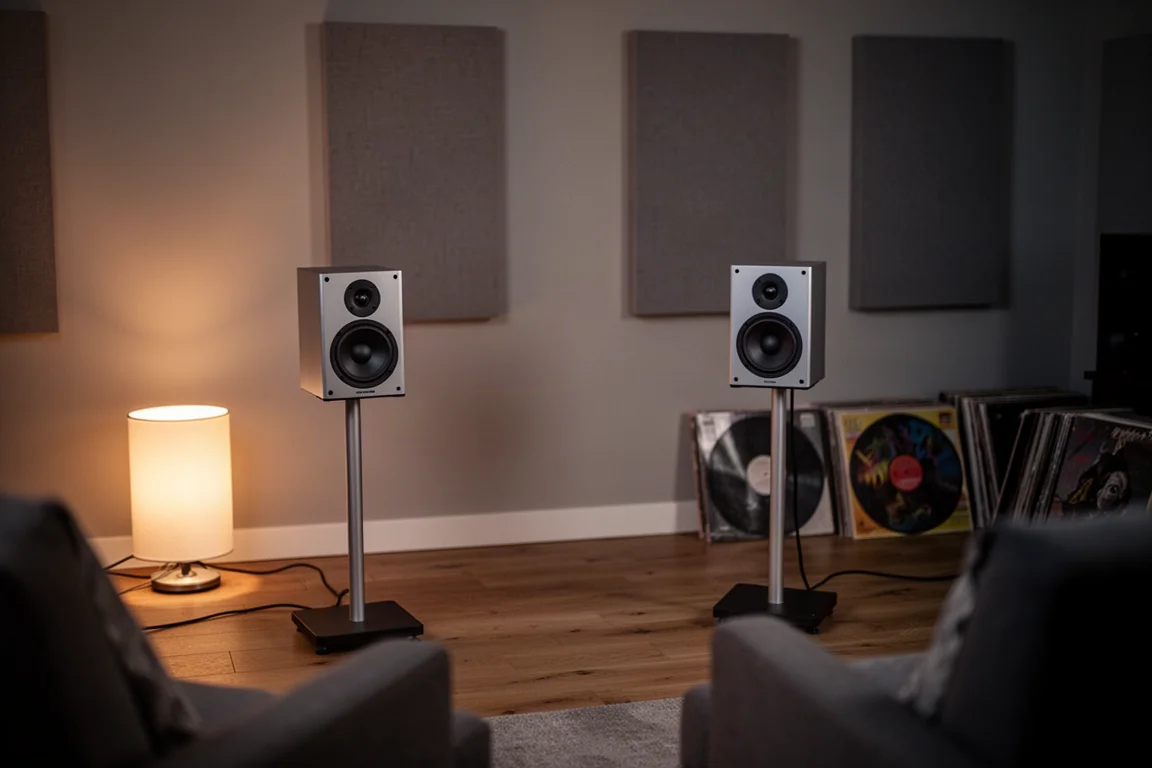
The speakers ship with dedicated stands made from the same aluminum as the cabinets, with adjustable spiked feet. What sets them apart is a ball-bearing interface: the stands have small indentations that hold metal balls, and the underside of each speaker has matching indentations. Combined with the spikes, this decouples the speaker from the floor.
The effect is audible. Even with bass-heavy material, room interaction stayed minimal, with no rattling floors or walls.
There are two practical catches. First, the ball-bearing arrangement is not especially stable, so a bump from a child or a clumsy moment could send a speaker over. Second, the stands are 22 inches tall, which places the tweeter at 32 inches, below ear height for many seated listeners. Moving to 24-inch stands raised the tweeter to the right height and unlocked the imaging and high-frequency detail these speakers are capable of. If you would rather keep the factory stands, a solid riser underneath can achieve a similar result.
Things to consider before buying
- The factory stands place the tweeter at 32 inches, which may sit below your ears depending on your chair and seating position.
- The ball-bearing mounting system decouples well but is less stable than a conventional spiked stand.
- Each cabinet is designed for a specific channel, so left and right placement needs attention.
- Deep bass is limited by the compact cabinet, and subwoofers are the sensible path to a full-range setup.
- In-room extension figures depend heavily on the room, and the measurements taken here come from a space that is not perfectly treated.
- Impressions of tonal balance are subjective, so an in-room listen with your own music remains the best guide.
Buying advice
Taken as a package, the immaculate cabinet construction and the purpose-built stands make a compelling proposition. If you want a highly resolving speaker that stays enjoyable over long listening sessions, and you are willing to spend a little time on height and placement, these are easy to recommend. The presentation is forgiving enough for everyday listening while still surfacing the small details that make well-recorded tracks engaging.
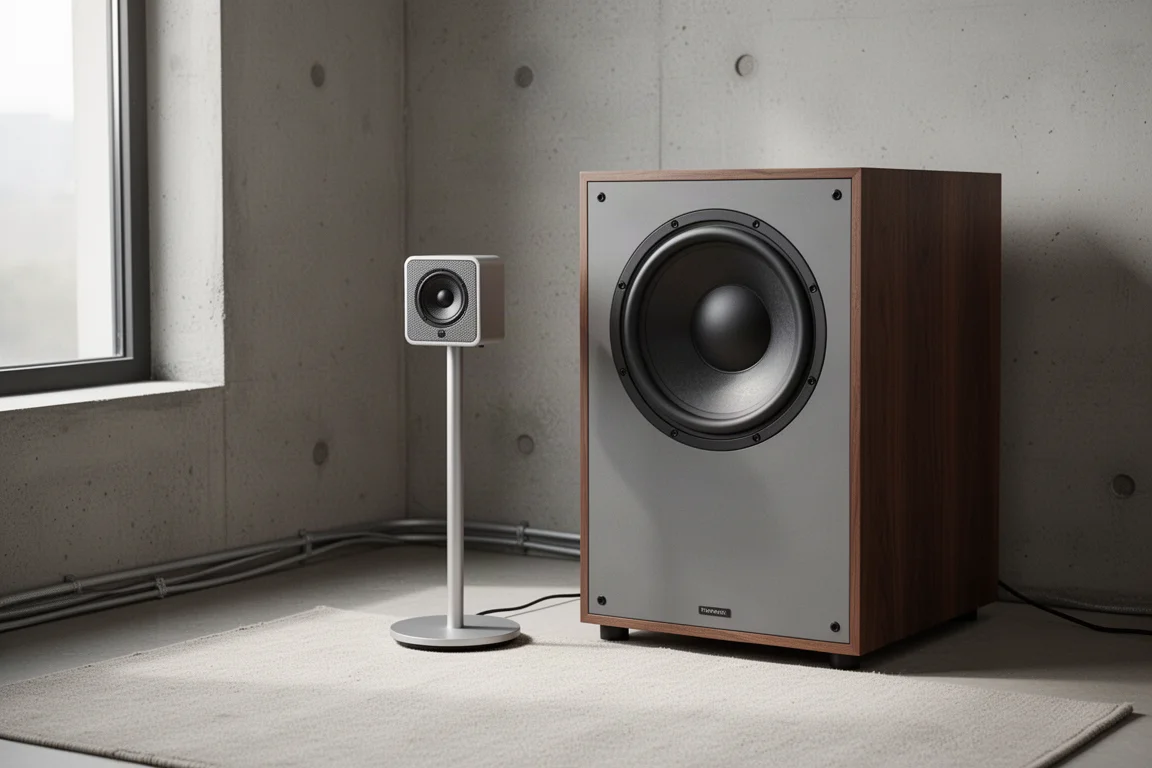
Budget for the stand question up front. Either plan on raising the factory stands or set aside room in your budget for taller third-party stands, since that single change had the largest effect on performance in this room. If your listening space is small to medium and you want the option to add subwoofers later, the total system will be hard to beat at this size.
Conclusion
The Platamon Acoustics speakers stand out for three reasons: a genuinely premium aluminum enclosure, a warm and detailed sound that favors long sessions, and tight, well-controlled bass for a cabinet this compact. The main caveat is ergonomic rather than sonic, since the supplied stands put the tweeter lower than many seated listeners need and the ball-bearing interface trades stability for decoupling. Sort out the height, and these speakers reward the effort.
Product link
View more details for Platamon Acoustics Speakers
This product is mentioned in the review. Check the specifications, options, and compatibility before buying.
View more details for Platamon Acoustics SpeakersFurther reading
Related Reviews
Bookshelf Speakers
Acoustic Energy A100 Mark II Review: A Compact Standmount With an Expansive Soundstage
The Acoustic Energy A100 Mark II brings clarity, natural tonality and a wide soundstage to an entry-level standmount, with a few setup details worth knowing first.
Bookshelf Speakers
Acoustic Energy AE-100 Mark II Review: Compact Bookshelf Speakers With Standout Imaging
A compact British two-way bookshelf speaker with deep, layered imaging, fast bass, and a slight treble lift to weigh against a crowded $500 field.
Bookshelf Speakers
Acoustic Energy AE100 MK2 Review: Measured Performance and Four Alternatives
A close look at the Acoustic Energy AE100 MK2 bookshelf speaker, what its measured performance reveals, and four alternatives with different trade-offs.