AV Receivers
Pioneer VSX-LX305 Review: Why Dirac Live Changes the Value Equation
A 9.2-channel AV receiver with Dirac Live room correction, eight HDMI inputs, a phono stage, and two-channel music performance that comes close to dedicated separates, for around $1,200.
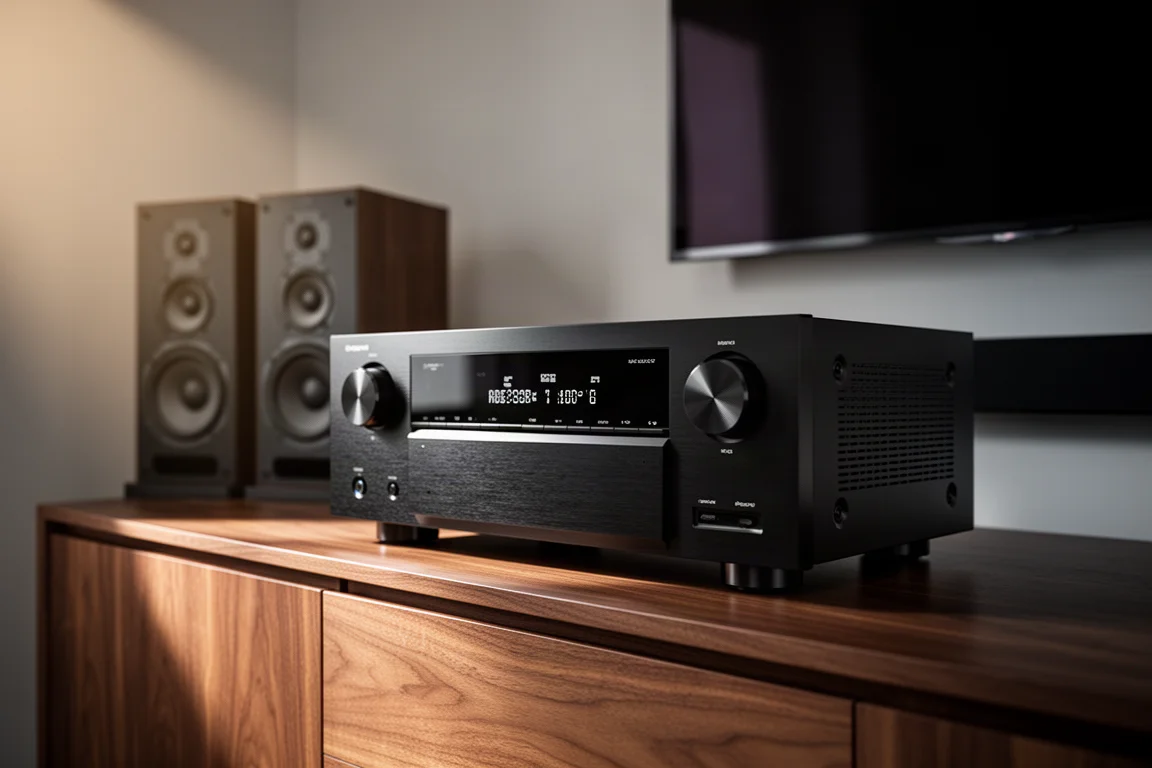
Introduction
The Pioneer VSX-LX305 is a 9.2-channel AV receiver that sells for around $1,200. It can drive nine speakers in whatever combination you choose, with support for up to four height or Dolby Atmos speakers and two subwoofers. There is a phono stage for a turntable, eight HDMI inputs, and 8K and 4K passthrough.
Feature lists are rarely the interesting part of a receiver at this price. The VSX-LX305 carries Dolby Atmos, Dolby Atmos Music, DTS Neural:X, height modes, and a long list of DSP presets such as concert hall and jazz club. Most owners will use a handful of them and ignore the rest.
What actually separates this model is Dirac Live, the advanced room correction system that sits alongside Pioneer’s own automatic calibration. After more than a month of living with the receiver in a room with no acoustic treatment at all, just furniture and carpet, the difference Dirac Live made turned out to be the real story.
Who This Receiver Is For
The VSX-LX305 makes the most sense for listeners who run a single room for everything: films, television, and music. If there is no dedicated listening room and no appetite for a second stereo system, one component that handles all three well is worth more than three components that each handle one.
It also suits anyone who has quietly given up on acoustic treatment. Dirac Live does a convincing impression of a treated room, and that changes the economics of the purchase. Panels, bass traps, and the hours spent building them are not free.
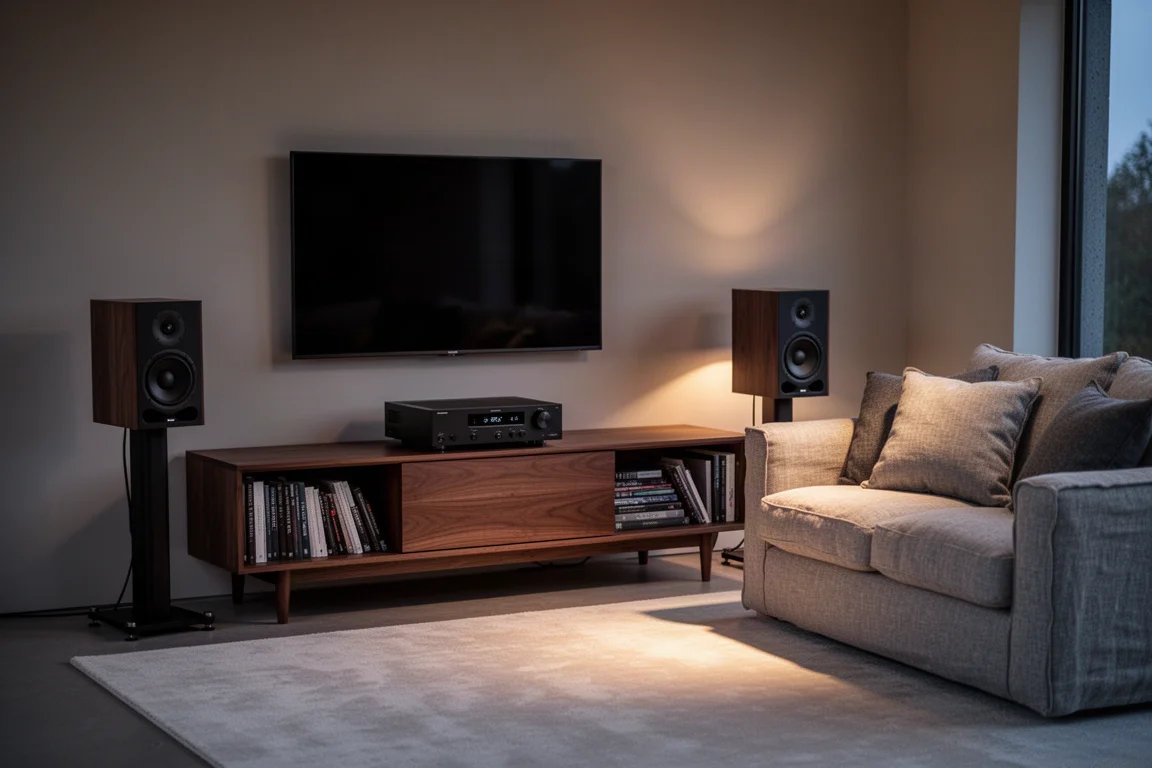
Finally, it fits households with mismatched speakers. The receiver’s correction pulled an unmatched front and centre pair into one coherent stage, and it turned a pair of 30-year-old sealed bookshelf speakers angled toward the ceiling into convincing Atmos height channels. You do not need to buy dedicated Atmos speakers for height effects to work properly.
Main Strengths
Room Correction That Reshapes the Room
Dirac Live is set up from an app rather than from the on-screen menus, and the measurement microphone can be placed in as many positions as you like. Once the measurements are done, the change is immediate: a wider sound stage, clearer top end, and a noticeably larger sense of space. The opening ten minutes of a familiar film sounded like a far bigger room, and one without the echo that usually comes with a bigger room.
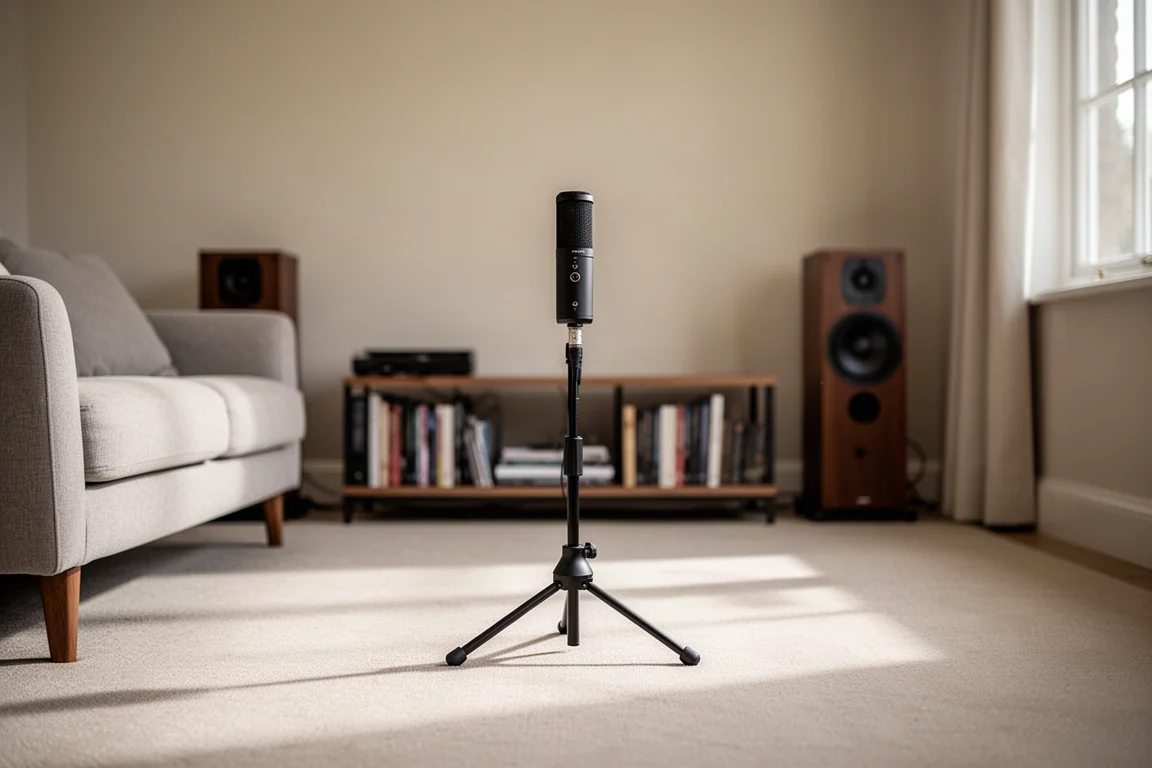
Pioneer’s own built-in calibration is also good on its own. Running it produced a result that needed very little manual tweaking, and it held up well next to the Audyssey calibration on a Marantz NR1711, where crossovers needed a little adjustment afterwards. The comparison is largely academic, though. Dirac Live is the reason to care, and it is the easier of the two to run.
Two-Channel Music Performance
This is the surprise. Most home theater receivers are competent with music and little more. The VSX-LX305 is genuinely enjoyable in two-channel listening, with strong instrument separation, a large and open presentation, and no shoutiness in vocals even through a mixed speaker set.
Against a two-channel preamplifier and power amplifier pairing costing roughly $2,000, the separates kept a slight edge in instrument separation and cleanliness. Against a vintage McIntosh preamplifier and power amplifier, the vintage set had richer, more powerful bass and a creamier midrange, while the Pioneer arguably separated instruments better. That is a remarkable place for an AV receiver to land.
Dolby Atmos Music tracks also play properly through the height channels, which adds another reason to run the correction rather than leave it switched off.
Streaming and App Control
Tidal Connect and Spotify Connect are both supported, along with AirPlay, Chromecast, and Play-Fi. Tidal Connect is the most pleasant option: the receiver appears in the native Tidal app and playback is controlled from there. Album art appears on the television, and everything can be adjusted from the phone, so there is no need to walk through the receiver’s on-screen menus to make a small change.

Play-Fi is included, but it is the weakest of the streaming options and best treated as a fallback. The native apps and the Pioneer control app are all better choices.
HDMI and Everyday Handling
There are eight HDMI inputs, one of them on the front panel. For anyone who regularly plugs in a game console, that front port is a small thing that turns into a daily convenience. HDMI passthrough covers 8K and 4K sources.
Just as important is stability. HDMI handshake problems are a familiar frustration in home theater, and even well-regarded receivers have needed fixes for them, including the Marantz NR1711. The VSX-LX305 produced no dropouts at all, with ARC and eARC switching cleanly whenever the television was powered on. It was the smoothest HDMI experience of any receiver in the room.
Things to Consider Before Buying
The price is the first consideration. At around $1,200 the VSX-LX305 is a serious purchase, and the value argument depends on how much of it you will actually use. If you would otherwise spend several hundred dollars on room treatment, the receiver starts to look like two purchases in one. If you would not, it is simply a very good receiver at a fair price.
Nine channels also means nine speakers. A 5.1.2 layout uses only part of what the receiver can do, and a full nine-channel configuration requires a speaker investment that will likely exceed the receiver itself.
Dirac Live needs a setup session with the microphone, and while the app makes that straightforward, it is still an hour of your time. The feature list is enormous, and most owners will settle on direct mode or a single DSP preset and leave it there. That is fine, but it is worth being honest about how much of the specification you will ever touch.
Buying Advice
If one room has to serve films, television, and music, the VSX-LX305 is one of the more convincing single-box answers available. It handles surround material confidently, it handles two-channel music better than most receivers have any right to, and Dirac Live solves a problem that most people never get around to solving.
If you already own a dedicated two-channel system you love, there is no need to replace it. The Pioneer will not beat a well-chosen separates setup outright, but it gets close enough that a second system becomes harder to justify for anyone short on space or budget.
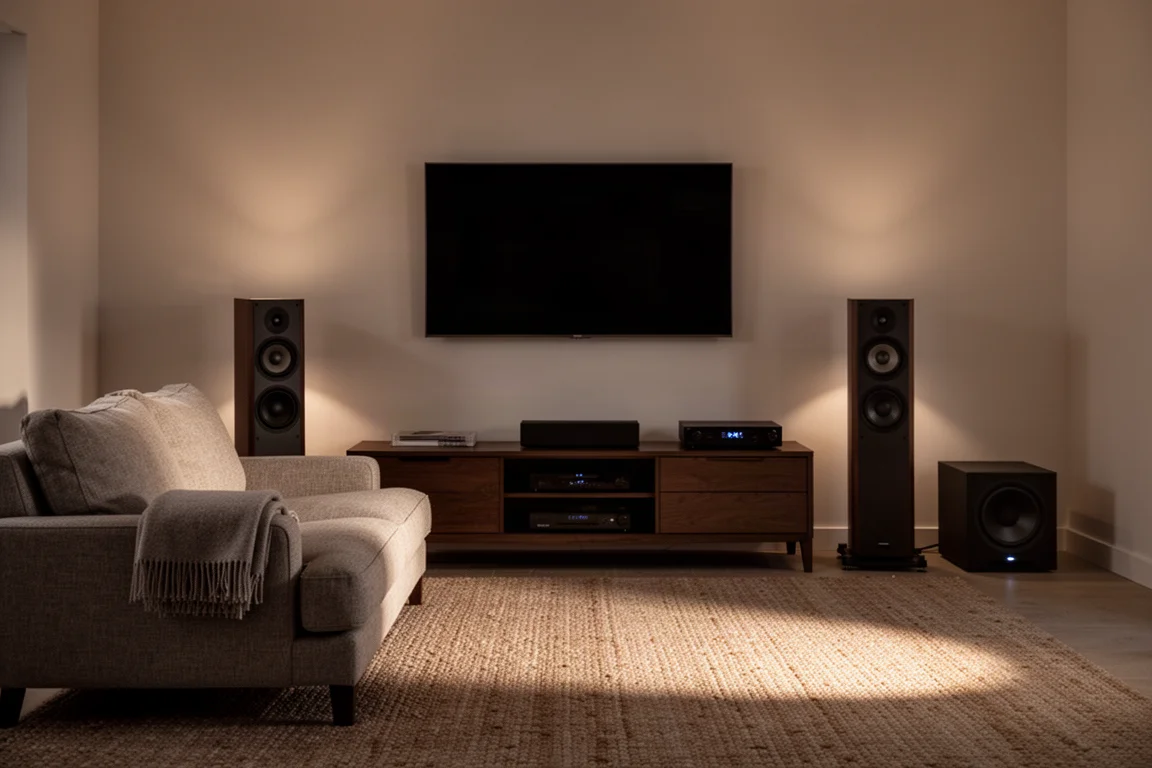
The room correction works with whatever speakers are connected, so a smaller layout still benefits from everything Dirac Live brings to the room. That makes the receiver a reasonable choice even for buyers who are not ready for a full nine-channel build.
Conclusion
The Pioneer VSX-LX305 earns its place by doing the unglamorous work well. Setup is quick, HDMI behaves, the app makes day-to-day control easy, and Dirac Live turns an ordinary room into something considerably better. Add two-channel performance that comes close to dedicated separates and the case is straightforward: if you want one component to do everything in one room, this is a strong place to start.
Product link
View more details for Pioneer VSX-LX305
This product is mentioned in the review. Check the specifications, options, and compatibility before buying.
View more details for Pioneer VSX-LX305Further reading
Related Reviews
AV Receivers
Anthem MRX 740 8K Review: Composed Home Theater Sound With a Few Rough Edges
A close look at Anthem's mid-tier MRX 740 8K receiver, covering its sound, ARC Genesis room correction, HDMI 2.1 features and the daily quirks worth knowing before you buy.
AV Receivers
Anthem MRX 740 vs MRX 1140: Which AV Receiver Fits Your System?
A measured look at the Anthem MRX 740 and MRX 1140, covering preamp output performance, amplifier behaviour, bass management, and expansion headroom.
AV Receivers
Best AV Receivers for Home Theater: Denon, Onkyo, Marantz and Yamaha Compared
Four home theater receivers compared on features, sound character, setup and value, with clear guidance on which one fits which kind of buyer.