Home Theater Receivers
Pioneer Elite VSX-LX305 Review: A 9.2-Channel Receiver That Punches Above Its Class
A 9.2-channel Dolby Atmos receiver with Dirac Live built in, 4K/120 support out of the box, and sound quality that holds its own against pricier models.
Introduction
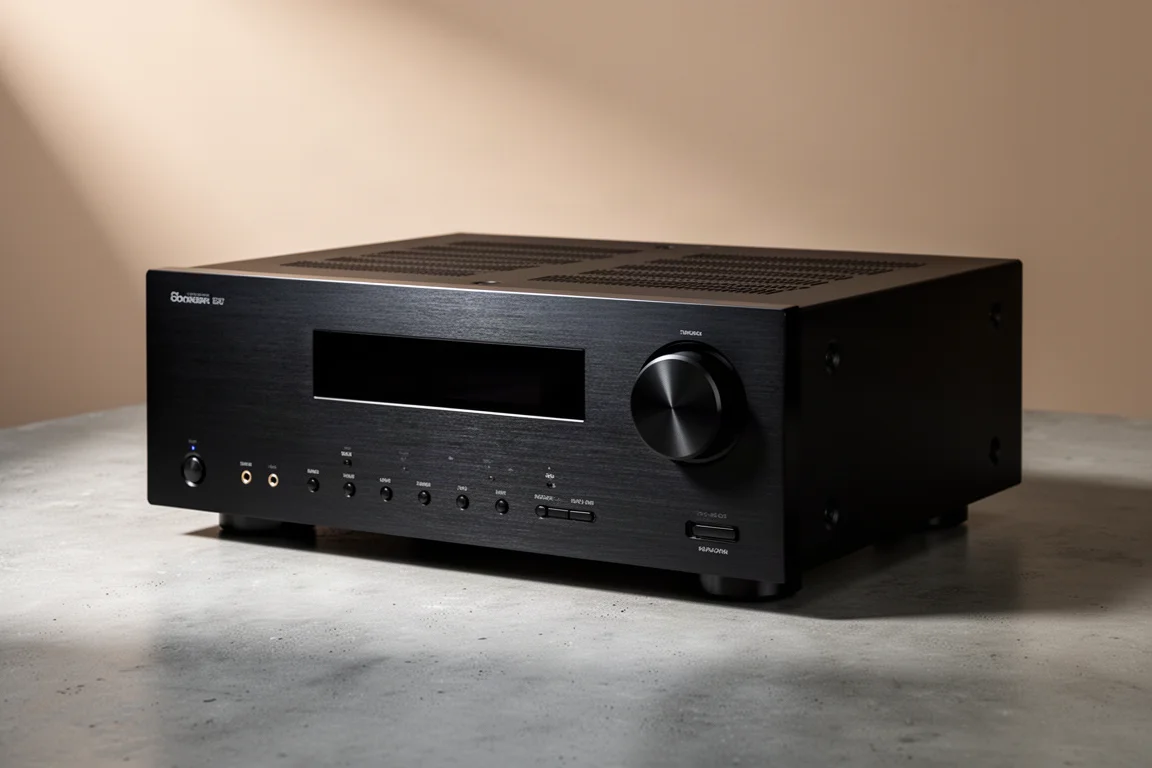
The Pioneer Elite VSX-LX305 sits in the middle of Pioneer’s Elite receiver lineup, and it lands in one of the most competitive spots in home theater: 9.2 channels of amplification, Dolby Atmos, DTS:X and IMAX Enhanced support, Dirac Live room correction included as standard, and a price of roughly a thousand dollars.
That combination invites the obvious comparison with the Onkyo RZ50, a receiver with a strong reputation in the same class. The RZ50 offers full preamp outputs for 11.2 channels and a bit more power per channel. The VSX-LX305 keeps a simpler feature set and a lower price, while delivering sound quality that holds up remarkably well next to it. This review covers what the VSX-LX305 does well, where it makes compromises, and who should choose it over the alternatives.
Who This Receiver Is For
Nine amplified channels open up more speaker layouts than a typical seven-channel receiver. The VSX-LX305 can drive a 5.2.4 Dolby Atmos configuration, a 7.2.2 layout, a 5.1.2 arrangement, or another permutation of the same channel count, which makes it a sensible centerpiece for a first serious Atmos build as well as for an upgrade from an older receiver.
Power is rated at 100 watts per channel into 8 ohms with two channels driven, and Pioneer does not publish an all-channels-driven figure. Two subwoofer outputs are provided, though they are not independent of one another, so anyone planning to align two subwoofers separately should factor that in.
The receiver also carries a moving-magnet phono preamp among its analog inputs, a welcome inclusion for anyone with a turntable sharing the room with the home theater.
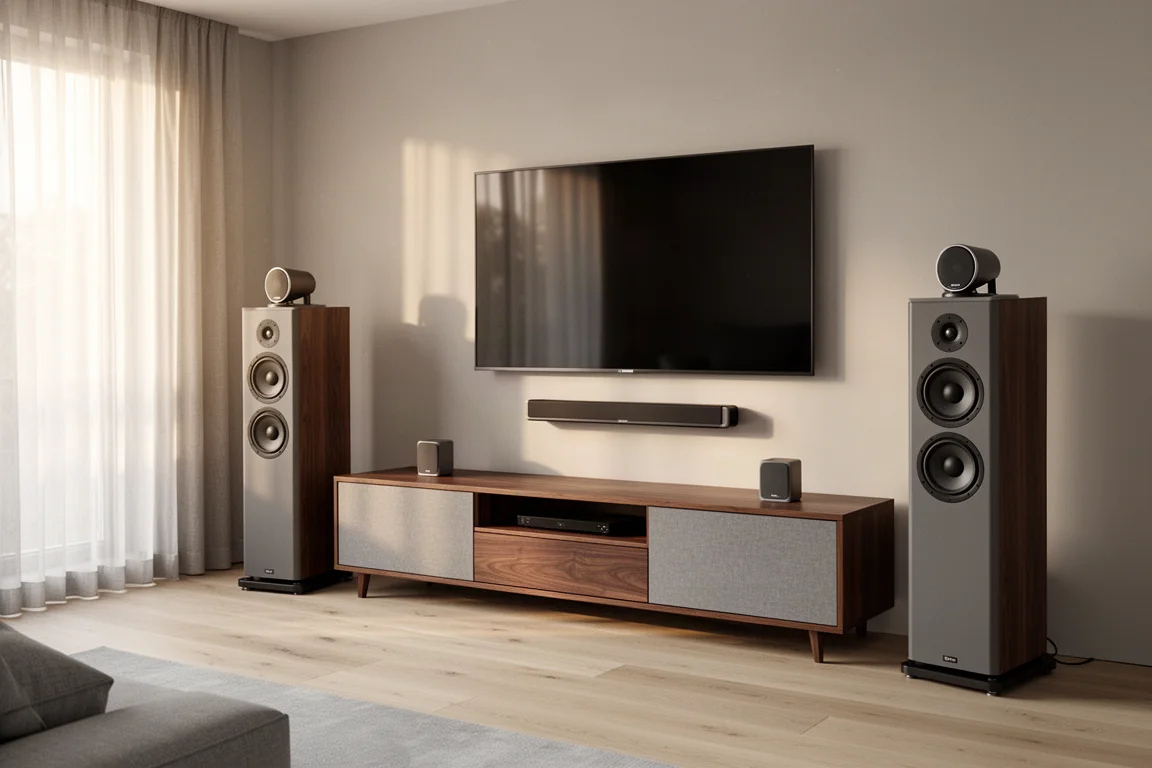
This is also a receiver for buyers who want Dirac Live without paying flagship money. Dirac is built in, and it works with the supplied microphone and the free Pioneer Remote App. For anyone who has been curious about Dirac but reluctant to spend more to get it, the VSX-LX305 is one of the more affordable ways in.
Room Correction and Setup
Setting up the VSX-LX305 is not difficult, even for someone who has never configured an AV receiver before. Connect the speakers, connect the sources, then run the calibration routine from the Pioneer Remote App on a phone or tablet with the included microphone plugged in.
Dirac Live is the headline feature here, and it behaves consistently: it identifies the connected speakers, sets their levels, and applies filters correctly. The initial speaker-identification sweep can ask for a higher subwoofer level than the measurement pass that follows, so expect a small adjustment at the subwoofer’s level control between the two stages rather than repeated prompts.
If Dirac is not to your taste, Pioneer’s own MCACC room correction is also built in, giving the receiver two distinct calibration paths. That kind of choice is unusual at this price, and it means buyers who prefer a lighter-touch correction curve are not locked out.
Sound Quality in Stereo and Surround
In Direct mode, whether the source is stereo or Dolby Atmos, the VSX-LX305 sounds very close to the Onkyo RZ50. It is not night-and-day different from considerably more expensive receivers either. The differences that do exist are matters of character rather than capability, which is useful context when comparing price tags.
Bass is where the VSX-LX305 establishes its personality. It has a fuller, weightier low end than a comparable Yamaha or Sony receiver when driving a stereo pair of tower speakers without a subwoofer. Once a subwoofer enters the system, that advantage largely evens out, because the subwoofer’s extension, not the receiver, determines how deep the system ultimately goes.
The mid-range is the standout. Vocals, instruments, and subtle textures come through with clarity and studio-like precision, and there is very little to pick apart. If something in the mid-range sounds warm or lean, it is far more likely to be the speakers than the receiver.
Treble is clear and detailed without becoming fatiguing over long listening sessions. It is not as airy or as three-dimensionally spacious as true reference-caliber gear costing several times more, but at this price the high frequencies are difficult to fault. The stereo soundstage is impressive as well, with strong detail separation and presence between the left and right speakers, even if depth is slightly flattened compared with high-end amplification.
With movie soundtracks, the receiver lands in the same territory as the RZ50 and perhaps a step behind the Yamaha A8A when it comes to ambient and spatial cues. It made effective use of upward-firing Atmos modules, arguably more so than the Marantz NR1711 or the Denon X3700H. Upmixing non-Atmos content, stereo mixes included, is genuinely enjoyable rather than merely functional.
Dialog intelligibility is easy to manage. Presence can be dialed up or down from the remote, a convenience not every receiver offers, and it makes a real difference with dense mixes or quiet late-night viewing.
Power and Speaker Matching
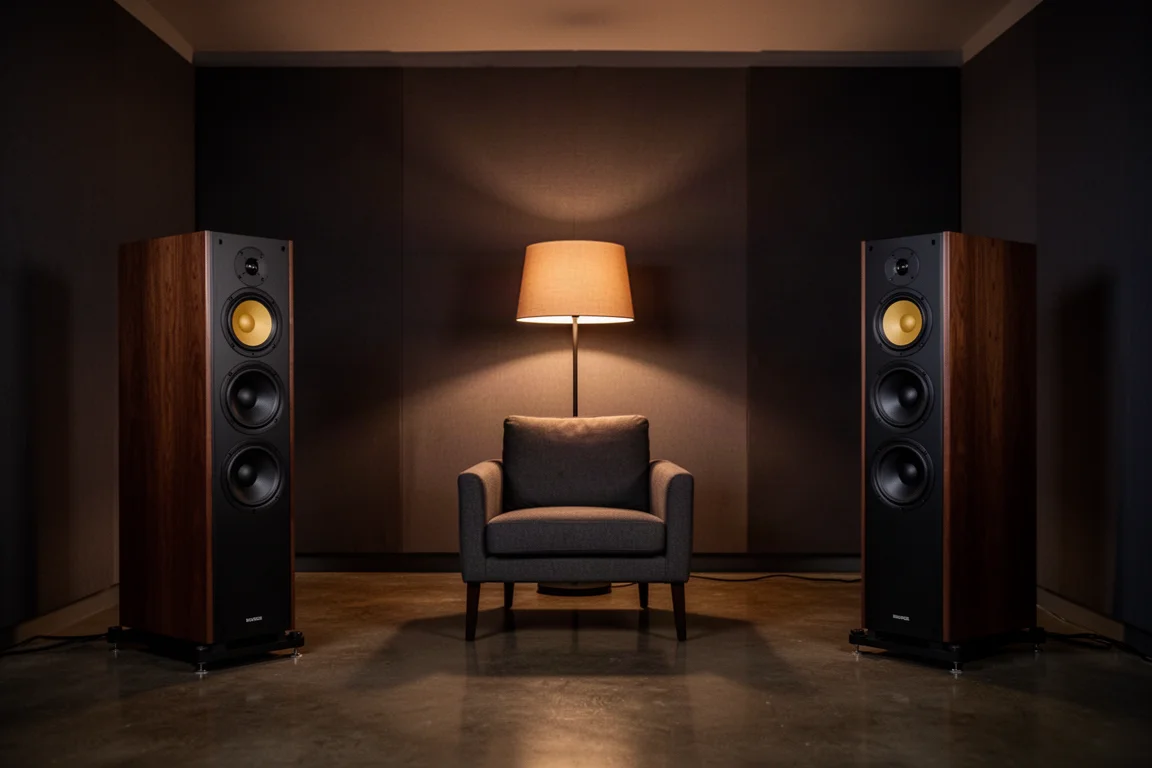
The 100-watts-per-channel rating is enough to drive most speakers, though not all of them. Planar magnetic designs are the clear exception, since a load of that kind is better served by dedicated power amplification. Conventional tower speakers are a different story. The VSX-LX305 drove Focal K2 towers well, had no trouble with Monitor Audio Silver series speakers or Wharfedale Lintons, and sounded excellent with a Magnet Cinema Ultra system.
Dynamic swings are broad, rich, and impactful while retaining detail, which is what gives action sequences their scale. Buyers chasing a genuinely cinematic sense of impact should find plenty to like here.
Gaming, Streaming, and Connectivity
Pioneer rates the VSX-LX305 as 8K/60 and 4K/120 compatible out of the box, with no firmware update required. True 8K/60 performance is difficult to verify simply because so little 8K content is available, but 4K/120 in HDR works well: Call of Duty ran smoothly at 4K/120, and 4K/60 titles such as Shadow of the Tomb Raider posed no problem at all.
One setup note matters for gamers. Before attempting higher resolutions and frame rates, change the HDMI output setting in the receiver’s menus from 4K Standard to 8K Standard or Enhanced. With that done, a console should pass its highest-quality signal through without further fuss.
There are six HDMI inputs and two HDMI outputs, all HDMI 2.1 compliant. Inputs 1 through 3 handle up to 40 gigabits per second, while inputs 4, 5, and 6 are limited to 24 gigabits per second, so it is worth planning which devices go where.
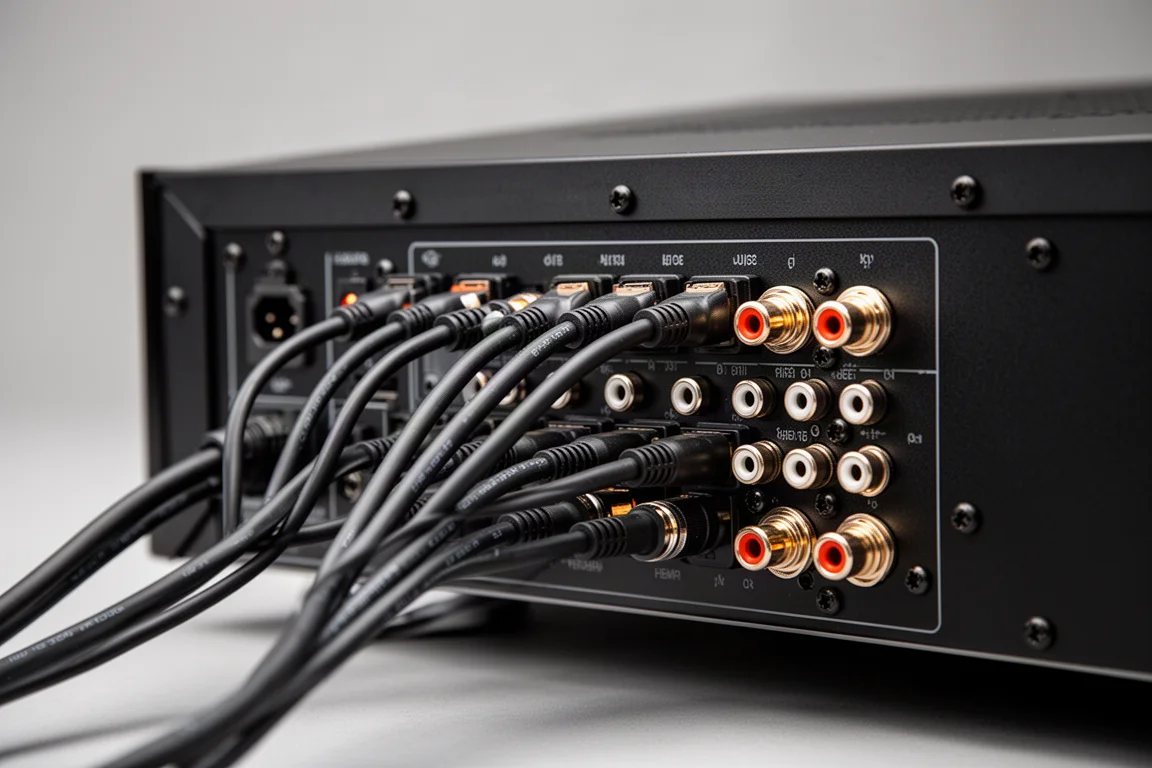
On the audio input side, the receiver is light on digital connections: one coaxial and one optical input. Analog inputs are more generous, including the phono stage mentioned earlier. Streaming support covers popular services such as Spotify and Amazon Music, alongside Bluetooth, AirPlay 2, and voice control through Amazon Alexa or Google Assistant. Day-to-day control comes from the supplied remote or the free Pioneer Remote App.
Things to Consider Before Buying
- Only three of the six HDMI inputs accept the full 40 Gbps signal, which limits where the most demanding sources can be connected.
- In Auto Surround mode, the center channel occasionally cut out during testing. Switching to another sound mode, such as Dolby Atmos or Direct, brought it back immediately. It is not clear whether this is specific to one unit or more widespread, but it is worth knowing about.
- Digital audio inputs are limited to a single coaxial and a single optical connection.
- The two subwoofer outputs are not independent, which restricts separate alignment of two subwoofers.
- The receiver does not match the Onkyo RZ50’s full 11.2-channel preamp outputs, and it offers less power per channel.
How It Compares With Other Receivers
Against the Onkyo RZ50, the differences are mostly about features rather than sound. The RZ50 adds full preamp outputs for 11.2 channels and roughly 20 extra watts per channel. If neither of those matters for the planned system, the VSX-LX305 sounds every bit as good in everyday use and costs a few hundred dollars less. It has also been the easier of the two to actually buy.
Against the Denon X3700H, the Pioneer is every bit as good and nearly as powerful, while the Denon offers more connection options and more room to expand later. The Pioneer’s advantage is a more straightforward user experience and Dirac room correction, which tends to produce more natural results than Audyssey.
Against Yamaha’s Aventage line, the VSX-LX305 slots between the A4A and the A6A in feature set. Yamaha receivers tend to feel more robustly built and offer a few more connection options, but the platform currently has rough edges: 4K/120 firmware has not reached every model, leaving some limited to 4K/60, and YPAO room correction is not as capable as Dirac. Paying a premium for Yamaha is difficult to justify on that basis.
It is also worth noting that Pioneer, Onkyo, and Integra receivers now deliver broadly similar performance and features, so brand loyalty within that group is less meaningful than it once was. Across the category, the law of diminishing returns appears to sit somewhere around $1,500 or less, which is exactly the territory the VSX-LX305 occupies.
Buying Advice
At roughly a thousand dollars, the VSX-LX305 punches above its weight class. Buyers who do not need the extra channels, the preamp outputs, or the additional 20 watts per channel will find it delivers most of what a more expensive receiver does, and it does so while remaining widely available.
If the plan is to add external amplification for more channels later, or to run a full 11-channel layout, the RZ50 remains the more sensible target. For a 5.2.4 or 7.2.2 build with a mix of movies, games, and stereo music, the VSX-LX305 covers the essentials without compromising on sound quality.
Buyers who value a simple setup and reliable room correction should weigh Dirac heavily in the decision. It is included here, it works consistently, and it is one of the strongest arguments for choosing this receiver over similarly priced alternatives.
Conclusion
The Pioneer Elite VSX-LX305 is a capable, great-sounding 9.2-channel receiver that gives up a handful of features to reach a lower price, and for a large share of buyers those features will never be missed. Dirac Live, 4K/120 support out of the box, and a clear, detailed sound signature make it easy to recommend to anyone building a modern Atmos system on a sensible budget.
Product link
View more details for Pioneer Elite VSX-LX305
This product is mentioned in the review. Check the specifications, options, and compatibility before buying.
View more details for Pioneer Elite VSX-LX305Further reading
Related Reviews
Home Theater Receivers
Arcam AVR11, AVR21, AVR31 and AV41: Inside the Current Home Theater Lineup
Three AV receivers and one surround processor share Arcam's house sound and a complete modern feature set. Here is how they differ and which one fits your room.
Home Theater Receivers
Best Home Theater Receivers 2026: Ten Picks From Entry Level to Flagship
A practical roundup of ten home theater receivers, from an affordable 5.1.2 model to a 15-channel flagship, with the features that matter most before you buy.
Home Theater Receivers
Best Home Theater Receivers: Eight Picks From Entry Level to Audiophile
Eight home theater receivers compared on channels, amplifier headroom, room correction, subwoofer outputs, and expansion, from an entry-level pick under $750 to audiophile flagships.