Mountain Bikes
Pinarello Dogma XC Hardtail Review: A Carbon Cross-Country Race Machine
A close look at the Pinarello Dogma XC hardtail, from its asymmetric carbon frame and race geometry to its two builds, weights, and prices.
Introduction
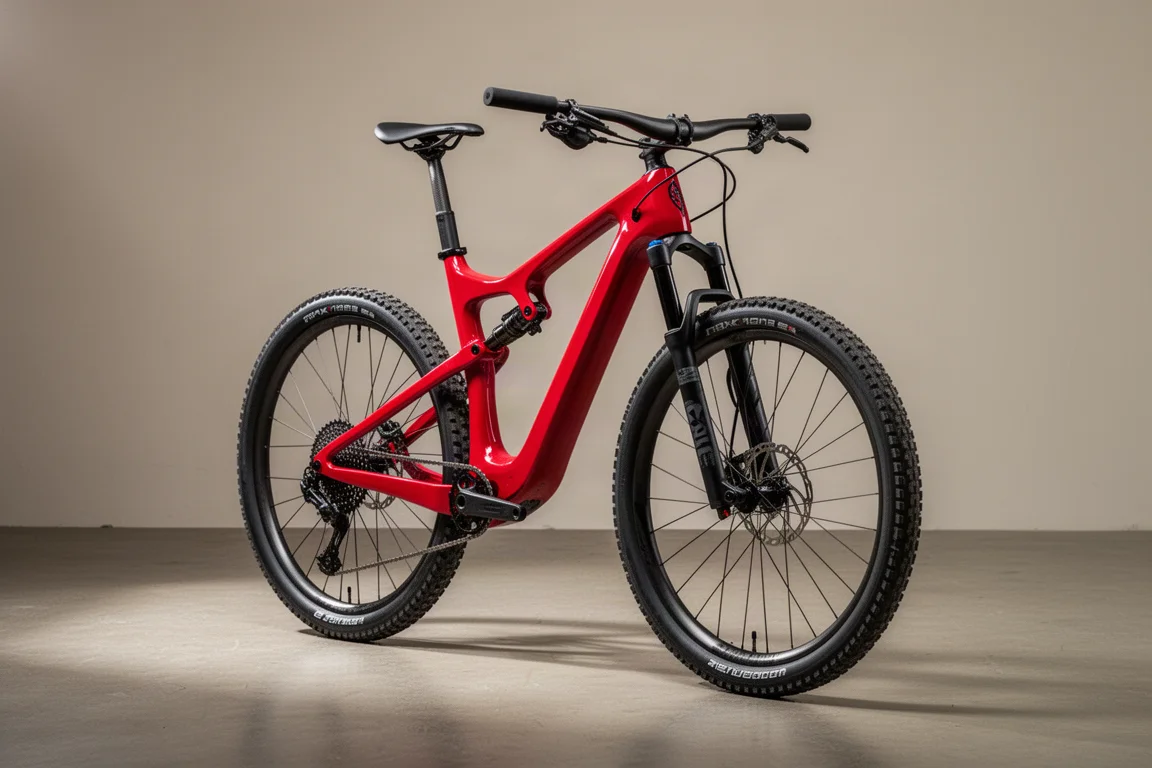
Modern cross-country race bikes are built to a familiar formula: fast, efficient, and remarkably capable. Most follow a similar design language, and the Pinarello Dogma XC hardtail is no exception. What sets it apart is a distinct Pinarello design flair that shows up in a few specific areas, most obviously in the frame itself.
The result is a race bike with genuine racing pedigree behind it and a set of engineering choices you can see rather than just read about on a spec sheet.

At 9.11 kg on the scales in its range-topping build, the Dogma XC hardtail sits in competitive territory for a cross-country race machine, and it is offered in two complete builds so riders can choose how much of that performance they want to pay for.
Who the Pinarello Dogma XC Hardtail Is For
This is a bike aimed at cross-country racers and efficiency-focused riders. The geometry, the short chainstays, and the low weight all point toward a machine built to accelerate hard, climb well, and stay sharp in tight race situations.
Two complete bikes are offered: a range-topping model with top-tier components, and a second-tier build that uses a slightly different type of carbon fiber while keeping the same geometry. That makes the platform relevant both to riders chasing the lightest possible race setup and to those who want the same handling character at a lower outlay.
Frame Design and Asymmetric Stiffness
The frame is constructed from carbon fiber, and its most distinctive trait is asymmetry. The non-drive side of the bike is reinforced to counterbalance the higher forces that the drivetrain puts through the other side. Pinarello claims this improves traction and delivers more balanced energy transfer.
The chainstays and seatstays do the heavy lifting when it comes to withstanding the power and rapid accelerations of elite racers. Laying the rear end out in this way removes the need for a connection between the chainstays and the seatstays, which saves weight and allows shorter chainstays for sharper handling. It also leaves ample clearance for a 29 x 2.4 inch tire with room to spare for mud.
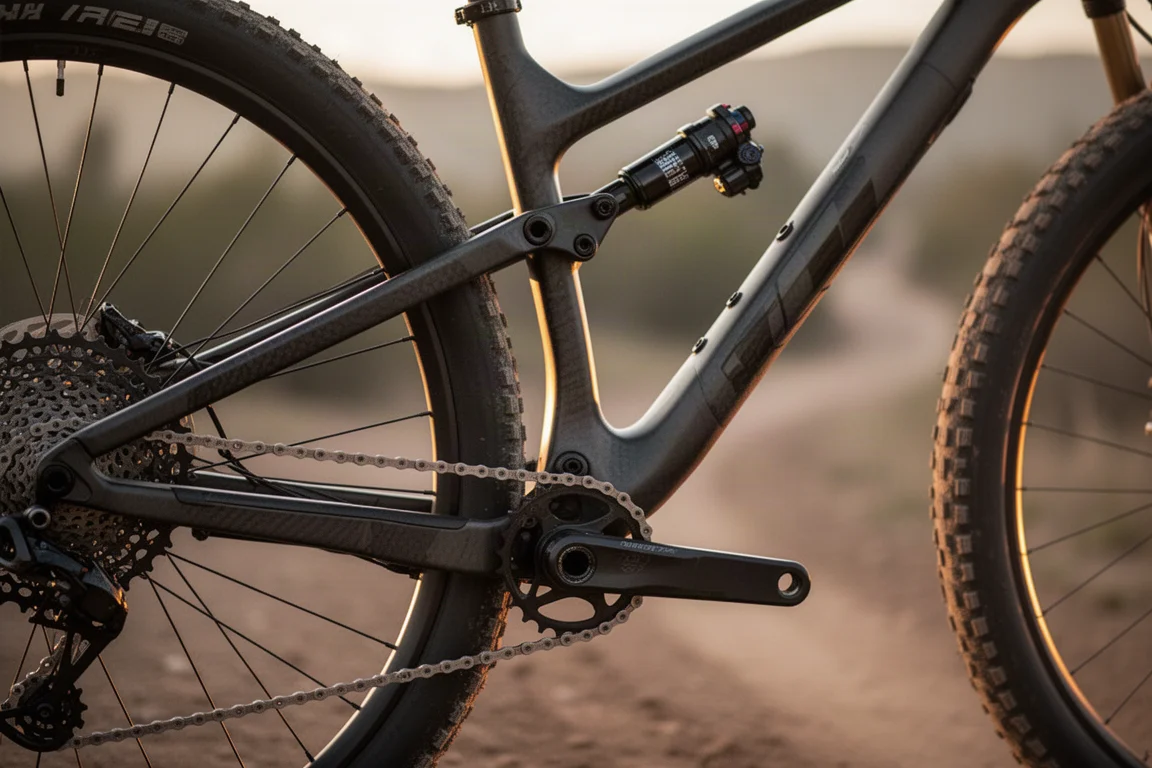
Stiffness gets another boost from the brace between the down tube, bottom bracket, and seat tube. Oversized designs in this area are common, but Pinarello’s cutout brace is visually striking and helps the bike stand out from the rest of the category. Elsewhere, the bottom bracket is a good old-fashioned threaded unit rather than a press-fit design.
Geometry and Handling
The longer, lower, and slacker trend has reached cross-country racing, and the Dogma XC hardtail follows it without going to extremes. It is not the slackest or most radically shaped bike in the category, and it matches the Dogma XC suspension bike’s numbers.
The head angle sits at 67.5 degrees on small and medium sizes, with a slightly steeper angle on large and extra large to keep handling sharp. Seat tube angle also varies by size: 74.5 degrees on small and medium, and 75 degrees on large and extra large. The cockpit is suitably rangy, with 470 mm of reach on a size large, and the chainstays are size-specific, ranging from 423 mm to 430 mm.
Build Options and Specifications
The range-topping build is priced at 9,700 pounds or 11,200 dollars, and it is specified with top-of-the-line equipment. You get Fox’s ultra-light, radically styled 32 StepCast Factory fork with 100 mm of travel, SRAM’s XX SL AXS transmission, Shimano’s top-tier XTR brakes, and DT Swiss’s lightest carbon wheels, the XRC 500 Spline. Those wheels come wrapped in Maxxis Rekon Race rubber in a wider 2.35 inch front and a narrower 2.25 inch rear.
Two colors are available: true red, which reflects Pinarello’s classic style, and true white, which is decorated with gold and rainbow stripes that reference the bike’s racing pedigree. The second-tier model uses a slightly different carbon fiber and the same geometry, with Fox Performance Elite suspension, SRAM GX AXS transmission, Shimano XT brakes, and DT Swiss alloy XR700 wheels. It is priced at 6,200 pounds or 6,600 dollars and comes in black only.
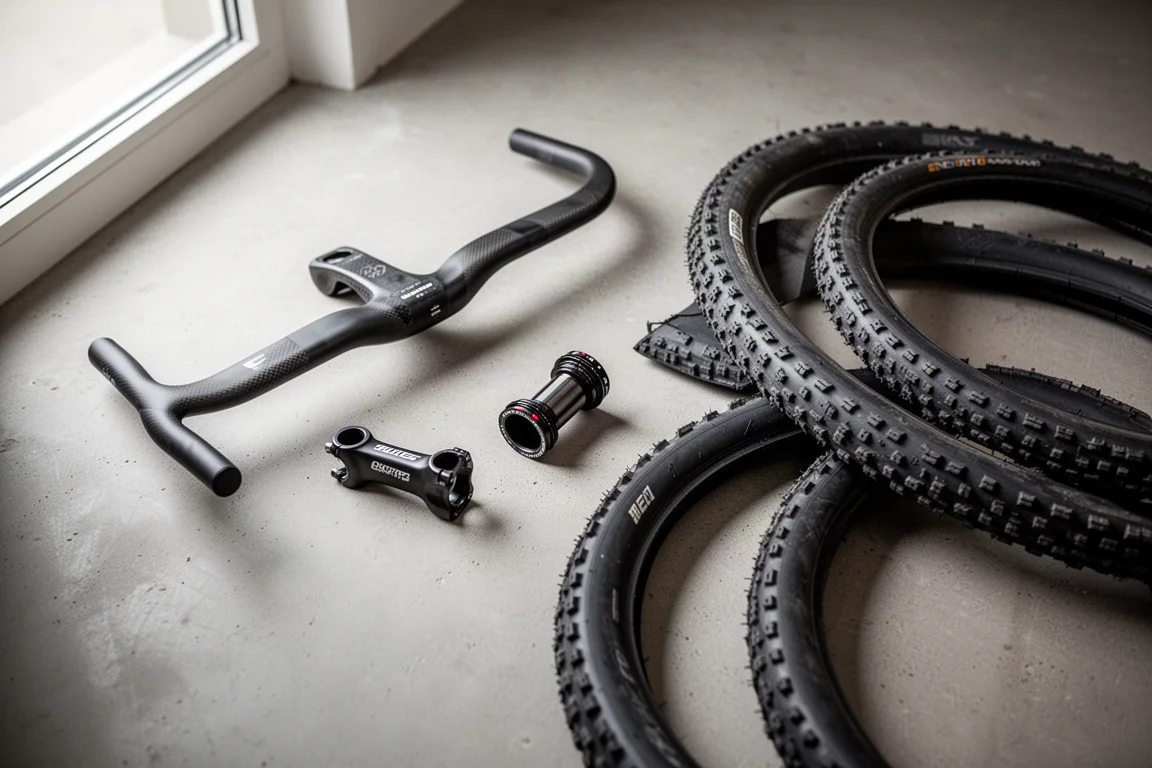
Both bikes share the same one-piece Talon Ultra XC handlebar and stem from house brand MOST. The fully integrated design is claimed to save weight and increase precision compared with a two-piece setup, and it includes fully integrated cable routing plus a specific headset bearing with an internal stopper, which keeps the front end neat and stops the handlebars from over-rotating and damaging the bike in a crash.
Things to Consider Before Buying
The price gap between the two builds is significant, and so is the specification gap. The range-topping model carries a 9,700 pound or 11,200 dollar price, while the second-tier bike comes in at 6,200 pounds or 6,600 dollars.
It is also worth knowing what the production bikes do not include. The prototype SR Suntour electronic suspension and the Princeton wheels used by the pros are not part of either build.
Two more practical points: the second-tier model is only available in black, and the one-piece handlebar and stem is a single integrated unit, so it is a less modular setup than a two-piece design.
Buying Advice
If you want the lightest, fastest version of this platform, the range-topping build is the one to look at. Its 9.11 kg weight, Fox 32 StepCast Factory fork, SRAM XX SL AXS transmission, XTR brakes, and carbon DT Swiss wheels make it a genuine race-ready package, and the choice of true red or true white with gold and rainbow stripes lets you match the bike to Pinarello’s racing heritage.

The second-tier model keeps the same frame geometry and handling, which is the part that shapes how the bike actually rides, while stepping down to Fox Performance Elite suspension, SRAM GX AXS, Shimano XT brakes, and DT Swiss alloy wheels. For riders who value geometry and ride character over the last few grams, it is the more sensible entry point into the Dogma XC hardtail.
Conclusion
The Pinarello Dogma XC hardtail brings a distinctive asymmetric carbon frame, a threaded bottom bracket, short size-specific chainstays, and generous tire clearance together in a cross-country race package that weighs just over 9 kg in its top build. With two builds covering different budgets and the same geometry underneath, it makes its case on engineering detail as much as on racing pedigree.
Product link
View more details for Pinarello Dogma XC Hardtail
This product is mentioned in the review. Check the specifications, options, and compatibility before buying.
View more details for Pinarello Dogma XC HardtailFurther reading
Related Reviews
Mountain Bikes
Atherton AM.130 Review: 3D-Printed Titanium Lugs and a 130mm Trail Bike That Descends Like a Bigger Machine
The Atherton AM.130 pairs 3D-printed titanium lugs with carbon tubes and a DW6 suspension platform. Here is how it rides, what the build delivers, and who it suits.
Mountain Bikes
Beginner Mountain Bike Buying Guide: What to Look For in a Trailworthy Hardtail
A practical framework for evaluating beginner mountain bikes, whether new or used, by examining key components that indicate real trail capability.

Mountain Bikes
Best Aluminum Mountain Bikes 2026: Five Alloy Bikes Worth Your Attention
Five aluminum mountain bikes that show how far alloy has come, from a 120mm trail bike and a versatile machined frame to a 180mm freeride machine.