Hi-Fi Speakers
Piega Coax 411 Gen 2 Review: A Swiss Standmount With a Coaxial Ribbon Heart
A handbuilt Swiss standmount with a single-piece aluminium cabinet and a coaxial ribbon driver. Here is what its sound, setup demands and price mean for buyers.
Introduction
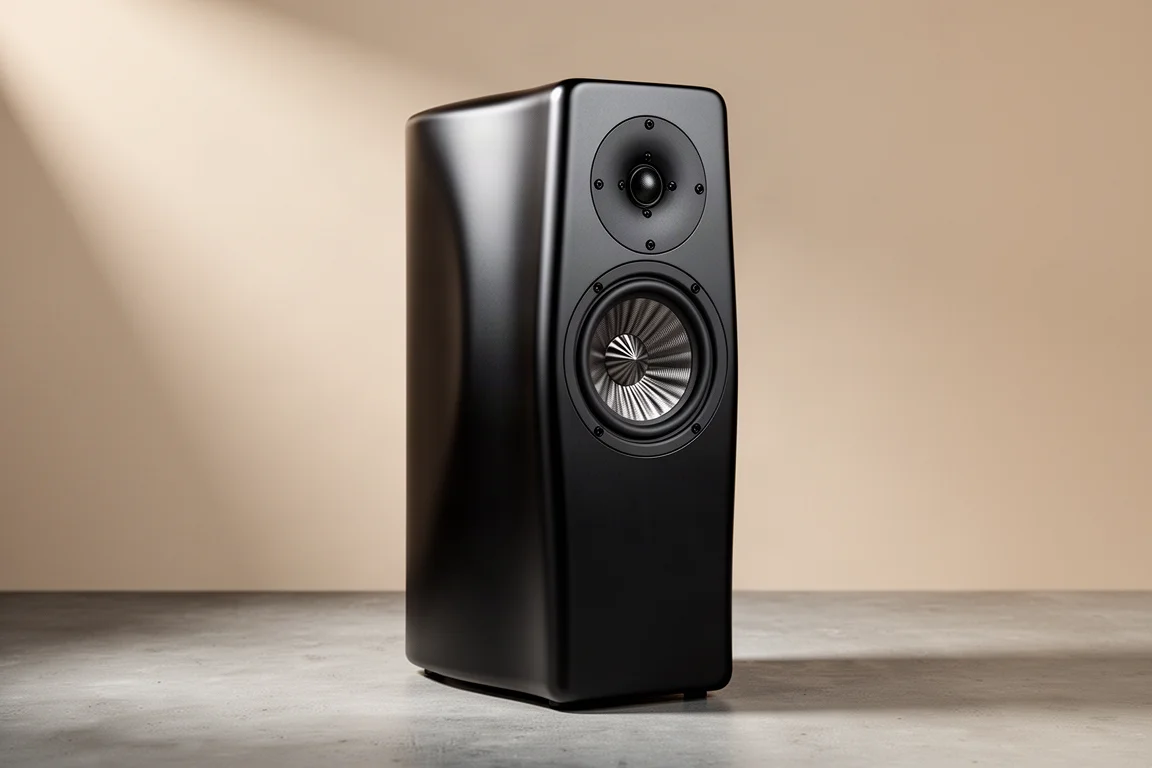
The Piega Coax 411 Gen 2 is a compact standmount loudspeaker built around two ideas that rarely appear together: a cabinet extruded from a single piece of aluminium, and a ribbon tweeter mounted concentrically inside the midrange driver.
It is handbuilt in Switzerland, on the shores of Lake Zurich, by a small team. The company began building speakers in 1984, when an engineer and musician joined forces with a business partner, and the second generation of the founding family took over the running of the business in 2018. Metal cabinets have been part of the design language since 1993, and a coaxial ribbon driver since 2000.
The Coax 411 Gen 2 retails at £8,000 a pair in one of three standard anodised finishes: black, silver or white. A further eight colours can be specified for an additional £1,300. Competing designs in this bracket can cost considerably more, but this is still a serious outlay, and the speaker asks a fair amount of the rest of the system.
Who This Speaker Is For
This is a speaker for listeners who put soundstage, instrument separation and timing at the top of the list. The coaxial driver arrangement produces a central sweet spot that is much wider than usual, which means three people can sit on a couch and all have a genuinely good listening experience rather than one person in the centre seat.
That said, the design rewards care. The speakers want space away from walls and a resolving system in front of them, so they suit a listener who is willing to treat positioning and electronics as part of the purchase rather than an afterthought.
They are also a natural fit for anyone who values the craft story as much as the specification: a handbuilt product from a small Swiss workshop, with the coaxial driver developed in house and the bass unit built to Piega’s specification.
Cabinet Design and Build Quality
The cabinet is the first thing that sets the Coax 411 Gen 2 apart. It is extruded from one piece of aluminium rather than assembled from panels, and the tall, slim profile has curved sides and back. A Swiss architect and designer was responsible for the shape.
Dimensions are 450 x 210 x 310 mm (17.7 x 8.3 x 12.2 in), and each speaker weighs 25 kg (55 lb), which is substantial for a standmount and reflects how much of the enclosure is metal.
Grilles are held in place and can be removed with some effort using the supplied heavy magnet. Leaving them off is the better choice, because it exposes the driver that makes this speaker unusual.
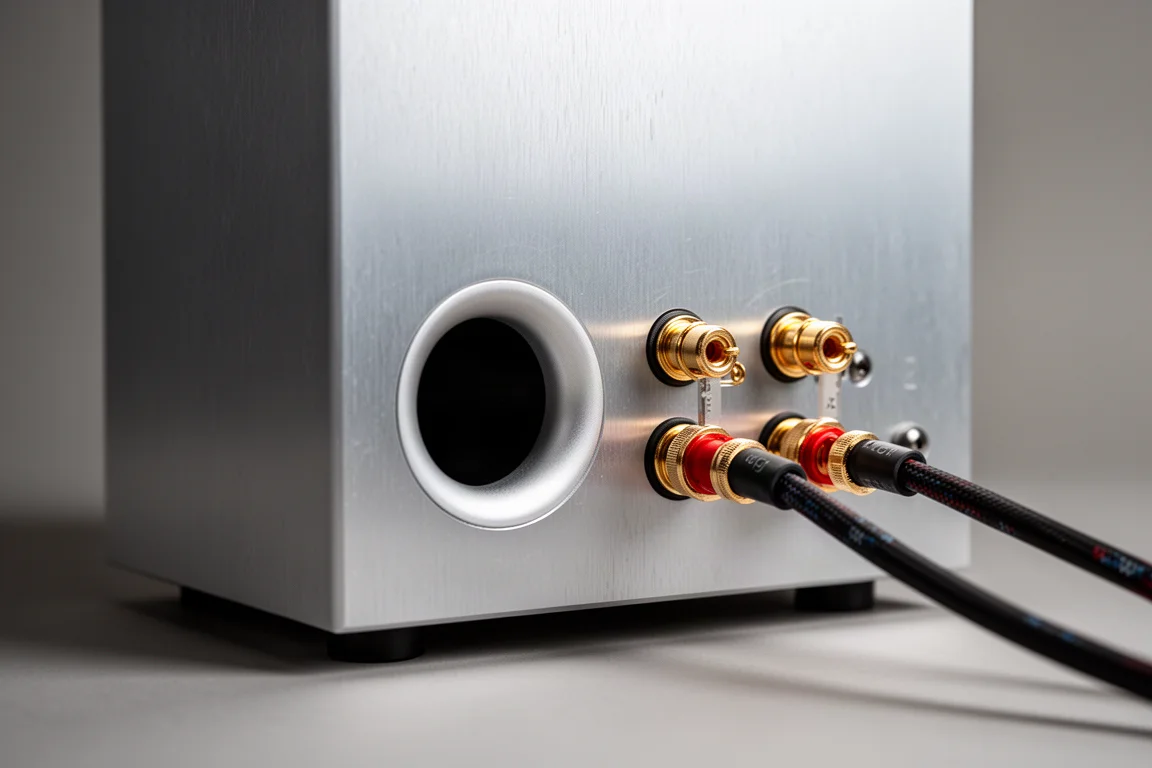
Inside, a brace applies pressure to the internal walls to hold the cabinet under controlled tension, an approach Piega calls the TIM system, short for tension improved module. Now in its second generation, it is intended to reduce cabinet resonances. On the rear panel you will find two sets of speaker binding posts and a port.
Driver Technology: The Coaxial Ribbon
The centrepiece is the C112 plus driver, developed in house: a tweeter concentrically mounted within a midrange unit. Dual concentric cones, domes and horns are familiar enough, but building a ribbon driver in this form is unusual.
The driver’s stated frequency response runs from 450 Hz up to 50 kHz. Because the midrange is large enough to reach down to 450 Hz, the speaker behaves effectively as a point source across everything above the bass and lower midrange, which covers the frequencies where timing information matters most to the ear.
Below that sits a 160 mm (6.3 in) alloy cone bass driver, developed to Piega’s specification and named UHQD, for ultra high quality definition.
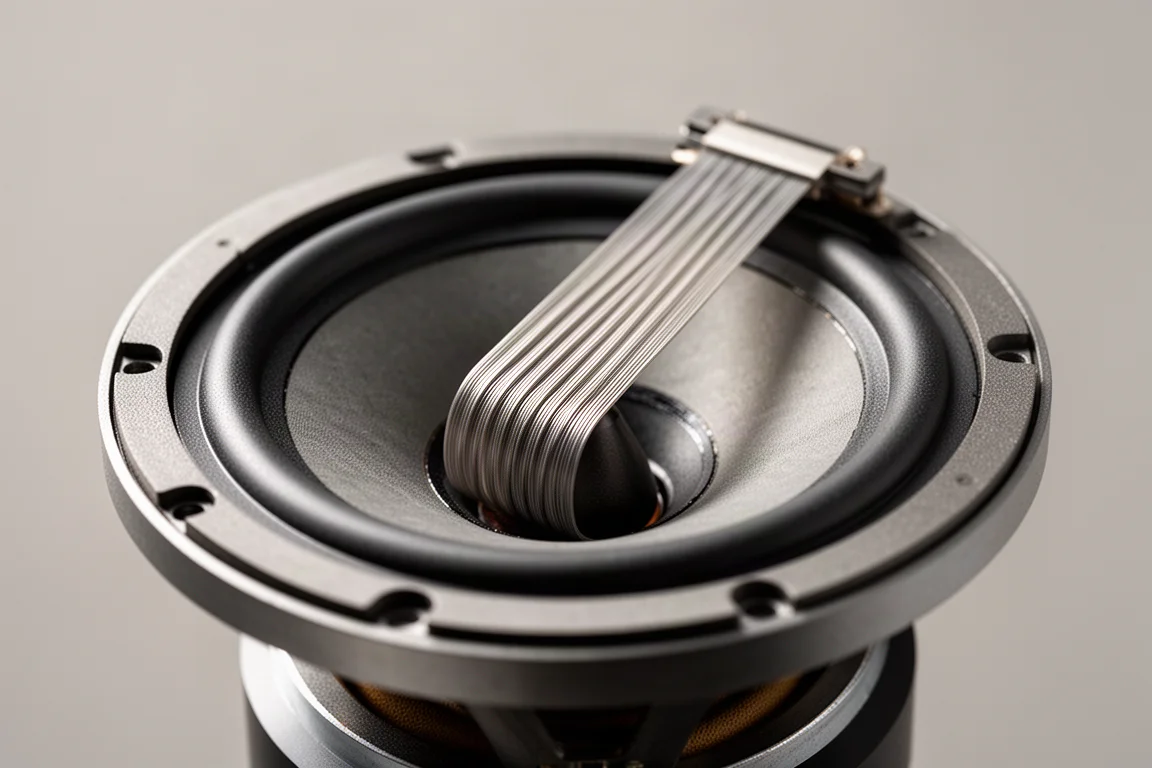
Ribbon drivers are chosen for several reasons. The diaphragm has a much lighter mass than a cone or dome membrane, typically below 1 g, which results in a quicker impulse response. Because the diaphragm is flat, more linear force is applied across the radiating area, which lowers coloration and distortion. A ribbon typically has greater symmetrical compliance, whereas the rigidity of a conventional driver is compromised by the dome shape, the materials used, and the spider and surround that support the dome and voice coil. The flat voice coil results in minimal inductance and a relatively flat impedance, presenting a less challenging load to an amplifier. And a ribbon suffers less thermal compression, because the voice coil remains at a more stable and lower temperature regardless of the playback level.
There are some excellent dome tweeters on the market, and integrating a ribbon tweeter with a conventional cone woofer brings dispersion challenges. Mounting the midrange concentrically around the tweeter is how this design addresses that.
Sound Quality: Soundstage and Timing
The way the Coax 411 Gen 2 stages and separates instruments is remarkable. There is a dark background from which music emerges with an impeccable sense of timing, and the speakers disappear as physical objects, creating an immersive sound field that extends to the boundaries of the room in every direction.
Imaging has both precision and robustness; performers are placed with a tangibility that makes them feel almost within reach. Combined with the wide central sweet spot, that makes for a listening experience that holds up across a small group rather than rewarding only one seat.
Bass Performance and Tonality
Bass quality is exceptional, and among the finest heard from any ported speaker design. The lack of cabinet resonances is almost certainly a major contributor. Transient attack and note-to-note definition rival sealed box and transmission line designs, which is notable because the floorstanding 611 and 811 models in the range use sealed enclosures. Choosing a port for the 411 lets the standmount reach a specified 35 Hz, only 3 Hz short of the 611 on paper.
That 35 Hz figure is optimistic. With some room boundary reinforcement, useful output in the high 30s is realistic. The sensitivity figure is the bigger question mark: the stated 90 dB into a 4 ohm load works out to roughly 87 dB into 8 ohms, and in practice the speaker demanded noticeably more amplifier volume than that number suggests.
Tonally, the Coax 411 Gen 2 sits a touch on the warm side of neutral and sounds a little dark, with treble that is slightly rolled off compared with some rivals. The upside is a fuller midrange that lends body to vocals and lead instruments. Fine timbre and fleshed-out tone depend on the recording, so high-quality sources pay off here.
Setup and System Matching
Positioning matters as much as anything else. Fine timing information is easily smeared by early reflections from nearby boundaries, so keep the speakers away from walls. Around 80 cm (31.5 in) from the wall, measured from the centre line of the front baffle, works well, with the speakers toed in to point directly at the listening position for maximum treble energy.
Ignore the published sensitivity rating and give them power. Roughly 75 W per channel into 8 ohms is a sensible minimum. Amplifiers that are neutral or lean slightly cool balance the speaker’s warm, dark character; a fuller, warmer amplifier can push the balance too far. The Hegel H190 (£3,250, rated at 250 W per channel into 4 ohms) is a good starting point, while the Hegel H400 (£5,900) is a substantial step up in fidelity and low-end grip. Anything below the level of a genuinely resolving front end is unlikely to do them justice.
Buying Advice
Buy the Coax 411 Gen 2 if you are chasing soundstage, separation and timing, and if you can give the speakers room to breathe and electronics with enough current to wake them up. They are also a straightforward choice for listeners who want a handbuilt, metal-cabinet design that looks and feels like the money it costs.
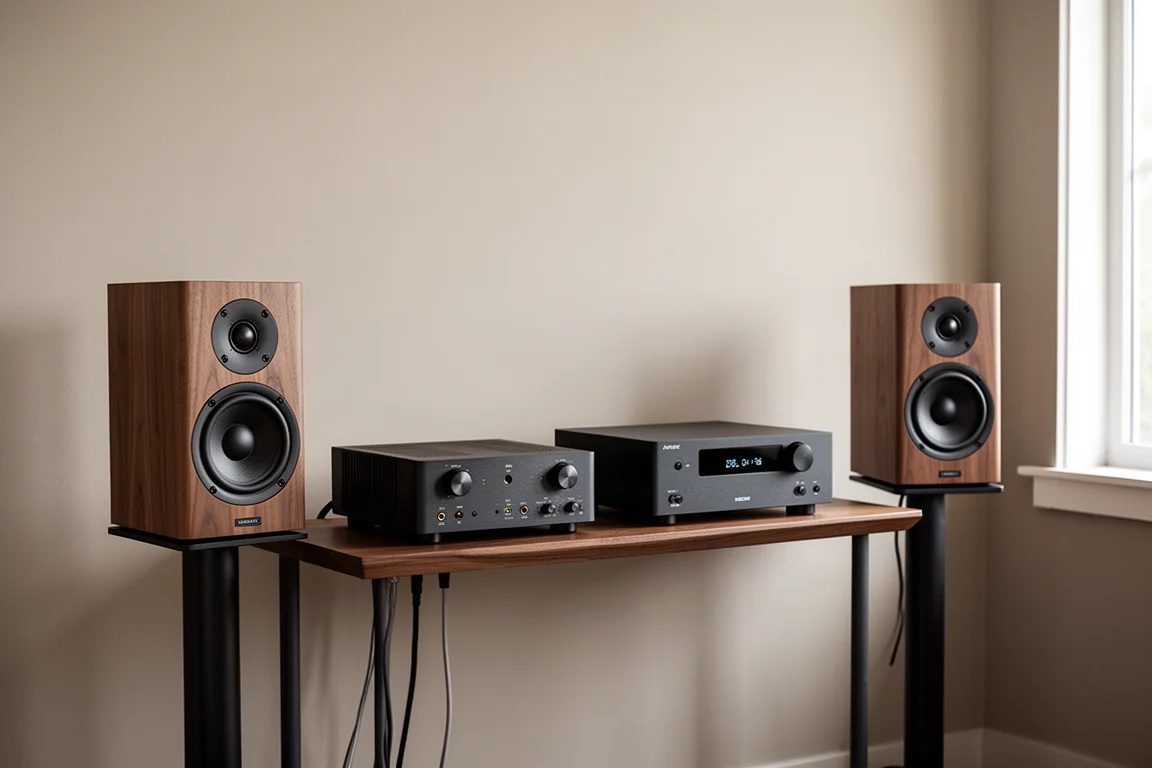
Think carefully if your room forces you to place speakers close to a wall, or if you plan to drive them with a small amplifier or a warm-sounding one. The dark tonal balance and the realistic sensitivity mean the system around the speaker carries more weight than usual. Budget for stands and an amplifier of the calibre described above, and factor in the £1,300 premium if you want one of the eight optional finishes beyond black, silver or white.
Conclusion
The Piega Coax 411 Gen 2 is a stylish, superbly constructed standmount that pairs genuine design innovation with premium materials: a sculpted aluminium cabinet, a custom bass driver, and a coaxial midrange and ribbon tweeter developed in house. Few speakers at any price disappear so completely or place performers with such tangibility, and the bass performance from a ported standmount is exceptional.
They sit warm of neutral and a little dark, so they reward careful matching with neutral or cool-leaning electronics that have real power on tap. At £8,000 a pair they are not a casual purchase, but for a listener who values imaging, timing and craft, they earn a place on the shortlist.
Product link
View more details for Piega Coax 411 Gen 2
This product is mentioned in the review. Check the specifications, options, and compatibility before buying.
View more details for Piega Coax 411 Gen 2Further reading
Related Reviews
Hi-Fi Speakers
1723 THX Tower vs 1528 Bookshelf: Which Speaker Fits Your Room?
Two speakers at roughly the same price, built very differently. How the 1723 THX tower and the 1528 bookshelf compare on construction, bass, power needs, and sound.
Hi-Fi Speakers
Acoustic Energy AE 300 Review: Deep Bass From a Compact Standmount
A two-way standmount with real wood veneer, surprising low-end weight, and a warm, easygoing character. Here is what to know before buying.
Hi-Fi Speakers
Acoustic Energy AE1 40th Anniversary Review: A Modern Take on a British Classic
A compact standmount that revives a 1980s favorite with all-new parts, a warm mid-centric balance, and a price of £1,499 per pair.