Hi-Fi Speakers
Picard A700 Review: A Powered Tower With Switchable Master Tunings
A powered floorstanding speaker with four 150W amp channels per cabinet, USB-loaded Master Tunings, and measured performance that stays clean at realistic listening levels.
Introduction
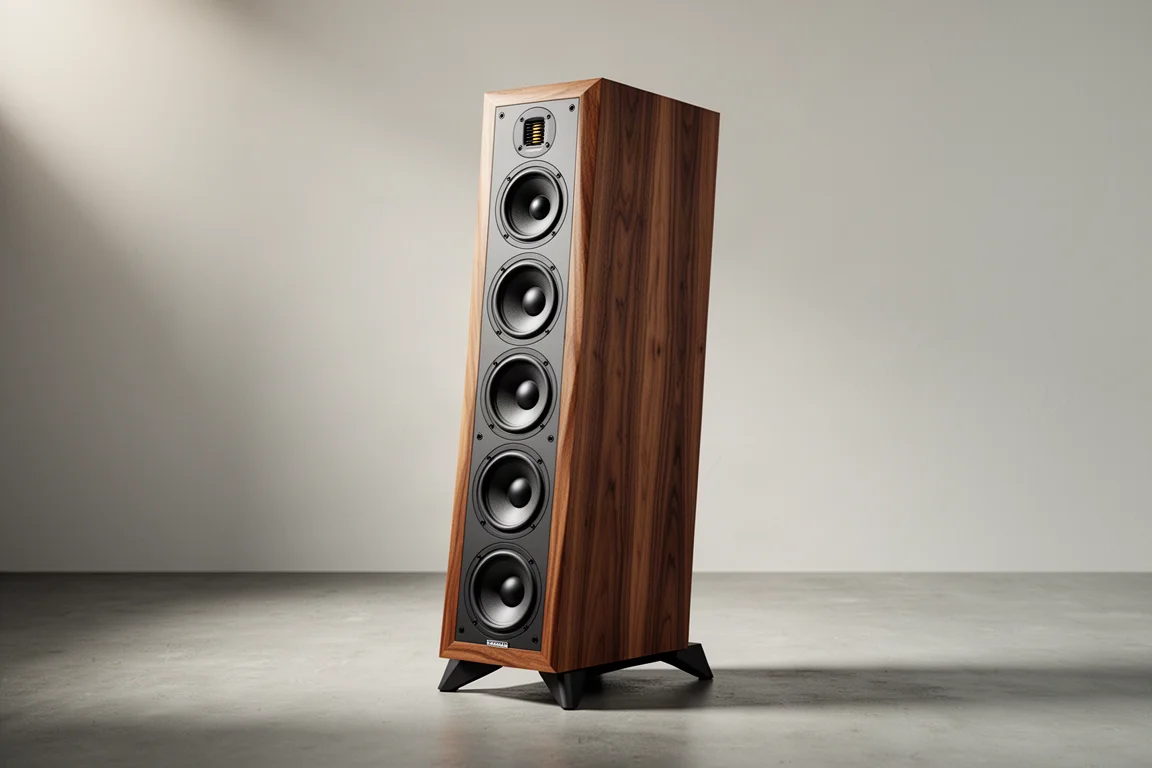
The Picard A700 is a powered floorstanding loudspeaker, which means each cabinet arrives with its own amplification, its own digital signal processing, and a set of swappable voicing profiles the company calls Master Tunings. Every cabinet carries four 150-watt amplifier channels, so there is no separate power amplifier to match and no speaker cable to agonize over. You connect a source, place the speakers, and listen.
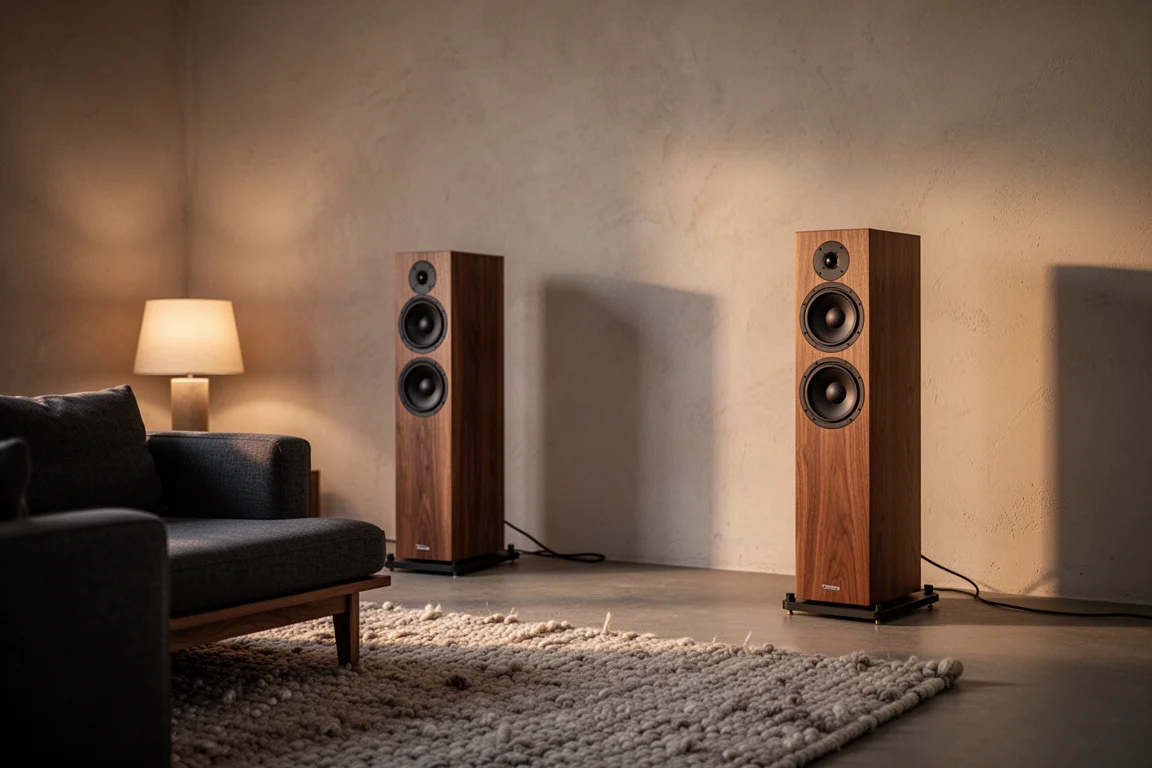
Pricing sits firmly in premium territory. The A700 retails at roughly 6,000 EUR per pair, which converts to about 6,600 USD per pair including shipping. The set supplied for testing included the optional wireless hub, a compact box that accepts music streamed from a phone and feeds each active speaker directly. The hub also brings RCA and optical inputs into the system, so a turntable, a disc player, or a television can all live in the same setup without extra hardware.
The speaker itself is unusual in how much control it hands to the owner. Instead of a fixed factory voicing, the A700 lets you load different tuning profiles yourself, and the optional hub adds room correction and manual equalization on top. That combination is the heart of what makes this speaker interesting.
Who the Picard A700 Is For
The A700 suits listeners who want a complete system rather than a chain of components. Because the cabinets are active and self-powered, the signal path stays short: source into hub, hub into speakers, and you are running. For anyone who has spent time matching amplifiers to speakers, that simplicity is a genuine part of the appeal.
It is also a strong candidate for smaller rooms. The stock neutral tuning proved bass heavy in a compact space, and moving to the cardioid bass mode brought the low end much closer to neutral. Cardioid mode uses the rear woofers to cancel low-frequency energy behind the cabinet, which reduces the rear wall reflection that tends to exaggerate bass. Owners who cannot pull their speakers far out from the front wall will appreciate having that option built in rather than having to treat the room.
Finally, the A700 rewards people who like to experiment. The stock tuning is a solid starting point, but the ability to download a profile, load it, and compare it against another is exactly the kind of flexibility that keeps a system enjoyable over years rather than weeks.
Main Strengths
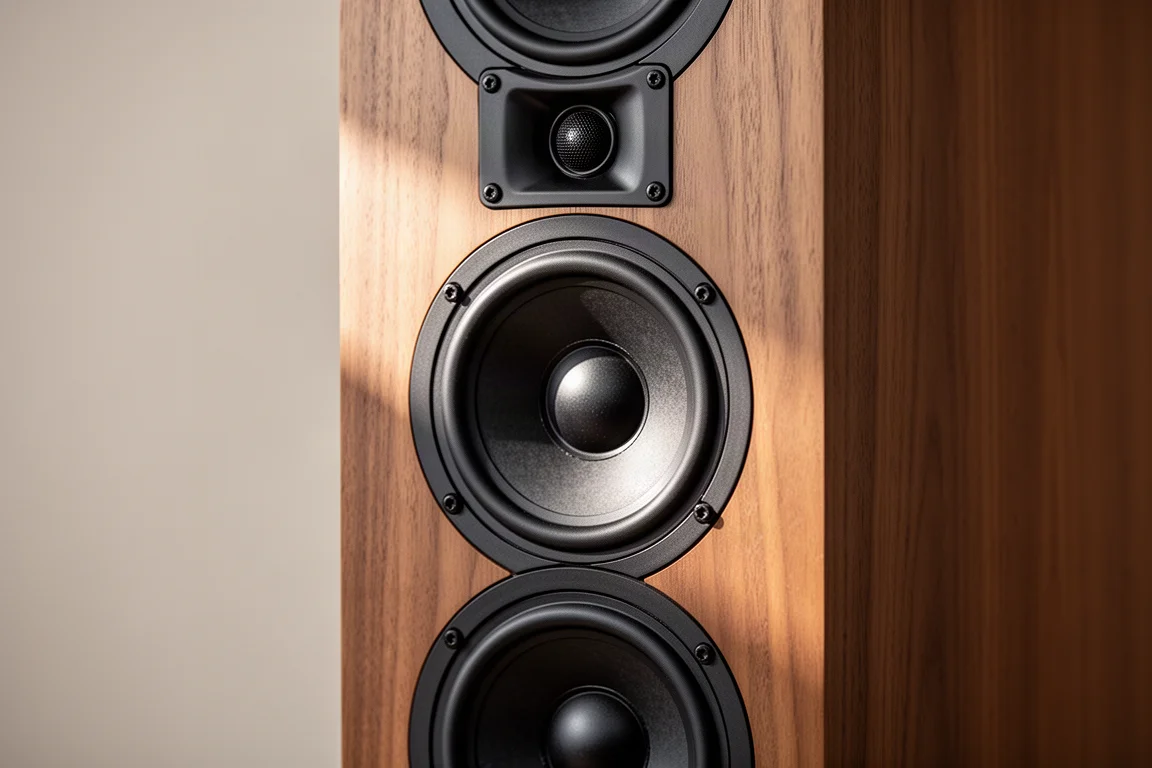
The driver complement is generous. A roughly 20 mm tweeter, about three quarters of an inch, sits loaded into a waveguide at the top of the baffle, above a six-inch midwoofer. Below that are four six-inch woofers, two on the front baffle and two on the rear, all driven by the four 150-watt channels inside each cabinet. The cabinet is tilted back slightly, which aims the reference axis, the point between the waveguide tweeter and the midwoofer below it, toward a normal seated ear height.
Measured performance backs up the design. On-axis response stays within roughly plus or minus 1.5 to 2 dB, with an F3 of 51 Hz and an F10 of 22 Hz, and the low-frequency roll-off is gradual rather than abrupt. Harmonic distortion stays well below one percent above 80 Hz at 86 dB, and multitone distortion at 96 dB ranks among the lowest measured in a full-range speaker. At a listening distance of about three meters, output reached roughly 96 dB without strain, which works out to around 20 dB of usable dynamic range above a 76 dB reference. In practical terms, that is enough headroom for most rooms and most listening habits.
The tuning system is the other headline strength. Beyond the stock profile, seven additional Master Tunings are available. You download the profile you want from the manufacturer, copy it to a USB drive, plug the drive into the back of the speaker, and confirm with the buttons on the cabinet. The speaker then runs that voicing until you change it. Few powered speakers give owners this much latitude over the sound.
Things to Consider Before Buying
Horizontal radiation is narrower than some listeners prefer, at roughly plus or minus 50 degrees. Vertical dispersion is tighter still, with a useful window of about plus or minus 10 degrees. In a normal two-channel setup that is rarely a problem, since the speaker is set once at ear height and left alone, but it does mean placement and seat height matter more than usual. The reference axis sits between the waveguide and the midwoofer below it, and the tilted cabinet helps align that axis with a seated listener.
The waveguide is constant directivity, which holds its pattern as you move off axis. The practical consequence is that the high frequencies can sound slightly elevated relative to the midrange when the speakers are aimed straight at the listener. Toeing the speakers out by about 10 degrees, either crossing in front of the listening position or angled further into the room, tends to restore a more neutral balance.
Protective limiting is built in, as it is on most powered designs, and it engages only at the very highest output levels. It did not intrude at realistic listening volumes, but buyers who expect to push a system hard should know the limiter exists. It is also worth noting that the 45-day trial period is generous, though return shipping is the buyer’s responsibility. Colors include a wood finish, black, and white, with the possibility of further options over time.
Master Tunings, EQ, and Placement
Getting the most from the A700 is mostly a matter of matching the tuning to the room. In a small space with limited distance to the front wall, the cardioid bass mode is the most useful starting point because it lowers the amount of bass energy sent rearward. The stock neutral profile and the theoretical profile differ more subtly, mainly in the midrange and upper midrange, and either can be preferable depending on taste and room.
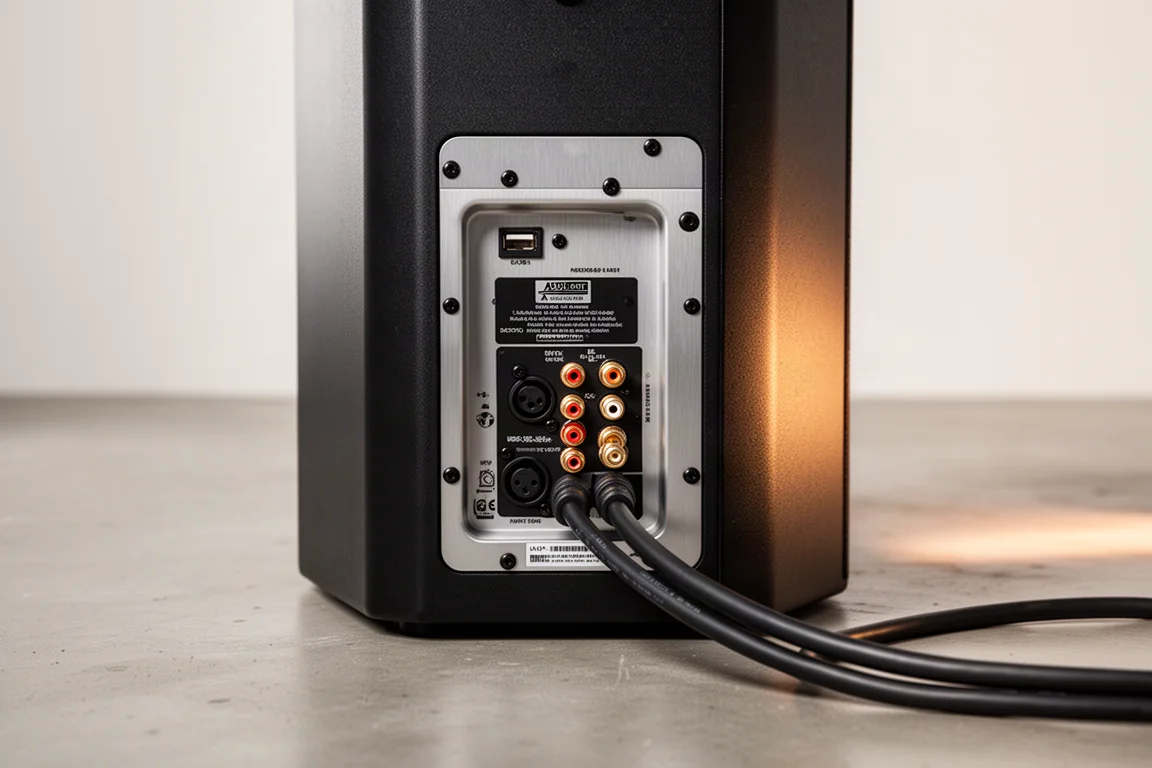
The optional hub extends this further. It adds room EQ alongside manual equalization, and adjustments can be made from a phone app, so a small boost in the treble or a gentle cut in the midrange is a few taps away. If you settle on a tuning you like but one room mode still bothers you, that is where the hub earns its roughly 300 EUR asking price. Placement matters too: toe the speakers out around 10 degrees, keep them symmetrical, and make sure your ears line up with the axis between the tweeter and the midwoofer.
Buying Advice
If you are ordering the A700, order the hub with it. The speakers work without it, but the hub is what turns a very good powered speaker into a system that adapts to your room, and bundling it at purchase is the sensible way to go. It is a modest addition next to the price of the pair, and it unlocks streaming, extra inputs, room EQ, and manual equalization in one step.
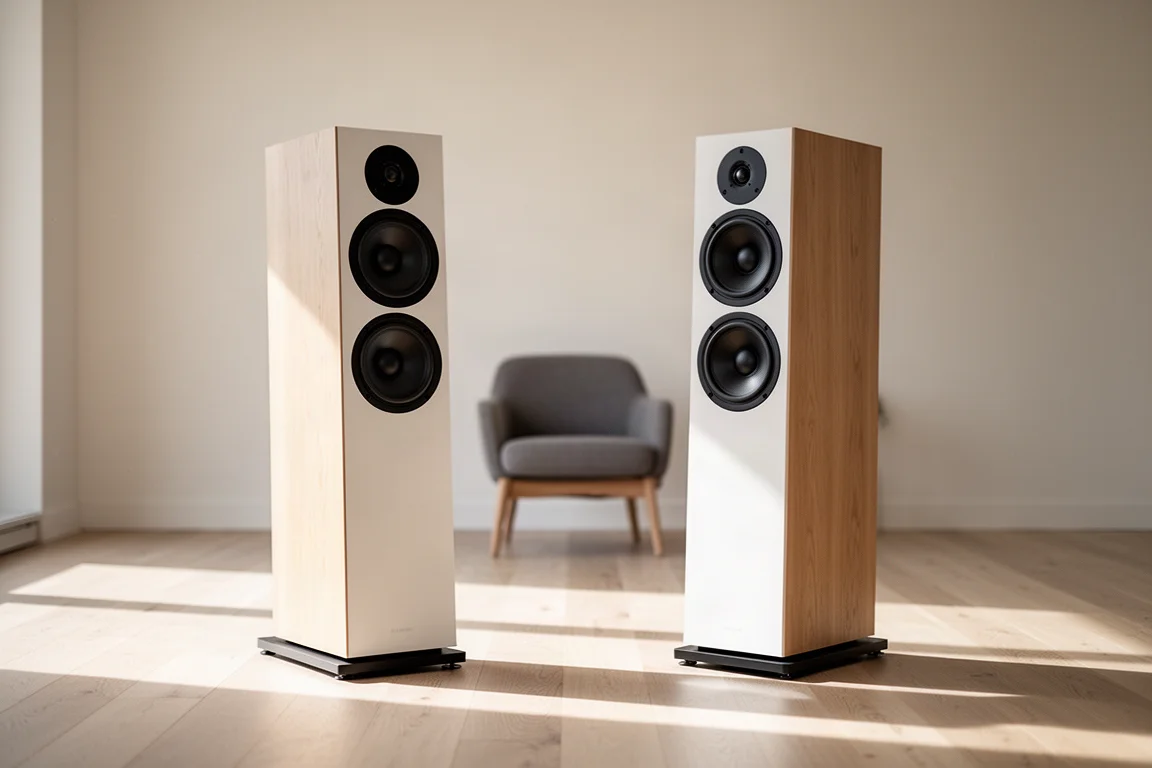
Room size should guide your tuning choice more than anything else. Small rooms benefit from cardioid bass mode; larger, more open rooms may prefer the stock or theoretical profiles. The 45-day trial period is long enough to move the speakers around, try a couple of Master Tunings, and decide whether the sound suits your space, with the caveat that return shipping is yours to cover. Wood, black, and white finishes make it straightforward to match most interiors.
Conclusion
The Picard A700 is a well-executed take on the modern powered tower. It removes the amplifier matching problem, offers unusually deep tuning flexibility, and backs it up with measured performance that stays clean well past normal listening levels. The trade-offs are real but narrow: a radiation pattern that rewards careful placement, a tight vertical window, and a hub that costs extra but genuinely improves the experience. For listeners who want a complete, adjustable system rather than another component to chase, it is an easy shortlist entry.
Product link
View more details for Picard A700
This product is mentioned in the review. Check the specifications, options, and compatibility before buying.
View more details for Picard A700Further reading
Related Reviews
Hi-Fi Speakers
1723 THX Tower vs 1528 Bookshelf: Which Speaker Fits Your Room?
Two speakers at roughly the same price, built very differently. How the 1723 THX tower and the 1528 bookshelf compare on construction, bass, power needs, and sound.
Hi-Fi Speakers
Acoustic Energy AE 300 Review: Deep Bass From a Compact Standmount
A two-way standmount with real wood veneer, surprising low-end weight, and a warm, easygoing character. Here is what to know before buying.
Hi-Fi Speakers
Acoustic Energy AE1 40th Anniversary Review: A Modern Take on a British Classic
A compact standmount that revives a 1980s favorite with all-new parts, a warm mid-centric balance, and a price of £1,499 per pair.