Bookshelf Speakers
Philharmonic BMR v2 Review: A Wide-Dispersion Bookshelf Speaker Worth Knowing
A bookshelf speaker with a ribbon tweeter, a balanced mode radiator midrange, and a genuinely wide soundstage. Here is what to weigh before you buy.
Introduction
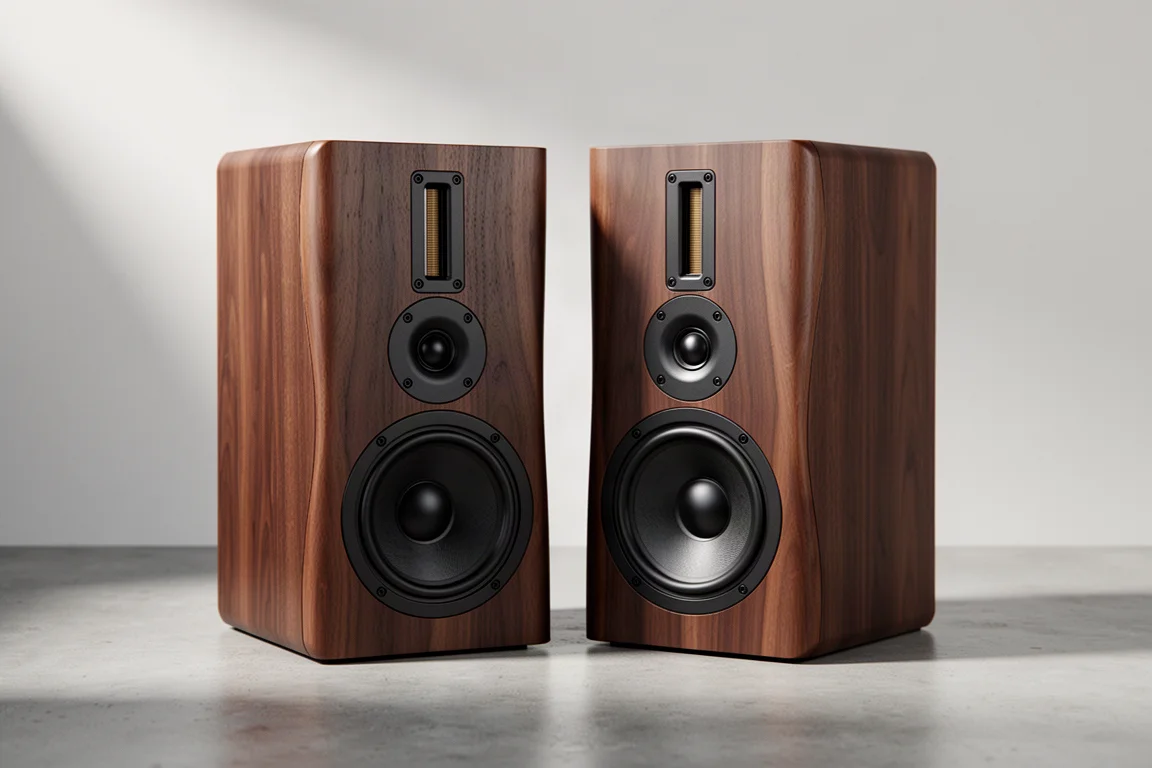
The Philharmonic BMR v2 is a bookshelf-sized monitor built around an unusual driver complement. A 6-inch SB Acoustics mid-woofer anchors the low end, a 2.5-inch Tectonic balanced mode radiator covers the midrange, and a RAAL ribbon tweeter sits at the top of the baffle. The speaker is designed by Dennis Murphy and sells for roughly $1,800 to $2,000 depending on the finish you choose.
That driver set is remarkable for the money, and the cabinet matches it: solid, carefully finished, and clearly assembled with real attention to detail. The v2 also resolves the main criticism of the first generation, where the tweeter level ran hot and plateaued in room. This version is better balanced from the start, and its in-room response is strong across most of the audible range.
The one characteristic worth understanding before you buy is a band of glare between roughly 2 and 3 kHz that adds edge to some vocals, guitars and string passages. It is not present on everything, and part of it traces back to the recordings themselves, but it is more pronounced here than on a neutral reference. Everything else about the speaker, from its radiation pattern to its build, is genuinely appealing.
Who this product is for
This speaker suits two-channel listeners who prize a wide, enveloping soundstage over pinpoint image placement. Its radiation is extremely broad, which fills a room with sound in a way that most bookshelf designs cannot.
It also makes sense for anyone with a medium to large, reasonably damped listening space. In a wider room with fewer sidewall reflections, instruments become noticeably easier to localize, and the speaker’s presentation sharpens up considerably.
Finally, it is a good fit for listeners who plan to add a subwoofer and who are comfortable applying a little equalization. A couple of well-placed cuts can clean up the tonal quirks described below, and the low end benefits from being handed off to a dedicated bass driver.
It is less suited to very small or highly reflective rooms, to listeners who want high playback levels, and to anyone who needs precise imaging in a narrow space.
Driver Design and Cabinet Build
Three drivers share the front baffle. The 6-inch SB Acoustics mid-woofer covers the bass and lower midrange. A 2.5-inch Tectonic balanced mode radiator takes over through the midrange, and a RAAL ribbon tweeter handles the top octaves. Ribbon tweeters of this type are typically the most expensive element in a design like this, and the mid-woofer is a well-regarded unit as well.
Add up the drivers, the crossover components, the cabinet and the assembly time, and the price looks fair for what is inside. It is not a budget speaker, but the component count and build quality are easy to see and hear.
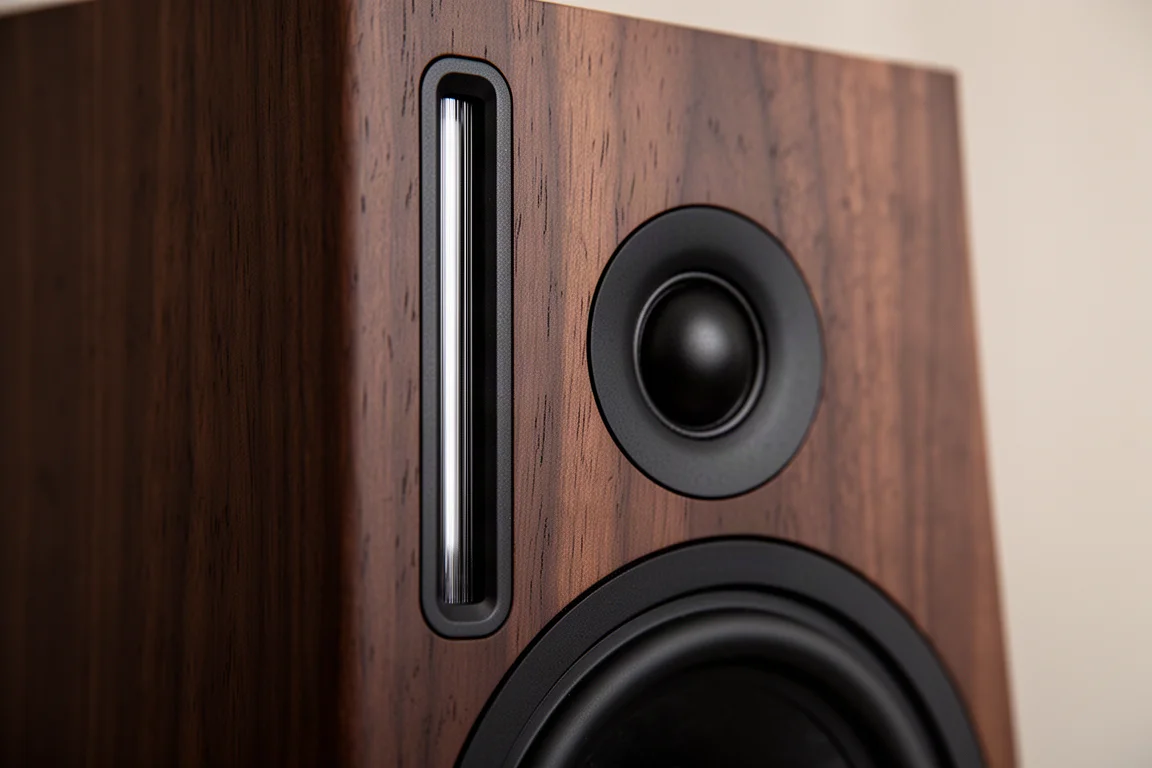
The cabinet is a large part of the story. It feels substantial in the hand, and the finish work sits a step above what this price would normally suggest. Placed next to typical mass-market bookshelf speakers, the difference in construction is one of the first things you notice.
Main strengths
The most appealing quality is the radiation pattern. The speaker radiates broadly, roughly plus or minus 70 to 80 degrees, which produces a very wide soundstage and an enveloping sense of space. Instruments extend well beyond the cabinets, and the presentation feels larger than a bookshelf speaker usually manages.
Tonally, the v2 is a clear improvement over the original. The elevated tweeter level that flattened the in-room response on the first version is gone, and the balance through the treble is far more even. Vocals and acoustic material benefit most from that change.
Output is well managed through the midrange and treble. At higher playback levels, distortion stays low above the bass region, so there is no sense of the tweeter or the midrange straining. The limits that do appear sit squarely in the mid-woofer rather than the upper drivers.
For most people in most rooms, that combination adds up to a speaker that sounds refined at normal listening levels while still offering the scale and spaciousness that make a wide-radiation design special.
Things to consider before buying
The 2 to 3 kHz glare is the detail most likely to shape your experience. Certain vocals, guitar riffs and string passages carry extra edge, and the estimated in-room response shows a rise of roughly 1 to 2 dB in that band. There is also a milder lift between about 300 and 500 Hz, and some evidence of sibilance around 6 kHz.
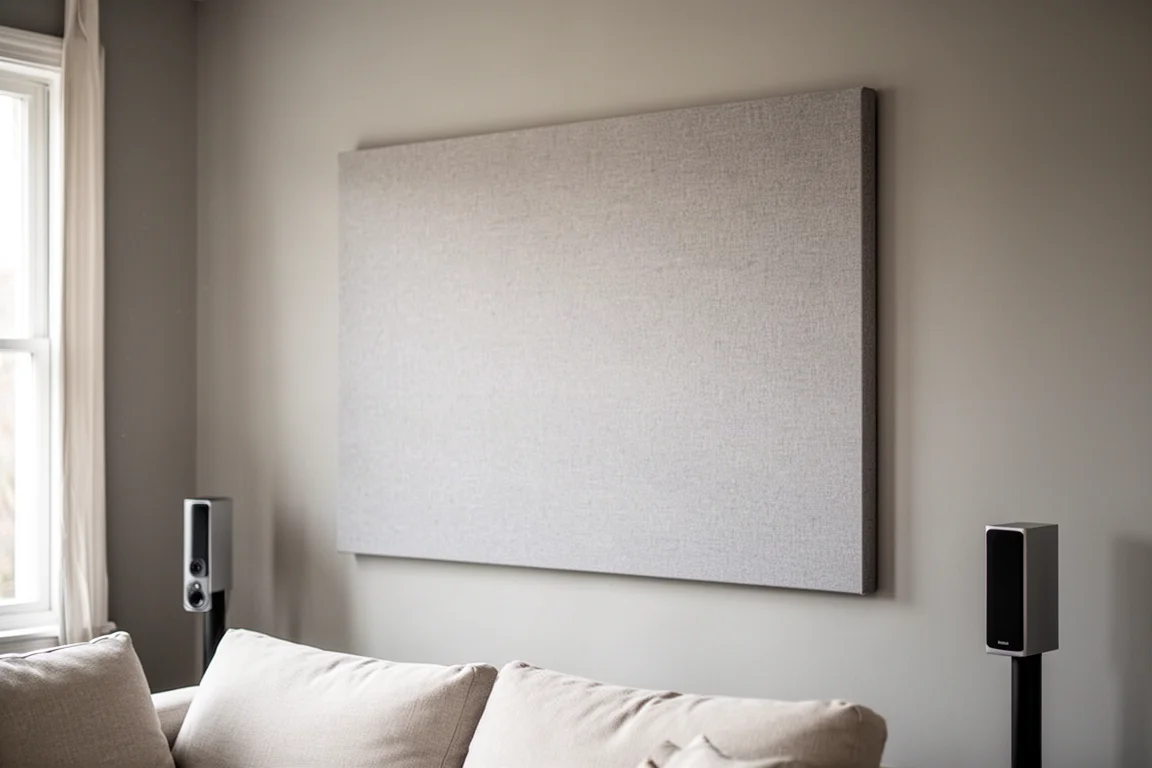
The wide dispersion has a trade-off. With broad radiation, image placement becomes less precise: a vocalist and an instrument are harder to pin down individually, especially in a narrow room where sidewall reflections blur the picture. In a larger, more open space with fewer sidewall reflections, localization improves markedly. If your room is small or reflective, this may not be the best choice unless you are prepared to treat the sidewalls properly, and a substantial thickness of acoustic paneling, around four inches, is likely to do more than a thin layer.
Sensitivity is quoted at around 86 dB, with anechoic measurement closer to 84 dB. That is a reasonable average, but the mid-woofer does not have much in reserve. Listening three to four meters away at an average of 80 to 85 dB is comfortable. Pushed to about 95 dB at four meters for the pair, the woofers begin to run out of headroom. At 96 dB, distortion rises in the lower frequencies while the midrange and treble remain clean, and at the highest level tested the mid-woofer compresses noticeably and the ribbon tweeter also loses output.
Bass extension is the other practical consideration. In-room roll-off lands around 50 Hz, so most music will sound complete, but a subwoofer is the sensible addition, particularly if you want to use the speaker in a combined stereo and home theater setup. One further technical note: a resonance around 500 Hz shows up as a stacking of response curves in the horizontal data and a lift in sound power, along with some diffraction around 3 kHz where the on-axis response dips relative to the listening window.
None of these points are deal-breakers at this price, but they are worth knowing in advance, especially if your room is small or heavily reflective.
Buying advice
Finish selection is the main variable in price, with the speaker landing between about $1,800 and $2,000 depending on what you choose. Given the driver complement, cabinet construction and crossover work, that looks like fair value rather than a premium for the badge.
Room matching matters more here than with most bookshelf speakers. If your space is wide and lightly furnished, the broad radiation works in your favour. If it is narrow, with hard sidewalls close to the speakers, expect a more diffuse soundstage and plan accordingly, either with acoustic treatment or by choosing a narrower-radiating design.
If you have equalization available, a small amount goes a long way. Modest cuts in the 2 to 3 kHz region and around 300 to 500 Hz smooth out most of the tonal quirks described above, and the speaker responds well to that kind of correction.
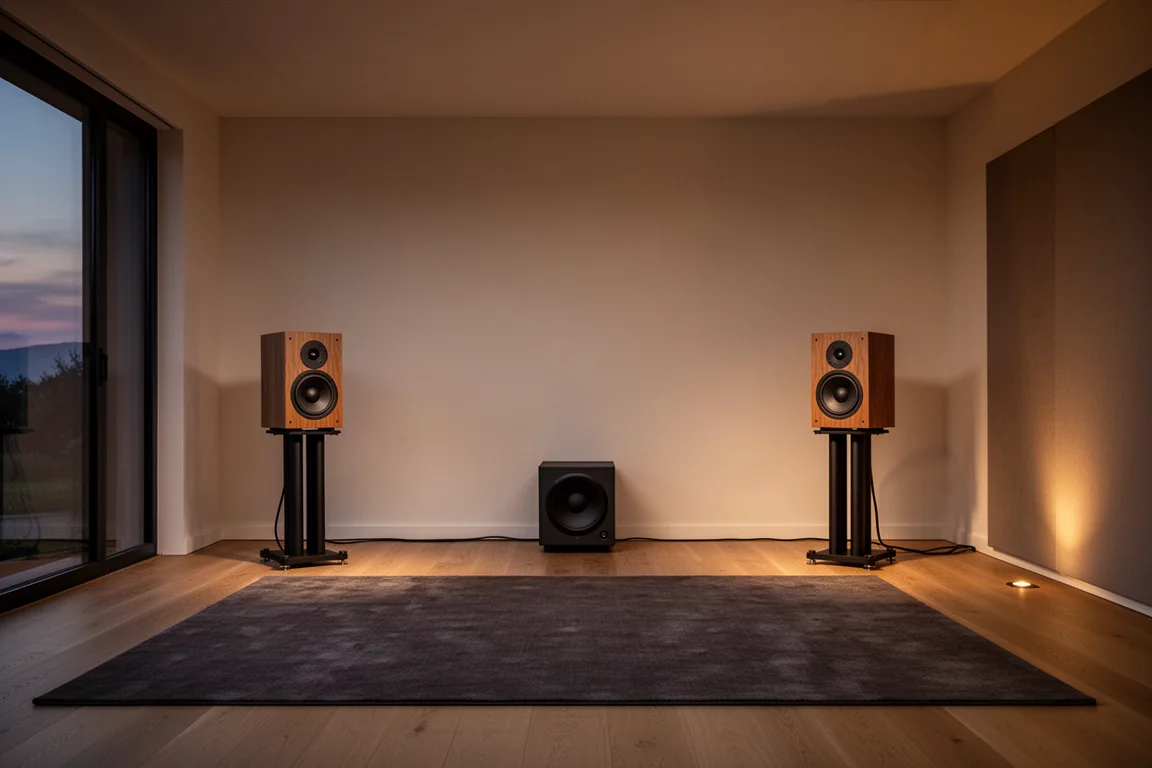
Budget for a subwoofer as part of the purchase rather than an afterthought. It takes pressure off the mid-woofer, extends the low end below the roughly 50 Hz in-room roll-off, and makes the speaker far more versatile if you want it to double as part of a home theater system.
If you have the chance to hear the speaker before committing, take it. A wide presentation is the kind of quality that either suits your room or does not, and no specification sheet settles that question.
Conclusion
The Philharmonic BMR v2 is a beautifully built bookshelf speaker with a genuinely wide soundstage and a driver complement that looks underpriced for the asking price. It rewards a decent-sized, reasonably damped room and a listener who values atmosphere over pinpoint imaging, and it responds well to a little corrective EQ. Pair it with a subwoofer, keep its tonal character in mind, and it makes a compelling case at around $1,800 to $2,000.
Product link
View more details for Philharmonic BMR v2
This product is mentioned in the review. Check the specifications, options, and compatibility before buying.
View more details for Philharmonic BMR v2Further reading
Related Reviews
Bookshelf Speakers
Acoustic Energy A100 Mark II Review: A Compact Standmount With an Expansive Soundstage
The Acoustic Energy A100 Mark II brings clarity, natural tonality and a wide soundstage to an entry-level standmount, with a few setup details worth knowing first.
Bookshelf Speakers
Acoustic Energy AE-100 Mark II Review: Compact Bookshelf Speakers With Standout Imaging
A compact British two-way bookshelf speaker with deep, layered imaging, fast bass, and a slight treble lift to weigh against a crowded $500 field.
Bookshelf Speakers
Acoustic Energy AE100 MK2 Review: Measured Performance and Four Alternatives
A close look at the Acoustic Energy AE100 MK2 bookshelf speaker, what its measured performance reveals, and four alternatives with different trade-offs.