Bookshelf Speakers
Perlisten S4b Review: A Neutral Three-Way Bookshelf Speaker Worth the Stretch
A close look at the Perlisten S4b, a three-way bookshelf speaker with a sealed cabinet, beryllium treble, and a roughly $10,000 per pair price tag.
Introduction
Perlisten has become one of the most discussed names in high-end audio, and the S4b is the speaker most often held up as proof that the attention is deserved. On paper it is a compact three-way bookshelf design. In person it is anything but compact. With a price of roughly $10,000 per pair, it sits firmly in reference territory, so the question worth answering is straightforward: does the S4b deliver sound that justifies the outlay, or does the reputation run ahead of the performance?
This review covers what the S4b does exceptionally well, where it asks more of the buyer, and how it stacks up against a handful of well-known alternatives.
Who the Perlisten S4b Is For
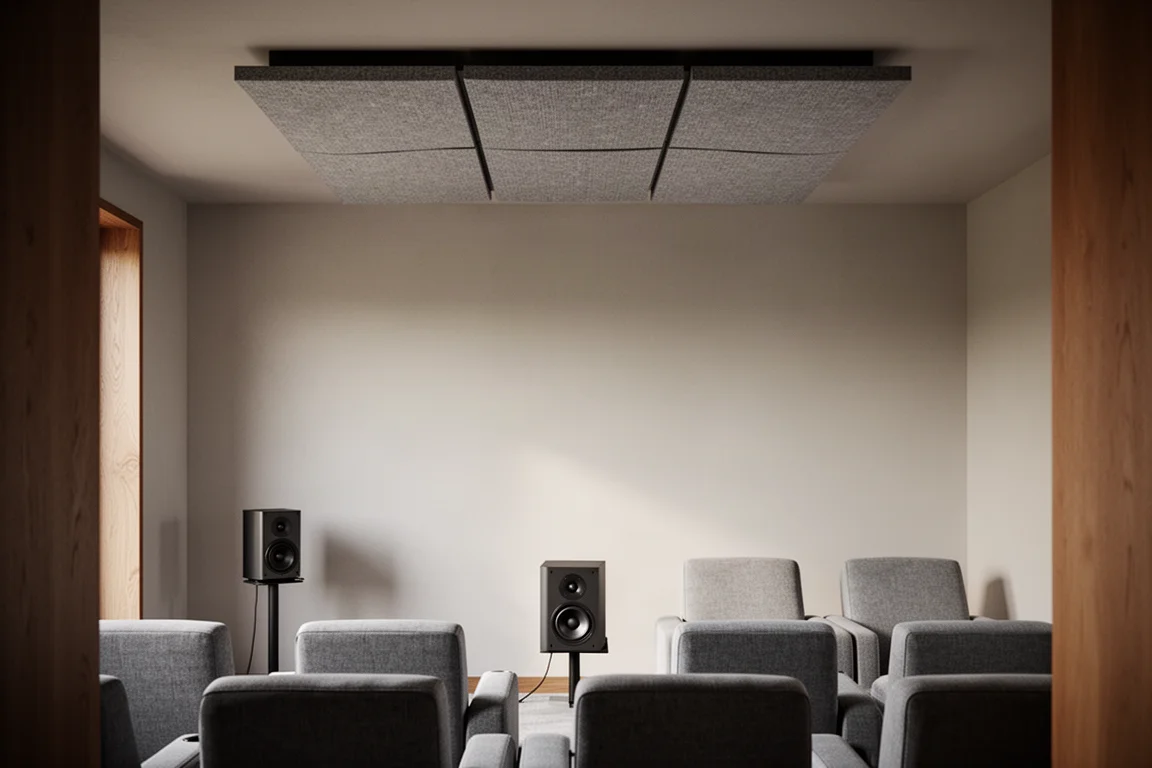
The S4b is built for listeners who want accuracy ahead of character. Its sealed cabinet, four drivers, and THX Dominus certification point to a speaker designed for high output and low distortion in serious rooms, including large personal cinemas and professional screening rooms.
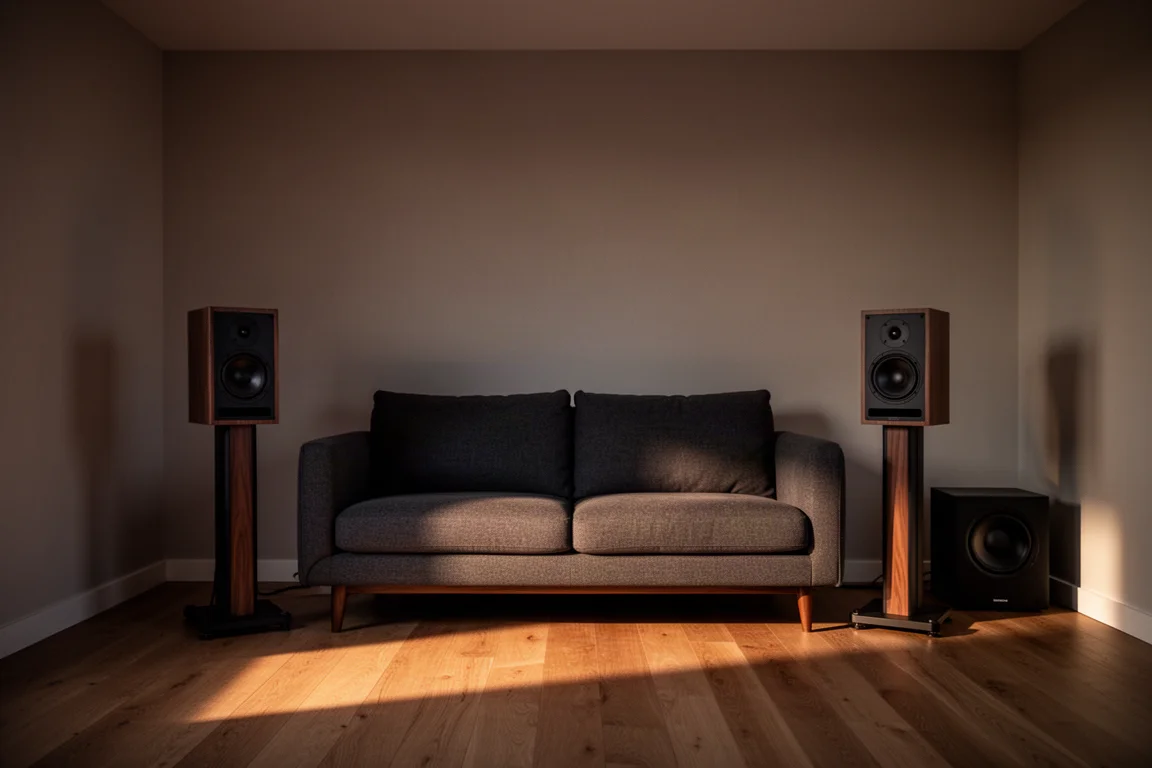
That profile suits someone assembling a system around neutrality: a listener who wants familiar recordings to sound clearer and better resolved rather than warmer or more flattering. It also suits rooms where placement options are limited, because the S4b integrates easily whether it sits close to a wall or well out into the room. What it is not is a plug-and-play speaker for a modest amplifier, and that point is worth understanding before purchase.
Design, Build, and Placement
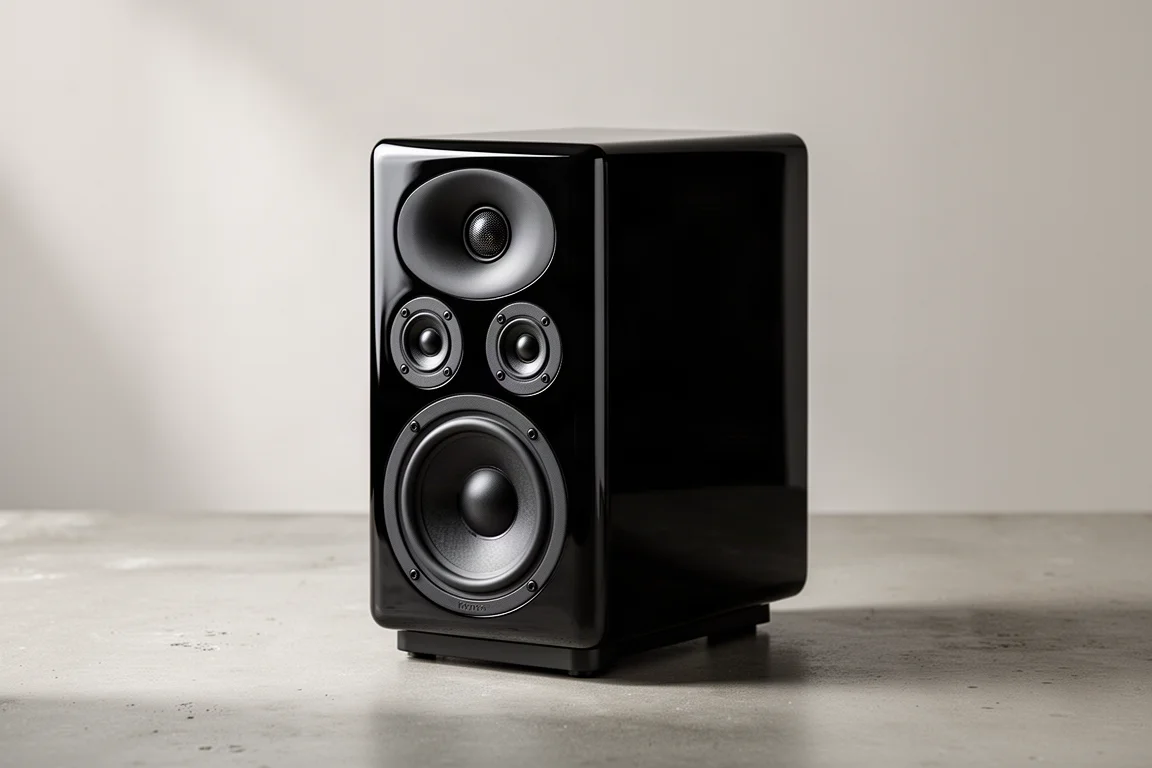
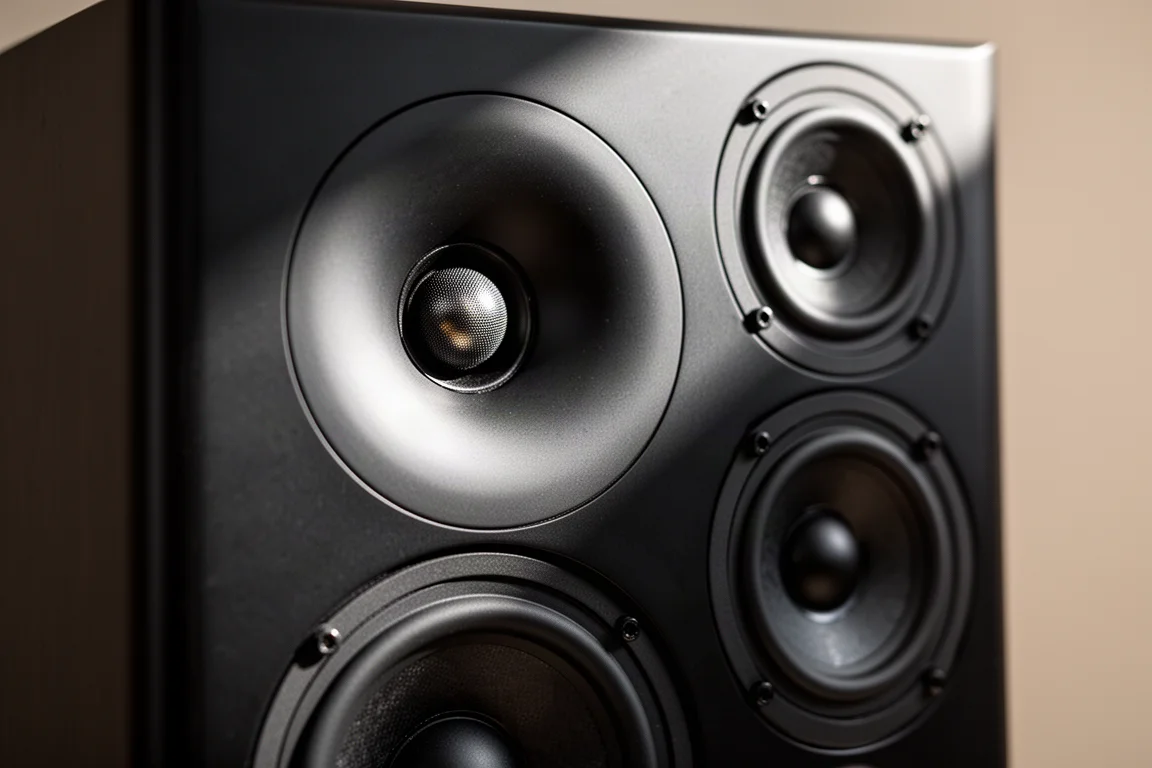
Physically, the S4b is a substantial three-way bookshelf speaker. A seven-inch woofer dominates the front baffle, with a one-inch beryllium tweeter set at the centre of a large waveguide. Perforations above and below the tweeter conceal two one-inch carbon midrange drivers, which is what makes this a genuine three-way design rather than a two-way with decorative detailing.
Perlisten lists a frequency response of 36 Hz to 37 kHz, sensitivity of 85.4 dB, and a nominal impedance of 4 ohms, dipping to 3.2 ohms. Those figures matter: this is a speaker that wants an amplifier comfortable with low impedance loads.
Build quality is a real strength. The cabinet is inert and ranks among the more solidly constructed speakers available, and that rigidity is a meaningful part of why the midrange and treble behave as cleanly as they do. Two standard finishes are offered, piano black and white, with special edition wood and paint finishes available on inquiry for availability and cost.
Placement is refreshingly undemanding. The S4b works close to a wall or pulled out into a room, and toe-in was not necessary, since dispersion is wide enough that the speaker does not demand a narrow listening window. Amplification is the opposite story. Pair it with something capable of driving a 4 ohm load properly. A Technics R1000 proved an excellent match, and a Denon A110 was a strong second option, though opinions on that pairing differed. A tube amplifier and a streaming integrated amplifier were also used during testing, and a less expensive amplifier with a similar character to the Technics was suggested as a way to save money without giving up the essential voicing.
Main Strengths
The S4b’s defining quality is linearity. Sweeps from 20 Hz to 20 kHz at the listening position and in the near field showed a speaker that, from about 100 Hz upward, is remarkably neutral. Nothing across the range calls attention to itself, and there is a sense of ease and transparency throughout the presentation. This is not a bass-heavy, warm, lush, dark, laid-back, or bright speaker. Whatever the recording contains is what you hear.
That neutrality has a practical benefit. Tracks heard hundreds of times did not suddenly sound new or different, which is usually the sign of a speaker adding flavour of its own. Instead they sounded clearer, sharper, and more refined. For listeners who want to get closer to the music without altering it, that is the entire point.
Bass, Midrange, and Treble in Practice
Bass is tight, grippy, and detailed. The 36 Hz figure comes with fine print, specifically a minus 10 dB qualifier, and in practice the speakers played down to the mid-50s region in the room used for testing. Perlisten itself notes that some listeners may prefer to add a subwoofer, and that is fair advice. The important caveat is not to pair it with a slow or bloated subwoofer that would undermine the speaker’s otherwise excellent reflexes.
The midrange is the heart of the design. It is neutral, detailed, and highly intelligible, and the inert cabinet is a large part of why. Vocals and instruments come through without a pronounced coloration.
Treble is where the beryllium tweeter earns its place. Highs are nuanced, airy, and extended, with just a hint of shimmer that makes metallic instruments such as cymbals sound convincingly real. Crucially, the treble is not bright, in your face, or brittle, which are common complaints about beryllium tweeters once the volume climbs. The S4b stays composed at high output.
Soundstage and Dynamics
The speaker disappears sonically. In the room used for testing it was nearly impossible to locate in space: sound appeared beside, behind, in front of, and even above the speakers, but rarely seemed to come from the cabinets themselves. The result is a three-dimensional soundstage with a centre image that is genuinely excellent.
Dynamically, the S4b is at its best when pushed. At background listening levels it is composed rather than captivating, and some competitors are more articulate at low volume. Turn the volume up, though, and few speakers in this class can match it.
Things to Consider Before Buying
Style is the most obvious consideration. The design is busy, and the front baffle reads as though several different ideas were combined into one cabinet. The finish, while certainly well executed, is a high-gloss black or white that does not obviously signal a luxury pedigree at this price, particularly since high-gloss lacquer is now widely available at far lower prices. The available wood finishes apply to the back of the cabinet only, leaving the front with the same shape and a satin or matte paint finish. The look is an acquired taste, and at roughly $10,000 per pair, buyers are entitled to be particular about what sits in their room.
Amplification is the second consideration. With 85.4 dB sensitivity and a 4 ohm nominal impedance dipping to 3.2 ohms, the S4b needs a capable amplifier. Budget for that as part of the purchase rather than as an afterthought.
Bass extension is the third. Reaching into the mid-50s region in-room is respectable for a sealed bookshelf speaker, but it is not full-range output, and a subwoofer is a sensible addition for anyone who wants deep low-frequency performance.
How the Perlisten S4b Compares
Against the Bowers & Wilkins 805 D4, which sits in a similar price bracket, the S4b is the more neutral and accurate speaker. The 805 D4 has a recognisable sonic character, with extra bass and treble energy that makes it more engaging at lower volumes, similar in effect to engaging a loudness control. At high volumes or with less than stellar recordings, the 805 D4’s tweeter can edge toward forward or aggressive territory, which is not something the S4b does. Both are reference-caliber speakers, and the choice comes down to whether absolute neutrality or added sonic interest matters more. The Focal Kanta No.1, which also uses a beryllium tweeter, is outclassed here; it offers a greater sensation of bass, but its cabinet introduces a slight chestiness in the bass and midrange that plugging the port does not fully resolve. The Revel M16, at under $1,000 per pair, shares a surprising amount of tonal neutrality with the S4b, and listeners who cannot stretch to five figures will find more in common between the two brands than differences. The Focal Diablo Utopia Color Evo is a different proposition entirely, now priced around $20,000; it is smaller and more striking to look at, but the S4b is the more neutral and slightly less bright speaker, and a sensible alternative for anyone for whom that figure is out of reach.
Buying Advice
The S4b makes the most sense for a buyer whose priority is neutrality, transparency, and composure at high output. If that describes you, and you are prepared to pair it with a quality amplifier comfortable with a 4 ohm load, it is one of the more convincing bookshelf speakers available.
If your listening leans toward low-volume background sessions, or you want a speaker that adds energy and character to the music, a competitor with a more pronounced voicing may satisfy you more. Equally, if the styling is a dealbreaker, that is a legitimate reason to look elsewhere at this price, because the sound quality does not depend on you loving the cabinet.
Plan the system as a whole. Factor in amplification, consider a subwoofer if you want full-range output, and treat placement as an advantage rather than a chore, since the S4b is unusually forgiving about where it sits.
Conclusion
The S4b lives up to the reputation. It ranks among the best bookshelf speakers heard in this class, and its combination of a genuinely inert cabinet, a neutral midrange, and a beryllium tweeter that stays composed under pressure is difficult to argue with. The reservations are real but narrow: the styling is polarising, the finish does not obviously read as luxury at the asking price, and the speaker demands a capable amplifier and benefits from a subwoofer. For listeners who value accuracy above all else, the Perlisten S4b is a confident recommendation.
Product link
View more details for Perlisten S4b
This product is mentioned in the review. Check the specifications, options, and compatibility before buying.
View more details for Perlisten S4bFurther reading
Related Reviews
Bookshelf Speakers
Acoustic Energy A100 Mark II Review: A Compact Standmount With an Expansive Soundstage
The Acoustic Energy A100 Mark II brings clarity, natural tonality and a wide soundstage to an entry-level standmount, with a few setup details worth knowing first.
Bookshelf Speakers
Acoustic Energy AE-100 Mark II Review: Compact Bookshelf Speakers With Standout Imaging
A compact British two-way bookshelf speaker with deep, layered imaging, fast bass, and a slight treble lift to weigh against a crowded $500 field.
Bookshelf Speakers
Acoustic Energy AE100 MK2 Review: Measured Performance and Four Alternatives
A close look at the Acoustic Energy AE100 MK2 bookshelf speaker, what its measured performance reveals, and four alternatives with different trade-offs.