Home Audio
Perlisten R5t Towers and R18 Subwoofers: Precision Meets Deep, Controlled Bass
A two-part Perlisten system that pairs directivity-controlled towers with two 18-inch subwoofers, and why the integration matters more than the driver size.
Introduction
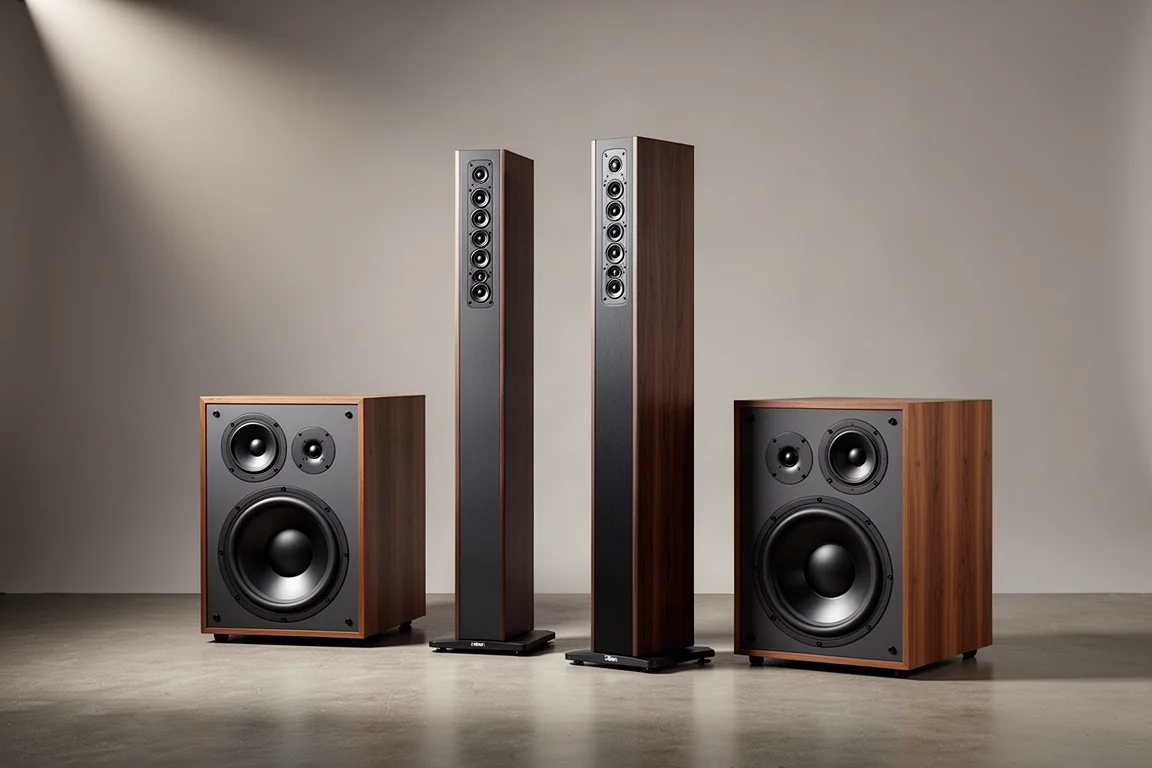
A pair of floorstanding speakers and a pair of large subwoofers is one of the hardest combinations to get right. Too often the bass arrives as a separate event: you hear the subwoofer working, you hear where it sits in the room, and the music stops sounding like one performance. In a demonstration that paired the Perlisten R5t towers with two Perlisten R18 subwoofers, the opposite happened. The system ran as a 2.1 setup with bass management, and the most telling detail was how often listeners asked whether the subwoofers were even running.
That question is a good sign. It means the low end was adding weight, depth and a sense of space without announcing itself, which is exactly what this pairing is designed to do.
What This System Was Made Of
The demonstration system was anchored by a Primare AVR with eleven-channel processing and nine channels of amplification, using class D output stages fed by a custom power supply, along with a separate CD player and app-based streaming with Qobuz and Tidal embedded. In this two-channel configuration the amplifier delivered 145 watts per channel into 8 ohms, because the power supply had no other channels competing for output.
The Perlisten R5t towers carried everything above the bass, and the two R18 subwoofers were blended in through DSP bass management. What made the setup interesting was not the size of the cabinets but how completely the subwoofers disappeared into the presentation. The result sounded like a full-range pair of speakers rather than satellites supported by bass.
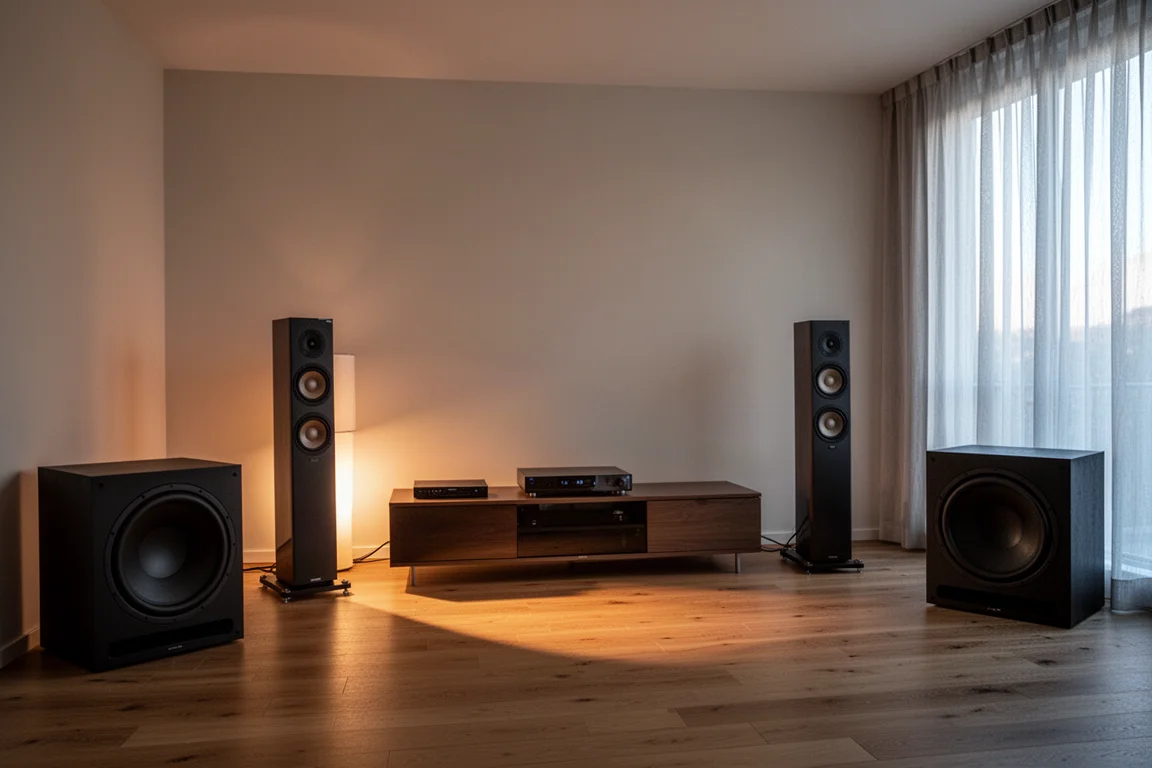
That is the goal with a system like this. A subwoofer that draws attention to itself, or a crossover that leaves a gap between the towers and the low end, breaks the illusion. When the handoff is smooth, extra low-frequency output reads as room and recording rather than as equipment.
Perlisten R5t Towers: Precision and Directivity
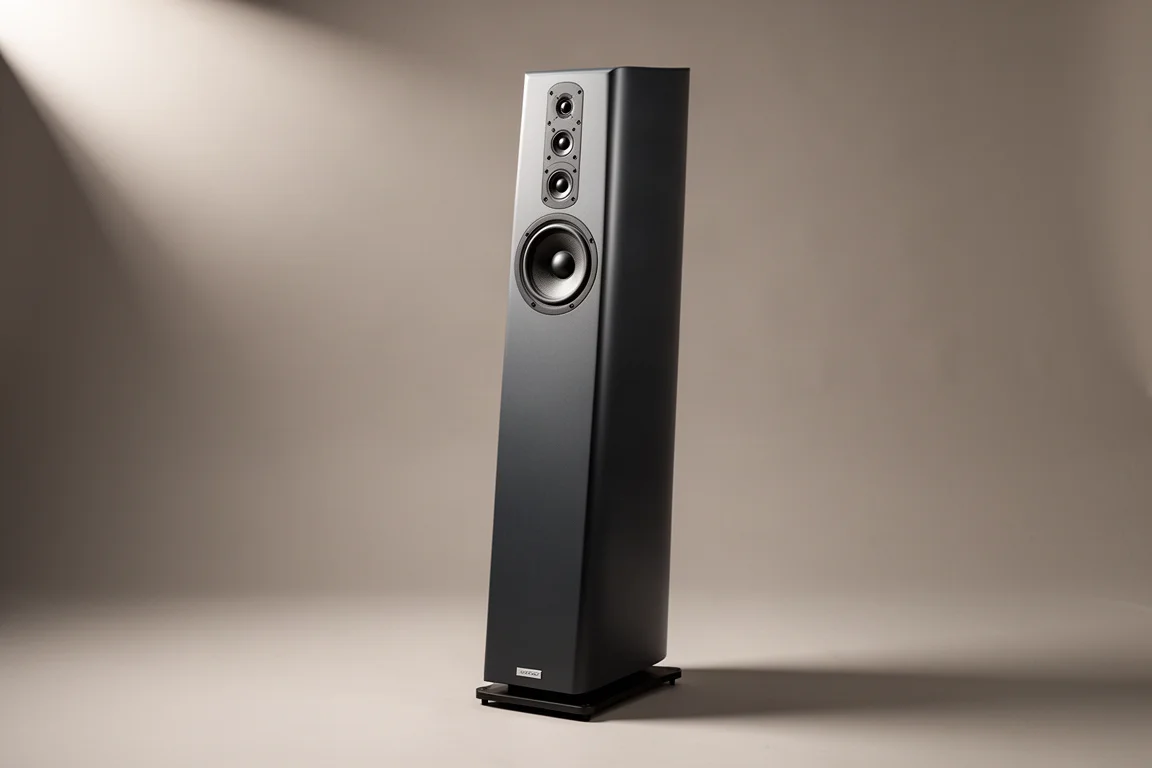
The R5t is built around a DPC array, a tweeter and midrange array designed to control how sound leaves the cabinet. The practical benefit is consistent behaviour off axis, so the speakers hold their tonal character across a range of listening positions instead of only in one narrow sweet spot.
That directivity control also limits vertical dispersion, which matters in real rooms. Spaces that open into a kitchen or that have longer decay times tend to smear imaging, and this kind of array helps keep vocals and instruments locked in place, with a strong phantom centre and precise placement of individual elements in the mix.
Because the towers are linear and low in distortion, they do not need aggressive correction. Room correction limited to the transition region, roughly 500 Hz and below, is usually enough, and pushing EQ further up the range can do more harm than good when the speaker is already behaving well.
Perlisten R18 Subwoofers: Deep Bass With Control
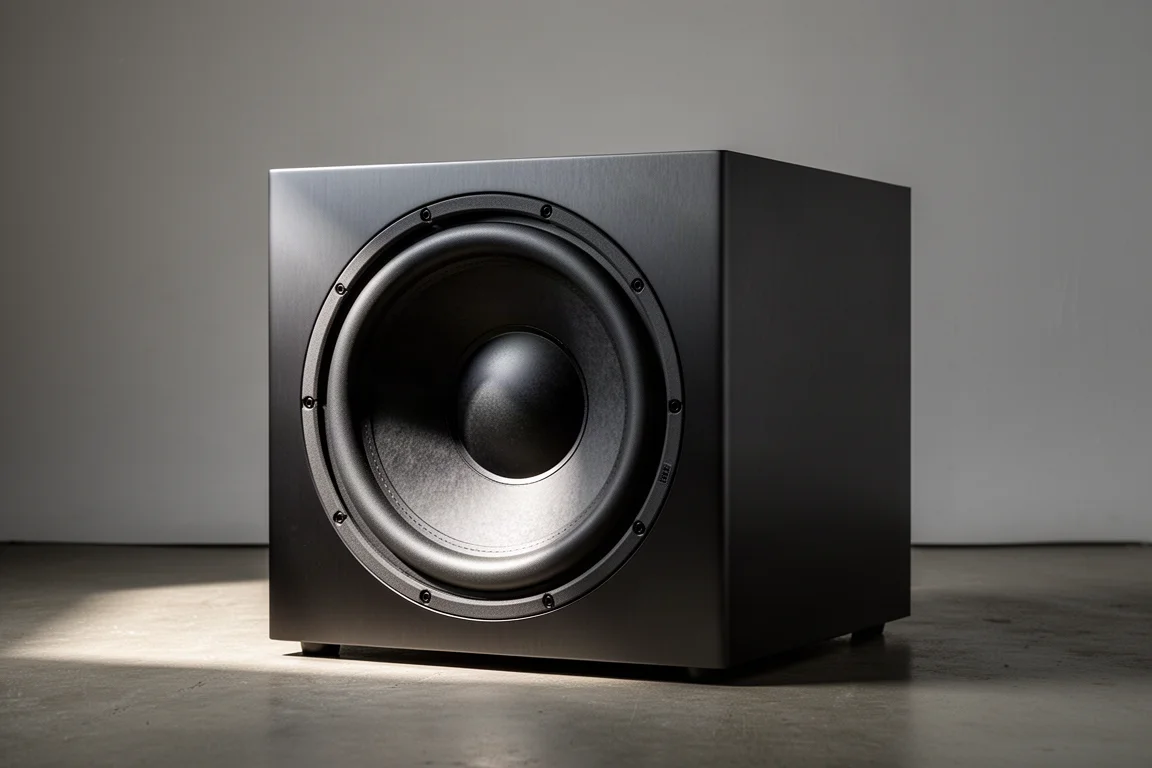
The R18 is a serious piece of hardware. The driver is at least as large as its 18-inch specification suggests, and the cabinet is correspondingly substantial. What makes it work in a system like this is the DSP built into each subwoofer, which lets the output be tailored so the sub blends with the main speakers instead of sitting underneath them.
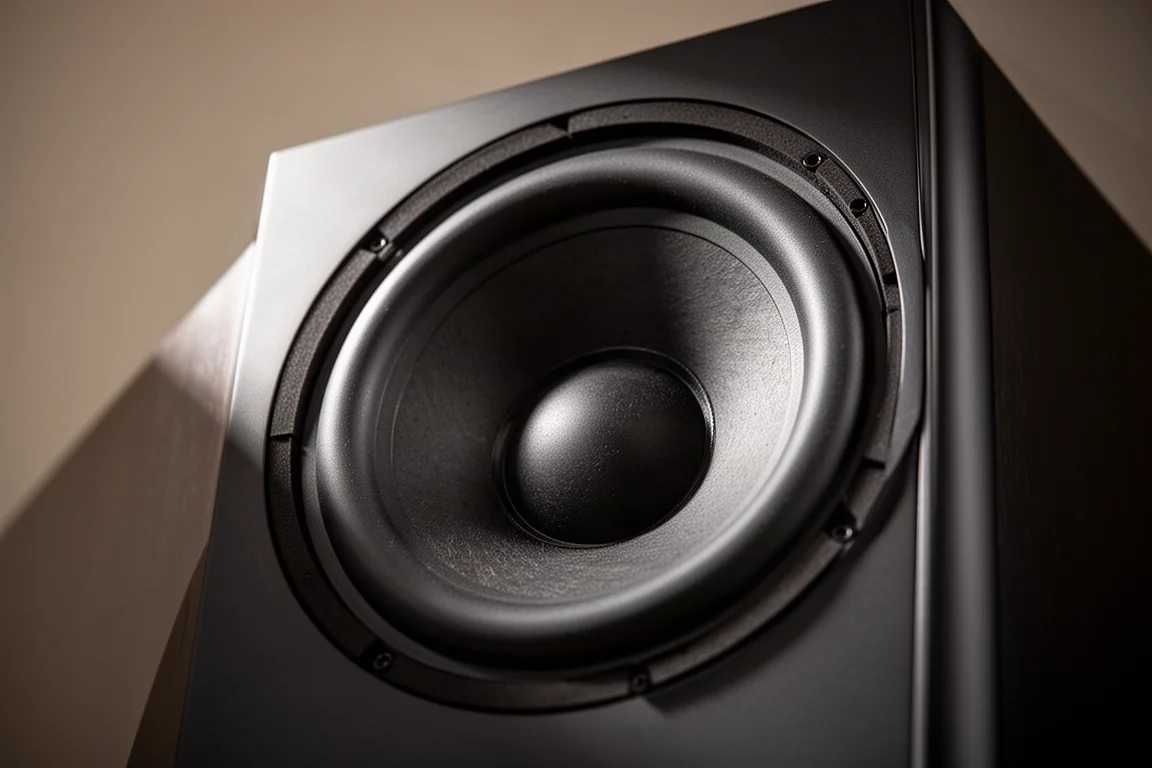
The payoff is bass that stays tight and controlled. Low distortion and low group delay are central to the design, and in practice that translates into low frequencies that do not sound laggy, overhung or boomy. Even on a driving electronic track with dense, thumping bass notes, individual notes stayed articulated instead of collapsing into a single blur.
Cost is part of the story, with the R18 selling for around $5,000 each. Two of them is a significant investment, and the reason to consider a pair is not simply more output. It is more even coverage across the room, which is where the second subwoofer earns its place.
Room Integration: Why Two Subwoofers Matter
When main speakers are pulled out into the room, away from the front wall, they can run into speaker boundary interference, which shows up as uneven response and audible dips in the bass region. Placing subwoofers close to the walls addresses that problem, and using two of them spreads low-frequency energy more evenly through the space.
In practice that meant consistent bass from the front row, from the back row and off to the sides. There was no obvious buildup or standing-wave hot spot, and the low end stayed linear rather than exaggerated as listeners moved around. That consistency is often the difference between a system that sounds impressive in one chair and one that sounds correct across the whole room.
Matching the Towers and Subwoofers to Your Room
A system like this rewards a careful setup more than it rewards brute force. Because the R5t towers are linear and predictable, room correction can stay light. Limiting correction to around 500 Hz and below is often the most effective approach, leaving the speaker’s own behaviour above that region untouched.
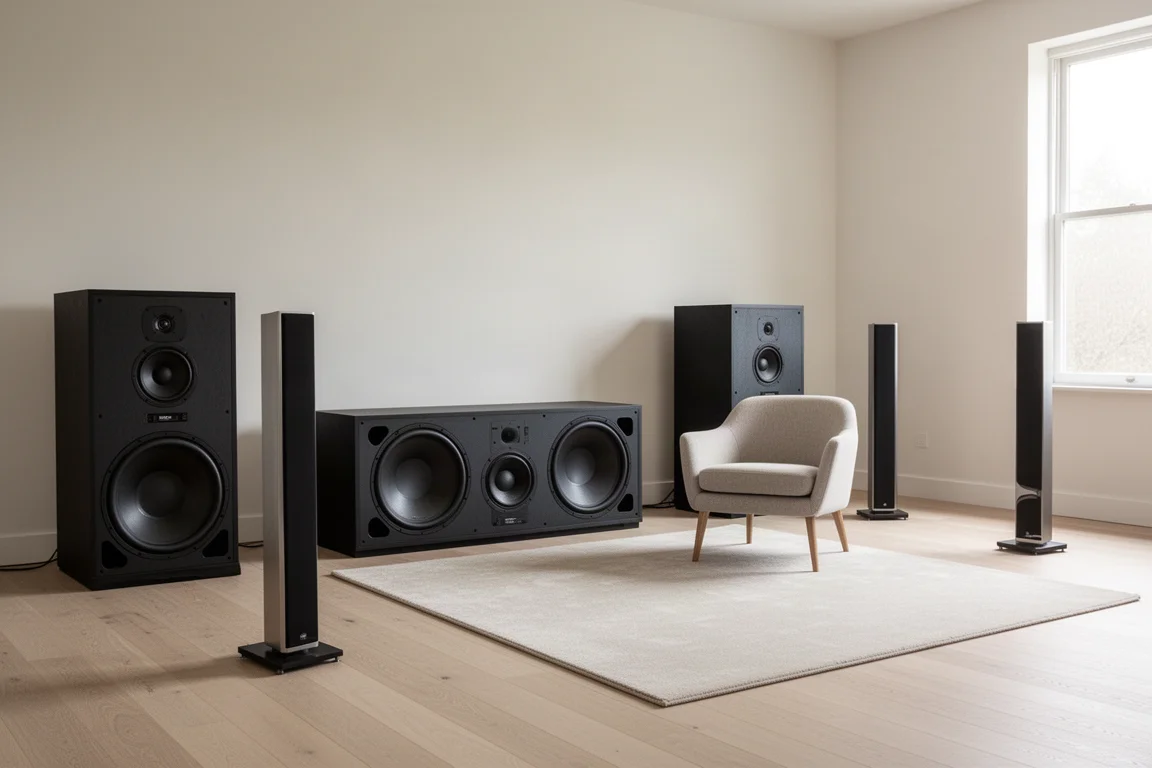
Placement deserves the same attention. Two subwoofers near the front wall, with the towers positioned for good imaging, give the DSP in each subwoofer the best chance to integrate the low end with the mains. The aim is a system where the subwoofers are felt rather than heard, and where the transition between the towers and the bass is impossible to pick out.
Buying Advice
The case for this pairing is straightforward. The R5t towers handle imaging, detail and directivity, and the R18 subwoofers add the depth and scale that a slim tower cannot produce on its own. Bought together, the DSP and the design approach line up, which makes integration easier than mixing unrelated brands and hoping the pieces meet in the middle.
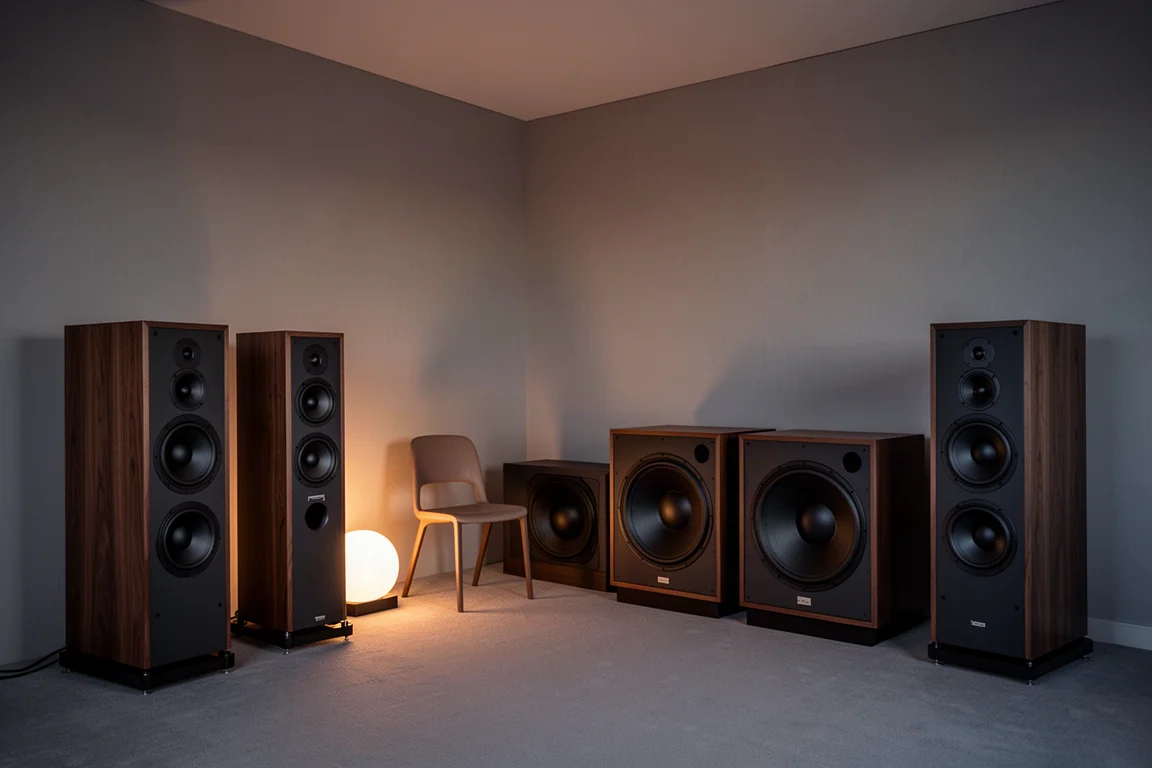
Think about what your room actually needs. If you want deep, controlled bass that stays out of the way of the music, the R18 is built for that job, and a pair makes the low end more even across seating positions. If precise imaging in a room that is not heavily treated is your priority, the R5t towers are the more important half of the equation. The R18’s roughly $5,000 per unit price will decide most budgets, and the towers sit in a premium class as well, so this is a system to plan deliberately rather than assemble in one step.
If you already have capable amplification and a room where speakers can sit away from the walls, this combination is worth hearing. Both products are designed to work as part of a larger multichannel system too, so a two-channel start can grow later without replacing anything.
Conclusion
The R5t towers and the R18 subwoofers make sense as a pair because they solve different halves of the same problem. The towers control dispersion and keep imaging precise, while the subwoofers add weight and depth without ever sounding loose or detached. The most convincing part of the demonstration was how little attention the bass demanded. That is a strong sign the system is doing its job.
Further reading
Related Reviews
Home Audio
Aperion Novus Tower and Center Review: Punchy Home Theater Sound With Real Refinement
A close look at the Aperion Novus tower and center speakers, from their layered paint finish and punchy bass to the 4-ohm load and what the price actually buys.
Home Audio
Arendal 1610 Tower Review: Flagship Dynamics in a Room-Friendly Tower
A compact floorstanding tower with three 8-inch aluminium woofers, a 5-inch carbon midrange, and the kind of bass heft usually reserved for much larger speakers.
Home Audio
Arendal 1723 S THX Review: A Reference Speaker Built Like a Tank
A practical look at the Arendal 1723 S THX, a sealed, THX-certified speaker with exceptional build quality, a very flat top end, and a midrange that responds beautifully to EQ.