Home Audio
Perlisten R Series Speakers Compared: R5m, R5c, R5t and R210
A practical breakdown of the Perlisten R Series, covering the R5m stand-mount monitor, the R5c center channel, the R5t tower, and the R210 push-pull subwoofer.
Introduction
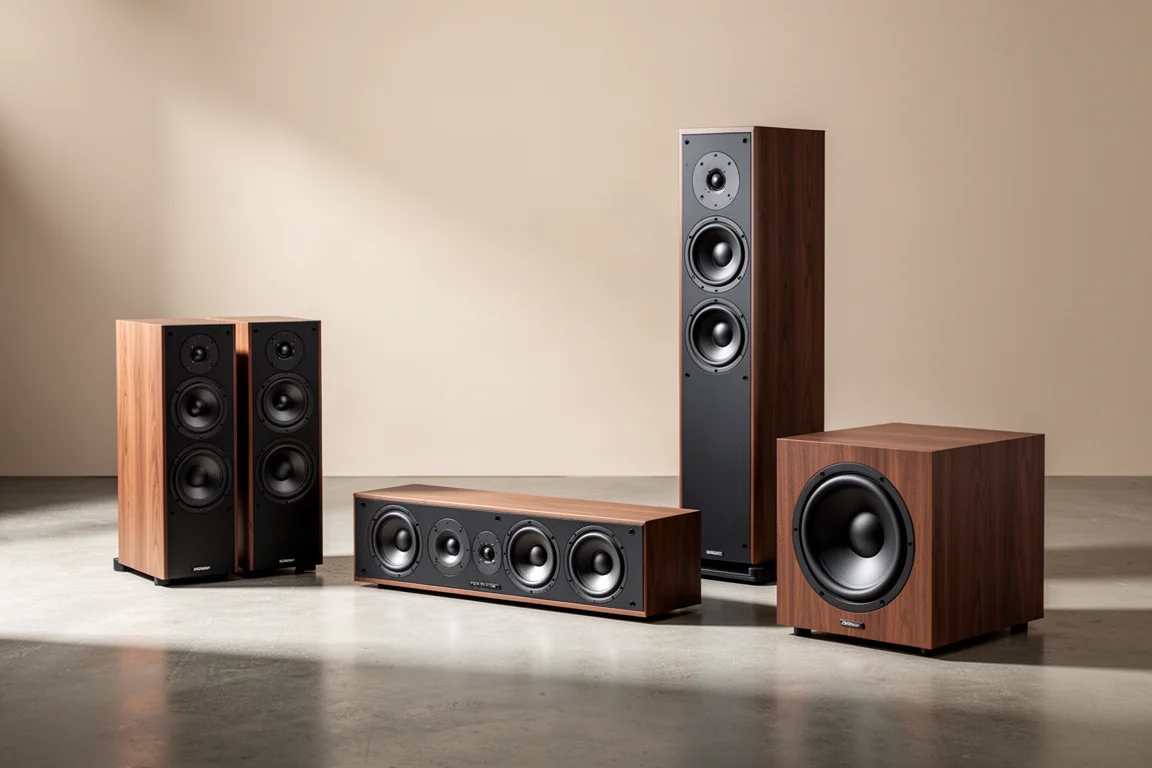
The Perlisten R Series covers the four roles most stereo and multichannel systems need: a stand-mount monitor, a dedicated center channel, a floorstanding tower, and a compact subwoofer. All four share the same driver platform and the same approach to controlling where sound travels in a room, which makes them straightforward to combine into one coherent system.
This guide looks at each model on its own terms, covering cabinet dimensions, driver complement, rated frequency response, connection options, and the practical details that matter when you are planning a build.
How the Perlisten R Series Fits Together
The models in this group have more in common than their finish. The R5m, R5c, and R5t each use a pair of 6.5-inch drivers for bass and lower midrange work, paired with a three-tweeter DPC array. DPC stands for directivity pattern control: the center tweeter handles high frequencies, while the tweeters above and below it handle mid frequencies and shape the speaker’s radiation pattern. The intent is to reduce ceiling and floor bounce so energy is directed more evenly toward the listening position. All three use one-inch silk dome tweeters across the array.
The rear panels share the same high-quality rhodium-plated binding posts, and the cabinets share the same family of finishes. The R Series enclosures use a thinner layer of HDF than the step-up S Series, so they are not quite as thick and dense, a difference you can feel when lifting them.
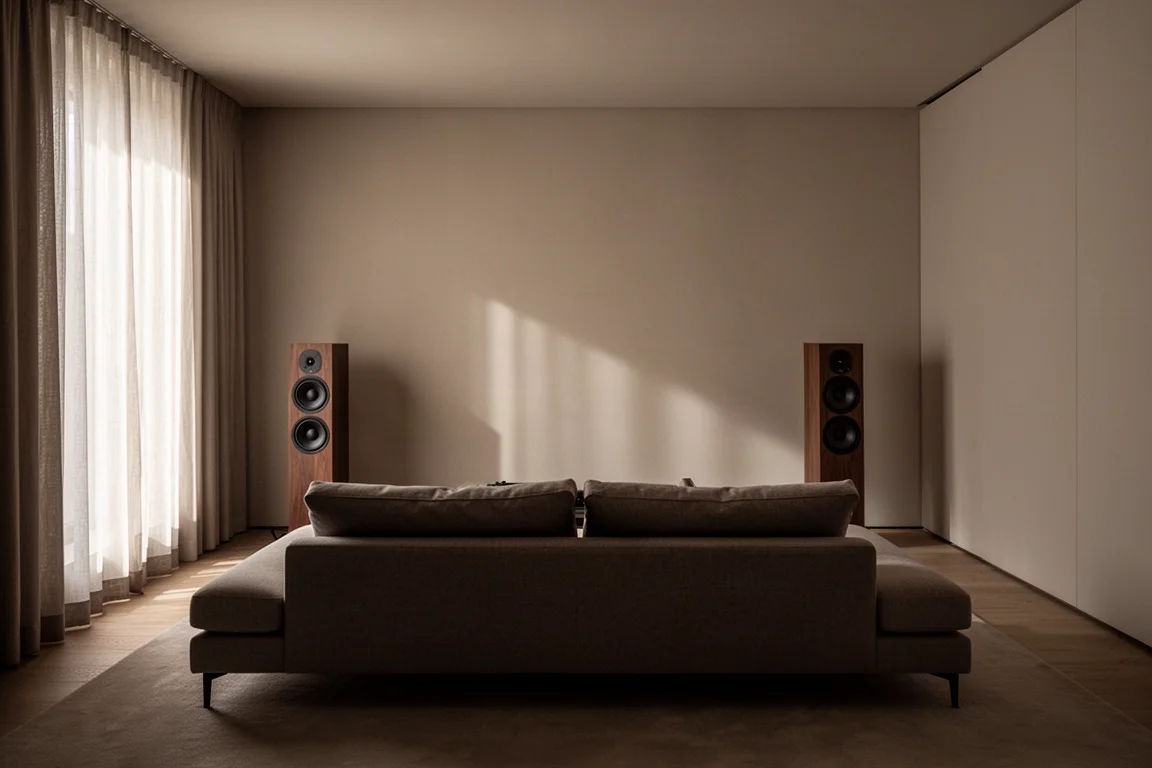
The R210 subwoofer follows the same design philosophy at the low end, using a push-pull driver arrangement and onboard DSP so its low-frequency behavior can be tuned to the room rather than fixed at the factory. Across the range, the emphasis is on consistency: matching drivers, matching tweeter technology, and a shared tonal character, so a system assembled from mixed R Series models still behaves like one system.
Perlisten R5m: The Monitor Bookshelf Speaker
The R5m is the monitor, or stand-mount, model in the series, and it is a substantial one. It measures roughly 22 to 23 inches tall, about 9 inches wide, and about 13 inches deep, and it weighs approximately 38 pounds. This is a speaker that wants a solid pair of stands rather than a shelf.
Up front, two 6.5-inch drivers handle the bass, with the DPC array sitting between them. Frequency response is rated at 40 Hz to 32 kHz in its ported configuration, or 47 Hz to 32 kHz when run sealed. Switching between the two alignments is unusually simple: the port sits on the underside of the cabinet, so flipping it over reveals the opening, and a foam plug is included if you prefer the sealed tuning.
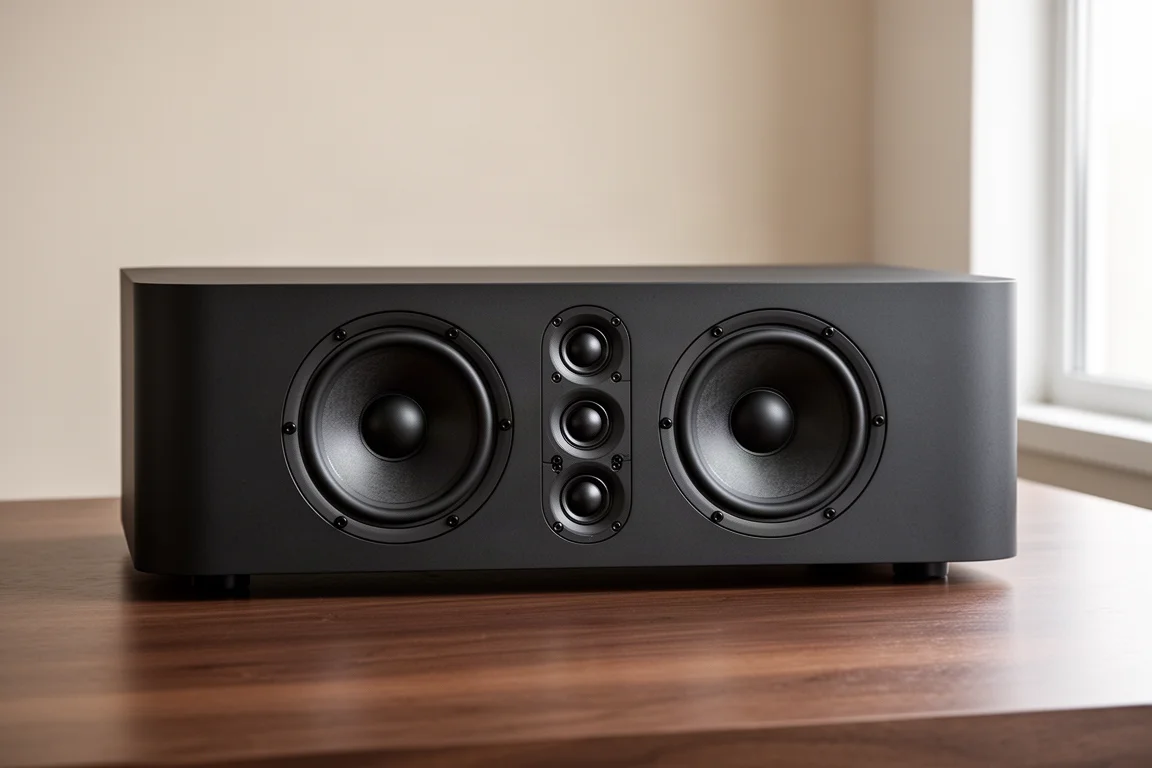
Perlisten R5c: The Matching Center Channel
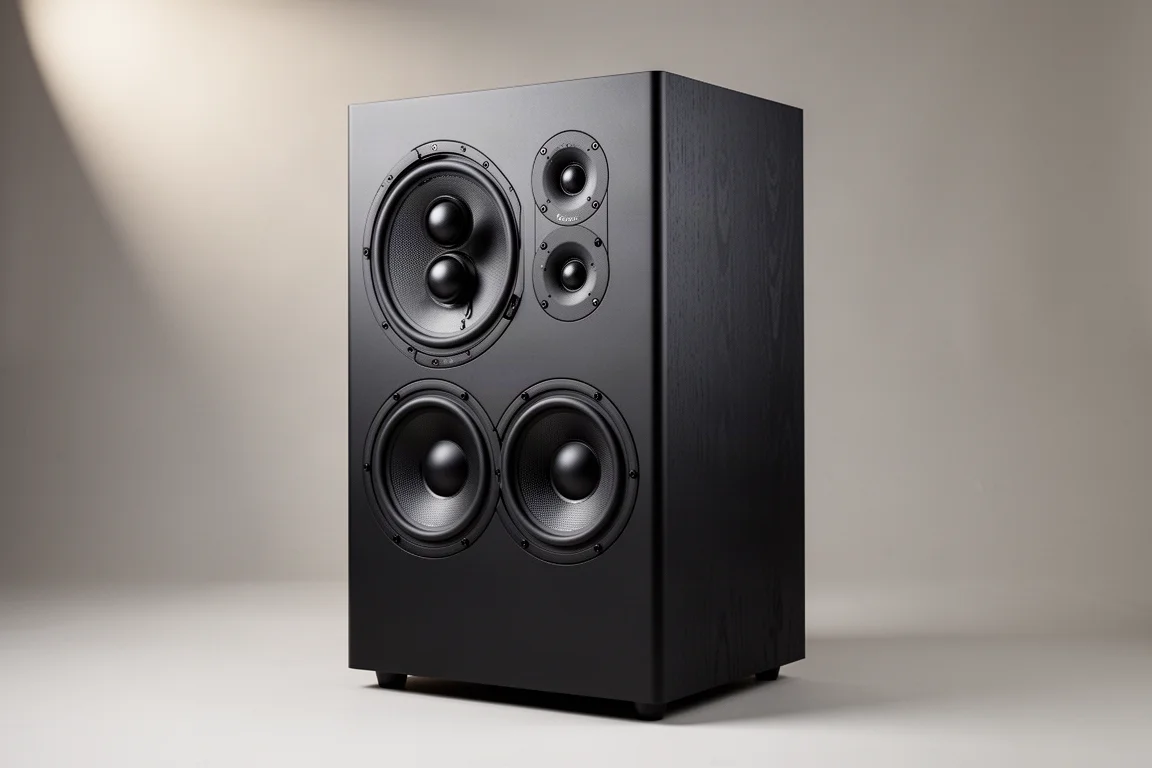
The R5c looks almost identical to the R5m, but it is built for a different job. It uses the same 6.5-inch drivers and the same three-tweeter DPC array with one-inch silk dome tweeters, and its frequency response is rated at 44 Hz to 32 kHz, so it does not reach quite as low as the monitor.
Dimensions differ as well: about 21.5 inches wide, roughly 9.5 inches tall, and about 10.5 inches deep, at approximately 30 pounds. The R5c is sealed only, with no ported option, and it uses a single set of binding posts rather than the bi-wireable arrangement found on the tower.
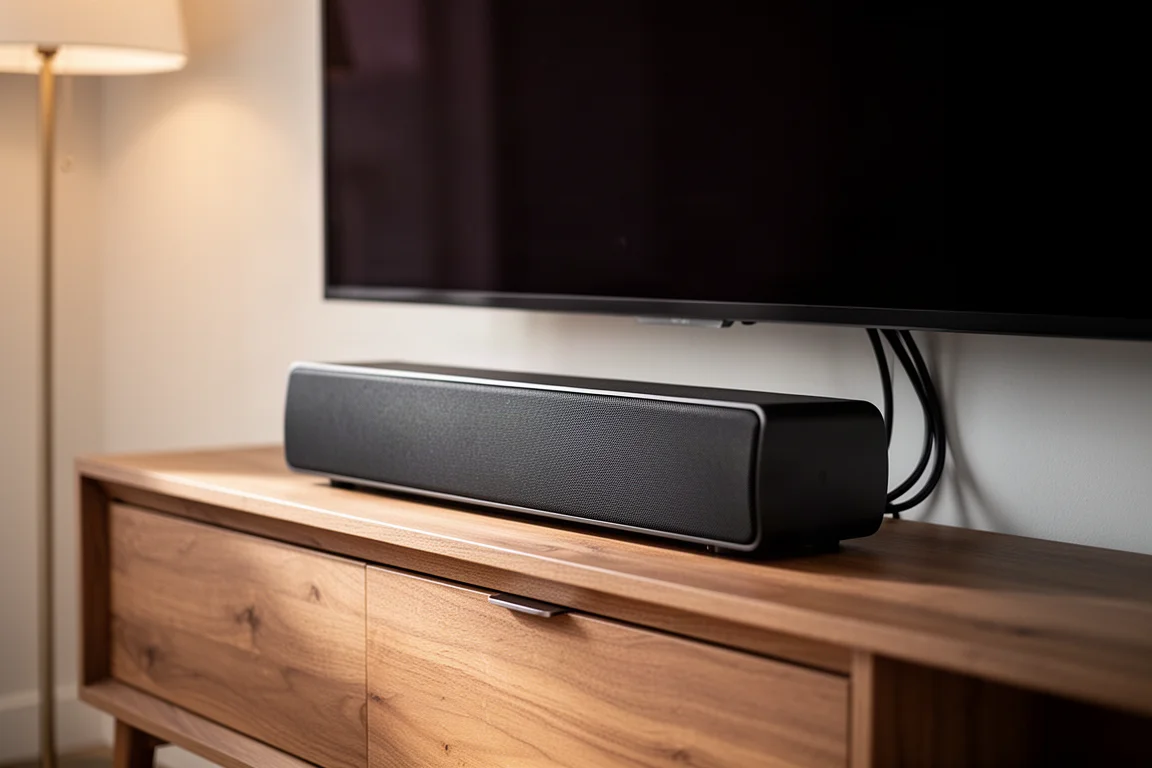
For a multichannel setup, that sealed cabinet and horizontal layout make placement simpler below a screen or inside a cabinet bay, since there is no rear port to accommodate. The lower cabinet weight also makes it easier to position and adjust.
Perlisten R5t: The Tower That Anchors the System
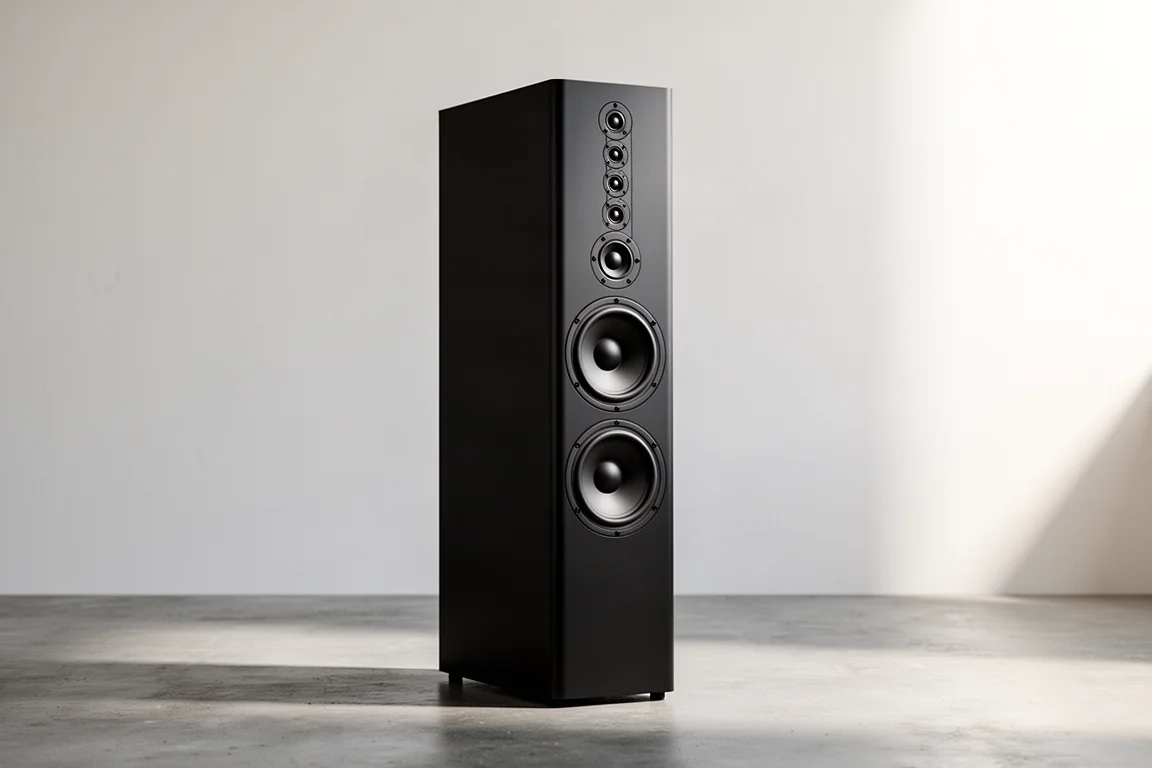
The R5t is the floorstander, and it is the only model in this group with a bi-wireable rear panel. The upper pair of binding posts feeds the high frequencies and tweeters, the lower pair feeds the 6.5-inch drivers, and all posts are rhodium plated.
The driver complement matches the rest of the range: two 6.5-inch drivers and the three-tweeter DPC array. The cabinet is ported, and like the R5m it accepts a foam plug if you want to run it sealed. Frequency response is rated at 24 Hz to 32 kHz, with in-room response extending down to about 21 Hz, which puts it close to full-range territory on its own.
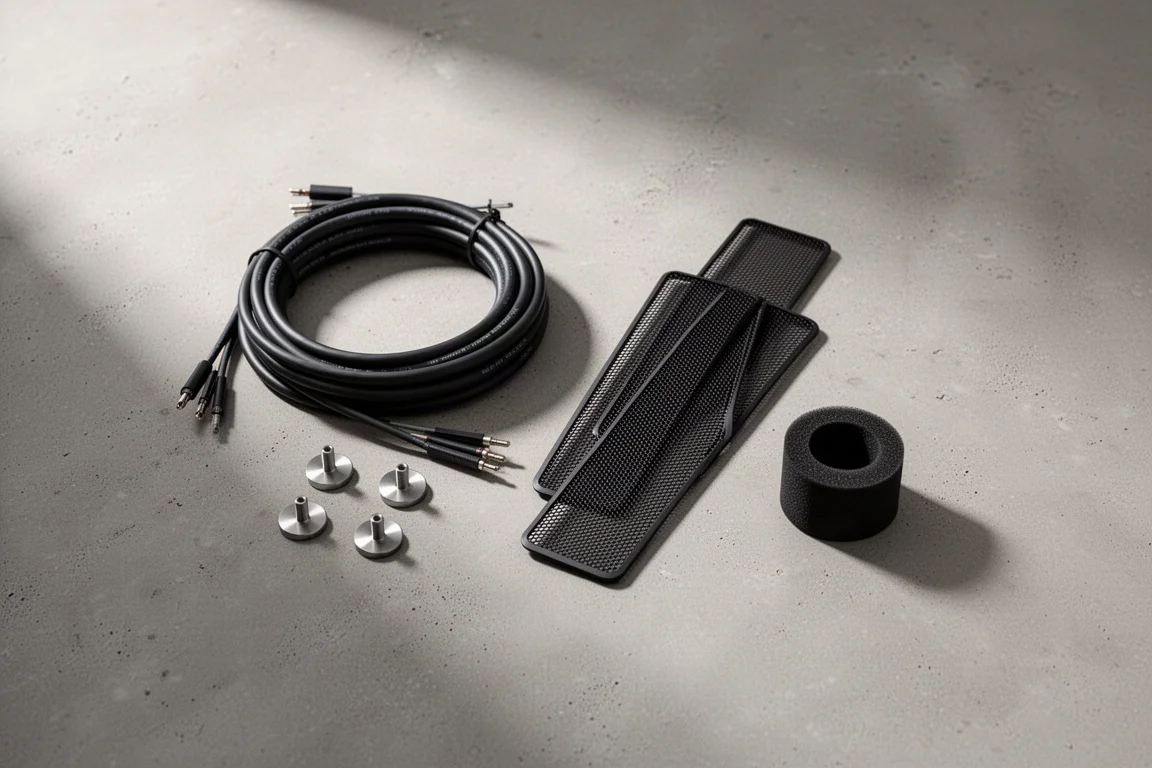
Measurements land at about 45.25 inches tall, 9 inches wide, and 13 inches deep, at roughly 58.5 pounds. Bronze spiked feet are included in the box. IsoAcoustics feet are an optional separate purchase, at around $300 for four, or roughly $600 for a pair. Grilles are also optional on the R5t at about $100 each; they attach magnetically and cover the drivers.
Perlisten R210: The Push-Pull Subwoofer
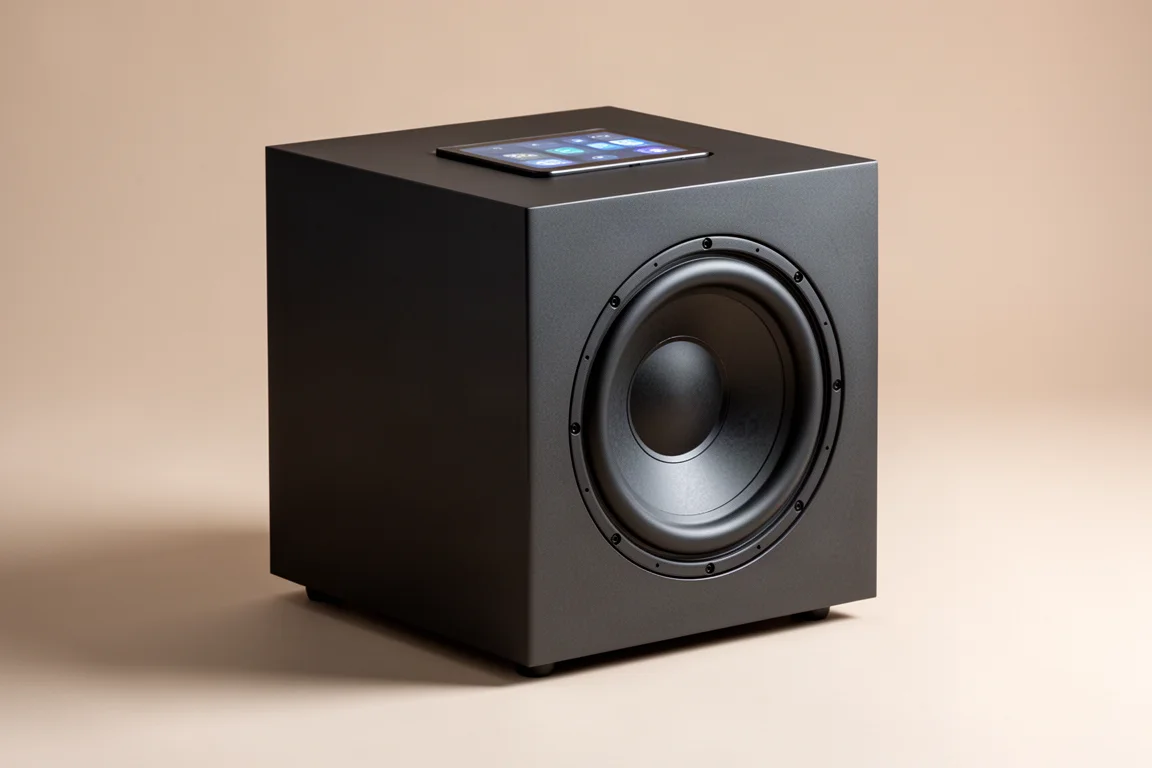
The R210 is the smallest subwoofer in the range, and it uses a push-pull configuration: one 10-inch driver faces forward while a second 10-inch driver fires downward. Onboard DSP lets you tailor the low-frequency response, with THX mode extending to 20 Hz, large room mode reaching down to 16 Hz, and small room mode delivering output to 24 Hz.
Control is available two ways. The iOS and Android app handles setup and adjustments, and there is also a 2.4-inch LCD touchscreen on the top surface of the cabinet with a resistive touch layer, giving access to menu settings, PEQ, phase, and related functions.
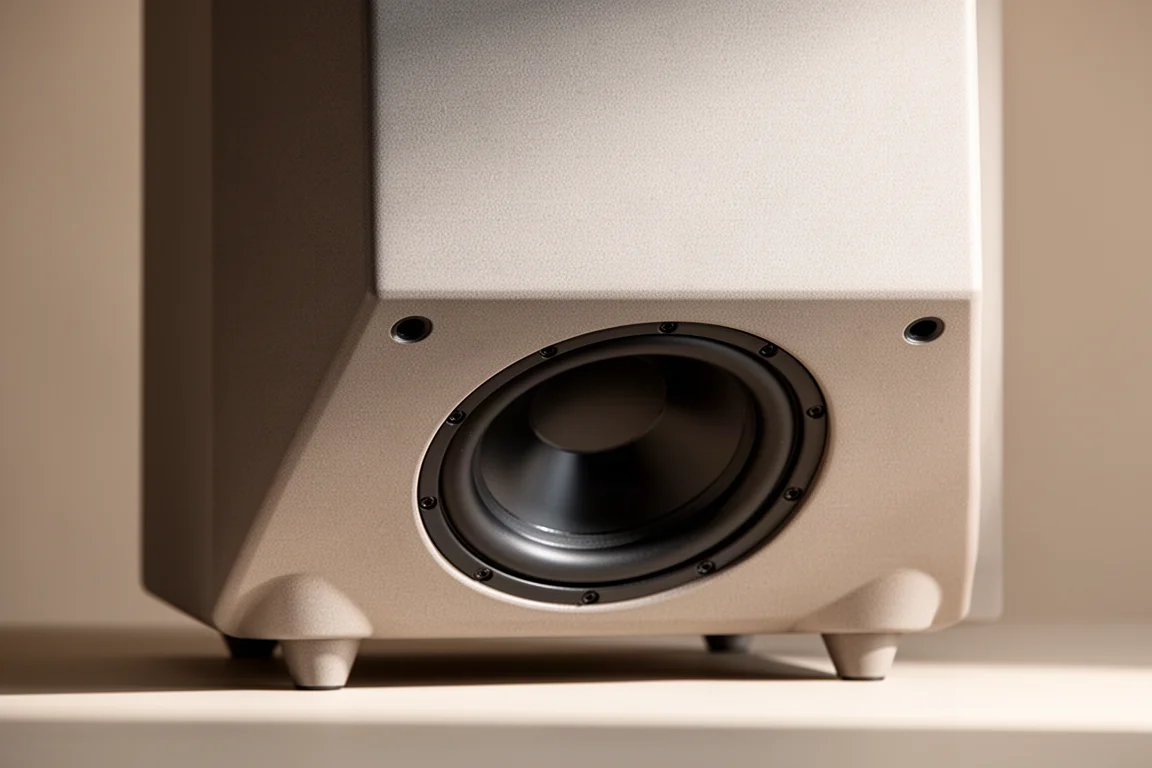
Physically, the R210 measures about 15 inches wide, about 17.75 inches deep, and roughly 22 inches tall, and it is hefty for its size. The rear panel includes a service port, a trigger input, unbalanced RCA inputs and outputs, balanced XLR inputs and outputs, a main power switch, and the power inlet. Power comes from a Class D amplifier rated at 1.2 kilowatts.
Buying Advice: Assembling a Perlisten R Series System
Start with the roles you actually need to fill. A stereo setup can be built around the R5m on stands or the R5t as a floorstander, while a multichannel system gains the most from adding the R5c as a dedicated center channel.
A few practical points to weigh before committing:
- Placement. The R5m needs stands and breathing room, at roughly 38 pounds and 22 to 23 inches tall. The R5t shares the same 9-inch width and 13-inch depth but stands about 45.25 inches tall.
- Sealed or ported. The R5m and R5t can run either alignment and both accept a foam plug. The R5c is sealed only.
- Cabling. Only the R5t supports bi-wiring. The R5m and R5c each use a single set of binding posts.
- Feet and grilles. The R5t includes bronze spiked feet, while IsoAcoustics feet are a separate purchase at around $300 for four. Grilles are optional at about $100 each.
- Bass strategy. If you want the deepest extension in the smallest footprint, the R210 with its DSP modes and push-pull driver layout covers the low end.
If you are weighing the R Series against the step-up S Series, the main visible difference is cabinet construction. The R Series uses a thinner layer of HDF, so the enclosures are not as thick and dense, and that difference is apparent the moment you lift one. Within the R Series itself, the shared driver platform is what keeps a mixed system sounding consistent.
Conclusion
The Perlisten R Series works as a set because every model leans on the same 6.5-inch drivers and the same three-tweeter DPC array. The R5m covers stand-mount duty with a ported or sealed option, the R5c handles the center channel in a sealed cabinet, the R5t brings near-full-range response and bi-wiring, and the R210 adds push-pull bass with app and touchscreen control. Match the models to your room and channel layout, and the shared design keeps the result coherent.
Further reading
Related Reviews
Home Audio
Aperion Novus Tower and Center Review: Punchy Home Theater Sound With Real Refinement
A close look at the Aperion Novus tower and center speakers, from their layered paint finish and punchy bass to the 4-ohm load and what the price actually buys.
Home Audio
Arendal 1610 Tower Review: Flagship Dynamics in a Room-Friendly Tower
A compact floorstanding tower with three 8-inch aluminium woofers, a 5-inch carbon midrange, and the kind of bass heft usually reserved for much larger speakers.
Home Audio
Arendal 1723 S THX Review: A Reference Speaker Built Like a Tank
A practical look at the Arendal 1723 S THX, a sealed, THX-certified speaker with exceptional build quality, a very flat top end, and a midrange that responds beautifully to EQ.