Home Audio
Perlisten A Series Speakers Compared: A4T, A3T, A3M, and A2S
A practical guide to Perlisten's most affordable speaker lineup, covering what all four A series models share and which one fits your room, your system, and your listening habits.
Introduction
Perlisten built its reputation with the S series, a flagship line that introduced innovations such as a directivity pattern control array and beryllium tweeters and delivered performance on par with some of the most respected names in high-end audio. The R series followed, carrying much of that technology into a more attainable price point without sacrificing the precision, scale, and control that made the S series so special.
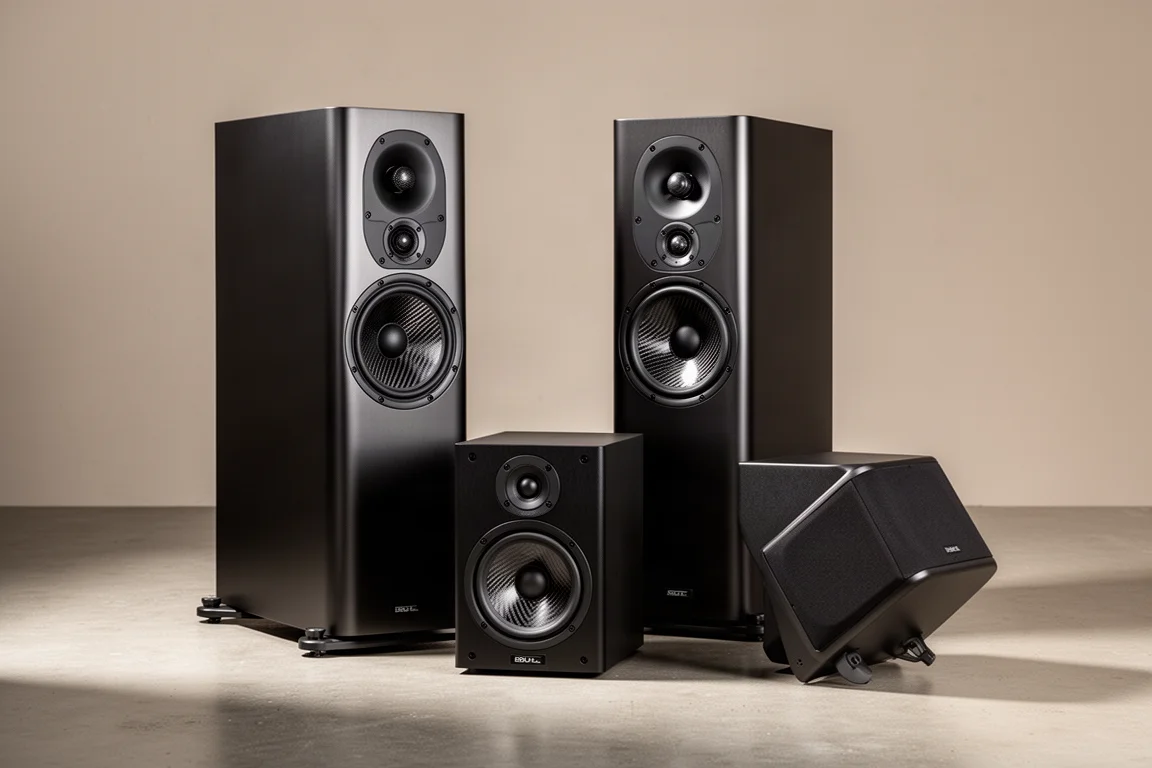
For many listeners, even the R series kept Perlisten firmly in the high-end category. The new A series changes that conversation. It is the most affordable lineup Perlisten has introduced, yet it is not a stripped-down or compromised line. All four models, the A4T, A3T, A3M, and A2S, share the same drivers and voicing, so the real question is not which one sounds best, but which one, or which combination, fits your room and your priorities.
This guide covers what the A series has in common, what each model is designed to do, and how to think about amplification, room size, and system building before you commit.
What Every Perlisten A Series Model Shares
The A series spent more than three years in development before release, and it benefits directly from the engineering work behind the S series. Perlisten designs and engineers its products in the US and owns its own overseas factory, dedicated solely to its own products, staffed by full-time employees and run with strict quality control for the tight tolerances its speakers demand. Drivers, cabinets, crossovers, and even finishing work are controlled in-house.
Cabinets are solid and acoustically inert, with heavy bracing and damping to eliminate the resonances that blur detail and reduce clarity. Even in this entry-level series, Perlisten uses HDF, which is 35 percent denser than the MDF typically found in speakers. The front baffle is 50 mm thick, slightly thicker than the main cabinet, and the two are attached so that they form a constrained layer damping arrangement that further reduces resonance. The satin black finish is understated and elegant, equally at home in a purpose-built theater or a stylish living room, and optional grilles are available if you prefer to hide the drivers.
Every model uses Perlisten’s new 38 mm composite Teteron dome tweeter mounted in a custom waveguide. It is an offshoot of the tweeter used in the R series, with a polyester dome in place of silk. The waveguide is precisely shaped to control how sound radiates from the tweeter, keeping tonal balance consistent across a wider listening area, and it sits forward and slightly over the mid-bass driver to bring the speaker closer to a point source. The result is a very large soundstage with natural, even sound, whether you sit in the sweet spot or a little off to the side.
All four models also use a custom-designed 8-inch carbon fiber driver, a version of the carbon fiber drivers developed for the S series. Carbon fiber is both stiff and light, allowing the cone to move quickly and accurately without flexing, which produces bass that is tight, fast, and detailed even at higher listening levels. The motor structure is engineered for linear movement, reducing distortion and preserving dynamics.
The crossover directs all acoustic traffic to the right drivers. The A models started out with standard inductors, but after listening tests the team switched to more expensive air core inductors to reach the sound they wanted. On the back you will find one pair of solid binding posts, a slight step down from most R series models, which offer biwiring capability, and a trade-off Perlisten considered worthwhile at this price point.
Every Perlisten product follows three acoustic principles the company believes are needed to bring music to life at home: detail, dynamics, and low distortion. Each model is measured and refined using Klippel near-field scanning, which maps the speaker’s output in three dimensions so frequency response and dispersion can be fine-tuned for real-world listening rooms as well as lab conditions. Perlisten also publishes the Klippel measurement images for its speakers, something many speaker companies avoid.
The A series does not include the multi-driver DPC array found higher up the range, but it is still designed and controlled with dispersion in mind: wide horizontal dispersion paired with a baffle that slightly limits vertical dispersion, which helps considerably with placement. The voicing is unmistakably Perlisten, offering a wide soundstage and natural tonal balance, and the A series leans just slightly warmer than the R series with delicate high frequency extension.
All models are 4 ohms and, for the most part, about 88 dB in sensitivity. That is slightly less than the S and R series, which means the A series benefits from a good amplifier with plenty of power behind it.
Perlisten A4T: The Flagship Tower for Large Rooms
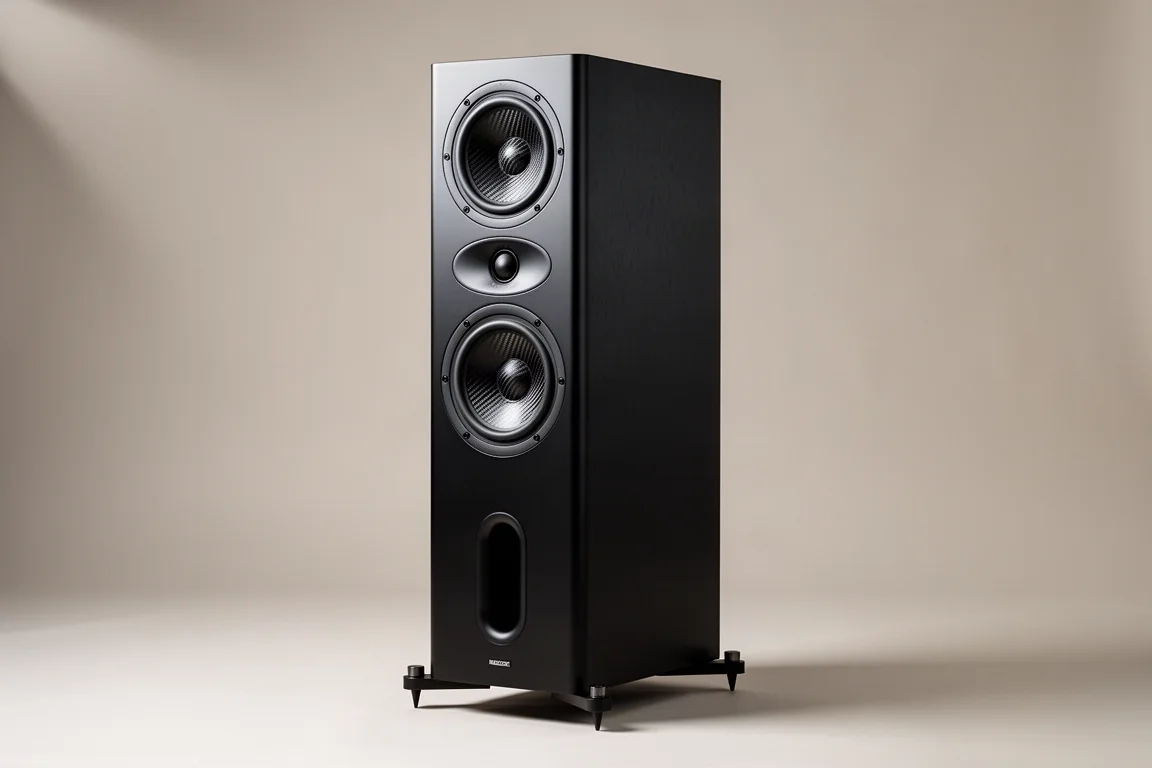
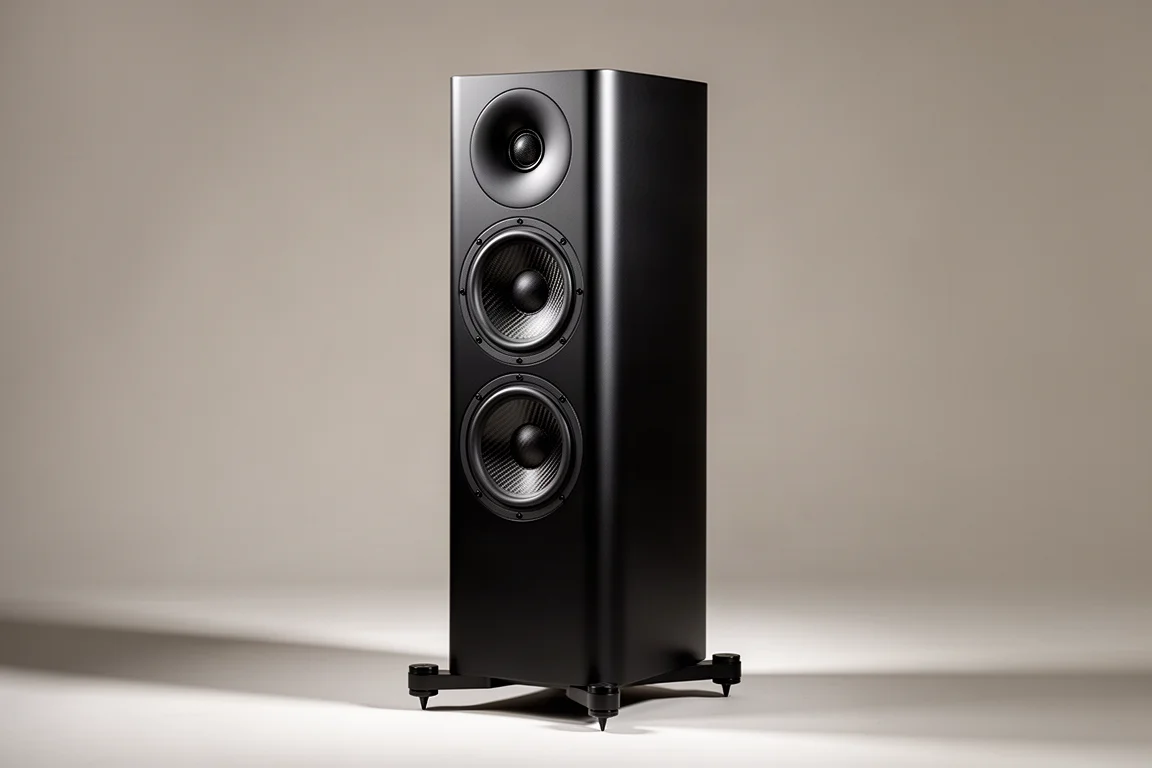
The A4T is the flagship of the A series and the best fit for large rooms or dedicated theaters. It is a 2.5-way design with three 8-inch carbon fiber woofers and the Teteron tweeter. The drivers on either side of the tweeter crossover at 1,500 Hz, while the lower one comes in at 500 Hz. Designing the port for this model took hours of computer modeling along with measuring and listening to prototypes; the result is a front-firing vertical rectangle with a special design inside the cabinet that extends the bass while allowing more placement flexibility than other ported designs.
Together, the driver complement and port technology give the A4T very deep bass extension, clean dynamics, and the ability to reach peaks over 113 dB while keeping distortion below 3 percent. With distortion that low, the speaker can play surprisingly loud with the right power before it starts to sound strained. If you want to anchor a full Perlisten system in a big space, the A4T is the natural choice for your front left and right channels, and it is worth budgeting for an amplifier that can drive it properly. The adjustable outrigger feet included with both towers help here, keeping the cabinet stable on a range of floors.
Perlisten A3T: A Slimmer Tower for Medium Rooms
The A3T takes the same design philosophy and scales it into a slightly slimmer cabinet. It pairs the Teteron tweeter and waveguide with a smaller complement of carbon fiber woofers, which still delivers plenty of bass extension and headroom for medium-sized rooms. In effect, it is an A4T without the extra woofer.
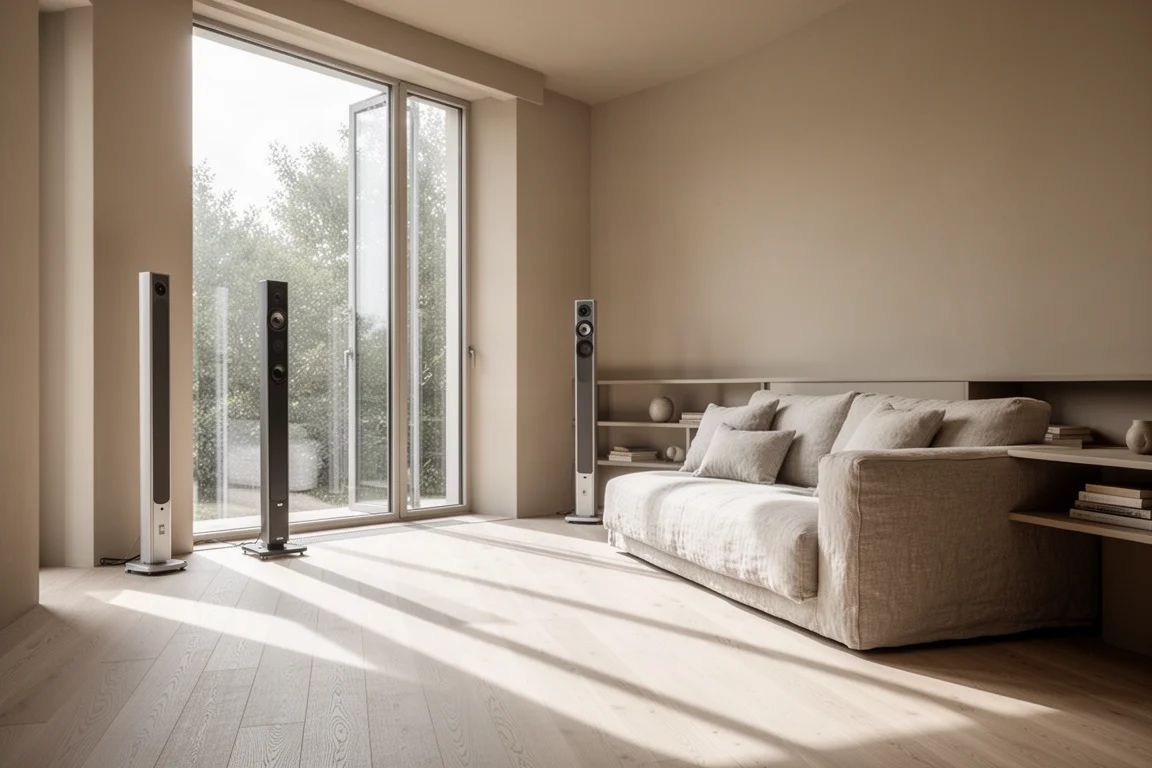
It can reach peaks of 111 dB while staying under 3 percent distortion. It is easy to integrate and does not dominate a room physically, which makes it a sweet spot for listeners who want tower speaker performance without the raw output of the A4T. It is equally comfortable in a two-channel music setup or as the mains in a surround sound system, and like the rest of the range it benefits greatly from a really good amplifier. Adjustable outrigger feet come standard, as they do on the A4T.
Perlisten A3M: A Compact Bookshelf With Real Bass Presence
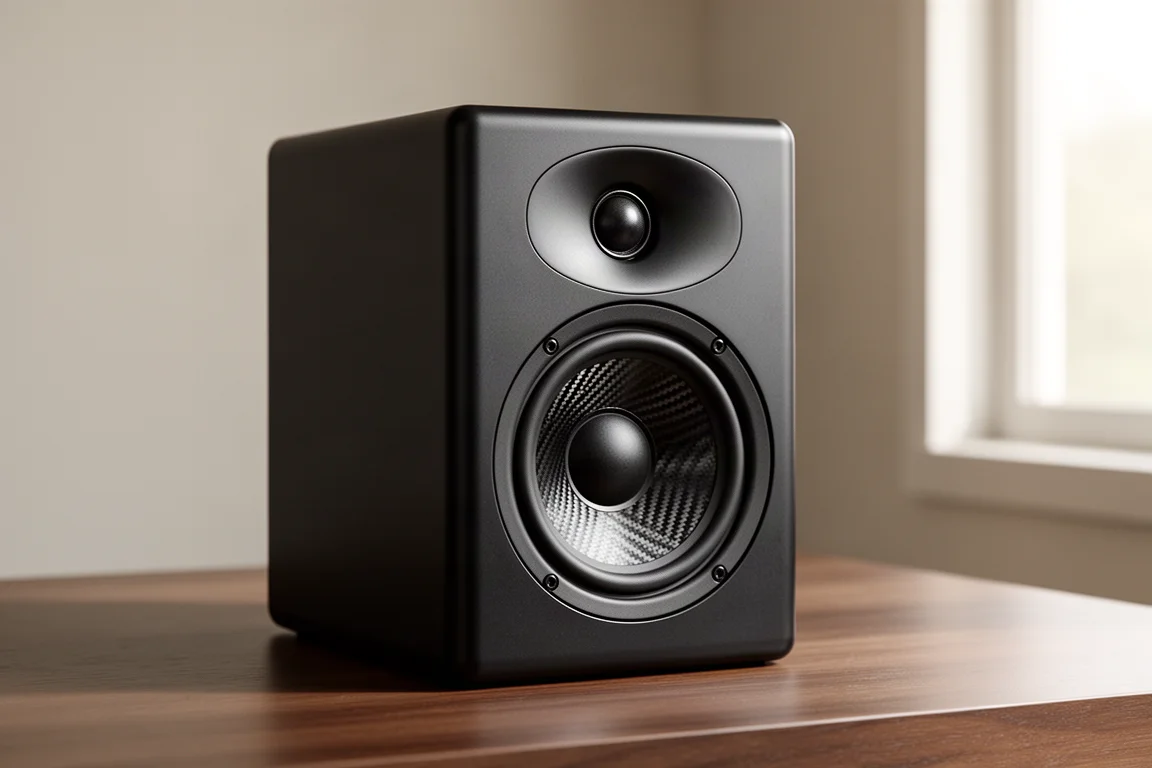
The A3M is the bookshelf option in the lineup, and its flexibility is a large part of its appeal. Think of it as an A3T tower in a smaller sealed cabinet. It is compact enough to work on stands, shelves, or a desk, yet it offers more bass presence than its size suggests, with typical in-room bass extension all the way down to 40 Hz, enough to fill a smaller space. In a larger room where you want a smaller footprint, it can be paired with a subwoofer.
The A3M shares the same low-distortion SPL capabilities as the A3T towers. That makes it easy to use as the main speakers in a 2.1 music setup, as a center channel, as side or surround speakers in a home theater, or even as left, right, and center speakers in a smaller home theater room.
Perlisten A2S: Purpose-Built for Surround and Height Channels
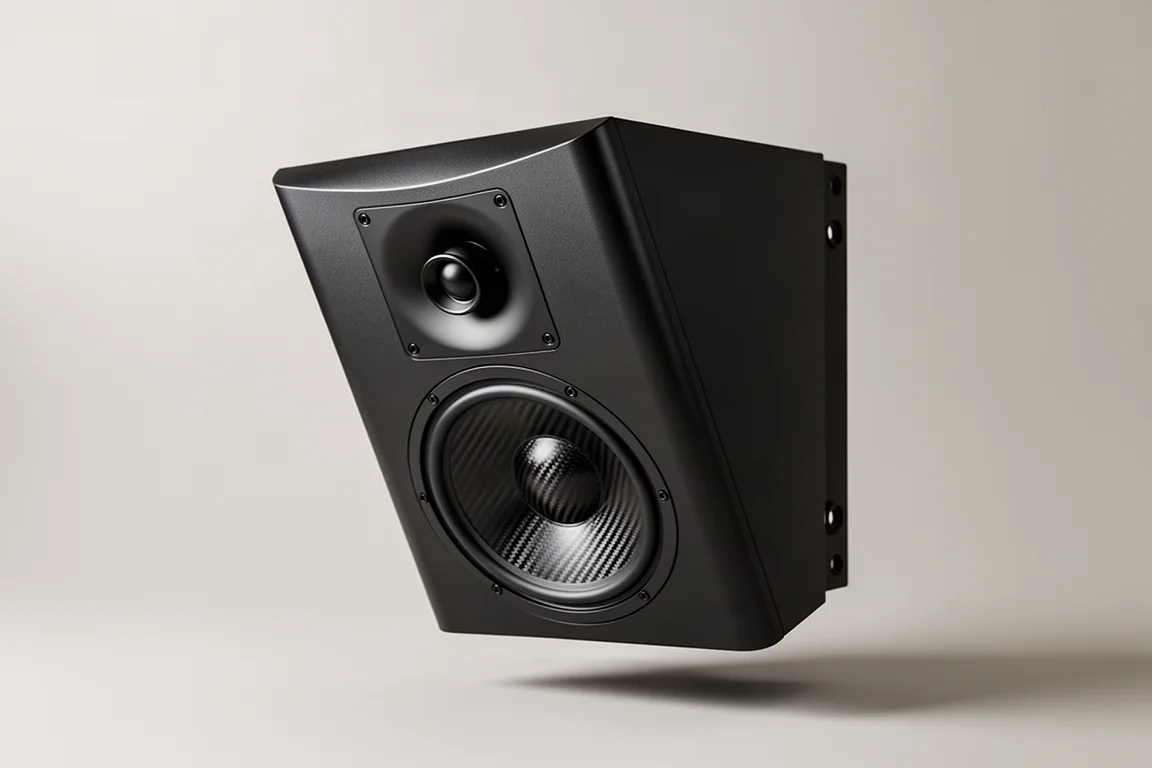
The A2S is designed with surround and height channel use in mind. It combines the same composite Teteron dome tweeter and waveguide with the same 8-inch carbon fiber woofer in a shallow cabinet purpose-built for flexible mounting. The drivers are angled down, and the speaker is intended for side or rear walls and, ideally, high on the wall or at the ceiling.
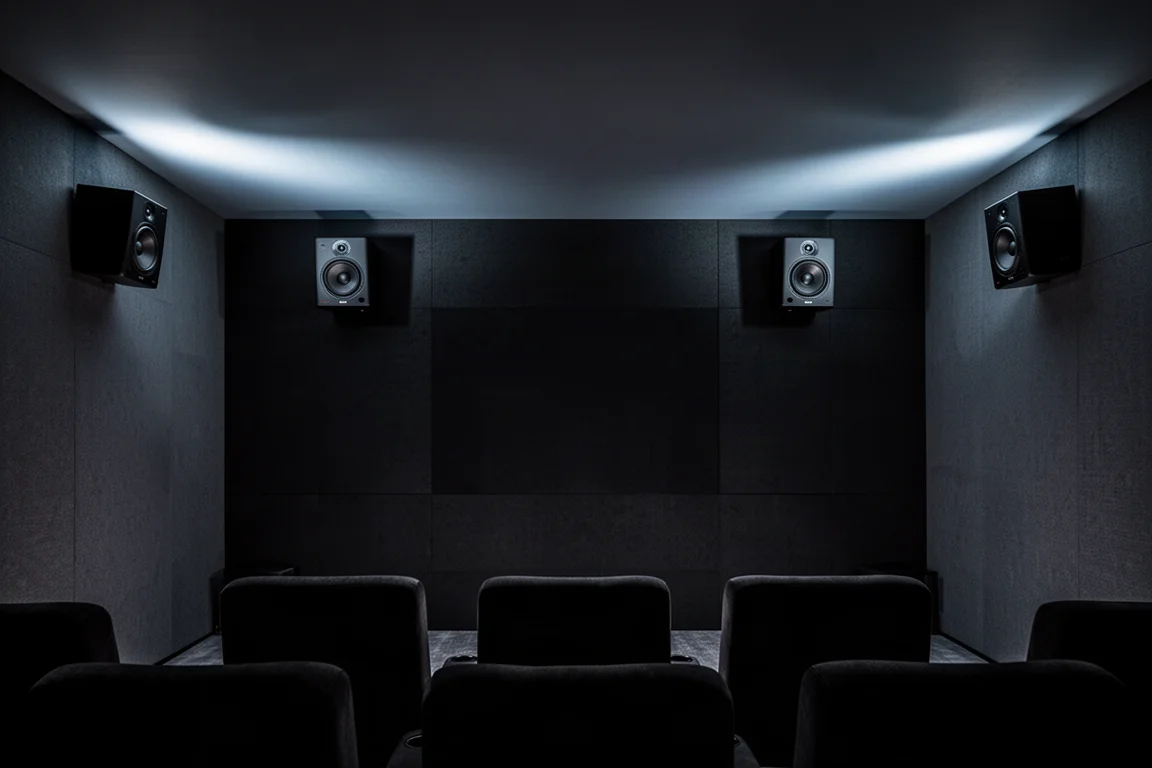
Mounting points allow direct mounting, and an optional tilt and swivel bracket made by ISO Acoustics adds a wide range of angling options or a ceiling mount, so you can aim the speaker precisely where it needs to go. That flexibility makes the A2S a natural fit for Atmos and DTS:X setups where you want consistent voicing across every channel but also need compact, placement-friendly speakers.
Mixing and Matching Across the A Series
Because every single model shares the same drivers and voicing, you can mix and match across the lineup to create a seamless system. The best combination for your space comes down to room size and whether your focus is music, home theater, or both.
A few practical directions follow from how each model is designed. In a large dedicated theater, the A4T can anchor the front left and right channels. In a medium room, the A3T works as mains with the A3M covering center and surround duties. In a smaller space, three A3M speakers can handle left, right, and center, with the A2S taking on surround and height channels. Because the voicing is consistent across the range, stepping up or down within a system does not introduce a tonal mismatch.
Buying Advice: Power, Room Size, and System Priorities
Two practical factors matter most with the A series: amplifier power and room size. With 4-ohm impedance and roughly 88 dB sensitivity, these speakers are slightly less sensitive than the S and R series, so they reward a capable amplifier that can deliver plenty of clean power. The payoff is low distortion at high output, which is exactly what lets the A4T and A3T reach their rated peaks without sounding strained.
Room size should drive your choice of model. Large rooms and dedicated theaters suit the A4T, medium rooms are well served by the A3T, and smaller spaces or 2.1 music systems are a natural fit for the A3M. The A2S exists for surround and height channels, where a shallow, mountable cabinet is the priority. If you plan to build toward a full Perlisten system over time, the shared drivers and voicing mean the pieces you add later will still sound like a matched set.
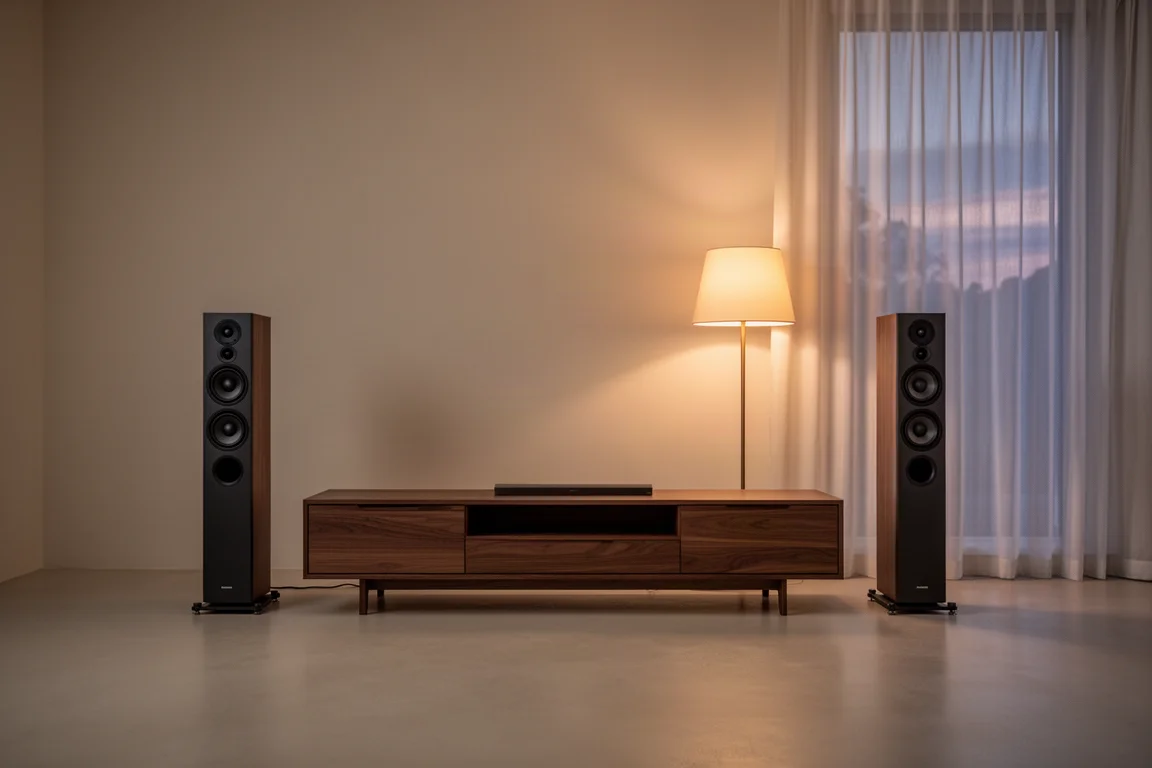
The satin black finish and optional grilles also make the line easy to live with in a shared living space, not just a dedicated theater, which matters if your system doubles as everyday furniture.
Conclusion
The A series is the most affordable lineup Perlisten has introduced, but it is not a compromise line. The same in-house engineering discipline, HDF cabinets, constrained layer baffle, Teteron tweeter with waveguide, and 8-inch carbon fiber driver run through all four models. The A4T is the flagship for large rooms, the A3T is the medium-room sweet spot, the A3M brings the same voicing to a compact sealed bookshelf, and the A2S handles surround and height channels with flexible mounting. Match the model to your room, plan for adequate amplification, and any combination in the range can be built into a coherent system.
Further reading
Related Reviews
Home Audio
Aperion Novus Tower and Center Review: Punchy Home Theater Sound With Real Refinement
A close look at the Aperion Novus tower and center speakers, from their layered paint finish and punchy bass to the 4-ohm load and what the price actually buys.
Home Audio
Arendal 1610 Tower Review: Flagship Dynamics in a Room-Friendly Tower
A compact floorstanding tower with three 8-inch aluminium woofers, a 5-inch carbon midrange, and the kind of bass heft usually reserved for much larger speakers.
Home Audio
Arendal 1723 S THX Review: A Reference Speaker Built Like a Tank
A practical look at the Arendal 1723 S THX, a sealed, THX-certified speaker with exceptional build quality, a very flat top end, and a midrange that responds beautifully to EQ.