Ski Resorts
Perisher Ski Resort Review: Australia's Biggest Resort, Explained
Perisher is the largest ski resort in the southern hemisphere, with four interconnected areas, a unique ski train, and terrain parks that draw Olympic teams. Here is what works, what frustrates, and who it suits.
Introduction
If you are looking for the closest thing to big mountain skiing on the Australian continent, Perisher is almost the default choice. Measured at roughly 2,400 skiable acres, it is the largest single ski resort in the southern hemisphere and one of the few resorts down here where you can spend multiple days without feeling like you have fully covered it. On paper, that may make you wonder why more people do not think of Australia for a southern hemisphere destination ski trip. In reality, the overall experience is more complicated than the size suggests. This review breaks down Perisher’s mountain experience, its practical frustrations, and how it stacks up overall, so you can decide whether it is worth going for you.
The Mountain: Four Resorts in One
Perisher is a very large resort by Australian standards, and in raw size it is not too dissimilar from some North American and European destinations. It is made up of four interconnected areas that were originally separate ski resorts and were combined into a single continuous resort over the years.
Perisher Valley is home to the main base and the first place most visitors see, offering strong cruising terrain and the most impressive freestyle features. Blue Cow sits in the middle of the footprint and offers great alpine meadows and the most sustained steep terrain. Guthega is the smallest and most remote of the four, hidden behind Blue Cow, but it is typically the quietest and sits close to the resort’s best backcountry access. Smiggin Holes, or Smiggins for short, is the smallest and least tall area, serving as the de facto learning mountain.
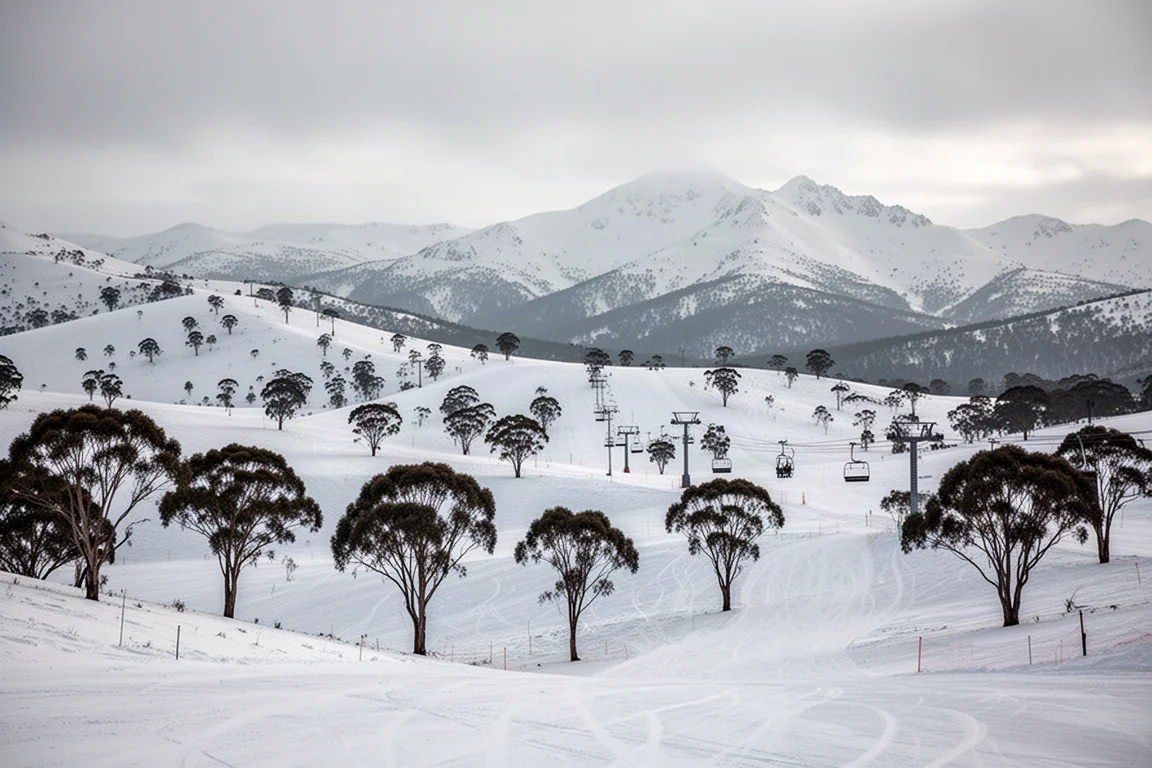
But for all its horizontal sprawl, Perisher is much wider than it is tall. The resort’s 1,420 ft vertical drop is not impressive and is straight-up short by international standards, and that figure may even overstate things because the vertical is not continuously skiable. In most terrain areas it is tough to find runs that break a thousand vertical feet. If you come expecting long sustained runs based on the advertised size, you are likely to be disappointed.
Terrain by Ability Level
Perisher works well for less experienced skiers and riders. Green runs exist in every sector, and the stretch of low-angle meadows running from the Perisher Front Valley across to Pleasant Valley and Blue Cow gives beginners plenty of mellow ground to get comfortable. Front Valley itself is especially desirable for beginners, being directly served by a short high-speed eight-pack. Many green trails also double as connectors between terrain areas, though some of them are painfully flat, to the point where you have to catwalk to keep moving. One standout is the Pleasant Valley Trail from Blue Cow to Guthega, a scenic route that is a must-do for all abilities. Dedicated learning terrain is concentrated at Smiggin Holes, where the lift setup is a single chair plus mostly surface lifts, which works reasonably once you can ride a T-bar.
Intermediate terrain is strong, albeit not overly long. Blue trails concentrate in pockets: off the Ridge and Summit Quads at Blue Cow, the Perisher Express Quad in Perisher Valley, and across Guthega generally. Double blue ratings denote advanced intermediate runs, with the best concentration of sustained high intermediate cruisers off the Perisher Six Pack on Mount Perisher, plus solid runs off the Freedom Quad at Guthega and the Ridge Quad at Blue Cow.
Advanced terrain is a significant minority of slopes, and very few blacks are even moderately long. Most sustained blacks sit off the Interceptor Quad and North Perisher T-bar at Perisher Valley, with short blacks off the Olympic T-bar. Guthega has one black trail and Smiggins has none. With the exception of the Headwall atop the Olympic T-bar, none of the runs in these sectors are harder than an advanced intermediate run at a typical North American or European resort. For the most sustained technical inbounds terrain, head to Ridge and Summit at Blue Cow: Kamikaze is probably the best on-piste run for experts, steep and ungroomed but fairly short, and the neighbouring Rock Garden Trail offers a similar pitch with a longer runout and scattered boulders and shrubs. The double black Double Trouble, meandering from Pleasant Valley to Guthega, earns its rating more from remoteness, rolling pitch and lack of grooming than steepness.
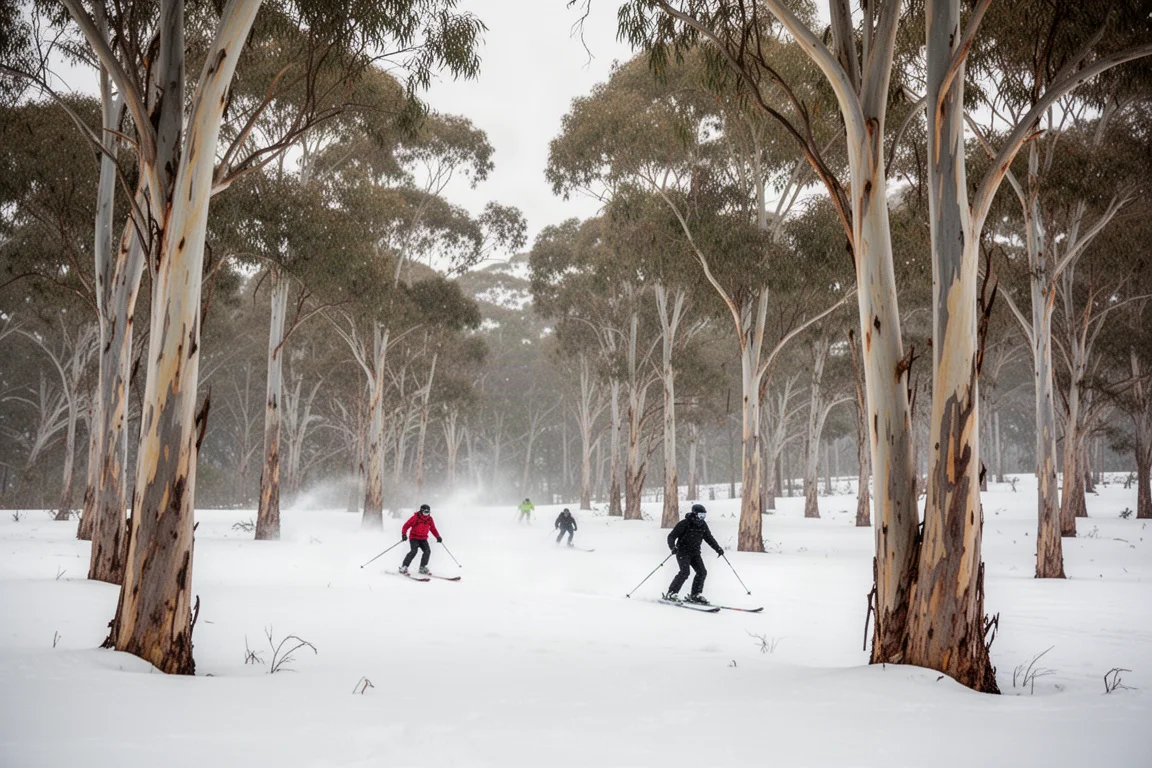
Perisher’s biggest natural terrain standout is tree skiing. The resort’s widely spaced gum trees make for phenomenal glades, ranging from low-angle beginner-oriented tree areas to technical woods, with options for effectively all ability levels when conditions allow. Guthega is also a very popular starting point for backcountry touring on the Australian Alps’ main range, with guided tour services available.
Freestyle: Perisher’s Real Strength
One of the best parts of Perisher is its freestyle setup. The resort has five terrain parks including Australia’s only superpipe, and they are widely considered top tier for the southern hemisphere. Features range from extra small to extra large, including boxes, rails, jumps and specialty features, with the piece de resistance being the slopestyle terrain park on Front Valley, a top-to-bottom course built to international competition standards. There are also two mogul courses at Blue Cow that host the Australian National Freestyle Mogul Championships.
Because the Australian winter falls in the northern hemisphere off-season, Perisher draws training camps from various national teams. During any given peak season week, you can watch World Cup and Olympic level riders lapping the parks alongside everyone else, which is a genuinely unique spectator bonus.
Snow, Weather and Reliability
By Australian standards, Perisher’s snowfall is not bad, but not bad by Australian standards still means meager by most international measures. Over its roughly four-month season, even 250 cm or 100 inches of snowfall would be considered well above average. With a summit elevation just above 2,000 m, Perisher is one of the highest resorts in Australia and sees some snow retention benefits over Victoria’s resorts, but conditions are regularly variable.
A significant percentage of terrain has snowmaking, which keeps the most critical areas resilient, and is often the only reason some slopes are not bare. However, warm spells limit how often snow guns can be used effectively, and some runs, notably a few in Guthega’s unfavorable northern-facing aspects, have highly unreliable cover. If you arrive when Double Trouble is open, you have lucked into an exceptionally good day in an exceptionally good season.
Perisher’s exposed footprint also makes upper mountain areas highly susceptible to wind holds, and in nasty storms those effects can trickle down the mountain. The storms that bring snowfall are often accompanied by massive wind gusts, meaning fresh snow frequently coincides with the inability to properly ski it. On the plus side, areas served by T-bars and the more sheltered Summit and Ridge chairs at Blue Cow are less vulnerable.
Lifts, Crowds and Getting Around
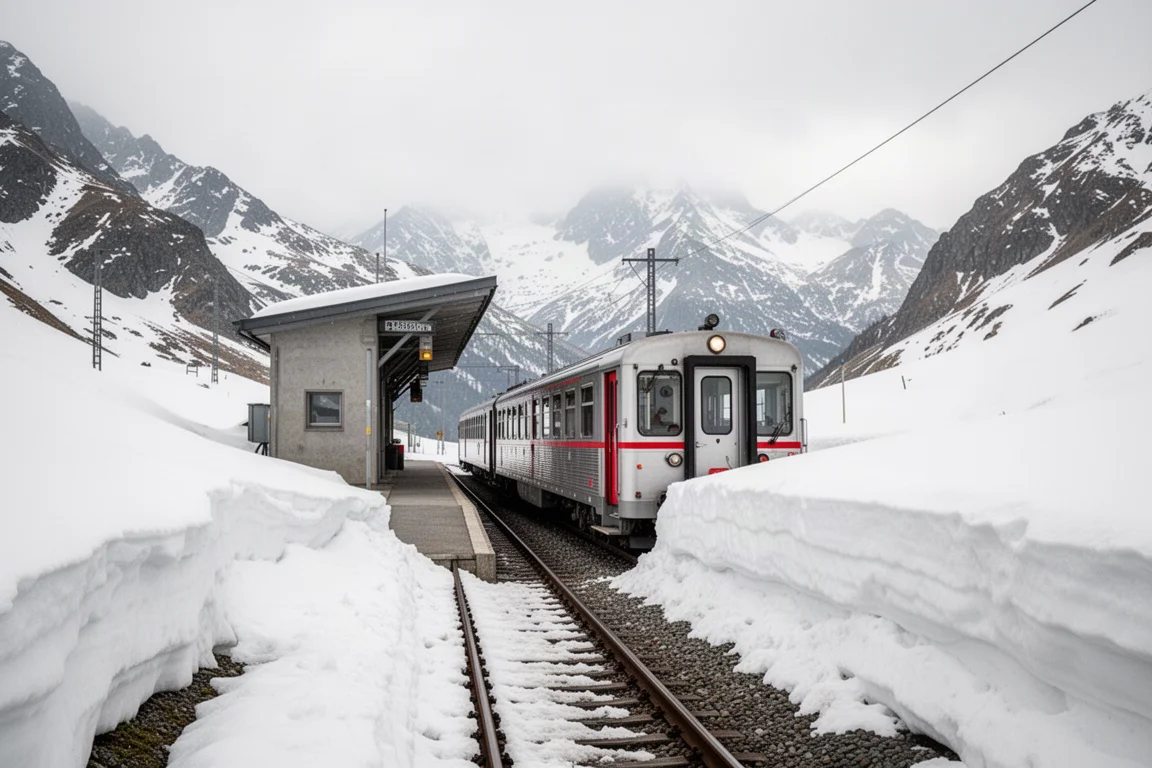
Perisher has standout lifts for Australia in its front side areas: multiple high-speed lifts in Perisher Valley including a modern six-pack on Mount Perisher and the only eight-pack lift in Australia, plus a high-speed quad at Blue Cow’s Pleasant Valley. Arguably the most distinctive piece of uphill infrastructure is the SkiTube, the only ski train outside of Europe. The trains are old and run-down but get the job done, doubling as transport between the Perisher Valley base and the top of Blue Cow, which is often faster than the convoluted chairlift route. However, all the other chairlifts are slow, mostly fixed-grip quads with some doubles and triples, and many areas rely on T-bars, including all routes between Smiggins and the other areas.
Crowding is a real issue. Perisher becomes especially packed during the July school holiday period, with nearly all Perisher Valley chairlifts seeing substantial lines. The Ridge Quad at Blue Cow and Freedom Quad at Guthega also funnel crowds because the layout offers no alternatives. Several T-bars act as backup lifts during wind holds and, under normal conditions, can be a good way to hit popular terrain with shorter waits.
Getting around is perhaps the resort’s biggest frustration. Moving between the four areas often requires multiple lifts, long traverses, and flat catwalks, with the worst offenders including the catwalks between Paradise Valley and the Perisher base and the painfully flat access trail to the Interceptor Quad. Some of these can be avoided: the SkiTube bypasses catwalks between the backside of Blue Cow or Guthega and the Perisher Centre, and a base-to-base shuttle bus connects Perisher Valley to Smiggin Holes.
Navigation is also bogged down by inadequate signage. Trail signs frequently appear only at the top of a run, making it hard to confirm you are still on your intended trail at intersections. At Murphy’s Crossing, one sign points to the Piper T-bar but is mislabeled as the Telemark T-bar. Terrain ratings are inconsistent too: Side Saddle is marked green on the mountain despite appearing blue on the trail map, Kamikaze and Rock Garden are signed as double blacks in some places despite being single blacks on the map, and Zali’s is marked as a single blue at the Kamikaze split point despite being a double blue on the map. Some studying is required to figure out your way around.
Food, Atmosphere and Night Skiing
Perisher offers a number of on-mountain facilities across its footprint. Resort-owned lodges serve mostly cafeteria food and are fairly commercial, while the independent operations are more distinctive and arguably better on both value and quality. Several slopeside hotels have nice restaurants that are not always advertised on the trail map; they are more expensive, but less known and less crowded.
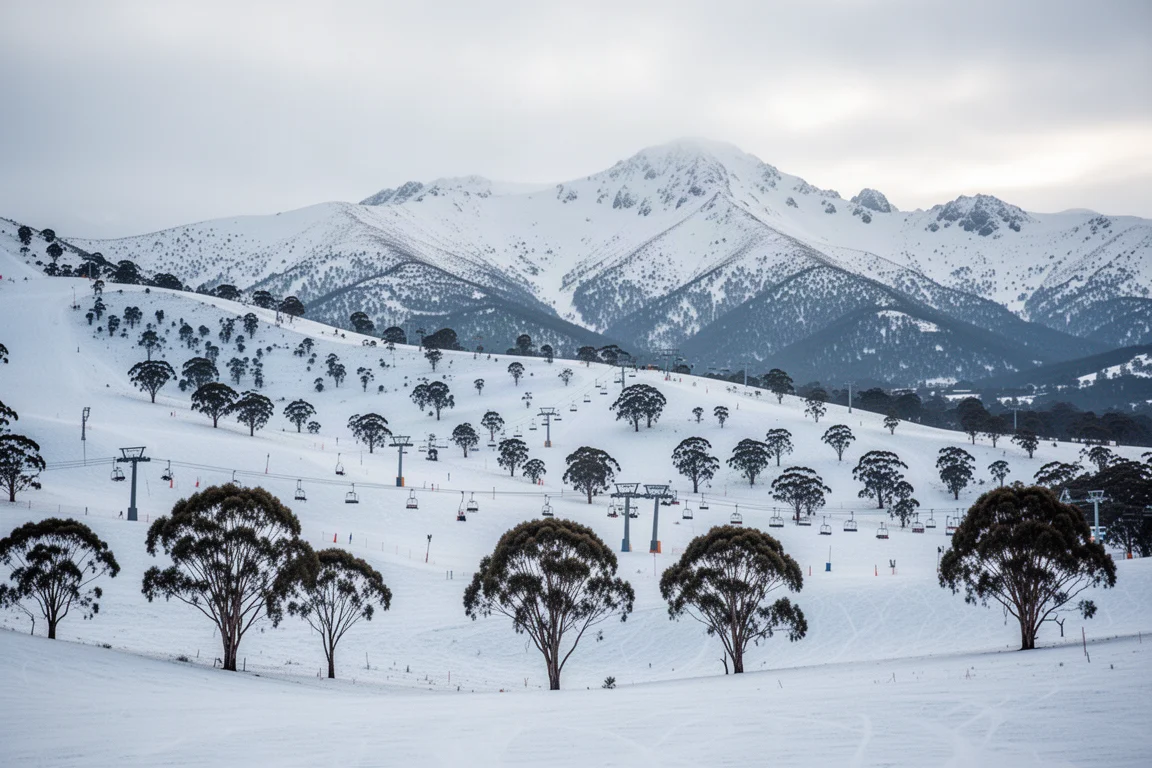
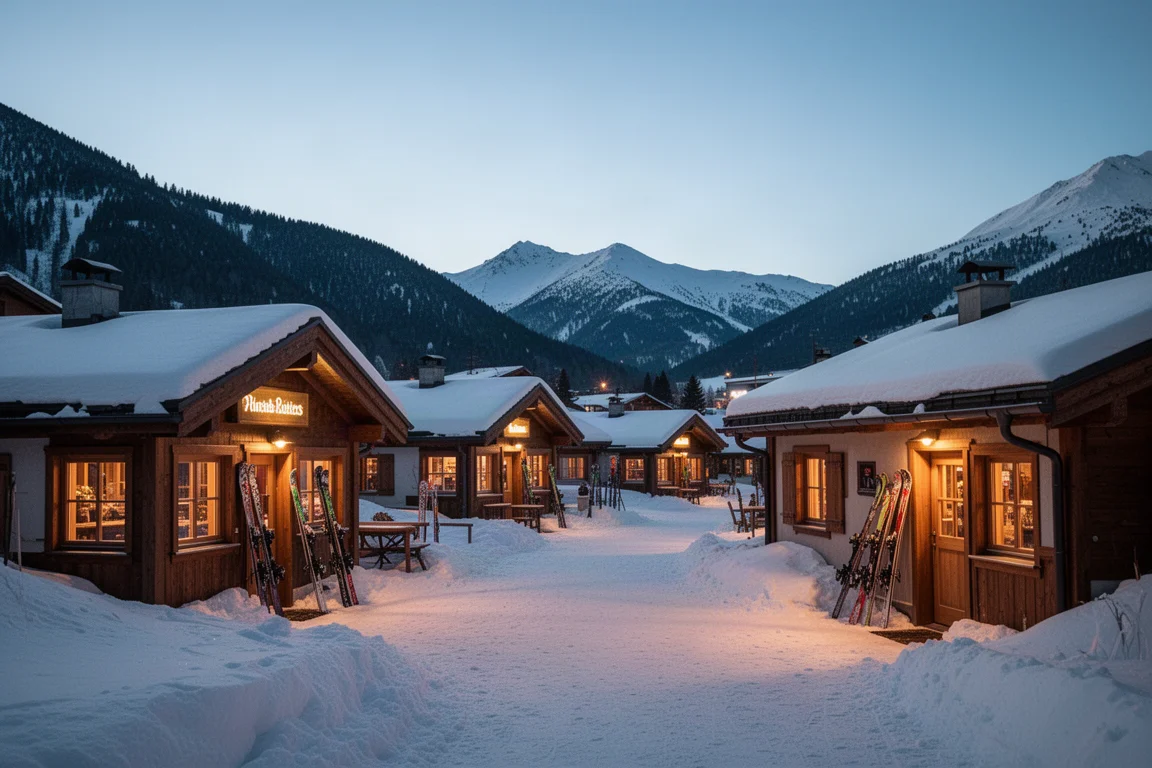
The overall atmosphere is a big part of Perisher’s appeal for first-time visitors to Australia. Open rolling terrain dotted with exotic gum trees and above-treeline slopes in the background are unlike any other major ski region in the world, and despite the modest vertical, the distinct mountain zones give Perisher a big mountain feel. Night skiing is limited to Tuesdays and Saturdays during peak season, covers only the small Front Valley sector served by the Village Eight-Pack, and starts at 6:00 pm, at least an hour after normal lifts close, so you will have to leave the mountain in the interim.
Logistics, Lodging and Value
Perisher sits roughly five hours south of Sydney and two and a half hours from Canberra. A car is the most common way to get to the Snowy Mountains, with direct buses also available from both cities, and two-wheel drive vehicles must carry snow chains. From Jindabyne there are three options for the final stretch: driving directly to a base area (paying a $29 Kosciuszko National Park entry fee), taking a bus ($20 Australian dollars per person round trip), or riding the SkiTube from Bullocks Flat, where parking is free but the round trip fare is $45 even for lift ticket or pass holders. For groups, a bus or splitting the park fee across a private car is usually more economical. Note that Perisher Valley’s car parks fill quickly on weekends and school holidays, and once full, the road may close to private vehicles.
On-site lodging is incredibly expensive, and accommodations not adjacent to the bases are reached by snowcat. Overnight parking is not permitted in Perisher Valley, so overnight guests on the mountain need to take the SkiTube up from Bullocks Flat. More affordable options exist in Jindabyne, though they remain pricey for what you get; Cooma, further away, is better value, and camping sites are available in Jindabyne for the most budget-friendly option. The après scene on the mountain is relatively small, with a handful of bars and restaurants and occasional live music in Perisher Valley; for a livelier night out, Jindabyne offers a wider range of pubs, restaurants and nightclubs.
The biggest downside is lift ticket value. One-day adult rates top out at a staggering $278 Australian dollars, and tickets do not include the $29 National Park entry fee for drivers, the $45 per day SkiTube fee, or a $6 pass card fee for first-time visitors to Vail-owned Australian resorts. If you plan to ski multiple days, an Epic Pass-related product is likely your best bet. The Epic Australia Pass offers unlimited access to Perisher plus every global resort on the full Epic Pass except Telluride, and the Epic Australia four-day pass covers all of Vail’s Australian-owned resorts for up to four days. Perisher is technically on the non-Australian full Epic Pass, but that access applies to the season after purchase, and the non-Australian pass does not include night skiing.
How Perisher Ranks
Across a ten-category mountain score, Perisher totals 51 points overall. It scores a 3 for snow (about 200 cm average, well under 100 inches), a 4 for resiliency (strong snowmaking but inconsistent openings elsewhere), a 7 for size, a 6 for terrain diversity, a 4 for challenge, a 5 for lifts, a 5 for crowd flow, a 7 for facilities, a 3 for navigation, and a 7 for mountain aesthetic, thanks to the high alpine backdrop and exotic gum trees. That total is competitive for Australia, but less so on a global scale: the footprint and beauty look compelling, but the package is ultimately not quite as fun in reality, and the snow is just not dependable enough to plan a trip far in advance.
Conclusion
If you are in Australia and want a large selection of family-oriented terrain, or you simply want the novelty of skiing amidst the gum trees, Perisher is not a bad choice at all. The freestyle setup is genuinely top tier for the southern hemisphere, the SkiTube is a one-of-a-kind piece of infrastructure, and the landscape feels unlike anywhere else. But for an in-advance destination ski trip, short runs, complex navigation, variable snow, and extraordinary ticket prices mean there are far better southern hemisphere destinations you can choose specifically for skiing. Go for the novelty and the parks if you are already nearby; otherwise, look elsewhere.
Product link
View more details for Perisher
This product is mentioned in the review. Check the specifications, options, and compatibility before buying.
View more details for PerisherFurther reading
Related Reviews

Ski Resorts
Alyeska Resort Review: Alaska's Largest Ski Resort, Worth the Journey?
A deep look at Alyeska Resort: heavy snowfall, expert terrain, an Icon Pass connection, and the trade-offs of a near-sea-level mountain in the Last Frontier.

Ski Resorts
Bear Valley Ski Resort Review: Northern California's Quiet Sierra Alternative to Tahoe
A lesser-known Sierra resort with over 1,300 skiable acres, surprisingly strong expert terrain, and crowd levels Tahoe can only dream of. Here is what to know before you go.

Ski Resorts
Colorado Ski Resorts Ranked: The Best Destination Mountains for Overall Experience
A ranked guide to Colorado's destination ski resorts, covering terrain, snow, logistics, crowds, and cost so you can pick the right mountain for your trip.